How Often to Clean a Turtle Habitat: Cleaning Schedule
By Dr. Zubair Khalid, DVM, MS, PhD ·
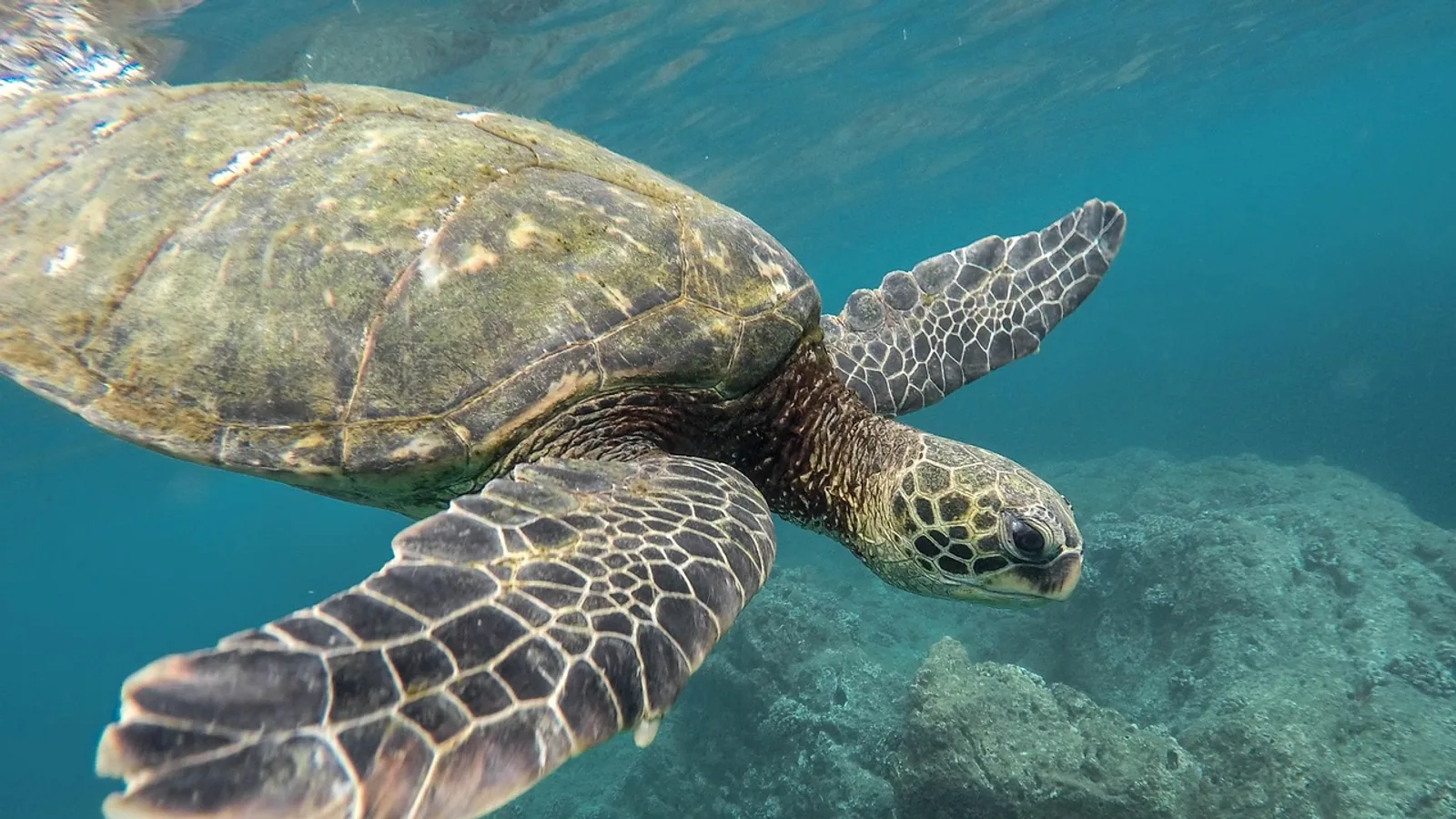
Most turtles need waste removal and leftover food picked up every day, a partial water change and filter rinse every week, and a full deep clean of the enclosure every four to eight weeks. Aquatic and semi-aquatic turtles that foul their water quickly sit at the frequent end of that range. Dry, well-drained tortoise-style setups sit at the longer end. Treat these intervals as a starting point, then adjust based on tank size, filtration, number of animals, and how much your turtle eats and eliminates.
Cleaning is not just cosmetic housekeeping. Chelonians require more space and more time for proper care than many new owners expect, and a large share of illness seen in pet turtles traces back to husbandry shortfalls rather than infections alone [1]. Veterinary reviews of turtle medicine consistently frame sanitation, water quality, temperature, and nutrition as the foundation of clinical health in captive turtles [2]. This guide gives you a workable turtle cage cleaning schedule, explains the reasoning behind each task, covers safe cleaning products for turtles, and walks through deep cleaning a turtle enclosure without turning routine maintenance into a stress event for your animal.
At a Glance: Turtle Habitat Cleaning Schedule
| Task | Frequency | Notes |
|---|---|---|
| Remove leftover food | Daily | Uneaten prey items and produce rot fast in warm water |
| Spot clean waste, basking area, and land area | Daily | Scoop feces, shed skin, and debris with a dedicated scoop |
| Check filter flow and rinse mechanical media | Weekly | Rinse media in removed tank water, never tap water |
| Partial water change | Weekly | Replace roughly a quarter to a half of the water volume, adjust to your bioload |
| Wipe algae and waterline film | Weekly | During the partial water change, while water level is dropped |
| Clean hides, ramps, basking platforms | Every two to four weeks | Scrub and rinse thoroughly before returning |
| Deep clean a turtle enclosure | Every four to eight weeks | Full drain, disinfect, rinse, and dry cycle |
| Replace substrate (aquatic) or top dressing (terrestrial) | At deep clean or as soiled | Fully dry terrestrial substrate only if species needs dry footing |
| Water quality check | Weekly | Test kits help you catch trends before turtles show signs |
This table is a maintenance rhythm, not a rigid prescription. A single small turtle in an oversized, heavily filtered tank may stretch the intervals. Several turtles in a modest tank fed daily may shorten them. When you are unsure, your reptile veterinarian can review your specific setup and bioload.
Why Turtle Habitat Hygiene Is a Medical Issue
A turtle's environment is functionally part of its body. Chelonians live in continuous contact with their water, their substrate, and their basking surfaces, so any contamination in the habitat becomes exposure on the shell, skin, eyes, and mouth. Reviews of captive chelonian care emphasize that owners frequently underestimate what proper care requires, which is one reason turtles remain popular pets but are overrepresented in preventable illness [1]. The clinical literature on turtle and tortoise medicine makes the same point from the veterinary side, noting that sound husbandry knowledge is the basis for preventing common diseases in this order [2].
Poor hygiene does not act alone. Case series from zoos show how husbandry problems compound. In Central American river turtles with intestinal tympany and volvulus, fatal cases were preceded by abrupt diet changes, inappropriate food items, ingestion of indigestible material, and temporary lapses in environmental temperature, and the authors concluded that optimal husbandry including nutrition and temperature appears vital to prevention [3]. A separate case series of degenerative cardiac disease in young Galápagos and sulcata tortoises found that the deaths occurred in animals too young for typical degenerative disease, leading the authors to recommend investigating inappropriate environmental parameters, husbandry, and diet as contributing factors [4]. Cleaning is one of the few husbandry variables you control completely and daily.
Human studies echo the gap between owning a turtle and maintaining it well. A survey of over 200 reptile owners in Hong Kong found turtles remained among the most commonly kept reptiles, but also documented a clear gap between owners' awareness of proper husbandry and what they actually implemented, with half of respondents reporting concerns about enrichment and a fifth uncertain about appropriate enclosure size [5]. Even veterinary students surveyed about pet reptile welfare reported uncertainty about their own knowledge across multiple care domains, which underscores how easy it is for well-meaning keepers to miss maintenance standards [6].
The Core Schedule: Daily, Weekly, Monthly
Daily Tasks (Five Minutes or Less)
- Remove uneaten food within thirty minutes of feeding. Leftover protein in warm water is the fastest way to crash water quality.
- Spot clean visible feces from the water column, basking dock, and any land area. A turkey baster or dedicated net works for aquatic setups, a scoop or tongs for terrestrial ones.
- Visually scan the habitat. Cloudy water, a sudden film on the surface, or a turtle that is less active than usual are early signals worth acting on.
Daily observation matters beyond hygiene. Behavioral assessment is considered one of the most valuable indicators of welfare in captive turtles because it is non-invasive and more sensitive than many other measures, and researchers have shown that quantifying normal swimming and activity patterns can reveal poor condition before overt illness [7]. Your daily two-minute scan doubles as a health check.
Weekly Tasks
- Perform a partial water change. For most single-turtle aquatic setups, replacing roughly a quarter to a half of the water weekly, matched to your filter capacity and feeding volume, keeps dissolved waste in check. Treat replaced tap water with a conditioner if your municipal supply contains chlorine or chloramine.
- Rinse or replace mechanical filter media in the old tank water you removed. Tap water kills the beneficial bacteria that process nitrogenous waste.
- Wipe the waterline, glass, and any algae on smooth surfaces while the water level is down.
- Clean and disinfect feeding tongs, dishes, and scoops.
- Test water parameters with a liquid test kit if you keep an aquatic turtle, and log the results so trends become visible.
Every Two to Four Weeks
Scrub basking platforms, ramps, hides, and feeding dishes with hot water and a dedicated brush. These surfaces accumulate biofilm that a quick rinse will not remove. Rinse thoroughly and let them air dry before they go back in the habitat, especially for terrestrial setups where damp decor promotes bacterial and fungal growth.
Deep Cleaning a Turtle Enclosure: Every Four to Eight Weeks
Deep cleaning a turtle enclosure is the full reset. For an aquatic setup:
- Move the turtle to a secure temporary container with dechlorinated water at an appropriate temperature. Prepare this container before you start.
- Drain the habitat completely. Siphons make this manageable even for large tanks.
- Remove all decor, substrate, and equipment. Discard substrate that cannot be reliably sanitized, or boil and bake rocks and wood if they are sturdy enough for that treatment.
- Scrub every surface with hot water and a reptile-safe cleaner or a mild detergent, then disinfect.
- Rinse everything at least twice. Residue from any cleaner is a real risk to a semi-aquatic animal that drinks from and lives in its water.
- Let the tank, decor, and equipment air dry completely. Many pathogens and parasites are sensitive to desiccation, and a full dry cycle is free disinfection.
- Refill with dechlorinated water, reinstall the filter, and confirm the heater and basking lamp are reaching their target temperatures before returning the turtle.
- Run the filter and monitor behavior closely for the first day.
For terrestrial and semi-terrestrial enclosures, deep cleaning means removing all substrate down to the floor, disinfecting the empty enclosure and hard furnishings, rinsing, drying, and rebuilding with clean substrate. Captive environments shape turtle physiology in measurable ways. A study comparing Eastern box turtles and common snapping turtles in wild versus managed care found that environment and diet produced significant differences in blood fatty acid profiles, confirming that what an animal experiences in its enclosure is reflected in its biology [8]. Clean, well-structured surroundings are not decorative.
Safe Cleaning Products for Turtles
Choosing safe cleaning products for turtles comes down to three rules: effective disinfection, zero residue, and nothing aromatic.
What works. Hot water and physical scrubbing remove the biofilm and organic matter that disinfectants cannot penetrate. After mechanical cleaning, a dilute unscented household bleach solution is a widely used and effective disinfectant for tanks and hard furnishings. Dilute it according to label directions for disinfection, apply it to a cleaned surface, allow adequate contact time, then rinse repeatedly and air dry fully. Commercially available reptile habitat cleaners are an alternative if you prefer a purpose-made product, and your veterinarian or an Association of Reptilian and Amphibian Veterinarians member can recommend one suited to your species.
What to avoid. Do not use scented cleaners, pine or citrus oil products, ammonia-based glass cleaners, or any combination of bleach with ammonia, which produces toxic chloramine gas. Never disinfect a habitat or decor in the same sink where you prepare food, and never return a wet, chemically treated item to the tank. If you can smell a product on an item, it is not done being rinsed.
Dedicated tools. Keep a separate set of sponges, brushes, and buckets used only for the turtle habitat. Cross-contamination between reptile equipment and human kitchenware is an avoidable risk, and salmonella exposure from reptiles to household members is a recognized zoonotic consideration that good hygiene on both ends addresses. Wash your hands after every maintenance session.
The Merck Veterinary Manual's exotic and laboratory animal resources and VCA Animal Hospitals' reptile care guides both provide general guidance on enclosure sanitation that aligns with this approach, and both are reasonable references to consult alongside your veterinarian.
Cleaning Without Causing Stress
Cleaning is handling, and handling is a physiological event for a turtle. In a controlled study of loggerhead sea turtle hatchlings, plasma corticosterone, a stress hormone, showed no significant increase when hatchlings were handled once a week, but rose significantly when animals were handled once every two weeks, suggesting that turtles can acclimate to frequent, predictable handling routines [9]. The practical translation for pet keepers is encouraging. A consistent, calm cleaning routine that your turtle experiences regularly is less disruptive than sporadic, chaotic maintenance events.
Apply that finding with a few habits:
- Prepare everything before you touch the animal. Have the transport container, conditioned water, and tools ready so handling time is short.
- Move deliberately. Support the shell and limbs, avoid gripping the head or tail, and never drop a turtle into an empty or unfamiliar container.
- Keep cleaning sessions on a predictable schedule at a predictable time of day.
- Minimize total handling time. Research on rehabilitation turtles has shown that even routine procedures like morphometric measurement consume handling time that can be reduced through better methods, a principle that applies to cleaning logistics as well [10].
- Return the turtle to a habitat that has already reached correct water temperature and basking surface temperature.
Welfare-oriented housing research adds a final consideration. When aquatic turtles were given continuous choice among substrates, enclosure features, and lighting in a zoo study using 24-hour remote monitoring, individual turtles showed clear and consistent preferences for particular features and microclimates [11]. Your deep clean is the natural opportunity to evaluate whether the layout still matches your turtle's apparent preferences, and to reposition basking and hiding features in the arrangement the animal uses most.
Using Behavior to Judge Whether Your Schedule Works
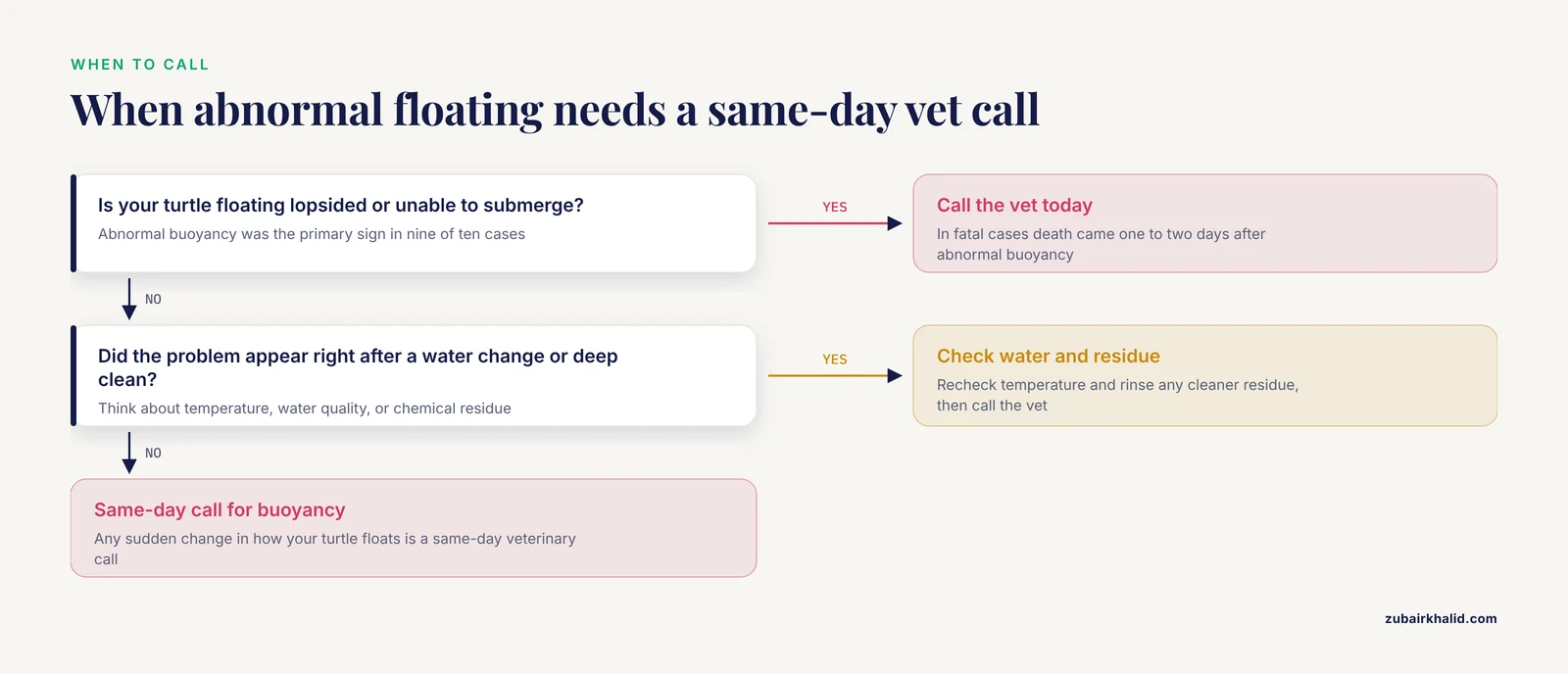
How do you know your turtle cage cleaning schedule is right? Watch the turtle. Behavioral diversity and activity patterns are increasingly used as welfare indicators in reptiles, and studies of zoo-housed reptile species, including turtles, have shown that behavior changes measurably when environmental conditions change [12]. A turtle in a clean, stable, appropriately warm habitat typically shows steady activity, regular basking and swimming patterns, consistent appetite, and normal respiration. A turtle in a degraded habitat often shows lethargy, prolonged hiding, abnormal swimming or buoyancy, or refusal to bask.
Abnormal buoyancy deserves specific mention. In the case series of Central American river turtles, abnormal buoyancy was the primary presenting sign in nine of ten cases of intestinal gas accumulation and volvulus, and in fatal cases the progression from abnormal buoyancy to death took only one to two days [3]. Any sudden change in how your turtle floats or sits in the water is a same-day veterinary call, not a cleaning adjustment.
Common Cleaning Mistakes
Cleaning everything at once, always. Replacing all water and all media simultaneously can crash the biological filter and destabilize water chemistry. Partial water changes on a fixed schedule are more protective than occasional total resets.
Rinsing filter media under tap water. Chlorinated tap water damages the bacterial colonies your filter depends on. Always rinse media in the tank water you siphoned out.
Feeding in a dirty tank. If you feed in the main habitat, waste and food particles compound weekly. Some keepers feed in a separate container to concentrate mess, which also shortens deep-clean intervals.
Overlooking the basking area. The dock, ramp, and land area accumulate feces and food just as fast as the water, and they are often the dirtiest surfaces in the enclosure.
Using the wrong products. Residual detergent or scented cleaner in turtle water is a direct chemical exposure for an animal that drinks and absorbs through its environment. Rinse twice and dry fully.
Cleaning so rarely that the deep clean becomes a crisis. When you skip weeks, the deep clean involves heavy scraping, full substrate replacement, and prolonged disruption. Frequent light maintenance makes each deep clean fast and low-stress.
Ignoring the filter's limits. Turtles are messy animals that produce a heavy bioload for their size. A filter rated for the tank's fish capacity is usually undersized for a turtle, and no filter replaces water changes.
Supplies You Need for a Workable Routine
- A siphon or gravel vacuum sized to your tank
- A dedicated turkey baster or net for daily spot cleaning
- Two buckets used only for turtle maintenance, one for old water and one for conditioned new water
- A water conditioner appropriate for your tap water supply
- A long-handled soft brush and a stiff brush for decor, both dedicated to the habitat
- Unscented bleach or a reptile-safe disinfectant for deep cleans
- Liquid water test kits for aquatic setups
- A secure, ventilated temporary holding container with a lid
- A thermometer for the holding container and the main tank
- A logbook or phone note recording cleaning dates, water test values, and any behavior changes
Selection criteria are simple. Every tool should be non-toxic, easy to rinse completely, durable enough to be scrubbed hard, and used for the turtle habitat only. Brand choices matter less than consistency, and no equipment substitutes for the weekly and deep-clean schedule itself.
Troubleshooting Persistent Problems
Water goes cloudy within days of a change. This usually signals overfeeding, undersized filtration, or an incomplete nitrogen cycle in a newly set up tank. Reduce feeding volume, verify filter capacity, and allow the biological filter to mature before making more changes.
Persistent odor despite regular cleaning. Odor that survives a partial water change usually lives in substrate, under the basking dock, or inside the filter. Deep clean those specific components and check whether uneaten food is being trapped somewhere out of view.
Algae overgrowth. Algae thrives on excess light hours and dissolved nutrients. Shorten photoperiod if lighting runs too long, scrub weekly, and confirm the partial water change volume is adequate for your feeding rate.
Turtle hides constantly after cleaning. Rebuilding the enclosure with different layout, unfamiliar decor placement, or wrong water temperature can trigger prolonged hiding. Restore the previous arrangement, verify temperatures, and give the animal a day before reassessing. If hiding persists beyond a few days or is paired with appetite loss, contact your veterinarian.
Shell or skin changes. Soft shell areas, unusual discoloration, pitting, white patches, or raw skin are medical findings, not cleaning problems to scrub away. Do not treat the shell with anything without veterinary guidance.
Limitations and When to Contact a Veterinarian
Individual cases vary, and a reptile veterinarian who has examined your turtle should have the final word on your specific maintenance and husbandry plan. This article is educational and is not a substitute for veterinary diagnosis or treatment.
Contact a veterinarian promptly, ideally one with reptile experience, if any of the following occur:
- Abnormal buoyancy, lopsided floating, or difficulty submerging
- Refusal to eat for longer than is normal for your individual and species
- Lethargy, prolonged hiding, or a sudden drop in activity
- Soft, discolored, pitted, or foul-smelling shell areas
- Swollen or closed eyes, nasal discharge, or open-mouth breathing
- Visible worms or unusual feces, including persistent diarrhea
- Any injury, including wounds from enclosure furniture or cage mates
- Signs of illness that develop right after a water change or deep clean, which may point to a temperature, water quality, or chemical residue problem
Preventive care matters as much as sick care. Reptile owners in published surveys frequently report gaps in routine veterinary visits even while acknowledging their importance [5], and veterinary educators continue to call for stronger owner education around reptile welfare [6]. Establishing a relationship with a reptile veterinarian while your turtle is healthy gives you a baseline and a source for habitat-specific advice.
Frequently Asked Questions
How often should I deep clean a turtle enclosure?
Deep clean every four to eight weeks for most setups. Aquatic tanks with heavy bioload, multiple turtles, or light filtration belong at the four-week end. Larger tanks with strong filtration and single occupants can extend toward eight weeks. If waste accumulates faster than your schedule removes it, shorten the interval rather than letting conditions slide.
Can I use dish soap to clean a turtle tank?
Use dish soap only if you can rinse and air dry the item completely afterward, and prefer hot water plus a reptile-safe cleaner instead. Any soap residue in turtle water is a chemical exposure for an animal that lives in and drinks that water. For routine cleaning, physical scrubbing with hot water removes most buildup on its own.
Is bleach safe for cleaning turtle habitats?
Dilute unscented household bleach is an effective and commonly used disinfectant when applied correctly. Clean organic debris off the surface first, apply the diluted solution with adequate contact time, then rinse repeatedly and air dry fully until no odor remains. Never mix bleach with ammonia or other cleaners, and never add bleach to occupied water.
How do I clean a turtle tank without stressing my turtle?
Keep the routine short, predictable, and calm. Prepare the holding container and tools before touching the animal, move deliberately, and return the turtle only after water and basking temperatures have recovered. Research on turtle hatchlings found no significant stress hormone increase with weekly handling, suggesting turtles acclimate to consistent routines [9]. Regular gentle maintenance stresses turtles less than rare disruptive overhauls.
How often should I change the water in an aquatic turtle tank?
Plan on a partial water change of roughly a quarter to a half of the volume weekly as a starting point, then adjust for tank size, filtration, number of turtles, and feeding volume. Heavily loaded small tanks may need more frequent changes. Watch water clarity, odor, and test values rather than relying on a fixed calendar alone.
Do land turtles and tortoises need the same cleaning schedule as aquatic turtles?
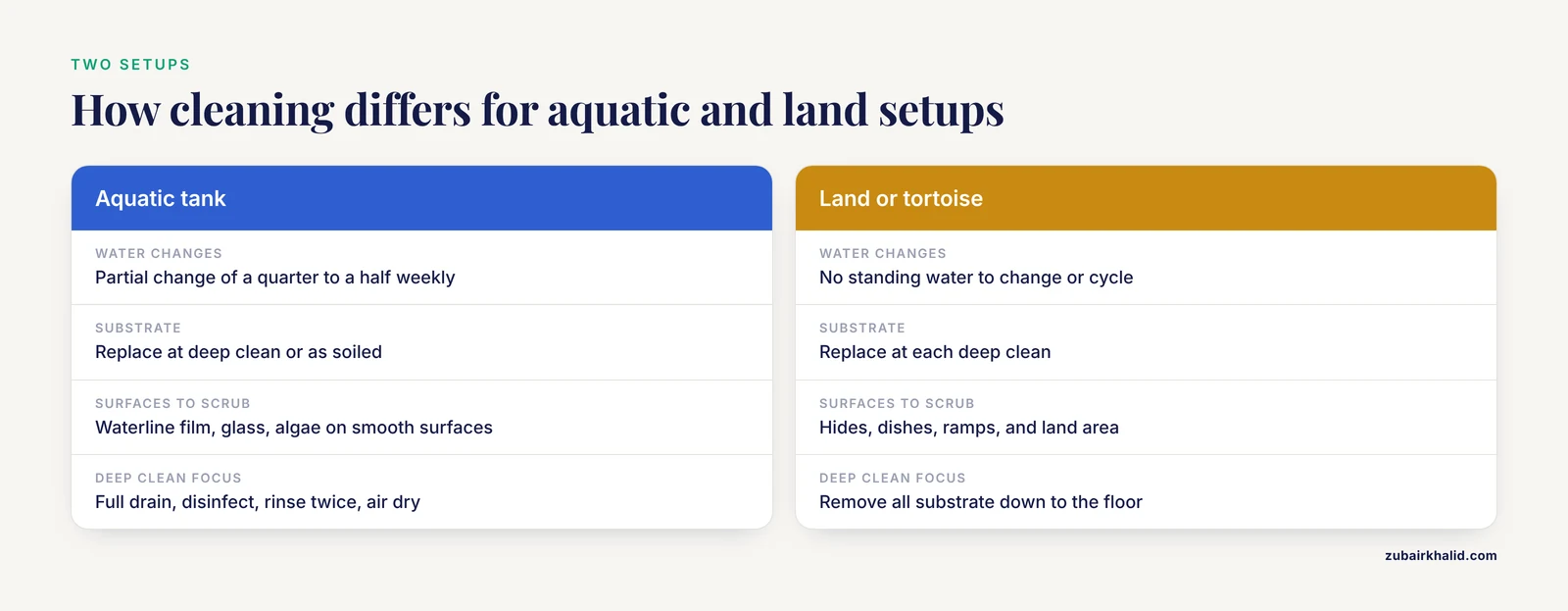
The structure is similar but the emphasis differs. Terrestrial setups need daily spot cleaning of feces and food, regular washing of food and water dishes, and substrate replacement at each deep clean because damp or soiled substrate supports bacterial and fungal growth. There is no standing water to cycle, but hygiene on land surfaces, hides, and dishes is just as consequential for health.
Why does my turtle tank smell even after I clean it?
Lingering odor usually means waste is trapped somewhere your routine misses, most often in substrate, inside the filter, under the basking dock, or in decomposing food behind decor. Deep clean those components, feed more precisely, and confirm your filter media has not gone anaerobic. A tank that smells within a day or two of cleaning also points to undersized filtration or overfeeding.
Should I remove my turtle during routine cleaning?
For daily spot cleaning and partial water changes, you usually do not need to remove the turtle if you can work around it safely. Remove the turtle for deep cleans, substrate changes, and any session involving disinfectants, since the animal should never contact cleaning chemicals. Use a secure, appropriately warm holding container every time you relocate the animal.
Sources
- Turtle care and husbandry.
- Biology and medicine of turtles and tortoises.
- INTESTINAL TYMPANY AND VOLVULUS IN CENTRAL AMERICAN RIVER TURTLES (DERMATEMYS MAWII).
- DEGENERATIVE CARDIAC DISEASE IN TWO SPECIES OF TORTOISE (CHELONOIDIS NIGRA COMPLEX, CENTROCHELYS SULCATA).
- Assessing the Current Landscape of Reptile Pet Ownership in Hong Kong: A Foundation for Improved Animal Welfare and Future Research Directions.
- A Survey Study of Veterinary Student Opinions and Knowledge about Pet Reptiles and Their Welfare.
- Quantification of sea turtle swimming patterns using a standardized arena to minimize effort in welfare assessment.
- ANALYSIS OF FATTY ACID PROFILES FOR EASTERN BOX (TERRAPENE CAROLINA CAROLINA) AND COMMON SNAPPING (CHELYDRA SERPENTINE) TURTLES IN WILD AND MANAGED CARE ENVIRONMENTS.
- Assessment of captive rearing conditions on loggerhead hatchlings: Effect of handling frequency and stocking density.
- Digital image processing: A new tool for morphological measurements of freshwater turtles under rehabilitation.
- Moving Toward Evidence-Based Care: Measuring Preferences in Zoo-Housed Aquatic Turtles Using 24-h Remote Monitoring.
- Behavioral Assessment of Six Reptile Species during a Temporary Zoo Closure and Reopening.