How Often to Clean a Crested Gecko Habitat: Cleaning Schedule
By Dr. Zubair Khalid, DVM, MS, PhD ·
A healthy crested gecko habitat needs three levels of cleaning on three different clocks. Spot clean waste, shed skin, and leftover food every day. Perform a working clean, which includes washing dishes, wiping surfaces, and refreshing substrate in soiled areas, once a week. Deep clean the entire enclosure, including all décor, hides, and the empty terrarium itself, roughly every four weeks or whenever odor, mold, or staining appears. This tiered crested gecko cage cleaning schedule keeps bacteria, fungi, and parasites from building up while avoiding the stress of unnecessary full teardowns.
Crested geckos (Correlophus ciliatus) are among the most popular pet reptiles in the United States, and research on the species notes that reptile and amphibian ownership continues to grow while many owners struggle with husbandry basics, which reduces quality of life and shortens lifespan. Hygiene is one of those basics. A enclosure that looks clean can still harbor microbial growth in humid hides, on silicone edges, and under substrate. This article walks through exactly what to clean, how often, and with what products, so your gecko's habitat supports a long, healthy life.
This article is educational and is not a substitute for veterinary diagnosis or treatment.
At a Glance: Your Cleaning Checklist
| Frequency | Task | Notes |
|---|---|---|
| Daily | Remove feces, shed skin, and uneaten food | Takes under five minutes |
| Daily | Refresh water dish and mist droplets | Rinse with hot water |
| Daily | Scan for mold, mites, or unusual odor | Early detection prevents bigger problems |
| Weekly | Wash food and water dishes with reptile-safe soap, rinse, dry | Use dedicated cleaning tools |
| Weekly | Wipe glass, leaves, vines, and hides the gecko has soiled | Spot replace substrate in soiled patches |
| Weekly | Check humidity gauge, temperature, and live plants | Correct husbandry reduces cleaning load |
| Every 4 weeks | Deep clean a crested gecko enclosure: full substrate change, disinfect décor, sanitize empty terrarium | Move gecko to a temporary container |
| Anytime | Clean immediately after illness, mites, or a vet-diagnosed infection | Discard porous items that cannot be disinfected |
Why Cleaning Frequency Matters for Crested Gecko Health
Reptile enclosures are warm, humid, and enclosed. That combination accelerates bacterial and fungal growth on every surface the gecko touches, from bark hides to the silicone corners of a glass terrarium. Feces left for more than a day in humid conditions feed mold and can raise ammonia levels in the air. Standing water in food dishes grows biofilm, a slimy bacterial layer that resists simple rinsing.
The veterinary literature on crested gecko care is consistent on one underlying point: husbandry quality drives health outcomes in this species. A study on crested gecko nutrition published in The FASEB Journal opens by observing that pet owners often struggle to maintain reptile well-being because of gaps in proper husbandry and nutrition, with consequences for quality of life and lifespan. Cleaning frequency sits squarely inside husbandry. Poor habitat hygiene contributes to skin infections, bacterial and fungal dermatitis, parasitic cycles, and respiratory irritation from ammonia and mold spores.
There is also a behavioral reason to keep a predictable routine. Crested geckos are territorial animals with individual behavior patterns. Research on cohabitated female crested geckos documented clear dominance hierarchies, with one female in each group consistently dominant and using specific zones of the enclosure more aggressively than others [1]. A gecko that knows its enclosure and its favored zones is more secure. Frequent chaotic teardowns disrupt scent trails and territory markers, while a steady schedule of small, quiet cleanings preserves the gecko's sense of place. This is why the answer to "how often to clean crested gecko habitat" is not "as often as possible." It is a balance between microbial control and behavioral stability.
How Often to Clean a Crested Gecko Habitat: The Three-Tier Schedule
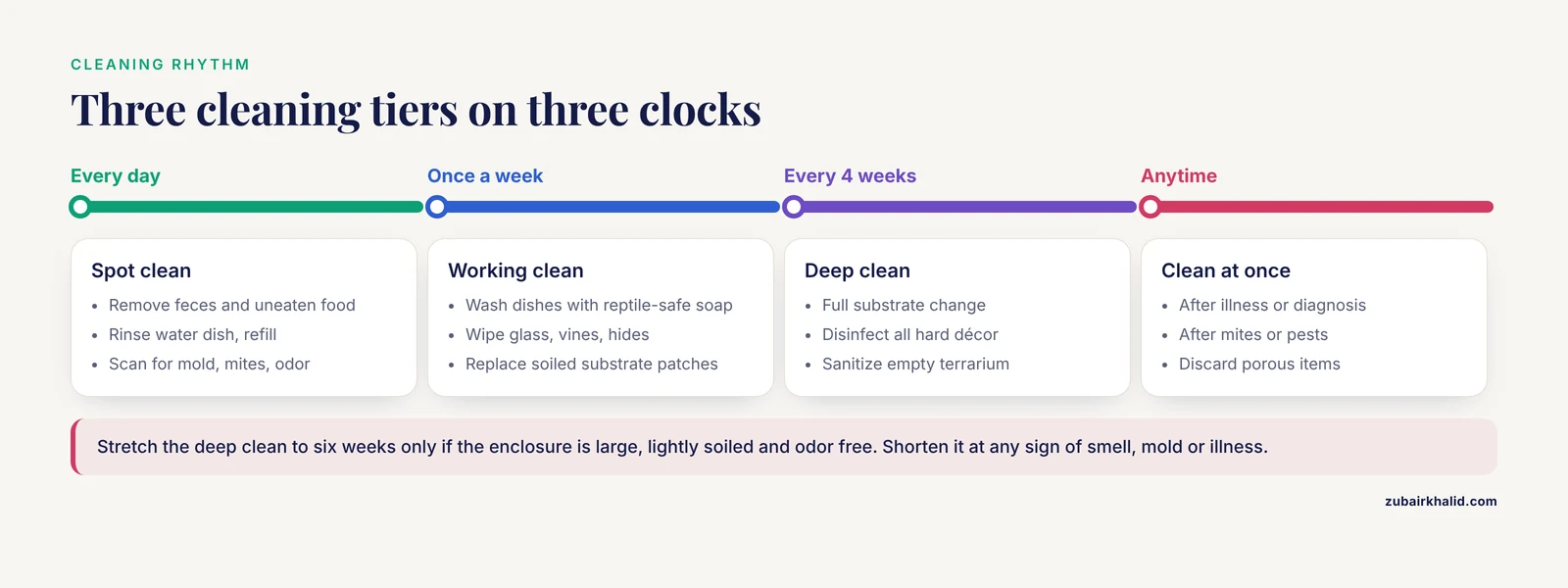
Most reptile husbandry guidance, including resources from the Association of Reptilian and Amphibian Veterinarians (ARAV) and the Merck Veterinary Manual's exotic animal sections, organizes enclosure sanitation into tiers rather than a single interval. Crested geckos need all three.
Tier 1: Daily Spot Cleaning (2 to 5 Minutes)
Crested geckos defecate in fairly predictable spots, often the same leaf or glass pane repeatedly, which makes daily spot cleaning fast. Each day:
- Remove any feces with a paper towel or dedicated scoop.
- Lift out uneaten food. Crested gecko diet powder, fruit mixes, and insect leftovers spoil quickly in a warm, humid enclosure.
- Rinse the water dish with hot water and refill. Scrub biofilm with a dedicated brush at least every other day.
- Wipe any smears on glass or leaves.
- Do a thirty-second visual scan for mold on substrate, mites on the gecko or wood, and unusual smell. A sour or ammonia odor means a deeper clean is needed sooner.
Daily removal of waste and food is the single highest-impact habit in crested gecko habitat hygiene. It denies bacteria and mold the moisture and nutrients they need and it breaks parasite life cycles before eggs become infectious.
Tier 2: Weekly Working Clean (20 to 30 Minutes)
Once a week, do a fuller pass while the gecko stays in the enclosure or, ideally, rests in a temporary holding container:
- Wash all food and water dishes with hot water and a reptile-safe dish soap or a dedicated reptile cleaning solution. Rinse thoroughly and dry.
- Wipe down vines, cork bark surfaces, leaves, and the glass with warm water or a reptile-safe wipe. Pay attention to surfaces with visible smears or saliva marks.
- Remove and replace visibly soiled patches of substrate rather than the full bed.
- Wipe the terrarium floor and any ledges where droppings accumulate.
- Inspect equipment. Clean misting nozzle tips, check that the humidity gauge reads accurately, and confirm heat sources are safe.
- Rinse live plants gently with water if they have dust or gecko droppings on them.
Weekly cleaning keeps the enclosure presentable and hygienic without full disinfection, which is hard on both the gecko and the beneficial microfauna in planted setups.
Tier 3: Monthly Deep Clean (1 to 2 Hours)
Deep cleaning a crested gecko enclosure means emptying it completely, disinfecting every hard surface, and replacing the substrate. Most keepers do this every four weeks. Stretch it to six weeks only if the enclosure is large, lightly soiled, and odor free, and shorten the interval immediately if you smell anything, see mold, or your gecko has been ill.
Deep Cleaning a Crested Gecko Enclosure: Step by Step
Step 1: Prepare a Temporary Holding Area
Set up a ventilated plastic container or spare enclosure with paper towel lining, a small hide, and a clamp lamp or room-temperature spot in the appropriate range. Crested geckos tolerate short transfers well if the container is dark and secure. Do not place the holding container in direct sun or near a heat source that could overheat it.
Step 2: Remove the Gecko Gently
Crested geckos can jump and may drop their tail if grabbed by it. Support the body from below or let the gecko walk onto your hand or into the container. Research on captive crested gecko behavior shows that individuals in the same enclosure differ markedly in temperament and dominance, so a submissive or nervous gecko may need slower, calmer handling during transfers [1]. Move one gecko at a time if you house more than one, and return each to its established enclosure rather than mixing them.
Step 3: Remove Everything From the Terrarium
Take out all substrate, décor, dishes, plants, and equipment. Dispose of the old substrate in a sealed bag. If you are troubleshooting mites or a persistent smell, bag the substrate outside the living area to avoid spreading particles indoors.
Step 4: Sort Décor Into Disinfectable and Disposable
Hard, nonporous items (glass, ceramic, smooth resin, sealed stone, plastic plants) can be washed and disinfected. Natural wood, cork bark, and porous items can be scrubbed and baked or disinfected, but after a mite outbreak, a fungal problem, or an illness, replacing porous items is safer than trying to disinfect them. Live plants stay out of disinfectants entirely. Rinse their leaves, inspect them, and set them aside.
Step 5: Scrub Before You Disinfect
Disinfectants work poorly on visible grime. Scrub every hard item with hot water and a dedicated brush to remove organic debris first. Use tools reserved only for reptile cleaning, never kitchen sponges that also touch human dishes.
Step 6: Disinfect
Apply your chosen disinfectant to all hard surfaces, keep surfaces visibly wet for the full contact time on the product label, then rinse thoroughly with clean water. For the empty terrarium itself, disinfect the floor, walls, silicone seams, and the mesh lid frame. Mesh lids can be scrubbed with hot water and dish soap and disinfected carefully, since rusting frames are a common hiding place for grime.
Step 7: Rinse and Dry Completely
Residual disinfectant fumes and film irritate reptile skin and airways. Rinse everything until no scent remains, then air dry fully. Drying is part of disinfection, because many microbes survive longer on damp surfaces.
Step 8: Reassemble With Fresh Substrate
Add new substrate, reinstall décor in a familiar arrangement, return hides and plants to their usual positions, and refill dishes. Familiar placement matters. Studies of crested gecko behavior in captivity show that individuals use enclosure zones predictably, and aggressive or dominant interactions cluster in specific areas [1]. Keeping the layout stable after a deep clean helps a cohabitated group settle back in without renewed tension.
Step 9: Return the Gecko and Monitor
Place the gecko back in its enclosure during the evening, when crested geckos naturally become active. Mist lightly, confirm temperatures, and watch the gecko's first hour for normal climbing, exploratory behavior, and settling into a hide.
Safe Cleaning Products for Crested Geckos
Choosing disinfectants for a reptile enclosure is different from choosing household cleaners. Reptiles absorb chemicals through their skin and are sensitive to fumes in enclosed spaces.
Products widely used and considered appropriate in reptile husbandry:
- Dilute unscented household bleach. A common reptile-husbandry dilution is roughly one part bleach to ten parts water, applied to hard surfaces, kept wet for ten minutes or the labeled contact time, then rinsed exhaustively and air dried. Only use plain unscented bleach, never products with added fragrances, thickeners, or "no-splash" additives.
- Chlorhexidine solution. A disinfectant commonly used in veterinary clinics and reptile collections for hard surfaces and dishes. It is effective, generally less irritating than bleach when properly diluted, and still requires thorough rinsing.
- Commercial reptile-safe disinfectants. Products formulated for terrarium use are available at reptile retailers. Follow the label for contact time and whether rinsing is required.
- Plain hot water and dish soap. For routine washing of dishes and light wiping of décor, hot soapy water followed by a thorough rinse is sufficient and gentle.
- White vinegar diluted with water. Useful for dissolving hard water spots on glass. It loosens mineral deposits but is not a true disinfectant, so follow it with an appropriate disinfectant when deep cleaning.
- Steam. A handheld steam cleaner can sanitize glass, tile, and some hard décor without chemicals. Keep steam away from silicone seams, acrylic panels, and live plants.
Products to avoid in or around a crested gecko enclosure:
- Pine and cedar cleaners, and any product containing phenols or essential oils, which are toxic to reptiles.
- Ammonia-based cleaners, especially in a closed terrarium.
- Scented soaps, dryer-sheet-scented anything, and antibacterial products with added fragrances left as residue.
- Any aerosol spray used near the open enclosure.
Whatever you use, the rinse-and-dry step is nonnegotiable. A rule of thumb many reptile keepers follow: if you can smell the cleaner on a dry surface, it is not done being rinsed.
Special Situations That Change the Schedule
Bioactive and Planted Vivariums
A bioactive crested gecko vivarium uses live plants, a drainage layer, and a cleanup crew of springtails and isopods to break down waste biologically. These setups need less frequent full teardowns. Spot clean feces daily, maintain the cleanup crew population, replace portions of substrate annually or as needed, and deep clean only the glass, silicone, and equipment surfaces. Do not disinfect the inside of a bioactive enclosure with chemicals, because that kills the microfauna and microbial balance the system depends on.
After Illness or a Veterinary Diagnosis
If your crested gecko has been diagnosed with a bacterial, fungal, or parasitic condition, ask your reptile veterinarian for a disinfection protocol specific to that pathogen. In general, plan a full deep clean the day of diagnosis, again at the end of treatment, and possibly at intervals in between. Discard porous hides and wood that cannot be reliably disinfected. This breaks reinfection cycles, which are a common reason treatment appears to fail.
After a Mite or Pest Outbreak
Mites hide in silicone seams, lid frames, and wood grain. Deep clean, replace porous items, and consider treating surrounding surfaces. Repeat the deep clean on a shorter cycle for a few weeks, because mite eggs can hatch after the initial treatment.
Cohabitated Geckos
Although cohabitation of crested geckos is debated and female groups are commonly kept together, research shows that even female groups establish dominance hierarchies with a single dominant individual and consistent aggression zones within the enclosure [1]. Cohabitated groups produce more waste in shared zones and more stress-related soiling. If you house geckos together, spot clean more than once a day during high-activity periods and watch for bites or stress marks, which warrant separating the animals and consulting a veterinarian.
Quarantine Enclosures
Any new crested gecko should spend a quarantine period in a simple, easily disinfected setup, typically paper substrate and minimal décor. Quarantine tubs tolerate full disinfection after every cleaning, which is part of their purpose. Ask your veterinarian how long quarantine should last for your situation, since recommendations vary.
Equipment and Supplies Worth Having
You do not need much, but dedicated tools prevent cross-contamination between the enclosure and your kitchen:
- Two spray bottles, one for disinfectant and one for rinse water, clearly labeled.
- A soft-bristle brush and a dish brush reserved solely for reptile use.
- Paper towels and a scraper or old credit card for dried smears.
- Disposable gloves for deep cleans and any post-illness cleaning.
- A sealable container for substrate disposal.
- A spare ventilated holding tub with a hide for cleaning days.
- A reptile-safe disinfectant or chlorhexidine stock, stored per label directions.
Selection criteria are simple: dedicated tools, nonporous surfaces wherever possible, and products with a listed contact time you can actually follow.
Common Mistakes in Crested Gecko Habitat Hygiene
- Waiting for smell. By the time an enclosure smells, microbial load is already high. Smell is an alarm, not a schedule.
- Disinfecting without scrubbing first. Organic film blocks disinfectants from reaching surfaces.
- Skipping the rinse. Residue from bleach or other disinfectants harms skin and mucous membranes.
- Cleaning midday with the gecko in the enclosure. Crested geckos rest by day. Move them to a holding container so they are not stressed by spraying and scrubbing above their heads.
- Leaving leftover crested gecko diet in place overnight, repeatedly. Mixed powder and fruit diets ferment quickly. Remove within a few hours of feeding.
- Using kitchen sponges and sinks interchangeably with reptile tools. Salmonella risk runs in both directions.
- Tearing down and bleaching everything weekly. Overcleaning stresses the gecko, destroys established scent cues, and is unnecessary when daily spot cleaning is done well.
- Ignoring the lid and silicone seams. These hidden areas accumulate mold and harbor mites.
- Cleaning bioactive setups with disinfectant. This defeats the biological system and can crash the enclosure's balance.
- Not washing hands before and after contact. Reptiles can carry Salmonella, a zoonotic risk the CDC and AVMA highlight for all reptile owners. Wash hands after every enclosure interaction.
Troubleshooting Persistent Odor, Mold, and Staining
Persistent sour or ammonia smell despite daily cleaning. Check under hides and inside hollow cork, where waste accumulates unseen. If the substrate holds odor, replace it fully and deep clean. Confirm your ventilation is adequate, since stale, humid air traps odor and promotes mold.
White fuzzy growth on wood or substrate. Small patches of mold on wood can be scrubbed with vinegar solution and dried. Recurring mold means humidity is too high, ventilation is too low, or the piece should be replaced. Fuzzy growth on food remnants is expected spoilage and signals the food dish should be removed sooner after feeding.
Green or black staining on silicone and corners. This is often mildew embedded in silicone. Scrub and disinfect. If it returns, resealing or replacing the enclosure may be needed, because mold inside compromised silicone cannot be cleaned away.
Frequent soiling on the glass. Crested geckos often defecate from a favored perch. A paper towel or removable pad behind that spot simplifies daily cleaning.
Welfare and Safety Points
- Minimize handling stress during cleaning. Keep transfers brief, the holding container dark, and the return at a natural activity time.
- Protect the tail. Never restrain a crested gecko by the tail. Autotomy, tail loss, is permanent in this species.
- Temperature safety during cleaning. Do not leave the gecko in a holding container in direct sunlight or a hot car while you clean. Room temperature is fine for the duration of a deep clean.
- Chemical safety for you too. Wear gloves when using disinfectants, and ventilate the room. Bleach fumes affect the human cleaning as much as the gecko.
- Quarantine new animals. Cleaning routines are only as effective as quarantine. A new gecko introduced without quarantine can bring parasites into an otherwise well-maintained habitat.
- Weight and appetite monitoring as hygiene feedback. If a gecko eats well but loses condition, or defecation habits change suddenly, hygiene and husbandry review plus a veterinary exam are warranted. Nutritional research in this species emphasizes that gaps in husbandry and nutrition directly reduce quality of life and lifespan.
Limitations and When to Contact a Veterinarian
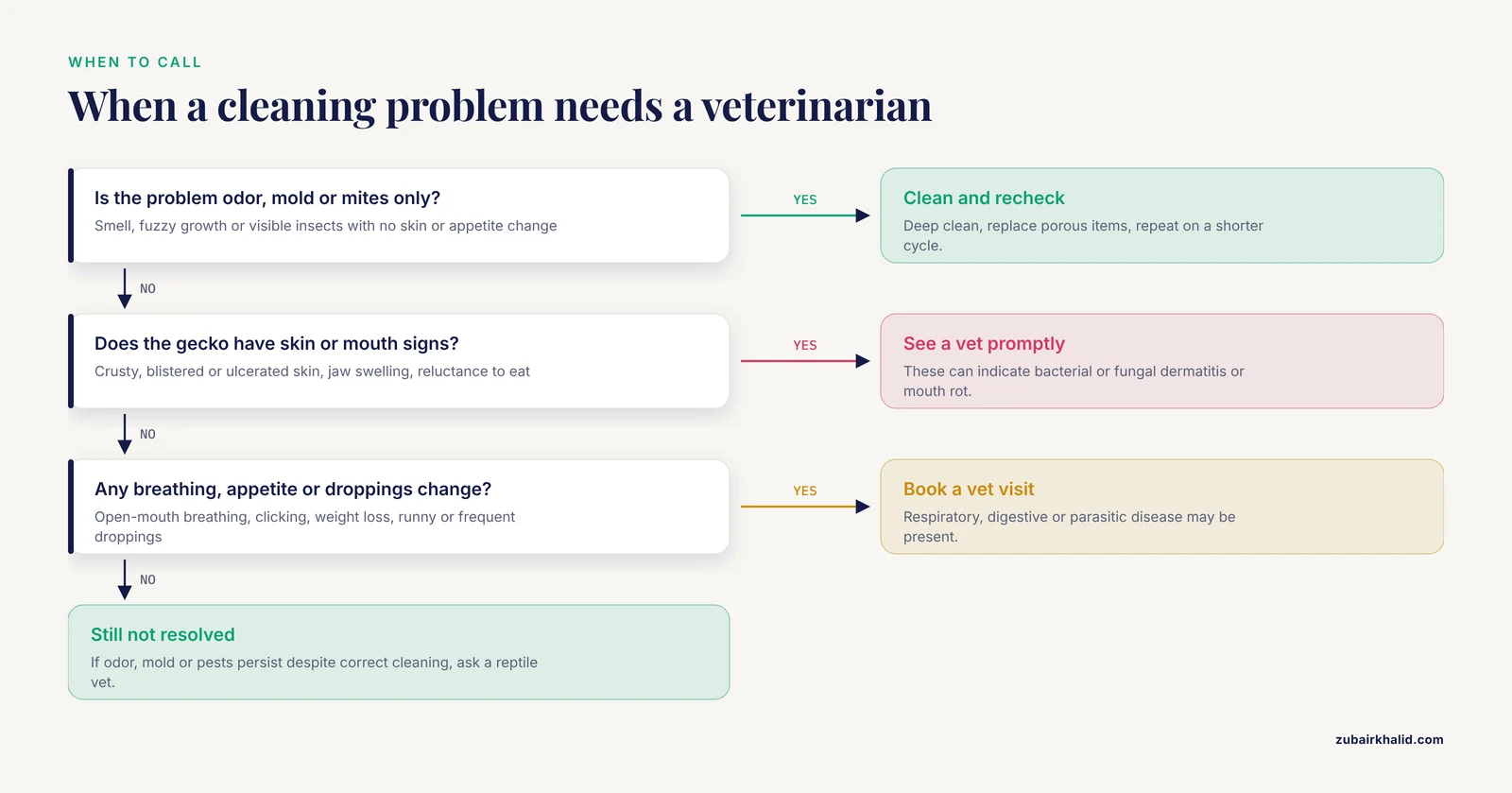
Cleaning schedules are husbandry guidance, not veterinary treatment. Individual cases need a reptile veterinarian, especially because crested gecko medicine depends on the specifics of your animal's history, enclosure, and local disease risks.
Contact a reptile veterinarian promptly if any of the following occur:
- Discolored, crusty, blistered, or ulcerated skin, which can indicate bacterial or fungal dermatitis.
- Lethargy, loss of appetite, or weight loss that persists more than a few days.
- Runny, foul-smelling, or unusually frequent droppings, which suggest digestive or parasitic disease.
- Respiratory signs such as open-mouth breathing, clicking sounds, or mucus around the nostrils or mouth.
- Visible mites or unusual insects in the enclosure.
- Mouth soreness, swelling of the jaw, or reluctance to eat, which can indicate mouth rot.
- Any situation where you cannot eliminate odor, mold, or pests despite correct cleaning, since an underlying health or husbandry problem may be present.
- Sudden aggression or hiding changes in a cohabitated group, since documented dominance dynamics in female crested geckos can escalate and require separation [1].
A veterinarian who sees reptiles can perform a fecal examination, skin cytology, and oral exam, and can advise on pathogen-specific disinfection after any diagnosis.
Frequently Asked Questions
How often should I fully clean a crested gecko enclosure?
Once every four weeks is a widely used deep cleaning interval, with daily spot cleaning and a weekly working clean in between. Shorten the interval if you notice odor, mold, mites, or illness.
Can I clean the enclosure while my crested gecko is inside?
Light spot cleaning is fine with the gecko inside, but for weekly wipe-downs and full deep cleans, move the gecko to a ventilated holding container to reduce stress and avoid spray contact.
Is vinegar safe for cleaning a crested gecko cage?
Yes, diluted white vinegar is safe for dissolving hard water spots on glass when the enclosure is empty, and it should be rinsed and dried afterward. Vinegar loosens mineral deposits but does not disinfect, so use a proper disinfectant for deep cleans.
Can I use bleach to clean a crested gecko habitat?
Yes, dilute unscented household bleach is a standard reptile-husbandry disinfectant when applied to hard surfaces in an empty enclosure, allowed the full contact time, rinsed exhaustively, and air dried. Never use scented bleach products and never leave residue behind.
How do I clean a bioactive crested gecko vivarium?
Spot clean daily, let the cleanup crew handle organic waste, maintain plants and microfauna, and deep clean only the glass, seams, and equipment. Do not apply chemical disinfectants inside a bioactive enclosure because they destroy the biological system.
Why does my crested gecko enclosure smell?
Odor usually comes from uneaten food, hidden feces under décor, saturated substrate, or poor ventilation. Remove food promptly, check under hides, replace substrate if the smell persists, and improve airflow.
How often should I change crested gecko substrate?
Replace soiled patches weekly and the full substrate bed during each monthly deep clean. Paper-based substrates in quarantine setups should be changed every few days or whenever soiled.
What cleaning products should I avoid around crested geckos?
Avoid pine and cedar products, phenols, essential oils, ammonia-based cleaners, and any scented cleaner. Reptiles absorb chemicals through their skin and are sensitive to fumes, so stick to hot soapy water, chlorhexidine, dilute unscented bleach, or products labeled for reptile use, always with thorough rinsing.