How Often to Clean a Corn Snake Habitat: Cleaning Schedule
By Dr. Zubair Khalid, DVM, MS, PhD ·
Spot clean your corn snake's habitat daily, replace soiled substrate weekly to monthly, and perform a full deep clean with disinfection every one to three months. Water bowls need washing every day or two because snakes often defecate in or soak in their water. This layered routine, called the corn snake cage cleaning schedule below, keeps waste, bacteria, and odors under control without constantly disrupting a snake that prefers a stable environment.
Cleaning frequency is not arbitrary. Snakes spend their entire lives in contact with the floor of their enclosure. Waste left in place raises ammonia and bacterial loads, feeds mold, attracts fungus gnats and mites, and can contribute to skin and respiratory problems. At the same time, over-cleaning, frequent total teardowns, and constant rearrangement create their own problem. Research using shed skin corticosterone as a measure of chronic stress in captive snakes, including corn snakes (Pantherophis guttatus), shows that the snakes' stress biology responds to how they are housed, and that species react differently to the same conditions [1]. A corn snake kept in a stable, well-maintained, enriched enclosure showed lower stress indicators than one kept in a bare, low-stimulus setup in that research [1]. The practical takeaway for owners is to clean predictably and thoroughly, not constantly.
Corn Snake Habitat Cleaning at a Glance
Use this checklist as your working schedule. Adjust for enclosure size, substrate type, and how much your individual snake soils its habitat.
| Task | Frequency | Notes |
|---|---|---|
| Remove feces, urates, shed skin, and uneaten prey | Daily or at first sighting | Use a scoop or tongs, spot-replace substrate |
| Wash and rinse the water bowl | Every 1 to 2 days | Snakes defecate and soak in water dishes |
| Wipe surfaces the snake soils | Weekly | Glass, hides, branch surfaces, cage furniture |
| Check humidity gauge, heater, and thermostat function | Weekly | Cleaning day is equipment-check day |
| Replace all substrate (partial or full change) | Every 4 to 8 weeks | More often if odor or dampness develops sooner |
| Deep clean and disinfect the entire enclosure | Every 1 to 3 months | Includes furniture, hides, décor, and disinfection with a reptile-safe product |
| Inspect for mites, mold, and pest insects | Every cleaning session | Early detection makes treatment far easier |
Why Cleaning Frequency Matters for Corn Snakes
A corn snake's enclosure is a closed system. Nothing leaves it unless you remove it. Urates and feces break down into ammonia and grow bacterial and fungal populations. Damp substrate from spilled water or a wet fecal spot molds within days. Prey remains left overnight rot quickly and attract pests.
Poor hygiene contributes to several of the most common health problems seen in pet snakes, including scale rot (ventral dermatitis), mouth rot, respiratory infections, and parasitic problems. Reptile veterinary organizations such as the Association of Reptilian and Amphibian Veterinarians emphasize that sanitation and husbandry are the foundation of reptile health, and the Merck Veterinary Manual's exotic animal resources describe unsanitary enclosures as a contributing factor in many reptile disease presentations. Husbandry problems, not infections alone, are behind a large share of illnesses in captive snakes.
There is also a welfare dimension that owners often miss. A study published in BMC Veterinary Research measured corticosterone, a stress hormone, in the shed skins of three commonly kept snake species, including corn snakes, housed either in bare rack tubs or in enriched terraria [1]. Corn snakes housed in rack systems showed higher shed corticosterone than corn snakes kept in enriched terraria, meaning the better-furnished environment was associated with lower chronic stress in this species [1]. Enrichment includes appropriate hides, climbing opportunities, and varied substrate. A cleaning routine that preserves a well-built habitat rather than constantly dismantling it supports that welfare advantage. Clean regularly and predictably, and put the habitat back together the same way each time.
The Full Corn Snake Cage Cleaning Schedule
Daily Tasks (5 Minutes or Less)
- Remove solid waste immediately. Corn snakes usually defecate within a day or two of eating, often in one corner of the enclosure. Lift the feces and urates with a substrate scoop or paper towel, then sprinkle a small handful of fresh substrate over the spot.
- Remove shed skin. Shed skin is harmless but traps moisture and looks unkempt. Take it out when you see it.
- Remove uneaten prey. Never leave a rodent prey item in the enclosure overnight. Unfinished prey rots, attracts pests, and the snake may be bitten by a defensive feeder. Frozen-thawed prey that goes uneaten after a reasonable interval should be discarded.
- Glance at the water bowl. If it contains waste, substrate, or film, swap it for a clean bowl. Wash the dirty bowl with hot water and dish soap, rinse well, and let it dry before its next use.
Daily observation doubles as a health check. While scooping, look at the droppings. Normal corn snake droppings combine a dark brown or black solid portion with a white chalky urate. Persistent diarrhea, undigested fur or bone, unusual color, or a sudden change in frequency are details worth reporting to a reptile veterinarian.
Weekly Tasks (15 to 20 Minutes)
- Wipe the enclosure surfaces. Use a damp cloth with plain warm water or a reptile-safe cleaning spray to clean the interior glass or panel surfaces where the snake has rubbed, smudged, or left urate marks. Wipe the exterior too.
- Spot-treat damp substrate. If any area feels wet from a spill or soaked urate, remove that patch and replace it even if the rest of the substrate is fine.
- Rinse and refresh humid hide substrate if used. Sphagnum moss in a humid box should be replaced when it darkens, smells, or grows discolored patches, which can happen in under a week in warm, moist conditions.
- Check equipment. Confirm the thermostat reads correctly against a separate thermometer, that the heat source is intact, and that the humidity gauge is responsive. Cleaning day is the natural time to catch a failing heat mat or a stuck hygrometer.
- Scan for mites and pests. Look around the eyes, along the belly scutes, and in substrate seams. Mites look like tiny moving black or red dots. Fungus gnats or phorid flies signal that organic material is accumulating somewhere it should not be.
Monthly Tasks: Substrate Change
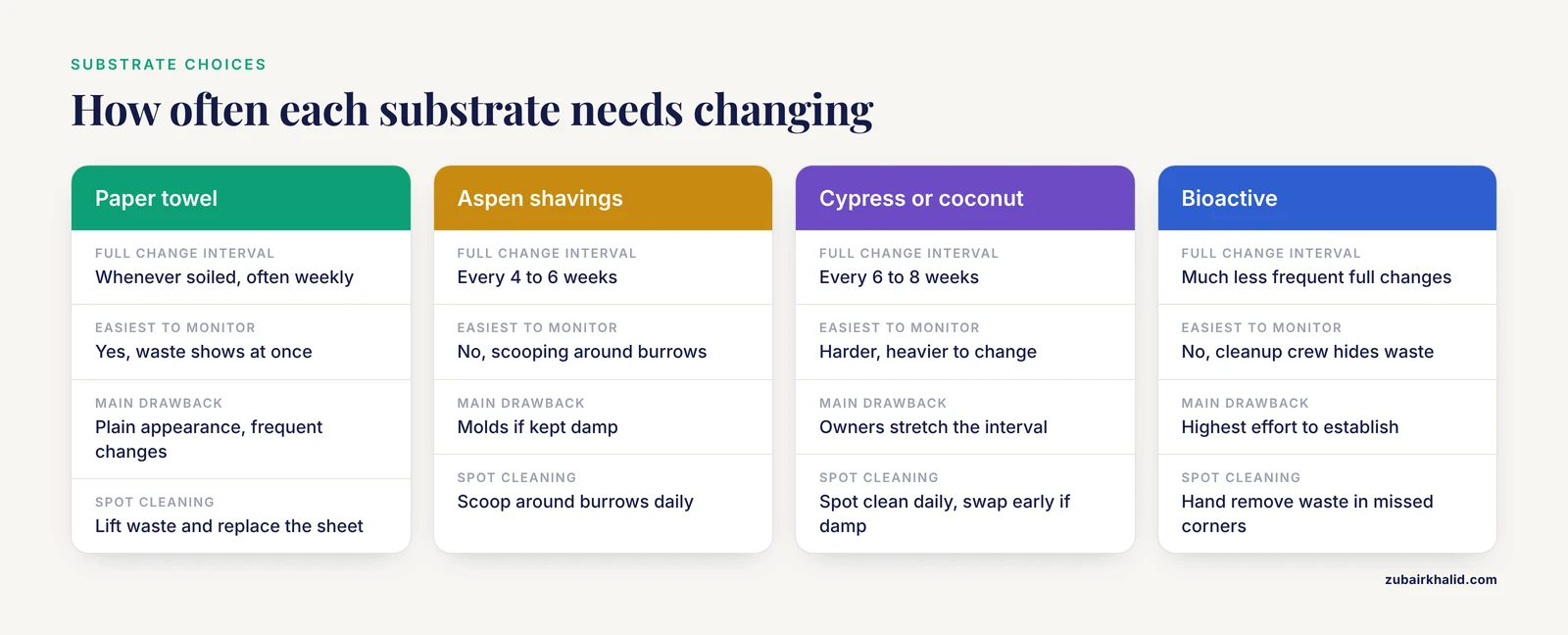
Every four to eight weeks, replace the substrate. The right interval depends on the material:
- Paper towel and newspaper: Replace entirely whenever soiled, which often means several times between monthly checks. Many keepers simply change paper weekly.
- Aspen shavings: Spot clean daily, full change every 4 to 6 weeks, or sooner if the bedding develops an odor, clumps from moisture, or molds.
- Cypress mulch or coconut fiber blends: Spot clean daily and change every 6 to 8 weeks. These hold up longer but should be swapped early if they stay damp.
- Bioactive setups with a cleanup crew: Springtails and isopods process waste, so full substrate changes are much less frequent. Even bioactive enclosures need surface maintenance, waste removal in corners the cleanup crew misses, and periodic checks of the drainage layer.
When changing substrate, remove and set aside the hides and décor so you can clean them, sweep or vacuum the empty enclosure floor, and note whether any corner is chronically soiled. A snake that consistently fouls one spot tells you where to focus spot checks and may be hinting that a hide or temperature gradient needs adjusting.
Every 1 to 3 Months: Deep Cleaning a Corn Snake Enclosure
Deep cleaning is the full teardown, disinfection, and reset. How often you deep clean depends on substrate type, enclosure size, and your snake's habits, but a reasonable default is every two to three months for mulch and fiber substrates and monthly to bimonthly for paper-based setups. Plan for the snake to spend an hour or more in a secure temporary container with a hide and air holes.
Step 1: Prepare. Gather a spare secure container, a scrub brush reserved for reptile use, rubber gloves, your chosen disinfectant, paper towels, and fresh substrate. Fill the temporary container with a hide and place it somewhere warm but out of direct sun.
Step 2: Move the snake safely. Support the snake's body fully, lift it calmly, and place it in the container. Never clean around a loose snake, and never leave a snake unattended in a room where it could escape.
Step 3: Strip the enclosure. Remove all substrate, hides, branches, the water bowl, and electronic equipment. Bag the old substrate and discard it. Wood and cork items get set aside for their own treatment.
Step 4: Clean before you disinfect. Scrub every surface with hot water and dish soap or a reptile-safe detergent to remove organic film. Disinfectants are deactivated by organic matter, so this physical cleaning step is what makes disinfection work. Rinse thoroughly.
Step 5: Disinfect. Apply a reptile-safe disinfectant to every interior surface, including the water bowl and nonporous décor. Leave the product in contact with the surface for the full contact time listed on its label. Contact time is the step owners skip most often, and it is the step that actually kills pathogens.
Step 6: Rinse and dry completely. Rinse every surface with clean water until no disinfectant residue or smell remains, then let the enclosure air dry. Residue and dampness both cause problems, the first through chemical irritation and the second through immediate humidity spikes and mold.
Step 7: Treat porous items. Hides, cork bark, and branches cannot be soaked in harsh chemicals. Scrub them with hot water and soap, rinse well, and either bake them at a low oven temperature until fully dry or place them in direct sunlight on a dry day to desiccate remaining organisms. Discard any wood item that is saturated, crumbly, or smells of mold.
Step 8: Reassemble deliberately. Rebuild the habitat with fresh substrate, and recreate the thermal gradient: a warm hide on the heat source side and a cool hide on the other. Keep the layout consistent with what the snake knows. Then confirm temperatures and humidity with your gauges before returning the snake.
Step 9: Return the snake and observe. Give the snake time to settle. Some tongue flicking and exploring is normal. Refusing to settle for more than a day, repeated escape attempts, or refusal of the next scheduled meal warrants a closer look at temperatures, hides, and stressors.
Safe Cleaning Products for Corn Snakes
Snakes are highly sensitive to fumes and residue because they breathe through a single lung pathway and rub their bodies across every surface. Choosing the right products and using them correctly matters as much as the schedule itself.
Products generally considered safe when used and rinsed correctly:
- Diluted unscented household bleach. A common reptile-keeping dilution is roughly a half cup of regular unscented bleach per gallon of water, applied for the labeled contact time, then rinsed thoroughly and dried. Bleach is effective and inexpensive but demands meticulous rinsing and full ventilation.
- Chlorhexidine solutions. Widely used in veterinary settings, chlorhexidine diluted per label directions is effective against a broad range of bacteria and is gentler than bleach. It still requires rinsing.
- Plain dish soap and hot water. Adequate for routine washing of bowls, glass, and décor before disinfection, and for weekly wiping when no illness is present.
- White vinegar. Useful for dissolving mineral deposits and water spots on glass and bowls. Rinse afterward.
- Commercial reptile habitat cleaners. Several products sold for terrarium cleaning are formulated for use around reptiles. Follow the label exactly, especially rinsing instructions.
Products and ingredients to avoid in or near the enclosure:
- Phenol-based disinfectants such as pine and some quaternary products. Phenols are toxic to reptiles and the residue is difficult to fully remove.
- Ammonia-based cleaners. Ammonia fumes irritate a snake's respiratory tract and mixing ammonia with bleach produces dangerous chloramine gas.
- Scented sprays, essential oil cleaners, and aerosol air fresheners. The volatile compounds in these products linger on surfaces and in the air. Never use them inside the enclosure, and avoid using them in the same room.
- Undiluted or residue-heavy disinfectant wipes. Convenient for human spaces, unsuitable for animal enclosures because of residue.
Three rules apply to every product. First, remove the snake before cleaning begins. Second, respect the contact time on the label, because a disinfectant wiped off immediately has not done its job. Third, rinse and dry completely before the snake returns. If you can smell the cleaner after the enclosure is rebuilt, you are not done rinsing or ventilating.
Substrate Choices and Their Cleaning Implications
The substrate you choose drives how often the corn snake habitat cleaning routine demands real work.
- Paper towel or newspaper is the most hygienic and easiest to monitor. It cannot hide mites, it shows waste immediately, and replacement takes seconds. The tradeoff is appearance and the need for more frequent changes.
- Aspen shavings allow natural burrowing, are lightweight, and dry quickly. They must be kept dry, because damp aspen molds. Spot cleaning requires scooping around burrows, which some snakes resent having disturbed.
- Cypress mulch and coconut fiber hold humidity well and look natural. They are heavier to change and more expensive to replace in bulk, so owners often stretch the interval. Resist that temptation if odor develops, since odor means the substrate is past due.
- Bioactive substrates with live plants and a cleanup crew of springtails and isopods break down waste continuously. This is the lowest-effort long-term option for waste management but the highest-effort to establish correctly, and it requires managing humidity, drainage, and plant health.
Whatever you choose, never use cedar or untreated pine products. The aromatic oils in these woods are respiratory and skin irritants for reptiles.
Common Mistakes in Corn Snake Habitat Hygiene
- Waiting for odor before cleaning. By the time an enclosure smells, bacterial and fungal loads are already high. Smell is a lagging indicator, not a trigger.
- Cleaning without the contact time. Spraying disinfectant and immediately wiping it away accomplishes little more than soap and water would.
- Insufficient rinsing. Bleach and detergent residues irritate reptile skin and airways. When in doubt, rinse again.
- Returning the snake to a wet enclosure. A damp environment right after cleaning spikes humidity, chills the snake on the cool side, and encourages mold. Dry first, then return the snake.
- Cleaning with the snake in the enclosure. This exposes the snake to fumes and handling stress and risks escape. Always move the snake to a secure temporary container for anything beyond spot cleaning.
- Neglecting hides and décor. The underside of a hide, the seam of a cork round, and the bark of a climbing branch hold feces, mites, and mold. Every deep clean must include them.
- Sharing equipment between enclosures. If you keep more than one reptile, assign each enclosure its own scoop, bowl, and brush. Shared tools transfer parasites and pathogens between animals.
- Complete teardowns too often. Stripping and rebuilding the habitat every week removes familiar scent cues and cover, which is stressful for a prey species. Follow the layered schedule instead. Predictable maintenance beats constant disruption.
- Ignoring equipment during cleaning. Heat mats under substrate can fail or overheat as substrate depth and moisture change. Check the thermostat against an independent thermometer on every deep clean.
- Handling the snake right after feeding for cleaning. Moving a snake during the first day or two after a meal can contribute to regurgitation. Schedule deep cleans so they do not coincide with the post-meal digestion period.
Troubleshooting Cleaning Problems
Persistent odor despite routine cleaning. Odor in a corn snake enclosure almost always traces to saturated substrate, waste under a hide, or a soiled water bowl. Lift every hide and check the substrate beneath. Replace the full substrate bed if the smell survives a spot clean.
Recurring mold or mildew. Mold means sustained dampness. Check the water bowl placement, since a spill-prone bowl on the substrate is a frequent culprit. Increase ventilation, remove the moldy patch with a generous margin of surrounding substrate, and recheck humidity targets.
Mites. Tiny moving dots on the snake, around the eyes, or clustered at water bowl edges indicate mites. Deep clean and disinfect everything, discard disposable substrate completely, treat the snake and enclosure with a reptile-appropriate mite product, and repeat treatment per the product's directions because mites have resistant life stages. Persistent infestations need veterinary guidance.
Fungus gnats or small flies. These breed in damp organic material. Dry out overwatered plants or damp substrate zones, remove decaying matter, and consider adding or boosting a springtail population in bioactive setups.
Mineral deposits and water spots on glass. White vinegar dissolves hard water scale safely. Apply, let it sit briefly, scrub, and rinse.
The snake soils the water bowl constantly. This is common and normal behavior. Simply plan on more frequent bowl changes and keep a rotation of two or three bowls so a clean one is always ready.
Housing, Welfare, and the Case for a Stable Clean Habitat
Housing quality is a welfare issue, not just a hygiene issue. The shed skin corticosterone research mentioned earlier demonstrated that corn snakes respond to their housing environment in measurable ways, with higher chronic stress indicators in bare rack housing than in enriched terraria [1]. That finding matters for cleaning because it reframes what an enclosure should be. A habitat with proper hides, substrate depth for burrowing, climbing structures, and a reliable thermal gradient is not decoration. It is part of the animal's physiological comfort.
For owners, this translates into a cleaning philosophy. Clean thoroughly on schedule, remove waste promptly, and disinfect periodically, but preserve the structure and scent landscape of the habitat between deep cleans. Return hides and décor to their familiar positions. Let the snake experience its enclosure as a stable, predictable territory rather than a space that is repeatedly dismantled.
The same research also showed that housing effects differ between species, with other snake species in the study responding differently to rack versus terrarium housing than corn snakes did [1]. That species-specificity is a reason to follow corn snake specific guidance rather than generalizing from other reptiles, and a reason to evaluate your individual animal's response to its setup rather than assuming one formula fits every snake.
Limitations and When to Contact a Veterinarian
This article provides general husbandry guidance for healthy pet corn snakes. Individual cases, especially snakes that are ill, newly imported, breeding, or immunocompromised, need a veterinarian's input, and a reptile veterinarian can tailor a disinfection protocol if your snake has been diagnosed with a specific infection or parasitic problem.
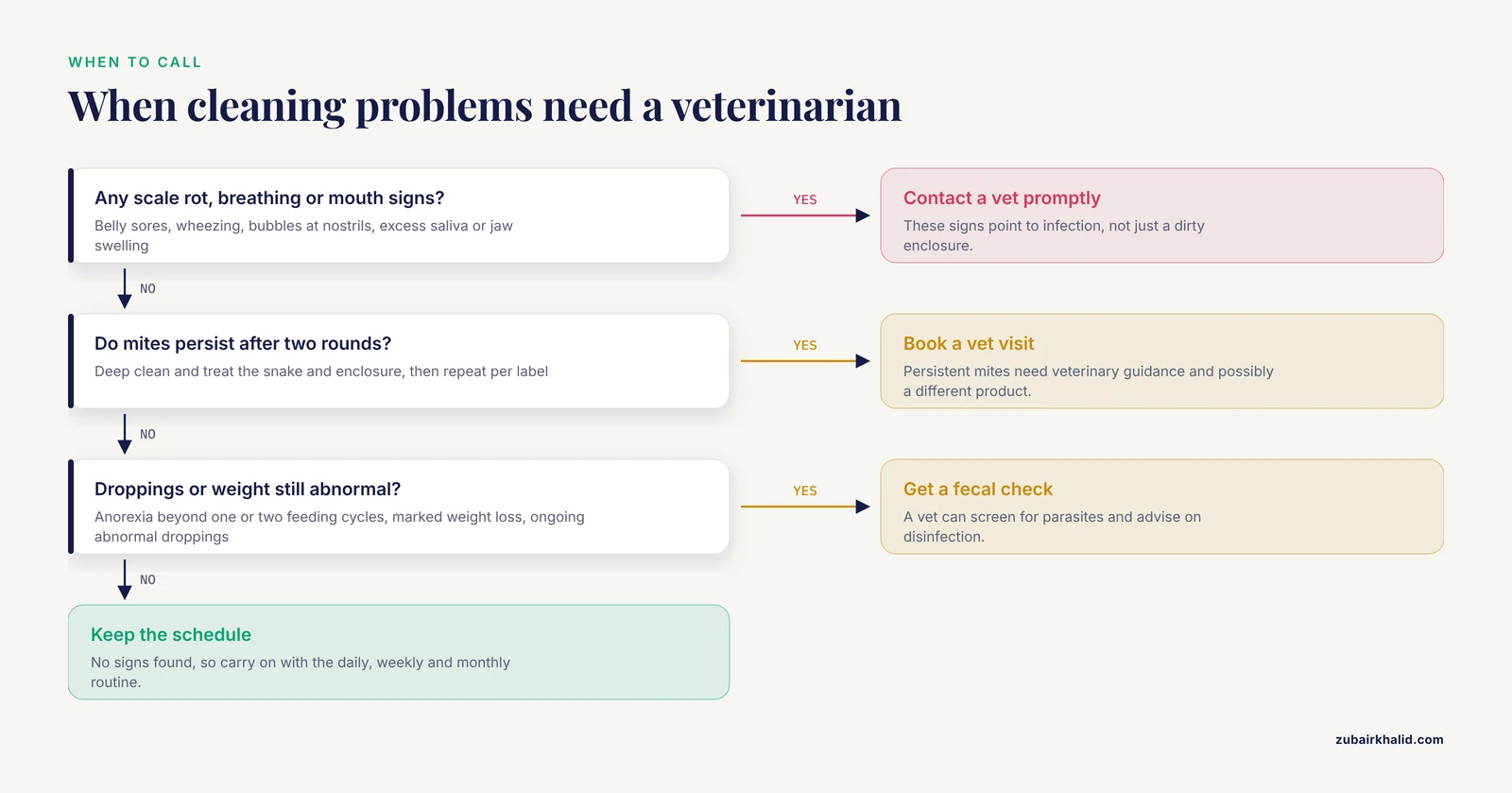
Contact a veterinarian promptly if you observe any of the following:
- Signs of scale rot, including reddish-brown discoloration, blistering, or sores on the belly scutes, especially in contact with persistently damp substrate.
- Respiratory signs, including open-mouth breathing, wheezing or clicking sounds, bubbles at the nostrils, or holding the head and neck upward while breathing.
- Mouth rot signs, such as excessive saliva, swelling of the gums or jaw, or inability to close the mouth normally.
- Mites that persist after two rounds of cleaning and treatment.
- Regurgitation, anorexia lasting more than one or two expected feeding cycles, marked weight loss, or abnormal droppings that persist beyond a single occurrence.
- Any snake kept in an enclosure you suspect was previously occupied by a sick animal, since thorough disinfection may still leave residual pathogens in porous décor, and a veterinarian can advise on testing and quarantine.
A reptile or exotics veterinarian can also run a fecal examination to screen for parasites, which is a reasonable step for any new snake and periodically for established ones, and can recommend disinfectants appropriate to any specific pathogen involved.
Frequently Asked Questions
How often should I spot clean a corn snake enclosure?
Spot clean daily. Remove feces, urates, shed skin, and uneaten prey as soon as you see them, and patch any damp substrate. Daily removal keeps bacterial and ammonia levels low and makes the monthly substrate change much easier.
How often does a corn snake enclosure need a full deep clean?
Deep clean and disinfect the entire enclosure, including hides and décor, every one to three months. Use the shorter interval for paper substrates or if your snake is recovering from illness, and the longer interval for well-managed mulch or fiber setups without odor or dampness.
What are safe cleaning products for corn snakes?
Diluted unscented bleach, chlorhexidine solution diluted per label, plain dish soap with hot water, white vinegar for mineral deposits, and commercial reptile habitat cleaners are all appropriate when the product is applied for its full contact time and rinsed completely. Avoid phenol and pine cleaners, ammonia products, scented sprays, and essential oil cleaners.
Can I use bleach to clean a corn snake tank?
Yes, diluted unscented bleach is an effective and commonly used reptile enclosure disinfectant. Apply the diluted solution for the labeled contact time, rinse every surface thoroughly with clean water until no smell remains, and let the enclosure dry fully before the snake returns.
Can I clean the enclosure while my corn snake is inside?
No. Remove the snake to a secure temporary container with a hide before cleaning. This protects the snake from fumes, chemicals, and stress, and prevents escape during open-door cleaning.
How often should I change the substrate in a corn snake cage?
Change paper substrates whenever soiled, aspen every four to six weeks, and cypress mulch or coconut fiber every six to eight weeks. Change any substrate early if it develops odor, dampness, or mold regardless of the calendar.
Is a bioactive corn snake enclosure easier to keep clean?
A properly established bioactive setup with springtails and isopods processes waste continuously, so it needs less frequent full substrate changes. It still requires daily spot checks, occasional hand removal of waste in corners, moisture management, and periodic monitoring of plant and cleanup crew health.
Do corn snakes carry diseases that make cleaning risky for people?
Reptiles can carry Salmonella bacteria, so wash your hands with soap and water after any contact with the snake, the enclosure, or cleaning tools, and keep enclosure cleaning supplies out of food preparation areas. Supervised hand washing for children after handling is a sensible precaution. Routine cleaning protects both the snake and the household.
This article is educational and is not a substitute for veterinary diagnosis or treatment.