Captive-Bred vs. Wild-Caught Reptiles: Key Differences
By Dr. Zubair Khalid, DVM, MS, PhD ·
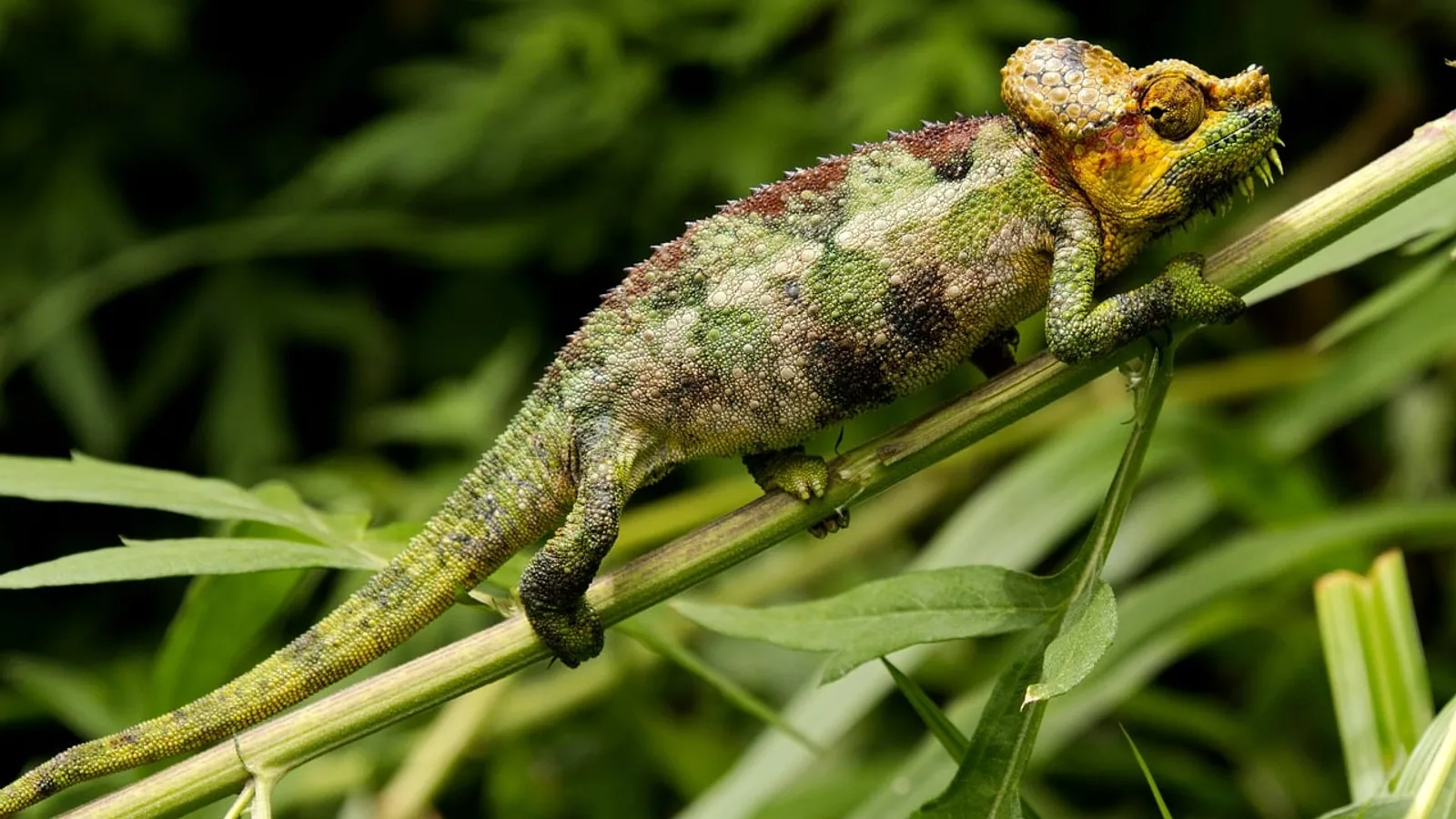
A captive-bred reptile was born and raised in captivity, while a wild-caught reptile was captured as an adult or juvenile in its native habitat and then imported or sold. That single difference drives most of what follows: parasite exposure, stress tolerance, feeding behavior, temperament, and the animal's value to conservation.
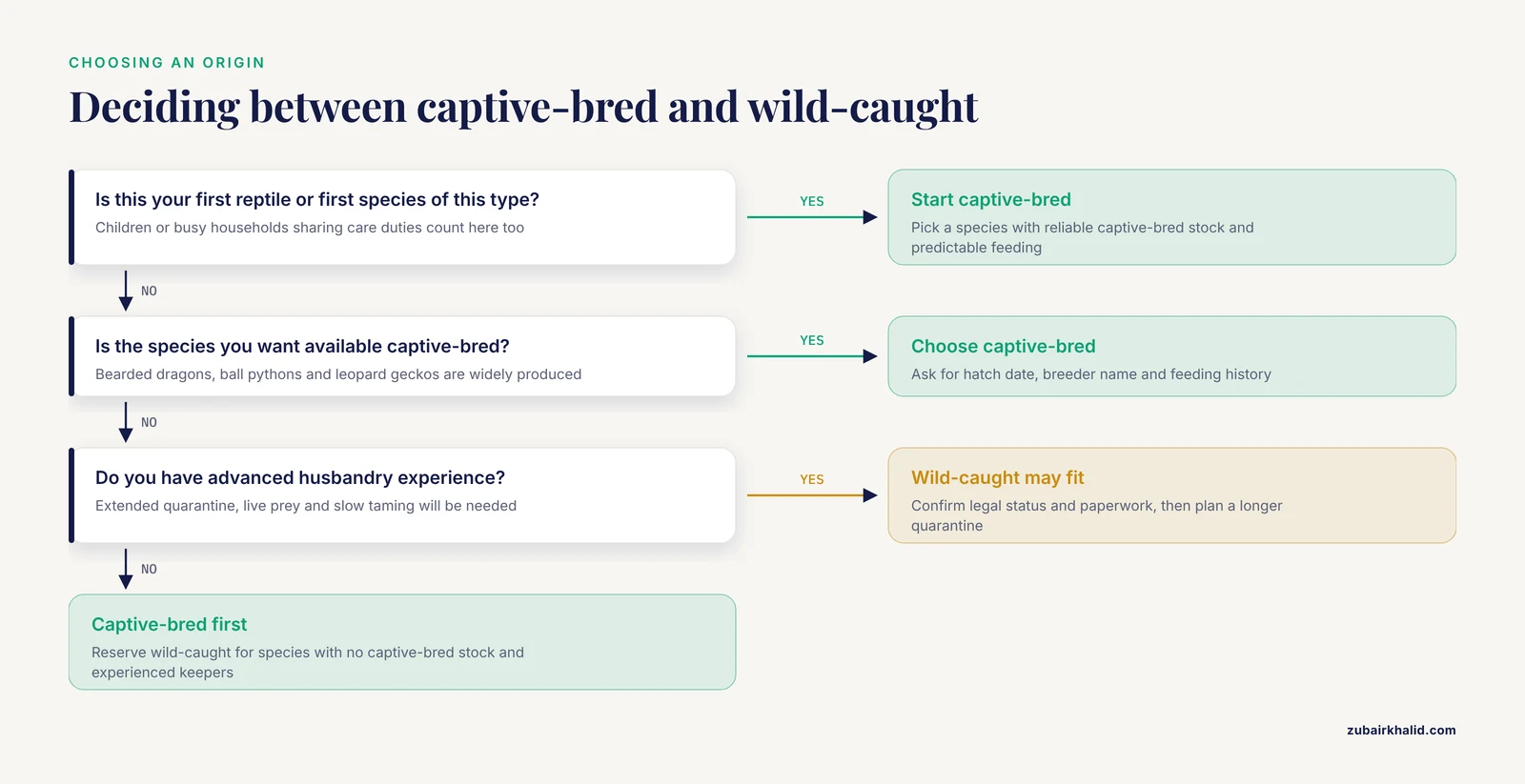
The rule of thumb for most first-time and intermediate keepers is simple. Choose captive-bred whenever the species you want is available captive-bred. Reserve wild-caught animals for situations where no captive-bred stock exists, where you have advanced husbandry experience, and where you are prepared for a longer quarantine and a slower taming process.
This article explains the difference between captive bred and wild caught reptiles, compares them side by side on the criteria that decide real purchases, and gives you a reptile care checklist you can use for either origin of animal.
What Captive-Bred and Wild-Caught Actually Mean
The pet trade uses several labels, and they are not interchangeable.
Captive-bred (CB or cbb, captive-bred and born) animals were born from parents that mated in captivity. Multi-generation captive-bred animals, sometimes labeled F2, F3, or higher, come from bloodlines that have reproduced in captivity for several generations. Many of the most popular pet reptiles, including bearded dragons, ball pythons, and leopard geckos, are overwhelmingly produced this way. An analysis of reptile pet trade trends found bearded dragons were the most popular pet reptile of the last decade, followed by ball pythons and leopard geckos, all species with well-established captive breeding networks [1].
Wild-caught (WC) animals were captured in their native range. They may have spent anywhere from a few days to several years in the trade before reaching you. Some sellers list animals as "long-term captive" or "established," meaning a wild-caught animal that has been in captivity long enough to feed reliably and stabilize, but its early history still matters for its health profile.
Ranched or farm-raised animals were usually collected as eggs or hatchlings from the wild and raised in captivity. They occupy a middle ground, and the label does not guarantee the same disease profile as true captive-bred stock.
Labeling is not always reliable. At a European exotic pet fair, more than half of the animals were labeled captive-bred, but information on origin was absent for nearly half of the individuals offered for sale [2]. In the international CITES trade database, researchers have documented significant discrepancies between what exporting and importing countries report, which makes origin claims difficult to verify independently [3].
Side-by-Side Comparison
| Criterion | Captive-Bed Reptile | Wild-Caught Reptile |
|---|---|---|
| Early life history | Born in captivity, known age in most cases | Unknown age, capture date, and history |
| Parasite burden | Lower, though not zero | Higher, with more zoonotic and latent infections documented |
| Bacterial exposure | Lower risk of importing multidrug-resistant organisms from the trade pipeline | Imported animals move through crowded shipment chains where resistant bacteria are documented |
| Feeding response | Usually established on prepared diets and frozen-thawed prey | Often needs live prey or species-specific foods, may refuse food for weeks |
| Temperament | More tolerant of handling from hatching | Defensive, flighty, or aggressive, taming takes months to years if it happens at all |
| Stress in captivity | Generally adapts to a prepared reptile enclosure setup | Chronic stress is common, can suppress immune function and feeding |
| Veterinary baseline | Easier to interpret, fewer confounding parasite effects | Blood values can be altered by infection and capture stress |
| Price at purchase | Often higher upfront | Sometimes cheaper upfront, higher downstream medical costs |
| Species availability | Limited to species that breed reliably in captivity | The only option for many rare, wild, or recently described species |
| Conservation impact | Low or no direct collection pressure | Depends entirely on species, source population, and trade volume |
Captive-Bred Reptiles Explained
Captive breeding is now the engine of the pet reptile hobby. In one major commercial supplier dataset covering more than 255,000 specimens over 16 years, roughly 34 percent of all listings were described as captive-bred, and that proportion increased over the study period [4]. In Thailand's CITES-reported imports of live reptiles and amphibians, 79 percent of individuals were declared captive-bred [3]. The trend is clear. The bulk of the modern trade in popular species is captive production, not collection.
Why captive-bred animals suit most owners
Known background. A reputable breeder can tell you the hatch date, feeding history, shed history, and parentage. That information lets your veterinarian interpret growth and bloodwork against a known timeline.
Established feeding. Captive-bred animals typically start on rodents, insects, or prepared diets in a home-like setting. A ball python that has eaten frozen-thawed rats since its first meal is far less likely to go off food than a wild-caught adult that has never seen a dead prey item.
Predictable temperament. Hatchling bearded dragons and leopard geckos handled from a young age tolerate interaction that would send a wild adult into defensive displays.
Lower, though not absent, parasite risk. Captive-bred does not mean parasite-free. In a UK survey of reptiles from pet shops, zoological collections, private collections, and research herpetariums, parasitic infections were detected in 21.1 percent of samples across 58 species, and both captive-bred and wild-caught animals were represented [5]. The direction of risk favors captive-bred animals, but every new reptile still needs a fecal examination.
When to use captive-bred
Choose captive-bred when any of the following apply to you:
- This is your first reptile or your first species of this type.
- You want an animal that will accept frozen-thawed prey and standard feeder insects.
- Children or busy households will share care duties, so predictability matters.
- You plan routine handling rather than a display-only animal.
- A reliable captive-bred source exists for the exact species or locality you want.
For the most in-demand species, captive-bred availability is essentially universal. The species that dominate trade listings are common in captivity precisely because they breed well, and analyses of trade data found that the most commonly listed taxa were rated by the IUCN as least concern [4].
Wild-Caught Reptiles Explained
Wild-caught animals remain part of the trade for several reasons. Some species have never been bred reliably in captivity. A captive breeding program for venomous Thai snakes at the Queen Saovabha Memorial Institute, started in 1994 with wild-caught founders, had produced successful breeding in only two species by the end of the initial study period, which shows how difficult captive reproduction can be even with institutional resources [6]. Collectors and institutions also seek wild-caught animals for genetic diversity in breeding programs.
The real costs of a wild origin
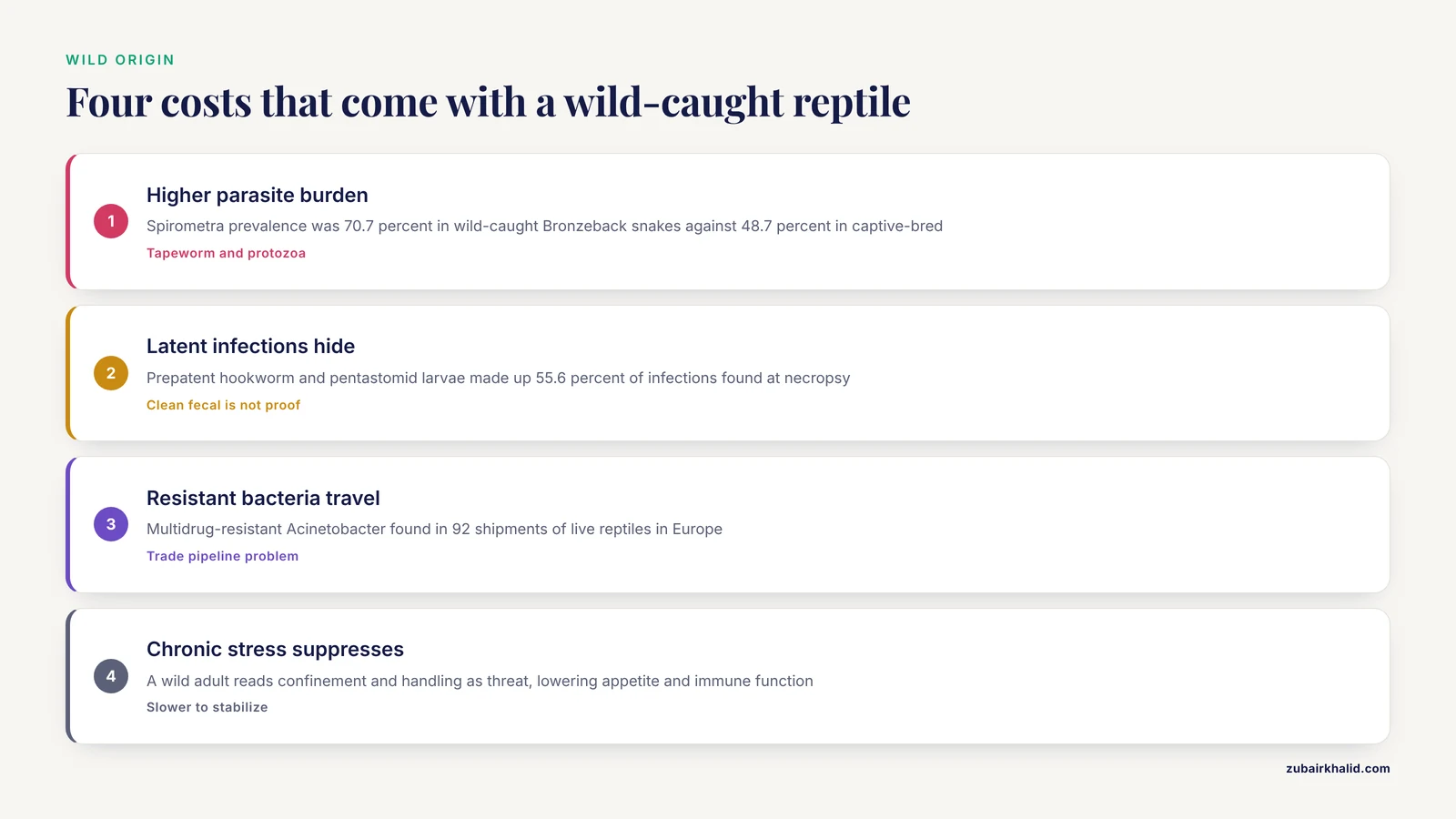
Parasite loads are higher and harder to clear. Wild-caught Indonesian Bronzeback snakes had a Spirometra tapeworm prevalence of 70.7 percent compared with 48.7 percent in captive-bred snakes from the same study [7]. In Asian water monitors examined in East Java, the overall sparganosis prevalence was 69.64 percent, with most larvae encysted in muscle tissue where they cannot be seen from outside the animal [8]. Hemoprotozoa tell the same story. In Brazilian rattlesnakes, 38.3 percent of wild-caught animals carried Hepatozoon infections while no captive-bred animal tested positive, and infected snakes had lower weight and length measurements plus increased immature red blood cells [9]. King cobras showed the same pattern, with Hepatozoon detected in 11 of 13 wild-caught snakes compared with 7 of 15 captive-bred snakes [10].
Latent infections hide from routine tests. The UK endoparasite survey found that necropsy revealed latent infections, including prepatent hookworm and pentastomid larval stages, which accounted for 55.6 percent of all parasitic infections detected. Real-time PCR also uncovered co-infections that microscopy missed [5]. In practical terms, a clean fecal test on a recently imported wild-caught animal does not rule out significant parasite burden.
Drug-resistant bacteria travel with imported animals. Sampling of 92 shipments of live reptiles at Europe's busiest transshipment point found multidrug-resistant Acinetobacter species in the animals, including strains resistant to six to ten substance groups in vitro and novel oxacillinase resistance variants [11]. This is a trade-pipeline problem that affects imported animals specifically.
Temperament and stress. A wild adult lizard or snake has spent its life avoiding predators. Confinement, handling, and visible room activity register as threats. Chronic stress can suppress appetite and immune function, and a stressed wild-caught animal is a harder patient to stabilize than a captive-bred one.
Bloodwork interpretation is harder. Baseline studies in species such as the Gila monster established hematology and biochemistry references using mostly wild-caught animals, which means a wild origin can confound how your veterinarian reads results [12]. A parasite-positive wild-caught snake can show elevated white cell and azurophil counts and altered fibrinogen, changes documented in infected king cobras [10].
When a wild-caught animal can be the right call
Experienced keepers choose wild-caught animals when the species is unavailable captive-bred, when a breeding project needs new bloodlines, or when the keeper specifically wants a wild-type animal and accepts the quarantine, acclimation, and feeding demands. Venom and danger matter here too. Institutions keep wild-caught venomous species because captive breeding of every species is not yet achievable, and those animals belong only in facilities with the training and containment to hold them [6].
Health Differences That Matter Most
The health gap between captive-bred and wild-caught reptiles is mostly a gap in what the animal carried on arrival.
Parasites. The UK survey identified strongylid nematodes as the most common findings, followed by ascarids and protists, and it detected zoonotic genera including Ophidascaris and Giardia in traded reptiles [5]. Spirometra, the tapeworm genus behind human sparganosis, was common in both wild-caught and captive-bred Bronzeback snakes in Indonesia, though wild-caught animals carried it more often [7]. These findings matter to your household because several reptile parasites are zoonotic, meaning they can infect people.
Viruses are not confined to wild origin. Inclusion body disease, a serious arevirus-associated disease of boids, was diagnosed in a group of palm vipers where six of eight affected animals were captive bred and only two were wild caught [13]. Buying captive-bred reduces certain risks but does not eliminate infectious disease, which is why quarantine applies to every new animal.
Bacteria. Imported animals arrive carrying organisms selected in crowded shipment and holding conditions. The multidrug-resistant Acinetobacter findings in imported reptiles included resistance to fluoroquinolones and colistin in some isolates [11]. Hygiene after handling and a veterinary relationship established before problems start are practical protections.
Physiology. Captive-bred animals in comparative studies showed hematological profiles consistent with better condition, including higher red blood cell values and lower percentages of stress-associated cell types in king cobras [10]. These differences give your veterinarian a cleaner baseline in a captive-bred patient.
Quarantine and the First Veterinary Visit
Every new reptile, regardless of origin, needs a quarantine period in a separate room with separate equipment and hand hygiene after every contact. The length of quarantine is a decision to make with your reptile veterinarian, based on the species, its origin, and your collection. Wild-caught imports generally justify a longer quarantine than a captive-bred hatchling from a local breeder.
Schedule a new-patient examination within the first week. A reasonable first visit includes:
- A full physical examination with weight, body condition scoring, and oral and cloacal inspection.
- A fecal parasite screen, repeated as your veterinarian directs, because prepatent infections and protozoa can be missed on a single sample [5].
- A husbandry review covering your reptile enclosure setup, temperatures, humidity, lighting, and diet.
- Baseline bloodwork in larger or expensive animals, interpreted with the origin of the animal in mind.
- A written feeding plan, especially for wild-caught animals that may refuse food initially.
Recheck timing depends on findings. A positive parasite screen typically calls for treatment followed by repeat fecal testing to confirm clearance, on a schedule your veterinarian sets for the specific parasite and species.
Reptile Enclosure Setup and Reptile Care Checklist
Origin changes the animal, not the fundamentals of care. Both captive-bred and wild-caught reptiles need the same core provisions, prepared before the animal comes home.
Reptile care checklist for any new reptile:
- Enclosure sized for the adult animal, secure and escape-proof.
- A thermal gradient with a basking zone and a cooler zone, verified with a thermometer at the surface, not just ambient air.
- Appropriate UVB lighting where the species requires it, replaced on the manufacturer's schedule.
- Species-correct humidity, measured with a hygrometer.
- Hides on both the warm and cool ends so the animal can thermoregulate without exposure.
- A water dish cleaned and refilled daily.
- Substrate chosen for the species and cleaned or replaced on a routine schedule.
- Feeder insects or prey items from reputable sources, gut-loaded where appropriate.
- A quarantine room and separate tools for the new arrival.
- A reptile veterinarian identified before the animal arrives.
For wild-caught animals, add these adaptations:
- A visual barrier or heavier cover on one side of the enclosure so the animal can hide from room traffic.
- Live prey or scent-based feeding techniques during acclimation, discussed with your veterinarian, until the animal accepts its normal diet.
- Minimal handling for the first weeks while the animal establishes feeding and normal behavior.
- Closer monitoring of weight, because stress anorexia and parasite burdens compound each other.
For captive-bred hatchlings, the enclosure setup can be finalized to adult standards from day one, and feeding routines usually start without acclimation delays.
Choosing Between Captive-Bred or Wild-Caught Reptiles: Three Scenarios
Scenario 1. A family wants their first lizard. A household with two school-age children wants a handleable lizard. The right answer here is a captive-bred bearded dragon or leopard gecko from a breeder or reptile-savvy store. Both species sit at the top of reptile pet popularity precisely because they breed reliably and tolerate handling [1]. A wild-caught animal of almost any species would be a poor match for young children and a first-time keeper.
Scenario 2. An experienced keeper wants a rare species. A keeper with a decade of experience wants a species for which no captive-bred stock is available in their region. A wild-caught animal is the only option. This keeper should budget for an extended quarantine, multiple fecal and blood parasite screens, species-appropriate live prey, and a long acclimation period with minimal handling. They should also confirm the legal status of the species, because over half of the species recorded at one European pet fair were listed in CITES Appendix II, and documentation of origin and legal status was frequently missing at the point of sale [2].
Scenario 3. A breeder wants new bloodlines. A ball python breeder wants to outcross into new genetics. Some importers offer wild-caught or ranched animals for exactly this purpose. The breeder should treat the arrival as the highest-risk acquisition in their collection, quarantine it far from the established breeding group, and screen thoroughly, because viral diseases such as inclusion body disease spread within collections and affect captive-bred animals as readily as wild-caught ones [13].
Common Mix-Ups and Mistakes
Assuming captive-bred means parasite-free. Roughly one in five samples in a mixed-origin UK reptile survey carried parasitic infections [5]. Captive-bred animals still need fecal screening.
Assuming captive-bred means disease-free. The palm viper inclusion body disease outbreak affected mostly captive-bred animals [13]. Quarantine every arrival.
Trusting origin labels without documentation. Origin information was missing for nearly half the animals at a major pet fair, and international trade data show reporting discrepancies between countries [2][3]. Ask for hatch dates, breeder information, and import paperwork where applicable.
Buying a wild-caught animal because it is cheaper. The purchase price can be the smallest line item. Diagnostic testing, repeat fecal exams, treatment, and the cost of live prey during acclimation often exceed the savings.
Underestimating acclimation. Wild-caught animals may refuse food for extended periods. Intervention windows and force-feeding decisions belong with your veterinarian, not with internet advice.
Skipping the veterinary visit because the animal "looks fine." Latent infections, including larval stages that stool tests miss, were a major finding in traded reptiles [5]. Appearance is not a diagnostic test.
Conservation, Welfare, and Legal Context
Owners reasonably ask whether buying wild-caught animals harms wild populations. The evidence is more nuanced than the debate suggests. An analysis of more than 255,000 specimens from a major US supplier and more than 85,000 specimens from European suppliers found that a small number of species dominated trade, that the most commonly listed taxa were rated as least concern by the IUCN, and that the major risks to reptiles in trade came from other drivers rather than pet collection for the dominant species [4]. At the same time, broader reviews of the global exotic pet trade found that traded reptile and mammal species were more likely to be threatened than expected by chance, and that trade often compromises animal welfare standards [14].
Welfare concerns begin at capture and transport. Research on moving captive-bred and wild-caught animals into new environments, drawn from reintroduction projects, found potential welfare problems in 67 percent of projects reviewed, with high mortality, dispersal, and disease among the most common issues [15]. A wild-caught pet reptile faces a compressed version of that same transition in your living room, which is another argument for experienced hands only.
Legally, CITES governs international movement of listed species, and many popular species fall under Appendix II [2]. In the United States, additional federal and state rules can apply to specific species, so verify requirements with your state wildlife agency and confirm import paperwork before purchasing any animal represented as imported. Accurate record-keeping also protects you. Because trade databases contain significant reporting discrepancies between countries, your own purchase documentation is the best record of where your animal came from [3].
Limitations and When to Contact a Veterinarian
Every reptile is an individual, and the patterns described here are population-level tendencies, not guarantees. Individual cases need a veterinarian, ideally one with reptile experience, and this article is educational and is not a substitute for veterinary diagnosis or treatment.
Contact a reptile veterinarian promptly for any of the following:
- Refusal to eat beyond the normal interval for the species and season, particularly in a newly acquired wild-caught animal.
- Regurgitation, stargazing, tremors, paresis, or unexplained sudden death in a collection, which warrants diagnostic workup and possibly a discussion of viral disease [13].
- Visible worms, larval stages in feces or vomit, or any skin lesion with a migrating tract.
- Diarrhea, unusually smelly or runny feces, or undigested food in stool.
- Open-mouth breathing, wheezing, or excess oral mucus.
- Lethargy with dehydration signs such as sunken eyes or tacky mucous membranes.
- Any bite or scratch from a reptile, or any exposure concern involving a household member who is immunocompromised, pregnant, very young, or elderly, given the zoonotic parasites and resistant bacteria documented in traded reptiles [5][7][11].
Frequently Asked Questions
Are captive-bred reptiles always healthier than wild-caught ones?
No, but they start with a large advantage. Captive-bred animals carry lower parasite and stress burdens on average, yet studies have documented infections and viral disease in captive-bred animals too, so every new reptile needs screening and quarantine.
Can a wild-caught reptile be tamed?
Sometimes, and usually slowly. Some wild-caught animals learn to tolerate handling over months or years, while others never do. Expect a long acclimation period with minimal handling and no guarantee of the outcome.
What does captive-bred mean on a label, and can I trust it?
It should mean the animal was born in captivity, but labeling is inconsistently applied and origin information was missing for nearly half the animals at one European pet fair. Ask for the breeder's name, hatch date, and documentation, and treat undocumented claims skeptically.
Do wild-caught reptiles carry diseases that can infect humans?
Yes, some can. Zoonotic genera including Ophidascaris and Giardia were identified in traded reptiles, and Spirometra tapeworms, which cause human sparganosis, were common in both wild-caught and captive-bred snakes. Wear gloves when cleaning waste, wash hands after handling, and keep reptiles away from food preparation areas.
Is buying wild-caught reptiles bad for wild populations?
It depends on the species and the fishery. Trade data show that the most heavily traded pet species are mostly least-concern species with rising captive-bred proportions, while rarer traded species can face greater risk. Research species-level collection pressure before buying any wild-caught animal.
How long should I quarantine a new reptile?
Long enough to complete initial health screening and observe normal feeding and defecation, with the specific duration set by your reptile veterinarian based on species and origin. Keep the new animal in a separate room with dedicated equipment and strict hand hygiene throughout.
Sources
- Using Google Trends to Determine Current, Past, and Future Trends in the Reptile Pet Trade.
- Composition and Legal Aspects of Reptiles and Amphibians Displayed at an Exotic Pet Fair in Warsaw (Poland).
- The role of Thailand in the international trade in CITES-listed live reptiles and amphibians.
- The commercial trade in exotic pets has had little impact on wild populations of reptiles and amphibians.
- A preliminary microscopic and molecular epidemiological survey of endoparasites within wild-caught and UK captive-bred reptiles: Assessing a potential parasitic disease public health risk?
- Venomous snake husbandry in Thailand.
- The medical relevance of Spirometra tapeworm infection in Indonesian Bronzeback snakes (Dendrelaphis pictus): A neglected zoonotic disease.
- Sparganosis (Spirometra spp.) in Asian Water Monitor (Varanus salvator): A medical implications for veterinarians, breeders, and consumers.
- Hepatozoon spp. (Apicomplexa: Hepatozoidae) infection and selected hematological values of the neotropical rattlesnake, Crotalus durissus collilineatus (Linnaeus, 1758) (Serpentes: Viperidae), from Brazil.
- Hematology, morphology, cytochemical staining, and ultrastuctural characteristics of blood cells in king cobras (Ophiophagus hannah).
- Imported Pet Reptiles and Their "Blind Passengers"-In-Depth Characterization of 80 Acinetobacter Species Isolates.
- Hematology, leukocyte cytochemical analysis, plasma biochemistry, and plasma electrophoresis of wild-caught and captive-bred Gila monsters (Heloderma suspectum).
- A disease resembling inclusion body disease of boid snakes in captive palm vipers (Bothriechis marchi).
- Global trade in exotic pets 2006-2012.
- Conflicting and complementary ethics of animal welfare considerations in reintroductions.