Can Bearded Dragons Eat Coconut Fiber? Substrate Safety
By Dr. Zubair Khalid, DVM, MS, PhD ·
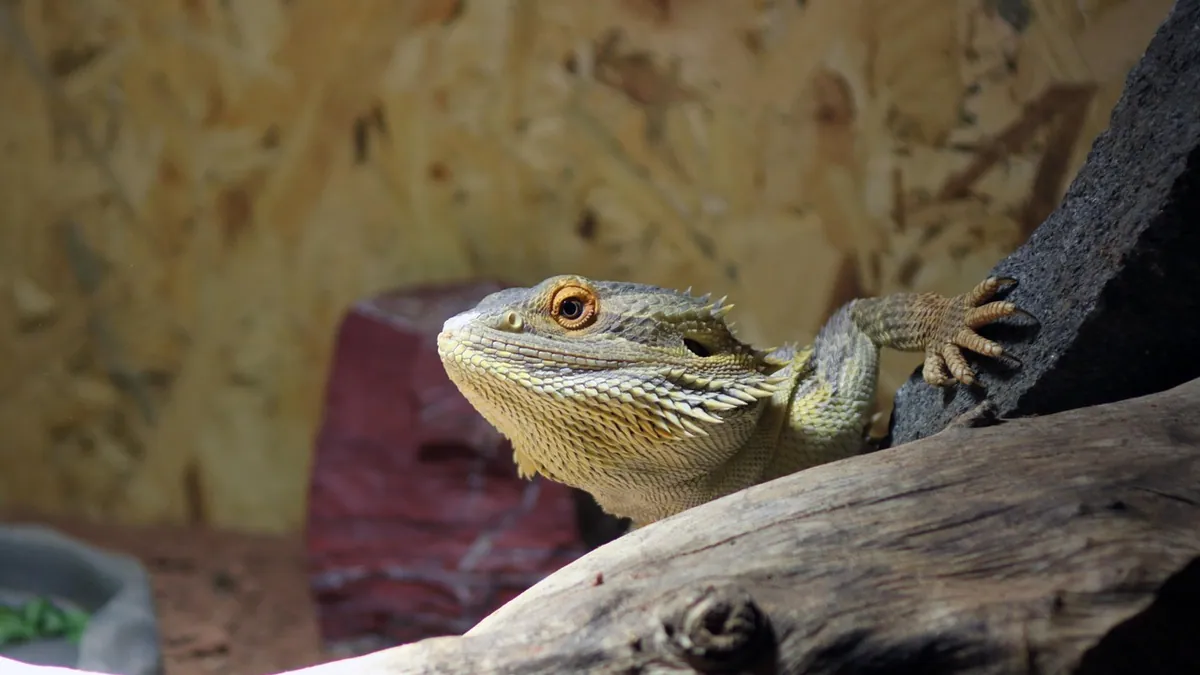
Can bearded dragons eat coconut fiber? No. Coconut fiber is a bedding material, not food, and bearded dragons should never eat it on purpose or by accident. When a bearded dragon swallows enough of it, the fiber can clump inside the digestive tract and cause a blockage called impaction, which is a serious and sometimes fatal problem. This article is educational and is not a substitute for veterinary diagnosis or treatment.
Quick Answer
- Coconut fiber is not toxic, but it is not digestible either. The danger is physical blockage, not poison.
- Impaction risk rises when a dragon eats substrate while hunting insects, when loose fiber sticks to food, or when a dragon with poor nutrition or low temperatures eats bedding out of curiosity.
- Small amounts may pass, but repeated or large ingestions can build up and block the intestines.
- If you see your bearded dragon eat coconut fiber, remove the substrate right away and watch closely for vomiting, straining, or a drop in appetite.
- Safer choices include solid, non-particle substrates such as tile, paper, or reptile carpet, especially for young, sick, or clumsy dragons.
Is Coconut Fiber Toxic to Bearded Dragons?
Coconut fiber itself is not a poison. It is the shredded husk of the coconut, sold as a loose bedding for reptiles, and it does not contain a chemical that harms bearded dragons directly. The problem is that it is meant to sit on the floor of the enclosure, not to go into the mouth.
There is no safe "food" version of coconut fiber. Some products mix coconut fiber with other materials, and some keepers use it in a bioactive setup where cleanup crews live in the soil. None of that changes the basic rule. Coconut fiber is a substrate, and a bearded dragon's digestive tract is not built to process it.
If your dragon eats a tiny strand that was stuck to a cricket, that is different from eating a mouthful of loose bedding. The risk depends on how much is swallowed, how often it happens, and the size and health of the dragon. A large, well-hydrated adult may pass a small amount. A baby, a sick dragon, or one kept too cool may not.
What Coconut Fiber Does Inside the Body
Coconut fiber does not dissolve. It absorbs moisture and can form a dense, matted mass. In the stomach and intestines, that mass can slow or stop the normal movement of food and waste. This is impaction.
Impaction is a mechanical problem. The gut cannot push the material through, so everything backs up. Pressure builds, the intestinal wall can become inflamed, and in severe cases the tissue can be damaged or rupture. A similar pattern has been documented in other reptiles and animals that swallow indigestible material. In loggerhead sea turtles that ingested large amounts of sea urchins, all of the turtles showed severe intestinal impaction, mainly affecting the colon and the lower small intestine [1]. The material was different, but the mechanism was the same. A solid mass blocked the gut.
Terrestrial reptiles also interact with man-made and natural debris in ways that can cause harm. A review of plastic pollution in terrestrial reptiles found that ingestion and entanglement have been documented across many species, and that these interactions are a recognized threat to reptile health [2]. Coconut fiber is not plastic, but the lesson is the same. Reptiles explore their environment with their mouths, and what goes in may not come out.
There is another layer of risk. A bearded dragon that is already unwell is less able to handle a blockage. In a study of 242 bearded dragons brought in for emergency care, lethargy and anorexia were the most common complaints, and dragons with those signs were less likely to survive to discharge [3]. A dragon that is already lethargic or not eating has less reserve to cope with an impaction on top of whatever else is wrong.
Signs of Impaction and Their Timeline
Signs can appear within a day or take several days to build. It depends on how much was eaten and how well the dragon's gut is moving.
Watch for these signs:
- No bowel movement for several days, or only small, hard stools
- Straining to defecate with little or nothing coming out
- Vomiting or regurgitating food
- Loss of appetite or refusing food
- Lethargy, hiding, or a sudden drop in activity
- A swollen or firm belly
- Weight loss over time
- Weakness or trouble moving the back legs in severe cases
Some of these signs overlap with other common bearded dragon problems. Lethargy and anorexia are two of the most frequent reasons bearded dragons end up in emergency care, and both are linked to a lower chance of surviving to discharge [3]. That does not mean every lethargic dragon has an impaction. It means these signs deserve a prompt veterinary visit, not a wait-and-see approach.
A dragon that stops pooping after eating substrate is a concern. A dragon that stops pooping, stops eating, and becomes weak is an emergency.
What to Do Right Now
If you saw your bearded dragon eat coconut fiber, act calmly and quickly.
- Remove all coconut fiber and any other loose substrate from the enclosure.
- Put the dragon on a solid, easy-to-clean surface such as paper towels or tile.
- Make sure the enclosure is at the correct temperature so the dragon can digest normally.
- Offer fresh water. A dragon that is dehydrated has a harder time passing anything.
- Do not induce vomiting unless a veterinarian tells you to. Vomiting can cause aspiration and other injuries in reptiles.
- Call your veterinarian, the ASPCA Animal Poison Control Center at (888) 426-4435, or Pet Poison Helpline at (855) 764-7661 for guidance.
The poison control lines are useful even though coconut fiber is not a classic poison. They can help you decide whether the amount eaten is a concern and whether you need to be seen right away. Your own veterinarian can examine the dragon, check hydration and body condition, and decide if imaging is needed.
Do not wait for signs to appear if you know a large amount was swallowed. Early evaluation is easier on the dragon and on you.
How Veterinarians Diagnose and Treat Impaction
Your veterinarian will start with a physical exam. They will feel the belly, check for dehydration, look at the mouth, and ask about appetite, bowel movements, and the enclosure setup.
Imaging is often the next step. Radiographs (X-rays) can show a gas-filled or dilated bowel, and they can help rule out other causes. Digital radiography is commonly used in bearded dragons, and studies have looked at how different systems and radiation doses affect image quality in these patients [4]. Your veterinarian will choose the technique that gives the clearest picture with the least radiation.
Ultrasound and blood work may also be used. Blood work can show dehydration, infection, or organ problems. In one reported case, a bearded dragon had a liver mass found during a routine exam, and blood biochemistry showed only mild changes [5]. That case was a tumor, not an impaction, but it shows why imaging and lab work matter. A swollen belly or a dragon that is not eating can have more than one cause.
Treatment depends on how sick the dragon is. Mild cases may be managed with fluids, warmth, and medications that support gut movement. More severe cases may need hospitalization, repeated fluids, and sometimes surgery to remove the blockage. There is no home remedy that safely clears a true impaction. Enemas and laxatives given without veterinary guidance can cause serious harm.
Outlook After Eating Coconut Fiber
The outlook is good if the amount eaten was small and the dragon is otherwise healthy. Many small ingestions pass with supportive care.
The outlook is more guarded if the dragon was already lethargic, not eating, or in poor body condition before the incident. In the emergency study of bearded dragons, poor body condition was linked to a lower chance of survival to discharge [3]. A dragon that is already behind the curve has less ability to recover from a blockage.
The best outcomes come from early recognition. If you notice the problem within hours and get veterinary advice, you have more options. If you wait until the dragon is weak and has not eaten for a week, treatment is harder and the risk is higher.
Prevention and Safer Substrate Choices
The simplest prevention is to stop using coconut fiber as bedding. This is especially true for baby bearded dragons, dragons that are sick, and dragons that are clumsy hunters.
Safer options include:
- Slate or ceramic tile, which is easy to clean and cannot be swallowed
- Paper towels or unprinted newspaper, which is cheap and lets you monitor droppings
- Reptile carpet, which is reusable and has no loose particles
- A solid, non-adhesive shelf liner, cut to fit the enclosure
If you want a naturalistic look, use a substrate that is designed to be safe and follow the manufacturer's guidance. Even then, feed your dragon in a separate container or on a solid surface so insects do not pick up bedding. Never leave loose substrate in a baby's enclosure. Babies are more likely to eat bedding by accident, and their small bodies have less room for error.
Good husbandry lowers the risk too. A dragon with correct temperatures, proper UVB, and a balanced diet is less likely to eat things it should not. For more on feeding, see Bearded Dragon Diet: Safe Foods, Insects, and Greens. For lighting and calcium, see Calcium Supplementation for Bearded Dragons: Preventing Metabolic Bone Disease. And for a full comparison of bedding options, see Bearded Dragon Substrate: Choosing the Best Bedding for Health and Safety.
Keep an eye on droppings. A change in poop is often the first sign that something is wrong. Healthy Bearded Dragon Poop: A Veterinary Observation Guide can help you know what normal looks like.
Limitations and When to Contact a Veterinarian
This article gives general information. Your dragon is an individual, and only a veterinarian who examines your pet can give you specific advice.
Contact a veterinarian the same day if:
- You saw your dragon eat coconut fiber and you are not sure how much
- Your dragon has not pooped in two or more days
- Your dragon is eating less than usual
- You see straining or a change in droppings
Go to an emergency clinic now if:
- Your dragon is vomiting or regurgitating
- Your dragon is weak, limp, or unable to move normally
- Your dragon's belly is swollen and firm
- Your dragon has not eaten for several days
- Your dragon is a baby and ate loose substrate
Schedule a routine visit if you want help choosing a safer substrate or if you have questions about your setup. A routine exam is a good time to review diet, lighting, and bedding before a problem starts.
Frequently Asked Questions
Can bearded dragons use coconut fiber as bedding?
They can live on it, but it is not a safe choice for most owners. The risk of accidental ingestion and impaction is real, especially for babies and dragons that are not feeling well. Solid substrates are safer and easier to monitor.
What should I do if my bearded dragon ate coconut fiber?
Remove the substrate, keep the dragon warm and hydrated, and call your veterinarian or a poison control line for advice. Do not try to make your dragon vomit. Watch for signs of a blockage and seek care if they appear.
How long does it take for impaction to show up?
Signs can appear within a day or take several days. The timeline depends on how much was eaten and how well the gut is moving. A dragon that stops pooping and stops eating needs veterinary attention.
Is coconut fiber the same as coconut coir?
Yes, coconut coir and coconut fiber are names for the same basic material. Both are loose, moisture-holding substrates that are not meant to be eaten. The impaction risk is the same.
Can a bearded dragon pass coconut fiber on its own?
Sometimes a small amount passes without problems. A large amount, or fiber that clumps, may not pass and can cause a blockage. If you are unsure, have your dragon checked instead of waiting.
Related Articles
- Bearded Dragon Diet: Safe Foods, Insects, and Greens
- Calcium Supplementation for Bearded Dragons: Preventing Metabolic Bone Disease
- Bearded Dragon Substrate: Choosing the Best Bedding for Health and Safety
- Healthy Bearded Dragon Poop: A Veterinary Observation Guide
- Bearded Dragon Care: Metabolic bone disease UVB D3 calcium protocol
- Bearded Dragon Care: Pyramiding & Shell Health Management
- Can Bearded Dragons Eat Wild Insects and Plants Outside?
- Can Bearded Dragons Eat Spinach? Oxalate Risks
- Can Bearded Dragons Eat Carrots? Prep, Frequency, and Risks
References
- Mortality associated with ingestion of sea urchins in loggerhead sea turtles (Caretta caretta): A case series. PloS one, 2019.
- Terrestrial reptiles and plastic pollution: a review. Environmental science and pollution research international, 2026.
- Bearded dragons (Pogona vitticeps) presenting for emergency evaluation with lethargy and anorexia are less likely to survive to discharge. American journal of veterinary research, 2026.
- Radiation Dose Reduction in Different Digital Radiography Systems: Impact on Assessment of Defined Bony Structures in Bearded Dragons (Pogona vitticeps). Animals : an open access journal from MDPI, 2023.
- Cholangiocarcinoma in a central bearded dragon (Pogona vitticeps): A case report. Australian veterinary journal, 2026.