Ball Python Healthy Weight: Body Condition and Weight Charts
By Dr. Zubair Khalid, DVM, MS, PhD ·
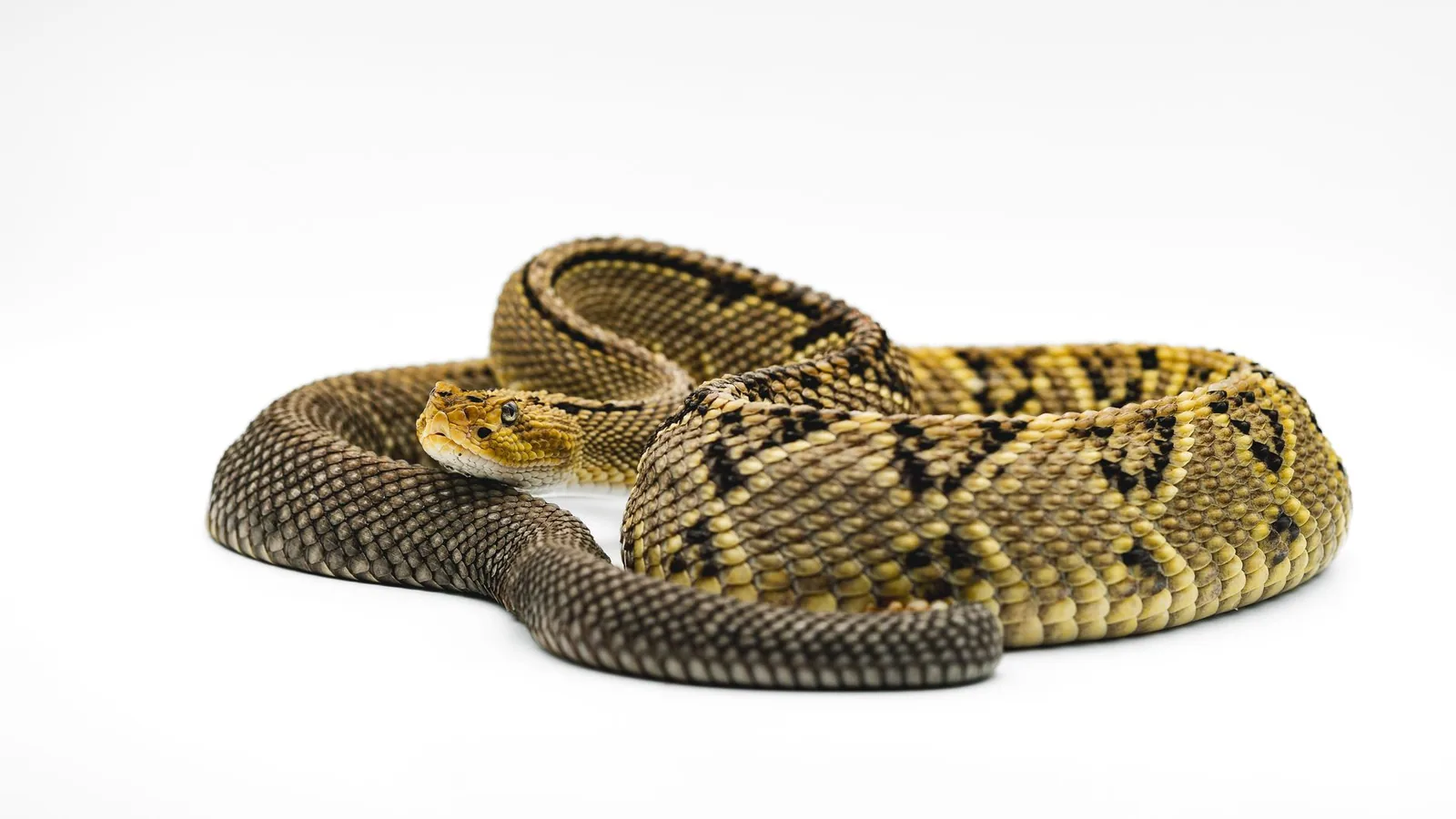
There is no single number on a scale that defines a healthy ball python. A healthy ball python carries a body condition score of about 2.5 to 3 on a 5-point scale, holds a stable weight trend across months, feels firm and muscular along the spine, and tapers smoothly toward the tail. Adult females are usually heavier and thicker than adult males, and a breeding female can gain substantially before ovulation without being overweight.
That is the short answer. The rest of this guide explains how to score your snake by hand, how to build a weight chart that actually means something, how to tell fat from follicles, and how to help an overweight ball python lose weight without triggering a hunger strike.
This article is educational and is not a substitute for veterinary diagnosis or treatment.
At a Glance
| Check | Healthy finding | Act if you see |
|---|---|---|
| Body condition score | 2.5 to 3 out of 5 | 1, 2, 4 or 5 |
| Spine feel | Rounded ridge you can find but not grip | Sharp and prominent, or impossible to locate |
| Cross-section | Rounded oval, widest at mid-body | Triangular, or flat and broad like a loaf |
| Skin when curled | Smooth, no deep creases | Deep folds and dimples at the neck and hips |
| Tail taper | Gradual, smooth taper to the vent | Abrupt cut-off, or a thin, wasted tail |
| Weight trend | Flat or slowly rising in adults | Rapid rise, or steady fall over 2 to 3 months |
| Feeding response | Consistent strike and swallow | Repeated refusals outside a known fasting season |
| Shed quality | Complete, one piece | Patchy sheds, retained eye caps |
A score of 2.5 to 3 is the target. Weigh and score on the same day each month and write both numbers down. A single weight is close to useless. A series of weights plus a hand score tells you what is happening.
What a Healthy Weight Actually Means in a Ball Python
The scale is only half the answer
Weight in grams tells you mass. It does not tell you whether that mass is muscle, fat, follicles, or a recent meal. A snake that just ate a large prey item can gain a visible percentage of its body weight in one feeding. A female in follicular development can gain hundreds of grams of reproductive tissue rather than fat. A dehydrated snake can lose weight while carrying the same fat reserves.
Body condition scoring is a palpation skill. You are feeling for the spine, the ribs, and the muscle blocks along the back, then judging the fat layer sitting over them. Once you learn the feel of your own snake at a good score, you can detect change long before the number on the scale becomes alarming.
Growth stages change the target
A hatchling ball python is lean and ribbon-like. It grows quickly through its first two years, and a rising weight is expected during that period. A juvenile that gains steadily while staying at a 2.5 to 3 score is doing exactly what it should.
Adults plateau. Once a ball python reaches mature size, its weight should be roughly flat for years, with small seasonal swings. A mature snake that keeps gaining month after month is taking in more energy than it uses. Slow, unexplained loss in a mature snake is a reason to call a veterinarian.
Sex matters too. Adult female ball pythons are typically longer and much heavier than adult males. Comparing your male to a friend's large female tells you nothing useful.
Weight is not the same as length
Body length and weight together give a better picture than weight alone. Measuring a ball python properly requires it to extend fully, and that matters for husbandry as well as data collection. A welfare assessment of more than 5,000 ball pythons across expositions and breeder videos found that most were kept in enclosures too small to let them extend to full and unrestricted natural length, and that many buyers could not recognize those unsuitable conditions themselves [1]. If your snake cannot straighten out in its enclosure, you cannot get a clean length measurement, and the animal also cannot express normal stretching and climbing behavior.
Ball Python Body Condition Score: How to Assess It at Home
Set up the assessment
Work on a flat, well-lit surface at room temperature, away from other pets. Let the snake move through your hands rather than gripping it. Assess three zones: just behind the head, at mid-body, and at the hip and tail base.
- Run your thumb and fingertips lightly down the spine from neck to vent. Note whether the spine feels like a rounded ridge or a sharp keel.
- Cup the body at mid-body with a loose hand. Feel for the ribs under the muscle. You should be able to detect them, but not count them individually with light pressure.
- Look at the cross-section from directly in front of and behind the snake. The ideal shape is a rounded oval.
- Curl the snake gently into a loose loop and watch the skin at the neck and mid-body. Deep creases and dimples suggest fat padding.
- Check the tail. A healthy tail tapers gradually. A suddenly narrow tail base on a thick body suggests fat storage concentrated forward of the vent.
The five-point body condition chart
| Score | Label | What your hands and eyes find |
|---|---|---|
| 1 | Emaciated | Spine and ribs sharp and prominent, no padding, loose skin folds, triangular cross-section, wasted tail |
| 2 | Thin | Spine easily felt as a ridge, ribs detectable with light pressure, muscle present but flat, minimal fat layer |
| 2.5 to 3 | Ideal | Spine found as a rounded ridge under a light fat layer, ribs not individually prominent, firm muscle blocks, rounded oval cross-section, smooth gradual tail taper |
| 4 | Overweight | Spine difficult to locate, ribs not detectable, visible fat rolls when curled, dimples and creases in the skin, broad flatter back |
| 5 | Obese | Spine cannot be found, prominent fat rolls at the neck and hips, very wide body, deep creases, tail base looks pinched relative to the body |
Use half scores when you are between categories. Take a photo from above and from the side each month on the same background. Photos catch changes the eye adapts to.
Score before feeding, not after
Score on an empty stomach, ideally three to five days after the last meal. A freshly fed snake will always read fatter at mid-body. Scoring after a meal is the most common reason owners convince themselves their snake is obese.
Do not confuse follicles with fat
Sexually mature females develop follicles before ovulation, and those follicles occupy space in the same region you are palpating for fat. Manual palpation is a poor way to tell the difference. A study monitoring follicular growth with ultrasonography found that manual palpation carried a 25% false-negative rate when compared with ultrasound [2]. If your female is gaining condition during breeding season and you are unsure whether you are feeling fat or developing follicles, that is a question for a reptile veterinarian with ultrasound, not a guess made at home.
How to Measure and Track Weight Correctly
Choosing a scale
Look for a digital kitchen or postal scale with these features:
- Capacity of at least 5 kg, since large adult females can exceed the range of small diet scales
- Resolution to 1 g, so small changes in juveniles are visible
- A tare or zero function, so you can subtract the weight of a container
- A flat, stable platform large enough for a coiled snake
- Battery or mains power that does not time out mid-weighing
A container with a lid and air holes makes weighing safer and calmer for the snake than an open bowl. Weigh the empty container first and subtract it, or zero the scale with the container on it.
Build a weight chart that works
The chart you need is a personal growth record, not a universal table. Downloadable species weight charts that give a single target number for every adult ball python are misleading because adult size varies with sex, lineage, and feeding history.
Record the following each month:
| Column | What to enter |
|---|---|
| Date | Same day each month |
| Weight | In grams, empty stomach |
| Snout-to-vent length | In centimeters, only if the snake can be straightened safely |
| Body condition score | Half-point precision |
| Last meal date and prey weight | In grams |
| Shed since last entry | Yes or no |
| Notes | Refusals, handling, enclosure changes, breeding activity |
Plot weight against date. In a juvenile, expect a climbing line that flattens as the snake matures. In an adult, expect a nearly flat line with small bumps after big meals and dips during seasonal fasting.
How often to weigh
Once a month is enough for a healthy adult. Weigh every two weeks during an intentional weight loss plan, and weekly for a juvenile that is refusing food or a snake recovering from illness. Daily weighing produces noise, not information, and adds handling stress.
Why the trend matters more than the number
Three months of data tells you direction. One month tells you almost nothing. A 40 g drop in a 2 kg snake after a skipped meal is normal. The same drop repeated for three months is a pattern that needs veterinary attention.
How Much Should a Ball Python Weigh?
There is no universal answer, and any chart that gives you one fixed number for all adults should be treated with suspicion. What you can do is judge your snake against three reference points.
Against itself. The most useful reference is your snake's own history at a good body condition score. If your adult male sat at a stable weight and a score of 3 for two years, that is his healthy range.
Against its sex and age. Adult females are typically longer and considerably heavier than adult males. Juveniles are lighter than adults of the same length. A young snake on a rising curve is not overweight just because the number is climbing.
Against its reproductive status. A female building follicles, ovulating, or recovering from egg laying will not fit her usual pattern. Follicular development, ovulation, and oviposition follow a seasonal sequence that can be tracked with ultrasound, and follicle diameter changes measurably across the breeding season [2]. Expect seasonal weight changes in breeding females and do not chase them with diet changes.
Prey size is a better day-to-day guide than a target weight. A feeder should leave a modest, temporary bulge at mid-body that is gone within a day or two. If the bulge is still visible three days later, the prey is too large or the feeding interval is too short.
Is My Ball Python Overweight?
Signs that point to excess fat
- Spine difficult or impossible to locate under light pressure
- Ribs not detectable at all
- Deep skin creases and dimples when the snake curls
- Fat rolls visible at the neck, mid-body, and just forward of the vent
- A broad, flat back rather than a rounded oval
- Body condition score of 4 or 5
- Continued weight gain in a mature adult that is not a breeding female
Signs that are often mistaken for obesity
A snake that looks thick right after a meal is not obese. A female in follicular development is not obese. A large, muscular adult female with a firm body and a locatable spine may simply be a big snake.
Some color morphs come with neurological signs that affect posture, coordination, and feeding. Spider ball pythons are frequently associated with wobble syndrome, and imaging studies have identified structural differences in the inner ear of spider morphs that are highly likely related to the condition [3]. A spider morph that is a messy feeder or has an odd body posture needs a husbandry and veterinary review, not a diet.
Why excess fat matters
Fat storage in reptiles is not inert. It changes how the body handles energy, affects breeding performance, and complicates physical examination. An obese ball python is harder to assess for follicles, harder to palpate for masses, and more likely to be fed on a schedule that keeps the problem going. If you suspect your snake is obese, ask your veterinarian to confirm the score and to check for underlying disease before you change the diet.
How to Help a Ball Python Lose Weight
Weight loss in reptiles should be slow. Aggressive calorie cuts in a ball python often produce a feeding strike, and a strike makes the plan impossible to follow. Aim for gradual change over several months and measure progress with both the scale and the body condition score.
Step 1: Confirm the problem
Get a body condition score from a reptile veterinarian or an experienced keeper who handles ball pythons regularly. Confirm that the snake is genuinely over-conditioned and not gravid, not post-meal, and not carrying fluid or a mass.
Step 2: Audit the current feeding plan
Write down every feeder given over the last three months, with the weight of each feeder in grams and the date. Total prey mass per month is the number that matters. Most overweight ball pythons are overfed on two fronts at once: feeders that are too large and intervals that are too short.
Step 3: Reduce total prey mass, not meal count
Keep feeding. Reduce the size of the feeder first, because a smaller prey item still triggers a full feeding response. If that is not enough, lengthen the interval between meals gradually rather than skipping meals outright. Move in small increments over weeks, not days.
Step 4: Weigh prey, do not eyeball it
A feeder that looks small can be dense. Weigh each feeder on the same scale you use for the snake. Prey weight in grams is the only way to know what you actually changed.
Step 5: Stop all casual extra feeding
No mid-week snacks, no second feeder because the snake still seems hungry, no feeding to encourage handling. Ball pythons are opportunistic feeders and will often accept food they do not need.
Step 6: Recheck every two weeks
Record weight, body condition score, and feeding dates. A slow, steady decline with the score moving from 4 toward 3 is success. A fast drop, lethargy, regurgitation, or a refusal to eat is a reason to pause and call your veterinarian.
Step 7: Fix the husbandry that supports activity
A ball python in a bare, restrictive enclosure has little to do. Behavior-based housing research compared conventional rack systems with furnished terrariums sized to each snake's body length, containing substrate, a hide, climbing opportunities, a water basin for bathing, an elevated basking spot, and live plants, and found the behavior spectrum differed between the two housing types [4]. More space and structure give a snake more opportunity to move, climb, and explore, which supports a weight management plan.
Housing quality also affects stress physiology, and the picture is not simple. A study measuring corticosterone in shed skins of captive snakes found species-specific effects of housing, with ball pythons in enriched terraria showing higher corticosterone concentrations than those in rack systems, while the pattern reversed in corn snakes [5]. That result does not argue against enrichment. It shows that a single hormone marker cannot be read as a simple verdict on housing. Use behavior, feeding response, shed quality, and body condition as your working signals, and let a veterinarian interpret lab results.
Step 8: Keep the plan boring
Consistency beats intensity. The snakes that do best on a weight plan are the ones whose owners make one small, measured change and hold it for two months.
Common Mistakes
- Scoring right after a meal. You will always overestimate body fat. Score on an empty stomach.
- Chasing a universal target weight. Adult size varies widely. Track your own snake.
- Cutting food to zero. Prolonged fasting to force weight loss risks a hunger strike and does not build better feeding habits.
- Using prey size by eyeball. Weighing feeders is the single most useful change most owners can make.
- Mistaking follicles for fat. Palpation is unreliable for this. Ultrasound is the accurate method [2].
- Blaming obesity for a feeding problem. A snake that refuses food is usually stressed or ill, not too fat to eat.
- Ignoring enclosure size. A snake that cannot extend fully cannot be measured properly and has limited opportunity for normal movement [1].
- Weighing daily. It creates noise and unnecessary handling.
Troubleshooting: When the Weight Is Going the Wrong Way
A juvenile that is not gaining
Check surface and ambient temperatures, hide security, handling frequency, and prey size. A juvenile that refuses food for more than a few weeks or is losing weight needs a veterinary examination.
An adult that stops eating
Seasonal fasting is common in adult ball pythons, especially males during breeding season. A fasting snake should hold its body condition score. If the score drops while the snake is fasting, or the snake loses weight steadily for more than two months, book an appointment.
A snake that eats but still loses weight
This pattern deserves a veterinary workup. Parasites, gastrointestinal disease, and other medical problems can produce weight loss despite a normal feeding response. Bring your weight chart and feeding log to the appointment.
A spider morph with poor coordination
Wobble syndrome can affect striking accuracy and swallowing. Structural inner ear differences have been identified in spider ball pythons and are highly likely related to the syndrome [3]. If your spider morph is struggling to eat, ask your veterinarian about feeding modifications rather than assuming the snake is being difficult.
A female that balloons during breeding season
Follicular development and ovulation involve real tissue growth that can be tracked with ultrasound [2]. Do not put a breeding female on a diet based on a seasonal gain. Confirm her reproductive status first.
Welfare and Safety Points
Enclosure size. The snake must be able to stretch out fully. A large share of the ball pythons assessed in trade settings were housed in enclosures that prevented this, and many owners did not recognize the problem [1]. Measure your snake and check the enclosure against that measurement.
Enrichment and behavior. Furnished terrariums with substrate, hides, climbing structure, a bathing basin, and plants produced a different behavior spectrum than rack housing in a direct comparison [4]. Normal activity supports conditioning and gives you more to observe.
Stress load. Shed-skin corticosterone responses to housing differed by species and did not point in one direction for ball pythons [5]. Judge stress from behavior, feeding, shedding, and weight trend together, not from one marker.
Handling during assessment. Support the body, avoid gripping behind the head, and keep sessions short. A stressed snake will not relax enough for a reliable palpation.
Hygiene. Wash hands before and after handling and keep the scale and container clean between snakes. Do not share equipment between animals without disinfecting it.
Limitations and When to Contact a Veterinarian
This guide gives you a framework for scoring and tracking. It cannot replace a hands-on examination, because individual snakes differ in size, sex, reproductive status, and medical history. If you are unsure about a score, that uncertainty is worth a phone call.
Contact a reptile veterinarian promptly if you see any of the following:
- Body condition score of 1, 2, or 5
- Steady weight loss over two months or more
- Weight loss despite a normal feeding response
- Repeated regurgitation
- Refusal to eat for more than a few weeks in a juvenile, or a fasting adult whose condition is dropping
- A female with a rapidly swelling body during breeding season who is not eating or is straining
- Patchy or retained sheds, sunken eyes, or wrinkled, tenting skin
- Lethargy, weakness, tremors, or loss of righting response
- Any mass, swelling, or discharge around the vent
Bring your weight chart, feeding log, and photos. That data shortens the appointment and makes the assessment more accurate.
Frequently Asked Questions
What is a healthy weight for a ball python?
There is no universal number. A healthy ball python has a body condition score near 2.5 to 3 out of 5, a locatable spine under a light fat layer, and a stable weight trend for its age and sex.
How often should I weigh my ball python?
Once a month is enough for a healthy adult. Weigh every two weeks during a weight loss plan, and weekly for juveniles that are refusing food or snakes recovering from illness.
Is my ball python overweight if it looks thick after eating?
No. A visible bulge after a meal is normal. Score and weigh your snake on an empty stomach, several days after feeding, before drawing conclusions.
Can I help a ball python lose weight by skipping meals?
That is not the preferred approach. Reduce prey size first, then lengthen intervals gradually, and keep the snake feeding. Prolonged fasting risks a hunger strike and makes the plan harder to sustain.
Do female ball pythons weigh more than males?
Usually yes. Adult females are typically longer and heavier than adult males, so comparing a male to a large female is not a useful benchmark.
Why is my ball python losing weight but still eating?
That pattern needs a veterinary workup. Parasites, gastrointestinal disease, and other medical problems can cause weight loss despite a good appetite.
Will a bigger enclosure help my overweight ball python?
It can support the plan by giving the snake room to stretch, climb, and move. A snake that cannot extend fully in its enclosure also cannot be measured accurately.
Should I use a kitchen scale or a reptile-specific scale?
Any digital scale with at least 5 kg capacity, 1 g resolution, and a tare function works. Accuracy and consistency matter more than the label on the box.
Sources
- Dropping the Ball? The Welfare of Ball Pythons Traded in the EU and North America.
- Follicular Growth Evaluation, Oviposition and Egg Hatching in the Ball Python (Python regius).
- Comparative Assessment of Computed Tomography and Magnetic Resonance Imaging of Spider Morph and Wild Type Ball Pythons (Python regius) for Evaluation of the Morphological Correlate of Wobble Syndrome.
- Animal-appropriate housing of ball pythons (Python regius)-Behavior-based evaluation of two types of housing systems.
- Species-specific variations in corticosterone concentrations in captive snake shed skins: implications for housing systems and welfare.