Diarrhea Medication for Dogs and Safe Options
By Dr. Zubair Khalid, DVM, MS, PhD ·
Diarrhea is one of the most common reasons dogs see a veterinarian, and owners often want a medication that will stop the signs quickly. The safest medication for dogs with diarrhea depends entirely on the cause. Many cases of acute diarrhea resolve with supportive care alone, and antibiotics are not routinely indicated for uncomplicated cases [1]. When medication is needed, it may be an antiparasitic drug, an antifungal, a gut-supporting supplement, or a treatment aimed at a specific infection. This guide reviews the diarrhea medications for dogs that are supported by current veterinary evidence, explains how they work, and helps you recognize when your dog needs professional care.
At a Glance: Diarrhea Medications and Therapies for Dogs
| Medication or therapy | Species and use | How it is given | How fast it works | How long it lasts | Prescription or OTC |
|---|---|---|---|---|---|
| Metronidazole | Dogs, acute diarrhea when a veterinarian confirms a specific need [2] | Oral | Varies with the cause | Short course, set by a veterinarian | Prescription |
| Glutamine | Dogs, supportive care in parvoviral diarrhea [3] | Oral, 500 mg/kg/day in the study [3] | Diarrhea resolved in about 2.4 days in the study [3] | During the course of illness | Supplement, use under veterinary direction |
| Posaconazole | Dogs, enteric Prototheca bovis infection [4] | Oral | Weeks to months | Long-term, often months to years | Prescription |
| Lotilaner, moxidectin, pyrantel, praziquantel (Credelio Quattro) | Dogs, parasite control [5] | Oral chewable, given with food [5] | Varies by parasite | As directed by a veterinarian | Prescription |
| Pulsatilla chinensis | Dogs, investigational for antibiotic-associated diarrhea [6] | Oral | Under study | Under study | Supplement, use under veterinary direction |
| EGF-expressing Lactococcus lactis | Dogs, experimental therapy [7] | Oral | Investigational | Investigational | Investigational |
Minimum age and weight requirements vary by product and brand. A veterinarian will confirm the correct product and dose for your dog.
Understanding Canine Diarrhea and Treatment Goals
Diarrhea is a clinical sign, not a disease in itself. It can be triggered by viruses, bacteria, parasites, dietary indiscretion, antibiotics, or chronic conditions that damage the intestinal lining. The treatment goal is to identify the underlying cause and support the gut while it heals, rather than simply suppressing the sign.
Acute diarrhea is common and often self-limiting. In a January 2025 survey of US veterinarians, educational materials increased comfort with waiting before giving antibiotics [1]. This reflects a broader shift in veterinary medicine toward antimicrobial stewardship, which means using antibiotics only when there is clear evidence of a bacterial infection.
Chronic diarrhea, defined as diarrhea that persists for weeks or months, is a different situation. It often requires diagnostic testing to distinguish between conditions such as chronic enteropathy, parasitic infection, or rare infections like protothecosis [8][4]. In chronic enteropathy, the types of bacteria in the gut can predict whether a dog will respond to treatment, which means a one-size-fits-all medication approach does not work [8].
Antibiotic use itself can cause diarrhea. Antibiotic-associated diarrhea is a recognized problem in dogs, because antibiotics disrupt the normal gut microbiome and allow inflammation-associated bacteria to overgrow [6]. This is one reason veterinarians are cautious about prescribing antibiotics for diarrhea without a clear indication.
The bacteria that live in the gut are central to diarrhea. A healthy microbiome contains diverse bacterial communities that produce short-chain fatty acids, support the intestinal barrier, and keep inflammation in check. When that community is disrupted, whether by antibiotics, infection, or diet, diarrhea can follow. In dogs with chronic enteropathy, the loss of microbial diversity is a consistent finding, and the specific types of bacteria present can predict how well a dog will respond to treatment [8]. This is why veterinarians increasingly think about diarrhea in terms of the microbiome, not just as a problem to be silenced with a drug.
Medication for Dogs Diarrhea: What Veterinarians Reach For First
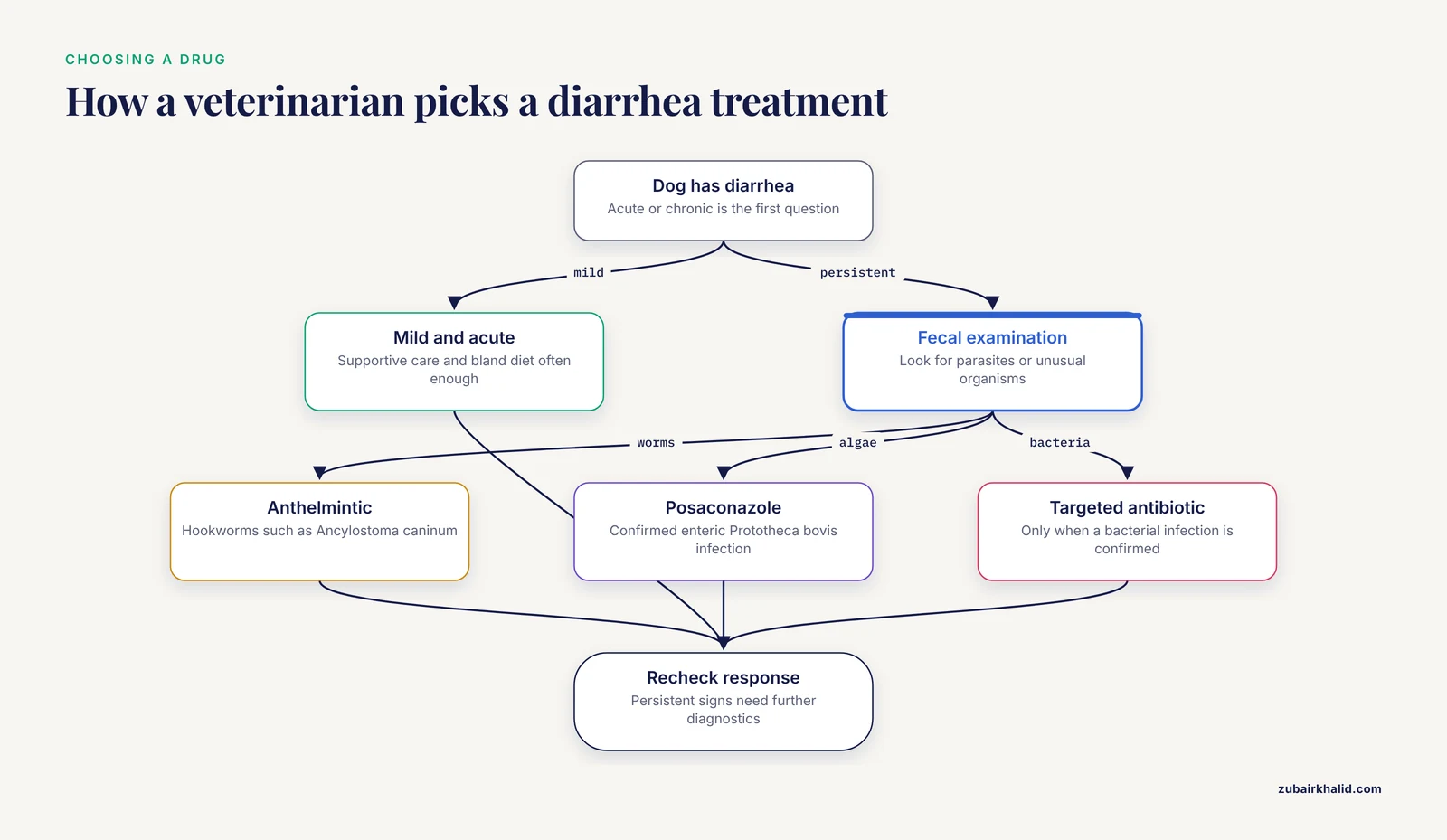
The first question a veterinarian asks is whether a dog needs medication at all. For many dogs with mild acute diarrhea, supportive care, access to fresh water, and a bland diet are enough. The evidence supports this approach. In a January 2025 survey of 1,626 US veterinarians, educational interventions increased the percentage who were comfortable waiting before giving antibiotics from 85% to 91% in the handout group and from 86% to 90% in the video group [1]. The same interventions increased comfort with not prescribing metronidazole, with 80% to 86% of handout recipients and 79% to 84% of video recipients comfortable withholding it [1].
Metronidazole: The Most Controversial Diarrhea Drug
Metronidazole has been used for decades in canine diarrhea because it has both antimicrobial and anti-inflammatory properties. However, current guidelines discourage its routine use for acute diarrhea. In the 2025 survey, only 18% of veterinarians (295 of 1,626) reported frequent metronidazole use, yet nearly half believed that clients (49%) and professional peers (44%) expected it [2]. This gap between expectation and evidence helps explain why the drug remains popular despite stewardship recommendations [2].
New graduates and veterinarians in academic settings were more likely to align their prescribing intentions with current guidelines [2]. Awareness of antimicrobial stewardship guidelines did not significantly correlate with lower metronidazole prescribing, which suggests that changing prescribing habits requires more than simply publishing guidelines [2].
Metronidazole is not a drug to use without veterinary direction. The dose must be carefully controlled, and side effects are possible. If a veterinarian prescribes it, they should explain the specific reason.
When Antibiotics Are Actually Needed
There are situations where antibiotics are appropriate for diarrhea. Bacterial infections that have been confirmed or strongly suspected, such as those caused by multidrug-resistant Escherichia coli, may require targeted therapy [9]. The emergence of ESBL-producing E. coli in canine infectious diarrhea is a growing concern, because these bacteria form biofilms that help them persist in the gut and resist treatment [9]. An innovative essential oil formulation called NHK-EO, derived from Coleus amboinicus, Ocimum basilicum, and Ocimum tenuiflorum, has shown antimicrobial and antibiofilm activity against these bacteria in laboratory studies [9]. This research points to a future where alternatives to antibiotics may play a larger role, but these products are not yet standard clinical treatments.
The takeaway is that antibiotics are a tool, not a default. Your veterinarian should be able to explain why an antibiotic is indicated for your dog and what specific organism they are targeting.
Antiparasitic Medications for Diarrhea
Intestinal parasites are a common cause of diarrhea in dogs, especially puppies. Hookworms, including Ancylostoma caninum, are among the most prevalent parasitic nematodes affecting dogs worldwide [10]. Hookworm infection can cause blood loss, anemia, and in severe cases, death, particularly in young puppies [10]. The infected dog in a 2025 case report presented with severe persistent diarrhea, decreased red blood cell and hemoglobin levels, and mild eosinophilia [10]. Treatment requires anthelmintic (deworming) medication, and the diagnosis is confirmed by microscopic examination of feces or molecular testing [10].
Hookworms are also a zoonotic risk. People can develop cutaneous larva migrans, a skin condition caused by hookworm larvae, after contact with contaminated soil [10]. Treating infected dogs protects both the dog and the people in the household.
The diagnosis of hookworm infection is not always obvious from the diarrhea alone. In the 2025 case report, the dog was 15 months old and had severe persistent diarrhea with laboratory evidence of blood loss [10]. The diagnosis was confirmed by finding adult worms in the feces after anthelmintic treatment and by molecular analysis of the parasite's DNA [10]. This case is a reminder that parasitic diarrhea can occur in adult dogs, not only in puppies, and that a fecal examination is a key step when diarrhea is persistent [10].
Broad-Spectrum Parasite Control
Prevention is more effective than treatment. Products that combine multiple antiparasitic drugs can protect dogs against fleas, ticks, and other parasites. Credelio Quattro is a chewable tablet containing lotilaner, moxidectin, pyrantel, and praziquantel, and it has been evaluated for efficacy against fleas and ticks in controlled studies [5]. In those studies, dogs received the product orally in a fed state, and efficacy was measured against experimental infestations [5].
Regular parasite prevention, guided by a veterinarian, reduces the risk of parasitic diarrhea and the zoonotic diseases that come with it. If your dog has diarrhea and has missed a dose of parasite prevention, mention this to your veterinarian.
Antifungal Therapy for Chronic Diarrhea
Some causes of chronic diarrhea are infectious but not bacterial or parasitic. Prototheca bovis is an algae-like organism that can infect the intestinal tract of dogs, causing chronic diarrhea that is difficult to treat [4]. In a 2026 case series, three dogs with enteric P. bovis infection were treated with posaconazole, an antifungal drug [4]. One dog was alive 45 months after starting treatment with only mild intermittent diarrhea and no detectable algae on rectal cytology. A second dog, managed exclusively with posaconazole, was alive after 39 months with moderate diarrhea and ongoing shedding but no signs of spread. The third dog survived 21 months before dying of central nervous system involvement [4].
Posaconazole was well tolerated in all three dogs, and the authors considered it a therapeutic option for enteric protothecosis [4]. This condition is rare, but it illustrates an important principle: chronic diarrhea that does not respond to standard treatment may require specialized diagnostics and long-term targeted therapy. In these cases, monitoring included rectal cytology to check for the organism [4]. If your dog has diarrhea that has lasted for weeks despite standard treatment, your veterinarian may recommend tests to look for unusual infections.
Supportive and Adjunctive Therapies
Not all diarrhea treatment comes in the form of a drug. Several supportive and adjunctive therapies have evidence behind them, and some are emerging as alternatives to antibiotics.
Glutamine for Gut Healing
Glutamine is an amino acid supplement that helped dogs with parvoviral diarrhea recover faster in a controlled study. In dogs infected with canine parvovirus type 2, oral glutamine at 500 mg/kg/day shortened the duration of diarrhea from a mean of 4.9 days in the control group to 2.4 days in the glutamine group [3]. The glutamine group also had better fecal scores, and none of the 10 glutamine-treated dogs died, compared with one death in the control group [3]. The two groups did not differ in time to clinical improvement or duration of hospitalization, so glutamine is best understood as a supportive therapy that helps the gut recover, not a cure for the underlying infection [3].
Probiotics and Prebiotics
The gut microbiome is central to diarrhea. In the 2025 veterinarian survey, a substantial percentage of veterinarians agreed that prebiotics (38% to 55% across intervention groups) and probiotics (48% to 58%) could be used instead of antibiotics for canine acute diarrhea [1]. This represents a real shift in clinical thinking.
The microbiome also matters for chronic diarrhea. In a study of dogs with chronic enteropathy, researchers identified two distinct microbiome clusters [8]. Cluster 2 was characterized by dysbiosis, with enrichment of Streptococcus, Enterococcus, and Klebsiella, and depletion of short-chain fatty acid producers like Fusobacterium and Blautia [8]. Among dogs with moderate to severe disease, 83.3% of Cluster 1 dogs achieved remission after treatment, compared with only 38.9% of Cluster 2 dogs [8]. This means that a probiotic or dietary intervention that works for one dog may not work for another, and microbiome testing may eventually help guide treatment choices [8].
Herbal Options: Pulsatilla chinensis
Pulsatilla chinensis (PC) is a traditional herbal remedy that is being studied for antibiotic-associated diarrhea in dogs. In a 2026 multi-omics study, treatment with PC significantly reduced serum pro-inflammatory cytokines including TNF-α and IL-6, and increased immune markers including IgG and IgA, compared with a control group [6]. PC also restored gut microbial diversity, enriched beneficial Lactobacillus, and decreased inflammation-associated taxa such as Proteobacteria, Desulfobacterota, and Escherichia-Shigella [6]. Key bioactive constituents identified in PC include anemoside B4, berberine, stigmasterol, and quercetin, which are predicted to target EGFR and AKT1 and modulate inflammation and epithelial repair [6].
Herbal products are not regulated like prescription drugs, and their potency and purity vary between manufacturers. If you are considering an herbal remedy for your dog, discuss it with your veterinarian first.
Emerging Therapies: EGF-Expressing Lactococcus lactis
A novel experimental therapy uses genetically engineered Lactococcus lactis bacteria to deliver canine epidermal growth factor (cEGF) directly to the gut [7]. In a 2026 study, the cEGF-expressing strain promoted proliferation of canine intestinal cells, repaired damaged mucous structure, suppressed inflammatory responses, and alleviated diarrhea in mice and dogs, potentially by activating the EGF receptor and its downstream AKT and ERK1/2 signaling pathways [7]. This therapy is not yet available clinically, but it represents a promising direction for diarrhea treatment that targets intestinal repair rather than just infection control [7].
Prevention of Infectious Causes of Diarrhea
Preventing diarrhea is always better than treating it. Two prevention strategies have direct evidence in the sources reviewed: parasite control and vaccination.
Canine Enteric Coronavirus
Canine enteric coronavirus (CECoV) causes diarrhea and vomiting and can spread rapidly through kennels and shelters [11]. The World Small Animal Veterinary Association does not recommend vaccination due to limited evidence of efficacy, but a systematic review and meta-analysis found that vaccination reduced the risk of diarrhea by 72% [11]. The same analysis found that vaccination did not significantly decrease viral shedding, which means vaccinated dogs can still spread the virus [11]. This is a nuanced situation, and whether to vaccinate a specific dog is a conversation for a veterinarian.
Prevention is especially important in environments where dogs gather. Canine enteric coronavirus can cause outbreaks in kennels and shelters, which means a single infected dog can expose many others [11]. The decision to vaccinate against CECoV is not straightforward, because the World Small Animal Veterinary Association does not recommend routine vaccination, yet the meta-analysis found a meaningful reduction in diarrhea risk [11]. A veterinarian who knows your dog's lifestyle and risk factors can help you weigh this decision.
Parasite Prevention
Regular use of broad-spectrum antiparasitic products prevents the intestinal parasite infections that cause diarrhea. The combination product Credelio Quattro, containing lotilaner, moxidectin, pyrantel, and praziquantel, is one example of a product that controls multiple parasite types in a single chewable tablet [5]. Consistent parasite prevention is especially important for puppies, because hookworm infection can be fatal in young animals [10].
What Diarrhea Medication Does Not Cover
Medication for dogs diarrhea is not a single cure-all. Several important scenarios require a different approach.
Antibiotic-Associated Diarrhea
Antibiotics can cause diarrhea by disrupting the gut microbiome. In this situation, the treatment is to stop the offending antibiotic when possible and support the microbiome, not to add another antibiotic [6]. Herbal alternatives like Pulsatilla chinensis are being studied as a way to prevent or treat antibiotic-associated diarrhea [6].
Chronic Enteropathy Subtypes
Chronic enteropathy is a heterogeneous condition, and the same drug will not work for every dog. The microbiome cluster a dog belongs to can predict treatment response, with Cluster 2 dogs (those with significant dysbiosis) achieving remission less than half as often as Cluster 1 dogs [8]. These dogs may need a combination of dietary change, microbiome modulation, and immunosuppressive therapy, rather than a single diarrhea drug [8].
Systemic and Emergency Conditions
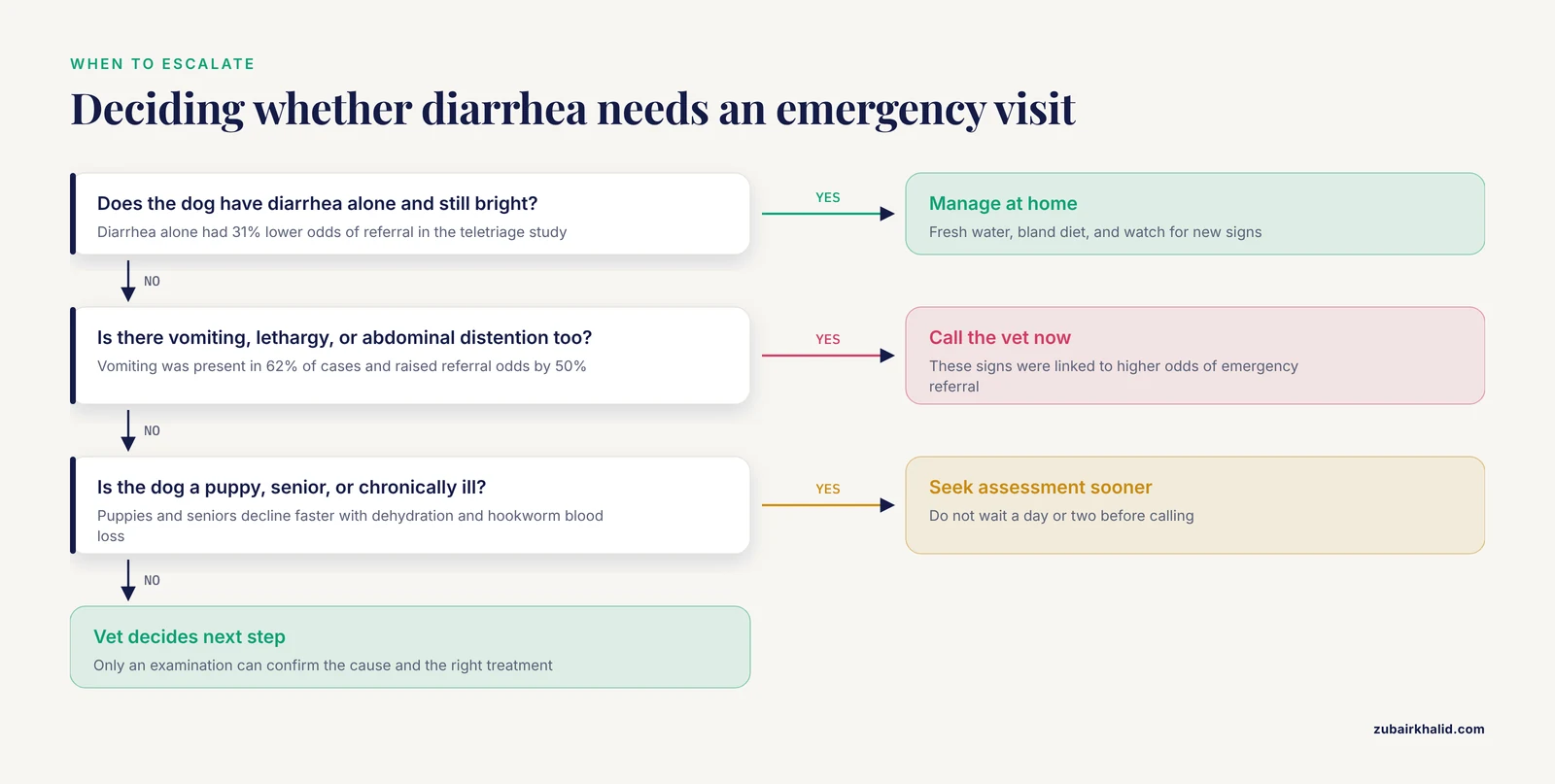
Diarrhea can be a sign of systemic disease. In a teletriage study of 1,575 dogs with gastrointestinal signs, 23% of cases were recommended for in-person emergency referral [12]. Vomiting was the most common complaint, present in 62% of cases, and was associated with 50% greater odds of referral [12]. Diarrhea was present in 43% of cases and was associated with 31% lower odds of referral, meaning diarrhea alone was less likely to trigger an emergency recommendation [12]. Abdominal distention and lethargy were associated with the greatest increases in referral odds [12]. These findings show that the context around diarrhea matters more than the diarrhea itself.
Medication also does not replace good nursing care. A dog with diarrhea needs access to fresh water, opportunities to eliminate frequently, and monitoring for dehydration. In the same teletriage study, diarrhea alone was associated with lower odds of emergency referral, which suggests that many dogs with diarrhea can be managed at home with guidance [12]. The decision to escalate care should be based on the whole picture, including the dog's energy level, appetite, and any other signs.
How to Give Diarrhea Medication Safely
Every medication carries risks, and the safest approach is to use the smallest effective dose for the shortest appropriate duration, under veterinary supervision.
- Confirm the drug, dose, and duration with a veterinarian before giving anything.
- Give oral medications with food when the label or your veterinarian directs it. In the Credelio Quattro studies, dogs received the chewable tablets in a fed state [5].
- Monitor your dog for side effects. In the posaconazole case series, the drug was well tolerated in all three dogs over months to years of treatment [4].
- Do not use leftover antibiotics from a previous illness. Antibiotic resistance in canine diarrhea is a real and growing problem, and using the wrong antibiotic can make things worse [9]. Ask your veterinarian before giving any medication that was not prescribed for this specific episode.
- Do not combine multiple diarrhea medications without veterinary approval, because interactions can be unpredictable.
Diarrhea medications are not interchangeable. A drug that works for one cause of diarrhea can be useless or harmful for another. For example, an antibiotic will not help a dog with hookworm diarrhea, and an antifungal is only relevant when a fungal or algal infection has been confirmed [4]. This is why the diagnostic workup matters as much as the prescription. Your veterinarian may recommend a fecal examination, blood work, or imaging before choosing a medication.
If your dog vomits a dose, has an allergic reaction, or seems worse after starting a medication, stop the medication and call your veterinarian.
Questions to Ask Your Veterinarian
Before starting any diarrhea medication, ask your veterinarian:
- What specific condition are we treating, and how was it diagnosed?
- What drug, dose, and duration are you prescribing, and what should I expect?
- What side effects should I watch for, and what should I do if they occur?
- Does my dog have any health condition that would make this medication unsafe?
- Could this medication interact with my dog's current medications or supplements?
- When should I see improvement, and when should I call you back?
Limitations and When to Contact a Veterinarian
This article is educational and is not a substitute for veterinary diagnosis or treatment. Individual cases vary, and only a veterinarian who examines your dog can determine the correct diagnosis and treatment plan.
Contact a veterinarian promptly if your dog has diarrhea along with vomiting, lethargy, or abdominal distention, because these signs were associated with higher odds of emergency referral in a large teletriage study [12]. You should also contact a veterinarian if you see blood in the stool, if your dog seems dehydrated, if diarrhea continues beyond a day or two, or if your dog is a puppy, a senior, or has a chronic illness. When in doubt, ask your veterinarian whether an examination is needed.
Over-the-Counter Anti-Diarrheal Products: What Is Safe and What Is Not
No over-the-counter human anti-diarrheal product is universally safe for dogs. Two common examples show why self-medication is dangerous.
Loperamide (Imodium)
Loperamide slows gut motility, but it can be toxic in dogs. Dogs with the MDR1 gene mutation, common in herding breeds such as Collies and Australian Shepherds, cannot clear loperamide from the brain effectively. Even a standard human dose can cause sedation, ataxia, respiratory depression, or coma. Veterinarians occasionally use loperamide for specific diarrhea types, but only after confirming breed and MDR1 status and calculating a precise canine dose.
Bismuth Subsalicylate (Pepto-Bismol)
Bismuth subsalicylate contains a salicylate related to aspirin. Dogs are more sensitive to salicylates than humans, and the drug can cause stomach ulcers, gastrointestinal bleeding, or salicylate toxicity. It can also turn stool black, which may be mistaken for digested blood. Some veterinarians recommend it for mild diarrhea, but the dose and duration must be set by a professional.
The core rule: never give a dog a human anti-diarrheal product without explicit veterinary instruction. The correct dose, the dog's breed, and underlying health conditions all affect safety. When in doubt, call your veterinarian.
Managing Dehydration and Fluid Support at Home
Diarrhea costs the body water and electrolytes. Check the gums, which should be slick rather than tacky, the skin over the shoulders for elasticity, and the eyes for a sunken appearance. Also watch for lethargy, reduced urine, and a dry nose.
Mild dehydration in a bright dog that still drinks can often be managed at home with free access to fresh water and a veterinary oral electrolyte solution. Do not use human sports drinks or homemade salt mixtures, because their sugar and sodium balance is unsuitable for dogs.
Offer small, frequent amounts rather than a large bowl. If your dog vomits, stop oral fluids briefly and contact a veterinarian. Subcutaneous fluids can help mild to moderate dehydration when the gut is working, but only a veterinarian should decide. Intravenous fluids are needed when a dog is severely dehydrated, vomiting persistently, or too weak to drink. Puppies and seniors decline faster, and vomiting alongside diarrhea raises concern [12]. Hookworm blood loss can be severe in young puppies [10]. Veterinary assessment is critical before starting home fluid therapy.
Dietary Management for Dogs With Diarrhea
Bland Diet
A bland diet gives the inflamed intestine time to recover. Boiled white rice or sweet potato with boiled skinless chicken breast or low fat cottage cheese are common choices. Feed small, frequent meals instead of one large bowl. Avoid fatty foods, dairy, and table scraps.
Short Fasting Period
For otherwise healthy adult dogs with acute diarrhea, a 12 to 24 hour fast lets the gut empty. Puppies, seniors, and dogs with chronic illness should not fast without veterinary approval. Always keep fresh water available.
Fiber Supplementation
Fiber can help firm stool, but the type matters. Soluble fiber, such as psyllium husk or canned pumpkin, absorbs water and supports stool formation. Insoluble fiber, such as wheat bran, adds bulk and may worsen diarrhea if introduced too early. Start with a small amount and adjust based on your dog's response.
Transition Back to Normal Food
Once stool starts to firm, gradually reintroduce the regular diet over 2 to 3 days. Mix increasing amounts of normal food with the bland diet. If diarrhea returns, return to the bland diet and contact your veterinarian.
Related Guides
- Pro-Pectalin for Dogs and Cats: Diarrhea Guide: Over-the-counter diarrhea product owners ask about; confirm dosing with your vet
- Albon for Dogs With Diarrhea: Does It Help?: Antiparasitic option for specific diarrhea causes; ask your veterinarian first
- Can Dogs Eat Brown Rice When Sick or With Diarrhea?: Bland diet option often used while a dog recovers from diarrhea
- Diarrhea vs Loose Stool in Dogs: What's the Difference?: Helps owners distinguish true diarrhea from softer stool consistency
- Dark Brown Diarrhea in Dogs: What the Color Tells You: Explains what dark stool color can mean during diarrhea
- Can Dogs Eat Pumpkin? Diarrhea & Constipation Relief: Dietary remedy some owners use for diarrhea and constipation relief
- Coccidia in Dogs: Treatment Options and Medications: Common parasitic cause of dog diarrhea with treatment options explained
- Tylosin Dose for Antibiotic-Responsive Diarrhea in Dogs: Specific antibiotic diarrhea treatment to discuss rather than self-prescribe
Frequently Asked Questions
What is the best medication for dogs with diarrhea?
The best medication depends on the cause of the diarrhea. Many dogs recover with supportive care alone, and antibiotics are not routinely needed for acute diarrhea [1]. A veterinarian must determine whether your dog needs an antiparasitic, an antifungal, or another targeted treatment.
Can I give my dog over-the-counter diarrhea medication?
Most over-the-counter human diarrhea medications are not approved for dogs and can be harmful. A veterinarian should recommend the safest product for your dog's specific situation.
Why do veterinarians avoid antibiotics for acute diarrhea?
Most acute diarrhea in dogs is self-limiting, and antibiotics do not speed recovery in typical cases. Antimicrobial stewardship guidelines encourage veterinarians to avoid antibiotics unless there is a clear bacterial infection [1][2].
Is metronidazole safe for dogs with diarrhea?
Metronidazole is sometimes used for diarrhea, but it is not a routine first-line drug. Current prescribing guidelines discourage routine use, so it should only be given under veterinary direction [2].
Can probiotics help dogs with diarrhea?
Yes, probiotics and prebiotics are increasingly recommended as alternatives to antibiotics for acute diarrhea [1]. The gut microbiome plays a major role in diarrhea, and microbiome patterns can affect treatment outcomes in chronic enteropathy [8].
What dewormer is used for diarrhea caused by hookworms?
Hookworm infections are treated with anthelmintic (deworming) medications [10]. Products that combine multiple antiparasitic drugs, such as Credelio Quattro, are used for broad parasite control [5]. A veterinarian must confirm the diagnosis and choose the right dewormer.
Are herbal diarrhea remedies safe for dogs?
Some herbal preparations show promise. Pulsatilla chinensis reduced inflammation and restored gut bacteria in a canine model of antibiotic-associated diarrhea [6]. However, herbal products are not regulated like prescription drugs, so use them only under veterinary guidance.
When should I take my dog to the emergency vet for diarrhea?
Contact a veterinarian or seek emergency care if your dog has vomiting, lethargy, or abdominal distention along with diarrhea, because these signs were associated with higher odds of emergency referral in a large teletriage study [12]. Very young, very old, or immunocompromised dogs should be evaluated sooner.
Sources
- Antimicrobial stewardship education increases US veterinarians' intention to avoid prescribing antimicrobial drugs for canine acute diarrhea, January 2025.
- New graduates and academic veterinarians' intentions to treat canine acute diarrhea align with antimicrobial stewardship guidelines, January 2025.
- Oral glutamine supplementation in dogs infected with canine parvovirus type 2.
- Prolonged survival of 3 dogs with Prototheca bovis infection treated with posaconazole.
- Efficacy of Credelio Quattro™ chewable tablets containing lotilaner, moxidectin, pyrantel, and praziquantel against Ctenocephalides felis and Rhipicephalus sanguineus infestations on dogs.
- Integrated Multi-Omics Analysis Explores the Protective Effects and Potential Mechanisms of Pulsatilla chinensis on Canine Antibiotic-Associated Diarrhea.
- Canine epidermal growth factor-expressing Lactococcus lactis promotes intestinal injury repair and alleviates diarrhea in canine.
- Fecal microbiome-based clustering identifies distinct disease subtypes with differing metabolomic profiles and treatment outcomes in canine chronic enteropathy.
- Innovative essential oil formulations for in vitro inhibition of Biofilm-Forming Extended-Spectrum β-Lactamase-Producing Escherichia coli isolated from canine infectious diarrhea.
- The Canine Hookworm Ancylostoma Caninum: First Confirmed Evidence in a Dog in Central Europe: Epidemiological Relevance or Coincidence?
- Immunogenicity and protective efficacy of canine enteric coronavirus vaccine: a systematic review and meta-analysis.
- Retrospective analysis of teletriage and teleadvice administered to 1,575 dogs with gastrointestinal signs.