Cat Skin and Coat Supplements: What Actually Helps
By Dr. Zubair Khalid, DVM, MS, PhD ·
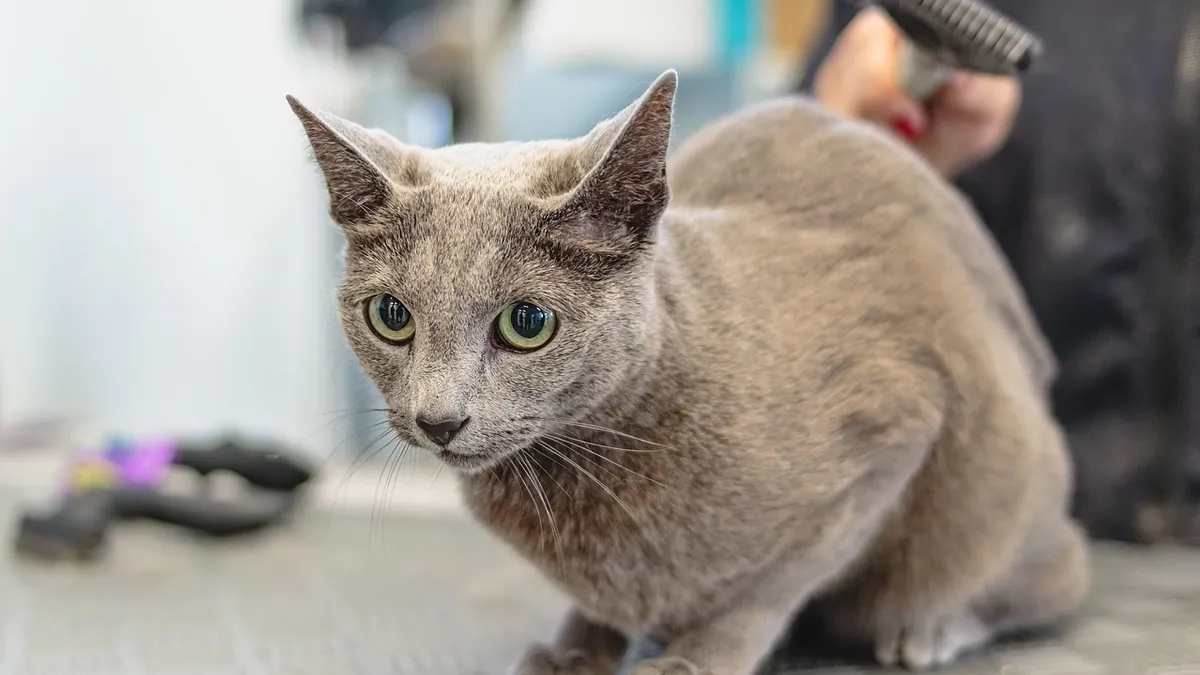
Most cat skin supplements are not a cure for anything. A small number have real evidence behind them for coat quality and skin barrier support, while many products on the shelf are marketing with little proof. The best results come when supplements are used alongside a proper diagnosis and veterinary treatment, not instead of it.
This article is educational and is not a substitute for veterinary diagnosis or treatment.
Quick Answer
- If your cat has itching, hair loss, scabs, or sores, the first step is a veterinary exam to find the cause. Supplements alone rarely fix a skin disease [1].
- A combination of dietary sodium hyaluronate and eggshell membrane improved hair cuticle condition, coat gloss, skin elasticity, and reduced water loss through the skin in a study of healthy Ragdoll cats [2].
- Fish oil supplementation changed fat levels in the blood of healthy adult cats, including lowering some triglycerides, which supports its use for general skin and coat support [3].
- Beta-glucans show promise for immune and inflammatory conditions, but most strong evidence is in dogs, and more cat-specific trials are needed [4].
- Supplements work best as support alongside treatment your veterinarian prescribes, such as parasite control or allergy management [5].
What Are Cat Skin Supplements and What Do Veterinarians Use Them For?
Cat skin supplements are products you add to your cat's food or give by mouth to support skin and coat health. They are not drugs. They do not require a prescription in most cases, and they are not regulated the same way as medications.
Veterinarians use them for a few main purposes:
- Supporting the skin barrier in cats with dry, flaky, or dull coats
- Helping coat regrowth after a skin problem has been treated
- Adding omega-3 fatty acids to the diet for their anti-inflammatory effects [6]
- Supporting cats with chronic conditions like allergies, where the skin barrier is weakened
It helps to understand the difference between a supplement and a medicine. Cat skin medicine, such as antibiotics, antifungals, steroids, or parasite treatments, targets a specific cause. Your veterinarian chooses these based on a diagnosis [1]. Supplements support the skin in a general way. They do not kill mites, clear infections, or stop an allergic reaction on their own.
One good example comes from a case report of a cat with excessive shedding and white scales caused by a mite called Demodex gatoi. The cat needed a specific antiparasitic spot-on treatment every 12 weeks. An essential fatty acid supplement was recommended at the same time to help repair the coat and skin barrier. The cat improved within 4 weeks, but the antiparasitic did the heavy lifting [5].
That pattern repeats often. The supplement supports. The medicine treats.
How Do Cat Skin Supplements Work?
Different supplements work in different ways. Here is what the evidence shows for the main categories.
Omega-3 Fatty Acids and Fish Oil
Fish oil is rich in omega-3 fatty acids, including EPA and DHA. These fats get built into cell membranes and shift the body toward less inflammation. A study of healthy adult cats found that fish oil supplementation changed 360 metabolites in the blood, mostly triglycerides and phospholipids. It lowered total plasma triglycerides and raised levels of specific triglycerides containing EPA and DHA [3].
For skin, the practical takeaway is that omega-3s support the skin barrier and may calm inflammation. They are one of the most commonly recommended supplements for cats with allergic skin disease.
Sodium Hyaluronate and Eggshell Membrane
Sodium hyaluronate helps hold water in tissues. Eggshell membrane contains collagen and other compounds that support connective tissue. In a study of 24 healthy 6-month-old Ragdoll cats, a combination of both improved hair cuticle morphology, hair fiber diameter, coat gloss, skin elasticity, coat brightness, and reduced transepidermal water loss (water escaping through the skin) [2].
This is one of the stronger pieces of evidence for a specific supplement combination improving coat and skin measures in cats. The study was in healthy young cats of one breed, so results may not apply to every cat with a skin disease.
Beta-Glucans
Beta-glucans are fibers that modulate the immune system. A review of the evidence found they show promise for skin disease, joint disease, and inflammatory bowel disease in pets. For allergic skin disease, the strongest results are in dogs, where beta-glucans reduced clinical signs of atopic dermatitis. The authors note that more clinical trials are needed, especially in cats [4].
So beta-glucans are promising but not proven for feline skin disease.
What Is Mostly Hype
Many products combine small amounts of several ingredients with big claims. If a label promises to cure itching, stop shedding, or replace medication, be skeptical. There is no supplement that treats an underlying infection, parasite, or food allergy. Those need diagnosis and specific treatment [1].
Dosing Basics for Cat Skin Supplements
Who Decides the Dose
Your veterinarian decides the dose. The right amount depends on your cat's weight, age, health conditions, and the specific product. Do not guess based on the label alone, and do not scale a dog dose down to a cat. Cats and dogs handle some nutrients differently.
How Supplements Are Given
Most skin supplements come as capsules, soft chews, powders, or liquids. You can often mix a powder or liquid into a small amount of wet food. Some cats take chews as a treat. If your cat refuses, ask your veterinarian about a different form.
What to Do About a Missed Dose
If you miss a dose, give it when you remember, unless it is almost time for the next one. In that case, skip the missed dose and continue on schedule. Do not double up to catch up. If you are unsure, call your veterinarian.
Side Effects of Cat Skin Supplements
Most supplements are well tolerated, but side effects happen. This table covers the common ones.
| Side effect | How common or serious | What to do |
|---|---|---|
| Loose stool or vomiting | Fairly common with fish oil or new supplements | Stop the supplement and call your veterinarian |
| Fishy breath or odor | Common with fish oil | Usually harmless, ask about a different form |
| Refusing food | Common if the supplement changes the taste | Try a different food or form, or stop |
| Bleeding tendency | Uncommon, seen with very high omega-3 doses | Call your veterinarian before surgery or if you see bruising |
| Allergic reaction (swelling, hives, trouble breathing) | Rare but serious | Stop the supplement and seek emergency care now |
| Worsening skin or itching | Uncommon | Stop the supplement and schedule a veterinary visit |
Any supplement can cause a reaction in a sensitive cat. If your cat has a known allergy to an ingredient, such as egg, avoid products containing it.
Who Should Not Take Cat Skin Supplements and What Interacts With Them
Some cats should not get certain supplements, or need extra caution.
- Cats with bleeding disorders or those scheduled for surgery should avoid high-dose fish oil unless your veterinarian approves it.
- Cats with egg allergies should avoid eggshell membrane products.
- Cats with kidney disease, liver disease, or diabetes need a veterinary review before starting any supplement.
- Cats on blood thinners or other medications may have interactions. Tell your veterinarian about every supplement and medication your cat takes.
Supplements can also interact with each other. If your cat takes more than one product, have your veterinarian review the full list.
For cats with allergies, supplements are only one part of the plan. If your cat has been diagnosed with allergic skin disease, you can read more about prescription options in Cat Skin Allergy Medicine: What Your Vet Might Prescribe. If you are still trying to figure out whether a skin problem needs a vet visit, see Cat Skin Problems: When to See the Vet and How to Help. And if your cat also has joint stiffness, Cat Joint Health Supplements covers what helps there.
Overdose and When to Call a Veterinarian or Poison Control
An overdose of most skin supplements causes stomach upset, not a life-threatening emergency. But some ingredients are riskier in large amounts. Too much fish oil can cause vomiting, diarrhea, and bleeding problems. Too much of any supplement can upset the stomach.
If you think your cat ate a large amount of a supplement, call your veterinarian right away. If your regular clinic is closed, call a pet poison control hotline. The ASPCA Animal Poison Control Center is available at (888) 426-4435. The Pet Poison Helpline is available at (855) 764-7661. Both may charge a consultation fee.
Signs that need emergency care now include trouble breathing, swelling of the face or throat, collapse, seizures, or severe vomiting.
Limitations and When to Contact a Veterinarian
Supplements are support, not treatment. They cannot replace a diagnosis. If your cat has an underlying skin disease, the problem will keep coming back until the cause is treated [1].
Contact your veterinarian the same day if you notice:
- New itching, scratching, or biting at the skin
- Hair loss, bald patches, or thinning coat
- Redness, scabs, crusts, or sores
- A bad smell from the skin or ears
- Your cat seems uncomfortable or is not eating
Seek emergency care now if your cat has:
- Trouble breathing or open-mouth breathing
- Swelling of the face, lips, or throat
- Collapse, weakness, or seizures
- Severe vomiting or diarrhea
- Bleeding that will not stop
Schedule a routine visit if:
- Your cat's coat looks dull despite a good diet
- You want to start a supplement and are not sure which one
- Your cat has a chronic skin condition and you want to review the plan
Individual cases need a veterinarian. No article can tell you what is right for your specific cat.
Frequently Asked Questions
Do cat skin supplements actually work?
Some do, for specific goals. A combination of sodium hyaluronate and eggshell membrane improved coat and skin measures in healthy cats [2]. Fish oil changes blood fats in a way that supports skin and coat [3]. Many other products have no strong evidence. Supplements work best alongside veterinary treatment, not instead of it.
Can I give my cat fish oil every day?
Many cats can take fish oil daily, but the right amount depends on your cat's weight and health. Your veterinarian sets the dose. Too much can cause stomach upset or bleeding problems. Ask before starting, especially if your cat takes other medications or has surgery planned.
What is the best supplement for a cat with dry, flaky skin?
There is no single best product for every cat. Omega-3 fatty acids and the sodium hyaluronate plus eggshell membrane combination have the most support for skin and coat measures [2]. Dry, flaky skin can also be a sign of mites, allergies, or other disease, so a veterinary exam comes first [1][5].
Are cat skin supplements the same as cat skin medicine?
No. Cat skin medicine treats a specific diagnosed problem, such as an infection, parasite, or allergy [1]. Supplements support the skin barrier and coat in a general way. They are not a substitute for prescription treatment when a real disease is present.
Can supplements replace a vet visit for my cat's itching?
No. Itching almost always has an underlying cause, such as parasites, allergies, or infection. A supplement will not fix those [1]. If your cat is itchy, see your veterinarian for a diagnosis, then use supplements as part of the plan your vet recommends.
Related Articles
- Cat Anxiety: Natural Remedies That Actually Work
- Cat Joint Health Supplements
- Cat Skin Allergy Medicine: What Your Vet Might Prescribe
- Cat Skin Problems: When to See the Vet and How to Help
- Dog Itchy Skin Supplements: Do They Work?
- Dog Itchy Skin Home Remedies: What Actually Works?
- Cat Dry Flaky Skin: What Helps and What to Avoid
- Vitamin E for Cats: Skin Benefits, Dosing, and Safety
- Coconut Oil for Cats: Skin, Fleas, and Ears
References
- Treatment of Skin Disorders in Cats - Cat Owners. Merck Veterinary Manual.
- Dietary sodium hyaluronate and eggshell membrane improve skin barrier function and coat health in Ragdoll cats. Frontiers in veterinary science, 2026.
- Impact of a Dietary Fish Oil Supplementation on the Plasma Lipidome of Healthy Adult Cats. Metabolites, 2026.
- Translating Human and Animal Model Studies to Dogs' and Cats' Veterinary Care: Beta-Glucans Application for Skin Disease, Osteoarthritis, and Inflammatory Bowel Disease Management. Microorganisms, 2024.
- Successful treatment of non-pruritus, excessive hair shedding and scales in a cat due to Demodex gatoi with fluralaner topical spot-on. JFMS open reports, 2024.
- Nutraceuticals, Social Interaction, and Psychophysiological Influence on Pet Health and Well-Being: Focus on Dogs and Cats. Veterinary sciences, 2025.