Adequan for Dogs: Uses, Dosing, and Safety
By Dr. Zubair Khalid, DVM, MS, PhD ·
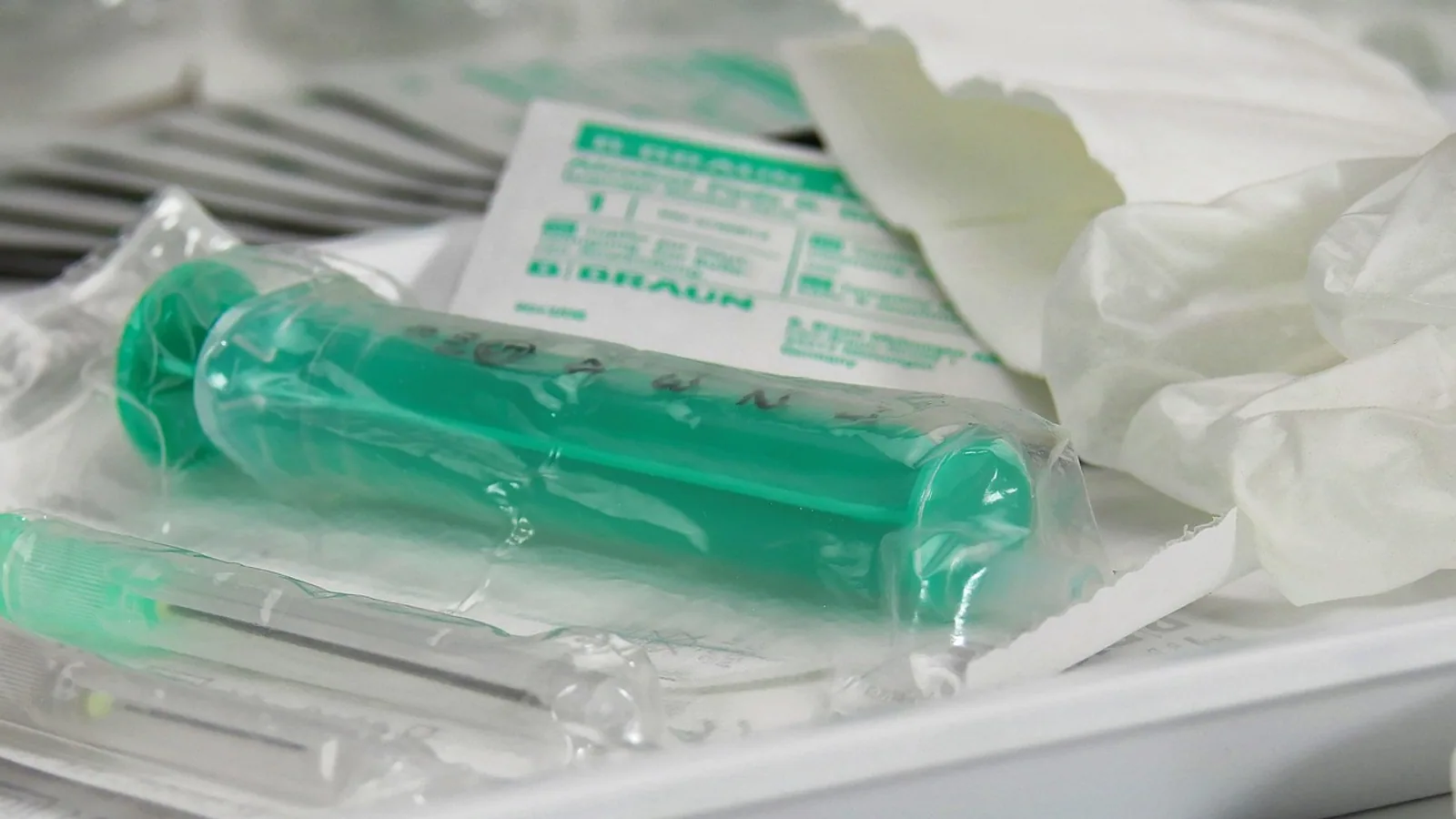
Adequan is the brand name for polysulfated glycosaminoglycan (PSGAG), an injectable antiarthritic medication approved for dogs with non-infectious arthritis. It is given by intramuscular injection, most often twice weekly for up to four weeks, then reduced to an as-needed maintenance schedule. Adequan is not a corticosteroid and not an NSAID. It belongs to a separate drug class called polysulfated glycosaminoglycans, and it works by interfering with the enzymes that break down joint cartilage while supporting the cells that rebuild it [1]. It is not a cure for arthritis. It is one tool in a broader management plan, and the clinical evidence for meaningful disease modification in dogs is modest rather than dramatic [2][3][4].
This guide explains what Adequan does inside a dog's joint, how the labeled dosing schedule works, what monitoring looks like over the first month and beyond, which dogs should not receive it, and how it compares with the more familiar arthritis medications owners already know.
This article is educational and is not a substitute for veterinary diagnosis or treatment.
At a Glance
| Feature | Detail |
|---|---|
| Active ingredient | Polysulfated glycosaminoglycan (PSGAG) |
| Drug class | Polysulfated glycosaminoglycan, a slow-acting disease-modifying osteoarthritis drug (DMOAD) [1] |
| Species | Dogs |
| Labeled use | Non-infectious arthritis |
| Route | Intramuscular (IM) injection, typically into the muscle of the hind limb |
| Labeled schedule | 0.5 mL per 10 lb body weight twice weekly for up to 4 weeks, then as needed |
| Onset | Gradual. Improvement is usually judged over weeks, not days |
| Duration per course | The initial labeled course runs up to 4 weeks, followed by maintenance dosing |
| Prescription status | Prescription only. Administered by a veterinarian |
| Not the same as | Corticosteroids or NSAIDs |
What Adequan Is and What It Treats
Adequan is an injectable polysulfated glycosaminoglycan. The active molecule is a long-chain, highly sulfated carbohydrate that is chemically related to the glycosaminoglycans naturally present in cartilage matrix and synovial fluid. Because of that structural similarity, PSGAG is taken up into joint tissue after injection and interacts with the same biochemical pathways that govern cartilage turnover [1][5].
The FDA-approved indication for dogs is non-infectious arthritis. In plain terms, that means arthritis that is not caused by an active infection inside the joint. The most common forms in dogs are osteoarthritis secondary to hip dysplasia, cruciate ligament disease, or other chronic joint instability. The drug is intended for joint inflammation and degenerative joint disease, not for septic arthritis, immune-mediated polyarthritis, or acute traumatic injury.
Adequan is a slow-acting drug. It does not produce the same rapid pain relief an owner might see within hours of giving an NSAID. Instead, it is classified as a disease-modifying osteoarthritis drug, or DMOAD, meaning its intended role is to influence the biology of the joint over time rather than simply block pain signals [1]. The label reflects that role with a defined loading course followed by maintenance dosing.
How Polysulfated Glycosaminoglycan Works
Understanding the mechanism helps explain both what Adequan can do and what it cannot.
Inhibition of degradative enzymes
Cartilage breakdown in osteoarthritis is driven largely by enzymes, particularly matrix metalloproteinases (MMPs), that cut apart the proteoglycan and collagen framework of the joint surface. In a canine study using cartilage explants from dogs with surgically induced osteoarthritis, PSGAG reduced proteoglycan degradation when the tissue was exposed to activated endogenous MMPs [6]. A separate canine model study found that cartilage from dogs treated with the polysulfated glycosaminoglycan had less total and active metalloproteinase activity and lower histopathologic damage scores than cartilage from saline-treated dogs [7]. The proposed mechanism in that work was suppression of proteoglycan breakdown, either by decreasing enzyme synthesis or by directly inhibiting the enzyme already present in cartilage, rather than by simply increasing new proteoglycan production [7].
Stimulation of hyaluronan and proteoglycan synthesis
PSGAG also has anabolic effects. In diseased joint tissue it stimulates its own incorporation into the cartilage matrix and promotes synthesis of matrix components, including proteoglycans, and it supports synovial tissue metabolism [1]. Hyaluronan, the large molecule that gives synovial fluid its viscosity and lubricating quality, is part of that anabolic picture. The net effect described in the pharmacology literature is a shift in the joint environment: less enzymatic degradation, more matrix building, and a reduction in inflammatory signaling [1].
Anti-inflammatory effects
PSGAG is not an anti-inflammatory drug in the corticosteroid sense, but it does have measurable anti-inflammatory activity within the joint. In a clinical study of dogs with osteoarthritis, serum C-reactive protein and markers of cartilage turnover were measured before and after a course of eight intramuscular PSGAG treatments. Lameness scores improved significantly after treatment, and the dogs whose hind limb lameness improved also showed corresponding decreases in serum cartilage oligomeric matrix protein, a marker of cartilage breakdown [2]. That study also found that dogs with forelimb lameness responded less well, and their MMP-9 activity remained elevated [2]. The takeaway is that response is not uniform across all joints and all dogs.
Distribution to joint tissue
Pharmacologic studies across several species show that PSGAG is rapidly distributed to diseased joint tissue after intramuscular or intra-articular administration [1]. A study in rabbits using tritium-labeled PSGAG confirmed that the drug reaches tendon tissue, serum, and urine after intramuscular injection, and that high molecular weight PSGAG could still be detected in tissue 192 hours after a single dose [5]. That persistence is one reason the labeled schedule spaces injections several days apart rather than giving them daily.
Adequan Is Not a Steroid and Not an NSAID
This distinction matters for owners because the three drug families are often discussed together as "arthritis medicine," yet they behave very differently in the body.
Corticosteroids such as prednisone suppress inflammation broadly through gene-level effects on immune cells. They can be powerful but carry well-known risks with long-term use, and at least one canine study found that low-dose prednisone did not reduce the severity of osteoarthritis in a cruciate transection model [8]. NSAIDs such as carprofen and meloxicam block cyclooxygenase enzymes and reduce prostaglandin production, which produces faster pain relief. Adequan does neither of those things. It is a polysulfated glycosaminoglycan that acts on cartilage matrix metabolism and joint enzyme activity [1][7].
Because the mechanisms do not overlap, Adequan is frequently used alongside NSAIDs or other therapies rather than instead of them. An owner survey of dogs receiving subcutaneous PSGAG found that the drug was most commonly administered together with other medications and rehabilitation therapies [9]. If your dog is already on an NSAID, adding Adequan does not replace that NSAID, and stopping the NSAID without veterinary guidance can leave pain poorly controlled.
Labeled Dosing Schedule
The labeled intramuscular dose for dogs is 0.5 mL per 10 lb of body weight, given twice weekly for up to 4 weeks, then as needed for maintenance. For a 50 lb dog, that is 2.5 mL per injection. For a 10 lb dog, it is 0.5 mL.
The initial four-week course is a loading phase. The goal is to build up drug exposure in joint tissue during the period when the joint is most actively inflamed or most symptomatic. After that, the schedule becomes flexible. Some dogs are maintained on an injection every two weeks, some monthly, and some only when signs flare. The right maintenance interval is an individual decision based on how the dog responds and how long the benefit lasts.
A few practical points about the labeled schedule:
- The volume is calculated from body weight, so a dog that gains or loses significant weight should have the dose recalculated.
- Injections are given by a veterinarian in the clinic. Adequan is a prescription injectable and is not designed for owner administration at home under the label.
- The labeled route is intramuscular. Subcutaneous administration is common in practice and has been studied from the owner's perspective, but it is not the labeled route [9].
- The labeled course is up to 4 weeks. Extending the loading phase beyond that is a veterinary decision, not a default.
Dose numbers in this article reflect the product label. Do not adjust your dog's dose or schedule on your own.
How Adequan Is Given
Adequan is supplied as a sterile injection solution and is given into a large muscle, most often the muscle group of the hind limb. The injection itself takes seconds. Most dogs tolerate it well. In an owner survey of dogs receiving subcutaneous PSGAG, the most common complaints were minor and included stomach upset, loose stool, pain at the injection site, and fear or anxiety around the injection [9]. One dog in that survey developed thrombocytopenia and bruising, which resolved after the drug was discontinued [9].
Because the injections are frequent during the loading phase, some owners find the twice-weekly clinic visits inconvenient. That is a legitimate practical consideration, and it is reasonable to ask your veterinarian whether a different schedule or a different therapy fits your situation better.
Monitoring Parameters
Adequan's benefit is judged clinically, not by a blood test. There is no routine laboratory value that tells you the drug is working. Instead, veterinarians track a small set of observable measures over the loading course and beyond.
| Monitoring parameter | What is assessed | When it matters most |
|---|---|---|
| Lameness score | Severity of limp at walk and trot, graded by the veterinarian | Before treatment, at the end of the loading course, and at each recheck |
| Pain on manipulation | Response to flexion, extension, and palpation of the affected joint | Before treatment and at each recheck |
| Range of motion | How far the joint moves through its normal arc | Before treatment and at each recheck |
| Owner-reported activity | Willingness to rise, climb stairs, go for walks, play | Continuously between visits |
| Injection site reaction | Swelling, pain, or discharge at the injection site | Within 24 to 48 hours of each injection |
| Gastrointestinal signs | Vomiting, diarrhea, appetite change | Throughout treatment |
| Bleeding or bruising | Unusual bruising, prolonged bleeding from minor cuts | Throughout treatment, especially in dogs with clotting concerns |
The parameters in this table mirror the outcome measures used in the controlled canine hip dysplasia study of PSGAG, which assessed lameness, range of motion, and pain on manipulation of the hip joints [3]. In that study, dogs given 4.4 mg/kg showed the greatest improvement in orthopedic scores and placebo dogs showed the smallest, but the differences between dose groups were not statistically significant [3]. No local or systemic adverse reactions related to the drug were observed in that trial [3].
In the clinical study of dogs with osteoarthritis, lameness scores improved in 12 of 16 dogs after a course of eight intramuscular treatments [2]. That is a useful benchmark for what a reasonable response looks like, and it also shows that not every dog improves.
What a good response looks like
A good response is usually described in terms of function rather than a single number. The dog rises more easily in the morning. Stairs become less of a negotiation. Walks get slightly longer. Lameness scores at the recheck are lower than at baseline. These are gradual changes measured over weeks.
What a poor response looks like
If lameness scores are unchanged at the end of the loading course, or if the dog's activity has not improved at all, the drug may not be the right fit. That is a conversation to have with your veterinarian, not a reason to increase the dose on your own. Some joints respond better than others. In the osteoarthritis study, dogs with forelimb lameness had less improvement than dogs with hind limb lameness, and their cartilage turnover markers stayed elevated [2].
Safety Profile and Side Effects
PSGAG has a wide margin of safety in dogs and horses, and adverse reactions are generally minimal [1]. That said, "minimal" is not "none."
The most commonly reported adverse events in dogs receiving PSGAG, drawn from an owner survey of subcutaneous use, were mild and self-limiting: stomach upset, loose stool, pain at the injection site, and fear or anxiety around injections [9]. Most of these did not lead to discontinuation of the drug [9]. One dog in that survey had persistent gastrointestinal signs, and one had a more serious event involving low platelets and bruising that resolved after the drug was stopped [9].
A separate consideration is clotting. PSGAG injections have been reported to prolong clotting times in dogs and cats, and the drug is considered efficacious with a wide margin of safety in those species [10]. That report focused on fatal coagulopathies in birds after intramuscular PSGAG, which is a species-specific finding and not a canine risk estimate, but it underscores that PSGAG does interact with the clotting system [10].
What to do if you see a side effect
- Mild stomach upset or loose stool: mention it at the next visit. Do not stop a prescribed arthritis medication without talking to your veterinarian first.
- Pain or swelling at the injection site: report it. Injection technique and site rotation may help.
- Bruising, unexplained bleeding, or tiny red spots on the gums or belly: contact your veterinarian promptly. This is the pattern that warrants attention.
- Vomiting that does not stop, refusal to eat, or marked lethargy: contact your veterinarian the same day.
Who Should Not Receive Adequan
Two contraindications matter most.
Bleeding disorders. PSGAG has been associated with prolongation of clotting times in dogs and cats [10]. A dog with a known bleeding disorder, a low platelet count, or a history of unexplained bruising should not receive PSGAG without a careful risk assessment.
Joint infection. The labeled indication is non-infectious arthritis. Injecting a drug intended for degenerative joint disease into a joint with an active infection is not appropriate, and the infection needs to be diagnosed and treated on its own terms.
Other situations require veterinary judgment rather than a blanket rule:
- Dogs with significant liver or kidney disease
- Dogs receiving other drugs that affect clotting, such as anticoagulants
- Dogs with a history of adverse reaction to a prior PSGAG injection
- Pregnant or breeding dogs, where the safety data are limited
If your dog has any of these conditions, tell your veterinarian before the first injection. The risk-benefit calculation is individual.
Drug Interactions
The main interaction to know about is with medications that affect clotting. Because PSGAG can prolong clotting times in dogs and cats [10], combining it with anticoagulant therapy or with other drugs that impair platelet function deserves a specific conversation with your veterinarian.
Adequan is often used alongside NSAIDs, and that combination is common in practice. The owner survey of subcutaneous PSGAG found that the drug was most often given together with other medications and rehabilitation therapies [9]. There is no indication in the available data that this combination is unsafe, but it does mean that any new symptom needs to be interpreted in the context of everything the dog is receiving.
How Adequan Compares With Other Arthritis Treatments
The arthritis treatment landscape for dogs includes NSAIDs, other injectable agents, nutraceuticals, and non-drug therapies such as weight management and rehabilitation. A systematic review of clinical trials in canine osteoarthritis rated the quality of evidence for these interventions using an evidence-based medicine scoring system. Meloxicam had the strongest evidence base, with four trials rated type I. Carprofen had three type I trials and two type III trials. Single type I trials existed for etodolac, P54FP, polysulfated glycosaminoglycan, and a chondroitin-glucosamine-manganese combination. Pentosan polysulfate and green-lipped mussel each had two type I trials, and hyaluronan had one type III trial [4].
That review is the clearest available summary of where Adequan sits in the evidence hierarchy. It has supporting clinical trial evidence, and that evidence is thinner than the evidence for meloxicam or carprofen [4]. This is not a reason to dismiss the drug. It is a reason to be realistic about what to expect and to keep other therapies in the plan.
Two additional points from the canine literature are worth knowing.
First, response varies by joint. In the osteoarthritis study, hind limb lameness improved significantly in nine dogs, with corresponding drops in serum cartilage oligomeric matrix protein, while forelimb lameness in seven dogs did not improve and their MMP-9 activity stayed high [2].
Second, dose response in hip dysplasia was not clean. In a double-blinded study of 111 dogs with hip dysplasia, the 4.4 mg/kg group showed the greatest improvement in orthopedic scores and the placebo group the least, but the differences between the four treatment groups were not statistically significant [3]. That is a modest result, and it is consistent with the broader picture that Adequan helps some dogs meaningfully and others only slightly.
Where Adequan fits
Adequan is best understood as an adjunct. It is reasonable to consider it for a dog with non-infectious arthritis who is already on appropriate pain management and could benefit from an additional agent with a different mechanism. It is not a replacement for weight management, activity modification, or effective pain control.
What to Ask Your Veterinarian
Bring these questions to the appointment where Adequan is being considered or started:
- What specific diagnosis are we treating, and has joint infection been ruled out?
- What is my dog's exact dose in milliliters, based on current body weight?
- What is the plan at the end of the four-week loading course if we see improvement? If we do not?
- Does my dog have any condition or medication that increases bleeding risk?
- How will we measure whether this is working, and at what point do we decide it is not?
- What other therapies should stay in place while we try this?
- What side effects should make me call you immediately rather than wait?
- Is there a practical alternative if twice-weekly clinic visits are not feasible for us?
Limitations and When to Contact a Veterinarian
Adequan is not a cure for arthritis. It is an FDA-approved treatment for non-infectious arthritis in dogs that may reduce clinical signs and influence joint biochemistry, and the evidence for disease modification is modest [2][1][3][4]. Many dogs improve. Some do not. Response depends on the joint involved, the underlying cause, the stage of disease, and factors that are not fully understood.
Contact your veterinarian promptly if any of the following occur:
- Bruising, small red spots on the gums or abdomen, nosebleeds, or bleeding that takes longer than expected to stop
- Vomiting that persists, refusal to eat, or marked lethargy
- Swelling, heat, or discharge at an injection site
- Sudden worsening of lameness, or lameness in a limb that was not previously affected
- Fever, joint swelling, or a dog that becomes acutely non-weight-bearing on a joint that was previously stable (this can indicate joint infection, which is a different problem and needs urgent evaluation)
- Any new medication started by another provider while your dog is receiving Adequan
Individual cases need individual veterinary assessment. The information here is general and cannot replace an examination, a diagnosis, or a treatment plan made for your dog.
Frequently Asked Questions
What is Adequan used for in dogs?
Adequan is FDA-approved for dogs with non-infectious arthritis. It is used to reduce clinical signs of joint inflammation and degenerative joint disease, most often in dogs with osteoarthritis from hip dysplasia, cruciate ligament disease, or other chronic joint conditions.
How is Adequan dosed in dogs?
The labeled dose is 0.5 mL per 10 lb of body weight, given by intramuscular injection twice weekly for up to 4 weeks, then as needed. Your veterinarian calculates the exact volume from your dog's current weight.
Is Adequan a steroid or an NSAID?
No. Adequan is a polysulfated glycosaminoglycan, a separate drug class. It is not a corticosteroid and not an NSAID, and it works by different mechanisms than either of those drug families.
How long does Adequan take to work in dogs?
Adequan is a slow-acting drug. Improvement is typically judged over the weeks of the loading course rather than within hours or days. Your veterinarian will assess lameness, pain on joint manipulation, and your reports of activity at rechecks.
Can Adequan be given at home?
The labeled route is intramuscular injection given in a clinic. Subcutaneous administration is used in practice and has been surveyed from the owner's perspective, but it is not the labeled route. Ask your veterinarian whether at-home administration is appropriate for your dog.
What are the side effects of Adequan in dogs?
Reported adverse events are usually mild and include stomach upset, loose stool, pain at the injection site, and anxiety around injections. More serious events such as low platelets with bruising are uncommon but have been reported and require prompt veterinary attention.
Can Adequan be used with NSAIDs?
Yes, Adequan is commonly used alongside other arthritis medications and rehabilitation therapies. It does not replace an NSAID, and you should not stop a prescribed NSAID without veterinary guidance.
Which dogs should not receive Adequan?
Dogs with bleeding disorders or an active joint infection should not receive Adequan. Dogs with liver or kidney disease, dogs on anticoagulant therapy, and pregnant or breeding dogs need an individual risk assessment from a veterinarian before treatment.
Related Articles
- Adequan Polysulfated Glycosaminoglycan: Joint Injection Protocol
- Anesthesia Machine Safety Checks for Laboratory Animal Use
- Prednisone for Dogs: Uses, Side Effects, and Safety Guidelines
- Pharmacotherapy in Avian Medicine
- Hypothyroidism in Dogs: Weight Gain, Lethargy and Thyroxine Dosing
- Can Cats Eat Valerian Root? Sedative Effect and Dosing
- Clonidine for Dogs: Uses, Dosing, and Safety
- Credelio Quattro for Dogs: Uses, Dosing, and Safety
- Pepcid for Dogs: Dosage, Uses, and Safety Guide
Sources
- Polysulfated glycosaminoglycan as a treatment for osteoarthritis in veterinary medicine: Summary of the pharmacological, laboratory, and clinical data.
- Effects of treatment with polysulfated glycosaminoglycan on serum cartilage oligomeric matrix protein and C-reactive protein concentrations, serum matrix metalloproteinase-2 and -9 activities, and lameness in dogs with osteoarthritis.
- Evaluation of polysulfated glycosaminoglycan for the treatment of hip dysplasia in dogs.
- Systematic review of clinical trials of treatments for osteoarthritis in dogs.
- Uptake and distribution of tritium-labeled polysulfated glycosaminoglycan in serum, urine, and superficial digital flexor tendon of rabbits after intramuscular administration.
- Effect of polysulfated glycosaminoglycan on DNA content and proteoglycan metabolism in normal and osteoarthritic canine articular cartilage explants.
- Therapeutic treatment of canine osteoarthritis with glycosaminoglycan polysulfuric acid ester.
- Low dose prednisone treatment does not reduce the severity of osteoarthritis in dogs after anterior cruciate ligament transection.
- Owner Perceptions of Long-Term Systemic Use of Subcutaneous Administration of Polysulfated Glycosaminoglycan.
- Hemorrhagic diathesis in avian species following intramuscular administration of polysulfated glycosaminoglycan.