Cat Vet Checkup Cost Calculator
By Dr. Zubair Khalid, DVM, MS, PhD ·
A cat vet checkup cost calculator comes down to one simple equation: the base examination fee, plus vaccines your cat is due for, plus parasite prevention, plus any screening tests, multiplied by the number of visits you plan each year. There is no single national price, because fees vary by clinic, region, and your cat's age and health status. The fastest way to get a real number is to call two or three clinics near you, ask for an itemized quote for a wellness visit, and plug those figures into the formula in this article.
This guide walks through the formula step by step, shows a worked example, explains what a complete feline checkup actually includes, and helps you budget for cat preventive care without surprises.
This article is educational and is not a substitute for veterinary diagnosis or treatment.
At a Glance: Build Your Checkup Budget in Five Steps
| Step | What You Do | Why It Matters |
|---|---|---|
| 1 | Call local clinics and ask for the wellness exam fee | The exam is the foundation of every estimate |
| 2 | Ask which vaccines your cat is due for | Vaccine needs depend on age, lifestyle, and local rules, especially rabies |
| 3 | Ask for prices on parasite prevention and screening tests | Fecal testing, deworming, and bloodwork are common add-ons |
| 4 | Decide how many visits per year | Annual exams are the baseline, senior cats often need more frequent visits |
| 5 | Add the numbers and keep a written estimate | A written quote protects you from billing surprises |
Keep your cat health checklist and your last invoice handy when you call. Clinics can give far more accurate quotes when they know your cat's vaccination history and last visit date.
Why Preventive Care Deserves a Line in Your Budget
Cats are skilled at hiding illness. Many conditions that are inexpensive to manage early, such as dental disease, parasites, weight gain, and early kidney changes, become far more costly once they cause obvious symptoms. That is the core economic argument behind cat preventive care: routine examinations catch problems while they are small.
The American Veterinary Medical Association encourages regular wellness examinations so that veterinarians can establish a baseline of health for each pet and detect disease earlier. The American Animal Hospital Association's wellness guidelines follow the same principle, recommending individualized preventive care plans rather than a one-size-fits-all approach. Cornell University's Feline Health Center similarly emphasizes that routine veterinary visits are a cornerstone of keeping cats healthy, because cats often show no outward signs of disease until it is advanced.
Budgeting with a calculator reframes the conversation. Instead of viewing a checkup as an unplanned expense, you treat it as a predictable, planned cost, the same way you budget for food or litter. The formula below turns that idea into arithmetic.
The Cat Vet Checkup Cost Calculator Formula
Here is the cat vet checkup cost calculator formula in its simplest form:
Annual Checkup Cost = (Exam Fee + Vaccines Due + Parasite Prevention + Screening Tests + Extras) × Visits Per Year
Each variable works like this:
- Exam fee (E). The charge for the veterinary visit itself. Every clinic sets its own rate, and prices differ between cities, neighborhoods, and clinic types.
- Vaccines due (V). Core vaccines for cats typically include rabies and the combination vaccine often called FVRCP, which protects against feline viral rhinotracheitis, calicivirus, and panleukopenia. Which shots are due depends on your cat's age, prior vaccine history, and your state and local rabies requirements, which vary across the United States.
- Parasite prevention (P). Flea, tick, and internal parasite control. The Companion Animal Parasite Council recommends year-round, lifelong parasite prevention for cats, including indoor cats, because fleas, heartworm, and intestinal parasites are not reliably kept out by walls alone.
- Screening tests (S). Common wellness add-ons include a fecal examination for intestinal parasites, and for adult and senior cats, bloodwork that establishes baseline organ values. Some cats also need blood pressure checks or urinalysis, which your veterinarian will recommend based on age and findings on the exam.
- Extras (X). Dental assessment, microchip placement, nail trimming, or treatment of anything found during the exam.
- Visits per year (N). One visit is the floor for most adult cats. Kittens need a series of visits for their initial vaccine series, and senior cats often benefit from examinations twice a year, an approach consistent with preventive care guidance for aging pets.
Written as variables:
Annual Cost = (E + V + P + S + X) × N
If you want a monthly budgeting figure instead, divide the annual total by 12:
Monthly Savings Target = Annual Cost ÷ 12
How to Calculate Cat Vet Checkup Cost: Step by Step
Knowing how to calculate cat vet checkup cost accurately comes down to gathering real quotes rather than guessing. Follow this sequence.
Step 1: List Your Cat's Profile
Write down your cat's age, whether it goes outdoors, known medical conditions, current medications, and the date of its last vet visit. A kitten, an indoor adult, and a fourteen-year-old cat have very different checkup needs.
Step 2: Request an Itemized Quote
Call two or three clinics and ask specifically for:
- The wellness examination fee
- The price of each vaccine your cat may be due for
- The price of a fecal test and any screening bloodwork
- The annual or monthly cost of the parasite prevention they recommend
Ask whether the quote includes an office visit or administrative fee on top of the exam fee, because some clinics itemize these separately.
Step 3: Check What You Already Have
Review your records. If your cat received its rabies vaccine last year, that cost drops out of this year's calculation. If you already have a three-month supply of flea preventive, subtract it. This is where many owners overestimate, because they count services they have already paid for.
Step 4: Choose Your Visit Frequency
Most healthy adult cats do well with one thorough wellness visit per year. Kittens require a series of visits for their initial vaccine series. For older cats, discuss with your veterinarian whether twice-yearly visits make sense, a frequency that many preventive care frameworks recommend for senior pets so that age-related changes are caught sooner.
Step 5: Run the Formula
Add the exam fee, vaccines due, parasite prevention, screening tests, and extras. Multiply by the number of visits. Divide by twelve if you want to set money aside monthly.
Step 6: Add a Contingency
No calculator can predict what the exam will uncover. A reasonable planning approach is to add a buffer for unexpected findings, such as dental treatment or medication for a newly diagnosed condition. Ask the clinic what their most commonly added services cost so your buffer reflects local pricing rather than a guess.
Cat Vet Checkup Cost Calculator Worked Example

Here is a worked example using sample numbers. These figures are placeholders for the arithmetic only. Real prices differ by clinic and region, so replace each number with a quote from your own veterinary practice.
Suppose you have a healthy eight-year-old indoor cat named Milo, and your local clinic provides this sample quote sheet:
| Item | Sample Price |
|---|---|
| Wellness exam | $60 |
| FVRCP vaccine (due this year) | $35 |
| Rabies vaccine (due this year) | $25 |
| Fecal test | $30 |
| Senior screening bloodwork | $90 |
| Flea and parasite preventive (annual supply) | $180 |
| Nail trim | $15 |
Step one, add the visit costs:
Exam ($60) + FVRCP ($35) + Rabies ($25) + Fecal ($30) + Bloodwork ($90) + Nail trim ($15) = $255
Step two, decide how parasite prevention is counted. An annual supply is a single purchase, so add it once rather than per visit:
$255 + $180 = $435
Step three, apply visit frequency. At eight years old, Milo is entering his senior years, and his owner and veterinarian agree on two visits this year. The second visit needs only the exam and a recheck, so estimate it separately:
Visit 1 total: $255. Visit 2 total: exam ($60) + any follow-up testing the vet recommends, budgeted at $60 = $120.
Annual total: $255 + $120 + $180 (prevention) = $555
Monthly savings target: $555 ÷ 12 = about $46 per month.
That is the complete how to calculate cat vet checkup cost process in action. Notice how the second visit is costed separately rather than duplicating every service. Once you swap in your own clinic's real quotes, the same arithmetic gives you a personalized annual figure you can set aside monthly.
What a Complete Checkup Includes: Your Cat Health Checklist
A checkup is more than a quick look. Use this cat health checklist to understand what you are paying for and what to ask about at each visit. Cornell's Feline Health Center provides owner-facing guidance on what routine feline care should cover, and the items below reflect the standard components of a thorough wellness visit.
History and Home Observations
Your veterinarian will ask about appetite, water intake, litter box habits, vomiting, diarrhea, coughing, sneezing, activity level, and any behavior changes. Write observations down before the visit, because subtle changes in drinking or litter habits are often the first sign of disease in cats.
Physical Examination
A complete physical typically includes:
- Weight and body condition scoring, tracked against previous visits
- Temperature, heart rate, and respiratory rate
- Examination of the eyes, ears, and oral cavity, including gum color and dental tartar
- Palpation of the abdomen and lymph nodes
- Heart and lung auscultation
- Skin and coat assessment, including flea and tick checks
- Palpation of joints and the spine, especially in older cats
Vaccines Based on Lifestyle
Vaccination is individualized. Core vaccines for cats, rabies and the FVRCP combination, are recommended across the board, with additional vaccines considered based on risk. The World Small Animal Veterinary Association's vaccination guidelines emphasize that vaccines should be given on a schedule tailored to each animal, with boosters spaced according to the product used and the cat's circumstances. Rabies vaccination is also a legal matter in many parts of the United States, with requirements set by state and local law, so confirm what applies where you live.
Parasite Control
Expect a discussion of fleas, ticks, heartworm, and intestinal parasites. The Companion Animal Parasite Council's guidelines support year-round prevention for cats and regular diagnostic testing, such as fecal examinations, regardless of indoor status. If your cat goes outdoors or hunts, tell your veterinarian, because that raises the priority of certain preventives.
Screening Tests
Common wellness diagnostics include a fecal test and, for mature and senior cats, bloodwork and sometimes a urinalysis to track kidney, liver, and thyroid values over time. Baseline values collected while a cat is healthy give your veterinarian something to compare against when illness strikes later. VCA Animal Hospitals' owner resources describe these routine tests as part of standard preventive profiles for adult and senior pets.
Dental Assessment
The mouth is examined at every visit. Periodontal disease is one of the most common findings in adult cats, and your veterinarian may recommend a professional cleaning under anesthesia as a follow-up. Ask for that estimate separately, because dental procedures are priced as their own event, not part of the checkup.
Weight, Nutrition, and Behavior
Weight trends between visits are among the most valuable data points in feline medicine. Gradual weight loss in a cat can signal dental pain, kidney disease, or hyperthyroidism, while gradual weight gain raises the risk of other problems. Merck Veterinary Manual guidance on feline husbandry notes the value of regular monitoring of body condition and diet as part of routine care. Mention any change in behavior, vocalization, or interaction, since cats frequently express illness through behavior before they show physical signs.
Factors That Move Your Number Up or Down
The same formula produces very different totals depending on these variables.
- Age. Kittens need multiple vaccine visits in their first months. Adults usually need one annual exam. Seniors often need more frequent visits and more screening tests, which is the pattern many veterinary preventive care guidelines describe for aging pets.
- Lifestyle. Outdoor access increases vaccine and parasite prevention needs. The CAPC position on year-round parasite control applies broadly, but outdoor and hunting cats typically need the most complete protection.
- Region and clinic type. Urban clinics, specialty hospitals, and same-day appointment services generally charge more than rural practices and community clinics. Mobile veterinarians and veterinary school clinics are alternatives worth quoting.
- Finding nothing versus finding something. A clean bill of health costs only the exam and routine services. A new murmur, a painful tooth, or skin disease adds diagnostics and treatment.
- Vaccine interval. If your cat received a three-year rabies vaccine last cycle, this year's total drops. Track your records, because they directly change the formula.
Practical Ways to Keep Preventive Care Affordable
Once you know your annual number, several legitimate strategies can smooth the cost.
- Spread it out. Divide your annual total by twelve and set that amount aside in a dedicated savings account each month.
- Ask about wellness plans. Many practices offer monthly membership plans that bundle exams, vaccines, and testing at a predictable rate. Ask what is included and compare against your calculated annual total.
- Get written estimates. Before agreeing to any additional service, ask for an itemized estimate. You are entitled to understand what you are purchasing.
- Keep records. Vaccination records and prior test results prevent duplicate services and let new clinics quote accurately.
- Discuss priorities with your veterinarian. If the full wish list does not fit your budget this visit, ask which services matter most for your cat's specific situation. veterinarians would rather see your cat for core services than have you skip the visit entirely, a message consistent with AVMA guidance that regular exams are the foundation of pet health care.
Common Mistakes Owners Make
- Skipping the exam because the cat seems fine. Cats compensate for illness until late stages. Cornell's Feline Health Center stresses that hiding signs of sickness is typical feline behavior, which is exactly why regular exams matter.
- Assuming indoor cats need no parasite prevention. Fleas and other parasites reach indoor cats, and the CAPC guidelines recommend prevention regardless of lifestyle.
- Forgetting rabies is legal, not optional. In many jurisdictions, rabies vaccination of cats is required by law, and requirements vary by state and municipality.
- Quoting without records. Calling for prices without knowing your cat's vaccine history produces inaccurate totals.
- Counting only the exam fee. The exam is usually the smallest line item. Vaccines, prevention, and testing drive the real annual total.
- Missing the follow-up. If your veterinarian recommends a recheck, budget for it at the time of the first visit so the second appointment does not get postponed for financial reasons.
Reducing Stress for the Visit Itself
Welfare is part of the value you are buying. A frightened cat is harder to examine thoroughly, which reduces what the visit accomplishes. Practical steps include using a secure top-opening carrier, leaving the carrier out at home between visits so it becomes familiar, covering the carrier with a light blanket during travel, and asking the clinic whether they offer feline-only hours or quiet waiting arrangements. Some clinics belong to cat-friendly practice programs that design the experience around feline stress, so it is a fair question to ask when you call for quotes. Bring your cat's favorite treats, and ask the staff whether treats are appropriate before the exam.
Limitations and When to Contact a Veterinarian
Every cat is an individual, and only an examination by a veterinarian can determine what services your specific cat needs. This calculator produces a planning estimate, not a clinical recommendation, and real prices come from your local clinics, not from this article.
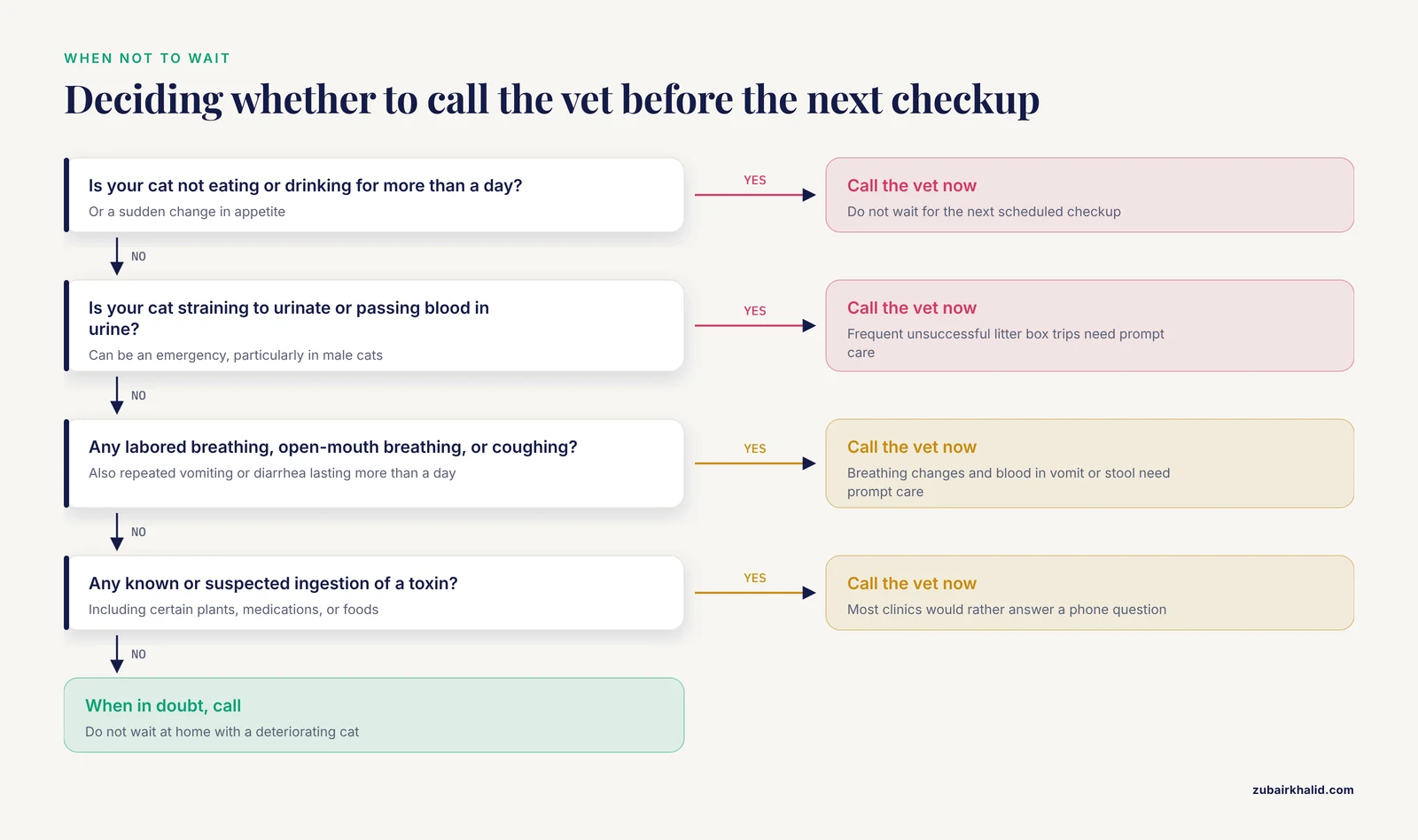
Contact a veterinarian promptly, rather than waiting for the next scheduled checkup, if your cat shows any of the following:
- Not eating or drinking for more than a day, or a sudden change in appetite
- Straining to urinate, frequent unsuccessful trips to the litter box, or blood in urine, which can be an emergency, particularly in male cats
- Repeated vomiting or diarrhea lasting more than a day, or any blood in either
- Labored breathing, open-mouth breathing, or coughing
- Sudden lethargy, hiding, or unwillingness to move
- A noticeable lump, wound, or unexplained weight loss
- Signs of pain, such as reluctance to jump, hunched posture, or vocalizing when touched
- Any known or suspected ingestion of a toxin, including certain plants, medications, or foods
When in doubt, call. Most clinics would rather answer a phone question than have you wait at home with a deteriorating cat.
Frequently Asked Questions
How often should my cat have a vet checkup?
Most healthy adult cats need at least one thorough wellness exam per year, while kittens need a series of visits for their initial vaccines and senior cats often benefit from visits twice a year. Ask your veterinarian to set the interval for your individual cat.
How much does a cat checkup cost?
Prices vary by clinic, region, and the services your cat needs, so there is no single national figure. Call two or three local practices and ask for an itemized wellness visit quote, then plug those numbers into the formula in this article.
Do indoor cats really need annual exams?
Yes. Indoor cats still age, still develop dental disease and weight changes, and can still be exposed to parasites. Cornell's Feline Health Center notes that cats commonly hide signs of illness, so routine exams are how problems are caught early.
What vaccines will my cat need at a checkup?
Core vaccines are rabies and the FVRCP combination vaccine. Your veterinarian will tailor the schedule to your cat's age, previous records, and local rabies law, following the principle of individualized vaccination described in WSAVA guidelines.
Does pet insurance cover checkups?
Coverage depends on the policy. Most standard pet insurance plans cover unexpected illness and injury, while routine care is typically available only through add-on wellness riders. Read the policy terms and compare them against your calculated annual cost.
What should I bring to the appointment?
Bring your cat in a secure carrier, along with prior medical records, a list of current medications and supplements, notes on appetite and litter box habits, and a stool sample if your veterinarian has asked for a fecal test.
Are senior cat checkups different?
Yes, senior visits usually include more screening, such as bloodwork and blood pressure measurement, because age-related conditions are far easier to manage when detected before symptoms appear. Discuss twice-yearly scheduling with your veterinarian.
How do I budget for a cat's vet bills?
Calculate your annual estimate with the formula, divide by twelve, and save that amount monthly. A dedicated pet savings account, a clinic wellness plan, or a wellness rider on an insurance policy all make the cost predictable.