How to Track Your Cat's Health Between Vet Visits
By Dr. Zubair Khalid, DVM, MS, PhD ·
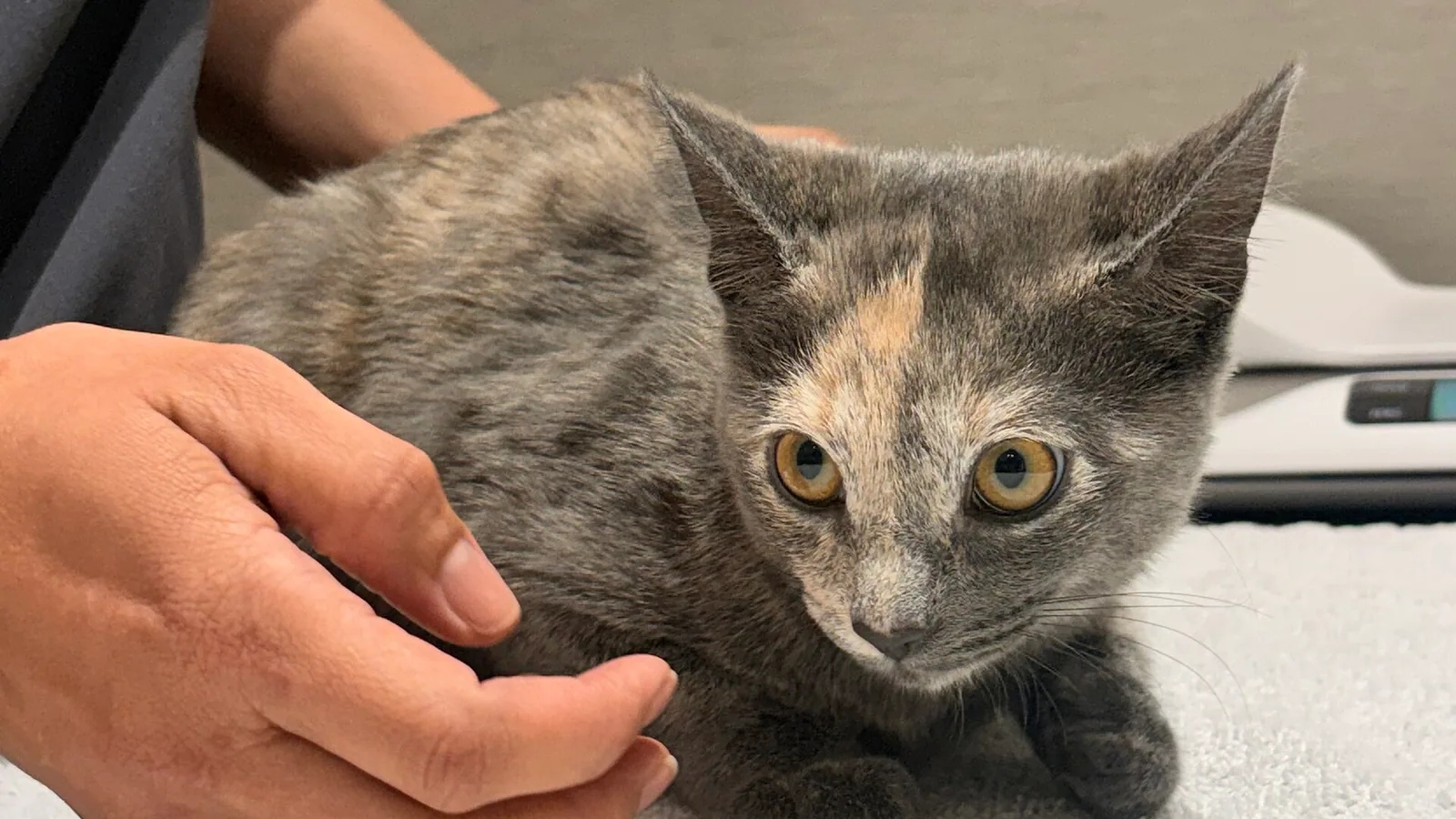
Track your cat's health at home with a simple weekly routine: weigh your cat, record appetite, water intake, litter box output, resting breathing, mobility, coat condition, and behavior in a single template, then bring that record to every veterinary appointment. Ten minutes a week is enough. The goal is not diagnosis. The goal is a written baseline so that when something changes, you and your veterinarian see the change early, with dates and numbers attached.
Cats are skilled at hiding illness, and most cats see a veterinarian only once or twice a year. A cat health tracking system closes that gap. This article shows you why tracking works, exactly what to monitor, how to set up a template you will actually use, which tools help (and which do not), the mistakes to avoid, and when a change in your log means you should call your veterinarian today rather than wait for the next exam.
This article is educational and is not a substitute for veterinary diagnosis or treatment.
Why a Cat Health Tracking System Works
Cats evolved as small prey animals as well as predators, so their instinct is to mask pain, nausea, and weakness. By the time a cat looks obviously sick to an owner, disease has often been progressing quietly for weeks or months. Structured home tracking is designed to catch the quiet phase.
The logic behind this approach is well established in medicine more broadly. Remote measurement-based care, meaning the routine collection of patient-reported outcomes between clinical visits, is designed to inform clinical decision-making and improve outcomes such as relapse and quality of life for people living with chronic illness [1]. In human respiratory medicine, a systematic review of digital health interventions found that smartphone symptom tracking and self-monitoring tools can strengthen self-management skills and patient engagement while reducing pressure on health systems [2]. Your cat cannot fill out a symptom diary, so you fill it out for them. The principle is the same. Frequent, structured observations between professional visits give the treating clinician better data than memory alone.
Written records also protect against a known failure mode in medicine. A qualitative study of diagnostic delays found that fragmentation of care, lack of follow-up, and overlooked history-taking contributed to missed diagnostic opportunities [3]. When you hand your veterinarian a dated log instead of a vague recollection, you reduce the chance that a meaningful clue gets lost between visits.
Finally, tracking keeps you attentive to subtle changes. Research in cats with osteoarthritis found that affected animals showed greater stride-to-stride variability and left-right asymmetry in hip joint movement compared with cats without osteoarthritis, even when moving at a normal walking speed [4]. Those are exactly the kind of small, gradual changes an owner notices only by comparison over time, which is what a tracking record provides.
At a Glance: Your Weekly Cat Health Checklist
| What to check | How often | What to record | Call the vet promptly if |
|---|---|---|---|
| , - | , - | , - | , - |
| Weight | Weekly or monthly | Pounds and ounces, same scale, same time of day | Steady unexplained loss or gain |
| Appetite | Daily glance, weekly log | All meals eaten, partial, or skipped | No appetite for more than a day, or total refusal |
| Water intake | Weekly | Noticeably more or less than usual | Sudden large increase or decrease |
| Litter box | Daily scoop, weekly log | Number of urine clumps, stool quality | No urine produced, straining, or crying in the box |
| Resting breathing | Weekly, when asleep or relaxed | Breaths per minute counted for 30 seconds, doubled | Open-mouth breathing, labored effort, rapid rate |
| Mobility | Weekly | Jumping up or down hesitating, stiffness, gait changes | Reluctance to use litter box, crying when moving |
| Coat and skin | Weekly | Matting, dandruff, over-grooming, lumps | Rapid hair loss, wounds, growing lump |
| Behavior and mood | Weekly | Hiding, play, sleep pattern, vocalization | Sudden hiding, aggression, confusion |
Building Your Cat Health Tracking System Step by Step
Step 1: Choose a Format You Will Actually Use
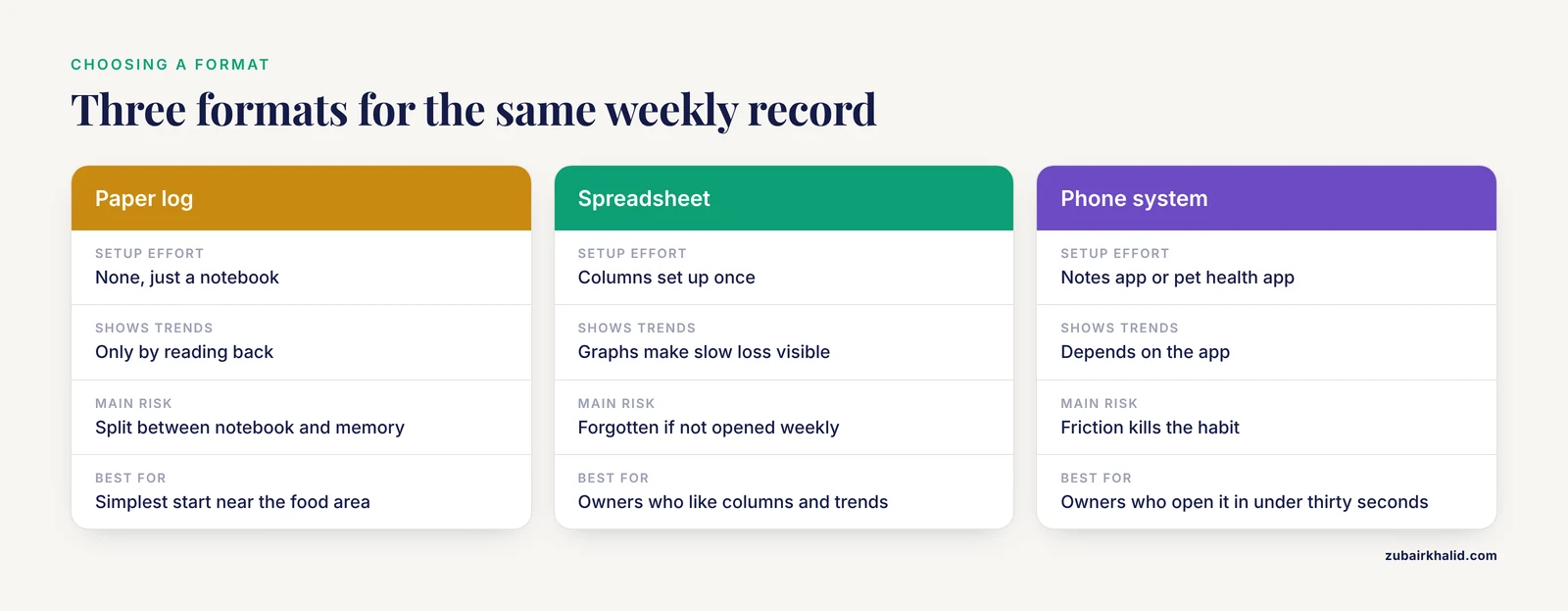
The best cat health tracking system format is the one you will maintain for months. There are three practical options.
A paper log is a dedicated notebook kept near the litter box or food area. Write one line per week. This is the simplest format and requires no setup.
A spreadsheet template works well for owners who like columns and trends. Set up columns for date, weight, appetite, water, urine, stool, resting breaths, mobility, coat, behavior, and notes. A spreadsheet also produces graphs, which make gradual trends such as slow weight loss visible at a glance.
A phone-based system can be as simple as a notes app with a repeating weekly reminder, or a dedicated pet health app that logs weight, medications, and symptoms. The human medical literature on digital tracking supports this choice for people who prefer technology. App-based symptom tracking improved engagement and self-management in chronic disease management studies [2], and momentary assessment methods capture day-to-day variation that recall at a clinic visit misses [1]. Pick whichever digital format you can open in under thirty seconds, because friction kills the habit.
Whatever format you choose, keep it in one place. A log split between a notebook, a phone, and your memory is not a system.
Step 2: Establish a Baseline
Spend the first two to four weeks recording your healthy cat's normal values before you try to interpret anything. A resting breathing count of a given number may be normal for one cat and a warning sign for another, so your cat's own baseline matters more than any general figure. Ask your veterinarian at the next visit to help you interpret your recorded baseline and to show you how they want each measurement taken.
Standardize how you collect each measurement. Research on non-invasive physiological monitoring has shown that sampling conditions themselves introduce real variability, with one study in managed killer whales documenting notable intra-individual variation in biomarker values depending on body location and procedure, which led the authors to stress standardized sampling [5]. The lesson transfers directly to home tracking. Weigh your cat on the same scale at the same time of day. Count breathing while your cat is asleep in the same cool room. Measure at the same point in the weekly routine, such as Sunday evening before dinner. Consistency is what turns raw observations into comparable data.
Step 3: Set a Realistic Schedule
Pair each task with something you already do. Scoop the litter box daily and glance at the output. Weigh your cat the same morning each week. Run through the full checklist once a week and do a head-to-tail hands-on check once a month. Attach the routine to an existing habit, such as Sunday coffee or the weekly trash run, and set a phone reminder until it becomes automatic.
What to Track: The Complete Cat Health Checklist
Weight
Weight is the single most valuable number in a home tracking system. Gradual weight loss is one of the earliest visible signs of chronic disease in cats, and it is invisible day to day unless you have numbers on paper. Weigh weekly if your cat has a known condition, and monthly to weekly for healthy adults. For kittens, weigh several times a week because they should be gaining steadily.
To weigh a cat at home, place the cat in a carrier or on your lap on a digital bathroom scale, subtract your own weight if you held the cat, or use a small kitchen or baby scale for kittens and small cats. Record the value in pounds and ounces to the nearest ounce. Never attempt dramatic home weight management on your own, because rapid weight loss in cats is itself a veterinary concern. Discuss any planned diet change with your veterinarian.
Appetite and Water Intake
Record whether meals are finished, partly eaten, or refused. Note any change in manner of eating, such as dropping food, chewing on one side, or approaching the bowl and walking away. For water, you do not need to measure milliliters. Simply note whether drinking is noticeably more or less than your cat's established pattern. A cat that suddenly hovers over the bowl, or one that ignores water entirely, belongs in the notes column with a date.
Litter Box Output
The litter box is your cat's most honest health report. During each scoop, note the approximate number of urine clumps and the general character of stool, including firmness and any mucus, blood, or unusually small hard pellets. Also record defecation frequency. Constipation and diarrhea both show up here days before other signs.
One finding is always urgent. If your cat visits the box repeatedly, strains, vocalizes, and produces no urine, contact a veterinarian immediately. This is a classic emergency in male cats and can progress quickly.
Resting Breathing and Heart Rate
Ask your veterinarian to show you how to count your cat's resting respiratory rate and where to feel the heartbeat during your next visit. Once you have been shown the technique, count breaths for thirty seconds while your cat sleeps and double the number for a per-minute value. Log the count weekly and watch the trend against your cat's own baseline rather than against a textbook number. Counting is easiest on a sleeping cat in a cool room. Open-mouth breathing or visibly labored effort in a cat is an emergency at any rate and warrants immediate veterinary contact.
Mobility, Gait, and Jumping
Cats develop arthritis far more often than owners realize, and the earliest changes are behavioral rather than limping. Record whether your cat hesitates before jumping, skips a favorite high perch, takes stairs more carefully, or grooms certain areas less because reaching has become uncomfortable.
Video helps here. Research on feline locomotion has validated markerless video-based motion tracking for gait analysis in adult cats, showing good to excellent agreement with established laboratory software across twelve kinematic variables, with nine variables exceeding excellent agreement thresholds [6]. Consumer software is not yet a home tool, but the principle matters for you. A short phone video of your cat walking toward you, taken monthly and stored with a date, gives your veterinarian something far more useful than a description. Kinematic studies of arthritic cats found greater stride variability and left-right movement asymmetry at the hip compared with non-arthritic cats, changes that were measurable on video-based systems [4]. Your phone video will not replace a clinical gait analysis, but it can document a limp, a shortened stride, or a new asymmetry for professional review.
Coat, Skin, and Grooming
Weekly, run your hands over the whole body from nose to tail tip. Record matting, flakes, grease, thinning fur, over-groomed bellies or legs, lumps, scabs, and any new sensitivity to touch. Changes in grooming often track changes in pain, stress, or systemic disease, which is why this belongs in your checklist rather than being treated as cosmetic.
Behavior, Stress, and Sleep
Log your cat's mood in one or two plain words each week, along with sleep location, playfulness, sociability, and any new vocalization at night. Take this seriously, because chronic stress is not merely a mood issue in cats. Research on feline stress notes that chronic exposure to stressful environments can negatively affect behavioral, autonomic, endocrine, and immune function [7]. A stressed cat is a cat whose body is working harder, and stress-related changes can appear in appetite, grooming, litter box habits, and illness susceptibility. A one-word mood column in your template often reveals a pattern, such as hiding every week after a new pet arrived, that no single visit to the vet would surface.
Teeth, Face, and Eyes
Once a month, lift the lips and look at the gum line. Record bad breath, red gums, drooling, dropping food, or pawing at the mouth. Note any squinting, discharge, cloudiness, or pupil size difference between eyes. These are observation categories for your log, and every abnormal finding should be described to your veterinarian rather than treated at home.
A Cat Health Tracking System Example
Here is a filled-in cat health tracking system example using a simple table format. Your own template can be shorter or longer.
| Date | Weight | Appetite | Water | Urine | Stool | Resting breaths | Mobility | Coat | Behavior | Notes |
|---|---|---|---|---|---|---|---|---|---|---|
| , - | , - | , - | , - | , - | , - | , - | , - | , - | , - | , - |
| Mar 2 | 11 lb 4 oz | All meals | Normal | 3 clumps daily | Firm, daily | 24 asleep | Jumps counter normally | Good | Playful | Full check, no lumps |
| Mar 9 | 11 lb 3 oz | All meals | Normal | 3 clumps daily | Firm, daily | 24 asleep | Normal | Good | Normal | |
| Mar 16 | 10 lb 15 oz | Left half of dinner | Normal | 3 clumps daily | Slightly soft | 26 asleep | Hesitated before sofa jump | Oily at tail base | Quiet, hiding more | Watch appetite and weight, video of walking saved |
| Mar 23 | 10 lb 9 oz | Skipped dinner once | Increased | 3 clumps daily | Firm | 28 asleep | Skipped window perch | Good | Hiding evenings | Called vet, appointment booked, video attached to portal |
In this example, three weeks of trend data told a story no single entry could. Weight was drifting down, appetite was softening, resting breathing was slowly rising, and mobility had changed. The owner had dates, numbers, and a video ready for the veterinarian, which is exactly what a tracking system is for. This is illustrative, not a prediction. Any similar pattern in your own cat should be discussed with your veterinarian.
Tools, Supplies, and What Not to Rely On
A complete home kit costs little. You need a digital scale that reads in ounces, a notebook or spreadsheet template, a phone with a camera and timer, and a treat to make handling pleasant.
Video is your most underused tool. Short monthly clips of your cat walking, jumping, and rising from rest create a visual archive that dated text entries cannot match. The scientific case for video-based movement assessment in cats is strong, with deep learning motion tracking validated for feline gait variables against reference software [6]. Store clips by date in a dedicated album so you can show your veterinarian a before-and-after pair within seconds.
Be skeptical of consumer wearables marketed for cats. This is an area where the research is candid about current limits. A pilot study comparing a commercially available chest-strap heart rate monitor with a traditional ambulatory electrocardiogram in healthy, unrestrained cats found the monitor's heart rate variability assessments did not agree well with the reference ECG, and the authors concluded the device was not supported for heart rate variability studies in cats [7]. That does not mean no consumer device will ever work for cats. It means that, at present, a device readout is no substitute for your own observations and your veterinarian's examination. If you use a wearable, treat its numbers as curiosities to mention at appointments, never as reasons to skip veterinary care, and discuss any device with your veterinarian before trusting its outputs.
Resist the urge to buy diagnostic gadgets. Home tracking is about observation, not home diagnosis. Anything that claims to replace bloodwork, imaging, or an examination does not belong in your system.
Common Mistakes to Avoid
Recording only when something seems wrong. A log full of bad days has no context. Healthy weekly entries are what make an abnormal entry meaningful.
Changing the measurement method. Switching scales, counting breathing on an active cat instead of a sleeping cat, or weighing after meals makes your data incomparable. Standardize first, as physiological monitoring research across species consistently emphasizes [5].
Recording feelings instead of observations. "Seems off" is not data. "Ate half of breakfast, hid under bed from 4 pm onward" is data. Write what you saw.
Waiting for the annual exam with an urgent problem. A tracking system is a bridge between visits, not a substitute for judgment. If an entry alarms you, act on it that day.
Interpreting trends without training. Your job is to detect and document change. Interpretation belongs to your veterinarian, who can place your log alongside an examination and any needed tests.
Turning Your Record Into Better Veterinary Care
Bring the log to every appointment, including wellness exams. Hand it over or offer the spreadsheet, and highlight the entries that concern you. A dated record changes the conversation from "he has seemed tired lately" to "his resting breath count rose over three weeks, his weight dropped eleven ounces, and here is the walking video from each month."
This habit directly supports cat preventive care. Preventive care works on a schedule, and organizations such as AAHA and the American Association of Feline Practitioners publish feline life stage wellness guidelines built around regular examinations, and the Companion Animal Parasite Council publishes guidance on parasite prevention. Your home record does not replace that schedule. It sharpens it, because your observations help the veterinary team decide what deserves attention at each visit.
The record also protects continuity. Studies of diagnostic delay in human medicine identified fragmented care and lack of follow-up as recurring failure points [3]. Cats are especially vulnerable to this because they often see different veterinarians, move between households, and cannot describe their own history. A single dated log that travels with your cat, whether printed or shared through a clinic portal, keeps the story in one thread.
If your veterinarian diagnoses a chronic condition, ask how they want your tracking adapted. Many conditions have specific home monitoring routines, such as daily appetite scores or breathing counts, that your veterinarian will want recorded at a defined frequency. Ask for the exact format they prefer, and put it straight into your template.
Troubleshooting When Tracking Gets Hard
My cat hides or resists being weighed. Weigh the empty carrier, then weigh the carrier with the cat inside and subtract. Do this right after a meal when the cat is settled, and pair it with a treat. If your cat panics, drop to monthly weighing and rely more on the other checklist items. Forcing restraint creates stress, and stress itself works against feline health [7].
I keep forgetting. Shrink the task. A ten-second daily litter box glance plus one weekly table row is enough. Set a recurring reminder, put the notebook on the food container, or log while you scoop.
Two people share the care. Put the template somewhere shared, agree on plain wording, and assign one named person to the weekly entry. A log only one person understands will not reach the veterinarian intact.
My numbers bounce around. Look at the trend over four weeks rather than any single entry, and check whether your method drifted. If the bounce persists, bring the whole log to your veterinarian and ask them to help identify which values matter for your individual cat.
Welfare and Safety Points
Keep handling low-stress and brief. Chronic stress harms cats beyond mood, with documented effects on autonomic, endocrine, and immune function [7], so a tracking routine that involves chasing, scruffing, or forcing your cat works against its own purpose. Weigh in the carrier, count breaths while the cat sleeps naturally, and do hands-on checks in short sessions with treats.
Never medicate, diet, or treat based on your log alone. The log documents, the veterinarian decides. And keep the emergency rule absolute: no urine production with straining, open-mouth breathing, collapse, seizures, or suspected toxin exposure means contacting a veterinarian or emergency clinic immediately, not adding another entry to the template.
Limitations and When to Contact a Veterinarian
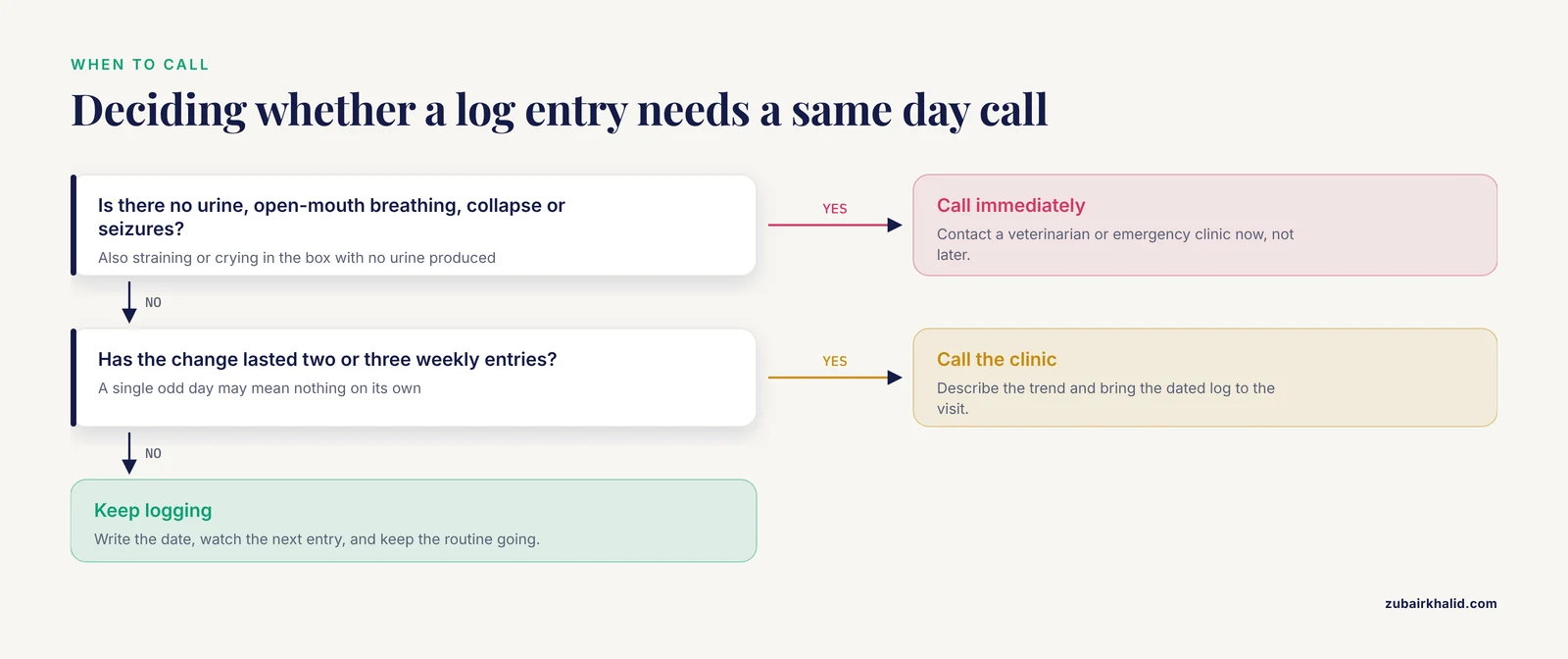
Home tracking detects change. It does not diagnose, and it does not establish how quickly any problem is progressing. Individual cases always require a veterinarian, and your log is a communication tool for that professional relationship, not an independent source of answers.
Contact your veterinarian promptly, within the same day or as they direct, when any of the following appear in your record or your home:
- No urine produced despite repeated litter box visits, straining, or crying in the box
- Open-mouth breathing, labored breathing, or a resting breath count that climbs well above your cat's established baseline
- Complete refusal of food lasting more than a day, or a day of skipped meals in a kitten
- Repeated vomiting, persistent diarrhea, or no stool for several days beyond your cat's normal pattern
- Sudden weight loss visible across several weekly entries, or any rapid unexplained gain with a bloated appearance
- A new lump, a wound that is not healing, sudden severe lameness, crying when touched or lifted
- Sudden behavior collapse, meaning hiding, aggression, disorientation, or seizures in a previously well cat
- Squinting, sudden blindness signs, a differing pupil size, or any eye that looks painful
If your veterinarian has given you condition-specific thresholds for a diagnosed disease, those numbers override anything general in this article. Ask for them in writing at your next visit and build them directly into your template.
Frequently Asked Questions
How often should I track my cat's health between vet visits?
Do a ten-second litter box and food bowl glance daily, and complete the full weekly checklist including weight once a week. Monthly, add a hands-on head-to-tail check and a short walking video. Increase frequency for kittens, seniors, and cats with diagnosed conditions based on your veterinarian's instructions.
What is a cat health tracking system?
A cat health tracking system is a simple, repeatable routine for recording your cat's weight, appetite, water intake, litter box output, resting breathing, mobility, coat, and behavior in one dated template between veterinary visits. Its purpose is to create a baseline and document changes so your veterinarian can interpret them with real data.
What should I do if I notice a change in my log?
Write it down with the date first, check whether it persists on the next entry, and then call your veterinary clinic to describe it. A single odd day may mean nothing, but a trend across two or three weekly entries, or any emergency sign such as no urine production or open-mouth breathing, warrants immediate contact.
Do I need a smart collar or wearable to track my cat's health?
No. Observation, a scale, and a phone camera cover everything you need. Consumer heart rate and activity devices have not been well validated in cats, and one published pilot comparison of a chest-strap monitor against reference ECG found the device unsuitable for heart rate variability measurement in cats, so treat any wearable output as informal information to mention at the clinic, not as a health verdict.
How do I weigh my cat accurately at home?
Use the same digital scale each time, weigh your cat in a carrier on a bathroom scale and subtract the carrier weight, or use a baby or kitchen scale for kittens. Weigh at the same time of day, before meals, and record to the nearest ounce.
How do I count my cat's resting respiratory rate?
Watch your cat's chest rise and fall while it sleeps or rests calmly, count each full rise as one breath for thirty seconds, and double the result. Ask your veterinarian to demonstrate the technique and help you interpret your cat's baseline at your next visit.
Should I track an outdoor cat differently from an indoor cat?
Use the same core template for both, and add bite marks, abscesses, wounds, and parasite sightings to the outdoor cat's checklist. Outdoor access also raises the priority of the parasite prevention discussion with your veterinarian, following guidance from organizations such as the Companion Animal Parasite Council.
Can a tracking template replace regular wellness exams?
No. A template documents change between visits, but only a veterinary examination, and where indicated diagnostic tests, can assess your cat's health fully. Wellness examinations on the schedule your veterinarian recommends, informed by your home record, remain the backbone of preventive care.
Sources
- Remote Measurement-Based Care Interventions for Mental Health: Systematic Review and Meta-Analysis.
- Effectiveness of Digital Health Interventions for Chronic Obstructive Pulmonary Disease: Systematic Review and Meta-Analysis.
- [[Health professionals' perspective about women's experiences during the diagnostic process of ovarian cancer in Catalonia: Qualitative study].](https://pubmed.ncbi.nlm.nih.gov/37043975/)
- Coxofemoral joint kinematics using video fluoroscopic images of treadmill-walking cats: development of a technique to assess osteoarthritis-associated disability.
- Tracking epidermal cortisol and oxytocin in managed killer whales as potential non-invasive physiological welfare indicators.
- A Validation of Supervised Deep Learning for Gait Analysis in the Cat.
- Comparative Assessment of Heart Rate Variability Obtained via Ambulatory ECG and Polar Heart Rate Monitors in Healthy Cats: A Pilot Study.