Cat Dandruff vs. Flea Dirt: How to Tell the Difference
By Dr. Zubair Khalid, DVM, MS, PhD ·
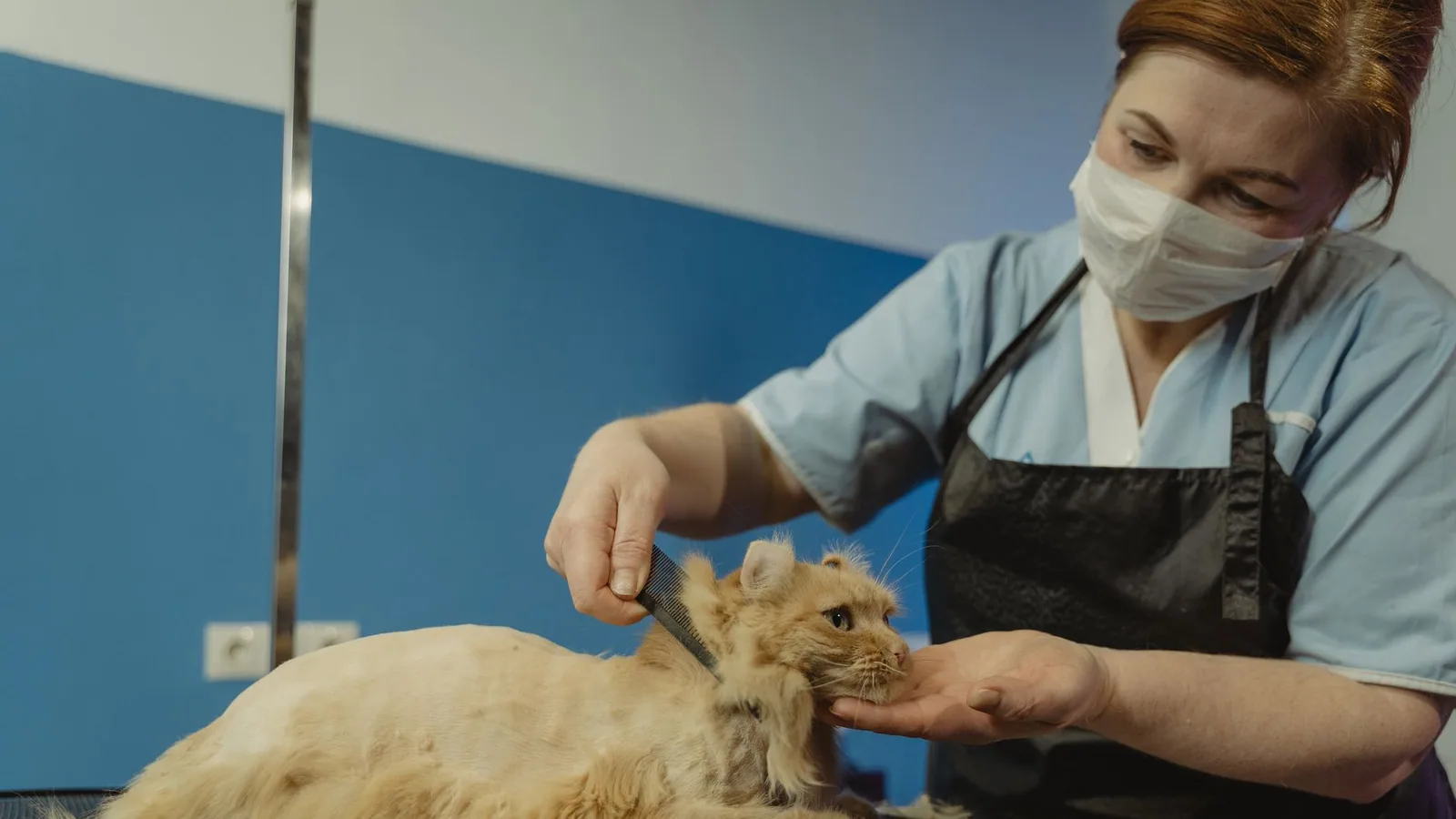
Cat dandruff is white or grayish flakes of dead skin that fall from the coat, while flea dirt is dark brown or black specks made of digested blood left behind by fleas. The fastest way to tell them apart is the wet paper towel test. Brush a few specks onto a white paper towel and lightly moisten them. Flea dirt dissolves into reddish brown or rust colored smears because it contains blood. Dandruff stays white, does not smear red, and simply looks like a tiny flake of dry skin whether wet or dry,.
That single test answers the question most owners bring home from the grooming session. The reason it matters is that the two findings point in completely different directions. Dandruff is a symptom of the skin and coat, sometimes minor and sometimes a sign of systemic disease. Flea dirt is proof of live fleas somewhere on the cat or in the home, even if you have never seen a single flea. This article walks through what each one is, what causes them, how to tell the difference reliably, and the practical steps that fix each problem.
At a Glance: Dandruff or Flea Dirt
| Feature | Cat Dandruff | Flea Dirt |
|---|---|---|
| Color | White, gray, or slightly yellow flakes | Black or dark brown specks |
| Wet paper towel test | Stays white, no smear | Melts into a reddish brown smear |
| Texture | Soft, flat, greasy or dry flakes | Gritty, like coarse pepper, often comma shaped |
| Location on the body | Back, tail base, flanks, anywhere the cat cannot groom well | Neck, shoulders, base of tail, along the back |
| Itching | May be absent unless a skin disease is present | Usually present, often intense scratching and biting |
| Movement | None unless mites are involved | None, the specks are flea feces, not living insects |
| What it means | Skin, diet, grooming, or systemic health issue | Active fleas on the cat or in the environment |
| First action | Gentle grooming, humidity, veterinary skin exam if it persists | Start or restart year round flea control and clean the home |
Use the table for a first pass. The sections below explain each row in detail and cover the follow up steps.
What Flea Dirt Actually Is
Flea dirt is the feces of adult fleas. Fleas feed on blood, and they pass digested, partially dried blood as small dark specks that fall from the coat onto bedding, combs, and surfaces. Because it is essentially dried blood, flea dirt behaves in a very specific way when it gets wet. On a damp paper towel it dissolves and leaves a reddish or rust colored stain. That reaction is the single most reliable field test a cat owner can do, and it is the reason the wet towel test is recommended in owner guidance from veterinary teaching hospitals and parasitology resources,.
Flea dirt matters for two reasons. First, it is diagnostic evidence of flea exposure. Many owners assume that if they cannot see fleas, the dark specks must be something harmless like dirt or dandruff. Fleas move fast, hide in dense fur, and spend most of their life cycle off the animal. Adult fleas on a cat may represent a small fraction of the fleas in the household, so finding flea dirt without finding fleas is common and still requires treatment.
Second, flea dirt means your cat is being bitten. Each bite is a blood meal for the flea and an antigen load for the cat. Some cats develop flea allergy dermatitis, an intensely itchy hypersensitivity reaction to flea saliva. Affected cats can break out with miliary dermatitis, hair loss, and scabs from very few flea bites, which is why flea allergy cats often look worse than the flea count would suggest,.
What Cat Dandruff Actually Is
Dandruff is made of corneocytes, the dead outer cells of the epidermis, shed in visible white flakes rather than the invisible shedding that happens on healthy skin. Small amounts of flaking can be normal, especially in dry winter air. Persistent or heavy dandruff usually reflects one of the following,:
- Dry skin from low household humidity, over bathing, or harsh shampoos
- Reduced grooming, common in overweight cats that cannot reach the back, rump, and tail base, and in senior cats with painful joints
- Dietary factors, including low quality fat intake or diets not formulated for skin health
- Seborrhea and other primary skin disorders that alter the rate and quality of skin cell turnover
- External parasites, most notably Cheyletiella mites, which produce large flakes that seem to move, earning the nickname walking dandruff
- Allergic skin disease, including food and environmental allergies
- Systemic disease. Hyperthyroidism, diabetes mellitus, and kidney disease can all show up in the coat before other signs become obvious
The distribution of flakes gives clues. Flakes concentrated over the rump and tail base in a cat that cannot groom back there point toward reduced mobility or obesity. Flakes that seem to crawl on close inspection raise the question of Cheyletiella. Generalized flaking with weight change, increased thirst, or changes in appetite points toward a medical workup rather than a grooming problem,.
Why the Difference Matters for Cat Preventive Care
The distinction between dandruff and flea dirt is a textbook example of why routine hands on inspection belongs in every cat health checklist. Skin and coat changes are among the earliest observable signs of both local and systemic disease. Veterinary preventive care guidelines, including those from the American Animal Hospital Association and the American Veterinary Medical Association, emphasize regular wellness examinations precisely because findings like these are caught by owners and veterinarians looking at the same animal in the same places,.
Flea dirt in particular carries a preventive care message. Finding it means the cat is exposed to fleas before the infestation is large enough to be obvious. Cats can also acquire tapeworms by swallowing infected fleas during grooming, so flea exposure links directly to other parasite risks. When owners can identify flea dirt early, treatment starts before the household flea population multiplies.
How to Tell the Difference Step by Step
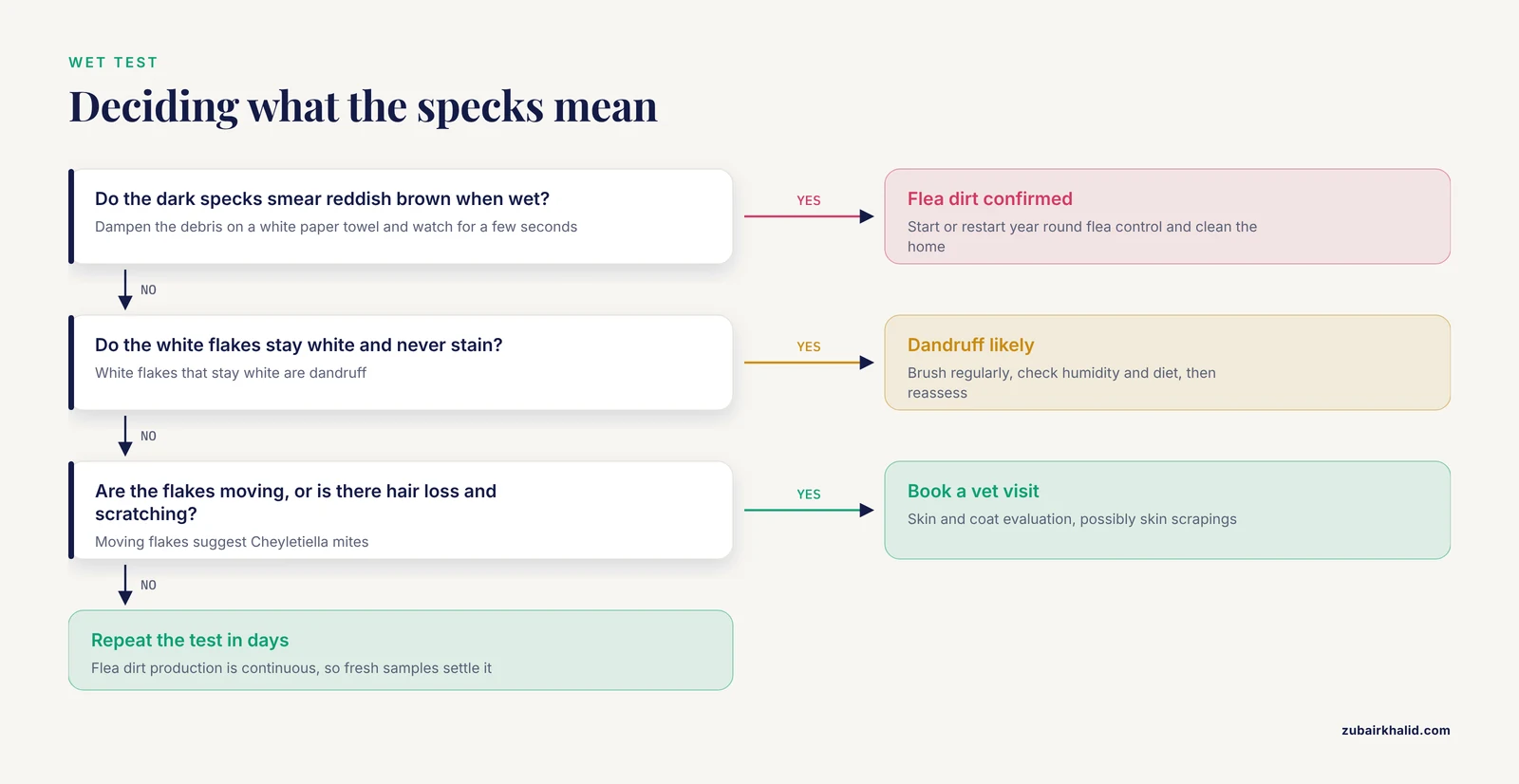
Follow this sequence during a calm moment, ideally after brushing. Most cats tolerate this better on your lap or a towel covered table.
- Brush thoroughly over a white surface. Use a fine toothed flea comb and brush the neck, shoulders, rump, and base of the tail. Flea dirt accumulates in these areas because that is where fleas congregate on cats. Let debris fall onto a white paper towel or sheet of paper.
- Separate the specks. You may see a mix of white flakes and dark specks. Both can be present at the same time, and a heavily infested cat with damaged skin can show dandruff secondary to flea allergy.
- Perform the wet test. Lightly dampen the paper towel, or dab the collected debris with a wet cotton ball. Watch the dark specks for a few seconds. Reddish brown halos or smears around the specks confirm flea dirt. White flakes that stay white are dandruff.
- Check the comb teeth. Flea dirt clings to the fine teeth of a flea comb and smears red when pressed against a wet tissue. Dandruff flakes brush off easily and never stain.
- Inspect the cat, not just the debris. Part the fur along the back and around the tail base. Look for live fleas, which are small, fast, brown, and flattened, and look for skin changes such as scabs, redness, or hair loss. Flea allergy cats often have more skin damage than fleas.
- Note the itch level. Record whether your cat scratches, bites, or overgrooms, and where. Intense itching at the rump and tail base is a classic flea allergy pattern. Quiet flaking without itch is more typical of dry skin or reduced grooming,.
If the test is ambiguous, repeat it on a fresh towel over the next few days. Flea dirt production is continuous while fleas are present, so repeated sampling usually resolves the question.
Cat Dandruff vs Flea Dirt Causes
Causes of flea dirt
There is only one cause. Fleas are present, somewhere. Fleas thrive in warm, humid indoor and outdoor environments, and they reproduce on bedding, carpet, and furniture. Even cats that never go outdoors acquire fleas, because flea eggs and pupae ride in on shoes, clothing, other pets, and wildlife moving through shared spaces. This is a frequent surprise for owners of indoor only cats, and it is why parasitology authorities recommend year round parasite prevention for all cats regardless of lifestyle.
A related trap is the seen nothing, treated nothing cycle. Because most of the flea population lives in the environment as eggs, larvae, and pupae rather than on the cat, a single treatment application rarely ends an established infestation. Consistent treatment over several months is needed to break the life cycle.
Causes of dandruff
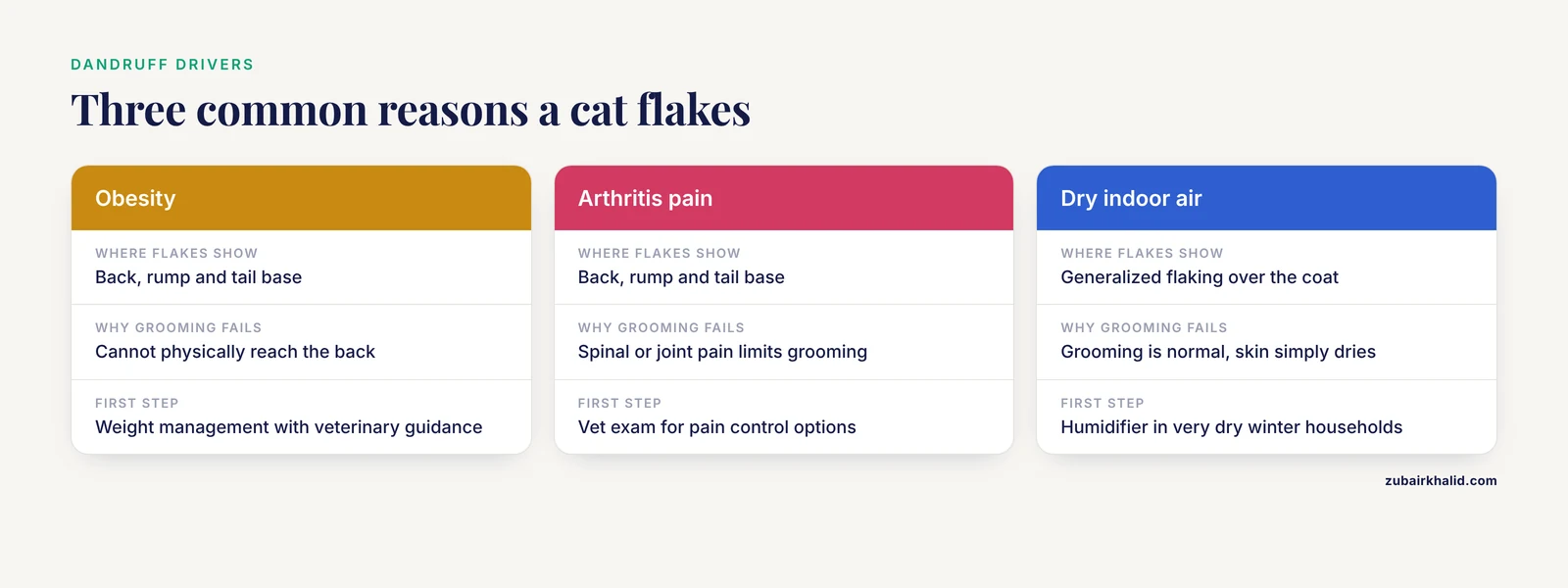
Dandruff has many possible drivers, which is why the fix depends on identifying the right one,:
- Environmental dryness. Forced air heating in winter lowers humidity and dries skin. Indoor cats are exposed year round.
- Obesity. Overweight cats cannot physically reach their back and rump to groom. Dead hair and scale accumulate where the tongue cannot reach.
- Pain and arthritis. Senior cats with spinal or joint pain reduce grooming for the same mechanical reason, and the result looks identical to obesity related flaking.
- Diet. Essential fatty acids support skin barrier health. Diets that are incomplete or poorly balanced can produce a dry, dull coat with visible scale.
- Bathing and grooming products. Cats are rarely bathed, but when they are, human shampoos or over frequent bathing strip protective oils and trigger flaking.
- Parasites and infection. Cheyletiella mites, lice, and bacterial or yeast overgrowth on damaged skin all produce scale. Cheyletiella in particular mimics ordinary dandruff until the flakes are seen moving.
- Allergies. Food or environmental allergy can drive scale, itching, and secondary skin changes.
- Systemic disease. Hyperthyroidism, diabetes, and chronic kidney disease frequently alter coat quality. Dandruff in a middle aged or senior cat with other subtle changes deserves a veterinary exam and basic screening bloodwork,.
How to Fix Cat Dandruff vs Flea Dirt: Practical Solutions
Treating flea dirt
The goal is simple. Kill adult fleas on the cat, break the environmental life cycle, and keep prevention continuous. The Companion Animal Parasite Council recommends year round flea control for all pets in the household, because interruption of treatment is the most common reason infestations return.
Step by step:
- Treat every cat and dog in the home. Fleas reproduce on any susceptible host. Treating one animal while others go unprotected leaves a reservoir.
- Use a product labeled for cats and follow the label exactly. Topical and oral flea preventives are available through retailers and veterinary clinics. Use only products approved for cats, and dose by the cat's actual weight.
- Never apply a dog flea product to a cat. Some canine topical products contain permethrin at concentrations that are highly toxic to cats, causing tremors, seizures, and death in severe cases. This is one of the most serious and most preventable medication errors in cats. If a dog product has been applied to a cat, contact a veterinarian or poison control immediately, bathe the cat to remove residue if directed, and keep the animals separated until the dog's product has fully dried.
- Clean the environment. Wash all pet bedding in hot water. Vacuum carpets, rugs, furniture, and baseboards thoroughly and discard the vacuum contents. Vacuuming physically removes eggs, larvae, and pupae and stimulates emergence so that adult fleas contact the treated cat instead of hiding.
- Treat continuously for at least three consecutive months during an active infestation, and then maintain year round prevention. Environmental pupae can continue to hatch for weeks, and new adults will appear until the life cycle is exhausted.
- Recheck with the wet towel test. After several weeks of consistent treatment, brush and test again. Finding less flea dirt over time confirms the program is working.
Treating dandruff
Because dandruff is a symptom, the fix depends on the cause. Work through these in order.
- Brush regularly. Brushing removes dead hair and scale, spreads natural skin oils through the coat, and is the single most useful home intervention for most cats. For a cat with reduced grooming, daily brushing partially replaces what the cat cannot do.
- Improve grooming access. If obesity limits grooming, weight management under veterinary guidance will restore the cat's reach over time. If arthritis is suspected in a senior cat, a veterinary exam can identify pain control options that return grooming behavior.
- Address indoor humidity and products. Avoid over bathing, use only products formulated for cats if bathing is medically necessary, and consider a humidifier in very dry households during winter.
- Review nutrition with your veterinarian. Complete and balanced diets formulated for skin support, or fatty acid supplementation when your veterinarian recommends it, can improve coat quality. Do not add supplements without veterinary advice, because excesses of some nutrients cause their own problems.
- Rule out parasites and skin disease. If flaking is heavy, spreading, itchy, or accompanied by visible movement in the debris, ask your veterinarian for a skin and coat evaluation. Cheyletiella and other parasitic causes require prescription treatment.
- Screen for systemic disease when indicated. For middle aged and senior cats, or any cat with dandruff plus weight, appetite, thirst, or energy changes, bloodwork and a physical exam can identify thyroid disease, diabetes, or kidney disease early, when treatment is most effective.
Common Mistakes to Avoid
- Assuming dark specks are just dirt. This is the single most common error and the reason infestations go untreated for months. Test every dark speck.
- Treating only the cat with fleas and not the other pets. Untreated hosts keep re seeding the home.
- Stopping flea prevention once the itching stops. Environmental stages continue to hatch after adult fleas on the cat are dead. Early discontinuation is the classic cause of relapse.
- Splitting a large dog product among several cats, or using a dog product on a cat at all. Permethrin containing dog products can be fatal to cats.
- Scrubbing dandruff away with frequent baths. Cats self groom, and over bathing strips oils and worsens flaking.
- Chasing dandruff with shampoo changes while ignoring weight, joint pain, or senior health screening. The coat is often the first place systemic disease shows.
- Blaming the diet immediately. Diet can contribute, but diagnosis before dietary change prevents months of trial and error without a clear answer.
Welfare and Safety Points
- Handle a cat that scratches intensely with care. Skin can be abraded or infected, and even gentle brushing can hurt. Stop and have the skin examined if the cat reacts to touch.
- Keep all flea products, including over the counter sprays and collars, out of reach and store them away from food. Follow label storage and disposal instructions.
- Kittens are at particular risk from heavy flea burdens because fleas can remove enough blood to cause life threatening anemia. Pale gums, weakness, or lethargy in a kitten with flea dirt is an emergency,.
- Brushing and combing are also welfare tools. Regular brushing prevents matting, reduces hair swallowing, and gives you a weekly window into skin, weight, and body condition changes.
The Cat Health Checklist Connection
Both findings fit naturally into a home cat health checklist. Once a week, take five minutes to run through this list:
- Brush and inspect the coat over a white surface
- Look at the neck, shoulders, and tail base for specks, scabs, or hair loss
- Wet test any dark specks you find
- Check body condition by feel. Can you feel the ribs easily with light pressure?
- Note grooming behavior, appetite, thirst, litter box output, and energy
- Confirm flea prevention is current for every pet in the home
- Book the recommended wellness examination. Adult cats generally benefit from at least annual veterinary exams, and senior cats from visits twice a year, consistent with preventive care guidance from the AAHA and AVMA,
This routine catches flea dirt before an infestation establishes, catches dandruff before an underlying disease advances, and builds a baseline that makes change easier to spot.
Limitations and When to Contact a Veterinarian
Individual cases vary, and this article cannot replace a physical examination, skin scrapings, flea combing by a trained eye, or bloodwork. Contact your veterinarian, or an emergency clinic outside regular hours, in any of these situations:
- Signs of anemia. Pale gums, weakness, collapse, or rapid breathing, especially in kittens or cats with heavy flea dirt. This can be urgent.
- Toxicity concern. Tremors, twitching, drooling, or seizures after any flea product was applied, particularly if a dog product was used on a cat. Seek emergency care immediately.
- Severe skin disease. Open sores, widespread scabs, raw patches, or intense scratching that prevents rest.
- Heavy or persistent flea dirt despite a full three month treatment program, which suggests an environmental reservoir or a product problem that needs veterinary input.
- Dandruff that does not improve with four to six weeks of grooming, humidity, and nutrition attention, or dandruff with any systemic signs such as weight loss, increased thirst, vomiting, or behavior change.
- Spreading hair loss or visible moving flakes, which suggests mites or another parasitic condition requiring diagnosis and prescription treatment.
- New dandruff in a cat over middle age, when screening for hyperthyroidism, diabetes, and kidney disease is worthwhile,.
When you call, mention the wet paper towel result, how long the specks or flakes have been present, what flea prevention each pet is on and when it was last applied, and any other household animals affected. Those details shorten the diagnostic path considerably.
Frequently Asked Questions
Can my cat have both dandruff and flea dirt at the same time?
Yes, and it is common. Flea allergy damages the skin, and damaged skin sheds scale, so a flea infested cat often shows white flakes and dark specks in the same brush stroke. Treat the fleas first, then reassess the dandruff once the skin has had time to recover.
Does the wet paper towel test work on dandruff too?
Yes, and that is exactly why it works. Dandruff flakes stay white and do not stain when wet. Flea dirt dissolves into a reddish brown smear because it is digested blood. If the specks leave no red or rust colored mark, they are not flea dirt.
Why does my indoor only cat have fleas?
Fleas reach indoor cats through other pets, through people carrying eggs or pupae on clothing and shoes, through wildlife near the home, and through newly introduced items from infested environments. Parasitology guidelines recommend year round flea prevention for all cats, including those that never go outside.
Can I use my dog's flea treatment on my cat?
No. Several canine topical products contain permethrin at concentrations that are toxic and potentially fatal to cats. Always use a product specifically labeled for cats, applied at the labeled dose, and keep recently treated dogs away from cats until the product has dried.
What home remedies help with cat dandruff?
Regular brushing, adequate indoor humidity during dry months, and a complete and balanced diet are the reasonable home measures. Avoid over bathing and avoid human or dog shampoos. If flaking persists after several weeks of these steps, a veterinary skin evaluation is the next step rather than another shampoo.
Is flea dirt dangerous if I never see actual fleas?
Flea dirt means fleas are present whether or not you see them, since adult fleas hide in the coat and most of the flea population lives off the animal as eggs, larvae, and pupae. The bites themselves carry health risks, including flea allergy dermatitis, anemia in heavy infestations, and tapeworm infection if fleas are swallowed during grooming,.
When should dandruff prompt a veterinary visit?
Seek an examination if the dandruff is heavy or worsening, if the cat is scratching, if there is hair loss or skin redness, if the flakes appear to move, or if the cat shows any other changes in weight, appetite, thirst, or energy. New dandruff in a senior cat also merits a check and possibly screening bloodwork,.
How long after starting flea treatment should flea dirt disappear?
With consistent, correctly applied treatment of every pet in the home, flea dirt on the cat should decline steadily over several weeks and keep improving as the environmental life cycle runs out. Continue treating for at least three months during an active infestation, then maintain prevention year round, and use the wet towel test to track progress.
This article is educational and is not a substitute for veterinary diagnosis or treatment.