Senior Finch Care: Aging Signs, Diet, and Comfort
By Dr. Zubair Khalid, DVM, MS, PhD ·
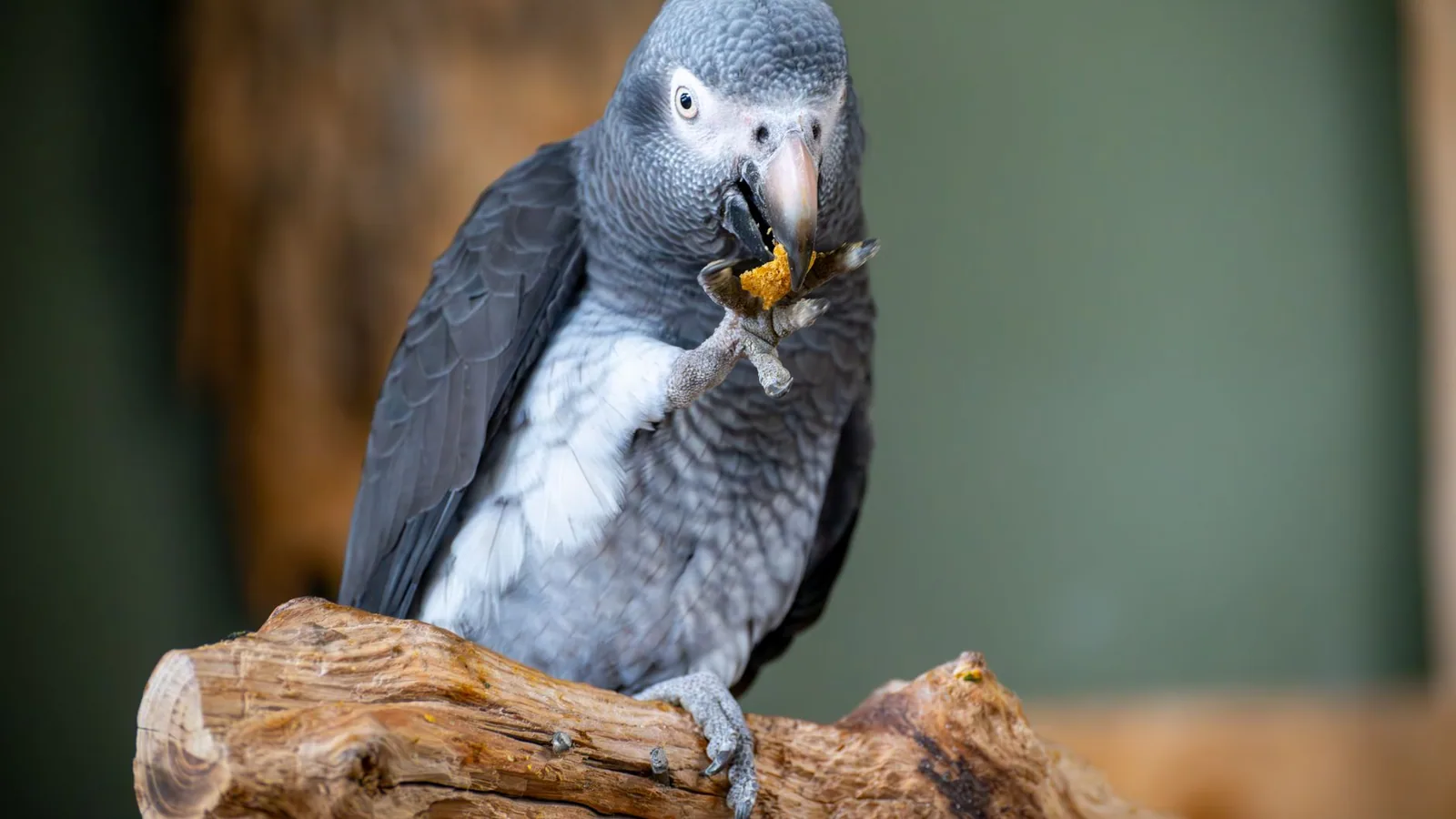
Senior finch care comes down to three things: recognizing the physical changes that arrive with age, adjusting the diet so your bird keeps getting enough protein and moisture from softer foods, and removing small physical hazards from the cage so an older, less agile bird can eat, sleep, and move without strain. Finches age quietly. There is no dramatic gray-muzzle moment like in a dog. The changes show up in feather quality, posture, activity level, and willingness to fly to the highest perch, and owners who catch these changes early can add years of comfortable life.
This guide covers when a finch counts as senior, the specific signs of aging to watch for, how to adapt the daily diet, and the housing and monitoring changes that matter most in the later years.
This article is educational and is not a substitute for veterinary diagnosis or treatment.
Senior Finch Care at a Glance
If you do only five things this week, make them these:
- Estimate your bird's age. Check any leg band for a hatch year. If the bird came without records, ask your avian veterinarian to estimate age during the next visit.
- Do a feather check today. Look for ruffled, broken, stained, or patchy feathers, especially around the vent and under the wings. Feather condition is one of the simplest, most reliable indicators of well-being in small finches, and it can be assessed at home without touching the bird [1].
- Weigh the bird. Use a gram scale and log the number weekly. Weight trend matters more than any single reading.
- Soften part of the diet. Offer soaked seed, egg food, or chopped greens daily so an older bird with a weaker beak or less efficient digestion still gets easy calories.
- Audit the cage floor and perches. Remove anything a stiff, slower bird could crash into, and make sure food and water sit within an easy hop of the favorite resting spot.
How Old Is a Senior Finch?
The answer depends on species and on the individual bird, but for the finches most commonly kept as pets, the practical answer is this: a finch is generally treated as senior once it is past the midpoint of its expected lifespan.
Zebra finches, the species most pet owners keep and the species most veterinary research focuses on, commonly live around five to ten years in captivity with good care. Society finches have a similar range. That means many finches enter their senior years around age four or five, and a bird that reaches eight or nine is genuinely old.
A few points change the math:
- Species. Larger finches and some of the rarer softbill-adjacent species can live longer than zebras or societies. Ask your avian veterinarian about your specific species rather than assuming one number fits all.
- History. A finch that spent early years in poor conditions, on an all-dry-seed diet, or in an overcrowded pet store flight may show aging changes earlier than a well-started bird.
- Sex and breeding history. Hens that laid many clutches often age faster than hens that never bred. Chronic egg laying is hard on the body.
- Records. Closed leg bands placed by breeders sometimes encode the year of hatch. If your bird is banded, record the band details now, while you can still read them easily. Researchers routinely use colored bands to identify individual zebra finches across years of study, which shows how useful a simple band is for tracking an individual bird over time [2].
If you cannot pin down the age, do not worry about the number. Watch the bird instead. The signs of aging described below matter far more than the birthday you never had.
Signs of Aging in Finches
Finches hide decline well, a leftover instinct from life in a flock where a visibly weak bird draws trouble. Senior finches therefore need an owner who looks closely and often. Watch for these changes.
Feather condition and posture
Feather quality is usually the first thing to change. A healthy finch in good condition keeps its feathers smooth, tight, and clean, and it spends part of every day preening. As birds age, or as their general condition slips, the plumage often becomes ruffled, duller, less groomed, or stained around the vent.
Work published on zebra finches developed a plumage scoring system specifically because feather condition tracks overall well-being so closely. Researchers found that a simple plumage score showed substantial reliability even between different observers, and it outperformed the traditional fat score in that respect, meaning ordinary people can learn to judge feather condition consistently [1]. You can borrow the same idea at home:
- Pick a consistent time, such as right after the lights come on in the morning.
- Look at the same four zones each time: head, chest, back, and vent area.
- Score each zone mentally as good, fair, or poor. Smooth and clean is good. Ruffled, broken, missing, or stained is poor.
- Write down the date and what you saw. Photograph the bird weekly if you can. A photo record catches gradual change that the eye misses day to day.
A sudden drop in feather condition in an older bird is one of the clearest signals that something needs attention.
Activity and flight
Older finches fly less, glide more, and take the low route. Specific changes to watch for:
- The bird stops using the highest perches and settles on mid-cage or low perches.
- Flight becomes shorter and heavier, sometimes with visible effort or a wobble on landing.
- The bird spends more time sitting fluffed on the cage floor or on a low perch during hours when it used to be active.
- Climbing to the food dish looks slower or more deliberate.
Any of these can also signal illness rather than simple aging, so a change in activity always deserves a closer look and a weight check.
Weight and body condition
Weight trend is the single most useful number an owner can track. Weigh the bird at the same time of day, ideally before the morning feed, on a kitchen gram scale with a small cup or platform. Log every reading.
Loss of muscle over the breastbone, a sharper and more prominent keel bone, or a gradually declining weight all point to a bird that is not holding condition. The complementary check, the fat score, looks at fat deposits in regions such around the vent and along the crop area. Researchers note that fat scoring requires more training and practice to do consistently than feather scoring does, which is a good reason to have an avian veterinarian show you the technique and establish a baseline during a routine visit [1].
Beak, nails, and face
Aging birds often need more help with grooming:
- Nails grow longer and thicker and may curl, because the bird perches differently and wears them down less.
- The beak can overgrow or develop flaky, crusty texture.
- Overgrown nails change how the foot grips the perch, which increases the risk of falls.
These are grooming issues your avian veterinarian can address and show you how to manage, and they double as warning signs when they appear suddenly.
Eyes, breathing, and voice
Look for cloudiness, swelling, or discharge around the eyes. Listen at rest for clicking, wheezing, or tail bobbing with each breath. Note any change in song, especially in a male zebra finch whose song was once vigorous. Because each of these signs overlaps with serious respiratory and systemic disease, any one of them is a reason to book an avian veterinary visit rather than wait.
Behavior in the flock
Older finches often drop in the pecking order. A once-dominant bird may start waiting for food, avoiding favored perches, or being displaced by younger cage mates. Watch for feather plucking or harassment from flock mates, because an aging bird that cannot defend itself can be injured. Separating a bullied senior into a smaller, calmer cage is a legitimate welfare decision, not a failure.
Senior Finch Diet
Feeding is where owners can make the biggest difference in an older finch's comfort. The goals of a senior finch diet are simple: easy-to-eat calories, adequate protein, moisture, and a weight that stays stable.
The base diet
A complete base diet for pet finches includes a quality finch seed mix or a pellet formulated for small passerines, offered fresh daily. Many finches prefer seed and will always eat seed first, so if you offer pellets, mix them in gradually and be patient. Lafeber's avian nutrition resources describe small passerines as birds that do best with variety built around a nutritionally complete core, and their owner guides for finches recommend pairing a staple diet with fresh components.
Soft and moist foods for aging beaks and digestion
Older finches often eat less dry seed because it takes effort to hull and digest. Offer at least one soft, moist option every day:
- Soaked or sprouted seed. Rinse thoroughly, soak until softened, and remove after a few hours so it does not spoil.
- Egg food or a small amount of cooked, crumbled egg. This supplies concentrated, easily digested protein, which aging birds use efficiently.
- Chopped leafy greens and vegetables. Finely chop so a slower bird can eat its fill without working hard.
- Fresh water, changed daily, placed where the bird does not have to fly far to reach it.
Remove moist foods after a few hours. Spoiled soft food in a warm cage causes more problems than it solves.
What to limit
Keep fatty treats rare. Aged finches, like aged people, tend toward either weight loss or fat accumulation, and both are easier to prevent than to reverse. Milky, high-fat, or sugary items have no place in a finch dish. Grit is unnecessary for finches and can cause digestive impaction, a point the Merck Veterinary Manual makes for pet birds generally.
Supplements and medications
Do not add vitamin drops, tonics, herbal products, or any medication to food or water without an avian veterinarian's instruction. Dosing a bird the size of a finch is delicate work, and an underdosed supplement in water often does nothing while the real problem continues.
Monitoring the diet with the fat score
Because overconditioning and underconditioning both hide under feathers, the fat score exists as a hands-on check of fat reserves. As noted above, this scoring takes practice, so have your veterinarian demonstrate it and set your bird's baseline [1]. Between visits, the plumage and weight logs you keep at home are the practical stand-in.
Comfort: Housing and Daily Care Changes
Small adjustments to the cage convert a standard setup into a senior-friendly one.
Perches
- Provide perches of varied diameter so the feet change position naturally, which helps aging joints.
- Place a comfortable, slightly wider perch at the bird's new favorite resting height. Older finches pick low perches for a reason.
- Avoid sandpaper perch covers. They abrade the feet and add nothing.
- Make sure every perch is stable. A wobbly perch makes an unsteady older bird grip harder and risk falls.
Layout for a slower bird
- Keep food, water, and the grit-free supplement dish within a short hop of where the bird actually rests.
- Soften the landing zones. A padded or shortened fall distance under favorite perches reduces injury if the bird slips.
- Remove clutter, sharp cage accessories, and awkward gaps the bird has to squeeze through.
- Lower the overall activity in the cage if the senior lives with younger, busier flock mates. More space, or a quieter companion, reduces stress.
Temperature, drafts, and light
Older birds tolerate environmental swings less well. Keep the cage away from windows that leak cold air, exterior doors, kitchen drafts, and direct afternoon sun. Maintain a stable room temperature and a dark, quiet, uninterrupted night. Birds need consistent darkness for real sleep, and a senior finch that sleeps poorly ages faster in every visible way.
Bathing and grooming support
Offer a shallow bath or damp greens for feather care, but watch the bird. A wet, chilled senior finch on a cold day is at real risk, so keep bathing opportunities warm and brief, and never bathe a bird that is already fluffed, weak, or in poor feather.
Enrichment that respects limits
Aging does not end the need for stimulation. Fresh greens tucked into the cage, a spray of millet, gentle daily routine, and the sounds of the household all keep an older finch engaged. Match the activity to the bird. Do not rearrange the cage frequently, because older birds map their environment and rely on it staying predictable.
A Weekly Senior Finch Monitoring Routine
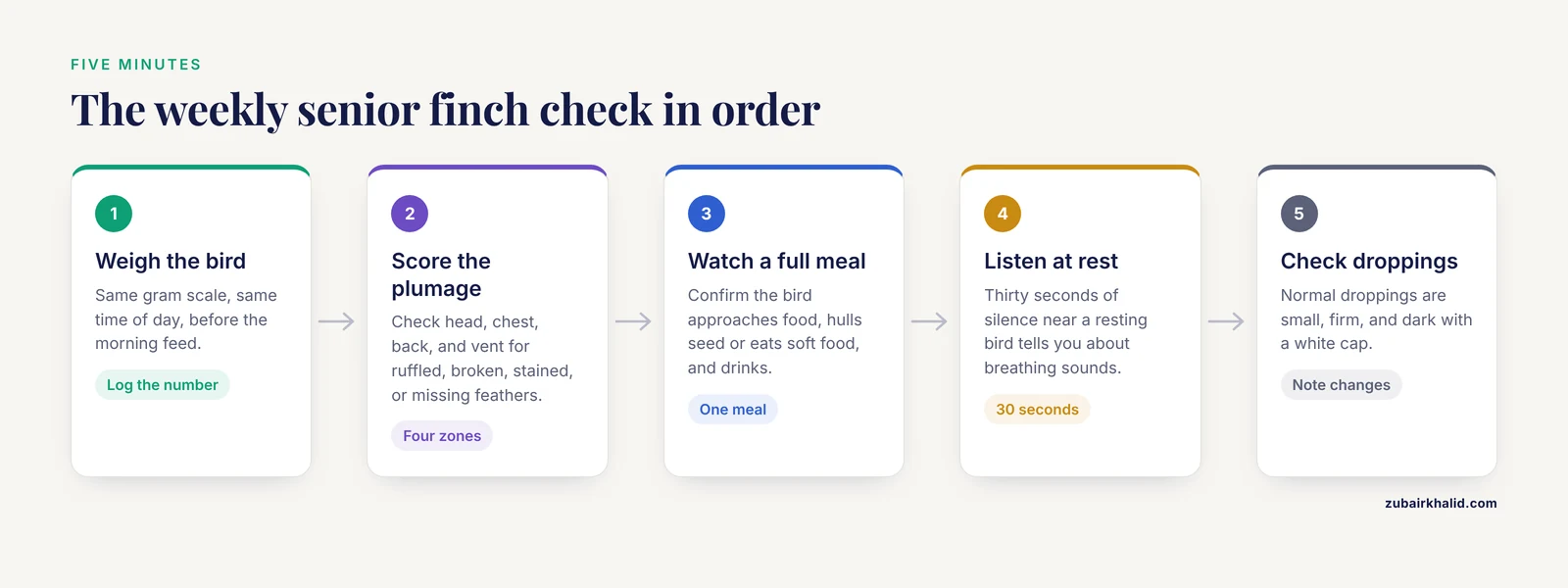
The research on well-being scoring in zebra finches supports a simple principle: consistent, non-invasive observation beats occasional dramatic intervention [1]. Build a five-minute weekly routine:
- Weigh. Same scale, same time of day, log the number.
- Score the plumage. Check head, chest, back, and vent. Note anything ruffled, broken, stained, or missing.
- Watch a full meal. Confirm the bird approaches food, hulls seed or eats soft food, and drinks.
- Listen at rest. Thirty seconds of silence near a resting bird tells you about breathing sounds.
- Check droppings. Normal finch droppings are small, firm, and dark with a white cap. Note persistent changes in color, volume, or consistency.
- Photograph. A weekly photo of posture and feather condition creates a record your veterinarian can use.
The plumage scoring research showed that even a simple four-level assessment of feather condition can be taught and repeated reliably, and that combining it with a fat check gives the fullest picture of condition [1]. Your version does not need a formal score sheet. It needs consistency.
Common Mistakes Owners Make With Senior Finches
- Assuming fluffing is normal aging. A fluffed, puffed, lethargic finch is sick until proven otherwise. Birds fluff when they are cold, but persistent fluffing with inactivity is a red flag.
- Waiting because the bird still eats. Finches keep eating while they decline, then stop abruptly. By the time a finch stops eating, it is in crisis.
- Changing the whole diet at once. Older birds tolerate abrupt change poorly. Introduce soft foods and any new items alongside familiar food over days to weeks.
- Skipping the scale because the bird is hard to catch. Chase-based weighing stresses the bird more than the data is worth. Weigh at night by placing the bird in a small, dim, familiar container on the scale, or have the veterinarian establish trends at visits.
- Ignoring the cage floor. Many owners focus on perches and forget that a grounded senior finch needs safe footing, clean floor material, and easy access to food and water at floor level.
- Treating with home remedies. Over-the-counter bird medications and water additives delay real diagnosis and can worsen dehydration. Use them only under veterinary direction.
- Assuming a single old bird must be lonely. Finches are flock animals, but an ailing senior harassed by cage mates does worse alone in a calm, warm, well-arranged cage. Judge the individual situation.
Welfare and End-of-Life Planning
No owner enjoys planning this, and a finch's small size makes some owners assume nothing can be done gently. That assumption is outdated. Because zebra finches are a standard research species, veterinarians have studied humane end-of-life methods in them specifically. That research compared several euthanasia approaches and found that appropriately chosen methods achieve rapid respiratory arrest while causing few observable distress behaviors, and it documented that the details of technique, such as the rate of gas displacement when carbon dioxide is used, directly affect how the bird experiences the process [3].
The practical takeaway for an owner is this: if your senior finch reaches a point where quality of life is gone, ask your avian veterinarian specifically about low-stress end-of-life options for small passerines. A veterinarian experienced with finches can explain the methods, what the bird will experience, and how to make the moment calm, and can help you judge timing using the weight, plumage, activity, and appetite records you have been keeping. Asking in advance, while the bird is still stable, is far easier than deciding in the middle of a crisis.
Signs that it is time to have that conversation include sustained weight loss that does not respond to diet changes, persistent fluffing and floor sitting, labored breathing, inability to reach food and water, and loss of interest in flock mates or food across multiple days.
Limitations and When to Contact a Veterinarian
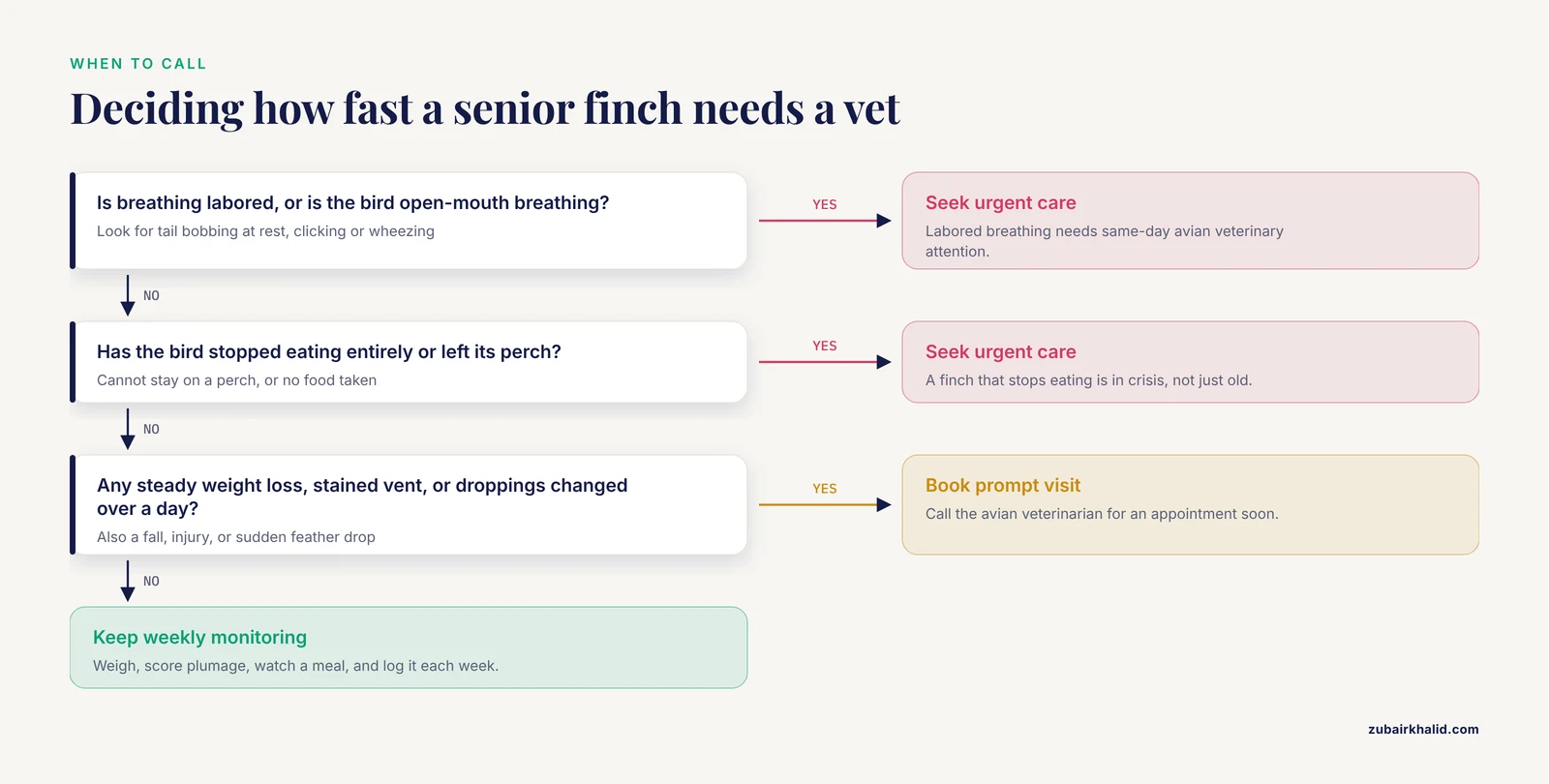
Every finch is an individual, and only an avian veterinarian examining your bird can diagnose disease, assess pain, and set a treatment plan. The age ranges and signs described here are general patterns, not diagnoses.
Contact an avian veterinarian promptly if your senior finch shows any of the following:
- Sitting fluffed on the cage floor, or perching low and motionless for most of the day
- Open-mouth breathing, tail bobbing at rest, clicking or wheezing sounds, or any breathing effort
- Not eating, or eating dramatically less for more than a day
- Sudden or steady weight loss, or a sharply prominent keel bone
- Persistent change in droppings for more than a day
- Discharge from the eyes or nostrils, swelling around the face, or a closed eye
- A fall, an injury, bleeding, or a broken blood feather
- A sudden, unexplained drop in feather condition, especially with staining around the vent
- In a hen, straining, a swollen abdomen, or sitting low over the vent, which can indicate egg-related problems
Seek urgent care rather than a routine appointment when breathing is labored, the bird has stopped eating entirely, or it cannot stay on a perch. Establish a relationship with an avian veterinarian before the emergency, because not every general practice sees finches, and small passerines need experience and equipment sized to them.
Frequently Asked Questions
How old is a senior finch?
Most pet finches, including zebra finches and society finches, are treated as senior around age four to five, which is roughly the midpoint of their typical five-to-ten-year captive lifespan. Individual history matters more than the exact number, so an avian veterinarian can help you estimate your bird's stage of life.
What are the first signs of aging in finches?
The earliest signs are usually a ruffled or duller feather coat, less grooming, lower perch choices, shorter and heavier flights, longer nails, and a drop in the flock's pecking order. Feather condition change tends to come first and is easy to track with weekly photos.
What should a senior finch eat?
Feed a complete base diet of finch seed mix or small-bird pellets, and add a daily soft, moist component such as soaked or sprouted seed, egg food, or finely chopped greens. Keep fatty treats rare, provide fresh water daily, and remove moist foods within a few hours so nothing spoils.
How can I tell if my senior finch is too thin or too heavy?
Track weight weekly on a gram scale and watch the trend rather than single numbers. A increasingly prominent keel bone suggests weight loss, while fat deposits near the vent and crop area suggest excess condition. Have your avian veterinarian demonstrate a body condition check and set your bird's baseline.
Should an old finch be kept with flock mates?
Usually yes, because finches are flock animals, but only if the senior is not being bullied. Watch for displacement from food, perches, or rest spots. A harassed or frail older bird does better in a smaller, calm cage with a gentle companion or briefly alone.
How often should a senior finch see an avian veterinarian?
Twice-yearly wellness visits are a reasonable routine for an aging finch, since small birds decline quickly between long intervals. If your bird has a chronic condition or you are tracking weight loss, follow the schedule your veterinarian sets rather than a fixed rule.
Can an old finch recover from illness?
Older finches can and do recover, especially when problems are caught early, which is exactly why weekly monitoring matters. Recovery odds depend on the specific disease, the bird's body condition, and how quickly treatment starts, so an early veterinary visit is the best investment you can make.
When is it time to consider euthanasia for a finch?
Consider that conversation when the bird has sustained weight loss that diet does not fix, persistent fluffing and inactivity, labored breathing, inability to reach food and water, or clear loss of interest in life across several days. Ask your avian veterinarian about gentle, low-stress methods for small finches, and discuss timing before a crisis forces the decision.
Sources
- Plumage and Fat Condition Scores as Well-Being Assessment Indicators in a Small Passerine Bird, the Zebra Finch (Taeniopygia guttata).
- Colour Cues That Are Not Directly Attached to the Body of Males Do Not Influence the Mate Choice of Zebra Finches.
- Evaluation of Best Practices for the Euthanasia of Zebra Finches (Taeniopygia guttata).