Safe Toys and Equipment for Canaries: What to Avoid
By Dr. Zubair Khalid, DVM, MS, PhD ·
Safe toys for canaries are simple, small-bird items made from untreated wood, plain paper, stainless steel, vegetable-tanned leather, and tightly woven natural fiber. Dangerous toys for canaries usually share the opposite traits: dyed or glued construction, galvanized or painted metal, jingle bells with loose clappers, frayed rope, and parts small enough to swallow. A canary also needs open flight space more than it needs clutter, so the safest cage holds a few well-chosen accessories rather than many.
This guide covers which materials and designs hold up safely, which toxic materials for canaries show up most often in pet store aisles, and how to set up perches, dishes, and hardware with canary cage accessories safety in mind. It ends with a weekly inspection routine and the specific signs that mean you should call an avian veterinarian the same day.
This article is educational and is not a substitute for veterinary diagnosis or treatment.
Safe Toys for Canaries at a Glance
| Choose | Avoid |
|---|---|
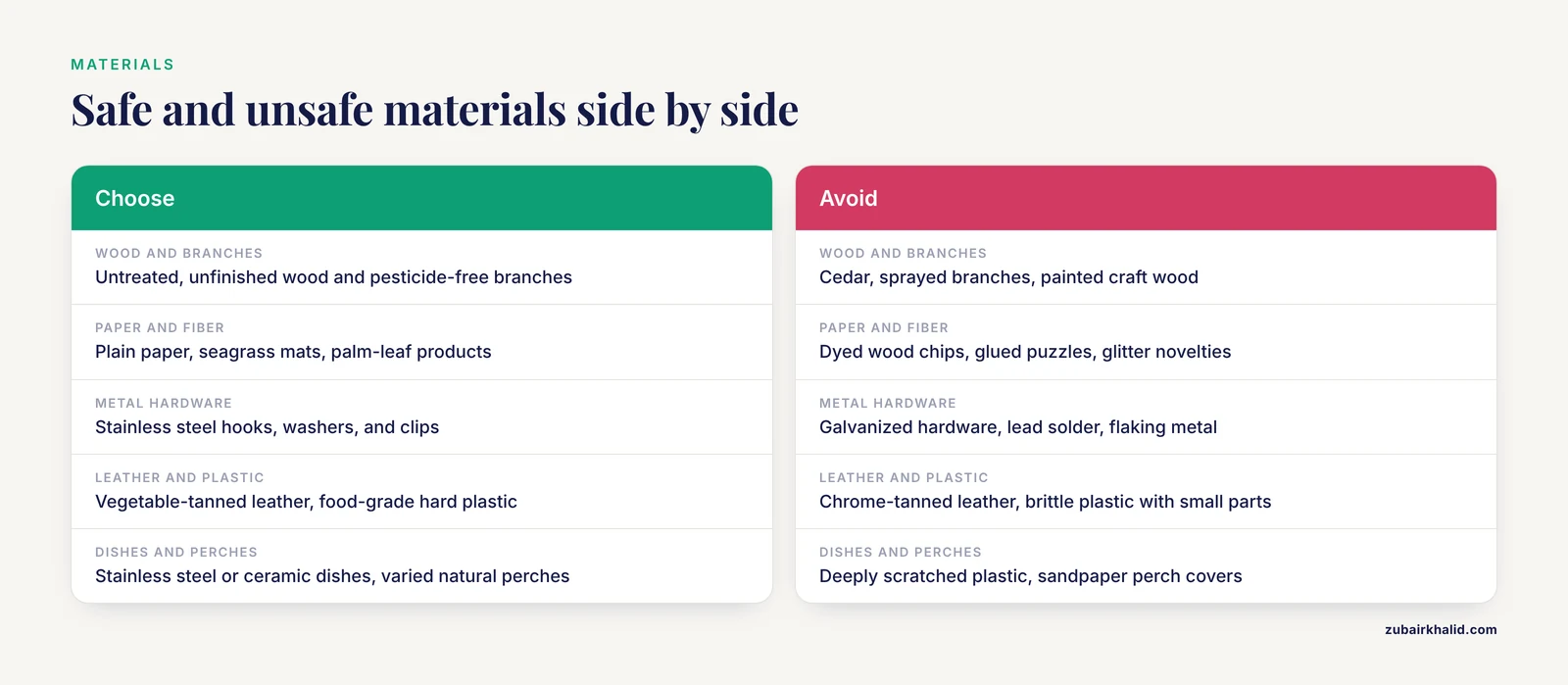
| Untreated, unfinished wood and pesticide-free branches | Aromatic woods such as cedar, sprayed branches, painted craft wood |
| Plain paper, cardboard without staples or glue, seagrass and palm-leaf mats | Dyed wood chips, glued puzzles, glitter and sequin novelties |
| Stainless steel hooks, washers, and clips | Galvanized (zinc-coated) hardware, lead solder, rusted or flaking metal |
| Bells with a fixed, one-piece clapper | Jingle bells with removable clappers |
| Tight-weave fiber toys in good condition | Frayed rope, loose threads, long cords, fluffy nesting material |
| Natural wood perches in varied diameters | Sandpaper perch covers, uniform plastic dowels only |
| Stainless steel or ceramic dishes | Deeply scratched plastic dishes placed under perches |
| Plain paper cage liner | Cedar shavings and scented bedding |
Do these things today:
- Remove any toy with loose fibers, flaking coating, or a dull gray soft metal part.
- Swap jingle bells for bells with a fixed clapper.
- Pull sandpaper covers off the perches.
- Move the cage out of the kitchen and away from aerosol sprays and scented products.
- Count the accessories in the cage. Keep a few and restore open flight space.
- Put a weekly toy inspection on your calendar.
Why Toy and Equipment Safety Matters More in Canaries
Small bodies leave little room for error
Canaries are small finch-type songbirds, and their size changes the risk calculation for every accessory in the cage. A bead or fiber that a larger parrot might pass without trouble can obstruct a canary's digestive tract. Hardware that a bigger bird could only bend, a canary can swallow. The Merck Veterinary Manual's pet bird resources list lead and zinc toxicosis among the recognized poisonings of pet birds, and both metals usually enter the body when a bird chews cage wire, toy hardware, or painted surfaces.
Birds hide illness
The Association of Avian Veterinarians warns in its client education materials that birds often conceal signs of disease until a problem is advanced. For a canary owner, that shifts the safety work to prevention. You may never see the early signs of a toxic exposure or a constriction injury, so the materials and designs you allow into the cage are the main protection you control.
Canaries fly, they do not climb
Parrots explore a cage in three dimensions with beak and feet. Canaries get most of their exercise from horizontal flight, so every extra toy, swing, or hanging cluster removes flight lane. A well-set-up canary cage has perches placed to preserve a clear path across the enclosure, plus a small number of accessories that add texture, taste, and problem-solving without crowding the air space.
The Best Canary Toys: Safe Materials and Designs
The best canary toys share four qualities. They are sized for a small songbird, built simply, made from undyed natural or inert materials, and attached with hardware that cannot trap a toe or beak. The categories below meet those standards when you buy or build them carefully.
Untreated wood and natural branches
Wood gives a canary a safe chewing outlet, which reduces the chance the bird turns to cage bars or perches instead. Choose untreated, unfinished wood and branches from trees that have not been sprayed with pesticides. Scrub branches in plain water and let them dry completely before they go in the cage. Avoid aromatic woods such as cedar, and skip any branch you cannot identify with confidence. If you are unsure whether a species is bird safe, ask your avian veterinarian before offering it.
Paper, cardboard, and woven grass
Shredding is normal, rewarding behavior for small birds. Plain paper, unprinted cardboard with no staples or heavy glue, seagrass mats, and palm-leaf products all give a canary something to work at with its beak. Check woven items for hidden wire, staples, or plastic ties before they enter the cage, because a single forgotten fastener can undo an otherwise safe design.
Hard plastics, stainless steel, and vegetable-tanned leather
Food-grade hard plastic toys without small detachable parts are acceptable for canaries, which are far less destructive than parrots. Stainless steel is the standard for hooks, washers, and clips because it contains neither lead nor zinc. Vegetable-tanned leather is the traditional safe choice for toy parts and perch wraps. Avoid chrome-tanned leather, which is processed with chemicals that do not belong in a beak.
Food-based foraging
Some of the safest enrichment is edible. Clip leafy greens to the cage bars with a stainless steel clip, or hang a spray of millet so the bird works to reach it. Lafeber's avian nutrition resources emphasize that treats should fit inside a balanced diet rather than replace it, so keep food enrichment modest and account for it in the daily ration. Skip clothespins with metal springs, which can rust and trap a beak, and use bird-safe clips instead.
Dangerous Toys for Canaries: What to Leave on the Shelf
Toxic materials for canaries
Lead and zinc. The Merck Veterinary Manual describes heavy metal toxicosis in pet birds as a recognized poisoning, with signs that are often nonspecific, such as lethargy, fluffed posture, reduced appetite, and changes in droppings. Lead hides in old paint, soldered joints, weighted toy bases, and some bell components. Zinc hides in galvanized hardware, some chains and quick links, and worn cage coatings. Treat any dull gray, soft, or suspicious metal part as a reason to remove the item and ask your veterinarian.
Fumes from heated coatings. Overheated nonstick cookware, self-cleaning oven cycles, and some heaters and hair appliances release fumes that are toxic to birds. The Merck Veterinary Manual treats this fume toxicosis as an emergency that can progress with little warning. Keep the cage out of the kitchen, ventilate well, and never run an oven cleaning cycle with a bird in the house.
Aromatic woods and scented products. Cedar and other strongly scented woods release aromatic compounds that do not belong in an enclosed cage, and scented candles, wax melts, diffusers, and aerosol sprays add respiratory risk. Keep all of them out of the bird's room.
Glues, dyes, and glitter. Colored wood chips, glued puzzle blocks, and sequined or glittered novelties add ingestion risk with no benefit. Undyed, unglued versions of the same toys exist in every well-stocked bird section.
Treated or unidentified branches. Branches sprayed with pesticides, gathered from roadsides, or cut from trees you cannot identify should stay outside the cage.
Design hazards: swallowing, entanglement, and traps
- Swallowable parts. Beads, buttons, googly eyes, and small bells that fit inside a canary's beak can be swallowed.
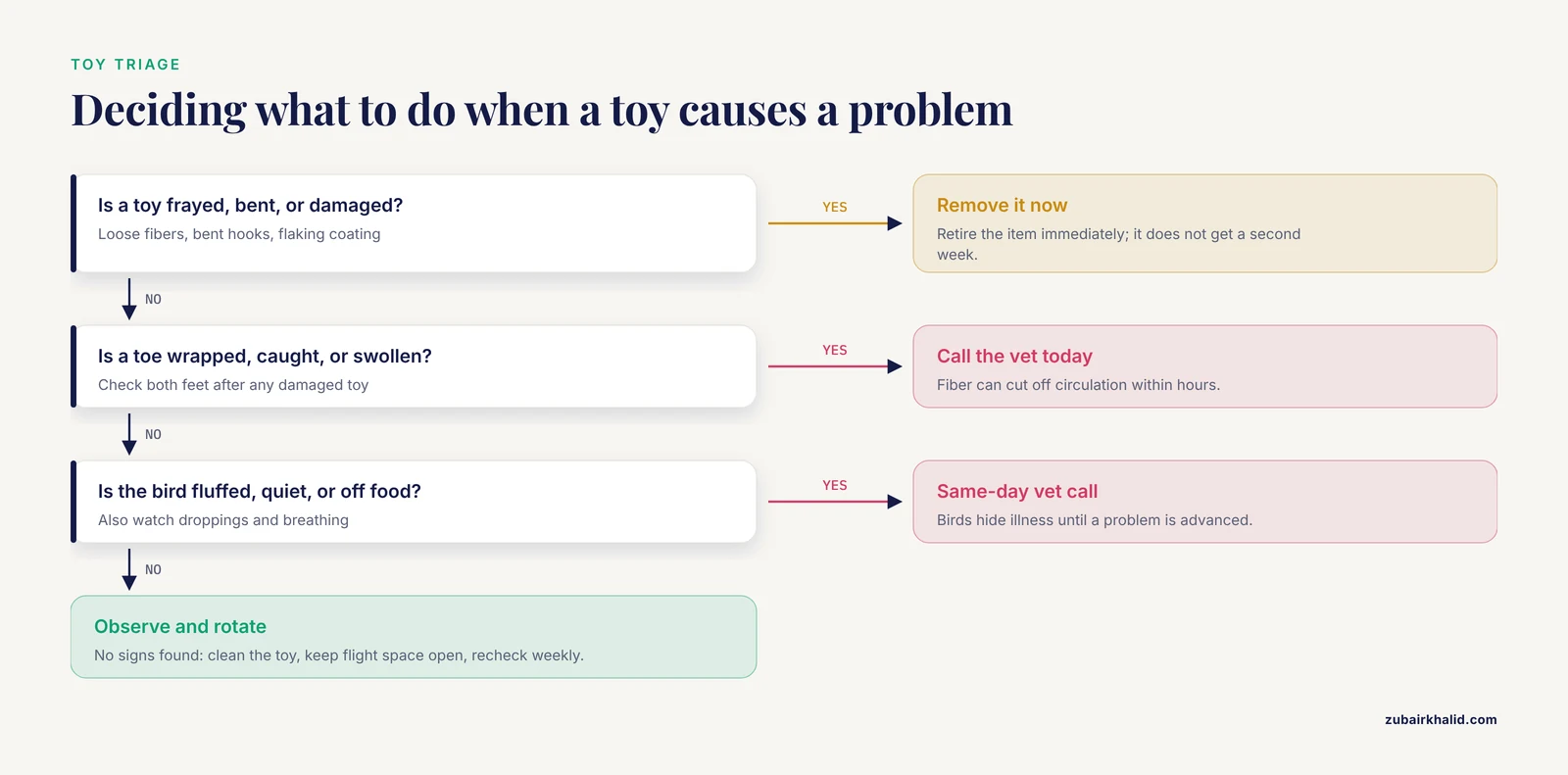
- Frayed fibers. Loose threads and rope fuzz can wrap around a toe within hours and cut off circulation, or they can be swallowed and pack the digestive tract. Check your bird's toes daily and retire fiber toys at the first sign of fraying.
- Open loops and chain gaps. Wide chain links, key rings, and large ring openings can trap a toe or the lower beak.
- Jingle bells. The clapper inside a jingle bell can be dislodged and swallowed. Choose bells made from a single piece of metal with a fixed striker.
- Long cords and strings. Anything long enough to loop around a foot or neck is an entanglement and strangulation risk.
- Brittle plastic. Thin plastic that cracks into sharp shards does not belong in a small bird's cage.
- Fluffy nesting material. Synthetic cotton nesting material can wrap around toes and legs and is a well-known cause of constriction injuries in finch-type birds.
Products marketed to canary owners that backfire
Sandpaper perch covers. These are sold as nail and beak conditioners, but avian veterinarians generally advise against them because the abrasive surface can irritate and abrade the bottom of the feet. Varied natural perches do the useful work without the abrasion.
Mirrors. A mirror is not automatically dangerous, but it is not automatically enriching either. Some canaries treat their reflection as a rival, which can drive persistent agitation, defensive behavior, or constant singing directed at the intruder. Offer a mirror only if you can watch the response, and remove it if your bird becomes fixated or stops normal activity.
Cedar-scented accessories and bedding. Marketed as fresh-smelling, these add aromatic compounds to a small enclosed space.
Oversized parrot toys. Toys built for budgies or larger parrots are often too heavy, too hard, or hung on hardware a canary can get caught in. Buy for size, not for the generic bird toy label.
Canary Cage Accessories Safety: Perches, Dishes, and Cage Hardware
Perches
Foot health depends on variety. A cage with only uniform dowel perches presses the same spots on the feet every day. Provide natural wood branches in several diameters and textures, positioned so the bird can hop between them without scraping its wings. Rope perches are acceptable only while their weave stays tight, and they should be removed the moment fibers loosen. If your canary shows foot tenderness, scaly or swollen feet, or overgrown nails, ask your avian veterinarian about perch choices and nail care instead of relying on abrasive covers.
Food and water dishes
Stainless steel or ceramic dishes are the standard because they tolerate daily scrubbing. Place dishes away from perches so droppings cannot fall into food or water, and refresh water daily. Deeply scratched plastic is difficult to sanitize, so replace plastic dishes once the surface feels rough.
Cage condition and location
Inspect the cage itself as part of canary cage accessories safety. The finish should be intact, with no rust, flaking coating, or exposed wire. Older or vintage cages may carry paint layers of unknown composition, so replacing them is safer than testing them. Bar spacing should be narrow enough that the head cannot slip through, which you can confirm with the manufacturer's specifications for finch-type birds. Position the cage out of the kitchen, away from aerosol sprays, scented products, and direct fumes, in a room with normal household activity but without constant disturbance.
Cleaning without chemical exposure
Daily cleaning needs hot water, a scrub, and drying, not chemicals. When you use any cleaning product, move the bird out of the room first, rinse everything thoroughly, and let it dry before the bird returns. Never spray anything near an occupied cage. If you want to disinfect beyond soap and water, ask your avian veterinarian which products and rinse routines they recommend for your setup.
How to Introduce, Inspect, and Rotate Toys Step by Step
- Screen before you buy. Bend and pull the toy gently. Look for loose fibers, glue, dye that rubs off, sharp edges, and hardware with gaps a toe could enter. Smell it. A chemical or perfumed odor is a reason to put it back.
- Prepare it at home. Remove price tags, staples, strings, and plastic ties. Wipe wood and plastic with plain water and dry completely.
- Introduce one item at a time. Add a single new accessory and supervise the first interactions so you learn how your bird responds.
- Place it deliberately. Attach toys securely with no swinging gap that could pinch, keep them away from food and water dishes, and leave a clear flight path across the cage.
- Rotate weekly. Keep a small set in the cage and swap items rather than adding more. Rotation keeps familiar objects interesting without crowding.
- Inspect every week. Run your hands over each item. Check fibers, metal parts, edges, and attachment points, and clean droppings off surfaces.
- Retire damaged items immediately. A frayed rope or a bent hook does not get a second week.
Common Mistakes Canary Owners Make
- Buying by label instead of by size. The bird toy shelf covers everything from finches to macaws. Judge every item against your canary's beak and feet.
- Overcrowding the cage. Every toy added removes flight space, which is the exercise that matters most for this species.
- Using a mirror as a default companion. Watch the response instead of assuming it helps.
- Leaving frayed rope for one more week. Fiber injuries progress quietly and quickly.
- Trusting sandpaper covers for nail care. They trade a cosmetic problem for a foot problem.
- Cleaning with sprays while the bird is in the room. Aerosols and fumes reach a cage faster than most owners expect.
- Assuming a quiet, fluffed bird is resting. Birds hide illness, so a change in posture, song, appetite, or droppings deserves a call to your veterinarian.
Troubleshooting: When a Toy Causes Problems
Your canary seems afraid of a new toy
Move the toy to the outside of the cage or to a far corner, and give the bird a few days to look at it. Pair the introduction with food placed nearby. Once the bird approaches calmly, move the toy to its intended spot.
Your canary ignores every toy
Try food-based enrichment first, such as greens clipped to the bars or a hanging millet spray, because eating motivates many canaries more than play does. Change one variable at a time, including texture and height, so you can see what the bird prefers.
Your canary chews cage bars or destroys perches
Offer acceptable chewing outlets such as untreated wood and woven grass mats, and check the cage coating for damage the chewing may have caused. If the behavior is new, appears with pacing or restlessness, or coincides with breeding condition, describe it to your avian veterinarian, because behavior changes can reflect hormonal state or stress.
You find a toy damaged overnight
Remove the toy, then examine your bird before you clean up. Check both feet for wrapped fibers or swelling, look at the beak and feathers, and confirm the droppings look normal. If anything is abnormal, call your veterinarian the same day.
Enrichment and Welfare: Reading Your Canary's Behavior
Daily observation is the most reliable welfare tool an owner has. Learn your bird's normal pattern of singing, activity, appetite, and droppings, and treat changes in that pattern as information rather than noise. VCA Animal Hospitals' avian care guides encourage owners to know their bird's routine so problems are noticed early, and the Association of Avian Veterinarians recommends regular health examinations as part of routine bird care.
Balance enrichment against space. Foraging items, a shallow bathing opportunity, varied perches, and calm social contact cover most of what a canary needs. A cage crowded with objects delivers less welfare, not more, because it removes the flight that keeps the bird fit.
Limitations and When to Contact a Veterinarian
Every canary is an individual, and this guide cannot replace an examination by a veterinarian experienced with birds. Use it to prevent problems, and use your veterinarian to answer questions about your specific bird.
Contact an avian veterinarian the same day, or an emergency clinic immediately, for any of the following:
- Breathing difficulty, open-mouth breathing, or collapse after any fume exposure. Move the bird to fresh air on the way.
- A suspected swallowed metal part, bead, or long fiber.
- A toe wrapped in fiber, caught in hardware, or swollen.
- Bleeding from any cause.
- Sitting fluffed and still, not eating, unusually quiet, or producing abnormal droppings.
Schedule a routine visit for perch and foot problems, nail care, behavior changes you cannot explain, pre-breeding setup, and the regular health examinations the Association of Avian Veterinarians recommends for pet birds. The Association of Avian Veterinarians maintains a directory of avian veterinarians at aav.org.
Frequently Asked Questions
What are the safest toys for canaries?
The safest toys are simple, small-bird items made from untreated wood, plain paper, woven grass, stainless steel, and vegetable-tanned leather, attached with hardware that cannot trap a toe or beak. Choose undyed and unglued versions, and keep the total number low so flight space stays open.
Are mirrors safe for canaries?
Mirrors are not physically dangerous, but some canaries treat the reflection as a rival and become agitated or fixated. Offer one only while you can watch the response, and remove it if your bird stops normal activity or acts defensive.
Can canaries have rope or cotton toys?
Yes, if the weave is tight and the toy is in good condition. Inspect fiber toys weekly, trim surface fuzz, and remove the toy at the first sign of fraying, because loose fibers can wrap around toes or be swallowed.
Which metals should I keep away from my canary?
Keep lead and zinc out of the cage. Lead appears in old paint, solder, and weighted toy parts, and zinc appears in galvanized hardware and some chains and quick links. Use stainless steel hardware instead, and remove any toy with dull gray soft metal, rust, or flaking coating.
Are dyed toys dangerous for canaries?
Dyed and glued toys add ingestion risk with no benefit, so undyed versions are the better choice. Replace a dyed item when the surface shows wear or the color rubs off.
How many toys should be in a canary cage?
Keep a small number, usually a few accessories at most, because canaries exercise by flying and clutter removes flight space. Rotate items weekly instead of adding more.
Are sandpaper perch covers safe for canaries?
No. The abrasive surface can irritate and abrade the pads of the feet. Use natural wood perches in varied diameters, and ask your avian veterinarian about safe nail care if the nails grow long.
How do I know if a toy made my canary sick?
Watch for fluffed posture, lethargy, reduced appetite, abnormal droppings, breathing changes, or a swollen toe, and remove the toy while you observe. Because birds hide illness, treat any of these changes as a same-day call to your avian veterinarian rather than a wait-and-see problem.