Parrot Cage
By Dr. Zubair Khalid, DVM, MS, PhD ·
Key Takeaways
- Cage size is critical for preventing obesity, musculoskeletal disorders, and behavioral stereotypies; minimum dimensions for budgerigars and cockatiels are provided, but larger is always preferable, with daily free-flight essential.
- Appropriate bar spacing (e.g., ≤1.3 cm for budgerigars, ≤1.9 cm for cockatiels) and non-toxic materials like powder-coated wrought iron or stainless steel are vital to prevent escape, entrapment, and heavy metal toxicosis from zinc.
- Environmental enrichment, including foraging devices, varied perches, chewable items, and social interaction, is a medical necessity to prevent stereotypies like feather plucking and promote psychological well-being.
- Rigorous hygiene, including daily cleaning of food/water bowls and weekly disinfection with bird-safe agents, is crucial to prevent the transmission of pathogens such as Dermanyssus gallinae, Giardia spp., and Chlamydia psittaci, a zoonotic risk.
- Recognizing early signs of illness within the cage, such as fluffed feathers, sitting on the cage bottom, or altered droppings (e.g., indicative of megabacteriosis or PDD), necessitates immediate veterinary intervention.
- Cage placement should avoid direct sunlight, drafts, and kitchens with non-stick cookware due to the risk of acute respiratory distress from PTFE fumes, and the cage should serve as a safe retreat to minimize chronic stress.
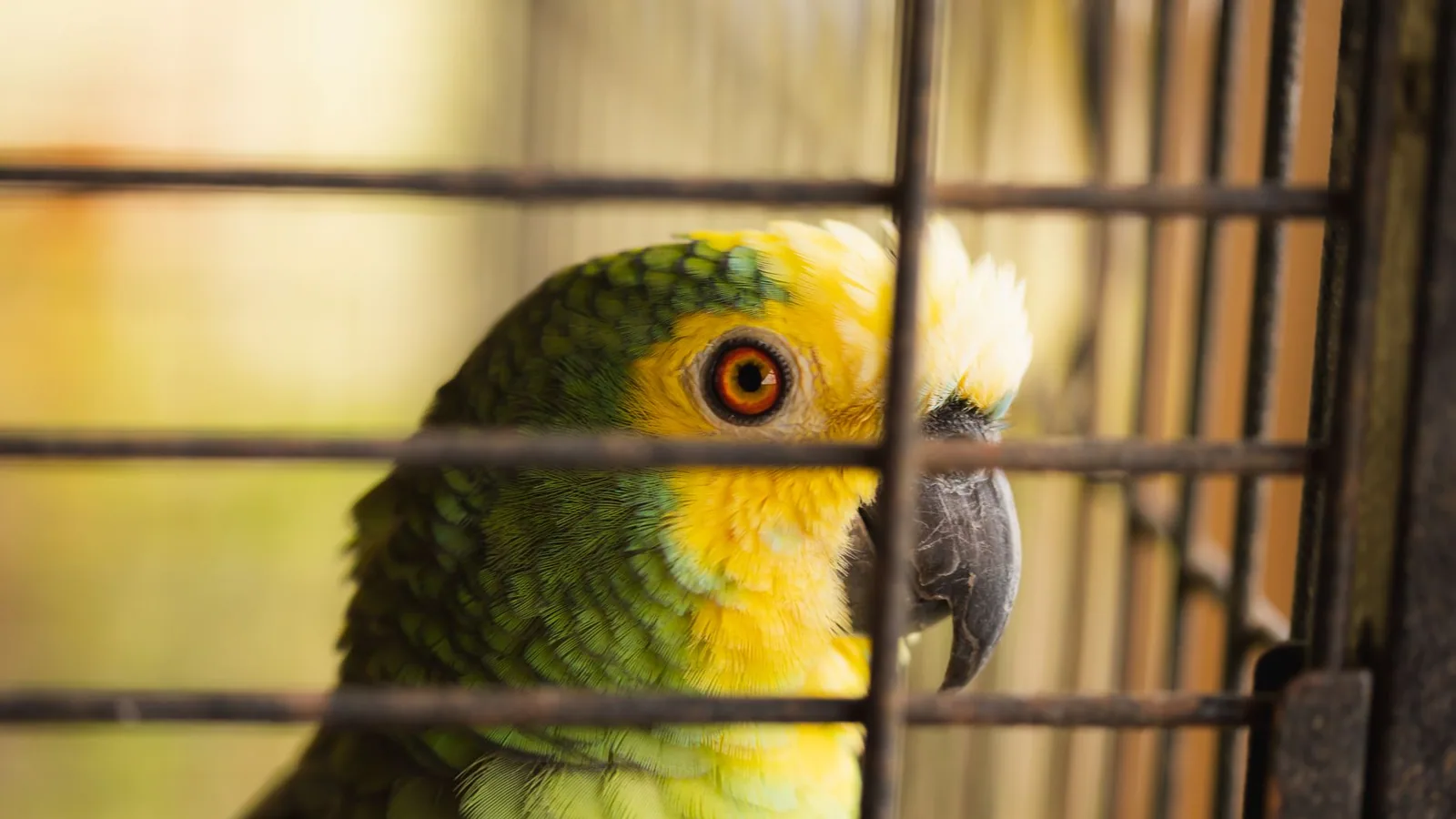
Selecting the right parrot cage is one of the most critical decisions an owner can make for the long-term health and welfare of their companion bird. A cage is not merely a containment device; it is the bird’s primary living environment, influencing physical activity, mental stimulation, social behavior, and disease susceptibility. Poor housing conditions are linked to obesity, feather-destructive behaviour, chronic stress, and increased risk of infectious diseases. This article provides an evidence-based, veterinary-framed guide to choosing, equipping, and managing a parrot cage, drawing on peer-reviewed research and authoritative clinical guidelines.
Quick Q&A
Question: What is the minimum cage size for a budgerigar or cockatiel? Answer: For a budgerigar, the minimum recommended cage size is at least 60 cm (24 in) wide, 45 cm (18 in) deep, and 60 cm (24 in) tall. For cockatiels, a cage of at least 80 cm (32 in) wide, 50 cm (20 in) deep, and 80 cm (32 in) tall is advised. However, larger is always better, and daily free-flight time outside the cage is essential to prevent obesity and musculoskeletal disorders.
Cage Size: More Than a Minimum
A common misconception is that a “minimum” cage size is adequate for a parrot’s lifetime. In reality, the cage should allow the bird to fully stretch its wings without touching the sides, climb, forage, and engage in natural behaviors. A landmark survey of budgerigar and cockatiel housing in Germany found that 82.8% of cockatiel and 52.2% of budgerigar owners kept their birds in cages or aviaries that were too small. These deficits were associated with a high prevalence of obesity (26.4% in budgerigars) and other health problems.
For larger psittacines such as African grey parrots, Amazon parrots, and macaws, the cage must be even more spacious. The Association of Avian Veterinarians (AAV) recommends that the cage width be at least 1.5 times the bird’s wingspan. A cage that is too small restricts movement and contributes to muscle atrophy, joint stiffness, and behavioural stereotypies such as pacing or head-swaying.
Bar Spacing and Material Safety
Bar spacing must be appropriate for the species to prevent escape or entrapment. For budgerigars and lovebirds, spacing should be no more than 1.3 cm (0.5 in); for cockatiels, 1.9 cm (0.75 in); for African greys and Amazons, 2.5 cm (1 in); and for macaws, 3.8 cm (1.5 in). Bars should be horizontal to encourage climbing, which provides essential exercise.
The cage material should be non-toxic, durable, and easy to clean. Powder-coated wrought iron or stainless steel are preferred. Galvanized cages may contain zinc, which can cause heavy metal toxicosis if birds chew on the bars. According to the Merck Veterinary Manual, zinc poisoning is a common emergency in psittacines and can present with lethargy, vomiting, diarrhoea, and seizures.
Cage Placement and Environmental Factors
Where the cage is placed in the home significantly affects the bird’s stress levels and social integration. Parrots are highly social and should be housed in a location where they can interact with the family but also have a quiet retreat. Avoid placing the cage in direct sunlight, near drafty windows, or in kitchens where fumes from non-stick cookware (polytetrafluoroethylene) can cause acute respiratory distress and death.
A study on Hispaniolan Amazon parrots showed that routine handling and restraint cause a significant increase in plasma corticosterone, indicating acute stress. Even when sedated with midazolam and butorphanol, the corticosterone response did not decrease, suggesting that the psychological stress of capture and restraint persists. Therefore, the cage should be a safe haven where the bird can retreat from perceived threats. Providing visual barriers (e.g., a covered side of the cage) can help reduce chronic stress.
Enrichment: Preventing Stereotypies and Promoting Welfare
Environmental enrichment is not a luxury; it is a medical necessity. Parrots in barren cages develop abnormal repetitive behaviours (stereotypies) such as pacing, head-turning, and feather plucking. A landmark study on Orange-winged Amazon parrots demonstrated that birds reared in unenriched cages developed significantly more stereotypy than those provided with foraging and locomotion enrichments. Introducing enrichment after a period of deprivation significantly reduced stereotypy, albeit with a 4-week delay.
Effective enrichment includes:
- Foraging devices: Hiding food in puzzle toys or shreddable materials mimics natural food-searching behaviour.
- Perches: Vary diameter and texture (natural wood branches, rope perches) to promote foot health and prevent bumblefoot (pododermatitis).
- Chewable items: Untreated wood, cardboard, and vegetable-tanned leather satisfy the natural urge to chew.
- Social enrichment: Visual and auditory contact with conspecifics or humans is vital. Budgerigars show contagious stretching only when paired with familiar cage mates, indicating social bonding.
A survey of German bird owners found that 77.8% of budgerigar and 69.0% of cockatiel husbandries had deficiencies in cage accessories. Owners should rotate toys regularly to maintain novelty.
Hygiene and Disease Prevention
The cage environment is a potential reservoir for pathogens. Regular cleaning is essential to prevent bacterial, fungal, and parasitic infections. A study in Algeria found that 100% of Fringillidae (canaries, goldfinches) kept in cages were infested with the poultry red mite Dermanyssus gallinae. This ectoparasite can cause anaemia, pruritus, and transmit other pathogens. Trap perches can be used to monitor mite burdens and assess acaricide efficacy.
Endoparasites such as Giardia spp., Isospora spp., and Ascaridia spp. are also common in cage birds. Chlamydia psittaci, the causative agent of psittacosis, can be shed in faeces and respiratory secretions. A Thai study detected C. psittaci in 2.5% of captive psittacines, with risk factors including poor cage hygiene and overcrowding. Psittacosis is zoonotic, posing a risk to immunocompromised owners.
The cage should be cleaned daily (remove soiled food and droppings) and disinfected weekly with a bird-safe disinfectant (e.g., diluted chlorhexidine or accelerated hydrogen peroxide). Food and water bowls must be washed daily to prevent bacterial overgrowth.
Diet Conversion and Nutrition
A proper diet is foundational to health, and the cage plays a role in feeding management. Many parrots are fed all-seed diets, which are high in fat and low in essential nutrients, leading to obesity, fatty liver disease, and nutritional secondary hyperparathyroidism. Converting a parrot from a seed-based diet to a formulated pellet diet or a balanced whole-food diet requires patience and careful monitoring.
During conversion, the cage should have multiple feeding stations to reduce competition and stress. Offer pellets in a separate bowl from seeds, and gradually decrease seed availability over several weeks. The AAV recommends that pellets constitute 60-80% of the diet, supplemented with fresh vegetables, fruits, and occasional nuts. Avoid avocado, chocolate, caffeine, and high-salt foods.
A study on budgerigars found that even with ad libitum food, individuals varied widely in activity levels and oxidative stress markers. Birds with higher body mass and less activity had increased DNA damage, suggesting that cage size and enrichment directly influence metabolic health.
Recognizing Illness Signs in the Cage Environment
The cage is the first place where owners may notice signs of illness. Psittacines are adept at hiding disease, but subtle changes in behaviour, posture, and droppings can provide early clues. Common illness signs include:
- Fluffed feathers and sitting on the cage bottom: Often indicates pain or weakness. A vinaceous Amazon parrot found prostrate on the cage floor died of toxoplasmosis.
- Changes in droppings: Diarrhoea, polyuria, or undigested seeds in faeces may indicate gastrointestinal disease, such as megabacteriosis (Macrorhabdus ornithogaster) or proventricular dilatation disease (PDD) caused by parrot bornavirus.
- Decreased activity and cage use: In a study of arthritic Amazon parrots, birds used fewer areas of the cage during acute pain.
- Respiratory signs: Open-mouth breathing, tail bobbing, or nasal discharge can signal aspergillosis, chlamydiosis, or air sacculitis.
- Feather-destructive behaviour: While often behavioural, it can also be secondary to pain, pruritus (e.g., from Dermanyssus mites), or systemic disease.
Any bird that is found at the bottom of the cage, unable to perch, or showing acute weakness should receive immediate veterinary attention. A 15-year-old eclectus parrot presenting lethargic and dyspneic at the bottom of its cage was diagnosed with disseminated pancreatic adenocarcinoma.
Cage-Related Injuries and Emergencies
Cages can also be a source of injury. Pelvic limb fractures are common in companion psittacines, often resulting from falls or entanglement. A retrospective study of 60 cases found that 71.7% of fractures involved the tibiotarsus, and cage rest was one of the management options. Complications such as bandage interference were frequent, highlighting the need for careful monitoring during recovery.
Aggression between cage mates can cause severe trauma. A red-lored Amazon parrot required a 3D prosthetic leg after losing its distal leg due to cage companion aggression. Owners should be aware of social dynamics and separate birds if fighting occurs.
Special Considerations: Breeding, Quarantine, and Zoonoses
For breeders, cage design must accommodate nesting boxes and reduce stress. Hand-reared birds may develop reproductive issues, such as laying eggs on the cage floor instead of in nest boxes. Proper nest box placement and size can mitigate this.
When introducing a new bird to the household, a strict quarantine period of 30-45 days in a separate cage is recommended to prevent transmission of pathogens such as bornavirus, Chlamydia psittaci, and polyomavirus. During quarantine, the cage should be in a separate airspace, and owners should practice good hygiene (hand washing, dedicated equipment).
Zoonotic diseases associated with cage birds include psittacosis, cryptococcosis (from dried droppings), and salmonellosis. Owners should avoid direct contact with droppings and wear a mask when cleaning the cage, especially if immunocompromised.
Conclusion
The parrot cage is far more than a simple enclosure; it is a dynamic environment that directly shapes the bird’s physical health, mental well-being, and longevity. Evidence-based selection of cage size, bar spacing, placement, enrichment, and hygiene protocols can prevent many common diseases and behavioural problems. Owners should work closely with an avian veterinarian to tailor the cage setup to their bird’s species, age, and individual needs. By prioritizing optimal housing, we can improve the quality of life for our feathered companions and reduce the incidence of preventable illness.
Related Clinical & Scientific Guides
References
Deka P, Das S, Hazarika R, et al. Molecular detection and characterization of Parrot Bornavirus 4 (PaBV-4) in captive psittacine birds in India. Sci Rep. 2026. Xavier IM, de Azevedo CS, Pizzutto CS, et al. Behavioral assessment of blue-fronted Amazon parrots subjected to experimentally induced osteoarthritis and rescue analgesia with tramadol. Front Vet Sci. 2026. Helms-Pack ML, Tully TN, Freeman BS, et al. No significant reduction in the plasma corticosterone response of Hispaniolan Amazon parrots sedated with intranasal midazolam-butorphanol during periods of routine restraint. J Zoo Wildl Med. 2025. Karima Z, Imane B, Nawel B, et al. Prevalence and diversity of parasites infecting pet birds in Guelma region (North-East Algeria). Vet Parasitol Reg Stud Reports. 2025. Nishida S, Kitamura W. An influx of non-native bird species into the natural environment owing to the accidental release of pet birds in Japan. Animals (Basel). 2024. Hollwarth AJ, Dutton TAG. Retrospective analysis of pelvic limb fracture management in companion psittacine birds (60 cases). J Avian Med Surg. 2023. Tripinichgul S, Weerakhun S, Kanistanon K. Prevalence and risk factors of avian chlamydiosis detected by polymerase chain reaction in psittacine birds in Thailand. J Avian Med Surg. 2023. Parks SN, Tully TN, Settle AL, et al. Handling and restraint induce a significant increase in plasma corticosterone in Hispaniolan Amazon parrots. Am J Vet Res. 2023. Lofgren NT, Malka S, Renna CM, et al. Liposarcoma of probable medullary bone origin in a lovebird. J Avian Med Surg. 2022. Kishimoto R, Seki Y. Response timing of budgerigars in a turn-taking task under operant conditioning. Behav Processes. 2022. Wickermann S, Krautwald-Junghanns ME. Evaluation of housing conditions of budgerigars and cockatiels in Germany. Tierarztl Prax Ausg K Kleintiere Heimtiere. 2021. Le Roux AB, Quesenberry K, Donnelly KA, et al. Disseminated pancreatic adenocarcinoma in an eclectus parrot. J Am Vet Med Assoc. 2020. Sa-Ardta P, Rinder M, Sanyathitiseree P, et al. First detection and characterization of Psittaciform bornaviruses in naturally infected and diseased birds in Thailand. Vet Microbiol. 2019. Falcón W, Tremblay RL. From the cage to the wild: introductions of Psittaciformes to Puerto Rico. PeerJ. 2018. Galicia C, Hernandez Urraca V, Del Castillo L, et al. Design and use of a 3D prosthetic leg in a red-lored Amazon parrot. J Avian Med Surg. 2018. Gallup AC, Militello J, Swartwood L, et al. Experimental evidence of contagious stretching and ingroup bias in budgerigars. J Comp Psychol. 2017. Larcombe SD, Tregaskes CA, Coffey J, et al. Oxidative stress, activity behaviour and body mass in captive parrots. Conserv Physiol. 2015. Dahlin CR, Young AM, Cordier B, et al. A test of multiple hypotheses for the function of call sharing in female budgerigars. Behav Ecol Sociobiol. 2014. Ferreira FC Jr, Donatti RV, Marques MV, et al. Fatal toxoplasmosis in a vinaceous Amazon parrot. Avian Dis. 2012. da Cunha AF, Strain GM, Rademacher N, et al. Palpation- and ultrasound-guided brachial plexus blockade in Hispaniolan Amazon parrots. Vet Anaesth Analg. 2013. Zhang JX, Wei W, Zhang JH, et al. Uropygial gland-secreted alkanols contribute to olfactory sex signals in budgerigars. Chem Senses. 2010. Vigo GB, Origlia J, Gornatti D, et al. Isolation of Salmonella typhimurium from dead blue and gold macaws. Avian Dis. 2009. Sedacca CD, Campbell TW, Bright JM, et al. Chronic cor pulmonale secondary to pulmonary atherosclerosis in an African grey parrot. J Am Vet Med Assoc. 2009. Pillai SP, Suarez DL, Pantin-Jackwood M, et al. Pathogenicity and transmission studies of H5N2 parrot avian influenza virus of Mexican lineage in different poultry species. Vet Microbiol. 2008. Kalmar ID, Moons CP, Meers LL, et al. Psittacine birds as laboratory animals: refinements and assessment of welfare. J Am Assoc Lab Anim Sci. 2007. Marlier D, Leroy C, Sturbois M, et al. Increasing incidence of megabacteriosis in canaries. Vet J. 2006. Asero R, Mistrello G, Roncarolo D, et al. Airborne allergy to sunflower seed. J Investig Allergol Clin Immunol. 2004. Meehan CL, Garner JP, Mench JA. Environmental enrichment and development of cage stereotypy in Orange-winged Amazon parrots. Dev Psychobiol. 2004. Vink-Nooteboom M, Lumeij JT, Wolvekamp WT. Radiography and image-intensified fluoroscopy of barium passage through the gastrointestinal tract in six healthy Amazon parrots. Vet Radiol Ultrasound. 2003. Straub J, Valerius KP, Pees M, et al. The myocardial thickness in budgerigars and Australian king parrots. Berl Munch Tierarztl Wochenschr. 2002. Phalen DN. Respiratory medicine of cage and aviary birds. Vet Clin North Am Exot Anim Pract. 2000. Millam JR. Reproductive management of captive parrots. Vet Clin North Am Exot Anim Pract. 1999. Lafferty SL, Fudge AM, Schmidt RE, et al. Avian polyomavirus infection and disease in a green aracaris. Avian Dis. 1999. McGarry JW, Trees AJ. Trap perches to assess the activity of pyrethrins against the poultry red mite Dermanyssus gallinae in cage birds. Exp Appl Acarol. 1991. Birmelin I. Behavior of pet animals. Dtsch Tierarztl Wochenschr. 1990. Wells TR, Falk RE, Senac MO, et al. Acrocephalospondylosyndactyly, a possible new syndrome. Pediatr Pathol. 1990. Dorrestein GM, Wiegman LJ. Inventory of the shedding of Chlamydia psittaci by parakeets in the Utrecht area using ELISA. Tijdschr Diergeneeskd. 1989. Rosskopf WJ, Woerpel RW. Egg binding in caged and aviary birds. Mod Vet Pract. 1984. Wegener HH, Staib F. Fatal cryptococcosis in a bird fancier. Zentralbl Bakteriol Mikrobiol Hyg A. 1983. Himmelstein S, Bernstein K. Clinical aspects of nutritional secondary hyperparathyroidism in cage birds. Vet Med Small Anim Clin. 1978.