Carrier Training for Birds: Step-by-Step Guide
By Dr. Zubair Khalid, DVM, MS, PhD ·

You train a bird to like its carrier by making the carrier a normal, rewarding part of daily life long before any trip is scheduled. The process is simple in concept: leave the carrier visible, put food and treats inside, reward every voluntary step toward it, and close the door only after your bird walks in willingly. Most birds need one to four weeks of short daily sessions to enter calmly on cue, and birds with a history of being grabbed and stuffed into a carrier usually need more time.
This guide walks through the full plan, from choosing the right carrier to troubleshooting a bird that freezes, flees, or bites when the carrier appears.
Carrier Training for Birds at a Glance
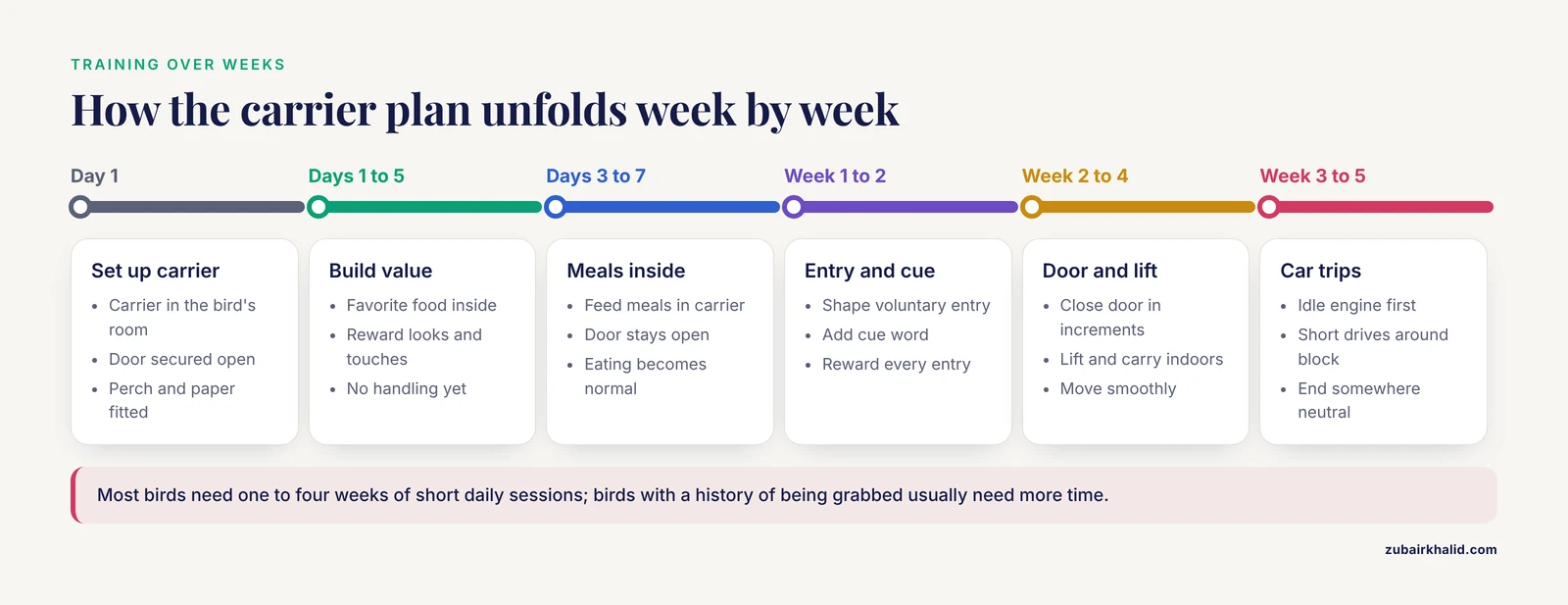
Use this checklist as your working plan. Each step is explained in detail below.
| Step | What you do | Typical timeframe |
|---|---|---|
| 1 | Buy the right carrier and set it up like a mini cage | Day 1 |
| 2 | Place the carrier in the bird's room, door open, with favorite food inside | Days 1 to 3 |
| 3 | Reward any look, approach, or touch of the carrier | Days 2 to 5 |
| 4 | Feed meals in or beside the carrier | Days 3 to 7 |
| 5 | Shape voluntary entry, then add a cue word | Week 1 to 2 |
| 6 | Close the door for seconds, then minutes, then longer | Week 2 to 3 |
| 7 | Pick the carrier up with the bird inside, then carry it around the house | Week 2 to 4 |
| 8 | Add short car trips that end somewhere neutral or pleasant | Week 3 to 5 |
| 9 | Maintain with occasional practice sessions and treats | Ongoing |
Why Carrier Training Matters
Birds are prey animals. Their instinctive response to being chased, restrained, and placed into a dark unfamiliar box is panic, and panic in a bird is not a minor behavioral nuisance. A thrashing bird can break flight feathers, damage the keel bone, injure a wing, overheat, or crash into the sides of a carrier. Stress also compounds existing health problems, which is a particular concern in birds because many hide illness until they are in real trouble.
Yet the situations that require a carrier are exactly the ones you cannot skip. Annual wellness exams, emergency visits, grooming, boarding, evacuation during a fire or hurricane, and any sudden illness all depend on getting your bird into a carrier quickly and calmly. The Association of Avian Veterinarians and avian veterinarians generally emphasize routine wellness examinations for pet birds, and those exams are only low stress if the bird arrives already comfortable with travel.
There is also a hidden cost to skipping carrier training. Many owners avoid routine vet visits because catching the bird is a battle. The bird then goes years without examination, and problems such as nutritional disease, overgrown beaks, respiratory infection, or reproductive disease go undetected. A bird that walks into its own carrier removes that barrier entirely.
Finally, a trained bird is safer for you. A frightened parrot delivers serious bites, and a panicking bird loose in a car or a waiting room is at risk of escape, which for a flighted bird can be permanent. Carrier training is one of the highest value investments you can make in your bird's long term welfare.
Choosing the Right Carrier
Before training starts, get the equipment right. A poor carrier can undo weeks of progress.
Size. The bird should be able to stand upright, turn around, and make a short hop, but not fly laps. For small birds such as budgies, lovebirds, and cockatiels, a small plastic travel kennel or a dedicated small travel cage works. For medium parrots such as conures, caiques, and small Poicephalus, choose a kennel sized for a cat or small animal. Large parrots need a travel cage with enough interior height for the species' normal posture. A carrier that is too large invites thrashing during movement, while one that is too small prevents natural positioning.
Material. Molded plastic kennels with secure metal latches are the practical default because they contain mess, protect the bird during travel, and clean easily. Wire travel cages offer better ventilation and visibility, which some birds prefer, but they allow drafts and debris to escape. Soft sided fabric carriers are generally unsuitable for parrots because a determined beak can chew through them, and they are harder to sanitize.
Security. Check the door latch in person. Parrots learn to open simple slide latches quickly, and an escape during travel is a life threatening emergency. Many owners add clips or carabiners on the latch as backup. The door should close without the latch rattling or pinching.
Access. A top loading door or a large front opening makes it far easier to place the bird in without a chase. A front door plus a top door gives you the most flexibility for a hesitant bird.
Setup inside the carrier. Treat the interior like a scaled down version of good bird cage setup:
- A perch sized for the species' feet, positioned so the bird's head, wings, and tail feathers do not touch the walls or door when it stands naturally. A towel wedged to stabilize the perch prevents rolling during car travel.
- Paper or plain substrate on the floor, changed after every use.
- A small food cup, and for longer trips, a water source. Many owners skip water for very short trips because it spills, and offer juicy foods instead.
- Good but not extreme ventilation. Never place the carrier where airflow is blocked entirely.
Do not place mirrors, loose toys, or swing type accessories in a travel carrier. Anything that can swing or fall during movement becomes a projectile.
Before You Start: Baseline Comfort
Carrier training works on top of general handling and husbandry. Two things make the process dramatically faster.
First, the bird should already be comfortable with you near its cage and ideally should step up reliably or at least accept treats from your hand. If your bird is not hand tame, the plan still works, but expect a longer timeline and lean entirely on food placement rather than physical guidance.
Second, review your overall routine, because a stressed bird does not learn well. A basic parrot care checklist includes appropriate daily diet, clean water, a cage large enough for full wing extension and species appropriate flight or climbing, natural light and a consistent dark quiet sleep period, daily out of cage interaction for social species, and enrichment. If sleep deprivation, an undersized cage, or a poor diet is already stressing the bird, fix those first. A bird whose basic needs are met is a bird that can learn.
How to Train a Bird to Like Its Carrier: Step by Step
The following plan uses positive reinforcement only. Never force the bird into the carrier during a training session. If you must travel before training is complete, see the troubleshooting section.
Step 1: Make the carrier furniture
Place the carrier in the room where your bird lives, within sight of the cage, with the door secured open. Do not bring the carrier out only for vet visits, because birds learn quickly what an object predicts. A carrier that appears twice a year and is followed by being grabbed and handled by strangers becomes a feared object. A carrier that has sat quietly in the room for two weeks is furniture.
Let the bird observe it. Some birds will immediately investigate. Others will be suspicious for days. Both responses are normal.
Step 2: Load the carrier with value
Place a small dish of a high value food, something the bird loves and does not get freely, inside the carrier near the open door. Sunflower seeds, a nut piece for suitable species, a slice of fruit, or a favorite pellet treat all work. Refill it a few times a day at first.
The goal of this phase is simple association. The carrier appears, good things appear inside it. Do not interact with the bird during this phase. Let curiosity do the work.
Step 3: Reward approaches
Once the bird willingly looks at, approaches, or touches the carrier, begin marking and rewarding those moments. If you use a clicker or a consistent marker word, click or say the word the instant the bird moves toward or touches the carrier, then deliver a treat from your hand. If your bird does not take treats from your hand, simply drop the treat into the dish inside the carrier.
You are building a chain. Reward looking at the carrier, then moving closer, then touching it with the beak or foot, then putting the head inside, then stepping in with one foot, then walking fully inside. Each bird moves through this chain at its own pace. Shorten the criteria whenever the bird hesitates. If the bird stalls at one step, go back to the previous step for a day or two.
Step 4: Feed meals in the carrier
Once the bird will enter the carrier, begin feeding part or all of one daily meal inside it, initially with the door open. Foraging and eating in the carrier turns it into a place where good things happen, which is the emotional state you want the bird to associate with travel. Many owners eventually feed breakfast in the carrier permanently, which maintains the training indefinitely with zero extra effort.
Step 5: Add a cue
When the bird walks in reliably, add a cue such as "carrier" or "in" just before it enters, then reward. Over repetitions, the cue predicts the reward and the bird begins entering on request. This cue is what you will rely on during a real emergency, so practice it often.
Step 6: Close the door in tiny increments
This is the step where most progress is lost, so go slowly. With the bird calmly eating inside, close the door for one second, open it, and reward. Repeat several times. Then close for five seconds, ten seconds, thirty seconds, a minute, and five minutes across multiple sessions. Always reopen the door while the bird is still calm, not after it has started pacing or vocalizing anxiously, because reopening should follow calm behavior rather than panic.
Feed a special treat through the door or the grille during closed door sessions so that door closing predicts food rather than disappearance.
Step 7: Lift and move the carrier
Once the bird tolerates the closed door, lift the carrier a few inches and set it down. Reward. Over successive sessions, carry it across the room, walk with it through the house, step outside briefly, and gradually introduce gentle motion. Move smoothly. Sudden jostling at this stage can undo the calm association.
Step 8: Introduce the car
Place the bird in the carrier inside the house, set the carrier on a stable car seat, and secure it with a seatbelt passed through the handle or strapped so it cannot slide or tip. Start the engine, sit with the bird for a few minutes, then turn it off and go back inside. Reward. Repeat until the idling car is boring.
Then take short drives around the block, extending gradually. Make early trips end somewhere neutral or pleasant, not at the veterinary clinic. If every car trip ends with an examination, the car itself starts predicting the clinic. Balance the association by occasionally driving somewhere uneventful, or by bringing a favorite treat that only appears in the car.
Step 9: Practice clinic type handling
If your bird tolerates towel wraps for examination or nail trims at home, practice that separately from carrier work so the two stresses do not combine into one overwhelming event during early vet visits.
Carrier Training Tips That Speed Progress
- Keep sessions under five minutes. Multiple short sessions per day beat one long session. Birds have short attention spans for repetitive tasks and learn best when the session ends on success.
- Use the highest value food for the hardest steps. Save the favorite treat exclusively for carrier work during training so it retains its power.
- Train before meals, not after. A slightly hungry bird is a motivated bird.
- Watch body language at every step. Relaxed posture, normal feather position, eating, and preening in the carrier are green lights. Pinning eyes, fanned tail, rapid open beak threat, or pressed retreat are signs to slow down.
- Pair the carrier with foraging. Stuff paper cups or wrap treats in paper inside the carrier so the bird has a job to do in there.
- Keep the carrier out permanently. Birds generalize poorly. A carrier that appears from a closet twice a year stays suspicious forever.
- Work at the bird's pace, not the calendar. A confident budgie may complete the whole plan in a week. A rehomed parrot with a bad catch history may need months. Both outcomes are wins.
Common Mistakes in Carrier Training
Only bringing the carrier out for the vet. This single mistake causes most carrier fear. The carrier becomes a reliable predictor of restraint and strangers. Keep it visible year round.
Chasing and grabbing the bird to get it in. Forcing a bird into the carrier can undo weeks of training in one minute and can physically injure the bird. If you must travel before training is complete, use a calm, minimal restraint approach in a dim room and then return to training afterward, accepting that some backtracking is likely.
Progressing too fast. Closing the door for ten minutes on day two, or lifting the carrier before the bird is settled inside, teaches the bird that the carrier is a trap. Every panic event sets the timeline back significantly.
Rewarding the wrong behavior. If you open the door or give treats when the bird is screaming or thrashing, you teach that panic makes things happen. Always return to the last successful step and reward calm.
Wrong perch height or orientation. A perch placed too high makes the bird scrape its head and wings on the ceiling. A loose perch that rolls during the drive turns every trip into a balance crisis. Position the perch so the bird stands naturally with clearance on all sides.
Skipping car desensitization. A bird that loves its carrier can still panic in a moving car if the car itself was never introduced gradually. Engine noise, vibration, and motion all need their own short exposures.
Leaving food or water in spill prone dishes for long trips. Water splashed onto bedding in a cool moving car chills the bird and soaks feathers. For trips beyond an hour, use a secured water source and check it at stops, and offer juicy fruits or vegetables instead.
Training a stressed or sick bird. A bird that is already ill does not have the reserves for training and should simply be transported as gently and quickly as possible.
Troubleshooting Common Problems
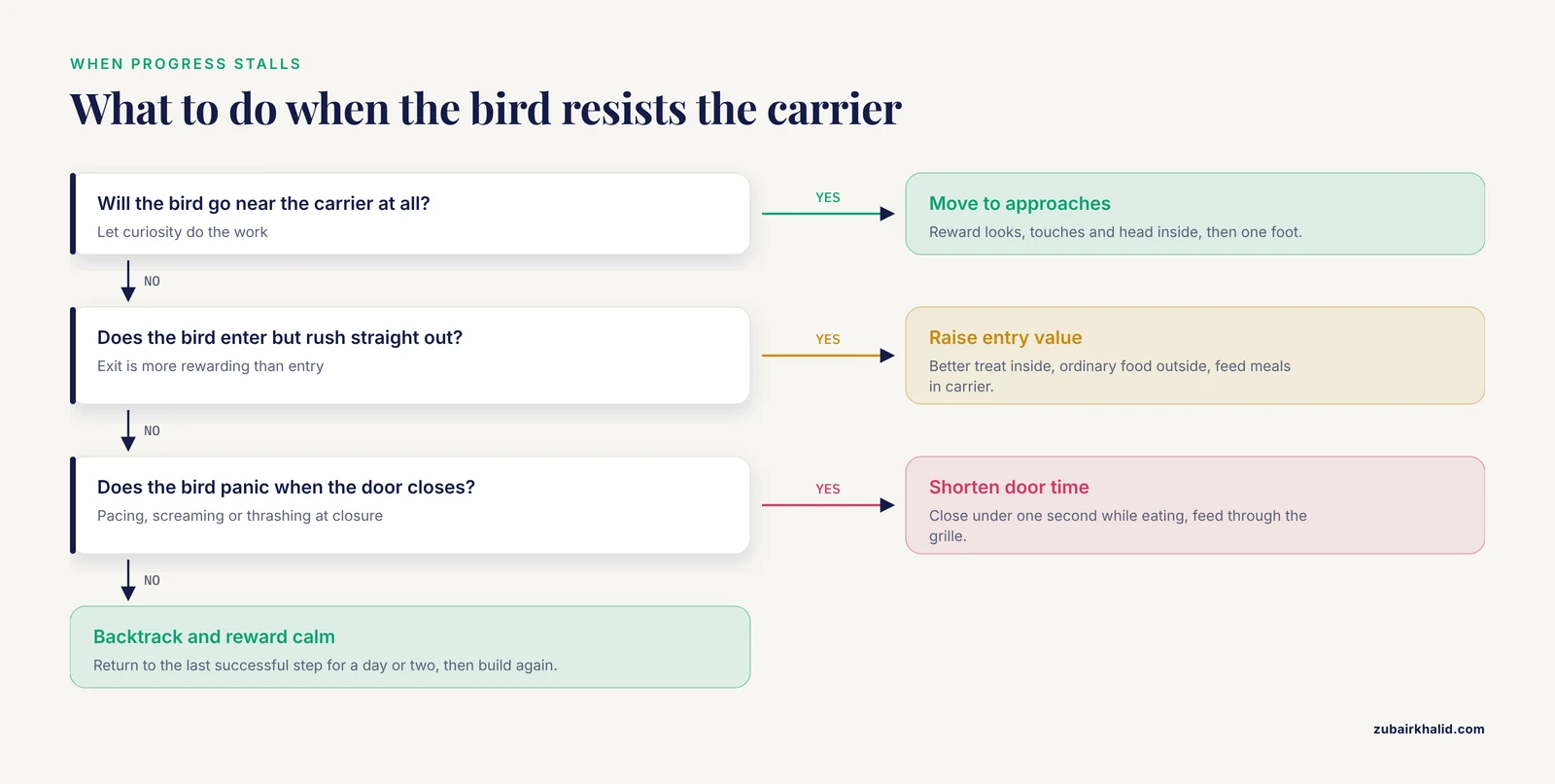
The bird will not go near the carrier. Move the carrier farther away, even to another part of the room, and restart with food simply placed beside it. Some birds need the carrier to sit for a full week before investigation. You can also start with the carrier disassembled, training on the base alone, then adding the top later.
The bird goes in but rushes out. Reduce the value of exit. Place the better treat inside the carrier and only ordinary food outside. Feed all meals in the carrier for several days. Exit should never be blocked, because a bird that feels trapped stops entering.
The bird panics when the door closes. Go back to closing the door for less than one second while the bird eats, and increase duration by tiny amounts across many sessions. Feed through the grille during every closed door period.
The bird was previously grabbed and stuffed into a carrier. Progress will be slower and may require starting with a completely different carrier so the old association does not transfer. Expect weeks to months and celebrate small steps. Forcing the issue in this group is the fastest way to create lasting fear of both the carrier and your hands.
The bird chews the carrier. Offer acceptable chew items inside, ensure the diet includes appropriate foraging outlets, and consider a plastic kennel with smooth interior walls if wire bars are being damaged. Persistent destructive chewing that extends beyond the carrier warrants a conversation with your avian veterinarian about enrichment and behavior.
The bird screams the entire drive. Check the basics first, because vocalizing in the car often signals motion discomfort, overheating, a draft, darkness with no visual anchor, or fear. Partial visual access out a window helps many birds. Covering the carrier loosely on three sides calms others. Experiment in short trips.
You need to travel before training is done. In an urgent situation, close the curtains or dim the room, remove perches and toys from the immediate area, and calmly encourage the bird into the carrier with the cue and food if it will go. If it will not, use a towel as a last resort, wrapped gently and briefly, and place the bird in feet first. Dimness dramatically reduces panic in restrained birds. Then resume training afterward.
Safety and Welfare Points
- Never leave a bird in a parked car. Interior temperatures rise and fall to lethal levels quickly, and birds are far more heat sensitive than mammals.
- Secure the carrier in the vehicle. A carrier that slides or tips during braking causes exactly the thrashing you are trying to prevent. Use a seatbelt or a secured position on the floor behind a seat.
- Keep the carrier out of direct sun and away from air vents. Birds tolerate a narrower temperature range than people realize, and drafts in a moving car are a real risk.
- Use a well fitted harness or keep wings trimmed only after discussing flight management with your avian veterinarian. For escape prevention, a secured carrier is the primary protection, and a bird should never be transported loose in a vehicle.
- Cover part of the carrier during travel. A partial cover with good ventilation gives nervous birds a visual refuge while maintaining airflow.
- Bring your own food and water on long trips, because abrupt diet changes on the road can cause gastrointestinal upset in birds.
Limitations and When to Contact a Veterinarian
Every bird is an individual. Species, age, history, and prior handling experiences all affect how quickly carrier training progresses, and this article cannot predict your bird's timeline. Any bird with an acute injury, chronic disease, or behavioral condition needs an individualized plan from an avian veterinarian, and the Association of Avian Veterinarians maintains a directory of members for owners seeking species experienced care.
Contact your avian veterinarian promptly if you observe any of the following:
- Open mouth breathing, tail bobbing, or labored breathing at rest
- Sitting fluffed and low on the perch, lethargy, or reduced appetite lasting more than a day
- Regurgitation, vomiting, or changes in droppings such as undigested seed, abnormal color, or markedly reduced volume
- Bleeding from a broken blood feather, beak, or nail, or any injury after thrashing in a carrier
- A bird that falls, cannot perch, or shows head tilt, tremors, or seizure activity
- Sudden aggression or fearfulness that represents a change from the bird's baseline, which can reflect pain or illness rather than a training problem
- Extreme panic responses during carrier training that do not improve with backtracking, since some birds need professional behavior support
For scheduled wellness visits, ask your avian clinic in advance about their recommendations for transport, fasting or feed as usual instructions for your species, and whether they want the bird covered in the waiting room. Bring a recent photo or note of your bird's weight and typical droppings if your clinic requests them.
Frequently Asked Questions
How long does it take to train a bird to like its carrier?
Most birds progress through the full plan in one to five weeks with one or two short sessions per day, but the timeline depends on the individual bird, its age, and its history. A bird that was previously chased or grabbed may need several months, and forcing the pace always takes longer than going slowly.
What kind of carrier is best for a parrot?
A molded plastic kennel or a travel cage with secure metal latches, appropriate interior height for the species, and a stable sized perch is the best choice for most parrots. Avoid soft sided fabric carriers for any bird with a strong beak, since parrots can chew through them.
Can I train an older bird to accept a carrier?
Yes. Age itself is not a barrier, and older birds learn new associations well when training uses food rewards and small steps. Older birds with arthritis or other conditions may need lower perches and extra care with handling, so discuss any mobility concerns with your avian veterinarian.
Should I put food and water in the carrier during trips?
Food is useful on most trips and helps the bird associate the carrier with good things. For short drives, water dishes usually spill, so offer juicy fruits or vegetables instead and provide secured water on longer journeys.
My bird only panics in the car, not in the carrier. What should I do?
Treat the car as its own training project. Sit with the bird in the parked, running car, reward calm behavior, and then build up to short drives that end somewhere neutral. Secure the carrier, reduce drafts, and try partial visual cover, since motion, noise, and lack of a visual anchor commonly trigger the panic.
Is it okay to use a towel to get my bird into the carrier?
In an emergency or a necessary trip before training is complete, a gentle towel restraint in a dim room is acceptable and sometimes the safest option. As a routine method, no. Towel chasing confirms the bird's fear and undoes training progress, so reserve it for genuine necessity and resume training afterward.
How do I keep my bird calm in the waiting room?
Keep the carrier partially covered, place it on a stable surface off the floor away from dogs and cats, and avoid opening it in the waiting room. Ask clinic staff about a quiet or separate avian waiting area, since many avian practices maintain one.
Does carrier training help with other training?
Yes. The same shaping and positive reinforcement skills transfer directly to harness training, travel cage loading, medications delivered in a favorite treat, and general handling. Birds trained with rewards rather than restraint become easier to care for across every part of their lives.
This article is educational and is not a substitute for veterinary diagnosis or treatment. Any health or behavioral concern in a pet bird should be evaluated by an avian veterinarian.
Further Reading
- Technology-Assisted Rehabilitation Gym for at-home Training (TARGeT) for stroke survivors: A study protocol for evaluating feasibility, safety, usability, clinical benefit, and costs.
- Dengue@Home: evaluation of a hospital in the home pathway for management of adults with dengue fever.
- Peanut oral immunotherapy updosing via in-office, video, and telephone encounters: Safety and caregiver satisfaction.
- Descriptive Analysis of the First 12-Month Activity of Docadom, a Private Physician-Led Urgent In-Home Consultation Service.
- Home-Based Multimodal Exergame Prototype for Patients With Chronic Stroke: Cross-Sectional Content Validation and Prospective Single-Arm Feasibility Study.
- Home-Based Transcranial Direct Current Stimulation for Depression: From Feasibility to Clinical Implementation.