Finch Grooming Guide: Feathers, Nails, and Skin Checks
By Dr. Zubair Khalid, DVM, MS, PhD ·
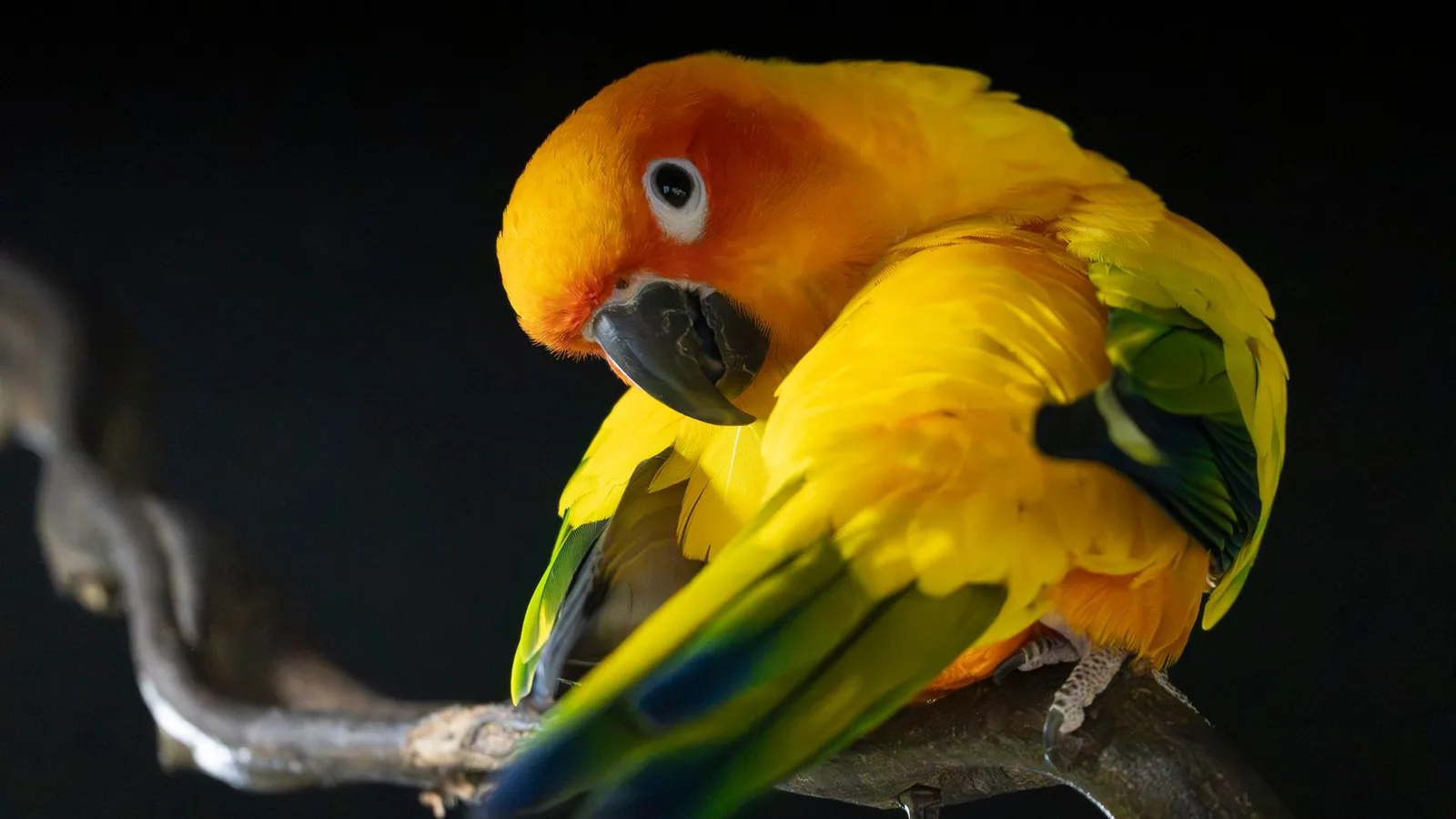
Finch grooming is mostly watching, not cutting. Finches are fastidious self-groomers that preen their own feathers many times a day, so a healthy finch rarely needs hands-on grooming from you. Your job as an owner is to provide the conditions that let natural grooming work, run a short weekly check of feathers and skin, trim nails only when they actually overgrow, and recognize the point where a problem moves from home care to an avian veterinarian. If you do one thing after reading this article, start a once-weekly visual check of your finch's plumage, feet, and vent area. That single habit catches most grooming-related problems early.
This article is educational and is not a substitute for veterinary diagnosis or treatment.
Finch Grooming at a Glance
| Task | How often | What you look for | See a vet if |
|---|---|---|---|
| Whole-bird visual check | Daily, seconds at a time | Smooth, sleek feathers, bright posture, both feet perching normally | Fluffed up for hours, sitting on the cage floor |
| Detailed feather and skin check | Weekly | Bare patches, broken feathers, scabs, flaking, debris at the vent | Any bare patch that grows, scabs, or visible mites |
| Bathing opportunity offered | Several times per week (individual preference varies) | The bird bathes voluntarily, feathers dry and resettle normally | Wet feathers stay soggy, or the bird stops bathing entirely and the plumage dulls |
| Nail check | Every 2 to 4 weeks | Tips just clear the perch surface, no curling, no catching on fabric | Nails curl, snag, or you can see and not safely trim them |
| Weight and body condition note | Weekly, at the same time of day | Stable weight, keel bone not sharply prominent | Sudden weight loss or a change in fat or keel condition |
Keep the table printed or saved on your phone. Grooming a finch fails most often because owners skip the observation steps and jump straight to restraint, which is the riskiest part of the whole process for a bird this small.
What Finch Grooming Actually Means
A finch's grooming routine has three parts, and only one of them involves you holding the bird.
- Natural grooming. Preening, bathing, dusting off, and scratching. The finch does all of this alone when its environment is right.
- Owner observation. Daily glances and a structured weekly check of feathers, skin, nails, and the vent. This is the core of how to groom a finch.
- Intervention. Nail trims when needed, and veterinary care for anything involving feathers, skin, or feet that does not resolve on its own.
The word "grooming" misleads many new finch owners. You are not brushing a dog. A finch restrained for unnecessary handling experiences genuine fear, and a panicked finch can injure itself against cage wire in seconds. Every recommendation in this guide is built around one principle, which the Association of Avian Veterinarians emphasizes for all small birds, which is to minimize restraint and maximize observation.
How Often to Groom a Finch
Here is the schedule that works for the vast majority of pet finches:
- Daily: A ten-second look at posture, feather set, and activity while the bird is undisturbed. You are comparing today's bird to last week's bird.
- Weekly: One focused check. Look at the chest and belly feathers, the vent, both feet and nails, the wings at rest, and the face and beak. Do this in good light without catching the bird if possible.
- Every 2 to 4 weeks: A specific nail check against the perch.
- Seasonally: During a molt, increase your observation. New pin feathers, temporary ragged appearance, and increased preening are normal. A finch that looks ragged for weeks beyond a normal molt, or that stops eating well during molt, needs a veterinarian.
If your finch is healthy and its environment is right, that entire schedule involves catching the bird zero times per month in most cases. Nail trims happen a few times a year at most.
The Plumage Score: A Simple Tool Worth Copying
Researchers studying zebra finch well-being developed a plumage scoring system precisely because feather condition is one of the most reliable, non-invasive windows into how a small bird is doing. In their work, multiple observers of different experience levels assessed the same birds, and the plumage score showed substantial inter-observer reliability, meaning different people looking at the same bird reached similar conclusions. The plumage score also proved more reliable between observers than the traditional fat score, which required more training, and the experienced scorer's own repeated assessments were highly consistent [1].
The practical takeaway for pet owners is direct. Feather condition is a legitimate, teachable, repeatable well-being indicator, not a vague impression. You can borrow the logic without the formal scoring sheet:
- Pick one day a week and one time of day. Consistency makes comparisons meaningful.
- Look at the whole bird first. Are the feathers lying smoothly and symmetrically, or are areas ruffled, missing, or damaged?
- Assign your bird a simple three-level feather grade each week: sleek and complete, slightly rough or patchy, or clearly poor with visible bare areas or damaged feathers.
- Write the grade down. A trend across three or four weeks tells you far more than any single day.
- Pair the feather grade with a body condition impression, keel prominence and fullness at the base of the neck, the same way the research pairing of plumage and fat scores gives a fuller picture than either alone [1].
Because the published scoring system was shown to be reliably taught to new observers, you can train a second family member and compare notes. Disagreement between two observers on the same day is itself useful information that the bird's condition is changing.
Feather Care: Setting Up the Bird to Groom Itself
Bathing
Finches maintain feather condition largely through bathing. Offer a shallow bath, a wet leafy greens rinse, or a fine mist, several times per week, and let the bird choose. Individual finches differ sharply in what they accept. The goal is voluntary use. After bathing, the bird should shake, preen, and return to a sleek appearance within a short time. Per guidance commonly given in VCA Animal Hospitals avian care resources and Lafeber Company educational materials for small birds, bathe earlier in the day so the bird dries completely before the temperature drops at night, and never dry a finch with a hair dryer on warm settings.
A finch that abruptly stops bathing while its plumage dulls is telling you something. Do not force baths. Book a veterinary visit and describe exactly what changed.
Molting
Molting is normal feather replacement, and it looks alarming to new owners. Expect a gradually scruffy bird, more preening, pin feathers appearing as small pin-like sheaths on the head and neck, and increased appetite as the bird rebuilds feathers. What is not normal is a molt that stalls, bare patches that do not refill, or a bird that seems sick rather than merely scruffy. Those findings belong in an avian examination, not a home remedy.
Damage, barbering, and feather loss
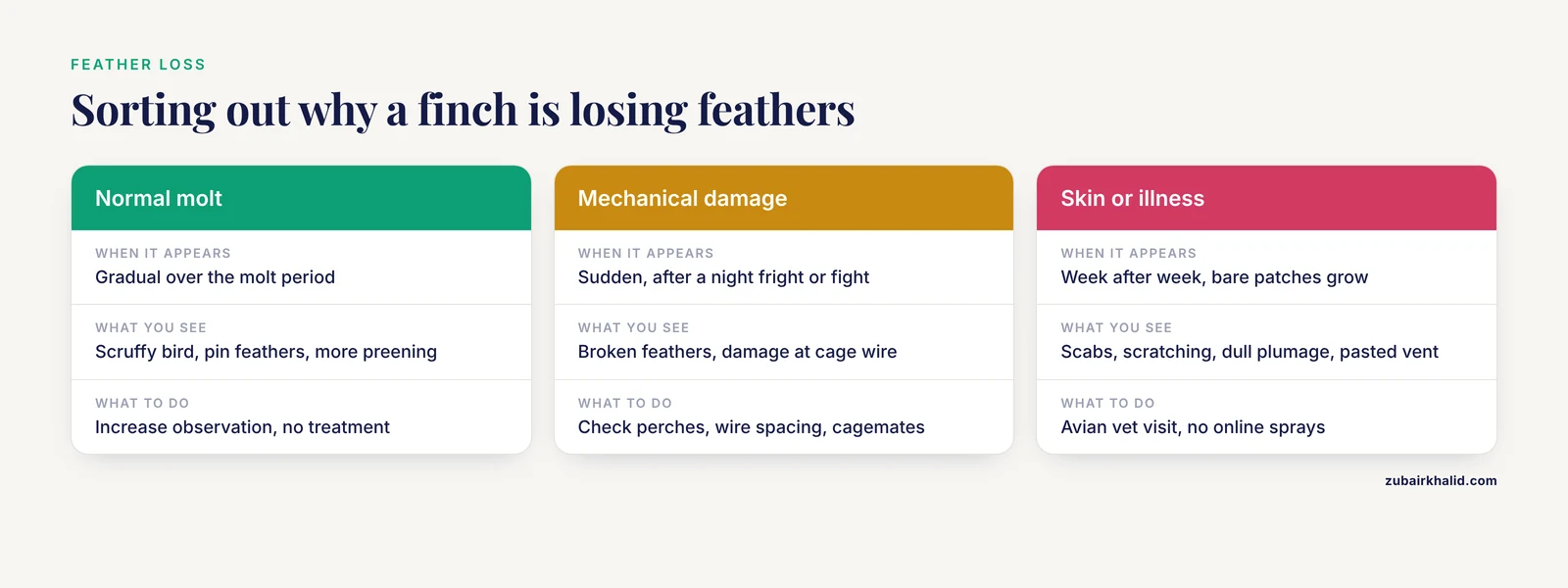
Feather problems in finches divide into three practical categories:
- Mechanical damage from cage design, aggressive cagemates, or night frights. Check perches, wire spacing, and whether two birds are fighting at dawn.
- Self-inflicted damage from itch, discomfort, or stress. This overlaps heavily with skin disease, covered in the next section.
- Systemic illness showing up in feathers. A plumage that degrades week after week, despite good care, is a whole-bird problem until a veterinarian proves otherwise. This is exactly the scenario the validated plumage score was designed to catch, because plumage deterioration tracks with declining well-being in captive zebra finches [1].
Resist the urge to treat feather loss with sprays, supplements, or mite products bought online. Random treatment delays diagnosis and, in a bird this small, carries real risk. Get a diagnosis first.
Finch Skin Problems
Skin is where grooming-related disease concentrates in finches, and the skin check is the part of the weekly routine owners skip most often. You need to part the mental picture beyond the feathers and look at the skin itself on the face, around the vent, and on the feet.
Mites and other ectoparasites
Mites are the best-documented skin problem in captive finches, and a published case from a research colony shows why owners should take them seriously. A zebra finch colony was infested with two previously undescribed mite species. The most abundant was a novel species in the genus Neocheyletiella, unusual even among bird mites because it lived and built nests within the feathers, and smaller numbers of a new species of a true feather mite, Megninialges, were also present. Multiple treatments with a pyrethrin spray eventually eradicated the mites, but topical ivermectin was subsequently found to be more effective, better tolerated by the birds, and less labor intensive. The investigators also noted that the infestation traced to birds arriving from outside sources, and they highlighted how little is known about ectoparasites in finches, concluding that ongoing health monitoring of finch colonies is warranted [2].
Three lessons apply directly to pet owners:
- New birds are the classic source. Any finch joining your household should go through a period of quarantine and veterinary check before living near your established birds. The epizootic described above began exactly this way.
- Mites in finches can hide in the feathers themselves. Because the Neocheyletiella species lived and nested in the plumage rather than only on the skin surface, a casual glance is not enough. Look close to the skin, around the vent, and under the wings during your weekly check.
- Treatment choice matters. The finding that topical ivermectin outperformed pyrethrin spray in effectiveness, tolerance, and ease of use came from an actual infestation, not theory [2]. The specific drug, formulation, and dosing for your bird must be set by an avian veterinarian based on your bird's weight and situation. Never dose ivermectin or any parasiticide yourself.
What the weekly skin check covers
During your weekly session, look specifically for:
- Flaking, crusting, or scabbing on the face, around the beak, and on the legs
- Clumps or irregular texture in the feathers close to the skin, which can indicate debris or mite activity
- Redness, swelling, or sores on the feet and toes, including the toe pads where perching problems start
- A dirty, pasted, or matted vent, which suggests diarrhea or reduced self-grooming and always warrants attention
- Any wound, however small, since skin breaks in small birds worsen quickly
Any positive finding on this list is a reason to contact an avian veterinarian within days, not weeks. Finches hide illness, and skin signs are usually visible late, not early.
A note on color-bred birds
If you keep white or other color-bred zebra finches, their grooming and handling plan should account for their vision. A study of white zebra finches found that although eye pigmentation and the major retinal wiring were normal, the visual system differed morphologically from normally colored birds, including an enhanced recrossing tectorotundal projection and a new reciprocal connection between the rotundal nuclei of both hemispheres, changes that may contribute to enhanced processing of stimuli from the same side of the body [3]. You do not need to understand the neuroanatomy to apply the lesson. White finches perceive their world differently from wild-type birds, so keep cage furniture in familiar positions, avoid sudden rearrangements during grooming sessions, and expect some color-bred birds to startle more readily. Grooming a nervous bird means shorter, calmer, more predictable sessions.
How to Trim Finch Nails
Nail care is the one grooming task that may genuinely require clippers, and it is the task most often done badly. Before discussing technique, get the threshold right: finch nails need trimming only when they overgrow past the point where the bird maintains them through perching on natural, textured surfaces.
Why finch nails overgrow
In the wild, finches wear their nails on rough branches and ground surfaces. In a cage furnished with smooth plastic or dowel perches, that natural wear disappears. The fix is often environmental rather than surgical. Offering varied natural wood perches, and textured perch surfaces, restores normal wear and reduces or eliminates the need for trims. If your finch needs trims repeatedly, change the perches before you sharpen the clippers.
When nails actually need a trim
Check nails every 2 to 4 weeks. A nail of appropriate length just clears the surface when the foot rests flat on a perch. Trim when you see one or more of these:
- The tip curls visibly past the plane of the toe
- The nail snags on fabric, cage liner, or your clothing during normal handling
- The nail is beginning to alter how the foot sits on the perch
Step-by-step technique
Most avian veterinarians, and the guidance published by the Association of Avian Veterinarians for small passerines, describe the same core approach. Discuss the exact method with your own avian vet at a routine visit, especially the first time, and have them demonstrate on your bird.
- Prepare before you catch the bird. Have small, sharp nail clippers, a coagulant product such as styptic powder, good lighting, a towel, and a second person if possible. A finch's body mass is tiny, so delays during restraint cost the bird stress quickly.
- Restrain gently and briefly. Cradle the bird in a soft towel with the head exposed and one foot accessible. Keep the session under a couple of minutes of actual restraint.
- Identify the quick. In light nails you may see the darker blood vessel within the nail. In dark nails you cannot, so trim conservatively, removing only the hooked tip.
- Trim the smallest possible amount. Take off the tip only. You can always trim again next month. You cannot undo cutting into the quick.
- Stop bleeding immediately if it starts. Apply styptic powder with gentle pressure. A small amount of bleeding from a slightly short cut is not an emergency, but uncontrolled bleeding in a bird this size is.
- Return the bird to the cage and watch. Confirm normal perching within minutes. Note the date and how much you trimmed so the next session is easier.
When not to trim at home
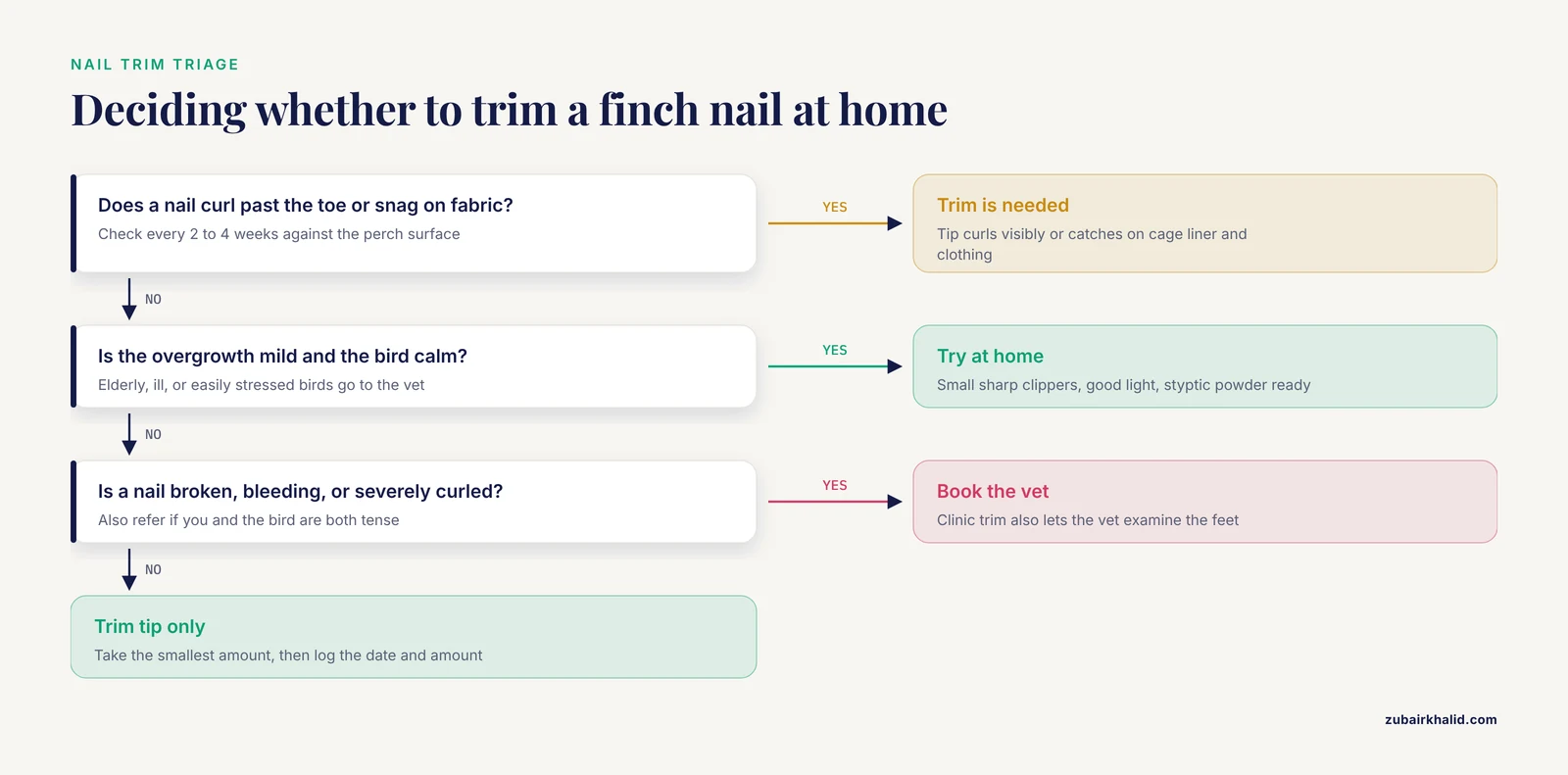
Hand the job to an avian veterinarian instead when the nails are severely overgrown or curled, when the bird is elderly, ill, or easily stressed, when a nail is already broken or bleeding, or when you and the bird are both tense enough that a mistake is likely. A nail trim at the clinic is inexpensive and gives the vet a chance to examine the feet, which catch problems owners miss.
The Weekly Skin and Feather Check, Step by Step
Run this five-minute routine once a week. Do not catch the bird for it. Most of it happens through the cage wire with a flashlight.
- Posture and position. Is the bird perching normally on both feet, upright, and alert?
- Head and face. Feathers around the eyes and beak smooth, beak aligned, no crusting at the nostrils or around the mouth.
- Chest and belly. Feathers lying flat, no bare patches, no matting.
- Vent. Clean, dry, no pasted feathers, no redness.
- Wings and back. Symmetrical at rest, no drooped wing, no broken or blood-stained feathers.
- Feet and nails. Toes gripping normally, nails length checked against the perch, no swelling or sores.
- Close look with the light. Part the visual impression at the neck and around the vent for flaking, crawling specks, or clumped feathers, given how finch mites can nest within the plumage [2].
- Log it. Write your feather grade, nail status, and anything unusual on the same note each week.
This routine is the practical heart of finch grooming. Everything else in this article either feeds into it or responds to what it finds.
Supplies Worth Having
You need very little. Select on function, not brand.
- Small, sharp nail clippers sized for tiny nails. Dull clippers crush rather than cut, which splinters the nail and hurts the bird.
- Styptic powder kept beside the clippers, not in another room.
- A plain light-colored bath dish or a dedicated bathing setup you can clean easily. Light colors let you see debris and droppings in the water.
- A small flashlight or headlamp for the weekly skin check. Skin lesions and mite evidence hide in shadow.
- A towel reserved for the bird, thin enough to feel through, large enough to cradle safely.
- A simple logbook or notes app for weekly grades and dates.
- Natural wood and textured perches in varied diameters. This is the single best nail and foot grooming supply you can buy.
Skip mite sprays, feather conditioners, vitamin sprays, and colored supplements unless your avian veterinarian prescribes or recommends them for your specific bird. One caution from the research literature is worth repeating here in practical terms. Studies on zebra finches show that even small color cues in a bird's environment can alter behavior in some contexts. In a series of mate-choice experiments, females initially preferred males associated with red environmental color cues over green, although follow-up experiments found no effect of such cues on female choice or male behavior [4]. Translated to the home cage, your finch notices what you add and change. Introduce new colored objects, including new perches, toys, or dishes, gradually and one at a time rather than redecorating during grooming week.
Common Mistakes in Finch Grooming
- Catching the bird for routine checks. Observation through the cage catches almost all problems. Restraint should be reserved for nail trims and veterinary transport.
- Trimming nails on a schedule instead of on need. Nails trimmed too often, or too short, cause pain and bleeding. Trim when the tip curls or snags, not because a month passed.
- Skipping the vent and feet. Owners check the pretty feathers and miss the vent, the toes, and the nails, which is where the actionable findings usually are.
- Treating suspected mites without a diagnosis. The published colony infestation was solved with correctly chosen, correctly applied treatment after the mites were identified [2]. Spraying an undiagnosed bird with an over-the-counter product does the opposite of helping.
- Bathing a bird late in the day or drying it forcibly. A wet finch chilled overnight is a genuine emergency risk. Offer baths early and let the bird dry naturally in a warm room.
- Ignoring a declining plumage grade because the bird still eats. The validated plumage score exists because feather condition tracks whole-bird well-being before obvious illness appears [1]. A slide from sleek to rough over several weeks is an early warning, not a cosmetic issue.
- Rearranging the cage during a stressful week. Color and layout changes affect finch behavior [4]. Stack changes, do not pile them onto grooming or molting periods.
- Assuming all finches see the same world. White color-bred zebra finches have documented visual system differences [3]. Handle and house them accordingly.
Welfare and Safety Points
Every hands-on grooming moment is a stress event for a prey species the size of a finch. The welfare rules that follow from this are simple and absolute:
- Restraint only for necessity, never for routine.
- Shortest restraint time that does the job, with everything prepared in advance.
- Never trim feathers, beak, or nails beyond the conservative minimum without veterinary training. Wing trims and beak work are veterinary procedures, not owner grooming tasks, and should be discussed with an avian veterinarian before any decision.
- Watch the bird for several minutes after any hands-on session. A finch that does not settle, perch, and resume normal behavior quickly needs to be observed further.
- Quarantine and veterinary-check every new finch before it joins your birds, because new arrivals are the documented entry route for ectoparasites into finch collections [2].
The Merck Veterinary Manual's pet bird resources make the same overall point that underlies all of these rules, which is that in small birds, prevention and early detection deliver far better outcomes than treatment of advanced disease.
Limitations and When to Contact a Veterinarian
The guidance in this article describes general husbandry practice for commonly kept pet finches, especially zebra finches, and individual birds vary. Every specific diagnosis, medication, dose, and treatment plan for your finch requires an avian veterinarian who can examine the bird. The research cited here comes largely from zebra finches, the most commonly kept and most studied finch species, and findings may not transfer identically to Gouldian finches, society finches, or other species.
Contact an avian veterinarian promptly, within days rather than weeks, for any of the following:
- A feather grade that worsens over two or more weekly checks
- Any visible mites, unusual clumping within the feathers, or flaking and crusting of the skin [2]
- A nail that breaks, bleeds, or curls severely
- A vent that is pasted, dirty, or red
- A bird sitting fluffed on the cage floor, not eating, or tail-bobbing, which is an emergency
- Bleeding that does not stop with pressure and styptic powder
- Any wound, swelling of a foot or toe, or a sudden change in posture or perching
- Any planned treatment for parasites, since drug choice and dosing in birds of this size must be veterinary decisions [2]
If you cannot reach an avian veterinarian locally, ask a general exotics vet, an emergency animal hospital, or the AAV's public resources for a referral. Do not wait out skin or feather disease in a finch, because small birds decline fast once they show signs.
Frequently Asked Questions
How often should I groom my finch?
Run a ten-second visual check daily and a full five-minute feather, skin, nail, and vent check once a week. Actual hands-on grooming is rare, usually limited to a nail trim a few times a year when nails genuinely overgrow.
Do finches need baths?
Yes, most finches benefit from the opportunity to bathe several times a week, but the bathing itself must be voluntary. Offer a shallow dish or gentle mist early in the day so the bird dries fully before night, and never force a bath on an unwilling bird.
How do I know if my finch's nails are too long?
A nail of proper length just clears the perch surface when the foot rests flat. Trim if the tip visibly curls, snags on fabric or cage liner, or starts to change how the foot sits on the perch.
Can I trim finch nails at home?
Yes, if the overgrowth is mild and you can restrain the bird calmly and briefly, using small sharp clippers, good light, and styptic powder ready at hand. For severe overgrowth, a stressed bird, or a first-time trim, have an avian veterinarian do it and demonstrate the technique.
What are the signs of mites on a finch?
Look for flaking or crusting on the face and legs, clumped or irregular texture in the feathers close to the skin, visible tiny moving specks, around-the-vent debris, and restless scratching. Some finch mites live and nest within the feathers themselves, so look closely rather than glancing.
Why is my finch losing feathers?
Normal molt causes temporary scruffiness with pin feathers and increased preening. Feather loss that produces growing bare patches, persists beyond a normal molt, or comes with scratching, scabs, or a dull bird points to skin disease, parasites, cage trauma, or illness and needs a veterinary examination.
Should my finch wear a leg band?
Closed leg bands from a breeder can help with identification, but do not add colored bands yourself. Color cues influence finch behavior and social perception in research settings, and a band that snags or fits poorly injures the leg. Discuss banding and band removal with an avian veterinarian.
Do white finches need different grooming care?
White color-bred zebra finches have documented differences in visual system structure despite normal-looking eyes, so keep their cage layout stable, avoid sudden changes, and handle them calmly. Their grooming needs for feathers, nails, and skin are otherwise the same as any finch.
Further Reading
Sources
- Plumage and Fat Condition Scores as Well-Being Assessment Indicators in a Small Passerine Bird, the Zebra Finch (Taeniopygia guttata).
- Infestation of research zebra finch colony with 2 novel mite species.
- Morphological alterations of the visual system in white zebra finches.
- Colour Cues That Are Not Directly Attached to the Body of Males Do Not Influence the Mate Choice of Zebra Finches.