How to Build a DIY Puzzle Feeder for Your Bird
By Dr. Zubair Khalid, DVM, MS, PhD ·

A DIY puzzle feeder for birds is any bird-safe wrapper, box, or container that makes your bird work briefly for part of its own daily food. The fastest version takes about five minutes: wrap a pinch of your bird's normal pellets in plain paper, twist both ends closed, and drop it into the food bowl. The rules that keep the project safe never change. Every material must survive beak contact without releasing anything harmful, the food must come out of the daily ration rather than pile on top of it, and you must supervise early sessions until you know exactly how your bird treats the object.
Puzzle feeders turn two minutes of bowl-eating into a longer activity that resembles how parrots find food naturally. This guide covers the materials that are safe, the full build step by step, tips for introducing the feeder to a suspicious bird, the mistakes that send birds to the veterinarian, and where foraging fits into a complete parrot care checklist.
This article is educational and is not a substitute for veterinary diagnosis or treatment.
At a Glance: Build One Today
| Step | Do this | Check before you walk away |
|---|---|---|
| , - | , - | , - |
| 1. Portion the food | Set aside part of the daily ration of pellets, seed, or chopped vegetables | No avocado, chocolate, caffeine, alcohol, or salty snacks anywhere in the mix |
| 2. Pick materials | Plain paper, unwaxed cardboard, untreated wood, stainless steel hardware | No tape, glue, staples, glossy print, or plated metal |
| 3. Load it easy | Leave food partly visible on the first attempt | No piece small enough to swallow whole |
| 4. Introduce slowly | Offer it near a favorite perch while you watch | Remove it if your bird panics |
| 5. Finish the session | Take the feeder out, inspect it, discard soiled paper | No cracks, sharp edges, or loose hardware |
Why Foraging Matters for Pet Birds
Wild parrots spend a large share of every day locating, opening, and processing food. A bowl delivers the same calories in minutes and leaves the rest of the day empty. The Merck Veterinary Manual identifies environmental enrichment as a core need for pet birds, and it warns that unstructured time contributes to behavior problems such as screaming, pacing, and feather damage. VCA Animal Hospitals recommends foraging toys and food-hiding games as practical ways to keep captive birds occupied and to encourage natural behavior. Lafeber, whose avian nutrition program is built around foraging, describes the search for food as normal parrot behavior that conventional bowl feeding removes from a bird's day.
A well-built feeder gives your bird safe outlets for chewing, shredding, and manipulating, which are normal beak and tongue activities. It stretches eating time, adds physical movement, builds problem-solving confidence in timid birds, and channels chewing energy that might otherwise land on perches, cage bars, or feathers. Enrichment is one input among several. Sleep, space, diet, and social contact all matter, and your avian veterinarian can help you balance them for your species.
Where a Feeder Fits in Your Bird Cage Setup
Placement decides whether a puzzle feeder becomes a game or a hazard. Attach it firmly so it cannot swing, spin, or fall. Position it at or slightly below the height of a favorite perch so your bird reaches it comfortably. Keep it clear of the perch directly above, because droppings will otherwise land in the food, and keep it away from the water dish so splashes and soaked paper do not breed bacteria.
The feeder also has to make sense inside the whole bird cage setup. Your bird should be able to stretch its wings fully without touching bars, reach food and water without stretching awkwardly, and move between several perches of different diameters and textures. Food stations belong away from droppings, and bar spacing should suit your species so a head cannot slip through, a detail your avian veterinarian or breeder can confirm. In a shared cage, plan one feeding station per bird plus a spare so no bird guards the puzzle and blocks cage mates from eating. A feeder is one element of the setup, never a substitute for adequate space and perches.
Bird-Safe Materials and Supplies
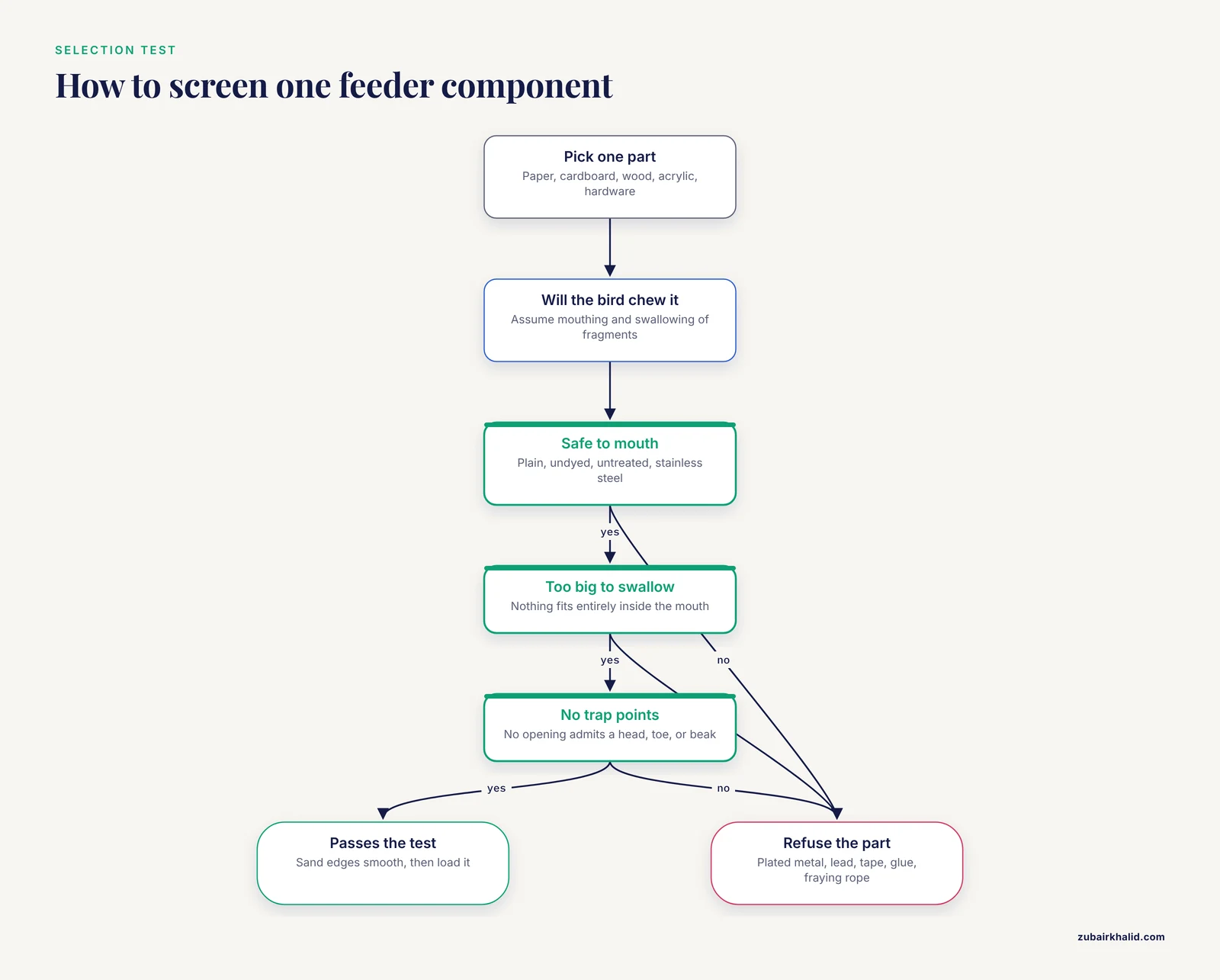
Apply one selection test to every component: assume your bird will chew it, shred it, and eventually swallow fragments of it. Each part must either be safe to mouth or be removed before it breaks down. Size matters as much as substance, so nothing should fit entirely inside your bird's mouth, and no opening should admit a head, toe, or beak and then narrow.
Materials That Work
- Plain paper. Newsprint, office paper, and paper baking cups twist, fold, and tear beautifully. They cost little, so you can discard them after every session.
- Unwaxed cardboard. Tubes and small plain boxes shred safely. Reject anything with tape, staples, glossy coating, or grease residue, and discard the piece the same day it gets damp.
- Untreated, unpainted wood. Pine, birch, and maple blocks, plus clean, pesticide-free fruit branches, satisfy heavy chewers. Cut edges smooth and skip any wood with finish on it.
- Stainless steel hardware. Skewers, washers, quick links, and eye bolts hold up to moisture, acids in fruit, and repeated washing. This is the only hardware category worth trusting around a bird.
- Sturdy acrylic. Thick, smooth acrylic pieces resist shattering and work well for medium and large parrots, provided every piece is too large to swallow.
- Undyed natural shreddables. Palm leaf, seagrass, and clean coconut shell give beaks a job without dyes or scent.
Materials to Refuse
- Galvanized or plated hardware. Zinc from these coatings is a classic avian poison, and the Merck Veterinary Manual lists zinc and lead toxicosis among the serious heavy metal risks in pet birds.
- Anything containing lead. Old paint, solder, fishing weights, and similar items have no place near a cage.
- Pressure-treated lumber, plywood, particle board, and cedar. Glues, preservatives, and aromatic oils make them unsafe for beaks.
- Tape, staples, paper clips, rubber bands, and every adhesive. Assemble with folds, friction, and stainless hardware instead.
- Fraying rope and loose string. Swallowed threads can impact the crop or intestine. If you use rope at all, it stays for supervised sessions only and gets trimmed of fuzz.
- Brittle plastic and swallowable parts. Hard plastic that snaps into sharp fragments, and any piece small enough to go down whole, fail the selection test.
- Glossy print, heavy dyes, and scented or waxed products. Plain and undyed wins every time.
Match every part to the bird. A budgie needs light paper and thin cardboard it can actually move, while a macaw dismantles soft designs in seconds and needs dense wood and thick acrylic. Whatever the species, sand cut wood edges smooth and run a finger over every surface hunting for sharp points before the feeder enters the cage.
DIY Puzzle Feeder for Birds Step by Step
The build itself takes ten to twenty minutes once materials are gathered. The introduction takes days, and that pace is deliberate.
Step 1: Portion the Daily Food
Decide which foods will travel through a puzzle. Base pellets and a share of chopped vegetables work well, and Lafeber's guidance treats foraging as a way to deliver a balanced diet rather than a source of extra calories. Before you change how food is presented, ask your avian veterinarian to confirm your bird's base diet and target weight, and never offer a food that is not already established in the diet. Plain, clean water stays available in its usual spot at all times.
Step 2: Choose a Starter Design
Pick one design that matches your bird's size and experience.
- Paper parcel. Place a small pinch of pellets or diced vegetables, sized for your bird, in the center of a square of plain paper. Fold the corners over and twist the top. For a first attempt, leave one corner loose so food peeks out.
- Muffin-cup stack. Drop food into a paper baking cup, cover it with a second cup, and stack three to five layers. Set the stack in a shallow dish. Peeling the layers is the puzzle.
- Cardboard roll stuffer. Fill a plain cardboard tube with crumpled paper balls, hiding food inside a few of them, then fold the tube ends inward. Small birds push, shred, and unroll it. Discard the tube the same day.
- Box puzzle. Trim a small plain cardboard box until it is light enough for your bird to tip over, punch a few finger holes so the scent escapes, and bury food inside among crumpled paper. Close the flaps by folding, never with tape.
- Skewer stack. Thread vegetables, leafy greens, and thin wood discs onto a stainless steel skewer, hiding favorite pieces between less exciting layers. Hang it so your bird must stretch and reposition to strip the stack.
- Shredder bowl. Fill a stainless bowl with crumpled paper, palm leaf, or seagrass and bury food throughout. Digging for dinner doubles as shredding enrichment.
Step 3: Load It Easy
Make the first loads almost free. Food sits visibly on top, wraps stay loose, and one layer separates the bird from dinner. The goal of session one is a win, not a challenge.
Step 4: Introduce Without Pressure
Many parrots treat an unfamiliar object with suspicion until it proves harmless, a wariness the Merck Veterinary Manual describes as typical of the group. Adults often need more time than young birds. Place the loaded feeder outside the cage near a favorite perch, or clip a flat version to the bars at perch height, and let your bird watch you tuck food into it. Reward any approach with a favorite treat from your hand, keep the first sessions short, and leave the familiar food bowl untouched on day one.
Step 5: Supervise Every Early Session
Stay in the room and watch how your bird chews. Notice whether hardware loosens, whether fibers begin to fray, whether your bird eats the food or only shreds the container, and whether anything snags a toenail. End each session while interest is still high, then remove and inspect the feeder.
Step 6: Raise Difficulty One Variable at a Time
Add a single change at a time: a tighter twist, an extra paper layer, an opaque cover, a new location. Most attempts should still end in success. If your bird fails repeatedly, drop back one level, because repeated failure teaches birds to give up on the game.
Step 7: Clean, Replace, Rotate
Wash stainless steel and acrylic parts daily with hot soapy water, rinse thoroughly, and air dry. Discard paper and cardboard the same day they become damp or soiled, since moist food debris grows bacteria quickly and VCA's feeding guidance stresses prompt removal of perishable foods. Wood is porous and hard to disinfect, so plan to replace pieces rather than scrub them indefinitely. Rotate two or three designs through the week so novelty survives.
DIY Puzzle Feeder Tips That Make the Difference
- Feed the ration, not extras. Puzzle food comes out of the daily allowance. Extra calories on top of a full bowl lead to obesity and picky eating.
- Weigh weekly. A gram scale catches trouble long before the eye can, and VCA recommends routine weighing as part of monitoring a pet bird's health.
- Match the individual, not just the species. Young birds usually dive in, while older birds often need slow introductions and repeated demonstrations.
- Time it to natural peaks. Offer the feeder in the morning and again in the late afternoon, when foraging drive runs highest.
- Put fresh food on a timer. Chopped produce spoils fast, so anything moist comes out within a few hours.
- Mix stationary and portable feeders. A hanging skewer and a floor-level shredder bowl exercise different skills.
- Model the behavior. Parrots learn from flockmates, so load the feeder in view of your bird and handle the food enthusiastically.
- Keep a simple log. Note which designs hold attention and which get ignored, and build your rotation from the winners.
Common DIY Puzzle Feeder Mistakes and the Fixes
- Starting too hard. A bird that cannot find food in ten minutes abandons the game. Fix: begin with visible food and raise difficulty in single steps.
- Trusting hardware-store metal. Plated and galvanized hooks, washers, and chains can shed zinc, and heavy metal toxicosis is a documented avian emergency. Fix: buy stainless steel only.
- Assembling with glue or tape. Adhesives stick to beaks and get swallowed. Fix: use folds, friction fits, and stainless hardware.
- Leaving fraying rope in the cage. Loose threads wrap around toes and impact the gut. Fix: reserve rope for supervised play and trim fuzz on sight.
- Offering swallowable parts. Small beads, buttons, and thin plastic caps go down whole. Fix: apply the too-big-to-swallow rule to every component.
- Leaving fresh chop in place all day. Spoiled produce exposes birds to bacterial growth. Fix: moist foods get a few hours, then come out.
- Removing the bowl overnight. An abrupt switch can leave a confused bird eating far too little. Fix: transition over a week or more while you track weight and droppings.
- Crowding the cage. Too many objects block flight paths and perching. Fix: treat the feeder as one item inside a deliberate bird cage setup, with open space preserved.
- Reusing soiled wood forever. Porous wood holds moisture and debris. Fix: retire chewed, stained, or damp pieces and replace them.
- Reading frustration as persistence. Pacing, aggressive screaming, or abandoning the feeder means the puzzle is wrong, not the bird. Fix: lower the difficulty and rebuild success.
Troubleshooting a Feeder That Is Not Working
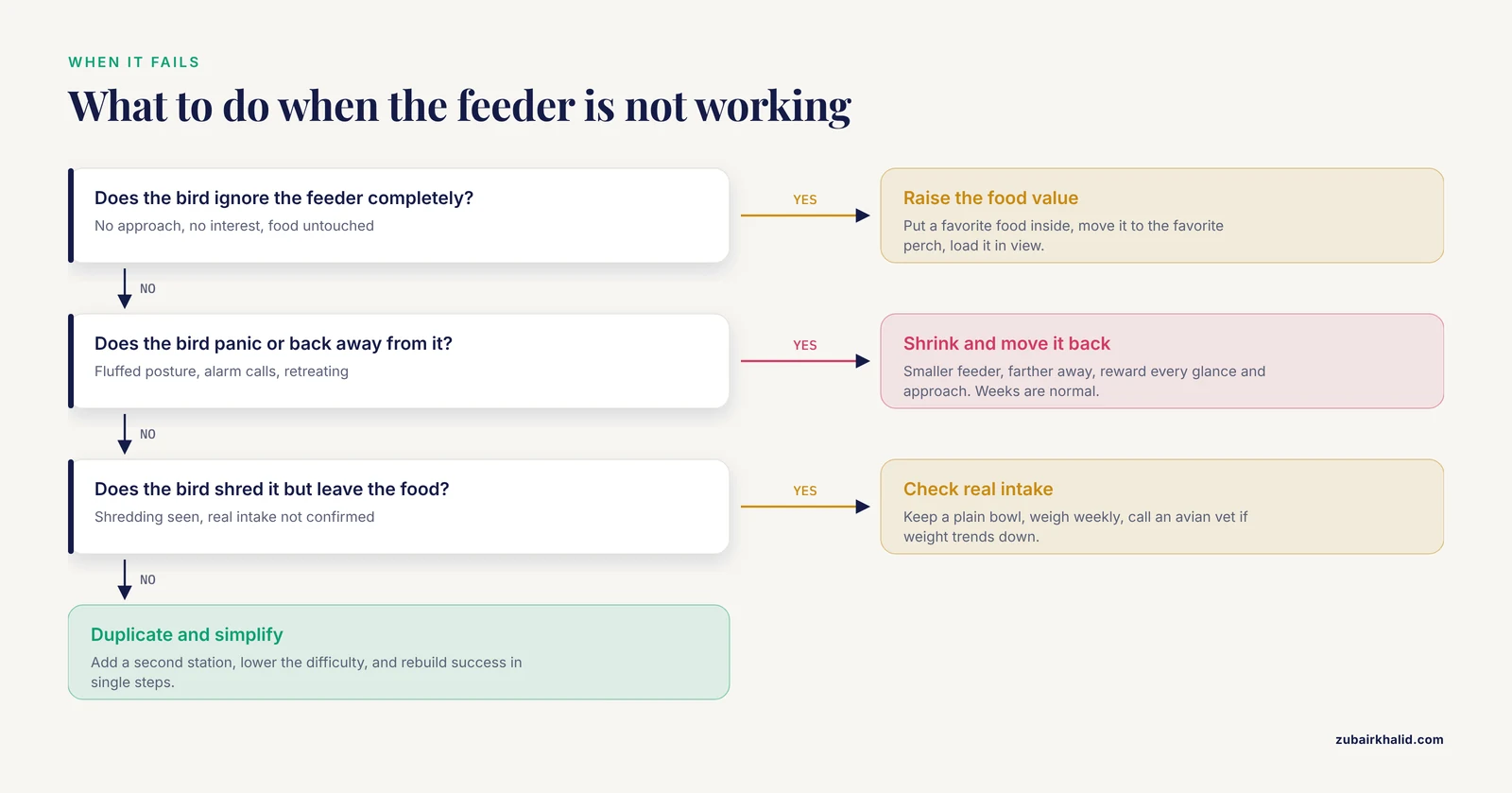
The bird ignores the feeder. Raise the food value inside it, place it at the favorite perch, and let your bird watch you load it. Try a different time of day before you conclude the bird dislikes foraging.
The bird fears the feeder. Move it farther away, shrink it, and reward every glance and approach. Weeks of gradual exposure are normal for adult birds, and pushing faster only deepens the fear.
The bird shreds but does not eat. Shredding is valuable, but confirm real intake. Keep a plain bowl available, weigh your bird weekly, and ask an avian veterinarian for guidance if weight trends down.
Cage mates guard or fight over it. Duplicate the feeder and separate the stations widely. Guarding is resource competition, and one shared puzzle invites conflict.
Food contaminates quickly. Move the feeder out of the dropping line, shorten sessions, and switch to disposable paper liners inside the container.
The bird chews the hardware instead. Swap to stainless steel, cap exposed threads with wood, or redesign the feeder so metal sits outside beak reach.
Welfare and Safety Rules for Homemade Feeders
Supervision is the foundation. Inspect every feeder before its first use each day and pull it the moment you see cracks, sharp edges, loose hardware, or soaked paper, which mirrors VCA's toy-safety advice to discard worn items promptly. Keep glues, paints, and solvents out of the bird's room while you build, and never spray aerosols or burn scented products near a bird, since the Association of Avian Veterinarians counts airborne fumes among the leading household hazards for psittacines.
Water stays separate, clean, and always available, and food is never withheld to force a bird to work. The goal is effort for food, not hunger. Finally, watch droppings and body weight through any change in how food is presented, because subtle shifts are the first signal that something is wrong.
A Parrot Care Checklist With Foraging Built In
Foraging earns its place on a parrot care checklist alongside the fundamentals. Use this schedule as a starting framework and adjust it with your avian veterinarian.
| How often | Task |
|---|---|
| , - | , - |
| Every day | Fresh food and clean water, at least one foraging session, a quick look at droppings, and a long, dark, quiet sleep period |
| Every day | Out-of-cage interaction or supervised exercise appropriate to your species, as your avian veterinarian advises |
| Weekly | Weigh your bird on a gram scale, rotate feeder designs, scrub bowls and stainless hardware, inspect perches and toys for wear |
| Monthly | Complete cage clean, check bar spacing, latches, and perch condition, replace chewed wood parts |
| Yearly | Wellness examination with an avian veterinarian, a checkup cadence the Association of Avian Veterinarians recommends so problems are caught early |
Foraging is one line on the list, not the whole list. Sleep, balanced diet, exercise, training, and veterinary care carry equal weight, and Lafeber's care materials place foraging inside a full nutrition and husbandry program rather than treating it as a stand-alone fix.
Limitations and When to Contact a Veterinarian
Every bird is an individual, and species, age, health status, and housing all change what is safe and appropriate, so review this project with your avian veterinarian, especially for young chicks, seniors, birds with chronic disease, and birds that pluck or injure themselves.
Contact an avian veterinarian promptly, the same day when possible, for any of the following:
- Reduced appetite, fewer droppings, or droppings that change color or consistency for more than a day
- Measurable weight loss on your gram scale
- Lethargy, fluffed posture, tail bobbing, or sitting on the cage floor
- Bleeding, limping, or a toe, leg, or beak caught in any part of the feeder
- Known or suspected swallowing of metal, plastic, string, or adhesive
- A sudden change in voice, activity, or sociability
Birds instinctively hide illness until disease is advanced, which is why the Merck Veterinary Manual urges owners to treat subtle changes as urgent rather than waiting. Keep your avian veterinarian's phone number posted near the cage, and the Association of Avian Veterinarians maintains a directory to help you locate a qualified bird vet in your area.
Frequently Asked Questions
What can I use as a DIY puzzle feeder for birds?
Plain paper parcels, unwaxed cardboard tubes and boxes, untreated wood blocks, stainless steel skewers, and undyed natural fibers all make effective feeders. Wrap a share of the daily food, tuck it into folded paper cups, or thread food between layers on a skewer. Skip tape, glue, staples, and any plated or galvanized metal.
Are DIY puzzle feeders safe for budgies and cockatiels?
Yes, when every part is sized for a small beak and nothing can trap a head, toe, or beak. Start with lightweight paper and thin cardboard designs, supervise early sessions, and remove anything damp or torn. Small birds swallow small pieces easily, so keep every component too large to go down whole.
How do I get my bird to use a puzzle feeder it keeps ignoring?
Make the puzzle easier until the food is plainly visible, then let your bird watch you load it. Start with the feeder near a favorite perch, reward any approach with a favorite treat, and keep sessions short. Once your bird touches it willingly, move it into the cage and rebuild the difficulty slowly.
Can a puzzle feeder replace my bird's regular food bowl?
No, treat it as a supplement that carries part of the daily ration while a familiar bowl stays available. Transition over a week or more, track weight on a gram scale, and check droppings daily. If intake falls, return to the bowl and talk with your avian veterinarian.
How often should I clean or replace a homemade bird puzzle feeder?
Wash stainless steel and sturdy acrylic parts daily with hot soapy water, rinse completely, and air dry. Discard paper and cardboard the same day they become damp or soiled, and retire chewed wood once surfaces turn rough or wet. Rotate designs so no single feeder sits in the cage for weeks.
Which materials should never go into a homemade bird feeder?
Avoid galvanized or plated hardware, lead-containing items such as old paint and solder, pressure-treated or painted wood, plywood and particle board, cedar, tape, staples, adhesives, brittle plastic, and fraying rope. Assume a chewing bird will eventually eat every component, so each part must be safe to mouth or removed before it breaks down.
Do puzzle feeders help with screaming and feather picking?
They can help as one part of a broader enrichment plan, because filling foraging time removes idle hours that bored birds often fill with noise or feather damage. They rarely fix the problem alone, so combine them with proper sleep, space, training, and attention, and have an avian veterinarian rule out medical causes first.
Where should I place a puzzle feeder inside the cage?
Attach it at perch height near a favored perch, clear of the perch above so droppings cannot land in the food, and away from the water dish. Secure it so it cannot swing or fall, and give each bird in a shared cage its own station to prevent guarding.