Best Pet Birds for Kids and Families
By Dr. Zubair Khalid, DVM, MS, PhD ·
The one-sentence difference between a great family bird and a terrible one is lifespan and handling need. A budgerigar may share five to ten years with your child, while a macaw can outlive the household and demand the handling time of a toddler for half a century. The rule of thumb for choosing among the best pet birds for kids is simple: match the bird to the youngest person who will care for it, and match the bird's social needs to the quietest estimate of your family's daily free time, not your most optimistic one.
This article is educational and is not a substitute for veterinary diagnosis or treatment.
Every species below can be a wonderful companion in the right home and a neglected animal in the wrong one. The goal of this guide is to help you pick honestly, not to sell you on any single species.
Quick Comparison: The Best Pet Birds for Families With Children
| Species | Size | Typical lifespan | Noise level | Handling | Best child age | Main watch-out |
|---|---|---|---|---|---|---|
| Budgerigar (budgie) | Very small | Roughly 5 to 10 years | Low to moderate | Yes, with taming | 6 and up | Often bought impulsively, then ignored |
| Cockatiel | Small | Roughly 15 to 25 years | Moderate, with contact calls | Excellent handleability | 8 and up | Dusty feathers, decades-long commitment |
| Lovebird | Small | Roughly 10 to 15 years | Moderate to loud for their size | Possible, but nippy | 10 and up | Strong pair bonds, can be territorial |
| Green-cheeked conure | Small-medium | Roughly 20 to 30 years | Loud bursts despite small size | Very hands-on | 10 and up | Vocalizations, long lifespan |
| Canary | Very small | Roughly 5 to 10 years | Melodious singing (males) | Look, do not touch | 5 and up | Not a handling pet |
| Zebra or society finch | Very small | Roughly 5 to 10 years | Soft chirping | Hands-off | 5 and up | Does best in pairs or groups |
| Large parrots (African greys, Amazons, macaws) | Medium to large | Often 30 to 50+ years | Very loud | Demanding | Not recommended as a child's primary pet | Screaming, bite force, lifetime rehoming risk |
Lifespans are typical ranges cited by avian veterinarians and vary substantially with diet, housing, and genetics. Treat them as planning figures, not promises.
Budgerigar: The Classic First Bird
Budgerigars, usually called budgies or parakeets, remain the most widely kept pet parrot in the world, and the Merck Veterinary Manual lists them among the most common psittacine patients seen in practice. That popularity is not an accident. Budgies are small, widely bred in captivity, inexpensive to house, and capable of genuine social bonding with humans.
Pros
- Small body and correspondingly small beak, which lowers bite risk for supervised children
- Relatively short lifespan for a parrot, which many families find easier than a four-decade commitment
- Widely available hand-tamed juveniles from reputable breeders and rescues
- Capable of learning words and whistles, which keeps children engaged
- Lowest total cost of entry among the parrot family options
Cons
- Small size means a small bird is easily injured by rough handling, closed doors, or other pets
- A single budgie needs daily interaction to stay tame. A pair will bond to each other and may become less interested in people
- Their short lifespan, often under ten years, means your child may experience the bird's death during childhood. Decide in advance how your family will handle that
- Pet store birds without handling history can be fearful and flighty, and taming takes patience
Who this bird fits
A budgie suits a family with a child around six or older who wants a bird the child can hold, talk to, and teach tricks, and where the parents accept responsibility for the bird even when the child loses interest. Budgies are the most forgiving entry point into parrot keeping, which is why avian veterinarians so often recommend them as a first psittacine.
Cockatiel: The Best All-Around Family Parrot
If you asked a group of avian veterinarians to name the best pet bird options for a household with children, cockatiels would appear on almost every list. VCA Animal Hospitals describes them as among the most popular pet birds precisely because they combine parrot intelligence and affection with a manageable size and a gentler beak than their larger relatives.
Pros
- Outstanding handleability. A well-socialized cockatiel steps up, rides on shoulders, and tolerates children's slower, clumsier movements better than most species
- Males can learn to whistle tunes and mimic words
- Long enough lived, typically fifteen to twenty-five years, that a child does not face the loss during early childhood, though you should plan for the bird outliving the child's departure for college
- Broad availability of hand-fed babies and rescues looking for second homes
Cons
- Cockatiels produce feather dust, a fine powder from their plumage. Households with asthma or allergies should discuss this with a physician before committing, and cleaning routines need to account for it
- They form strong bonds and can develop reproductive or behavioral problems, such as chronic egg laying, when bonded to a person. An avian veterinarian can advise on managing this
- Their contact calls are sharp. They are not screaming parrots, but they are not silent either
- The commitment horizon is measured in decades
Who this bird fits
A cockatiel fits families with children around eight or older who want a genuinely interactive pet and are ready for a two-decade responsibility. This is the bird I recommend most often to families who want a "real" parrot experience in a small, manageable package.
Lovebird: Beautiful, Bold, and Best With Older Kids
Lovebirds are small parrots with outsized personalities. They are colorful, active, and entertaining, but they are a step up in difficulty from budgies and cockatiels, and the best pet birds for families with children are usually not lovebirds when the handler is young.
Pros
- Striking color mutations and constant playful activity
- Small footprint in the home
- Deep bonds with a person or a partner bird make them rewarding for a dedicated older keeper
Cons
- Powerful bite for their size and a well-earned reputation for nippiness when hormonal or territorial
- Many lovebirds prefer one person and may guard that person against others, including children
- Pair-bonded lovebirds often become defensive of the cage and of each other
- Lifespans of ten to fifteen years still represent a serious commitment
Who this bird fits
Lovebirds suit a teen or a very motivated adult-led household. They are a poor match for a younger child's first bird.
Green-Cheeked Conure: Hands-On Personality, Serious Volume
Green-cheeked conures are frequently described by their owners as big parrots in a small body. They cuddle, they play, they hang upside down, and they want to be part of everything. For the right family they are superb. They are also a louder and longer-lived commitment than their size suggests.
Pros
- Extremely interactive and physically affectionate, often described as the cuddliest of the small conures
- Relatively quiet for a conure most of the time, though capable of loud calls
- Playful and toy-motivated, which makes enrichment easy and keeps children involved
Cons
- When they do vocalize, they can be startlingly loud for their size. Apartment dwellers should think carefully
- Lifespans of twenty to thirty years mean this bird may go to college with your child or need rehoming later
- Beaks are noticeably stronger than a budgie's, and an excited or frightened conure can break young skin
- They need daily out-of-cage time and can become noisy or destructive when under-exercised and bored
Who this bird fits
A conure fits a family with children ten or older, parents who are fully committed to daily interaction, and a living situation where occasional loud calls will not cause conflict. A well-socialized green-cheeked conure is one of the most rewarding family birds there is, but it is not a beginner's burden to hand a child alone.
Canaries and Finches: The Watch-And-Listen Birds
Not every family wants a bird that sits on a shoulder. Canaries and finches are the best pet birds for kids in households that want observation, song, and natural history on display without daily handling.
Pros
- Minimal handling means minimal bite risk and minimal stress for the bird
- Male canaries sing, which many families find genuinely pleasant
- Finches do best in small groups, and watching their social behavior is a real educational experience for young children
- Quiet enough for apartments and for homes with a sleeping baby
Cons
- They are not pets a child can hold. A child who wants to touch and carry a pet will be disappointed
- Catching a finch for a health check requires care, and netting a bird is stressful for everyone involved
- Because they are prey animals handled rarely, subtle illness signs are easy to miss. Weight checks and observation matter
Who this bird fits
Canaries and finches suit families with children as young as five who are content to observe, feed, and care for a bird rather than hold it. They also pair well with a hands-off family philosophy, since their welfare depends on calm, respectful distance.
Large Parrots: Why the Answer Is Usually No
African greys, Amazons, and macaws dominate social media, and they dominate the rehoming statistics too. These are the species most often surrendered to rescues after a family discovers that a bird with a potential fifty-year lifespan, a beak that can crack walnuts, and a voice that carries across a neighborhood is not a child's pet.
The Association of Avian Veterinarians consistently emphasizes that parrots are long-lived, cognitively complex animals whose welfare depends on decades of appropriate social contact, diet, and environmental enrichment. A large parrot is a multi-generation project. If your family genuinely wants one, the bird should be the parent's pet, adopted with adult eyes wide open, and the child should be a supervised participant rather than the responsible party. For the purposes of choosing among the best pet birds for kids, large parrots belong in the "not now, maybe much later" column.
Comparing the Options on the Criteria That Actually Decide the Choice
Listings describe species. Real decisions come down to six criteria. Here is how the realistic candidates stack up when you weigh them the way an avian veterinarian would.
Child's age and handling ability
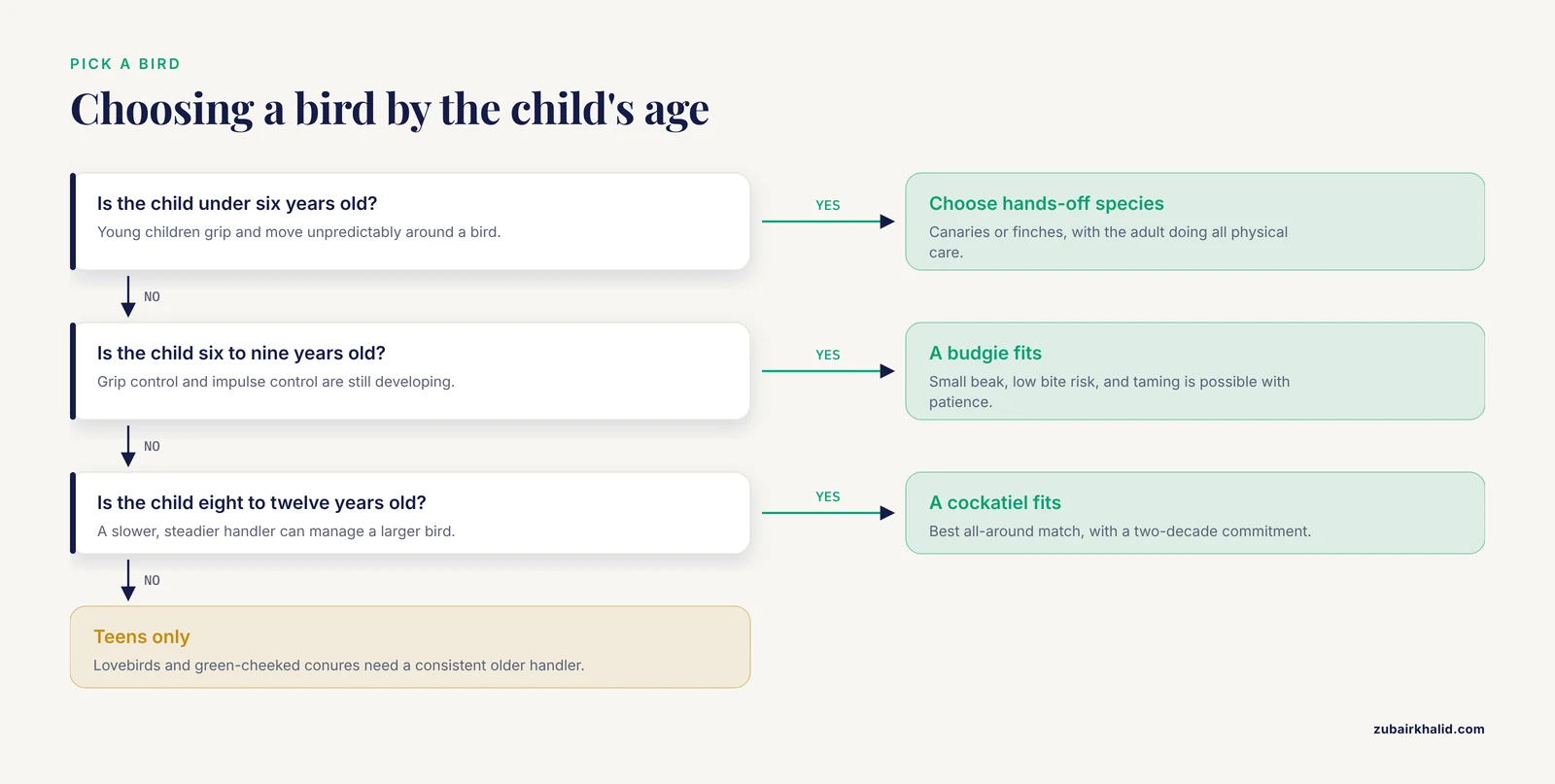
Under six, choose canaries or finches, where the child's role is observation and feeding under supervision. Six to nine, a budgie is the sweet spot. Eight to twelve, a cockatiel becomes the best all-around match. Teens with demonstrated consistency can handle lovebirds or green-cheeked conures, always with an adult holding ultimate responsibility. The common thread in guidance from avian veterinarians is that the adult, not the child, is the owner on paper and in practice.
Daily time budget
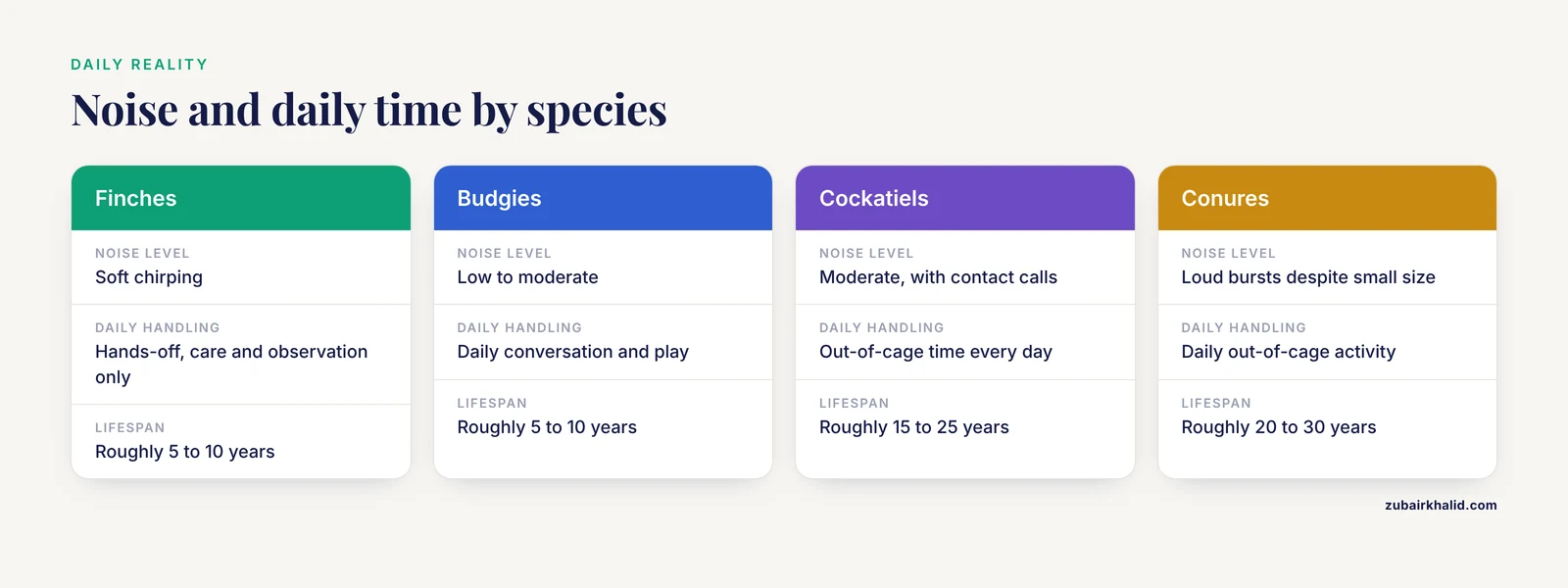
A single budgie needs daily conversation and play. A cockatiel or conure needs out-of-cage time and interaction every day, and a conure that misses it will let the household know. Finches and canaries need care and observation but not handling sessions. If your family can honestly commit thirty to sixty minutes of direct bird interaction daily, the hands-on species are open to you. If not, the aviary species are the honest answer.
Noise tolerance
From quietest to loudest in normal family housing: finches, canaries, budgies, cockatiels, lovebirds, green-cheeked conures, then large parrots by a wide margin. Conures are the surprise here. Their size suggests moderate noise and their calls do not.
Commitment horizon
The largest welfare problem in pet parrots is not bad diet or small cages. It is rehoming. A bird acquired for a seven-year-old may face three or four household changes before its life ends. Every species table above includes lifespan for this reason. Discuss out loud, before purchase, who cares for the bird when your child leaves home.
Bites and safety
Budgerigars rarely do real damage. Cockatiels can pinch. Lovebirds and conures can break skin. Large parrots can cause serious injury. Supervision, teaching gentle handling, and never letting a very young child carry a bird unsupervised prevent most incidents. Also remember the reverse direction: household cats and dogs remain predatory risks even after months of apparent friendship, and an unsupervised "friendly" cat and bird encounter can end fatally.
Zoonotic disease awareness
Birds can carry diseases transmissible to people, and the Merck Veterinary Manual highlights psittacosis, caused by Chlamydia psittaci, as the classic example among pet parrots. Children should wash hands after handling birds or cleaning cages, cages should be cleaned by adults or supervised older children, and anyone in the home with immune compromise should discuss bird keeping with a physician first. Routine wellness examinations with an avian veterinarian, which the Association of Avian Veterinarians recommends at least annually for pet birds, screen for these issues before they become household problems.
Bird Cage Setup: Getting the Foundation Right
Cage setup determines daily quality of life more than any other factor you control. VCA Animal Hospitals' avian care guides stress that the cage is the bird's primary environment, and corners cut here show up as behavioral and medical problems later.
Size and bar spacing
Buy the largest cage your space and budget allow, within the species-appropriate range. A bird should be able to stretch both wings fully and make short flights between perches. Bar spacing matters as much as footprint. Spacing that is too wide lets a small bird wedge its head through, which is a leading cause of entrapment injuries. Because correct spacing differs by species, confirm the right measurement for your specific bird with an avian veterinarian or a trusted avian retailer before you buy.
Perches
Provide multiple perches of varying diameter so pressure points on the feet change throughout the day. Natural wood branches, rope perches, and textured perches each serve a purpose. Avoid an all-dowel setup, and place food and water where droppings will not contaminate them.
Placement
Put the cage in a family living area where the bird participates in household life, but out of direct drafts, away from the kitchen, and out of reach of other pets. Kitchen air is a specific hazard. Overheated nonstick cookware and similar coated surfaces can release fumes that are rapidly fatal to birds, a point emphasized across avian veterinary resources including the Merck Veterinary Manual. Never house a bird where cooking fumes, aerosol sprays, scented candles, or cigarette smoke are routine.
Enrichment
Rotating toys, foraging opportunities, and shredded safe materials keep a parrot engaged. A bare cage produces a bored bird, and bored parrots develop screaming, feather destructive behavior, and aggression. For finches and canaries, provide flight space and visual cover within the cage rather than handling-based enrichment.
Parrot Care Checklist for Families
Print this list and put it on the cage. It is the daily and weekly minimum, consistent with guidance from the Association of Avian Veterinarians, the Merck Veterinary Manual, and the Lafeber Company's avian nutrition resources.
Daily
- Fresh water and a cleaned water vessel
- Fresh vegetables and appropriate pellets provided, with fresh perishables removed before they spoil
- Direct interaction and supervised out-of-cage time for parrot species
- A visual once-over: posture, droppings, appetite, activity, breathing, feather condition
- Cage covered or quiet room provided for a full night of dark rest
Weekly
- Full cage cleaning, perches rotated and cleaned, toys inspected for frayed ropes and broken parts
- Weight check where practical, recorded, because gradual loss is easier to catch on paper than by eye
Ongoing
- Annual wellness examination with an avian veterinarian, more often for young or geriatric birds
- Wing, nail, and beak assessments performed by the veterinary team, not clipped at home without training
- Diet built around a pellet base with vegetables and limited seeds and treats. Lafeber's avian nutrition resources and most avian veterinarians emphasize that all-seed diets are a leading driver of malnutrition in pet parrots
- New toys introduced regularly and rotated to prevent boredom
- A written plan for who cares for the bird during family vacations and, eventually, when your child grows up
Worked Scenarios
Scenario one: Two working parents, a seven-year-old, a dog, an apartment
The answer here is a budgerigar or, if the family wants a longer companion, a single cockatiel with a strict noise plan. The dog makes supervised introduction and secure cage placement non-negotiable. Apartment walls make conures and lovebirds poor fits despite their appeal. A finch or canary aviary is a legitimate alternative if the child is more observer than handler.
Scenario two: One stay-at-home parent, a ten-year-old who has asked for a bird for two years, a house
Two years of sustained asking is a meaningful signal. A hand-fed cockatiel is the strongest match. The parent should plan to co-own for the bird's full life and should book a first avian vet visit within days of bringing the bird home. A green-cheeked conure is the stretch option if the family tolerates noise and has accepted the twenty-to-thirty-year horizon.
Scenario three: A five-year-old who wants to hold a bird after visiting a friend's budgie
The honest answer is that a five-year-old should not be handed a handling bird. The great lesson of canaries and finches is that bird keeping can begin with respect and observation. Set up a small finch flight cage, teach feeding and care routines, and revisit the hands-on bird conversation at seven or eight, when grip control and impulse control are better developed.
Common Mix-Ups Families Make
- Buying the bird for the child. Children lose interest in almost everything eventually. The adult must be the committed party from day one.
- Choosing on looks alone. The most colorful bird in the store is often the loudest or the most nippy. Choose on temperament and lifespan, not plumage.
- Assuming a pair is twice the fun. Two birds frequently bond to each other and withdraw from humans. If the goal is a pet that interacts with people, start with one bird, tamed.
- Feeding an all-seed diet. Seed-only feeding is one of the most common and most preventable husbandry errors seen in avian practice. Lafeber's nutrition guidance and avian veterinarians consistently recommend a pellet-forward diet with fresh vegetables.
- Skipping the avian vet. Many owners assume birds need no preventive care. Annual wellness examinations catch weight loss, nutritional disease, and early illness that birds instinctively hide.
- Underestimating the noise. Families hear a quiet baby bird in the store and are surprised by an adult conure's contact calls. Visit birds of the same species and age before committing.
- Placing the cage in the wrong room. Cages in kitchens face toxic fume risks. Cages in isolated rooms produce lonely birds. Family room, away from the kitchen, is usually right.
- Trusting other pets. Even a cat that has "lived peacefully" with a bird for months remains a predator. Supervise every interaction or separate them physically.
Limitations and When to Contact a Veterinarian
Individual birds vary widely in temperament, health, and history, and any specific health or behavior question about your bird needs an in-person examination by an avian veterinarian. The species profiles above describe tendencies, not guarantees, and a quiet species can produce a loud individual.
Contact an avian veterinarian promptly, on the same day when possible, if your bird shows any of the following, because birds hide illness until they are often quite sick:
- Sitting fluffed at the bottom of the cage, inactive, or separating from flockmates
- Not eating, or a sudden drop in droppings or a marked change in droppings
- Open-mouth breathing, tail bobbing with each breath, or any breathing noise
- Discharge from the eyes or nostrils, or a squinting, partially closed eye
- Bleeding from the beak, nail, or feather follicle, which can be an emergency in small birds
- Straining, prolonged tail-down posture, or lethargy in a female bird, which can signal egg binding
- A known or suspected traumatic event, including being stepped on, caught by a pet, or trapped by cage bars
- Regurgitation outside of normal courtship behavior, weight loss, or a mass or swelling anywhere on the body
If your regular clinic does not see birds, ask for a referral to an avian-certified veterinarian. The Association of Avian Veterinarians maintains resources to help owners find qualified avian practitioners.
Frequently Asked Questions
What is the best first bird for a young child?
A budgerigar is the best first bird for most children aged six and up, with a cockatiel the better choice from around age eight. Both are widely bred, handle well when properly socialized, and have manageable beaks. Children under six do best with hands-off species such as finches or canaries, where an adult performs the physical care.
Do pet birds carry diseases children can catch?
Yes, some can, and psittacosis is the best-known example among pet parrots, as described in the Merck Veterinary Manual. Hand washing after handling birds or cleaning cages, adult-supervised cage cleaning, and annual avian wellness examinations keep risk low. Families with immunocompromised members should talk to their physician before acquiring a bird.
How much daily time does a pet bird need?
A single budgie or cockatiel needs direct interaction every day, and conures need daily out-of-cage activity as well, realistically thirty to sixty minutes of hands-on time plus ambient companionship. Finches and canaries need daily care and observation but no handling sessions. If your family cannot protect that time, choose a hands-off species.
Can a bird live in a child's bedroom?
A bird can live there only if an adult performs the daily care, checks the bird every day, and the room meets the bird's needs for light, stable temperature, draft control, and family contact. A cage in an isolated bedroom often becomes a forgotten bird. Many avian veterinarians suggest the family room instead, with the child's room reserved for daytime supervised visits.
What should we feed a pet parrot?
Feed a pellet-based diet with daily fresh vegetables, limited fruit, and seeds or treats in small amounts, a framework emphasized in Lafeber Company's avian nutrition resources and by avian veterinarians generally. All-seed diets cause nutritional disease in parrots. Ask your avian veterinarian to help design the diet for your specific species during the first wellness visit.
How long do pet birds live?
Small birds such as budgies, canaries, and finches commonly live five to ten years. Cockatiels often reach fifteen to twenty-five years, and green-cheeked conures can reach twenty to thirty. Large parrots such as African greys and macaws can live thirty to fifty years or more. Confirm expectations for the individual bird with an avian veterinarian, and decide before purchase who will care for the bird through its whole life.
Further Reading
- Insights into Argentavis magnificens (Aves, Teratornithidae) lifestyle based on neuroanatomy.
- Species-specific physiological status in seabirds: insights from integrating oxidative stress measurements and biologging.
- Mapping bird and bat assemblage vulnerability for predicting wind energy impact.
- Anthropogenic debris as nest material in three swift species: New insights into the interactions of atmospheric pollution with wildlife.
- A comparative study on grasping-related muscles in five Accipitriformes species.
- Pollen diet diversity across bee lineages varies with lifestyle rather than colony size.