Is Giardia in Cats Contagious to Other Cats?
By Dr. Zubair Khalid, DVM, MS, PhD ·
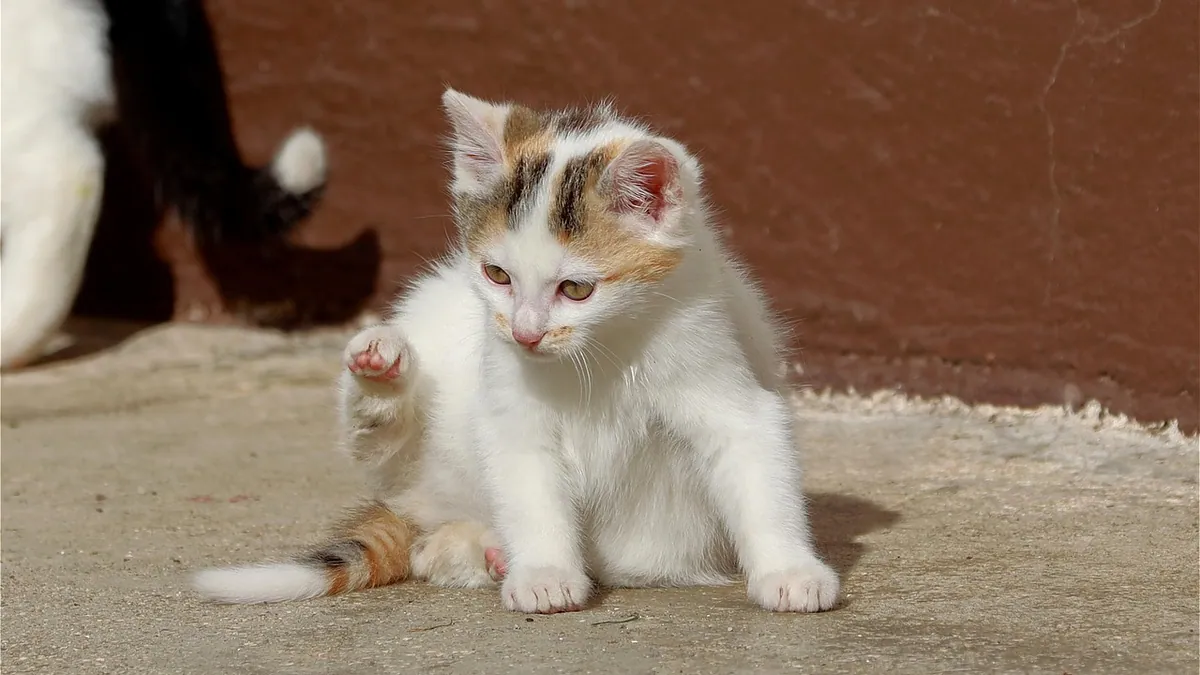
Yes, giardia in cats is contagious to other cats. The parasite spreads mainly when a cat swallows infectious cysts from contaminated feces, water, or food. It is one of the more common intestinal parasites in cats worldwide, and many infected cats never show any signs at all [1][2].
This article is educational and is not a substitute for veterinary diagnosis or treatment.
Quick Answer
- Giardia spreads by the fecal-oral route, so a cat does not need to be near a sick cat to get infected. Shared litter boxes, water bowls, and contaminated surfaces are enough [1][3].
- Many cats carry giardia without diarrhea, which means a cat that looks completely healthy can still pass cysts in its stool and infect other cats [1][2].
- Not every cat that carries giardia needs treatment right away. Whether to treat a cat with no signs is still debated among veterinarians [1].
- Treatment usually involves an antiparasitic drug chosen by your veterinarian, plus bathing and strict litter box hygiene to prevent reinfection [4].
- Giardia can pass to people in some cases, so hand washing matters, especially for children and anyone with a weakened immune system [5].
What Is Giardia in Cats?
Giardia is a microscopic protozoan parasite, a single-celled organism that lives in the small intestine [1]. The active form, called a trophozoite, attaches to the lining of the gut, absorbs nutrients, and multiplies by splitting in two [1]. As it moves through the intestine, it transforms into a cyst, a tough dormant form that gets passed in feces and can survive in the environment [6].
That cyst stage is the contagious stage. When another cat swallows a cyst, the cycle starts again in that cat's gut.
Giardia is not a worm, so it does not show up on every routine fecal test the way roundworms and hookworms do. It also is not the same as the amoeba that causes amebiasis, though both are intestinal protozoa with similar diarrhea signs [6].
Signs of Giardia Infection in Cats
The classic sign is diarrhea, often soft, pale, and bad smelling. Some cats have mucus in the stool or a sudden change in stool consistency that comes and goes. Others have no signs at all.
That last point surprises many owners. In one large Brazilian study of 272 cats, the overall giardia prevalence was 74.63%, and every cat that tested positive had no diarrhea [2]. A study of stray cats in Bangkok found a prevalence of 10.8% [7]. The wide range between these numbers shows how much infection rates depend on the cat's living situation, age, and access to the outdoors.
Signs you may notice include:
- Loose or watery stool that lasts more than a day or two
- Stool with mucus or a greasy appearance
- Weight loss or a dull coat in long-standing cases
- Increased gas or gurgling sounds from the belly
- Normal appetite with intermittent diarrhea
If your cat has loose stool with mucus, giardia is only one possibility. Food intolerance and inflammatory bowel disease can look very similar, and sorting them out usually takes a veterinary exam and stool testing. Our guide to loose stools with mucus in cats walks through how vets tell these apart.
How Giardia Spreads Between Cats
Giardia spreads by the fecal-oral route [3]. In plain terms, a cat has to swallow something contaminated with cysts from infected feces. This happens more easily than most owners expect.
Common routes include:
- Shared litter boxes. A cat that steps in contaminated litter can groom cysts off its paws.
- Contaminated water. Puddles, toilets, and outdoor water sources are common sources [3].
- Contaminated food or bowls. Cysts can cling to dishes that are not washed often.
- Direct contact. Cats that groom each other or share close quarters can pass cysts between them.
- Environment. Cysts survive in soil, on bedding, and on floors for a period of time, so a cat can pick them up without ever meeting the infected cat.
This is why giardia in cats is contagious to other cats in the same household even when the cats never touch each other. Multi-cat homes, shelters, and catteries see more cases for exactly this reason.
Is Giardia the Same as Contagious Gastroenteritis?
Owners often search for gastroenteritis in cats contagious because the signs overlap. Gastroenteritis simply means inflammation of the stomach and intestines, and it has many causes. Some are contagious (viral, bacterial, and parasitic causes like giardia) and some are not (dietary upset, toxins, and inflammatory disease). Giardia itself is contagious between cats, but a cat with gastroenteritis from eating something spoiled is not a risk to your other cats.
Risk Factors for Giardia in Cats
Not every cat faces the same risk. Factors that raise the odds include:
- Age. Kittens and young cats are more likely to show signs, though adult cats can carry the parasite too.
- Lifestyle. Cats that go outdoors, hunt, or drink from puddles have more exposure.
- Crowding. Multi-cat homes, shelters, and breeding facilities spread cysts quickly.
- Immune status. Stress, illness, or immune suppression can let an infection take hold.
- Hygiene. Litter boxes cleaned infrequently raise the risk for every cat in the home.
In the Brazilian study, adult cats and cats without a home had significantly higher infection odds than kittens and owned cats [2]. That does not mean indoor cats are safe. It means their exposure is lower, not zero.
How Veterinarians Diagnose Giardia
Diagnosis starts with a stool sample. Vets use several methods, and no single test catches every case.
- Fecal flotation. A stool sample is mixed with a solution that makes cysts float so they can be seen under a microscope [8].
- Direct smear. A small amount of fresh stool is examined directly.
- Antigen tests. These detect giardia proteins in stool and can be more sensitive than microscopy.
- PCR testing. This detects giardia DNA and can identify which genetic type, or assemblage, is present [9].
A single negative test does not rule giardia out, because cysts are shed in waves. Your vet may ask for samples collected on two or three different days.
Why the Genetic Type Matters
Giardia duodenalis has several genetic groups called assemblages, labeled A through H [8]. The types most often found in cats, such as assemblage F, are host-adapted and are not linked to human disease [9][3]. Zoonotic assemblages A and B can infect people, and they do show up in cats at moderate rates in some studies [9][3].
This is why your vet may not treat a positive test in a healthy cat the same way as a positive test in a cat with diarrhea. The type of giardia and the cat's signs both matter.
Treatment Options for Giardia in Cats
Treatment has two parts: killing the parasite and stopping reinfection. Skipping the second part is the most common reason cats keep testing positive.
Medication
Several drugs are used, including metronidazole, secnidazole, and fenbendazole. A 2026 study of 48 naturally infected cats compared omeprazole, metronidazole, secnidazole, and a placebo, and evaluated cyst shedding on days 0, 7, and 14 [4]. Research into new options continues because of concerns about resistance to the nitroimidazole drugs and their side effects [4].
Your veterinarian calculates the exact dose from your cat's weight and health status. Do not use a dose from the internet or from a dog's prescription. If your vet prescribes fenbendazole, our article on Panacur fenbendazole dosing for cats explains how that drug is used for both roundworms and giardia.
Bathing and Environment
Cysts stick to fur, so a bath at the start and end of treatment reduces the chance your cat swallows cysts while grooming. Wash bedding in hot water, scrub food and water bowls daily, and scoop litter boxes at least twice a day. Cysts are hardy, so regular cleaning is not enough. Use a disinfectant that is safe for cats and effective against protozoa, and let surfaces dry completely.
Treating Other Pets
If you have more than one cat, ask your vet whether the others should be tested or treated at the same time. Treating one cat while another silently sheds cysts often leads to a revolving door of reinfection.
Recovery, Outlook, and Long-Term Management
Most cats improve within days of starting treatment, but the stool may take one to two weeks to return to normal. A follow-up fecal test after treatment is common, because a cat can feel fine and still shed cysts.
Some cats become long-term carriers. In dogs, the value of repeatedly treating animals that seem permanently infected but appear healthy is still debated, and the same uncertainty applies to cats [1]. Your vet will weigh the cat's signs, the household situation, and the risk to other pets and people.
Long-term management usually means:
- Keeping litter boxes clean and plentiful, ideally one per cat plus one extra
- Washing bowls and bedding on a regular schedule
- Limiting outdoor access or preventing hunting where possible
- Testing new cats before they join the household
- Rechecking stool if diarrhea returns
Prevention: Protecting Your Other Cats
Prevention comes down to breaking the fecal-oral cycle. There is no vaccine for giardia in cats, so hygiene does the work.
| Step | Why It Helps |
|---|---|
| Scoop litter boxes twice daily | Removes cysts before cats step in them |
| Wash bowls and bedding weekly in hot water | Cysts survive on surfaces |
| Bathe an infected cat at the start and end of treatment | Removes cysts from fur |
| Quarantine a new cat for 1 to 2 weeks | Allows testing before exposure |
| Test all cats if one tests positive | Finds silent carriers |
| Keep cats from drinking puddles or toilet water | Water is a common source [3] |
If someone in your home is pregnant, a young child, or immunocompromised, tell your veterinarian. Zoonotic transmission of giardia is possible, and while most infections are host-specific, the risk matters most for vulnerable people [5]. Our guide to giardia zoonotic risk and sanitation covers household cleaning in more detail.
If you also have a dog, note that giardia affects dogs too, and the signs can look similar. See giardia symptoms in dogs for what to watch for.
Limitations and When to Contact a Veterinarian
No article can tell you whether your specific cat has giardia or needs treatment. That takes a stool sample and an exam. Individual cases need a veterinarian.
Contact your vet the same day if your cat:
- Has diarrhea lasting more than 24 hours
- Is vomiting along with the diarrhea
- Seems tired, hides, or stops eating
- Has blood or black material in the stool
Go to an emergency clinic now if your cat:
- Is a kitten under 8 weeks old with diarrhea
- Shows weakness, collapse, or a distended belly
- Cannot keep water down
- Has not urinated in 24 hours
Schedule a routine visit if your cat:
- Has soft stool that comes and goes
- Lives with a cat that tested positive for giardia
- Is a new addition to a multi-cat home
- Needs a recheck after giardia treatment
Frequently Asked Questions
Can my cat give giardia to my dog?
Yes, cats and dogs can both carry giardia, and cross-species transmission is possible. That said, most giardia infections are host-specific, so a cat's infection is more likely to spread to other cats than to your dog [5]. If one pet tests positive, testing the others is still a reasonable step.
How long is a cat with giardia contagious?
A cat can shed cysts in its stool for weeks, and sometimes longer, even after signs improve. Because shedding comes in waves, a single negative test does not prove the cat is clear. Your vet will decide when to retest and when it is safe to relax precautions.
Do indoor cats get giardia?
Yes. Indoor cats can pick up cysts from contaminated water, soil on shoes, or a new cat in the home. The risk is lower than for outdoor cats, but it is not zero. Good litter box hygiene protects indoor cats too.
Can I get giardia from my cat?
It is possible but uncommon. Most giardia types found in cats are host-adapted and not linked to human illness, though zoonotic types A and B do occur in cats at moderate rates [9][3]. Hand washing after litter box duty is the simplest protection, especially for children and immunocompromised people [5].
Does giardia go away on its own in cats?
Sometimes the signs improve without treatment, but the cat may keep shedding cysts and infecting other cats. Because of that, many veterinarians treat confirmed cases, particularly when there are other pets or people in the home. Whether to treat a cat with no signs at all is still debated [1], so that call belongs to your vet.
Related Articles
- Giardia in Cats: Zoonotic Risk and Sanitation Protocol
- Panacur Fenbendazole for Cats: Roundworm Giardia Dose and Duration
- Why Is My Cat having loose stools with mucus? IBD vs Giardia vs Food Intolerance
- Can You Use Povidone Iodine On Cats
- Giardia Symptoms In Dogs
- Giardia in Dogs: Cyst Shedding Diagnosis and Treatment Protocol
- Giardia in Cats: Treatment and Home Care
- How Do Cats Get Giardia? Causes and Prevention
- Can Cats Spread Giardia to Dogs? What Owners Need to Know
- Feline Giardiasis: Diagnostic Challenges and Updated Treatment Protocols
- Giardia duodenalis Assemblages in Dogs and Cats: Zoonotic Genotyping and Clinical Management
References
- Giardiasis in Animals - Digestive System. Merck Veterinary Manual.
- High prevalence of Giardia spp. in cats without diarrhea and agreement between diagnostic techniques in the municipality of Londrina, Paraná, Brazil. Veterinary research communications, 2026.
- Molecular characterization and zoonotic potential of Giardia and Cryptosporidium infections in dogs and cats in Central Spain. Food and waterborne parasitology, 2026.
- Omeprazole as a Novel Treatment Option for Giardiasis in Cats. Veterinary medicine and science, 2026.
- Regarding the Zoonotic Transmission of Giardia duodenalis Infection. Animals : an open access journal from MDPI, 2026.
- Disorders Caused by Protozoa of the Digestive System in Cats - Cat Owners. Merck Veterinary Manual.
- Molecular detection and genetic characterization of Giardia duodenalis in temple stray cats in Bangkok, Thailand. Frontiers in parasitology, 2026.
- Prevalence of Giardia duodenalis genetic assemblages isolated from dogs and cats in Poland. Journal of veterinary research, 2025.
- Comparison of multilocus genotyping and a commercial beta-giardin qPCR assay for detection of Giardia duodenalis zoonotic assemblages in cat and dog samples. Parasites & vectors, 2026.