Does Oregano Oil Kill Parasites? Evidence
By Dr. Zubair Khalid, DVM, MS, PhD ·
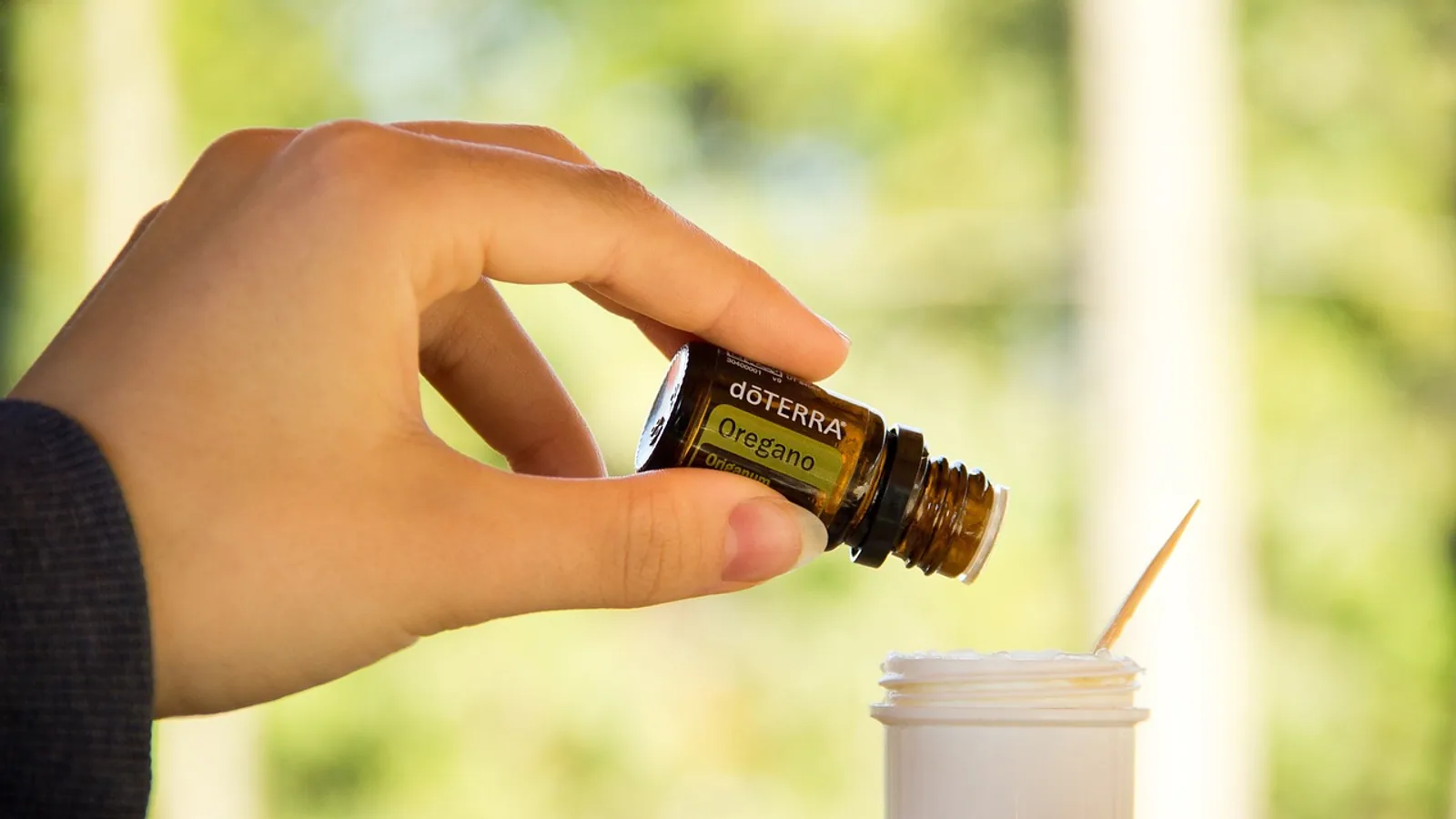
Oregano oil kills or disables several parasites in laboratory experiments, but that does not make it a dewormer for your pet. The strongest evidence comes from test-tube studies on protozoa such as Toxoplasma, Leishmania, and coccidia, while controlled trials in live animals are scarce and mostly involve poultry, fish, or livestock rather than dogs and cats.
This article reviews what oregano essential oil actually does to parasites, separates in vitro from in vivo evidence, and explains why it should never replace proven antiparasitic drugs such as fenbendazole or praziquantel.
This article is educational and is not a substitute for veterinary diagnosis or treatment.
What Oregano Oil Is and Why It Attracts Parasite Research
Oregano essential oil (often abbreviated OEO) is a volatile oil distilled from Origanum vulgare and related species. Its biological activity is tied mainly to two phenolic monoterpenes, carvacrol and thymol, plus supporting compounds such as p-cymene and gamma-terpinene.
In one analysis of OEO used against Toxoplasma gondii, the oil contained carvacrol at 72 percent, p-cymene at 5 percent, gamma-terpinene at 4 percent, and thymol at 2 percent [1]. That composition matters because carvacrol and thymol are the molecules most often credited with disrupting microbial and parasite membranes.
The appeal for researchers is straightforward. Conventional antiparasitic drugs carry real problems. Treatment of toxoplasmosis with pyrimethamine and sulfadiazine is limited by toxicity [1]. Leishmaniasis treatment is complicated by toxicity, long treatment courses, and drug resistance [2]. Coccidiosis control in poultry relies heavily on anticoccidial drugs and ionophores, and producers want alternatives. Plant oils are cheap, widely available, and generally recognized as safe as food flavorings, so they get tested.
What gets lost in popular summaries is the gap between a parasite dying in a plastic well and a parasite being cleared from a living host. A chemical that kills a parasite in a dish still has to survive digestion, reach the right tissue, avoid being metabolized, and do all of that without harming the host. That gap is the central problem with oregano oil as a parasite treatment.
How Carvacrol and Thymol Damage Parasites
The mechanism of action is best described as membrane and oxidative disruption rather than a single targeted kill switch.
Membrane disruption
Carvacrol and thymol are small, fat-soluble molecules. They insert into parasite membranes and alter permeability, which lets ions and small molecules leak in and out. In Leishmania amazonensis promastigotes, oregano oil combined with silver nanoparticles produced clear damage to the plasma membrane along with mitochondrial depolarization [3]. In a resistant Leishmania infantum strain, oregano oil caused membrane permeabilization and phosphatidylserine exposure, both markers of a dying cell [2].
Oxidative stress and mitochondrial failure
Several studies point to reactive oxygen species (ROS) as a major killing mechanism. Oregano oil treatment raised ROS production in Leishmania infantum, which was accompanied by mitochondrial damage, lipid droplet accumulation, and autophagic vacuoles [2]. The same pattern appeared in Leishmania amazonensis, where oregano oil increased nitric oxide and ROS while depolarizing mitochondria [3]. In Toxoplasma gondii, oregano oil reduced parasite viability with a selectivity index about 9 times higher for the parasite than for human placental cells, and the death process resembled necrosis with measurable ROS effects [4].
Metabolic and structural collapse
Electron microscopy in these studies shows the physical aftermath. Leishmania parasites developed abnormal morphology, accumulated storage material, and lost normal organelle structure after exposure [2]. Toxoplasma tachyzoites showed ultrastructural changes consistent with necrosis [4]. This is not a subtle effect. At sufficient concentrations in a closed system, oregano oil is genuinely toxic to these organisms.
The catch is concentration. Effective laboratory concentrations are measured in micrograms per milliliter, and the oil has to physically contact the parasite. In a living animal, that contact is unpredictable.
In Vitro Evidence: What the Laboratory Shows
In vitro work is the backbone of the oregano oil and parasites literature. It is also where most of the confident claims originate.
Toxoplasma gondii
Two studies on Toxoplasma gondii are among the most detailed. In BeWo placental cells, oregano oil had low cytotoxicity (CC50 of 114.8 micrograms per milliliter) and reduced parasite viability at an IC50 of 12.5 micrograms per milliliter, giving a selectivity index of 9.18 in favor of the parasite [4]. Treatment reduced intracellular proliferation and killed free tachyzoites through a necrosis-like mechanism [4].
A second study using HTR8/SVneo trophoblastic cells found oregano oil reduced infection and proliferation of both free and intracellular Toxoplasma, with selectivity indices of 21.58 for free forms and 7.96 for intracellular forms [1]. When combined with biogenic silver nanoparticles, the effect on free tachyzoites was additive, but the combination was antagonistic against the intracellular form [1]. That last finding is a useful reminder that "natural plus natural" does not automatically mean better.
Leishmania species
Leishmania has the most consistent in vitro signal. Against a resistant Leishmania infantum strain isolated from a naturally infected dog, oregano oil produced IC50 values of 12.53 and 43.61 micrograms per milliliter for the two strains tested, compared with amphotericin B at roughly 0.15 to 0.21 micrograms per milliliter [2]. In plain terms, oregano oil worked but was far less potent than the reference drug. The same study documented ROS-driven mitochondrial damage and cell death [2].
Against Leishmania amazonensis, oregano oil plus silver nanoparticles acted synergistically on promastigotes and infected macrophages, reducing the percentage of infected cells and the number of amastigotes per macrophage [3].
Coccidia (Eimeria species)
Eimeria is the parasite behind coccidiosis in poultry, and it has been studied in live birds rather than only in dishes. In experimentally infected broilers, oregano oil supplementation improved body weight gain and feed conversion and reduced intestinal lesion scores compared with infected controls, though it did not match the anticoccidial drug lasalocid for oocyst reduction [5]. A later study found oregano oil at 500 ppm reduced coccidiosis lesion scores in the upper and middle intestine compared with challenged controls [6]. In a mixed Eimeria challenge model, oregano oil alone could not support growth to the level of monensin at 100 mg/kg, and monensin programs were more effective at reducing fecal oocyst numbers [7].
Other protozoa and helminths
Anisakis simplex, a nematode that can cause gastrointestinal disease, was susceptible to Origanum syriacum essential oil, with LC50 values of 0.087 and 0.067 mg/mL at 24 and 48 hours [8]. That is a larvicidal effect in a laboratory penetration assay, not a treatment for a host.
Aedes albopictus larvae exposed to oregano oil and carvacrol at LC50 concentrations showed growth inhibition, with only about half of surviving larvae reaching adulthood and abnormal larval and pupal shapes observed [9]. Culex quinquefasciatus larvae and adults were also susceptible to Origanum syriacum oil, with carvacrol showing contact and fumigant toxicity [8].
These are insect and free-living larval models. They demonstrate that the oil can kill parasites and vectors on contact. They do not demonstrate that eating or applying oregano oil clears an infection in a mammal.
In Vivo Evidence: What Happens in Living Animals
This is where the evidence thins out sharply. Most in vivo work involves production animals, and almost none of it addresses the parasites that matter most in dogs and cats.
Poultry
The broiler coccidiosis studies are the closest thing to a body of in vivo evidence. Oregano oil supplementation improved weight gain and feed conversion and reduced lesion scores in Eimeria-challenged birds [6][5]. In a mixed Eimeria challenge, oregano oil alone underperformed monensin for oocyst reduction [7]. Combining oregano oil with benzoic acid improved intestinal villus morphology and reduced infectivity and fecal scores to levels comparable to salinomycin, and restored growth performance close to uninfected controls by 21 days after infection [10]. A companion study found no adverse effects on liver enzymes, thyroxine, or creatinine in supplemented birds [11].
The honest reading is that oregano oil has a measurable but partial anticoccidial effect in poultry, best when combined with other feed additives, and inferior to standard anticoccidial drugs when used alone.
Fish
Juvenile chum salmon fed a diet supplemented with 0.02 percent oregano oil for three weeks were significantly protected against the ectoparasitic flagellate Ichthyobodo salmonis and the ciliate Trichodina truttae [12]. In outdoor hatchery ponds, the treatment completely prevented Ichthyobodo infection for 52 days and Trichodina infection for 38 days, and mortality from these protozoans dropped to 7.6 percent of control mortality [12]. Carvacrol was detected on the skin of treated fish, which suggests the oil or its active component reaches the body surface where these external parasites live [12].
This is a genuine in vivo success, but it applies to external protozoan parasites on the skin of a cold-water fish. It does not transfer to internal worms in a dog.
Livestock
Oregano oil has been tested as a feed additive in cattle, but not primarily as a parasite treatment. In Nellore cattle on deferred pasture, oregano oil at 3 or 6 grams per animal per day produced no effect on body weight, average daily gain, total weight gain, or stocking rate compared with controls [13]. In Holstein bulls, oregano oil and monensin each improved growth when fed alone, but the combination was antagonistic to growth performance [14]. Neither study was designed to measure parasite clearance.
The missing data
There are no controlled trials in the approved literature showing that oral oregano oil clears Giardia, Cryptosporidium, or intestinal worms in dogs, cats, or people. The one study that discusses intestinal parasitic infection in children describes formulating oregano oil into a lipid-based nutrient supplement to improve delivery and taste, not a clinical trial of parasite cure rates [15]. That is a formulation study, and it should not be read as proof of efficacy.
In Vitro Versus In Vivo Evidence by Parasite
| Parasite | In vitro evidence | In vivo evidence | Strength of conclusion |
|---|---|---|---|
| Toxoplasma gondii | Kills free and intracellular tachyzoites, ROS and necrosis-like death, selectivity for parasite over host cells [4][1] | None in the approved literature | Laboratory activity only |
| Leishmania infantum | Kills promastigotes including a drug-resistant dog isolate, IC50 12.53 to 43.61 micrograms per milliliter, far less potent than amphotericin B [2] | None in the approved literature | Laboratory activity only |
| Leishmania amazonensis | Synergistic killing with silver nanoparticles, reduced infected macrophages [3] | None in the approved literature | Laboratory activity only |
| Eimeria species (coccidia) | Not the primary model | Partial protection in broilers, reduced lesion scores, inferior to monensin and lasalocid alone, better in combination with benzoic acid [7][6][5][10][11] | Real but partial effect in poultry |
| Ichthyobodo salmonis and Trichodina truttae | Weak direct antiparasitic action on the body surface [12] | Dietary supplementation prevented infection in juvenile chum salmon, mortality reduced to 7.6 percent of controls [12] | Strongest in vivo result, external fish parasites |
| Anisakis simplex | Larvicidal, LC50 0.087 to 0.067 mg/mL [8] | None | Laboratory activity only |
| Aedes and Culex mosquitoes | Larvicidal and adulticidal, growth inhibition [9][8] | None | Vector control potential, not a host treatment |
| Giardia and Cryptosporidium | Not directly demonstrated in the approved literature | None | No evidence base |
| Intestinal worms in dogs and cats | Not demonstrated | None | No evidence base |
Why Oregano Oil Is Not a Dewormer
A dewormer is a drug that reliably reduces or eliminates a parasite burden in a living animal at a dose that is safe for that animal. Oregano oil does not meet that standard for the parasites that commonly affect pets.
Three problems stand in the way.
First, potency. Against Leishmania, oregano oil was roughly 60 to 300 times less potent than amphotericin B in the same laboratory system [2]. Against Toxoplasma, effective concentrations were in the low micrograms per milliliter range [4]. Achieving comparable concentrations at the site of an internal infection through oral dosing is not established.
Second, delivery. Essential oils are volatile, poorly water-soluble, and prone to degradation. Researchers have resorted to cyclodextrin encapsulation and nanoparticle carriers specifically because the raw oil does not reliably reach the intestine intact [15][16]. If the oil cannot survive to the target tissue, it cannot kill the parasite there.
Third, host safety. The dose that kills a parasite in a dish is often close to the dose that irritates or harms host tissue. Oregano oil is a known mucosal irritant, and its margin of safety in small animals is narrow.
For dogs with Giardia or intestinal worms, fenbendazole and praziquantel remain the standard treatments because they have defined dosing, established efficacy, and known safety profiles. For coccidia in puppies and kittens, veterinarians use specific anticoccidial drugs. Oregano oil has no role in replacing any of these.
Safety: Cats, Dogs, and Livestock
Cats are the highest-risk species
Cats have a limited ability to glucuronidate many compounds, including several essential oil constituents and phenolic compounds. This means they clear certain chemicals far more slowly than dogs or people, and a dose that is trivial for a dog can accumulate to toxic levels in a cat. Essential oils in general, and concentrated oregano oil in particular, are a poor choice for cats by any route, including topical application, diffusers, and oral dosing.
Signs of essential oil toxicity in cats can include drooling, vomiting, lethargy, tremors, difficulty walking, and liver injury. If you suspect your cat has been exposed to oregano oil, contact a veterinarian or a pet poison hotline immediately.
Dogs
Dogs are more capable of metabolizing these compounds than cats, but that does not make oregano oil safe or effective as a parasite treatment. Undiluted oil can cause mouth and stomach irritation, vomiting, and diarrhea. There is no established safe oral dose for treating parasites in dogs, and giving a concentrated oil to a pet with an unknown parasite burden risks harm without benefit.
Livestock and poultry
The in vivo studies used defined feed concentrations, such as 300 and 500 ppm in broiler diets [6][5], 0.02 percent in salmon feed [12], and 3 or 6 grams per animal per day in cattle [13]. These are production settings with controlled feed mixing, not home dosing. Livestock and poultry tolerate oregano oil in feed reasonably well at studied levels, with no adverse effects on measured liver enzymes, thyroxine, or creatinine in one broiler trial [11]. That tolerability does not extend to cats, and it does not establish antiparasitic efficacy in mammals.
A note on product quality
Essential oil products vary enormously in carvacrol and thymol content, and labels often do not reflect actual composition. A product that is mostly carrier oil will behave nothing like the oils used in research. This variability is another reason oregano oil is unreliable as a treatment.
Practical Guidance for Owners and Keepers
If your dog or cat has diarrhea, weight loss, a pot-bellied appearance, visible worms in stool or vomit, or has been diagnosed with a parasite, the correct path is veterinary diagnosis followed by a targeted antiparasitic drug.
Use these principles:
- Do not use oregano oil as a substitute for prescribed dewormers such as fenbendazole or praziquantel.
- Do not give essential oils to cats.
- Do not apply undiluted oregano oil to a pet's skin to treat fleas, mites, or other external parasites.
- If you want to use oregano oil in poultry or livestock feed, follow established feed-additive concentrations and consult your veterinarian or extension service first.
- If your pet has been exposed to oregano oil and shows any neurologic or gastrointestinal signs, treat it as an emergency.
Prevention remains the most effective parasite strategy. Routine fecal testing, appropriate monthly preventives prescribed by your veterinarian, and prompt treatment of confirmed infections do more than any essential oil.
Limitations and When to Contact a Veterinarian
The evidence base for oregano oil against parasites is dominated by laboratory studies and a small number of production-animal trials. There are no controlled trials in dogs or cats for the parasites that most commonly affect them. Individual cases vary, and only a veterinarian who examines your animal can determine the right treatment.
Contact a veterinarian promptly if your pet has:
- Diarrhea lasting more than 24 to 48 hours, or diarrhea with blood or mucus
- Vomiting that persists or prevents eating and drinking
- Weight loss, poor appetite, or a pot-bellied appearance
- Visible worms or worm segments in stool or vomit
- Lethargy, weakness, or collapse
- Any suspected exposure to essential oils, especially in a cat
- A confirmed parasite diagnosis that is not improving on prescribed treatment
Do not wait for home remedies to work. Some parasitic infections, including Giardia and coccidiosis, can worsen quickly in young, old, or immunocompromised animals.
Frequently Asked Questions
Does oregano oil kill parasites in dogs?
Oregano oil kills some parasites in laboratory studies, but there is no controlled evidence that it clears internal parasite infections in dogs. It should not be used in place of prescribed dewormers.
Can oregano oil replace fenbendazole or praziquantel?
No. Fenbendazole and praziquantel are proven antiparasitic drugs with established dosing and efficacy. Oregano oil has not been shown to match them for any internal parasite in dogs or cats.
Is oregano oil safe for cats?
No. Cats clear many essential oil compounds poorly because of limited glucuronidation, so oregano oil can accumulate and cause toxicity. Avoid all routes of exposure in cats.
Does oregano oil work against Giardia?
There is no direct evidence in the approved literature that oregano oil clears Giardia infections. Giardia should be treated with veterinarian-prescribed medication.
Can oregano oil treat coccidia in puppies or kittens?
Oregano oil is not an established treatment for coccidia in puppies or kittens. Coccidiosis in young animals requires specific anticoccidial therapy from a veterinarian.
What parasites has oregano oil actually been tested against?
Laboratory studies focus on Toxoplasma gondii, Leishmania species, Anisakis simplex, and mosquito larvae, while in vivo studies cover Eimeria in poultry and external protozoans in salmon.
Is oregano oil effective against fleas or ticks?
Oregano oil has shown insecticidal activity against mosquito larvae and adults in laboratory tests, but there is no evidence it controls fleas or ticks on pets. Use approved flea and tick preventives.
Can I give my pet oregano oil for worms?
Do not give oregano oil to a pet for worms. It is not a proven dewormer, it can irritate the gut, and it is dangerous for cats. See a veterinarian for diagnosis and treatment.
Related Articles
- Can Heatstroke Kill A Dog
- Can Urinary Tract Infections Kill Cats
- How Much Chocolate Can Kill A Dog Calculator
- Can Cats Eat Tuna In Oil
- How Much Chocolate Will Kill A Dog Calculator
- Dog Licking Paws Coconut Oil
- Endosymbiotic Theory: Evidence and Explanation
- Yunnan Baiyao: Uses, Evidence, and Veterinary Safety
Sources
- Oregano essential oil alone and in combination with biogenic silver nanoparticles exhibits anti-Toxoplasma gondii activity in human trophoblastic cells.
- Oregano essential oil (Origanum vulgare) induces death in a resistant strain of Leishmania infantum isolated from a naturally infected dog through increased production of reactive oxygen species, mitochondrial damage and cell metabolic disruption.
- Synergistic Antileishmanial Effect of Oregano Essential Oil and Silver Nanoparticles: Mechanisms of Action on Leishmania amazonensis.
- Essential oil of oregano (Origanum vulgare L.) reduces infection and proliferation of Toxoplasma gondii in BeWo cells with induction of autophagy and death of tachyzoites through a mechanism similar to necrosis.
- Effect of dietary supplementation with oregano essential oil on performance of broilers after experimental infection with Eimeria tenella.
- Dietary oregano essential oil alleviates experimentally induced coccidiosis in broilers.
- Effect of anticoccidial monensin with oregano essential oil on broilers experimentally challenged with mixed Eimeria spp.
- Efficacy of Origanum syriacum Essential Oil against the Mosquito Vector Culex quinquefasciatus and the Gastrointestinal Parasite Anisakis simplex, with Insights on Acetylcholinesterase Inhibition.
- Sublethal effects of oregano essential oil and its major compound carvacrol on biological parameters of Aedes albopictus (Diptera: Culicidae).
- Influence of Benzoic Acid and Oregano Essential Oil on Intestinal Histomorphology, Lesion Scores, and Tight Junction Gene Expression in Mixed Eimeria-Challenged Broiler Chickens.
- Effect of Dietary Benzoic Acid and Oregano Essential Oil as a Substitute for an Anti-Coccidial Agent on Growth Performance and Physiological and Immunological Responses in Broiler Chickens Challenged with Eimeria Species.
- Effects of dietary supplementation with oregano essential oil on prevention of the ectoparasitic protozoans Ichthyobodo salmonis and Trichodina truttae in juvenile chum salmon Oncorhynchus keta.
- Oregano essential oil and monensin in supplementing cattle on deferred pasture.
- Dietary supplementation with oregano essential oil and monensin in combination is antagonistic to growth performance of yearling Holstein bulls.
- Functionalization of Lipid-Based Nutrient Supplement with β-Cyclodextrin Inclusions of Oregano Essential Oil.
- Inactivation of Murine Norovirus Using Polymeric Nanoparticle loaded with Oregano Essential Oil for Food and Environmental Applications.