Hypoallergenic Diet for Dogs: Trial Protocol
By Dr. Zubair Khalid, DVM, MS, PhD ·
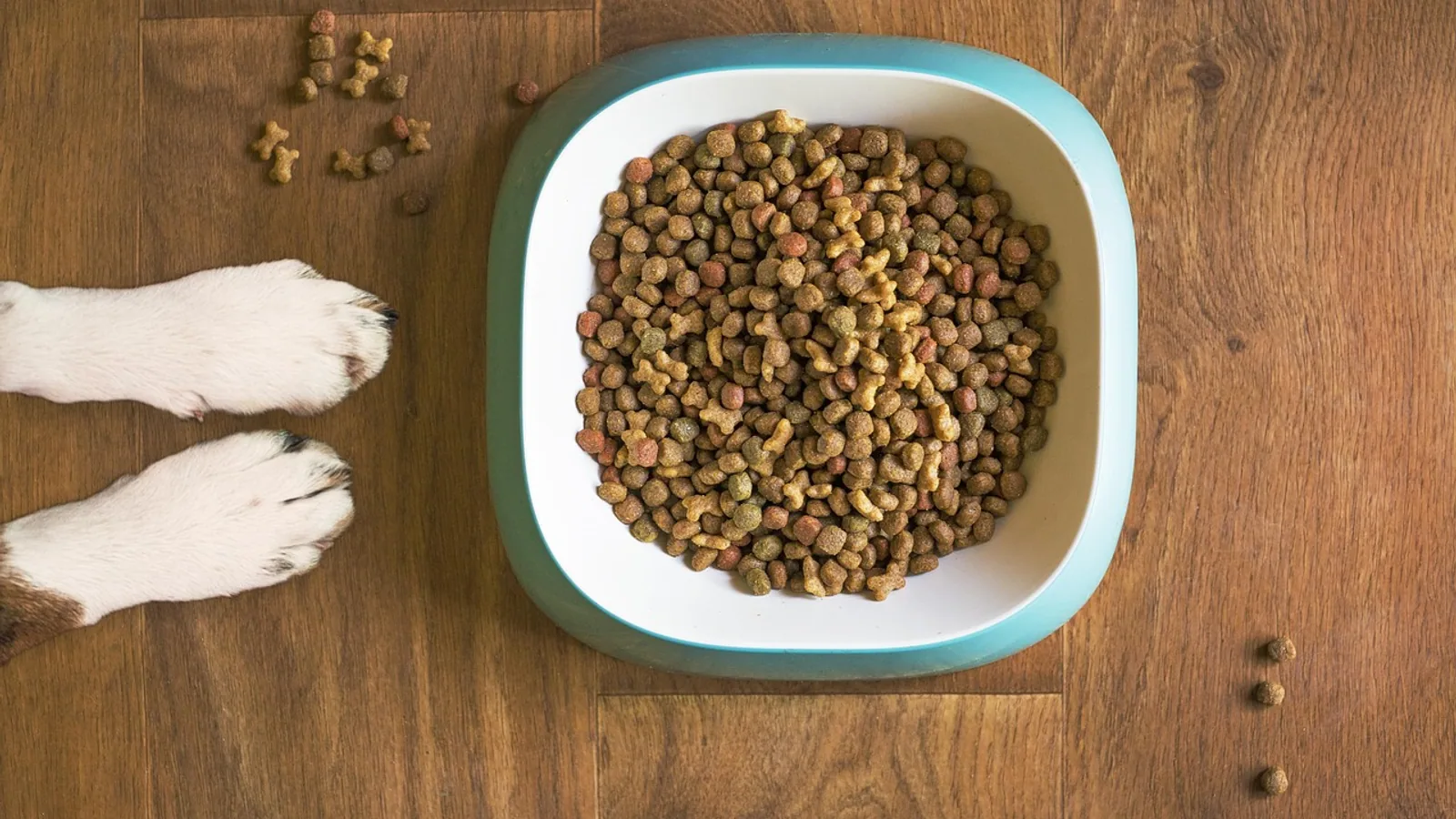
A hypoallergenic diet for dogs is not a product you buy once. It is a structured diagnostic test, called an elimination diet trial, that answers a single question: is food driving this dog's itching or digestive signs? The method works by removing every protein the dog has eaten before, waiting long enough for the immune system to quiet down, and then deliberately reintroducing the old food to see whether signs return. That last step, the provocation or challenge, is what turns a suspicion into a diagnosis.
The protocol takes eight weeks at minimum, and often longer. Most of the effort is yours: buying the right diet, reading every label, and refusing every treat, scrap, flavored medication, and toothpaste that could carry a stray allergen. Veterinary hands-on time is short, usually one examination at the start, a phone or in-clinic check around weeks two to four, and a final assessment plus challenge at the end. The payoff is a definitive answer and, for affected dogs, a lifelong treatment plan that is often just a change of food.
This article is educational and is not a substitute for veterinary diagnosis or treatment.
What the Elimination Diet Trial Achieves
The elimination diet trial is the gold standard for diagnosing a cutaneous adverse food reaction, also called food allergy, in dogs [1]. It is also used to investigate food-responsive chronic enteropathy, where gastrointestinal signs rather than skin signs dominate [2]. The logic is straightforward. If a dog is reacting to one or more dietary proteins, removing those proteins should reduce or eliminate clinical signs. Reintroducing them should bring the signs back.
The trial is not a treatment you can shortcut. A dog that improves on the trial diet has not yet been diagnosed. Improvement only proves that something in the old diet was contributing. The diagnosis is confirmed when signs recur after the original diet is fed again [3]. Without that challenge step, you cannot separate a true food allergy from seasonal or environmental atopic dermatitis that happened to improve at the same time, from a diet change that helped for unrelated reasons, or from natural fluctuation in a waxing-and-waning disease.
There is a second reason the challenge matters. Many dogs with food allergy also have environmental allergies. In one dietary trial, nine of 46 dogs had an adverse food reaction alone and another nine had both a food reaction and atopy [3]. If you skip the challenge and simply keep feeding the trial diet, you may never learn that the dog also needs management for environmental triggers.
When to Suspect Food Allergy
Food allergy should be on the list for any dog with nonseasonal itching, especially itching that involves the ears, paws, face, and around the anus. Gastrointestinal signs such as vomiting, diarrhea, soft stool, increased defecation frequency, or excessive gas can accompany the skin signs or appear alone. In one trial, six of nine dogs with an adverse food reaction had gastrointestinal signs that resolved on the trial diet and recurred when the original food was restored [3].
Age is not a reliable filter. Food allergy can appear in young dogs and in older dogs that have eaten the same diet for years. A dog does not have to be on a new food to develop a problem with it. Sensitization can develop to a protein the dog has eaten for a long time.
The decision path below shows how a suspected food allergy is separated from environmental allergy and how the trial feeds into a diagnosis.
flowchart TD
    A[Chronic itching or gut signs] --> B{Signs year round}
    B -->|No| C[Environmental allergy likely]
    B -->|Yes| D[Consider elimination diet trial]
    D --> E[Choose novel or hydrolyzed diet]
    E --> F[Feed exclusively 8 weeks]
    F --> G{Signs improved}
    G -->|No| H[Food allergy unlikely]
    G -->|Yes| I[Challenge with original diet]
    I --> J{Signs return}
    J -->|Yes| K[Food allergy confirmed]
    J -->|No| L[Reassess other causes]
Novel Protein Versus Hydrolyzed Diets
Two families of diets are used for elimination trials. They work on different principles, and neither is perfect.
Novel or Limited Protein Diets
A novel protein diet uses a protein source the dog has never eaten, paired with a single carbohydrate source. The idea is that the immune system can only react to proteins it has been exposed to. If the dog has never eaten venison, rabbit, or alligator, those proteins should not trigger an existing allergy. The trial diet must be the only source of protein, which means no other food, no flavored treats, and no table scraps.
The weakness of novel protein diets is that they depend on a genuine history of never having eaten that protein. Many commercial diets contain a wide range of proteins, and owners may not know every ingredient a dog has encountered. Cross-reactivity between related proteins is also possible, so a dog allergic to beef may react to venison or lamb because the proteins are similar. Novel protein diets also become less useful over time as those proteins enter the general pet food supply and more dogs are exposed to them.
Hydrolyzed Protein Diets
A hydrolyzed diet takes a protein and breaks it into small fragments, called peptides, through enzymatic hydrolysis. The goal is to destroy the three-dimensional shapes that antibodies and reactive lymphocytes recognize. If the protein is fragmented enough, the immune system should not see it as the original allergen [4].
Hydrolyzed diets have real advantages. They do not depend on a novel protein history, they are nutritionally complete, and they are widely used for both elimination trials and the initial management of inflammatory bowel disease [4]. In a study of 47 dogs with suspected cutaneous adverse food reaction, a hydrolyzed salmon diet performed similarly to an established hydrolyzed poultry feather diet, and both reduced itching and skin severity scores [1].
The critical caveat is that hydrolyzed does not automatically mean hypoallergenic. Hydrolysis reduces allergenicity but may not eliminate it. Residual proteins and peptides large enough to activate lymphocytes have been detected in commercial hydrolyzed diets, and in one analysis, extracts from two hydrolyzed diets stimulated reactive helper T cells in a substantial proportion of dogs with suspected food hypersensitivity [5]. A separate review notes that persistent allergenicity is the most significant potential problem with hydrolyzed diets, and that antigenic sites may not be fully destroyed [4]. The source ingredients still matter, because a dog allergic to chicken may react to a hydrolyzed chicken diet if fragments of the original allergen survive.
Why the Distinction Matters in Practice
If a dog fails a hydrolyzed diet, the failure does not rule out food allergy. The dog may be reacting to residual peptides in that specific hydrolyzate. Switching to a different hydrolyzed diet with a different source protein, or to a novel protein diet, is a reasonable next step. Conversely, if a dog improves on a hydrolyzed diet but relapses after the challenge, food allergy is confirmed regardless of which diet produced the improvement.
Diet Options and Their Caveats
The table below summarizes the main categories of trial diets, the protein sources typically involved, and the practical problems to expect. Specific product names are not listed because the choice depends on the individual dog's diet history and on what is available through your veterinarian.
| Diet category | Protein source | Key caveat |
|---|---|---|
| Novel single protein, commercial | Venison, rabbit, kangaroo, alligator, insect, or other protein the dog has not eaten | Depends on a reliable history of no prior exposure. Cross-reactivity with related proteins is possible. Contamination with other proteins can occur. |
| Novel single protein, homemade | A single named protein plus a single carbohydrate, formulated to be complete and balanced | Requires a veterinary nutritionist to prevent nutritional deficiencies. Harder to keep strictly exclusive. |
| Hydrolyzed protein, commercial | Chicken, salmon, soy, poultry feather, or other source, broken into peptides | Not always truly hypoallergenic. Residual peptides may still stimulate the immune system [4][5]. Palatability can be poor. |
| Hydrolyzed plus novel, commercial | Hydrolyzed protein from a source the dog has not eaten | Combines two strategies. Still requires strict exclusivity and label checking. |
| Insect protein, commercial | Black soldier fly larva meal as the sole animal protein | Emerging option. A case report described control of clinical signs in a dog with confirmed food allergy, with relapse on challenge with poultry [6]. Long-term data are limited. |
Palatability is a real obstacle. In a six-week trial with a chicken hydrolysate diet, 17 of 63 dogs were withdrawn, including four because they found the diet unpalatable, although palatability was reported as good or excellent in 48 dogs [3]. A dog that will not eat the trial diet cannot complete the trial, so a gradual transition over several days is often necessary. If the dog refuses the diet entirely, a different hydrolyzed or novel protein option is needed.
Hypoosmotic diarrhea is a recognized problem with some hydrolyzed diets, along with reduced nutritional value in poorly formulated products [4]. Any homemade trial diet must be balanced by a veterinary nutritionist, because an unbalanced diet fed for eight weeks or longer can cause its own problems.
Materials and Setup
Before the trial starts, assemble everything the dog will consume for the next eight weeks and remove everything else.
- The trial diet, enough for the full trial plus the challenge period. Buy in bulk if possible to avoid running out mid-trial.
- A written list of every food, treat, supplement, chew, and medication the dog currently receives.
- A supply of allowed treats. These must be the same protein and carbohydrate as the trial diet, or a single ingredient from the trial diet. Many commercial hydrolyzed diets offer matching treats.
- A method for tracking daily itching and stool quality. A simple 0 to 10 itch score recorded each evening works well.
- A plan for flavored medications. Flavored heartworm preventives, antibiotics, joint supplements, and toothpaste can all contain animal proteins. Ask your veterinarian for unflavored alternatives.
- A plan for other pets in the household. If another pet eats a different food, the trial dog must not have access to it.
Step-by-Step Trial Procedure
Step 1: Confirm the Indication and Rule Out Other Causes
Before starting, your veterinarian will examine the dog and address other causes of itching, including fleas, other external parasites, bacterial skin infection, and yeast infection. These are common complicating factors in allergic dogs and can worsen itching on their own [7]. A dog with an active skin infection may not improve on any diet until the infection is treated. This step is the reason the trial is supervised rather than self-directed.
Step 2: Choose the Trial Diet
The choice depends on the dog's dietary history. If a genuinely novel protein is available and the history is reliable, a novel protein diet is a reasonable first choice. If the history is unclear or the dog has eaten many proteins, a hydrolyzed diet is often preferred. Your veterinarian may select a hydrolyzed diet with a protein source the dog has not eaten, combining both strategies.
Step 3: Transition to the Trial Diet
Switch the dog to the trial diet over three to seven days, mixing increasing amounts of the new food with decreasing amounts of the old. A sudden switch can cause digestive upset that muddies the picture. If the dog has been on a prescription gastrointestinal diet, ask your veterinarian how to transition.
Step 4: Enforce Strict Exclusivity
This is the step that most often fails. The trial diet must be the only thing the dog eats or swallows for the full duration. That means no table scraps, no regular treats, no rawhides, no pig ears, no dental chews, no flavored toys, no bones, no leftovers, and no food from other people in the household. It also means no flavored medications.
The reason is dose and exposure. A recent study found that reactions in dogs with confirmed adverse food reactions were mostly triggered by 20 to 30 grams of food protein, with a median eliciting dose of roughly 0.86 grams per kilogram of body weight [8]. A single piece of cheese or a flavored tablet can approach or exceed that threshold in a small dog. Even a small slip can invalidate weeks of work.
Cross-contamination matters too. If another pet in the home eats a different food, feed the pets separately and pick up bowls. Do not let the trial dog lick the other pet's bowl. Do not let the trial dog clean up crumbs from the floor or from a child's hand. If the trial dog steals food, note the date and the food, and tell your veterinarian, because the clock may need to restart.
Step 5: Maintain the Trial for at Least Eight Weeks
Eight weeks is the standard minimum, and it is the duration used in the foundational studies of this protocol [9][10]. Some dogs improve within two to four weeks, but many take longer. In a study of hydrolyzed salmon and hydrolyzed poultry feather diets, over half of the dogs diagnosed with a cutaneous adverse food reaction needed more than four weeks to show a meaningful drop in itching scores or any improvement in skin severity scores [1]. Stopping at four weeks because the dog looks better, or because it looks unchanged, will miss a substantial number of cases.
A shorter path exists for some dogs. When a short course of prednisolone is used at the start of the trial to control itching and inflammation, some dogs can be challenged earlier. In one study, 10 of 53 dogs had no relapse after two weeks off prednisolone and were subsequently diagnosed with food-induced atopic dermatitis within four to six weeks of starting the trial, while the remaining dogs were classified as nonfood-allergic after the full eight-week trial [9]. A follow-up study using either prednisolone or oclacitinib found that the initial treatment duration did not change the outcome, and that a threshold of one relapse or fewer supported the diagnosis of food-induced atopic dermatitis [10]. This accelerated protocol requires veterinary supervision because the medication must be tapered and the timing of the challenge is critical. It is not a do-it-yourself shortcut.
Step 6: Score Signs Throughout
Record itching daily and note stool quality, vomiting, gas, and frequency of defecation. Bring the log to every recheck. Objective scores are more reliable than memory, especially when the challenge phase begins and you need to judge whether signs have returned.
Step 7: Reassess at the End of the Trial
If signs have resolved or clearly improved, proceed to the challenge. If signs have not improved at all after eight weeks of strict exclusivity, food allergy is unlikely to be the primary driver, and your veterinarian will look at environmental allergy and other causes [7]. If signs improved partially, the picture is mixed. The dog may have both food and environmental allergy, or the improvement may be incomplete because of a concurrent problem. Your veterinarian will decide whether to extend the trial or move to the challenge.
Step 8: Perform the Provocation Challenge
The challenge is the diagnostic step. Feed the original diet, or the specific protein you want to test, and watch for recurrence of signs. In a controlled study of oral food challenges, clinical signs appeared most commonly between days two and six, with a mean time to flare of about four days and a range of one to seven days [8]. This means the challenge is not a single meal. It is a period of days during which you feed the suspect food and record what happens.
If signs return, food allergy is confirmed. Stop the challenge, return to the trial diet, and let the dog recover. If signs do not return after a week or more of the original diet, food allergy is not confirmed, and the improvement on the trial diet needs another explanation.
Step 9: Plan Long-Term Management
For a confirmed food allergy, long-term management is avoidance of the offending protein. The trial diet often becomes the maintenance diet, or your veterinarian will help you identify which proteins are safe and which must be avoided. Some dogs tolerate a broader diet once the specific trigger is known. Others need to stay on the original trial diet indefinitely.
Expected Results and How to Read Them
The trial produces one of four outcomes.
Full resolution followed by relapse on challenge. This is a confirmed food allergy. The dog has a dietary trigger, and management is avoidance.
Partial improvement followed by relapse on challenge. This suggests food allergy plus another condition, commonly environmental atopic dermatitis. Both need management.
No improvement on the trial. Food allergy is unlikely as the primary cause. Environmental allergy, parasites, infection, or another disease should be pursued [7].
Improvement on the trial but no relapse on challenge. The diagnosis is uncertain. Possible explanations include a seasonal remission, a concurrent treatment effect, or a trigger that was removed for another reason. Your veterinarian may repeat the challenge with a specific protein rather than the whole original diet.
Troubleshooting
| Problem | Likely cause | Fix |
|---|---|---|
| Dog will not eat the trial diet | Poor palatability, especially with some hydrolyzed diets [4][3] | Transition gradually. Ask your veterinarian about a different hydrolyzed or novel protein diet. Do not add anything not approved for the trial. |
| Itching unchanged after four weeks | Trial too short, or food is not the trigger | Continue to eight weeks. Reassess other causes with your veterinarian. |
| Itching improved then worsened mid-trial | Hidden exposure to an allergen | Review everything the dog eats, licks, or chews, including medications, toothpaste, and other pets' food. Restart the clock from the exposure date. |
| Soft stool or diarrhea on the trial diet | Diet transition, hypoosmotic diarrhea from some hydrolyzed diets [4] | Slow the transition. Report persistent diarrhea to your veterinarian. |
| Signs returned during the challenge within one day | True reaction, or unrelated flare | Record the timing and signs. Contact your veterinarian. A reaction within days is consistent with a true food reaction [8]. |
| Signs did not return during the challenge | Food allergy not confirmed, or challenge too short | Extend the challenge under veterinary guidance. Reassess for environmental allergy. |
| Dog steals another pet's food | Cross-contamination | Feed pets separately, pick up bowls, and tell your veterinarian. The trial may need to restart. |
Variations on the Standard Protocol
Accelerated protocol with medication. A short course of prednisolone or oclacitinib at the start of the trial can control itching while the diet takes effect, allowing an earlier challenge in some dogs [9][10]. This must be supervised because the medication can mask signs and the timing of the challenge determines whether the result is valid.
Different hydrolyzed protein sources. Hydrolyzed salmon and hydrolyzed poultry feather diets have both been used successfully in elimination trials, with similar tolerability and reductions in itching and skin severity [1]. If one hydrolyzate fails, another with a different source protein may succeed.
Insect protein. Black soldier fly larva meal has been used as a single animal protein source in a dog with confirmed food allergy. The dog remained free of clinical signs on the insect-based diet and developed gastrointestinal signs when challenged with the poultry-based control diet [6]. This is an emerging option with limited long-term data.
Homemade elimination diets. A homemade diet can be a good option when commercial diets do not meet the patient's needs, but it must be formulated to be complete and balanced, ideally with veterinary nutritionist input [2]. An unbalanced homemade diet fed for eight weeks or longer can cause nutritional problems.
Combined prick and patch testing. Skin testing with food extracts has been studied as a way to guide elimination diet formulation. In one study, a combination of prick and patch tests had moderate sensitivity and specificity, and most dogs improved on a diet formulated around the test results [11]. This approach is not a replacement for the elimination trial and challenge, but it may help select which proteins to avoid.
Storage and Stability Notes
Store dry trial diets in the original bag or an airtight container in a cool, dry place. Check the expiration date before starting, because the trial may run eight weeks or longer and you do not want to run out or feed stale food. Canned diets should be refrigerated after opening and used within the manufacturer's recommended window. Homemade diets should be portioned and frozen if they are made in batches, and thawed in the refrigerator rather than at room temperature. Keep the trial diet separate from other pets' food to prevent mix-ups. If you are using matching treats from the same manufacturer, store them separately from any other treats in the house.
Limitations and When to Contact a Veterinarian
The elimination diet trial is a diagnostic test, and its result depends on strict execution. Individual dogs vary in how quickly they respond and in how much protein it takes to trigger signs [8]. A veterinarian who knows your dog's history should direct the trial, interpret the results, and decide on long-term management.
Contact your veterinarian promptly if any of the following occur:
- The dog refuses to eat the trial diet for more than 24 hours.
- Diarrhea, vomiting, or lethargy develops during the trial.
- Itching worsens severely, or the dog injures the skin through scratching.
- New skin lesions, hair loss, or odor develop.
- The dog has a known or suspected exposure to a non-trial food, especially a large amount.
- Signs return during the challenge and are severe or rapidly worsening.
- The dog does not improve after eight weeks of strict exclusivity.
- You are unsure whether a medication, supplement, or treat is allowed.
Do not extend the trial, restart the trial, or begin the challenge without veterinary guidance. The timing of each step affects whether the result can be trusted.
Frequently Asked Questions
How long does a hypoallergenic diet trial take?
At least eight weeks of strict diet feeding, followed by a challenge period that typically lasts several days to a week or more. Some dogs improve sooner, but many need more than four weeks to show clear improvement [1].
What is the difference between a novel protein diet and a hydrolyzed diet?
A novel protein diet uses a protein the dog has never eaten. A hydrolyzed diet uses a protein that has been broken into small fragments to reduce its allergenicity [4]. Hydrolyzed diets do not depend on a novel protein history, but they are not always truly hypoallergenic [5].
Can I give my dog treats during the trial?
Only treats that match the trial diet exactly, such as single-ingredient pieces of the trial protein or matching treats from the same manufacturer. Any other treat, scrap, chew, or flavored medication can contain an allergen and invalidate the trial.
What if my dog will not eat the hydrolyzed diet?
Palatability problems are common with some hydrolyzed diets, and some dogs refuse them entirely [4][3]. Tell your veterinarian. A different hydrolyzed diet, a novel protein diet, or a gradual transition may solve the problem.
Can my dog eat food from my other pets' bowls?
No. Cross-contamination from another pet's food can expose the trial dog to allergens. Feed pets separately and pick up bowls immediately after meals.
What happens if my dog improves on the trial diet?
Improvement alone is not a diagnosis. Your veterinarian will recommend a challenge with the original diet to confirm whether food is the trigger. If signs return during the challenge, food allergy is confirmed.
How soon do signs return during the challenge?
Signs most commonly appear between days two and six after the challenge begins, with a mean of about four days and a range of one to seven days [8]. A single meal is usually not enough to judge the result.
Can food allergy and environmental allergy occur together?
Yes. In one dietary trial, nine of 46 dogs had an adverse food reaction alone and another nine had both a food reaction and atopy [3]. Dogs with both conditions need management for each.
Related Articles
- IBD Diet for Dogs: Elimination Trial and Response Protocol
- Inflammatory Bowel Disease IBD in Cats: Diet Trial vs Steroid Protocol
- Hypoallergenic Dogs
- Cat Food Allergies: Signs, Diagnosis, and Safe Diet Trials
- Clinical Trial Protocol Development: Key Components and Best Practices
- Food Allergy Elimination Diet: Hydrolyzed vs Novel Protein 8-Week Trial
- Dutch Lop Rabbits: Care, Diet, and Health Guide
- What Do Turtles Eat? Diet Guide by Species
Sources
- Evaluation of hydrolyzed salmon and hydrolyzed poultry feather diets in restrictive diet trials for diagnosis of food allergies in pruritic dogs.
- Dietary Approach to Chronic Enteropathy in Dogs and Cats.
- Dietary trials with a commercial chicken hydrolysate diet in 63 pruritic dogs.
- Hydrolyzed protein diets for dogs and cats.
- Hydrolyzed diets may stimulate food-reactive lymphocytes in dogs.
- An Assessment of the Impact of Insect Meal in Dry Food on a Dog with a Food Allergy: A Case Report.
- An update on the treatment of canine atopic dermatitis.
- A prospective double-blinded study evaluating threshold doses of dietary allergens that trigger adverse food reactions in dogs, and time to flare after exposure.
- The usefulness of short-course prednisolone during the initial phase of an elimination diet trial in dogs with food-induced atopic dermatitis.
- Sensitivity and specificity of a shortened elimination diet protocol for the diagnosis of food-induced atopic dermatitis (FIAD).
- Combined prick and patch tests for diagnosis of food hypersensitivity in dogs with chronic pruritus.