Feeding Outdoor and Indoor-Outdoor Cats
By Dr. Zubair Khalid, DVM, MS, PhD ·
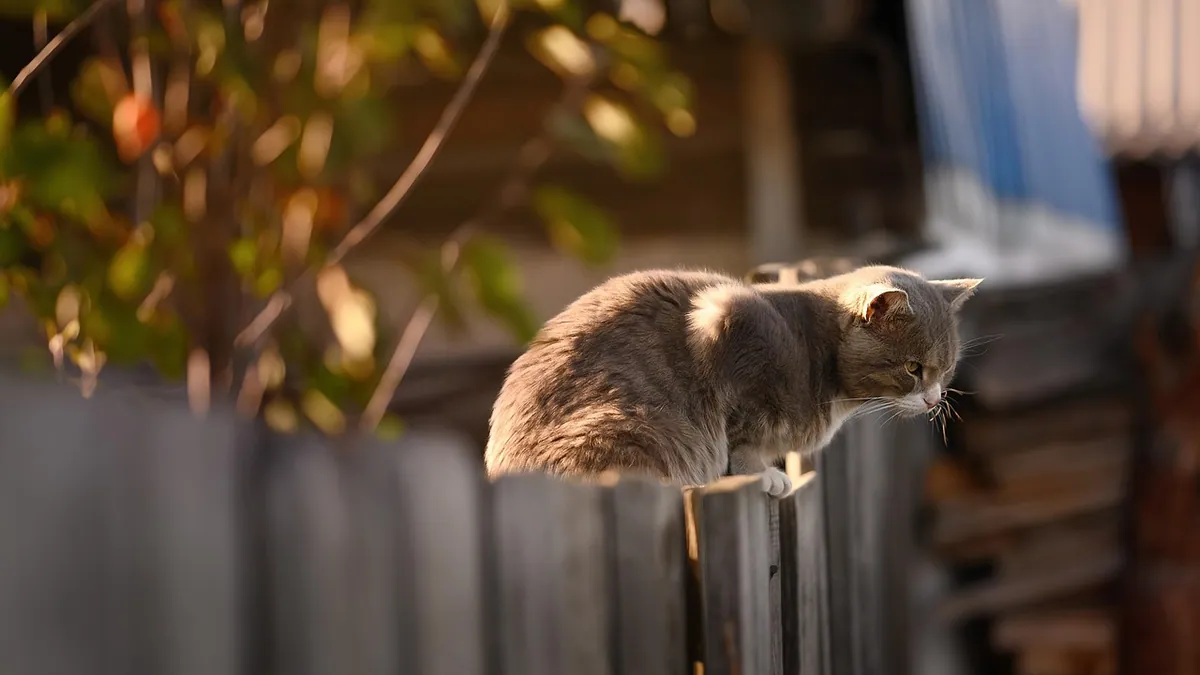
Outdoor and indoor-outdoor cats burn more energy than cats who stay inside, so they often need more calories and a complete, balanced diet to hold a healthy weight. The right cat food for outdoor cats is a complete adult formula, portioned to your cat's body condition, and served in a way that does not feed raccoons, opossums, or the neighborhood strays. This article is educational and is not a substitute for veterinary diagnosis or treatment.
Quick Answer
- Feed a complete and balanced adult cat food, and skip supplements unless your veterinarian approves them [1].
- Outdoor activity raises calorie needs, so portion by body condition and weigh your cat when you can, not by a fixed scoop.
- Feed measured meals instead of free feeding when possible, and pick up leftovers within about 30 minutes to avoid attracting wildlife.
- Always provide clean, fresh water, and check it more often in hot or freezing weather [1].
- Store dry food in an airtight container in a cool, dry place, and never feed past the expiration date [1].
What Outdoor Cats Actually Eat
Outdoor cats eat what you put in the bowl, plus whatever they hunt. That hunting matters for your feeding plan. A cat who catches mice and birds most days may eat less at home, while a cat who patrols a large territory in cold weather may eat much more.
There is no single number for outdoor cat calorie needs. A cat's energy requirement depends on body weight, body condition, age, activity, and weather. Your veterinarian can calculate a starting calorie target and adjust it as your cat's weight changes. Weigh your cat monthly if you can, or at least run your hands along the ribs. You should feel ribs easily without seeing them sharply.
If your cat is losing weight on a fixed portion, that is a signal to feed more or to have your cat checked. If your cat is gaining, cut back. Sudden weight loss in a cat who stops eating well is serious. Too little food or the wrong food can lead to hepatic lipidosis, a potentially life-threatening condition where fat accumulates in the liver [2].
Cat Food for Indoor-Outdoor Cats: What to Look For
For indoor-outdoor cats, the food itself does not need to be a special "outdoor" formula. It needs to be complete and balanced for your cat's life stage. A label that states the food is complete and balanced for adult maintenance, or for all life stages, is the baseline.
Most healthy adult cats do well on a standard adult maintenance diet. Cats with certain diseases need different diets. Diabetic cats often do best on a diet moderately restricted in carbohydrates, and cats with advanced chronic kidney disease are usually fed a diet restricted in protein and phosphorus [2]. Those changes should come from your veterinarian, not from a guess.
Senior cats are a separate question. There are no official nutritional guidelines for senior or geriatric cats, and most veterinary recommendations for older cats are extrapolated from adult cat requirements [3]. If your outdoor cat is older, ask your veterinarian to review the diet at your next visit.
Supplements are usually unnecessary if the diet is complete and balanced, and they can be harmful. Never give a supplement without your veterinarian's approval [1].
Dry Food, Wet Food, or Both
Dry food is inexpensive and does not dry out quickly, which makes free-choice feeding convenient [1]. That convenience is also its main risk outdoors. A bowl left out all day and night feeds wildlife and spoils in rain or heat.
Dry food can also be less palatable and, depending on ingredients and quality, less digestible than moist food [1]. Cats with periodontal disease, which is common, may struggle to chew dry kibble. Offering wet food, a finer kibble, or water added to the dry food can help [2].
Wet food raises the water content of the meal, which matters in hot weather. If you use wet food outdoors, serve it in a shallow dish and remove what your cat does not finish within about 30 minutes. See Wet Cat Food for more on moisture and palatability.
How Much to Feed
Start with the label's feeding instructions, then treat them as a starting point, not a rule. Feeding instructions on commercial cat food labels have been shown to vary, and label guidance does not always match a cat's true energy needs [4]. Your cat's body condition is the better gauge.
Cats naturally eat several small meals through the day [5]. That pattern fits an outdoor cat well. Two to four measured meals daily often works better than one large bowl, and it lets you see how much your cat is actually eating.
Here is a simple way to portion:
- Ask your veterinarian for a daily calorie target based on your cat's weight and body condition.
- Divide that target into two to four meals.
- Weigh or measure each meal with a kitchen scale or a marked measuring cup.
- Recheck body condition every two to four weeks and adjust.
If you cannot be home for midday meals, an automatic feeder can help with timing. Look for one built for weather and pests, and read Automatic Cat Feeder For Outdoor Use before you buy.
Feeding Stray Cats: Doing It Without Making Things Worse
Feeding stray cats is a common and kind impulse, but how you do it changes the outcome. Free-roaming cats contribute to wildlife impacts, community complaints, and high shelter intake, and targeted desexing programs have been shown to reduce shelter intake and cat-related complaints in the areas where they operate [6]. Feeding without any plan tends to grow the colony.
If you feed strays, keep these points in mind:
- Feed at a set time and place, then remove leftovers. Food left out draws wildlife and complaints.
- Feed on a washable mat or tray, not directly on the ground.
- Use clean bowls and wash them often. Dirty bowls spread disease between cats.
- Talk to a local rescue or your veterinarian about trap-neuter-return options. Desexing is the part that actually reduces the population over time [6].
- Do not feed milk, raw meat, or table scraps. These cause digestive upset and do not meet a cat's needs.
If you are managing several cats, Pet Feeders For Cats covers feeder types that can help with scheduling and portion control.
Food Safety Outdoors
Outdoor food faces heat, rain, insects, and wildlife. These are the practical rules.
Pick up leftovers. Dry food left out absorbs moisture and can grow mold or bacteria. Wet food spoils fast in warm weather. If your cat does not finish within about 30 minutes, remove the bowl.
Store food properly. Keep unused dry food in a cool, dry place and in an airtight container. This slows nutrient deterioration and helps keep fats from going rancid. Do not use food past its expiration date [1]. Large bags bought on sale can sit for months, so check the date before you feed [1].
Protect the water. Clean, fresh water should be available at all times [1]. Outdoors, that means checking for algae, debris, and ice. Refresh it at least twice daily in hot weather.
Keep wildlife out. Feed in the open where you can see the bowl, not near bushes or a fence line. Bring food in at dusk if raccoons or opossums visit. Never leave food out overnight in an area with wildlife.
Watch for parasites. Outdoor cats pick up fleas, ticks, and intestinal worms, and some of these spread through shared bowls and contaminated ground. Keep your cat on a veterinarian-recommended parasite prevention plan, and do not let your cat share bowls with unknown cats.
Weather changes the plan. In cold weather, cats burn more energy staying warm, so portions often need to go up. In hot weather, appetite often drops, and wet food or added water helps with hydration. Never leave a cat outside in extreme heat or cold without shelter and access to water.
What to Do If Your Cat Eats the Wrong Thing
Outdoor cats get into things. If your cat ate something that is not cat food, the response depends on what it was and how much.
| Item | Safe? | Notes |
|---|---|---|
| Complete adult cat food | Yes | The base of the diet. Portion to body condition. |
| Dog food as a one-off bite | Usually not dangerous | Not balanced for cats. Do not use as a regular diet. See Can You Feed Dogs Cat Food. |
| Spoiled or moldy food | No | Can cause vomiting, diarrhea, and worse. Call your veterinarian. |
| Raw meat or fish | No | Risk of bacteria and parasites. Cook or use commercial food. |
| Milk and cream | No | Most adult cats are lactose intolerant. Causes diarrhea. |
| Onion, garlic, chives | No | Toxic to cats. Can damage red blood cells. |
| Xylitol | No | A sweetener in some human foods. Toxic to pets. |
| Chocolate | No | Contains methylxanthines. Toxic to cats. |
| Grapes and raisins | No | Linked to kidney injury in pets. |
| Alcohol | No | Small amounts can be dangerous. |
| Salt-heavy human food | No | Can cause sodium poisoning. |
If your cat ate a toxic food, call your veterinarian or a pet poison control hotline right away. Do not wait for symptoms. Bring the packaging or a photo of the label with you. Your veterinarian will calculate any treatment dose from your cat's weight and health, so never give a home remedy or an over-the-counter medication on your own.
If your cat ate too much of a normal food, most cats recover on their own, but a large overload can cause vomiting and diarrhea. Withhold food for a few hours only if your veterinarian tells you to, and offer water. If vomiting continues, your cat seems painful, or your cat stops eating, call your veterinarian.
Limitations and When to Contact a Veterinarian
This article gives general guidance. Your cat's age, weight, health conditions, and medications change the plan. Individual cases need a veterinarian who can examine your cat and review the diet.
Contact your veterinarian the same day if your cat:
- Vomits repeatedly or has diarrhea for more than a day
- Refuses food for more than 24 hours
- Drinks much more or much less water than usual
- Loses weight you can see or feel
- Has a dull coat, low energy, or hides more than usual
Go to an emergency clinic now if your cat:
- Ate a known toxin such as onion, garlic, xylitol, chocolate, grapes, or alcohol
- Has trouble breathing, collapses, or has a seizure
- Has a swollen, painful abdomen
- Has pale gums or bleeding that will not stop
- Was hit by a car or had another major trauma
Schedule a routine visit if you want help setting a calorie target, choosing a diet for a cat with a health condition, or building a parasite prevention plan for an outdoor cat.
Frequently Asked Questions
Do outdoor cats need more food than indoor cats?
Often yes, because activity and weather exposure raise energy use. The exact amount depends on your cat's weight, body condition, and how much time your cat spends outside. Ask your veterinarian for a calorie target, then adjust based on body condition.
Is dry food bad for outdoor cats?
Dry food is not bad, but it spoils faster outdoors and is easy for wildlife to eat. Dry food is also less palatable and sometimes less digestible than wet food [1]. If you feed dry outdoors, use measured meals and pick up leftovers.
Can I leave food out all day for my outdoor cat?
Free feeding is convenient, but outdoors it attracts wildlife and lets food sit in heat and rain. Measured meals with leftovers removed within about 30 minutes are safer. If your schedule makes that hard, an automatic feeder can help.
What should I do if my outdoor cat is losing weight?
First, rule out parasites and illness with your veterinarian, since weight loss is not always about food. If your cat is healthy, increase the portion and recheck body condition in two to four weeks. Sudden weight loss with poor appetite needs a same-day call.
Is it safe to feed stray cats near my home?
It can be, if you feed at set times, remove leftovers, keep bowls clean, and work with a rescue on desexing. Feeding alone tends to increase the colony, while targeted desexing programs have reduced shelter intake and complaints in the areas where they run [6]. Never leave food out overnight where wildlife can reach it.
Related Articles
- Cat Food
- Automatic Cat Feeder For Outdoor Use
- Can You Feed Dogs Cat Food
- Pet Feeders For Cats
- Wet Cat Food
- Kitten Food
- How Often Should Cats Eat? Feeding, Water, and Litter Habits
- How Often Should Cats Get Wet Food? A Feeding Schedule
- Is It Safe for Cats to Go Outside? Risks and Options
References
- Feeding Your Cat. Cornell University College of Veterinary Medicine.
- How often should you feed your cat?. Cornell University College of Veterinary Medicine.
- EXPRESS: What Goes in the Bowl? Evidence-Based Nutrition for Ageing Domestic Cats. Journal of feline medicine and surgery, 2026.
- An investigation of feeding instructions on cat food labels in Belgium and comparison with European industry energy intake recommendations. The Veterinary record, 2026.
- Olfactory habituation and dishabituation dynamically regulate feeding motivation in domestic cats. Physiology & behavior, 2026.
- StrayCare Metro: Evaluation of a Targeted Cat Desexing Program to Manage Free-Roaming Cats. Animals : an open access journal from MDPI, 2026.