Seasonal Horse Care Checklist: Adjusting Your Routine
By Dr. Zubair Khalid, DVM, MS, PhD ·
The difference between a horse that thrives year-round and one that repeatedly lands on the sick list is usually not a single dramatic decision. It is the accumulation of small routine changes made at the right time of year, such as adjusting forage before the first hard freeze, starting fly control before the first hatch, and easing a horse onto spring pasture before the grass gets ahead of the gut. The rule of thumb is simple: shift feed, water, parasite control, hoof care, and monitoring a few weeks ahead of the season, not after the season has already arrived.
This article is educational and is not a substitute for veterinary diagnosis or treatment.
Why Seasonal Horse Care Adjustments Matter
Horses evolved as free-ranging grazers whose drinking, foraging, and movement patterns changed with the seasons. Domestic horses often live in environments that do not change on their own, so the owner has to create the change. Pasture quality swings from lush to dormant, water intake shifts with temperature, parasite transmission follows weather patterns, and hoof growth responds to moisture and workload.
The American Association of Equine Practitioners (AAEP) organizes much of its owner guidance around preventive care delivered on a schedule, including annual examinations, vaccination planning, dental assessment, and parasite control based on your farm and region rather than a fixed calendar for every horse. Seasonal horse care adjustments are how you translate that preventive framework into monthly habits.
A useful way to think about the year: your horse care checklist should never look identical in April and in October. If it does, you are probably reacting to problems rather than preventing them.
The Core Seasonal Comparison Table
The table below is the backbone of this article. Each row is a pillar of routine care, and each column shows what a thoughtful owner changes as the seasons turn. Use it as a master horse care checklist you adapt to your climate and your horse.
| Care pillar | Spring | Summer | Fall | Winter |
|---|---|---|---|---|
| Forage and feed | Transition to pasture slowly, watch body weight on lush grass | Feed to maintain weight during heat and work, monitor hay quality | Build body condition before cold arrives, assess hay supply | Increase forage as the primary heat source, feed before cold snaps |
| Water | Check troughs as temperatures swing, scrub algae buildup | Provide cool, clean water, monitor intake in heat | Check automatic waterers and lines before frost | Break ice, warm water when practical, watch for reduced intake |
| Parasite control | Follow a fecal egg count based program with your veterinarian | Continue monitoring, manage flies and midges | Deworm per test results and veterinary plan | Transmission is generally lower in cold climates, reassess in spring |
| Hoof care | Wet ground and rapid growth demand consistent farrier visits | Hard, dry ground and increased riding affect wear | Prepare for wet versus frozen ground conditions | Adjust trimming or shoeing to reduced riding and icy footing |
| Vaccination and dental | Core vaccination timing often falls here, schedule dental exams | Watch for issues during peak riding season | Plan ahead for next year's schedule | Annual exam planning, dental float if not done in fall |
| Monitoring | Body condition scoring, early laminitis vigilance | Heat stress awareness, sweat and recovery checks | Weight, coat, and cough checks as horses come off grass | Cold stress, colic vigilance, check under blankets |
The rest of the article explains each season on its own terms, then compares the practical seasonal horse care adjustments options owners actually choose from.
Spring Horse Care Checklist
Spring is the season of transitions. Grass explodes, parasites wake up, and the show and riding season begins. The most common spring mistake is doing all of it at once.
Introduce pasture gradually
Lush spring pasture is a major management challenge. The Merck Veterinary Manual notes that sudden access to rich pasture is a recognized trigger for digestive upset and laminitis in susceptible horses, so turnout should be increased incrementally rather than all at once. This matters most for ponies, easy keepers, and horses with a history of laminitis or equine metabolic syndrome. The Horse regularly reviews seasonal pasture-associated laminitis and reinforces the same principle, gradual exposure with close observation.
A practical approach many veterinarians recommend is starting with short daily turnout periods and lengthening them over several weeks, ideally with the horse not fully empty when first turned out. The Horse's seasonal coverage of spring grass management describes this staged introduction as a standard risk-reduction strategy.
Schedule the spring veterinary visit
For many owners, spring is when the annual visit happens. According to the AAEP's owner guidance on preventive care, a typical annual visit includes a physical examination, vaccination planning tailored to your region and the horse's exposure risk, dental assessment, and a discussion of parasite control grounded in fecal egg counts rather than blanket deworming. Bundling these services saves call fees and gives your veterinarian a baseline before the busy season.
Restart parasite monitoring
Modern parasite control follows the AAEP's recommendation to base treatment decisions on fecal egg counts and farm history, because indiscriminate rotational deworming drives resistance. Spring, when transmission resumes in most regions, is a logical time to run counts and rebuild the year's plan with your veterinarian.
Hoof care for wet ground and rapid growth
Hoof growth accelerates with spring forage quality, and wet footing softens the sole and frog. The AAEP emphasizes regular farrier care on a consistent interval, commonly in the range of every four to eight weeks depending on the individual horse, hoof quality, and workload. Spring is also when lost shoes become common because feet are softer and turnout is more vigorous.
Body condition scoring on a schedule
The Henneke body condition scoring system, scored on a nine-point scale, is the standard way to track weight objectively. The Horse provides detailed owner guides to body condition scoring and recommends scoring on a regular schedule, because gradual changes are invisible day to day. Score your horse now, at the start of the grass season, so you catch the upward drift early.
Summer Horse Care Checklist
Summer is the workload season and the heat season. The two biggest risks are dehydration and heat stress, and the biggest maintenance task is keeping weight and hoof quality steady through hard riding.
Water, water, water
Kentucky Equine Research notes that a horse's daily water requirement rises sharply with heat, sweat loss, and exercise, and that horses are most willing to drink water that is cool, clean, and fresh. Troughs and buckets should be checked and topped up at least twice daily in hot weather, and algae or slime buildup scrubbed weekly. A horse that sweats hard on a July trail ride and then refuses stale, warm water is a genuine medical risk.
Recognize heat stress early
The Merck Veterinary Manual describes heat stress in horses as involving elevated heart and respiratory rates, heavy or absent sweating, weakness, and in severe cases collapse, and advises moving affected horses to shade, cooling with water, and contacting a veterinarian promptly. The Horse's heat-related coverage stresses that high humidity impairs evaporative cooling, so a moderate temperature with high humidity can be more dangerous than a hot, dry day. Riders should build in walk breaks, provide shade and airflow in stalls, and work during cooler hours on humid days.
Feed for work, not for season
Horses in summer conditioning programs need energy that matches their workload, while idle easy keepers may need restrictions despite the season. Kentucky Equine Research emphasizes that forage should remain the foundation of every ration, with concentrates added only as the workload requires. Summer drought can also compromise hay quality and supply, so inspect what you buy.
Fly and biting-insect control
Summer brings flies, mosquitoes, and Culicoides midges, which drive sweet itch in sensitive horses. The Horse's insect-control coverage recommends layering approaches, including manure management, drainage or treatment of breeding sites, physical barriers such as masks and sheets, and topical repellents. Manure removal at least every few days breaks the fly life cycle more effectively than any spray alone.
Hooves in hard, dry ground
Summer riding on firm ground increases wear and can crack dry hooves. Consistent farrier intervals matter more than ever, and horses in heavy work may need shorter shoeing cycles than the same horse in winter. Keep workload increases gradual, which the AAEP's conditioning guidance frames as the core principle of safe training.
Fall Horse Care Checklist
Fall is the season of preparation. Everything you do from September to November either builds a buffer for winter or borrows against it.
Build body condition before the cold
Weight gain is slow, so a thin horse cannot be fixed in December. Kentucky Equine Research explains that horses derive significant heat from fermenting forage in the hindgut, which is why forage-based rations are central to winter thermoregulation. The goal in fall is to have thin horses at a healthy body condition score before the first sustained cold, using forage first and calibrated concentrate additions where needed.
Assess and buy hay early
Fall is the best time to evaluate hay quality and quantity for the winter. Kentucky Equine Research's nutrition resources walk owners through assessing hay, including visual quality checks and matching forage type to the horse's needs. The Horse similarly stresses buying hay before midwinter shortages and price spikes. A practical target many owners use is to secure enough hay to last until spring pasture, with a reserve for a longer or harsher winter than planned.
Final dental and vaccination decisions
If dental work was not done in spring, fall is the second standard window, so the horse enters winter able to chew forage efficiently. The AAEP's dental guidance emphasizes regular examination because dental pain quietly reduces feed intake and waste body condition precisely when horses need it. Fall is also when owners confirm the next year's vaccination calendar with their veterinarian, since some regional disease risks have defined seasonal windows.
Water systems before the first freeze
The Merck Veterinary Manual identifies reduced water intake as a recognized contributor to impaction colic, and cold weather is a classic time for it, partly because horses drink less when water is icy. Before the first freeze, test heated buckets, de-icers, and automatic waterers, and insulate or heat-tape exposed lines. A horse that must break ice to drink will often simply drink less.
Watch the fall grass flush
In many regions, cool-season pastures green up again in fall. Horses with metabolic disease or a laminitis history need the same staged caution applied to the autumn flush as to spring grass.
Winter Horse Care Checklist
Winter is the season where consistency beats intensity. The routine is simple, but the stakes of skipping it are higher.
Forage is the furnace
Kentucky Equine Research explains that the heat produced by fermenting fiber in the hindgut is a major source of the horse's internal warmth, so free or generous access to good forage is the foundation of winter feeding. As temperatures drop, forage quantity should increase before concentrate does. Feeding forage shortly before severe cold or overnight lows gives the fermentation-driven warming its best window.
Colic vigilance
Winter colic, particularly impaction, is a recurring theme in The Horse's cold-season coverage, linked to reduced drinking, reduced pasture moisture in the ration, and reduced movement when horses are confined. The Merck Veterinary Manual lists colic signs owners should recognize, including pawing, flank watching, rolling, lying down excessively, loss of appetite, and absence of manure, and advises contacting a veterinarian promptly rather than waiting. Winter habits that protect the gut include reliable unfrozen water, plenty of long-stem forage, and as much daily turnout and movement as conditions allow.
Blanketing by the horse, not the calendar
The Horse's blanketing guidance frames the decision around the individual horse, its coat, body condition, age, shelter access, wind, precipitation, and whether the coat is clipped, rather than a fixed date or temperature. A horse with a full unclipped winter coat, good body condition, and a windproof run-in shelter often needs no blanket. A clipped horse in work, a thin senior horse, or a wet horse in cold wind may need one. Blankets must be checked daily for rubs, moisture under the blanket, and fit, because a wet or misfitting blanket is worse than none.
Cold stress checks
Run your hands under the blanket at the withers and behind the shoulders. Feel behind the ears. The Merck Veterinary Manual describes shivering as an outward sign that a horse is cold and losing heat faster than it can generate warmth. Shivering briefly in a sudden squall is different from shivering daily, which means the plan is failing.
Ice, footing, and hoof decisions
Frozen paddocks and icy lanes cause slips and tendon strains. Discuss with your farrier whether to keep shoes, pull them, or use traction aids through winter, since barefoot horses collect less packed snow but may be tender on frozen ground. The AAEP's farrier resources describe these as individual decisions made with hoof quality and footing in mind.
Senior horses need extra attention
Older horses lose thermoregulation efficiency and dental efficiency. The Horse's senior horse coverage recommends closer weight monitoring, easier-to-chew forage options where chewing is impaired, and lower thresholds for calling the veterinarian during winter illness. An underblanket, extra forage, and a midwinter weight check are common senior adjustments.
Comparing Seasonal Horse Care Adjustments Options
Owners face recurring choices about how to structure the routine. Each of these seasonal horse care adjustments options has honest pros and cons.
Option 1: Calendar-driven routine
You anchor tasks to fixed months, such as spring vaccines, spring and fall deworming decisions, and farrier every six weeks.
Pros: nothing gets forgotten, boarding facilities and veterinarians run on this rhythm, and it is easy for a household with multiple caretakers to coordinate. Cons: it can mismatch an individual horse's needs, such as a laminitic pony that needed turnout restrictions in March rather than May, or a horse whose fecal egg counts suggest a different deworming cadence. The AAEP's preventive care guidance supports using the calendar as scaffolding but tailoring the contents to the horse.
Option 2: Condition-driven routine
You anchor tasks to the horse's measured state, adjusting forage to body condition score, deworming to fecal egg counts, and blanketing to actual weather and coat.
Pros: this is the best seasonal horse care adjustments approach for precision, and it aligns with modern veterinary recommendations on parasites and nutrition. Cons: it requires objective measurements, record keeping, and discipline, and owners can drift into rationalizing, deciding the horse looks fine when a score would say otherwise. The most robust routine is calendar scaffolding with condition-driven adjustments inside it.
Option 3: Owner-managed versus facility-managed care
At a boarding barn, seasonal care may be split between owner and management.
Pros of facility management: professional daily eyes, consistent feeding and turnout, and staff who notice subtle changes first. Cons: you may be several steps removed from the details, and a generic program may not fit your horse. Pros of self-management: total control and intimate knowledge of your horse. Cons: no backup when you travel, and single-person bias in what counts as normal. The workable answer in either setting is a written horse care checklist that survives staff turnover and owner vacations.
Worked Scenarios
Scenario 1: The easy-keeper pony and spring grass
An owner with a 13-hand pony that foundered two years ago faces April with the pasture already knee high. The calendar-driven routine says spring shots in early April and normal turnout resumed. The condition-driven adjustment says otherwise. The owner keeps the pony on a dry lot with a grazing muzzle introduced for short sessions, runs a fecal egg count before committing to any deworming, scores body condition at the start of the month and monthly after, and asks the farrier to keep to a four-to-six week interval because the pony's hooves grow fast on spring grass. The calendar still organizes the visit. The pony's risk profile rewrites the turnout plan. This is what the best seasonal horse care adjustments look like in practice, the calendar serving the horse rather than the reverse.
Scenario 2: The senior gelding entering his first winter under new ownership
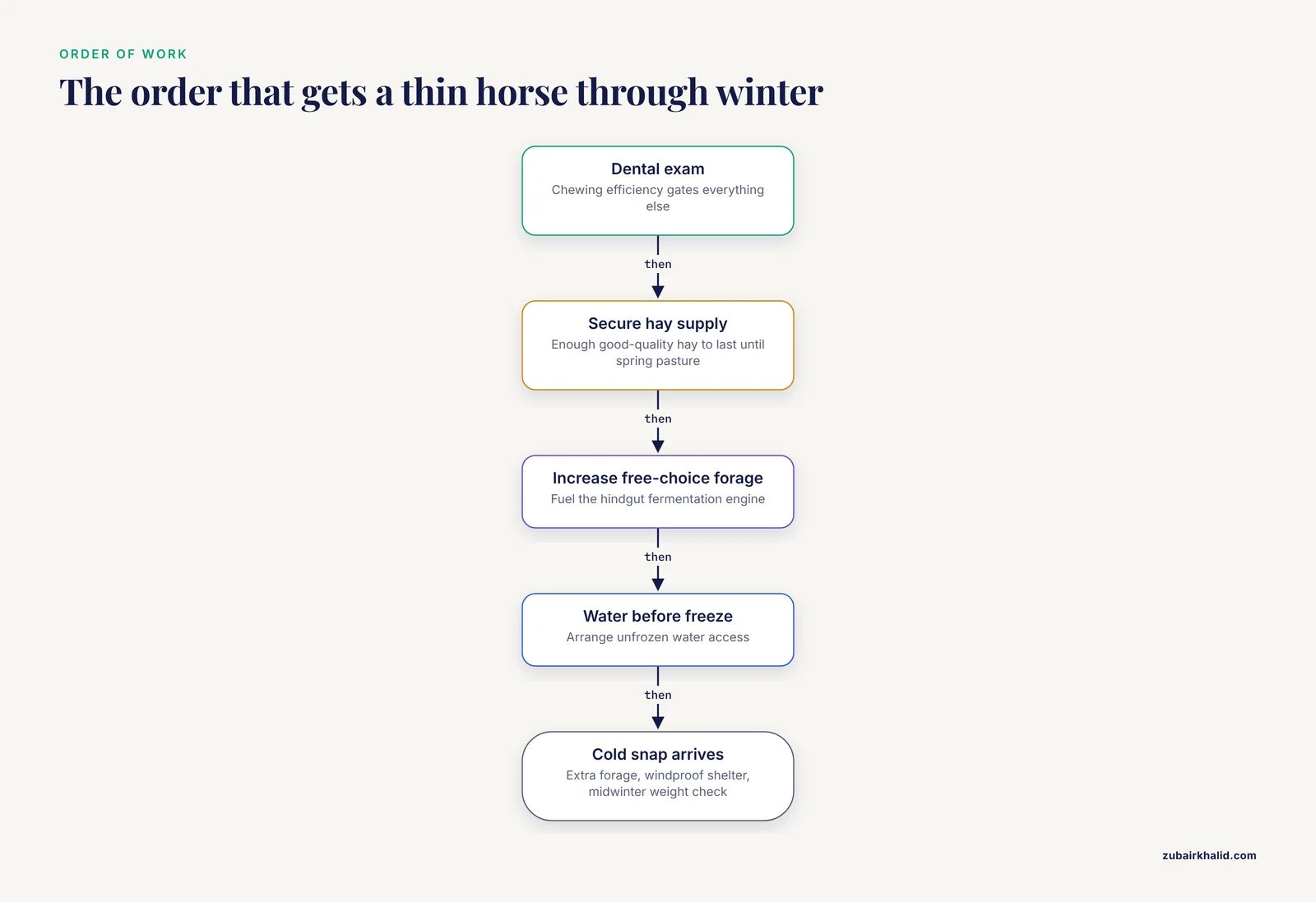
A buyer takes over a 22-year-old gelding in October. Body condition scoring shows him thin, and the seller's feed plan was a single scoop of sweet feed twice daily. Following the logic of fall preparation, the new owner schedules a dental exam first, because chewing efficiency gates everything else, secures a season's supply of good-quality hay, increases free-choice forage so the hindgut fermentation engine has fuel, and arranges unfrozen water access before the first freeze. When December brings a cold snap, the gelding's extra forage, windproof shelter, and a midwinter veterinary weight check keep him off the emergency list. The lesson is sequencing, dental before feed adjustment, feed adjustment before the cold, water infrastructure before the freeze.
Scenario 3: The competition horse in a humid August
A rider conditioning an event horse through a humid summer notices the mare's recovery heart rate slowing and her sweat feels abnormal after a moderate school. The Horse's heat-season guidance frames humidity as the hidden variable in cooling, and the Merck Veterinary Manual's heat stress signs, including rapid breathing and weakness, give the owner a clear threshold to stop, cool aggressively with water, move to shade, and monitor. The seasonal adjustment here is scheduling, moving hard work to early morning, adding walk breaks, and confirming the mare drinks readily after exercise. The rider also shortens the shoeing interval, because summer work on firm ground is eating shoes faster than the winter cadence.
Common Mix-Ups in Seasonal Horse Care
Mixing up the calendar and the climate. Vaccination and parasite plans should follow regional disease risk and farm history, not a national template. The AAEP is explicit that regional risk assessment drives vaccination decisions.
Cutting forage and adding grain to warm a horse. The hindgut fermentation of forage, not concentrate, is the primary internal heat source, so the first winter adjustment is more hay, not more grain.
Assuming horses drink enough on their own. Winter impaction colic is closely tied to reduced intake, and horses drink less from icy water. Provide liquid water reliably.
Blanketing by temperature alone. Wind, precipitation, coat, clip, age, and shelter matter as much as the thermometer.
Skipping the farrier in winter. Hoof growth slows but does not stop, and long winter cycles create the cracked, imbalanced feet that fail in spring.
Treating spring and fall grass identically to summer grass. Cool-season flushes are high in rapidly fermentable carbohydrate and are the classic laminitis windows for susceptible horses.
Letting water management lapse in spring. Algae blooms, pollen, and temperature swings all depress intake right when grass transitions stress the gut.
Building Your Year-Round Horse Care Checklist and Health Record
A horse care checklist works only if it is written down and dated. A practical horse health record template includes the following sections, updated at each seasonal transition:
- Identification, age, breed, and baseline vital signs for your horse.
- Body condition score, recorded monthly, with notes on where fat is being deposited or lost.
- Vaccination history, with dates, products, and the veterinarian's plan for next year.
- Deworming history paired with fecal egg count results and dates, so patterns emerge across seasons.
- Dental exam and float dates, plus any notes on chewing or dropping feed.
- Farrier dates, hoof notes, and any abscesses, cracks, or shoe losses by season.
- Weight or girth measurements, with a photo each season for visual comparison.
- Feed, including hay source and cutting, concentrate types and amounts, and supplements, with the date of any change.
- Water notes, including any periods of reduced intake and what fixed them.
- Incident log, from colic episodes to eye injuries, with dates, treatments, and outcomes.
Review this record at each season change, ideally with your veterinarian at the annual or semiannual visit. Patterns, such as weight loss every January or scratching every July, only become visible when the data exists.
Limitations and When to Contact a Veterinarian
Every horse is an individual, and this article describes general patterns that require a veterinarian's judgment to apply to a specific animal. Regional climate, breed, age, workload, and existing disease all modify the plan.
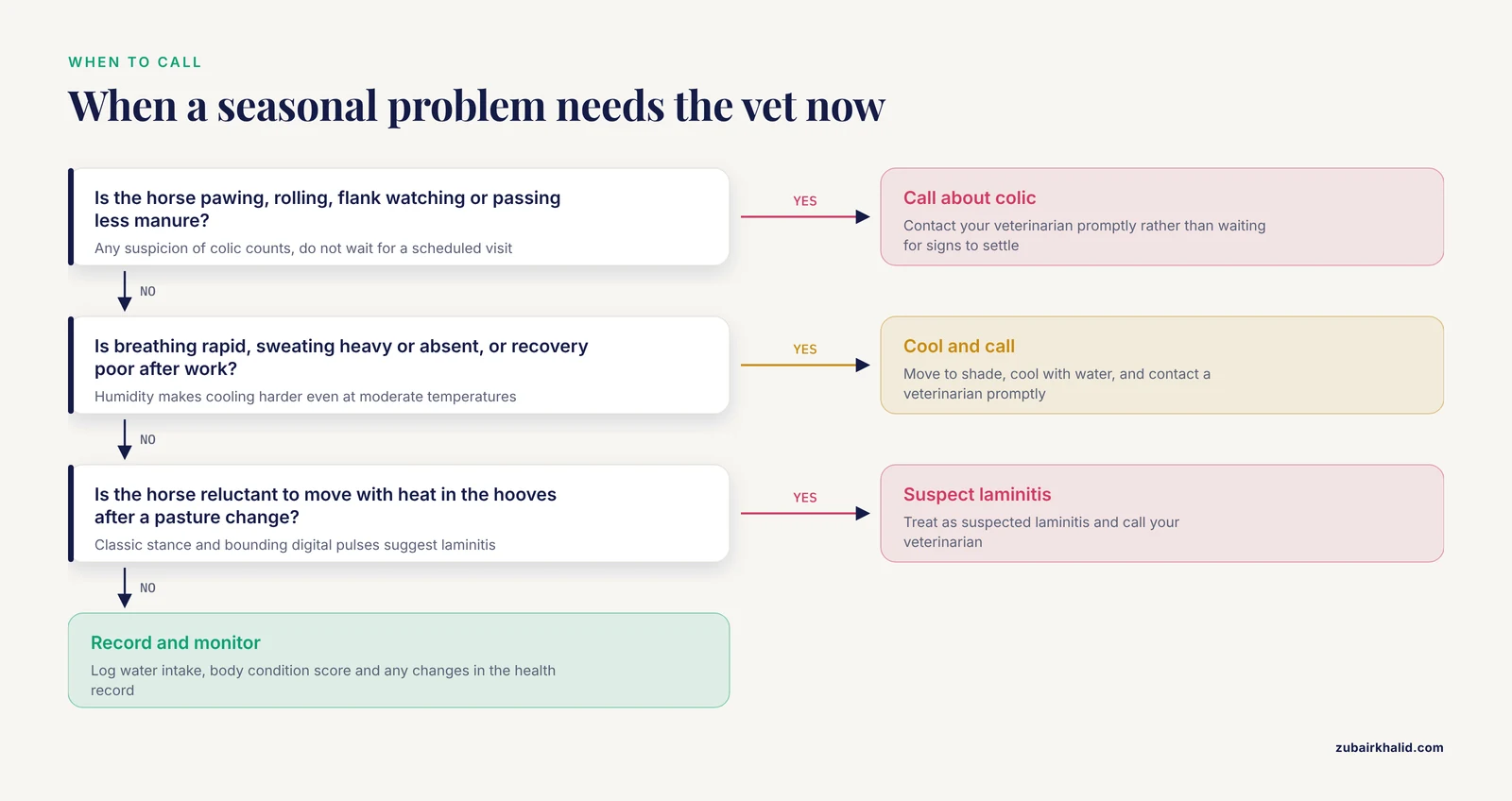
Contact your veterinarian promptly, without waiting for a scheduled visit, in the following situations:
- Any suspicion of colic, including pawing, rolling, flank watching, stretching, loss of appetite, or reduced manure output.
- Signs of heat stress, including rapid breathing, weakness, heavy or absent sweating, or a horse that does not recover normally after work.
- Suspected laminitis, including the classic stance, heat in the hooves, bounding digital pulses, or reluctance to move, especially after a pasture change.
- A horse that has not urinated normally, or straining to urinate.
- Fever, lethargy, nasal discharge, cough, or diarrhea, alone or in combination.
- A horse that is not drinking, or whose water intake has visibly dropped for more than a day.
- Eye injuries, including squinting, tearing, or cloudiness, which progress quickly.
- Unexplained rapid weight loss, or a horse that stops eating grain or hay entirely.
- Any wound near a joint, tendon sheath, or the hoof, and any wound in an unvaccinated horse, given tetanus risk.
- Shivering that persists, or a horse that seems dull and cold despite shelter and forage.
For routine seasonal planning, your veterinarian and farrier are the two professionals who should co-sign your checklist each year.
Frequently Asked Questions
How far ahead of each season should I make changes?
Start two to four weeks ahead of the season. Pasture introduction, hay purchasing, water system checks, and body condition building all need lead time, and the AAEP's preventive care model works on planning cycles rather than reactions.
Should I blanket my horse every winter?
Not necessarily. The Horse's blanketing guidance bases the decision on the individual horse's coat, body condition, age, shelter, wind, precipitation, and clipping status rather than a fixed rule. Many unclipped, healthy horses with good shelter do well unblanketed, while clipped horses in work and thin seniors often need blankets.
Why is colic a bigger worry in winter?
Reduced water intake, drier rations when pasture is gone, and less movement in confinement all contribute to impaction colic, a link described in Merck Veterinary Manual guidance on colic risk. Reliable unfrozen water, ample forage, and daily turnout are the countermeasures.
Can my horse graze spring grass freely if he looks healthy?
Introduce it gradually even in healthy horses, and be especially careful with easy keepers, ponies, and horses with any metabolic or laminitis history, since the Merck Veterinary Manual identifies sudden lush pasture access as a digestive and laminitis trigger.
What goes in a horse health record template?
At minimum, vaccination and deworming dates with fecal egg count results, dental and farrier dates, body condition scores over time, feed and hay details, water notes, weight measurements, and an incident log for illness and injury.
Do horses really need more hay in winter?
Yes, generally. Kentucky Equine Research explains that fermenting forage in the hindgut is a major internal heat source, making forage the first lever to pull when temperatures drop. Increase forage before increasing concentrates.