Printable Horse Vet Visit Planner
By Dr. Zubair Khalid, DVM, MS, PhD ·
A printable horse vet visit planner is a one-stop set of pages you keep in the barn that lists every routine appointment your horse needs, the questions and concerns to raise at each one, and the health record details your veterinarian will ask for. Build it once, print it, hang it in the tack room, and every visit from the spring wellness exam to a dental float becomes faster, cheaper, and more thorough.
Most owners lose value at veterinary visits in three ways. They forget the questions they meant to ask. They cannot produce vaccination dates, prior labs, or medication histories when the veterinarian asks for them. And they leave without a written plan for follow-up. A printed planner fixes all three problems before the trailer is even loaded.
This guide walks through exactly what a printable equine vet visit planner should contain, how to format each page, a filled-in example you can model, and a complete horse care checklist that ties your daily routine to the annual veterinary calendar.
At a Glance: Build Your Planner Today
You can assemble a working planner in under an hour with a binder, sheet protectors, and a printer.
| Step | Action | Time |
|---|---|---|
| 1 | Print one horse profile page per horse | 10 min |
| 2 | Print a health record template with vaccination, dental, and deworming logs | 10 min |
| 3 | Add a visit prep sheet for the next scheduled appointment | 5 min |
| 4 | Add a questions-and-concerns page in the barn aisle for jotting notes | 5 min |
| 5 | Attach a pen on a string and review the planner monthly | 5 min |
Once the core pages exist, maintaining the planner takes minutes per month.
Why a Printable Planner Beats Memory and Phone Notes
Horses are long-lived animals with layered medical histories. A ten-year-old gelding may have vaccination records from three owners, a dental history spanning multiple practitioners, a previous tendon injury, and a supplement list that changed last season. The American Association of Equine Practitioners emphasizes preventive care and clear owner-veterinarian communication as the foundation of equine health, and both depend on accurate records.
Paper wins in the barn environment for practical reasons:
- No battery, no signal problems, no glove-unfriendly screens
- Anyone handling the horse, including a barn manager, trainer, or pet sitter, can read it instantly
- A page on a clipboard can go to the veterinarian at the trailer, the wash stall, or the exam
- Signed paper records are accepted everywhere, from boarding barns to show offices to state border crossings
A printable horse vet visit planner is also the backup when a phone dies mid-emergency. Keep the emergency contact and directions page printed even if the rest of your system is digital.
The Core Pages of a Printable Horse Vet Visit Planner Template
A functional planner has five page types. Build them once, then reuse.
Page 1: Horse Profile
One page per horse, updated as things change. Include:
- Registered name, barn name, age, breed, sex, color, and distinguishing markings
- Microchip number and any brand or tattoo
- Height and current body weight estimate
- Current diet, including forage type, concentrate amount per feeding, and supplements with serving sizes
- Hay source and any known feed changes
- Turnout schedule and workload level
- Insurance policy number if applicable
- Primary veterinarian, after-hours clinic, and farrier contact information
- Boarding facility name, address, and directions for visiting veterinarians
Kentucky Equine Research nutrition resources stress that diet and workload details are central to any health assessment, because body condition and nutritional plan shape what the veterinarian recommends at every visit. Listing the actual ration, not "normal grain," makes those conversations concrete.
Page 2: Horse Health Record Template
This is the historical backbone of the planner. Use a grid with columns for date, service, administering party, and next due date. The horse health record template should include:
- Vaccinations, with product name, lot number if provided, and route
- Dental exams and floating dates, with notes on any points, hooks, or extractions
- Deworming products and dates, plus any fecal egg count results
- Coggins (equine infectious anemia) test dates and certificate numbers
- Farrier dates and any noted hoof concerns
- Injuries, illnesses, and treatments with resolution dates
- Medications and supplements with start and stop dates
- Body weight and body condition score at each check
- Surgeries and hospitalizations
The Merck Veterinary Manual notes that equine infectious anemia testing is a standard part of equine health management and is required for most interstate movement and many events in the United States, which makes the Coggins date one of the most frequently requested numbers in any record book.
Page 3: Visit Prep Sheet
One sheet per upcoming appointment. This is the working page you carry to the vet. It holds:
- Reason for the visit (wellness exam, vaccination booster, dental, lameness recheck, prepurchase)
- Dates and names of anything done since the last visit
- Current concerns, written as specific observations with dates
- Questions you want answered, numbered so you do not lose track
- Any medications or supplements currently being given
Page 4: Visit Summary and Follow-Up Log
Fill this in during or immediately after the appointment:
- Findings from the exam, in the veterinarian's own words if possible
- Treatments given and products used
- Instructions, including recheck timing, written verbatim
- Next due dates for everything scheduled
- Invoice reference for your files
The Horse, a veterinary-reviewed publication, consistently recommends capturing instructions in writing at the time of the visit, since verbal instructions given at the trailer are easy to misremember days later.
Page 5: Questions and Concerns Capture Sheet
A simple lined page hanging in the barn aisle. Every time something seems off, a slight puffiness, a change in manure, a quirky step under saddle, write the date and the observation. Between visits, this page becomes the raw material for the next visit prep sheet, and it gives your veterinarian dated observations instead of vague recollections.
A Printable Horse Vet Visit Planner Example
Here is a filled-in example showing how the pages work together for one horse. This sample uses plausible placeholder details, not real case data.
Horse Profile
- Name: Copper Penny ("Penny")
- Age/Breed/Sex: 11-year-old Quarter Horse mare
- Weight estimate: 1,100 lb, body condition score 5 of 9
- Diet: Free-choice grass hay, 1 lb balancer twice daily, salt block available
- Workload: Light trail riding, three to four rides weekly
- Veterinarian: Dr. Rivera, Valley Equine Practice
Health Record (recent rows)
| Date | Service | By | Next Due |
|---|---|---|---|
| Mar 14 | Spring vaccine series (core) | Dr. Rivera | Per vet schedule |
| Mar 14 | Annual exam, dental check, float performed | Dr. Rivera | 12 months |
| Apr 2 | Fecal egg count, result low | Dr. Rivera | Per vet plan |
| Jun 20 | Coggins test for show season | State lab | 12 months |
Visit Prep Sheet (Fall Wellness Visit, scheduled Oct 8)
- Ask about the intermittent right front footiness Penny showed in August, worse on hard ground. Farrier noted long toe on that foot Sept 2.
- Ask whether her vaccine schedule should change now that she travels to shows monthly.
- Request updated Coggins for the November clinic weekend.
- Report: weight steady, appetite good, manure normal, no coughing or nasal discharge.
Visit Summary (filled Oct 8)
- Exam findings: mild hoof tenderness right front with hoof testers, no heat or pulse difference
- Plan: radiographs scheduled Oct 15, farrier and vet to discuss trim angles
- Recheck: four weeks after farrier visit
- Next vaccines: per veterinarian's schedule discussed at visit
This example shows the real value of the format. August and September observations were preserved with dates, so October's visit started from evidence rather than memory.
Choosing a Format: Paper, Binder, or Hybrid
The best printable horse vet visit planner format is the one you will actually maintain. Three formats work well:
Single binder, printed pages. One three-ring binder per horse, or one binder with tabbed sections for a small backyard herd. Sheet protectors keep pages clean at the wash rack. This is the simplest and most durable option.
Clipboard rotation. Keep the current visit prep sheet and questions page on a clipboard that moves with the horse. Archive completed sheets into the binder monthly.
Hybrid paper-plus-digital. Some owners photograph each completed summary page and store the images in a cloud folder, giving them a searchable backup while the binder remains the working system. The paper original still goes to the vet, and the photos protect against a lost or damaged binder.
Whatever format you choose, print on heavy paper, date every page, and never write on loose scraps that live in a pocket.
Step-by-Step: Using the Planner Around a Vet Visit
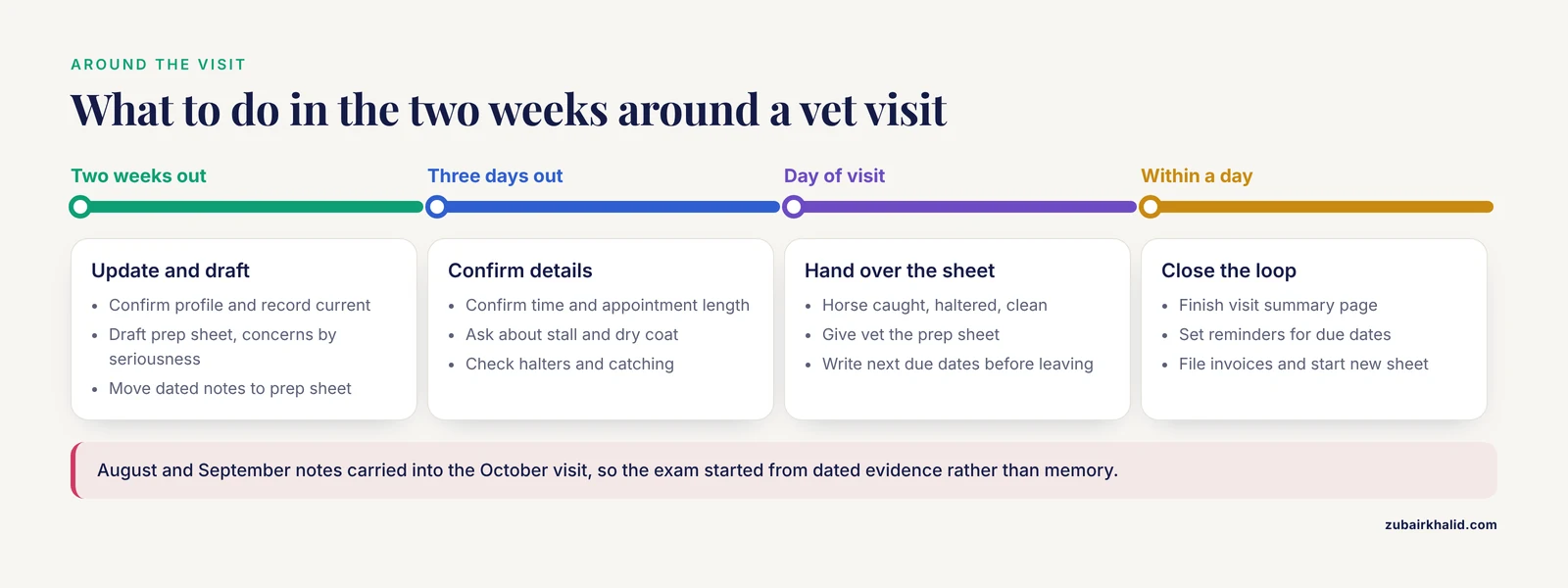
Two Weeks Before the Visit
- Pull the horse's profile and health record template pages and confirm every entry is current, especially diet and supplements.
- Draft the visit prep sheet. List the visit type first, then concerns in order of seriousness.
- Review the questions capture sheet and transfer anything relevant to the prep sheet with dates.
- Call the veterinary office to confirm appointment length. A dental exam with floating takes longer than a vaccine appointment, and underbooking leads to rushed visits.
Three Days Before
- Confirm the appointment time and ask whether the horse should be stalled and dry before the visit if footing at the barn is muddy. Some procedures and exams are easier on a clean, dry horse.
- Check that halters and lead ropes are in good repair and that your horse can be caught easily. If catching is a struggle, practice before the visit, not during it.
Day of the Visit
- Have the horse caught, haltered, and reasonably clean when the veterinarian arrives.
- Hand the veterinarian the visit prep sheet. Most equine practitioners appreciate a written summary because it saves time and reduces errors.
- Take notes on the visit summary page as the veterinarian talks. If instructions come quickly, ask to photograph the written instructions on the feed stall whiteboard or repeat them back for confirmation.
- Ask explicitly for next due dates for every service performed and write them into the record template before the trailer leaves the property.
Within a Day After
- Complete the visit summary page while memory is fresh.
- Set reminders for every next due date, both in the planner and wherever you keep calendar alerts.
- File any invoices, lab results, or certificates in the binder behind the record page.
- Start a fresh questions capture sheet for the next visit cycle.
The Annual Horse Care Checklist: Mapping the Veterinary Year
Your planner works best when it reflects the standard preventive care rhythm that the AAEP describes in its owner-facing guidance. Your veterinarian will tailor the schedule to your horse's age, region, travel, and exposure, so treat this checklist as the conversation framework rather than a fixed prescription.
Year-round, every visit or monthly check:
- Body condition and weight check (record the score in the health record)
- Hoof care per your farrier's recommended interval
- Dental concern watch, including dropping feed, quidding, or resistance to the bit, which the AAEP lists among signs that warrant prompt dental attention
Spring visit, commonly:
- Annual wellness exam
- Core vaccination discussion, covering the diseases the AAEP designates as core for all horses in the United States, including tetanus, rabies, and the encephalitides, plus risk-based vaccines determined by travel and exposure
- Dental exam
- Fecal egg count and parasite control discussion, guided by your veterinarian rather than a fixed rotation, an approach consistent with modern parasite management recommendations referenced in Merck Veterinary Manual horse-owner resources
Mid-year:
- Coggins test timing aligned with shows, sales, or travel plans
- Reassess body condition as pasture quality changes
- Midsummer fly, skin, and respiratory concern checks
Fall visit, commonly:
- Second wellness checkpoint or risk-based vaccine boosters as your veterinarian advises
- Prewinter body condition adjustment, since forage needs rise as temperatures drop, a topic Kentucky Equine Research covers in its seasonal feeding guidance
- Dental recheck if spring floating addressed significant issues or if your horse is young, senior, or showing signs
Senior horses: The Merck Veterinary Manual notes that older horses benefit from more frequent veterinary attention, with dental disease, weight loss, and chronic conditions becoming more common with age. Discuss a twice-yearly exam rhythm for horses in their senior years and record those visits in the planner.
Supplies for Building and Maintaining the Planner
No specialized products are needed. Assemble:
- A sturdy three-ring binder with tabbed dividers, one section per horse
- Sheet protectors for pages that travel to the vet
- A clipboard with a pen attached by string
- Printer paper, or pre-printed planner pages if you prefer buying a structured template
- Expanding file pockets for certificates, invoices, and lab reports
Selection criteria are simple. Binder rings should open smoothly with one hand, since you will often be writing while holding a lead rope. Sheet protectors should be the heavier gauge type so they survive barn dust and damp hands. Avoid planners with tiny pockets or fussy closures that slow you down at feeding time.
Common Mistakes That Undermine a Vet Visit Planner
- Recording "vaccines done" without product names. Vaccine product, and in some cases the vet's recommendations on timing, matter when your veterinarian plans future protection. Write the full detail at the time of service.
- Letting the planner lag months behind. An outdated record template is worse than none, because it looks authoritative while being wrong. Tie updating to a fixed habit, such as the first Saturday of each month.
- Vague concern entries. "Seemed off last week" gives your veterinarian nothing. "Favored right front at the trot on level ground, June 12 and June 14, normal the rest of the week" gives something usable.
- Failing to record who did what. Owner-administered treatments, lay dentist work, and nonveterinary bodywork should all appear in the record with dates, because they inform veterinary assessment.
- Treating the visit summary as optional. Skipping this page discards most of the visit's value.
- Storing the only copy in one place. Barns flood, burn, and leak. Photograph or copy completed pages at least annually.
Troubleshooting Common Planner Problems
The horse came from another owner with no records. Start the health record template with the date you acquired the horse and what is known or unknown. Ask your veterinarian to establish a baseline exam and build the record forward. Prior vaccination status is a specific question to raise, since your veterinarian will decide how to proceed based on the individual case.
The boarding barn keeps its own records. Ask the barn manager for copies of anything administered on the farm, and keep your own planner as the portable and permanent copy. Barn records follow the barn, not the horse.
The horse is difficult for veterinary handling. Note this prominently on the profile page so any visiting veterinarian knows in advance. Discuss with your veterinarian whether prior sedation or specific handling approaches would make visits safer, and record what worked.
You keep forgetting questions between visits. Move the questions capture sheet somewhere physically unavoidable, clipped to the grain bin lid or taped inside the tack room door.
Welfare and Safety Points
Good record-keeping is a welfare practice. Dated observations allow earlier detection of weight loss, dental pain, and lameness, and they prevent accidental duplicate treatments or missed boosters. Handle horses calmly around veterinary visits, avoid rushing catching or restraint, and never hold a horse in a position where you could be trapped if it startles. If a visit involves sedation, follow your veterinarian's instructions for fasting if any are given, post-visit monitoring, and return to work.
Limitations and When to Contact a Veterinarian
This article is educational and is not a substitute for veterinary diagnosis or treatment.
Every planner page in this guide supports your veterinarian's work. It does not replace it. Individual vaccination schedules, parasite control plans, dental intervals, and diet decisions must come from a veterinarian who has examined your horse, because age, region, job, herd dynamics, and health history all change the answers.
Contact your veterinarian promptly, outside of scheduled visits, for any of the following:
- Signs of colic, including pawing, rolling, flank watching, or refusal to eat
- Fever, depression, or loss of appetite
- Nasal discharge, cough, or labored breathing
- Diarrhea, especially with lethargy or dehydration signs
- Lameness that is more than mild, persists more than a day, or worsens
- Eye pain, squinting, tearing, or cloudiness
- Wounds, particularly puncture wounds, or any bleeding that does not stop
- Sudden or progressive weight loss
- Difficulty eating, dropping feed, or a swollen face or jaw
- A horse down and unable to rise, or any horse in obvious distress, which is an immediate emergency
For a horse that is nonresponsive, in severe respiratory distress, or collapsed, contact emergency equine veterinary care immediately. Keep the after-hours clinic number on the planner profile page where anyone at the barn can find it.
Frequently Asked Questions
What is a printable horse vet visit planner?
It is a set of printed pages, usually kept in a barn binder, that organizes your horse's health records, scheduled veterinary visits, visit-day questions, and post-visit instructions in one place. It replaces scattered papers and memory with a system anyone at the barn can use.
What should a printable horse vet visit planner template include?
A complete template has five page types: a horse profile, a health record grid for vaccinations, dental work, deworming, and testing, a visit prep sheet, a visit summary and follow-up log, and a running questions and concerns sheet. Add tabbed sections for certificates and invoices.
Is a printable format better than an app for equine records?
For barn use, printed pages are usually more reliable because they survive no-signal zones, dead batteries, and gloved hands, and anyone handling the horse can read them. Many owners run a hybrid system, with paper as the working copy and photographs of pages as a digital backup.
How often should I update my horse's health record template?
Update it within a day of any veterinary visit, farrier appointment, vaccination, deworming, or medication change, and do a full review monthly. An outdated record can mislead your veterinarian, so currency matters as much as completeness.
What vaccines belong in an equine vet visit planner?
Record every vaccine with the date, product name, administering party, and next due date. The AAEP designates a core group of vaccines recommended for all US horses, including tetanus, rabies, and the encephalitides, along with risk-based vaccines your veterinarian selects based on your horse's travel and exposure. Your veterinarian sets the specific schedule.
How do I use a planner for a dental visit?
Record every dental exam and floating date with findings, and note any signs between visits such as dropping feed, quidding, weight loss, or bit resistance, which the AAEP identifies as reasons to have the teeth examined. Bring the history to the appointment so the veterinarian can compare against prior years.
What goes on the visit prep sheet?
List the visit type, a dated summary of anything done since the last appointment, your specific concerns with the dates you observed them, and your numbered questions. Hand this page to the veterinarian at the start of the visit so nothing is missed.
How far in advance should I schedule routine equine vet visits?
Anchor the annual schedule to your spring and fall wellness visits, then place dental exams, Coggins testing, and vaccine boosters around them using your veterinarian's recommendations. Review the planner monthly and book the next appointment before leaving each current one so the calendar never lapses.