Pony Care Guide: Daily, Weekly, and Monthly Routine
By Dr. Zubair Khalid, DVM, MS, PhD ·
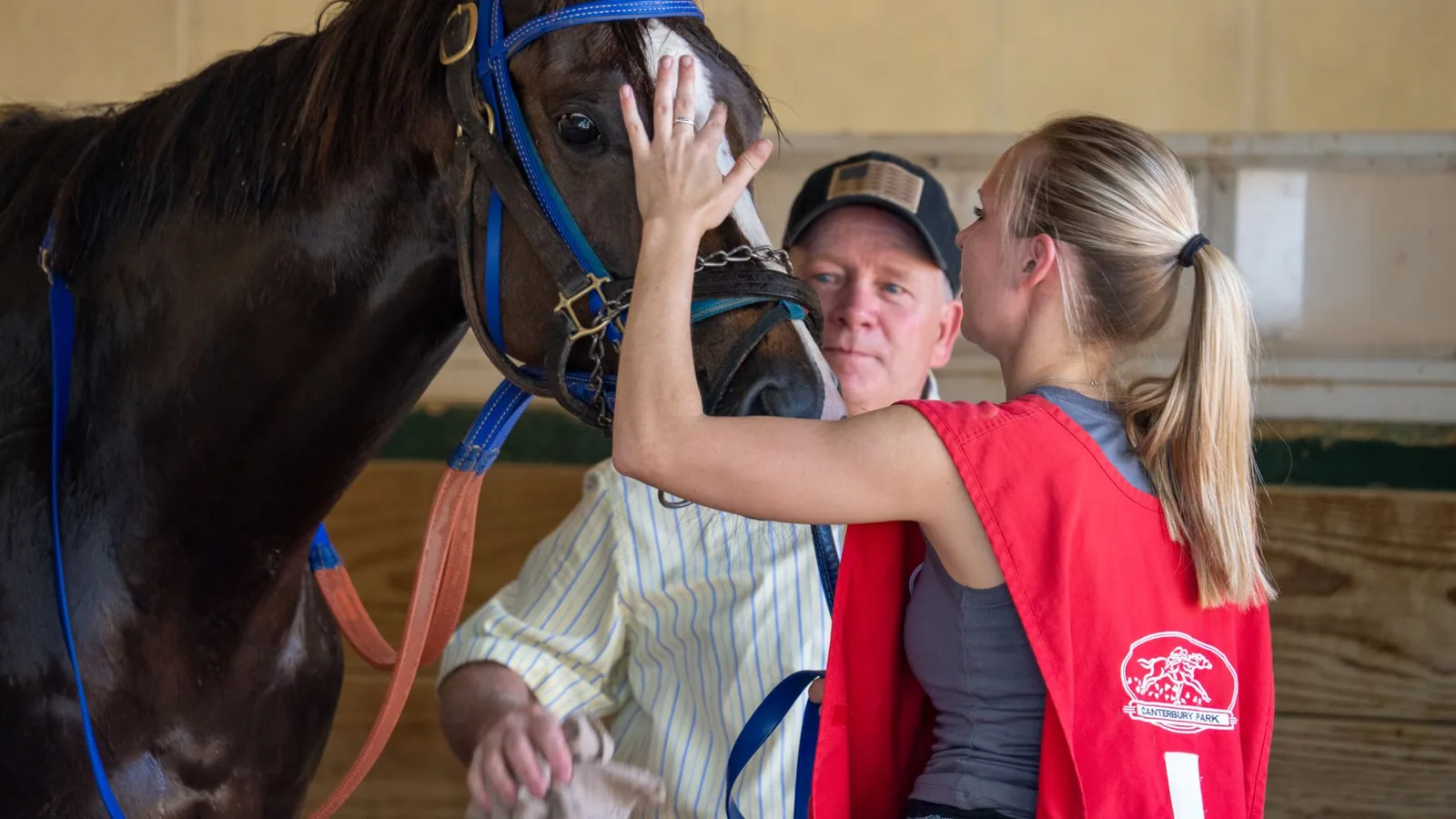
A complete pony care routine has three layers. Daily work covers water, weighed forage, turnout, hoof picking, and a short hands-on check. Weekly work adds body condition scoring, a full groom, a close hoof review, and equipment inspection. Monthly and seasonal work covers weight trends, property hazards, parasite planning, and veterinary scheduling. This structure exists because ponies are metabolically efficient, gain weight easily, and develop laminitis far more often than full-size horses, so a sound routine is built on measured feeding, daily movement, and early detection rather than crisis response.
This article is educational and is not a substitute for veterinary diagnosis or treatment.
Why a Structured Pony Care Routine Matters
Ponies look low maintenance, and that impression causes most of the welfare problems recorded in the species. A pilot welfare assessment of the working pony population on Gili Trawangan, Indonesia, found foot pathology in 92% of ponies examined, lameness in 38%, and at least one wound in 86% [1]. Those findings describe what happens when daily observation and routine care are missing.
The opposite holds as well. In a year-long study of Swedish Gotland ponies managed extensively with no supplementary feed, welfare stayed acceptable through the grazing season, and the authors identified daily monitoring as one of the factors that made the system work, alongside enclosures with sufficient feed and access to a recovery enclosure [2]. Even a hands-off setup still needs a person looking at the ponies every day.
Routine also has to match pony biology. A meta-analysis of 14 studies covering 364 equids found that free-ranging animals spent 56% of their time feeding compared with 38% in stabled ones, and grouped animals fed and rested more than isolated ones [3]. A routine that delivers small, frequent forage meals, constant companionship, and room to move copies the behavior pattern ponies evolved with.
How to Take Care of a Pony: The Routine at a Glance
| Frequency | Core tasks | What you are watching for |
|---|---|---|
| Daily, twice | Fresh water, weighed forage, turnout or hand walking, hoof picking, hands-on body check, manure removal from small paddocks | Off feed, missing manure, heat in hooves, new wounds, eye or nasal discharge, dull attitude |
| Weekly | Body condition score, weight tape, full groom, skin inspection, trough scrub, tack and fence check | Ribs you cannot feel, cresty neck, rub marks, scabs, worn tack |
| Monthly | Weight trend review, paddock and shelter walk-through, parasite plan review with your veterinarian, seasonal feed adjustment | Steady gain, broken fencing, toxic plants, parasite egg counts |
| Seasonal and annual | Veterinary exam, dental check, vaccination, endocrine screening if flagged, farrier schedule review, winter feed planning | Coat that fails to shed, lumps, murmurs, weight loss in old age |
Basic supplies that support the routine include a weight tape, a hay scale, a hoof pick, stiff and soft brushes, a mane comb, clean buckets, a wheelbarrow and manure fork, and a digital thermometer for days when your pony seems off. Choose gear that is durable, easy to disinfect, and comfortable for you to use daily, because equipment you avoid using does not get used.
Pony care for beginners becomes manageable the moment these tasks stop living in your head and start living on a clipboard. Print the table, post it at the barn, and tick items off for the first two months until the sequence is automatic.
Your Daily Pony Care Checklist
Morning Water and Forage
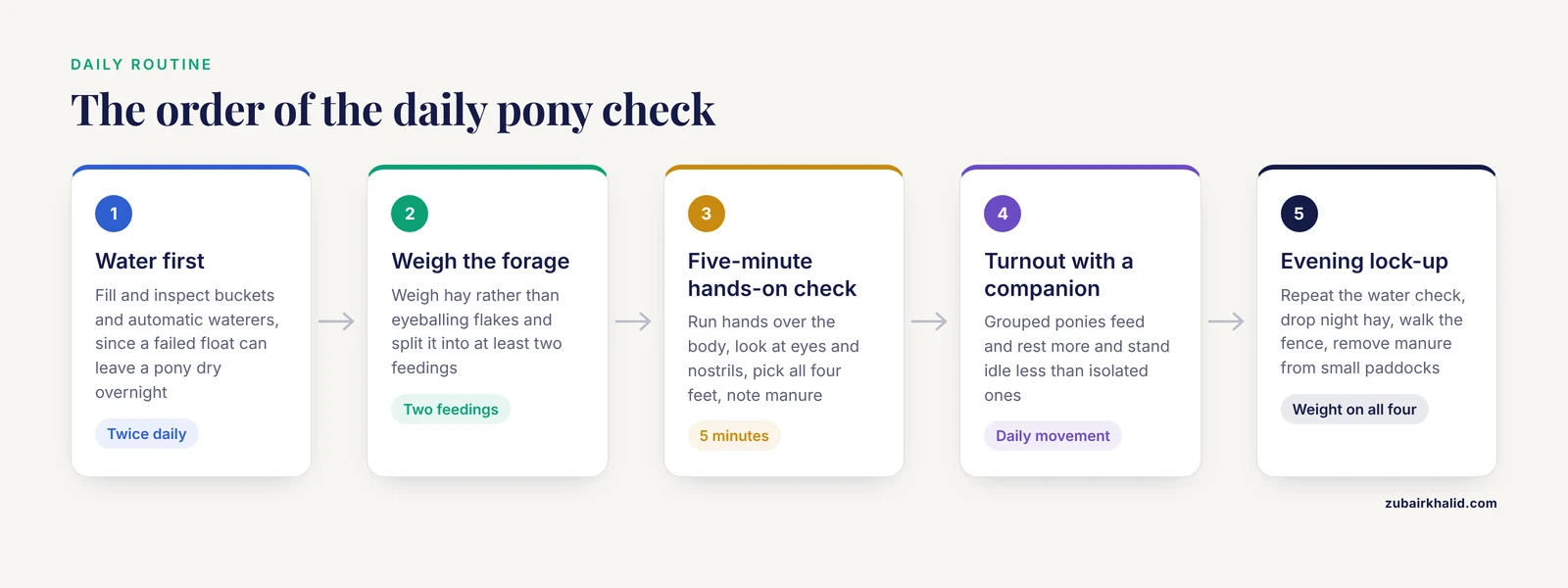
Fill and inspect water first. Water quality and availability is a formal welfare indicator in observational protocols designed for free-ranging ponies, which reflects how often water problems go unnoticed [4]. Scrub containers weekly and check automatic waterers daily, because a failed float can leave a pony without water overnight.
Forage comes next. Weigh hay instead of eyeballing flakes. Stabled equids spend far less of the day eating than free-ranging ones, so split the ration into at least two feedings and use slow-feed nets or spread piles to stretch eating time [3]. Keep grain meals small or absent. Many ponies hold condition on forage alone, a plan to confirm with your veterinarian based on body condition and workload.
The Five-Minute Hands-On Check
Run your hands over the whole body, then look at the eyes and nostrils. Ocular discharge was recorded in 7 of 12 extensively managed Gotland ponies during monthly welfare assessments, which shows how easily eye problems develop and persist in animals nobody checks daily [2]. Pick all four feet and look for stones, cracks, an odor of thrush, and a pounding digital pulse. Scan the legs and body for wounds, since wounds were the most common abnormality in the working pony population described earlier [1]. Note appetite, attitude, manure volume, and urine output before you walk away.
Turnout, Movement, and Companionship
Turn out with a companion whenever possible, because grouped equids spend more time feeding and resting and less time standing idle than isolated ones [3]. If you are limiting grass for weight control, the layout of turnout matters as much as the restriction itself. In a 24-hour surveillance crossover study, ponies on track systems spent 3.23% of their time moving and traveled a median of 7,013 meters per day, compared with 2.02% and 5,332 meters on strip-grazing systems, and they showed less aggressive behavior toward each other on the track layout [5]. A track, or a dry lot with hay placed at separate points, keeps a restricted pony walking instead of standing at a fence.
Evening Check
Repeat the water check, drop the night hay, walk the fence line, and remove manure from small paddocks. Confirm your pony is bearing weight on all four limbs and chewing normally before you leave.
Weekly Pony Care Tasks
Body Condition Scoring and Weight Taping
Once a week, score body condition and run the weight tape. Two systems are in common use, a 0-to-5 scale where 0 is emaciated and 5 is obese, and the 9-point Henneke scale. Pick one and stay with it so your records trend correctly. Modified body condition scores remain repeatable and reliable even when researchers assess free-roaming ponies they cannot touch, which makes scoring one of the most practical welfare indicators an owner can record [6]. Scores are indirect, though. Deuterium oxide dilution has been validated for measuring true body fat in ponies precisely because visual impressions can mislead, so keep a weight tape record alongside your scores [7].
Full Groom and Skin Inspection
Curry, brush, comb the mane and tail, and inspect the skin everywhere the light reaches. Skin condition is a recurring welfare issue in ponies. Eleven of 12 extensively managed Gotland ponies showed poor skin condition at some point during a year of monthly assessments [2], and 71% of geriatric horses and ponies examined in a UK study had at least one dermatological abnormality [8]. Work through the belly, sheath or udder area, and the zones under any tack or rugs. Note scabs, crusts, hair loss, or rub marks, and treat grooming as your early-warning system for sores.
Close Hoof and Leg Review
Daily picking removes stones. Weekly, look closer. Stand your pony on a hard surface and view the feet from front, side, and behind for balance and wall cracks. Run a hand down each limb for heat or filling. Lameness in ponies can be subtle, and researchers use pressure-platform and force-plate technology to detect mild forelimb lameness in ponies because visual assessment alone misses cases [9]. If your pony looks off without an obvious cause, that is a veterinary call, not a wait-and-see week.
Tack, Rug, and Equipment Check
Inspect stitching, buckles, and padding, and clean leather and fabric as needed. Fit matters because rub points become open sores. Chafing and poor skin condition increased over a year in extensively managed ponies, which shows how quickly friction damage accumulates when nobody checks for it [2].
Water and Feed Hygiene
Scrub troughs and buckets, dump stale water, check for algae and biofilm, and sweep the feed room. Store feed in sealed containers away from rodents and moisture.
Monthly and Seasonal Pony Care Tasks
Review the Weight Trend
Compare four to five weeks of weight tape readings and condition scores. In a UK veterinary survey of 200 geriatric horses and ponies, 26% were overweight and only 4.5% were underweight, which shows how strongly the default drift in ponies runs toward gain [8]. If your pony is gaining, reduce grass access and hay before you touch anything else. If your pony is losing, do not simply add concentrate. Investigate teeth, parasites, and metabolic disease with your veterinarian first.
When weight loss is the goal, plan it slowly. Shetland ponies under long-term feed restriction lost 18.4% of body mass over four months, and blood markers of fat mobilization rose continuously, with bilirubin remaining outside the reference range for the entire restriction period [10]. Those markers signal health problems from undernourishment when restriction is pushed too hard. A controlled program designed with your veterinarian avoids that trap.
Metabolic and Endocrine Watch
Ponies are the classic patients for endocrine disease. In a large dataset of submitted blood samples, non-sport breeds, the group that includes most leisure ponies, were more likely to show insulin dysregulation than sport breeds [11]. In the geriatric survey cited above, 22% of aged animals showed hirsutism or abnormal moulting, a hallmark of pituitary pars intermedia dysfunction [8]. Each month, photograph the coat, confirm the winter coat sheds on schedule, and feel for fat pads behind the shoulders or a hardening crest. Report these findings at the annual exam or sooner.
Parasite Program Review
Fecal egg counts drive modern deworming decisions, so bring a fresh manure sample to your veterinarian on the schedule they recommend and keep a written record of results and treatments. Parasite burden has measurable welfare effects. In the Gotland ponies, higher fecal parasite counts correlated with avoidance of humans on a standardized approach test [2].
Veterinary Exam, Dental, and Vaccination Schedule
Book the annual exam, dental check, and vaccinations in the same month each year so nothing slips. Older ponies need a wider net. The geriatric survey found cataracts in 58.5% of examined animals, vitreous degeneration in 66%, cardiac murmurs in 20%, and abnormalities on thoracic auscultation in 22%, with marked lower airway findings appearing on rebreathing examination in 13.6% [8]. Ask your veterinarian to check eyes, heart, and lungs at every senior visit and to set a dental frequency for your pony's mouth.
Property Walk-Through
Once a month, walk the entire enclosure. Environmental hazards are a scored indicator in pony welfare protocols, alongside water quality and human disturbance [4]. Look for loose boards, protruding bolts, fence gaps, toxic plants, standing water, and sharp edges on feeders and shelters. Confirm the recovery enclosure, the small paddock where you can separate a pony for rest, controlled feeding, or treatment, is safe and ready, because having that space prepared is listed among the factors that make management succeed [2].
Seasonal Coat and Clipping Work
Adjust grooming intensity to the coat through the year. A winter coat that fails to shed in spring is a medical flag rather than a grooming problem, as noted in the endocrine section above. Clipping a heavy coat is a comfort decision to make with your veterinarian if the coat change looks abnormal.
The Feeding Routine: Forage First, Measured Always
Feeding is where a pony care routine succeeds or fails. Forage should dominate every plan, delivered in a way that stretches eating across the day, because that is how ponies are built to eat. Grass management comes next. Strip grazing limits intake but reduces movement, while track systems preserve more natural walking behavior, so match the layout to whether your pony needs to lose weight or maintain it [5].
The reason for all this care is laminitis. In a survey of Pony Club animals in southeastern Australia, 21.8% of ponies had experienced at least one episode of laminitis compared with 4.4% of horses, the incidence rate in ponies was 6.5 cases per 100 pony years, and more than half of affected animals had suffered multiple episodes [12]. Keeping body condition in the ideal range, weighing forage, limiting lush grass, and maintaining daily movement are the routine-level defenses against a disease that recurs once it appears.
Avoid two opposite errors. The first is overfeeding, which drives the metabolic problems described above. The second is crash dieting, which the Shetland pony feed-restriction data show carries its own health costs [10]. Weight change in either direction should be gradual and supervised.
Exercise, Enrichment, and Housing
Daily movement is a health intervention, not a bonus. The turnout layout data above show that ponies move substantially more when their space encourages walking [5]. Ridden or driven work should be consistent and moderate. In a prospective study of ponies and horses preparing for the European Eventing Championship, locomotor injury was the most common reason for withdrawal from competition preparation [13]. For a family pony, that finding translates into steady conditioning rather than weekend bursts of hard work.
Social contact belongs in the plan. Equids are social animals, and grouped living supports more natural feeding and resting patterns [3]. Housing trends reflect this. Between two large Swiss surveys, the share of horses kept individually, especially in tie stalls, fell while group housing increased [14]. If a companion is impossible, discuss alternatives such as a neighbor across the fence with your veterinarian.
Enrichment rounds out the daily picture. Management guidance developed for equines in research settings identifies bedding, food and water provision, exercise opportunity, and environmental enrichment as core welfare levers, and the same levers apply at home [15]. Vary hay types, place forage in different locations, and allow mutual grooming time.
Common Pony Care Mistakes and How to Fix Them
Feeding a pony like a small horse. Ponies need fewer calories per kilogram of feed than their size suggests. Fix it by weighing everything and keeping forage as the base.
Crash dieting the overweight pony. Sudden severe restriction drives the metabolic stress markers seen in restricted Shetland ponies [10]. Fix it with a gradual plan your veterinarian designs.
Skipping the daily check on easy keepers. Daily monitoring is the factor that keeps even low-input systems safe [2]. Fix it by anchoring the five-minute check to an existing habit, such as morning coffee.
Working through pain. In the Gili Trawangan survey, 30% of cart drivers said they would work their ponies despite evidence of injury or illness [1]. "He seems fine" is not evidence. Rest a lame or wounded pony and call your veterinarian.
Assuming routine is optional in winter. Year-round monitoring is the explicit conclusion of welfare comparisons in free-ranging native ponies, because problems cluster in seasons when owners visit less [4]. Fix it by keeping the checklist alive through cold months.
Welfare Monitoring: Making the Routine Measurable
Your checklist is a simplified welfare assessment, and the research supports that approach. Modified body condition and mobility scores proved repeatable and reliable even in free-roaming Carneddau Mountain ponies [6], and most indicators from formal welfare assessment templates proved feasible in semi-feral Konik ponies [16]. Those Konik assessments also showed body condition dropping significantly from summer into early spring, so expect seasonal dips and plan winter feed before the dip happens.
The way your pony greets you carries information too. In the Gotland herd, a negative reaction to a human approach correlated with low body condition and ocular discharge, and habituation to human approach was listed among the factors that make extensive management succeed [2]. A pony that suddenly avoids handling is telling you something is wrong before you find the cause.
Limitations and When to Contact a Veterinarian
Every pony is an individual, and your veterinarian should tailor feeding amounts, parasite control, vaccination timing, dental frequency, and exercise levels to your animal. The routine in this article is the framework around which those individual decisions are made.
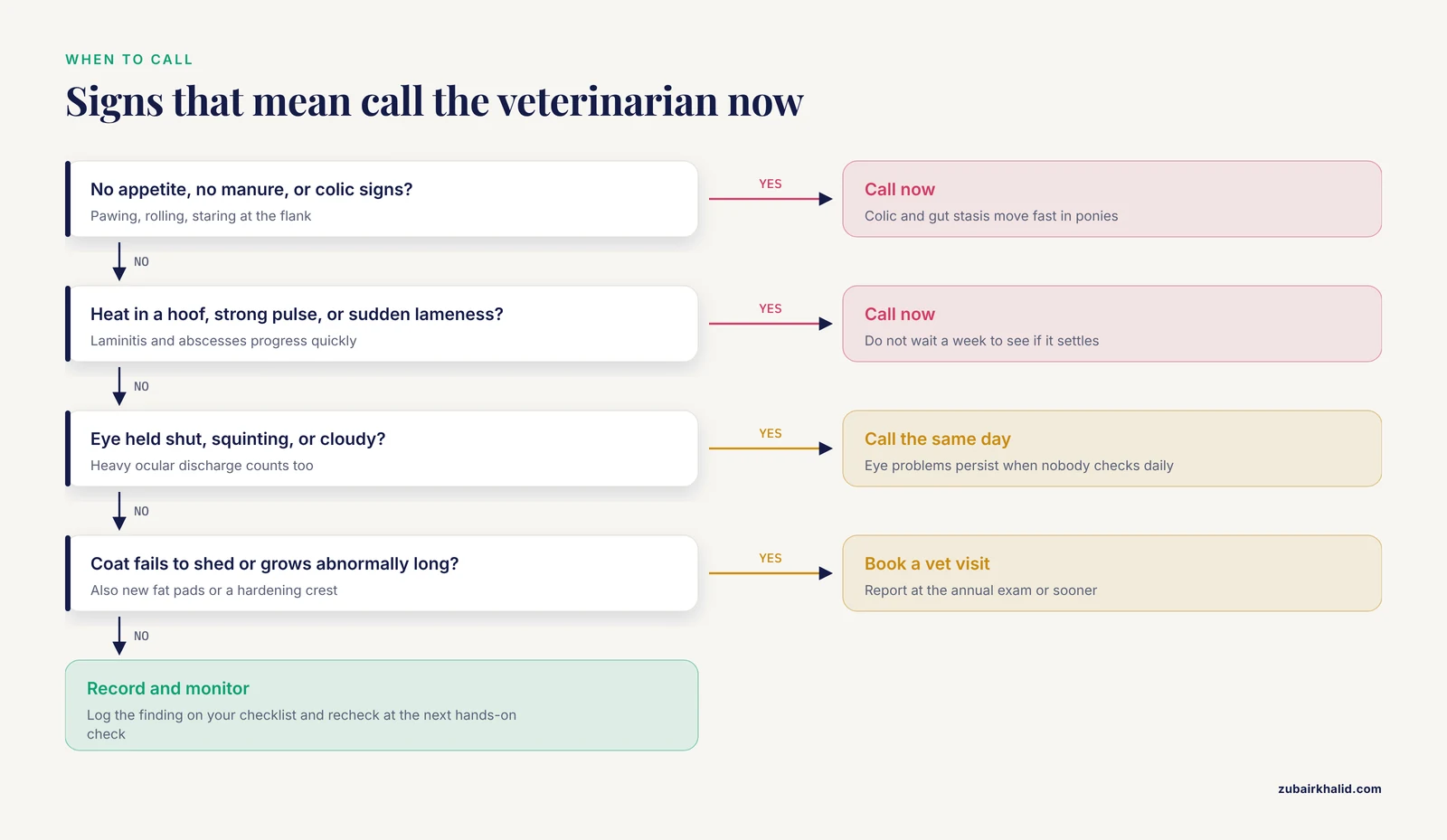
Contact your veterinarian promptly in these situations:
- No appetite or no manure for more than a few hours, or colic signs such as pawing, rolling, or staring at the flank.
- Heat in a hoof, a strong digital pulse, or sudden lameness, because laminitis and abscesses progress quickly in ponies.
- A wound that is deep, bleeding heavily, near a joint or tendon, or caused by a puncture.
- Squinting, a held-shut eye, heavy ocular discharge, or a cloudy eye.
- Sudden weight loss, or rapid weight gain with a cresty neck and new fat pads.
- A winter coat that fails to shed or grows abnormally long.
- A sharp behavior change, including refusal to be approached or handled.
For routine questions such as trim intervals and feed brand choices, your farrier and veterinarian remain the right first contacts.
Frequently Asked Questions
What should a daily pony care checklist include?
Fresh water checked twice, weighed forage in at least two feedings, turnout with a companion, hoof picking, a five-minute hands-on check of body, eyes, legs, and manure, and an evening lock-up check.
How much time does a pony care routine take each day?
Most healthy ponies need roughly 30 to 60 minutes of hands-on care daily, plus longer weekly sessions. Low-input living arrangements reduce hands-on time but never eliminate daily observation.
How often should a pony see a farrier?
Your farrier sets the interval based on hoof growth, workload, and hoof quality. Keep every appointment, because hoof problems accumulate silently when farrier care lapses.
How do I keep my pony from getting laminitis?
Keep body condition in the ideal range with weighed forage and limited grass access, maintain daily movement, and have your veterinarian screen for metabolic disease if your pony gains weight easily.
Can a pony live outside all year?
Yes, with shelter, unfrozen water, adequate forage, and daily monitoring. Expect to add feed in winter when grass stops meeting energy needs.
What weekly pony care tasks do beginners forget?
Body condition scoring, trough scrubbing, tack inspection, and skin checks under the coat. These tasks find problems days or weeks before they become emergencies.
Do ponies need companions?
Yes. Equids are social, and grouped animals show more natural feeding and resting patterns than isolated ones. If a companion is impossible, discuss alternatives with your veterinarian.
When should I call the veterinarian instead of waiting?
Call for colic signs, heat in a hoof, sudden lameness, a deep or puncture wound, eye pain or discharge, sudden weight change, or a coat that will not shed. When in doubt, call.
Sources
- A Pilot Welfare Assessment of Working Ponies on Gili Trawangan, Indonesia.
- Welfare of extensively managed Swedish Gotland ponies.
- Time-activity budget in horses and ponies: A systematic review and meta-analysis on feeding dynamics and management implications.
- A comparison of the welfare of free-ranging native pony herds on common land with those used for conservation grazing in the UK.
- The impact of restricted grazing systems on the behaviour and welfare of ponies.
- Evaluation of the Feasibility, Reliability, and Repeatability of Welfare Indicators in Free-Roaming Horses: A Pilot Study.
- Assessment of body fat in the pony: part II. Validation of the deuterium oxide dilution technique for the measurement of body fat.
- Disease prevalence in geriatric horses in the United Kingdom: veterinary clinical assessment of 200 cases.
- Assessment of static posturography and pedobarography for the detection of unilateral forelimb lameness in ponies.
- Effect of long-term feed restriction on the health status and welfare of a robust horse breed, the Shetland pony (Equus ferus caballus).
- Prevalence and Progression of Resting ACTH, Insulin and Adiponectin Values as Indicators of Suspected Endocrine Diseases in Sport Horses and Ponies Compared to Non-Sport Horses, Ponies and Donkeys.
- Incidence of laminitis and survey of dietary and management practices in pleasure horses and ponies in south-eastern Australia.
- A prospective study on a cohort of horses and ponies selected for participation in the European Eventing Championship: reasons for withdrawal and predictive value of fitness tests.
- [[Horses in Switzerland: results of a representative survey of population, housing and use in 2004].](https://pubmed.ncbi.nlm.nih.gov/18777725/)
- Management methods to improve the welfare of horses used in research.
- How Useful Are Existing Protocols in the Quick Assessment of the Welfare of Semi-Feral Horses? Pilot Study on Konik Polski Horses Living in the Forest Sanctuary.