Horse Healthy Weight: Body Condition and Weight Charts
By Dr. Zubair Khalid, DVM, MS, PhD ·
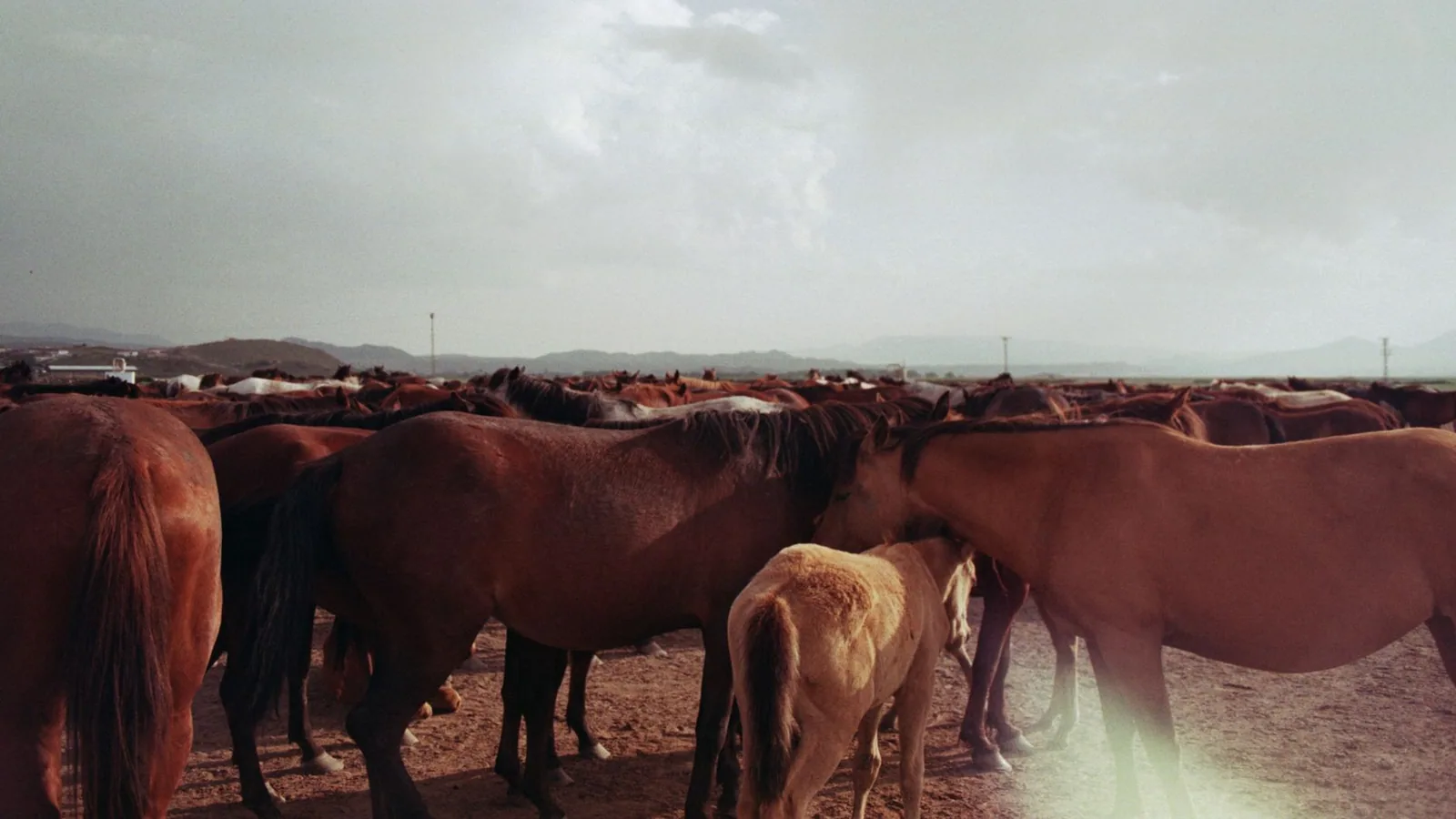
A healthy weight for a horse is not a single number on a scale. It is a body condition you can see and feel, scored against a repeatable system. On the Henneke 1 to 9 scale, scores of 4 to 6 are treated as normal condition and scores of 7 to 8 are classified as obese in published equine research [1]. Body condition scoring, not a target weight, is the practical tool that tells you whether your horse is at a healthy weight.
This article is educational and is not a substitute for veterinary diagnosis or treatment.
At a Glance: Your Healthy Weight Action Plan
| Step | What to do | Why it matters |
|---|---|---|
| 1 | Score your horse on the Henneke 1 to 9 scale | Gives you a repeatable number instead of a guess |
| 2 | Put your hands on the ribs, crest, and tailhead | Fat cover is judged by feel as much as by sight |
| 3 | Score the crest separately with a 0 to 5 cresty neck score | A thick crest can signal regional fat that a single score misses [2] |
| 4 | Record the score, the date, and a set of photos | Tracks change over time and catches slow gain |
| 5 | Measure heart girth and body length with a weight tape | Tracks body mass trend when the scale is not available [3] |
| 6 | Get a second opinion from your veterinarian on any score of 7 or higher | Owner estimates commonly drift low [1,7,8] |
Why a Healthy Weight Matters
Excess body fat is not quiet storage tissue. Adipose tissue behaves as an inflammatory organ that alters insulin signaling, which can lead to insulin dysregulation and impaired glucose metabolism [4]. Those disruptions raise the risk of metabolic disease and laminitis, and they can change how a horse uses energy during exercise [4].
The effects reach well beyond metabolism. In a study of asthmatic horses in clinical remission, obese horses had higher circulating interleukin-1beta and higher peripheral neutrophil counts than non-obese horses, and their neutrophils showed a stronger oxidative burst after stimulation [5]. That pattern points to a systemic inflammatory state that can worsen an existing airway condition.
Reproduction is affected too. Purebred Spanish stallions with a body condition score of 7 to 8 had significantly higher insulin and triglyceride concentrations than stallions scoring 4 to 6, along with significantly lower sperm counts and lower total sperm motility [1]. Body condition score correlated positively with both insulin and triglycerides in that group [1].
The upper airway changes with condition as well. In a computed tomography study of 58 horses, an increased body condition score was associated with an increased soft palate angle and increased basihyoid depth, meaning fatter horses carried more tissue around the pharynx [6].
At the population level, weight is a welfare issue. Assessment frameworks such as the Five Domains Model evaluate nutrition, environment, health, behavior, and mental state together, and body condition sits at the center of the nutritional domain [7]. A horse that carries too much fat is not simply at cosmetic risk. It is at risk across several domains at once.
How to Assess Your Horse's Body Condition
The Henneke Body Condition Score
The Henneke system grades a horse from 1 (emaciated) to 9 (obese) using visual inspection plus hands-on palpation of fat cover over the neck, shoulders, ribs, back, loin, and tailhead. The score is not a judgment of how fit or muscled a horse looks. It is a measure of fat cover over bony landmarks.
A practical routine works like this:
- Stand the horse on level ground and look at the whole body from the side and from behind.
- Place a flat hand over the ribs behind the shoulder. In a moderate horse the ribs are felt easily under a thin layer of fat.
- Feel the crest of the neck, the area behind the shoulder, the loin, and the tailhead.
- Assign a single whole or half number, and write it down with the date.
- Photograph the horse from the side and from behind on the same day, so future comparisons are honest.
Scores of 4 to 6 are regarded as normal in published work, and a score of 7 or 8 is classified as obesity [1]. A horse that scores 7 or above on repeated assessments needs a plan, not another season of waiting.
The Cresty Neck Score
The crest of the neck can accumulate fat independently of the rest of the body. A cresty neck score is graded 0 to 5 and records nuchal crest adiposity, the fat deposited along the top of the neck [2]. Owners and veterinarians agree on cresty neck scores more closely than on full body condition scores, with moderate agreement reported in one study compared with only slight agreement for body condition [2]. In that same group, the veterinarian identified nuchal crest adiposity in 38% of horses and owners identified it in 42% [2].
Score the crest separately, every time. A horse can look acceptable from the side and still carry a hard, thickened crest that signals regional fat deposition.
Why Owner Estimates Drift
Owners are the people who see their horses every day, yet studies consistently show that self-scoring runs low. In a group of 259 horses, owners classified 29% as overconditioned and 2% as obese, while the veterinarian classified 24% as overconditioned and 1% as obese, and overall agreement between the two was slight [8]. Agreement in that study was influenced by the age, breed, sex, and activity level of the horses [8].
In a group of 50 West African Barb horses, the veterinarian found obesity in 32% of horses while owners found it in 18%, and body condition score agreement was slight [2]. The pattern held in Ireland, where 45% of a mixed-breed group was overweight or obese [9]. Owner and veterinarian agreement there was fair to good before instruction and improved after owners received information and instructions on scoring [9].
The lesson is not that owners are careless. It is that body condition is genuinely hard to judge without a system, and that training helps. Use the scale, write the number down, and get a professional second opinion on borderline horses.
Weight Charts and Objective Measurements
Weight Tapes
A weight tape converts a heart girth measurement, usually combined with body length, into an estimated body mass. Tapes are inexpensive, easy to repeat, and useful for tracking direction of change in one horse over months. They do not measure fat percentage, and they are only as accurate as the formula behind them for a given body shape.
Treat the tape reading as a trend line, not a target. A horse that loses two tape increments over a winter is moving in the right direction. A horse whose tape reading is stable while its body condition score climbs is gaining fat and losing muscle.
The Body Condition Index
Researchers have developed a body condition index built from objective morphometric measurements. In a study of ponies and horses, the index correlated well with percentage body fat measured by deuterium dilution, with a Pearson r of 0.74 [3]. The index slightly overestimated body fat in leaner animals and underestimated it in more obese animals [3]. When tested against body condition score in field populations, the correlation varied, particularly in Shetlands and Miniature Horses, likely because of differences in body shape [3].
The practical takeaway for owners is that no single measurement tells the whole story. Combine body condition score, cresty neck score, weight tape trend, and photographs. When the numbers disagree, the hands-on score and a veterinary assessment carry the most weight.
How Much Should a Horse Weigh?
There is no universal healthy weight for a horse. A Shetland pony, a Thoroughbred, and a draft cross cannot share a number, and even within one breed, height and build vary enough that a breed average is useless as a personal target. Anyone who gives you a single figure for "a horse" is giving you a number for a different horse.
The better question is whether your horse is at a healthy body condition, and whether its weight is stable and appropriate for its frame and workload. Record your horse's weight tape reading at the same time you score body condition. If the score is 4 to 6 and stable, the tape number is your horse's healthy range. If the score is 7 or higher, the current weight is the starting point for a reduction plan, not a goal.
Weight also shifts with season, forage quality, and workload. A horse in hard training and a horse on winter turnout should not be expected to hold the same number. Score condition through the year and adjust feed and exercise to match.
Is My Horse Overweight?
The clearest answer comes from the score. A Henneke score of 7 or above indicates obesity [1]. Supporting signs include a crest that is thick, hard, or flops to one side, fat pads behind the shoulder and over the tailhead, ribs that cannot be felt without pressing, and a deposit of fat in the hollow above the eyes.
Owner perception is the weak link. In one study, agreement between owners and a veterinarian on body condition was only slight, and owners scored horses both lower and higher than the veterinarian did [8]. In another, owners underestimated obesity compared with the veterinarian's assessment [2]. If you suspect your horse is overweight, the odds are that you are right, and the scale may be telling you less than you think.
Ask three specific questions. Can I feel the ribs easily with light pressure? Is there a visible crease along the spine, or a gutter? Does the crest move when the horse walks, or is it rigid? Any yes to the last two, plus a score of 7 or higher, means the horse is carrying too much fat.
How to Help a Horse Lose Weight
Weight loss in horses is a slow, managed process. Crash dieting is dangerous, especially in ponies and easy keepers, because rapid restriction can trigger hyperlipemia and other metabolic problems. Plan for months, not weeks.
Start With Forage
Forage is the foundation of every equine diet, and it is also where most of the calories come from. Horses are built to eat for much of the day. In one study of geriatric horses and horses with chronic orthopedic disease, horses spent about 42% of their day eating, 39% resting, and 19% in movement [10]. Cutting forage too sharply fights that biology and invites behavioral problems, stereotypies, and ulcers.
Practical steps:
- Weigh the hay. Do not estimate by flake, because flake weight varies widely.
- Split the daily ration into several small feedings, or use a slow feeder to stretch eating time.
- Choose lower-calorie forage where quality allows, and have hay analyzed if you are unsure of its energy content.
- Replace some hay with a low-calorie chaff or soaked hay only under veterinary or nutritionist guidance.
- Remove high-calorie concentrates, sweet feeds, and oils unless a veterinarian or nutritionist has specifically prescribed them.
Feeding equipment changes behavior as well as intake. In a study of an automatic hay feeding device, alternating open and closed periods increased exploratory behavior compared with continuous access, and the device left more residual hay than ground feeding [11]. The lesson for weight management is that how hay is delivered affects how much time a horse spends foraging and how much is wasted. Slow feeders and small-hole haynets are tools in that same category.
Add Structured Exercise
Exercise is the other half of the equation. A single bout of exercise, and chronic exercise conditioning, both increase insulin sensitivity and glucose disposal through contraction-mediated and insulin-mediated pathways [4]. Regular exercise also raises calorie expenditure, which helps drive body fat loss [4].
Build a program with your veterinarian, especially if the horse has laminitis history or is currently lame. Start with walking and gradually increase duration and intensity. Track what the horse actually does. Accelerometer devices can quantify time spent moving and resting, and one study found that regularly trained horses stabled continuously spent more time recumbent than retired horses turned out during the day [12]. Activity monitors are not essential, but they can reveal that a horse is moving far less than its owner assumes.
Address the Metabolic Side
Some horses gain weight on rations that would leave another horse thin. Insulin dysregulation is a common reason, and obesity and insulin resistance feed each other [4]. Newer work on bile acids shows that horses with higher circulating taurocholic acid had significantly higher plasma insulin concentrations after an oral sugar challenge, and metabolomic signatures predicted body condition score with high performance [13]. That line of research supports the idea that metabolic testing belongs in the plan for a horse that will not lose weight on a sensible ration.
Monitoring Progress
Re-score body condition on a set schedule and after any change in feed, turnout, or workload. Photograph the horse at each scoring session from the same angles in the same light. Weigh hay at every ration change, because a new batch of hay can shift energy content substantially. Record the cresty neck score alongside the body condition score, since the crest often responds slowly.
Progress is judged by the trend, not a single measurement. A horse whose score has dropped from 7 to 6 over several months and whose crest is softer is succeeding. A horse whose score has not moved despite accurate hay weighing and consistent exercise needs a veterinary review.
Common Mistakes
- Scoring by eye alone, without palpation.
- Scoring once and never repeating it.
- Using a weight tape number as the goal instead of a trend.
- Cutting hay so aggressively that the horse spends hours without forage.
- Leaving concentrates or oil in the bucket while reducing hay.
- Ignoring a thick crest because the ribs can still be felt.
- Starting hard exercise on an unfit, overweight horse.
- Assuming a horse is healthy because it is not laminitic yet.
Welfare and Safety
Weight management is a welfare issue, and welfare assessment is broader than body condition. The Five Domains Model evaluates nutrition, environment, health, behavior, and mental state, and improvements in one domain can affect the others [7]. A weight loss plan that leaves a horse hungry, isolated, and stressed is not a welfare success even if the score drops.
Handling matters too. Husbandry and veterinary procedures can generate fear and stress, and horse responses can pose a safety risk to the people involved [14]. Low-stress handling, calm approach, and consistent routines make scoring and treatment safer for everyone. Use the same quiet routine each time you score, and pair handling with something the horse finds pleasant.
Limitations and When to Contact a Veterinarian
Individual horses need individual veterinary assessment. Contact your veterinarian promptly if you see any of the following:
- A body condition score of 3 or lower, or visible weight loss despite a normal appetite.
- A body condition score of 7 or higher that has not responded to several months of accurate forage weighing and structured exercise.
- A hard, thickened, or painful crest, or fat pads that are growing despite ration changes.
- Lameness, heat in the hooves, a bounding digital pulse, or a stance that suggests laminitis.
- Signs of insulin dysregulation, including unusual fat deposits, lethargy, or abnormal drinking and urination.
- A mare or stallion with reproductive problems alongside a high body condition score [1].
- Any horse with asthma whose breathing seems worse alongside weight gain [5].
Your veterinarian can perform a full physical examination, check for laminitis, and arrange metabolic testing where indicated. Do not start a severe restriction diet or a new exercise program on a horse with a history of laminitis without veterinary guidance.
Frequently Asked Questions
What is a healthy body condition score for a horse?
A score of 4 to 6 on the Henneke 1 to 9 scale is generally regarded as normal condition. A score of 7 or 8 is classified as obese [1].
How much should a horse weigh?
There is no universal number. Healthy weight depends on breed, height, and build, so track your horse's body condition score and weight tape trend rather than comparing it to a breed average.
How can I tell if my horse is overweight without a scale?
Use the Henneke body condition score and a separate cresty neck score. Palpate the ribs, crest, and tailhead rather than judging by eye, and record the numbers over time [7,8].
How often should I body condition score my horse?
Score regularly, and always after a change in feed, turnout, or workload. Repeat scoring is what reveals a slow gain before it becomes a health problem.
Can a horse have a normal weight tape reading and still be overweight?
Yes. Weight tapes estimate body mass, not fat percentage, and body shape affects accuracy, particularly in ponies and Miniature Horses [3]. Use the hands-on score as the primary measure.
How do I help a horse lose weight safely?
Weigh the hay, split it into several small feedings, remove high-calorie concentrates, and add structured exercise. Plan for gradual loss over months rather than rapid restriction.
Does exercise help a horse lose weight?
Yes. Exercise raises calorie expenditure and improves insulin sensitivity, which supports fat loss [4]. Build the program gradually and get veterinary clearance for horses with lameness or laminitis history.
When should I call a veterinarian about my horse's weight?
Call if the score is 3 or lower, if the score is 7 or higher and not responding to a managed plan, or if you see lameness, heat in the hooves, or signs of insulin dysregulation.
Sources
- Body Condition, Metabolic Parameters and Semen Traits in Purebred Spanish Horses.
- Can Nigerian horse owners effectively estimate body condition and cresty neck scores?
- Development of a body condition index to estimate adiposity in ponies and horses from morphometric measurements.
- Effect of Exercise Conditioning on Countering the Effects of Obesity and Insulin Resistance in Horses-A Review.
- Obesity-Associated Metabolomic and Functional Reprogramming in Neutrophils from Horses with Asthma.
- Soft palate angle and basihyoid depth increase with tongue size and with body condition score in horses.
- Using the Five Domains Model to develop welfare assessment guidelines for Thoroughbred horses in New Zealand.
- Are Horse Owners Able to Estimate Their Animals' Body Condition Score and Cresty Neck Score?
- Rate of obesity within a mixed-breed group of horses in Ireland and their owners' perceptions of body condition and useability of an equine body condition scoring scale.
- Equine Activity Time Budgets: The Effect of Housing and Management Conditions on Geriatric Horses and Horses with Chronic Orthopaedic Disease.
- Evaluating a novel automatic feeding device for hay provision in horses: behavioral outcomes in group and individual housing.
- Measuring Activity-Rest Condition by Using Two Different Accelerometer Devices in Trained and Retired Horses.
- Bile acids segregate metabolic syndrome in a cohort of 100 deeply phenotyped horses.
- Moving toward Fear-Free Husbandry and Veterinary Care for Horses.