How to Help a Horse Cool Down or Calm Down Safely
By Dr. Zubair Khalid, DVM, MS, PhD ·
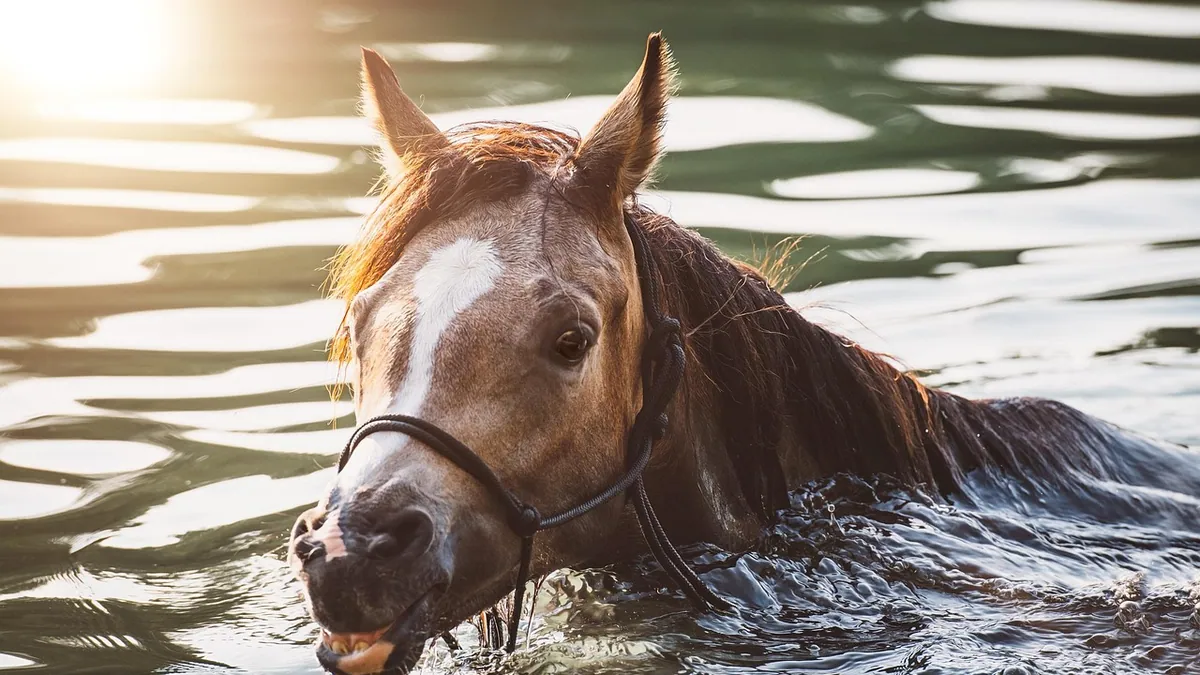
A hot horse needs to lose heat fast, and a wound-up horse needs to settle before anyone gets hurt. The two problems look similar from a distance, so the first job is figuring out which one you are dealing with. This guide walks you through how to help a horse cool down step by step and how to calm an anxious horse without making either problem worse.
This article is educational and is not a substitute for veterinary diagnosis or treatment.
Quick Answer
- A healthy adult horse normally holds a body temperature between 37.5 and 38.5 °C (about 99.5 to 101.3 °F), and heat stress begins when heat buildup outpaces heat loss [1].
- Rectal temperature is the most practical way to confirm overheating, so take it before you decide what to do [1].
- Move the horse into shade, offer cool water, and start active cooling with cold water or a cooling blanket while you monitor breathing and temperature [2].
- A horse that is excited instead of hot needs space, quiet, and a predictable routine, because quick fixes for behavior problems do not exist [3].
- Call a veterinarian right away if the rectal temperature stays high after cooling, the horse staggers, or breathing does not settle with rest.
How to Help a Horse Cool Down: Step by Step
Step 1: Stop the Work and Get a Real Temperature
End exercise the moment you suspect trouble. Walk the horse out of direct sun if you can. Then take a rectal temperature with a digital thermometer and a little lubricant. Normal is roughly 37.5 to 38.5 °C, and deviations from that range are how heat stress is detected [1]. Write the number and the time down. You will repeat this measurement, and the trend matters more than any single reading.
If the temperature is normal but the horse is dancing, sweating lightly, and calling to other horses, you are probably looking at excitement, not heat load. If the temperature is elevated and the horse is breathing hard with flared nostrils, treat it as heat stress until proven otherwise.
Step 2: Start Cooling Immediately
Early detection and immediate intervention are what keep heat stress from turning into heat stroke or worse [1]. Do not wait to see if the horse improves on its own.
Cold water applied continuously over the large muscle groups is the standard approach. Scrape and reapply instead of letting the water sit and warm up on the skin. An ice horse blanket is another option. In one trial, horses wearing a cooling blanket had lower skin surface temperature, heart rate, respiratory rate, and plasma cortisol than horses without one, and the blanket cooled the body gently without water or fans [2]. That makes it a good choice for a horse in a stall on a hot, humid day, or as a supplement to hosing.
Keep the water moving. Offer small drinks of cool, clean water every few minutes. Most overheated horses will drink if water is right in front of them.
Step 3: Use Airflow and Shade
Move the horse to shade or a breezy spot. A fan helps, but only if the horse is wet or the air is genuinely moving across the body. Standing a soaked horse in still, humid air does very little. If you have a misting fan, use it. If you do not, hand-walk the horse slowly in the shade so air moves over the wet coat.
Step 4: Recheck the Temperature Every 10 to 15 Minutes
Cooling is working when the rectal temperature falls and the respiratory rate drops. Keep going until the temperature is back in the normal range, then stop active cooling and let the horse dry. Overcooling a horse that has already normalized can cause shivering, which generates more heat.
Step 5: Let the Horse Recover Before Feeding
Once the horse is cool and calm, offer hay and water. Do not push a full grain meal immediately after a heat event. Electrolyte solutions during and after exertion can help maintain hydration and reduce the risk of fatigue and heat-related illness [4]. Ask your veterinarian which product and how much is right for your horse.
Step 6: If the Problem Is Behavior, Change the Approach
For a horse that is anxious instead of hot, the plan is different. Avoid the situations that trigger the behavior early on, then reintroduce them slowly under veterinary guidance [3]. Repetition of a problem behavior tends to make it worse, especially when the behavior gets the horse what it wants [3]. That means every time a horse spooks and gets pulled out of the arena, the spooking gets a little stronger.
Behavior change takes time and commitment. There are no quick fixes or magic pills for behavior problems [3]. Work with your veterinarian on a plan that combines training, environment changes, and possibly medication. If handling is part of the problem, our guide to grooming a sensitive horse covers low-stress handling techniques that apply to many anxious horses.
Cooling a Hot Horse: Comparison of Methods
| Method | Best For | How to Use It | Watch For |
|---|---|---|---|
| Continuous cold water | Most overheated horses after exercise | Hose large muscle groups, scrape, repeat | Water warming on the skin, so keep reapplying |
| Ice cooling blanket | Stall rest in hot, humid weather | Place over back and loin, leave in place | Check skin and recheck temperature regularly |
| Shade and fan | Mild heat buildup, recovery phase | Move out of sun, maximize airflow | Still, humid air limits benefit |
| Pre-exercise shower | Horses working in hot conditions | Cool before warm-up, not after | Does not replace cooling after work |
| Hand walking in shade | Horses too excited to stand still | Slow, calm walking with airflow | Do not jog or trot |
Pre-exercise cooling is worth knowing about. In a study of trained Thoroughbreds, a 10-minute pre-cooling shower before warm-up in hot conditions did not hurt performance and helped limit the rise in body temperature and body weight loss after exercise [5]. If you ride in serious heat, talk to your veterinarian about building a pre-cooling routine into your schedule.
Signs That Something Is Wrong
Heat stress in horses exists on a spectrum. Mild cases respond to cooling within minutes. Severe cases become emergencies.
Watch for these signs:
- Rectal temperature above the normal range that does not fall with cooling [1]
- Heavy breathing that continues at rest
- Nostrils flaring wide, ribs heaving
- Profuse sweating that suddenly stops
- Staggering, weakness, or a horse that will not walk straight
- Muscle twitching, stiffness, or a stiff, short gait
- Refusing water or acting dull and disconnected
Prolonged or severe heat stress can lead to anhidrosis (loss of the ability to sweat), heat stroke, or brain damage [1]. Those outcomes are why you cool first and ask questions later. Our article on horse heat stress signs goes deeper into early warning signs if you want a more detailed checklist.
Behavior problems have their own red flags. Aggression toward people, self-injury, and behavior that puts handlers at risk all need veterinary involvement, because the safety of people, other animals, and the horse itself has to come first [3].
Common Mistakes When Cooling or Calming a Horse
Using Ice Water on a Hot Horse and Stopping There
Ice water is fine. The mistake is applying it once and walking away. Cooling is a process, not a single action. Keep water moving over the body and recheck the temperature.
Assuming a Sweating Horse Is Fine
A horse that is still sweating heavily after work has not finished cooling. Sweating means the body is still trying to dump heat. Keep cooling until the temperature and breathing come down.
Confusing Excitement With Heat Stress
A horse that is fresh, calling, and prancing may have a normal temperature. Cooling that horse does not fix the behavior. For behavior, the environment may need to change to keep the horse away from the triggers, and reintroduction should be slow and guided by your veterinarian [3].
Punishing an Anxious Horse
Punishment does not resolve anxiety. Behavior modification works by promoting and rewarding desirable behaviors, along with products and sometimes medications that reduce anxiety or improve safety [3]. Punishment often adds fear to an already aroused horse.
Skipping Hydration and Electrolytes
Hydration is part of heat management, not an afterthought. Feeding regimens can help maintain hydration during exertion, and providing electrolyte solutions during and after an event may help prevent fatigue and heat-related illness [4].
Forgetting Acclimation
A horse that has not been acclimated to heat and workload will struggle in conditions a fit, adapted horse handles easily. Warm-up should always be part of the routine, and the horse should have time to adjust to the expected exertion and environment [4].
Supplies and Setup That Actually Matter
Keep a heat kit ready before you need it. A digital rectal thermometer with lubricant, a hose with good pressure, a sweat scraper, buckets, and a source of cool drinking water cover most situations. If you live in a hot, humid climate, an ice cooling blanket is a reasonable investment, since it cools the back and loin without water or fans [2].
For behavior, the setup is environmental. Quiet turnout, consistent handling, and a predictable routine do more than any gadget. If your horse struggles with heat in summer, plan ahead for winter management too, because blanketing and temperature swings create their own problems. Our guide to horse blanketing: when and how explains how to match blanket weight to conditions.
One more piece of setup: know your horse's normal rectal temperature when it is calm and cool. That baseline is what makes a reading meaningful during a heat event [1].
Limitations and When to Contact a Veterinarian
Cooling at home works for mild heat buildup. It does not work for heat stroke, and it does not replace a diagnosis.
Call your veterinarian the same day if the rectal temperature is elevated but comes down with cooling, the horse seems dull afterward, or the horse has a history of anhidrosis or previous heat illness.
Call immediately, as an emergency, if the rectal temperature stays high after 20 to 30 minutes of active cooling, if the horse staggers or cannot stand, if breathing stays rapid and labored at rest, if sweating stops while the horse still feels hot, or if the horse becomes unresponsive or confused. Prolonged or severe heat stress can cause heat stroke or brain damage, and those cases need veterinary care without delay [1].
For behavior concerns, schedule a routine visit instead of waiting for a crisis. Treatment for abnormal behaviors takes time and commitment, and improvement is usually slow and gradual [3]. Your veterinarian can rule out pain and physical causes, then build a plan.
Every horse is an individual. A veterinarian who examines your horse can give advice that fits its age, fitness, health history, and climate.
Frequently Asked Questions
How long does it take to cool down a hot horse?
Most mild cases improve within 15 to 30 minutes of continuous cooling. Keep checking the rectal temperature every 10 to 15 minutes and continue until it returns to the normal range. If nothing changes after half an hour of active cooling, that is a veterinary emergency.
Can I give my horse a cold bath right after riding?
Yes. Cold water is one of the fastest ways to pull heat out of a hot horse. Hose the large muscle groups, scrape the water off, and repeat. The old warning about cold water causing muscle cramps is not supported by how cooling actually works in horses.
What is the difference between heat stress and heat stroke in horses?
Heat stress is the early stage, when body heat builds faster than the horse can lose it. Heat stroke is the severe end of that spectrum, and prolonged or severe heat stress can lead to heat stroke or brain damage [1]. Heat stress responds to cooling. Heat stroke needs a veterinarian now.
How do I calm an anxious horse without medication?
Start by removing the triggers and keeping the horse in a predictable routine. Avoid the situations that set off the behavior, then reintroduce them slowly with veterinary guidance, because repeating the behavior tends to make it worse [3]. Training that rewards calm behavior works better than punishment.
Should I use electrolytes every time my horse sweats?
Not necessarily. Electrolyte solutions during and after exertion may help maintain hydration and prevent fatigue and heat-related illness [4]. How much and how often depends on the horse, the weather, and the workload, so ask your veterinarian for a plan instead of guessing.
Related Articles
- Horse Heat Stress Signs
- Caring for a Horse in Winter
- How To Groom A Sensitive Horse
- Horse Blanketing: When and How
- Horse Trailering Stress
- Why Your Horse Won't Sweat: Anhidrosis and Cooling
- Why Is My Horse Breathing Heavy? When to Worry
- How to Help a Horse Gain or Lose Weight Safely
References
- Heat stress in horses: a literature review. International journal of biometeorology, 2023.
- Effect of Cooling Blanket on the Heat Stress of Horses in Hot and Humid Environments. Animals : an open access journal from MDPI, 2022.
- Treatment of Behavior Problems in Horses - Horse Owners. Merck Veterinary Manual.
- Prevention of Fatigue in Horses - Metabolic Disorders. Merck Veterinary Manual.
- Effects of pre-exercise cooling in hot environments on performance and physiological responses in Thoroughbred horses. Journal of equine science, 2025.