Dog Throwing Up Phlegm: Causes and Home Care
By Dr. Zubair Khalid, DVM, MS, PhD ·
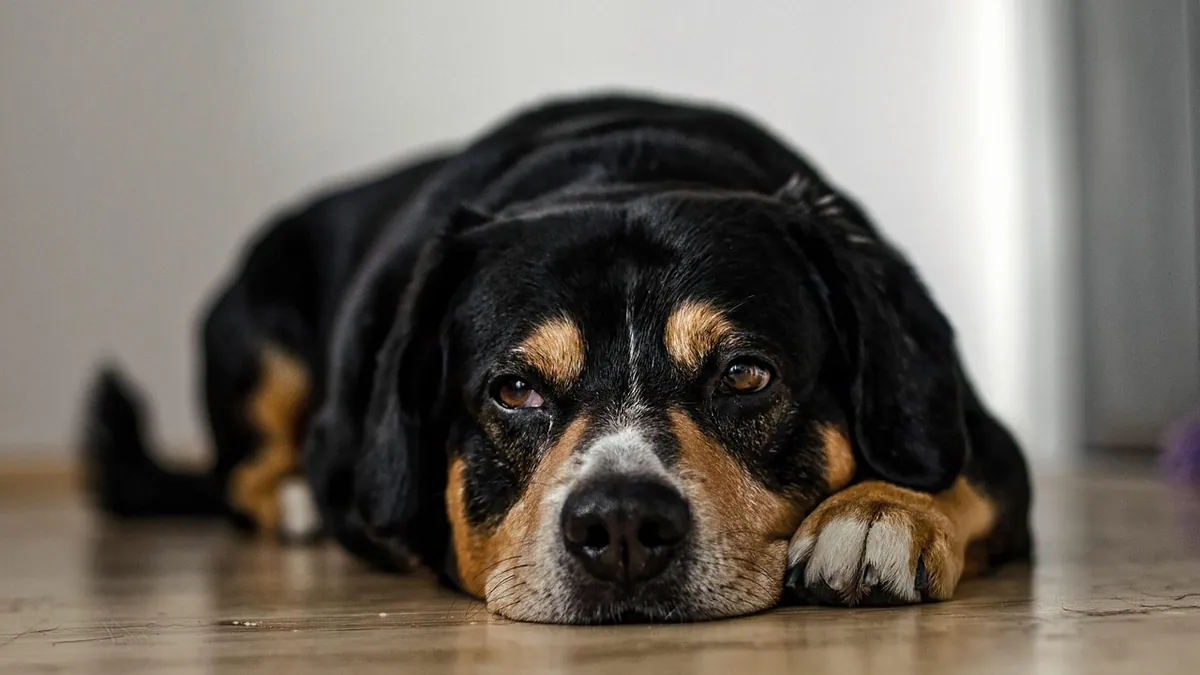
Dog throwing up phlegm means your dog has brought up a slimy, stringy, or foamy material that looks like mucus. That material can come from the stomach and upper small intestine, or it can come from the airway and be coughed up and then swallowed. The difference matters because the causes and the urgency are not the same.
This article is educational and is not a substitute for veterinary diagnosis or treatment.
Quick Answer
- Phlegm-like material is usually mucus, and it can start in the stomach or in the throat and airways.
- Vomiting is an active, forceful process with retching, drooling, and belly contractions [1].
- Regurgitation is passive, and coughing or trouble breathing is more often linked to regurgitation than to vomiting [1].
- A single episode in a bright, eating, drinking dog is often not an emergency, but repeated episodes need a vet visit.
- Never give human cough, cold, nausea, or pain medicine to a dog unless your veterinarian prescribes it and calculates the dose for your dog's weight and health.
What Dog Throwing Up Phlegm Actually Looks Like
Owners describe this in a few ways. Some see clear, stringy fluid. Some see white foam. Some see a thick, jelly-like blob mixed with a little food or bile. The color and texture give clues, but they do not confirm a cause.
True vomiting is the forceful ejection of stomach and upper small intestine contents [1]. Before it happens, many dogs show nausea. They drool, lick their lips, swallow hard, retch, and their belly muscles and diaphragm contract hard [1]. That is different from regurgitation, which is a passive motion with no effort or abdominal muscle contraction [1]. Regurgitated food is often undigested and may keep a tube shape from the esophagus [1].
Why does this matter for phlegm? Mucus from the nose, sinuses, or airways can be swallowed and then vomited back up. Mucus from the stomach lining can also be vomited. Coughing and breathing difficulty are more often tied to regurgitation than to vomiting [1]. So if your dog coughs, hacks, and then brings up frothy material, the airway may be the source. If your dog retches and heaves from the belly, the stomach is more likely.
Common Causes of Dog Vomiting Mucus
Many conditions can cause a dog to vomit mucus or phlegm. Some are mild and short lived. Others are serious. Vomiting can come from digestive disease, kidney or liver failure, pancreatitis, nervous system disorders, and eating irritating substances or poisons [1].
| Cause | Typical clues | How urgent |
|---|---|---|
| Kennel cough or other airway infection | Dry honking cough, gagging, white foam after coughing, recent boarding or daycare | Routine visit within a day or two, sooner if breathing changes |
| Gastritis (stomach irritation) | Vomiting clear or foamy fluid, eating grass, mild belly discomfort, recent diet change or garbage raid | Same day call if repeated, routine if one episode |
| Pancreatitis | Vomiting, inappetence, lethargy, belly pain, sometimes in dogs who ate fatty food | Same day, this can be painful and serious |
| Pancreatic torsion (rare) | Vomiting, not eating, lethargy, young dog, abnormal bloodwork | Emergency, this needs imaging and surgery [2] |
| Foreign body or toxin | Vomiting, drooling, tremors, possible access to trash, plants, or medication | Emergency if tremors, weakness, or repeated vomiting |
| Tremorgenic mycotoxicosis (moldy food or compost) | Acute generalized tremors, vomiting, possible mold exposure | Emergency, this is a neurotoxin [3] |
| Cyclic vomiting syndrome (rare) | Recurrent vomiting episodes in a pattern, often tied to stress or time of day | Routine workup, this is a diagnosis of exclusion [4] |
| Post-vaccine reaction (young dogs) | Vomiting, vocalizing, belly discomfort in the days after vaccination | Call your vet, most cases are managed supportively |
| Tick paralysis (in affected regions) | Vomiting or regurgitation with weakness or breathing trouble | Emergency, respiratory function can decline [5] |
Some of these are uncommon. Pancreatic torsion has been reported in a young dog with vomiting, inappetence, and lethargy, and it was confirmed with ultrasound and surgery [2]. Tremorgenic mycotoxicosis causes acute generalized tremors and is most often linked to penitrem A from moldy food or compost [3]. Cyclic vomiting syndrome is a chronic pattern of recurrent vomiting episodes that can be triggered by stress and daily rhythms, and it was only recently described in a dog [4]. Tick paralysis can cause vomiting and regurgitation, and those signs were studied for their link to breathing problems and survival [5].
If your dog is a puppy, mucus or foam can look different from adult vomit. See Puppy Vomiting Yellow Phlegm for age-specific guidance. If the material is yellow or bile-stained, Dog Vomiting Bile: Home Care and When to Call the Vet covers that pattern. If your dog coughs and gags before bringing up white foam, Why Is My Dog Coughing And Gagging And Throwing Up White Foam walks through the airway causes.
Red Flags That Make This an Emergency
Some signs mean you should stop reading and call an emergency clinic now.
- Repeated vomiting that will not stop
- A belly that looks bloated, hard, or painful to touch
- Unproductive retching, where your dog heaves and nothing comes up
- Trouble breathing, noisy breathing, or blue or pale gums
- Collapse, weakness, or inability to stand
- Tremors, twitching, or seizures
- Vomiting after eating moldy food, compost, or a known toxin
- Vomiting with a known or suspected tick bite in a region where ticks carry paralysis
- Blood in the vomit, or material that looks like coffee grounds
- Vomiting in a dog who is already on medication for another condition
Long term or repeated vomiting can lead to weakness, lethargy, weight loss, dehydration, and electrolyte imbalance [1]. That is why duration matters as much as the look of the material.
Home Remedy for Dog Vomiting Phlegm: Safe Steps While You Wait
You cannot diagnose the cause at home, but you can keep your dog safe and comfortable while you arrange care. These steps are supportive only. They do not treat an underlying disease.
Withhold food for a short time. A brief fast of a few hours can let a mildly irritated stomach settle. Do not withhold water. If your dog is a puppy, small breed, diabetic, or on medication, ask your vet before fasting.
Offer small amounts of water. Give a few laps at a time instead of a full bowl. Large gulps can trigger more vomiting.
Keep the airway clear. If your dog is coughing up phlegm, avoid collars that pull on the throat. Use a harness for walks. Keep the room humid and free of smoke, strong sprays, and dust.
Separate your dog from other pets. If kennel cough is possible, keep your dog home and away from other dogs until your vet clears them.
Do not give human medicine. Over-the-counter nausea, cough, cold, and pain drugs can be toxic to dogs at human doses. Your veterinarian calculates any dose from your dog's weight and health.
Save a sample. If you can, photograph or collect a small amount of the vomited material in a sealed bag. Your vet can look at the color, texture, and any food or foreign material.
Note the pattern. Write down when it started, how many times it happened, what your dog ate, and whether there was coughing, retching, or both. This history speeds up diagnosis.
Watch the gums and breathing. Pink, moist gums and quiet breathing are reassuring. Pale, blue, or tacky gums, or any labored breathing, mean go now.
For a broader look at managing vomiting at home, see Canine Vomiting: Home Management and When to Seek Veterinary Care. If the fluid is yellow or foamy, Dog Vomiting Yellow Bile or Foam: Diagnostics, Home Care, and Treatments has more detail.
What Your Veterinarian Will Check and Test
Your vet will start with a full history and physical exam. They will check hydration, gum color, belly comfort, heart and lung sounds, and temperature. They will also listen for cough and airway noise.
Then they may recommend tests based on what they find. Common options include:
- Bloodwork to check organ function, electrolytes, and blood cell counts
- A stool check for parasites
- Chest x-rays if coughing or breathing changes are present
- Abdominal x-rays or ultrasound for a foreign body, mass, or organ problem
- A heartworm test and other infectious disease screening
- A trial of a bland diet and a stomach protectant for simple gastritis
- Anti-nausea medication if vomiting is frequent
In one reported case, a young dog with vomiting and lethargy had mild neutrophilia, high amylase and lipase, and mild low chloride on bloodwork, and ultrasound showed a mass with a whirl sign that turned out to be pancreatic torsion [2]. That is rare, but it shows why imaging matters when signs do not fit a simple stomach upset.
A puppy with vomiting after vaccination had blood changes that looked concerning but resolved on their own within 30 days [6]. Your vet may repeat bloodwork to track a trend instead of treating a single abnormal result.
If the airway is the source, your vet may treat for kennel cough or another respiratory infection. If the stomach is the source, they may treat for gastritis, diet indiscretion, or a toxin. Whenever possible, vomiting is controlled by finding and removing the cause while giving the digestive system time to recover [1].
Prevention and Monitoring
You cannot prevent every cause, but you can lower the odds.
- Keep trash, compost, moldy food, and human medications out of reach.
- Feed a consistent diet and change foods slowly.
- Use a harness instead of a neck collar if your dog coughs or gags.
- Keep vaccinations current and ask your vet about kennel cough risk before boarding or daycare.
- Check for ticks after walks in wooded or grassy areas.
- Watch for patterns in when vomiting happens, such as early morning or after stress.
- Track episodes in a notebook or phone app so your vet can see the trend.
If your dog has repeated episodes with a clear pattern, ask your vet about a full workup. Cyclic vomiting syndrome is rare, but it is a recognized pattern of recurrent episodes that can be triggered by stress and daily rhythms, and it was recently described in a dog [4]. A pattern does not prove a cause, but it helps your vet decide what to test.
Limitations and When to Contact a Veterinarian
This article cannot tell you what is causing your dog's signs. Individual cases need a veterinarian who can examine your dog, ask questions, and run tests.
Call your veterinarian the same day if your dog vomits more than two or three times in a day, refuses food, seems painful in the belly, or has a cough that is getting worse.
Go to an emergency clinic now if you see repeated unproductive retching, a bloated or hard belly, trouble breathing, collapse, tremors, seizures, blood in the vomit, or vomiting after a known toxin exposure.
Schedule a routine visit if your dog has occasional mild episodes, a chronic cough, or a pattern of vomiting that keeps coming back over weeks.
Frequently Asked Questions
Is dog throwing up phlegm always a stomach problem?
No. The material can come from the stomach and upper small intestine, or it can come from the airway and be coughed up and swallowed. Vomiting is forceful and involves retching and belly contractions, while regurgitation is passive and is more often linked to coughing or breathing trouble.
Can I give my dog human nausea medicine for this?
No, not without veterinary guidance. Human nausea, cough, cold, and pain medicines can be harmful to dogs at human doses. Your veterinarian will calculate any dose from your dog's weight and health, and some drugs are not safe for dogs at all.
How long can I wait before calling the vet?
If your dog is bright, drinking, and has vomited once or twice, you can monitor for a few hours. Call the same day if vomiting repeats, if your dog will not eat, or if you see coughing, belly pain, or lethargy. Go to an emergency clinic right away for unproductive retching, breathing trouble, collapse, tremors, or blood in the vomit.
Does kennel cough cause phlegm in vomit?
It can. Kennel cough often causes a dry, honking cough, and some dogs gag or bring up white foam after a coughing fit. If your dog has been around other dogs recently, keep them home and call your vet for an exam and treatment plan.
Should I fast my dog?
A short fast of a few hours may help a mildly irritated stomach settle, but it is not right for every dog. Puppies, small breeds, diabetic dogs, and dogs on medication should not fast without veterinary advice. Always keep fresh water available, and offer small amounts at a time.
Related Articles
- Puppy Vomiting Yellow Phlegm
- Dog Vomiting Bile: Home Care and When to Call the Vet
- Why Is My Dog Coughing And Gagging And Throwing Up White Foam
- Dog Vomiting Yellow Bile or Foam: Diagnostics, Home Care, and Treatments
- Canine Vomiting: Home Management and When to Seek Veterinary Care
- Dog Honking Cough With Phlegm
- Why Is My Dog Throwing Up? Causes and When to Worry
- Dog Throwing Up Saliva: Causes and When to Worry
- Senior Dog Coughing and Gagging: Causes and What to Do
- Bordetella bronchiseptica in Dogs and Cats: Kennel Cough Pathogenesis, Diagnosis, and Control
- Canine and Feline Respiratory Infections: Etiology, Transmission, Zoonotic Risk, and Diagnostic Approaches
References
- Vomiting in Dogs - Dog Owners. Merck Veterinary Manual.
- Ultrasound Features of Pancreatic Torsion in a Young Dog. Veterinary radiology & ultrasound : the official journal of the American College of Veterinary Radiology and the International Veterinary Radiology Association, 2026.
- Five cases of tremorgenic mycotoxicosis in dogs - clinical aspects and analytical methods. Veterinary research communications, 2026.
- Diagnosis and management of presumptive cyclic vomiting syndrome in a dog: first report in veterinary medicine. BMC veterinary research, 2025.
- Prevalence and significance of vomiting and regurgitation in dogs with tick paralysis caused by Ixodes holocylus. Australian veterinary journal, 2025.
- Transient marked reactive lymphocytosis in a puppy suspected to be secondary to recent vaccination. The Journal of small animal practice, 2026.