Cat Teething Signs and Dental Pain: What Owners Should Know
By Dr. Zubair Khalid, DVM, MS, PhD ·
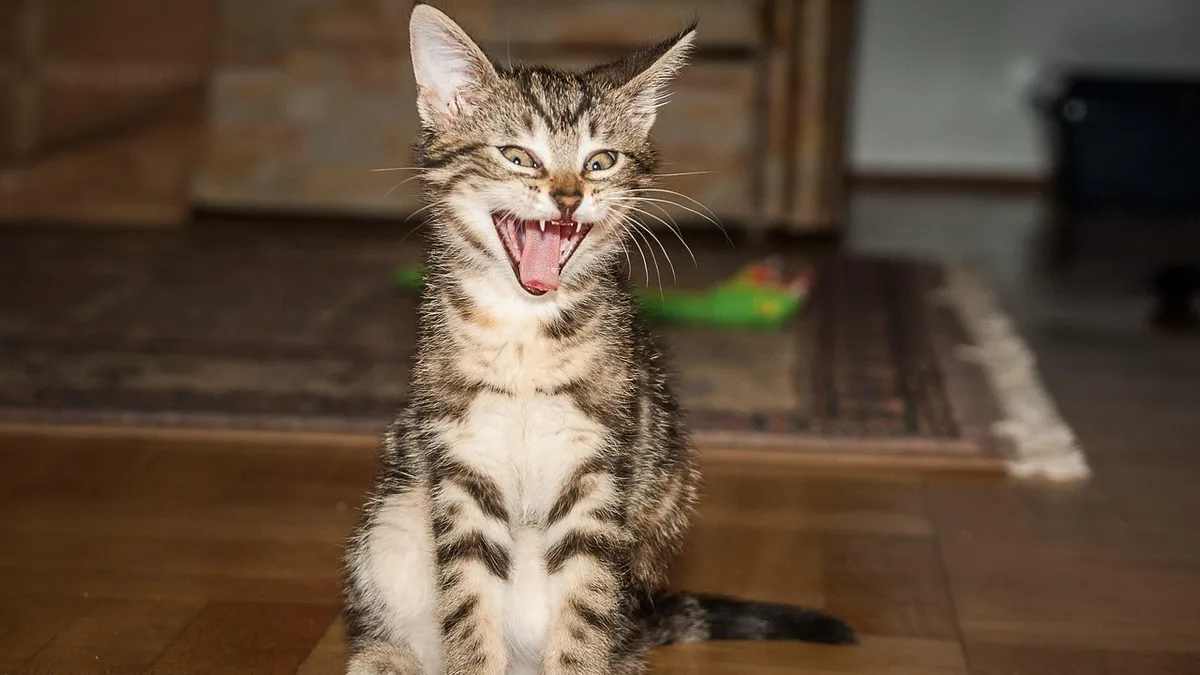
Kittens lose their baby teeth and grow adult teeth between about 3 and 6 months of age, and the cat teething signs during that window are usually mild and temporary. Adult cats do not teethe, so any new chewing, drooling, or eating changes in a grown cat points to dental pain or another oral problem instead. Knowing which signs belong to normal kitten teething and which ones signal something more serious helps you decide when to call your veterinarian.
This article is educational and is not a substitute for veterinary diagnosis or treatment.
Quick Answer
- Kittens have 26 baby teeth and 30 adult teeth, and the adult set usually starts coming in around 4 to 7 months of age [1].
- Normal kitten teething signs are mild: extra chewing, some drooling, and slight gum redness that improves over days to a couple of weeks.
- Adult cats never teethe, so drooling, dropping food, or chewing on one side in a grown cat is a pain sign, not a teething sign.
- Dental disease is common in cats, and only about 10 percent make it through life without some kind of dental problem [2].
- Cats hide oral pain well, so a veterinary exam is the only reliable way to find the cause [3].
What Cat Teething Signs Look Like and What Is Normal
Kitten teething is a short phase, not a long illness. The baby incisors push through at 2 to 4 weeks of age, and the baby premolars arrive at 5 to 6 weeks [1]. By about 6 weeks, most kittens have their full set of 26 deciduous teeth [2]. Those baby teeth then start falling out, and the permanent teeth usually begin to appear at around 4 to 7 months [1]. By roughly 6 months of age, the adult set of 30 teeth has replaced them [2].
During that transition, you may notice a few things.
- Chewing on toys, fingers, cords, or furniture. Kittens explore with their mouths, and loose or erupting teeth make chewing feel good.
- Mild drooling. A little extra saliva is common while gums are sore.
- Slight gum redness or a tiny amount of blood on a chew toy. This is usually brief.
- Eating slightly slower or preferring softer food for a day or two.
These signs should be mild and should not stop your kitten from eating, playing, or grooming. If your kitten is still eating well and acting like a kitten, you are likely seeing normal teething.
Cat Teething Behavior You Might Notice
Cat teething behavior is mostly about relief. Your kitten may bite more than usual, gnaw on the edge of a food bowl, or chew on things it ignored before. Some kittens become a little mouthy with hands. This is a phase, and it usually settles once the adult teeth are in place.
What you should not see is a kitten that refuses food, cries when eating, or holds its mouth open. Those are not typical teething signs.
Signs of Cat Dental Pain in Adult Cats
Adult cats do not teethe. If your grown cat shows new mouth-related behavior, assume it is pain until your veterinarian says otherwise. Dental pain in cats is often missed because cats hide it well, and the inability to communicate does not mean a cat is not in pain [3].
Common signs of cat dental pain include:
- Dropping food or chewing on one side of the mouth.
- Several attempts to pick up food before succeeding [4].
- Bad breath (halitosis) [4].
- Drooling more than usual, sometimes with blood-tinged saliva [4].
- Pawing at the mouth or rubbing the face on the floor.
- Flinching when you touch the muzzle or cheeks.
- Eating less, losing weight, or avoiding hard food.
- Grinding the teeth or chattering the jaw.
- Hiding more, sleeping more, or becoming irritable when handled.
A study of cats seen at a cats-only veterinary hospital found that dental and periodontal abnormalities were common, and clinical signs linked to dental pain included mouth discomfort, bad breath, drooling, difficulty holding food, and repeated attempts to grab food [4]. In another study of cats referred for suspected jaw joint problems, most turned out to have other diagnoses, and end-stage periodontal disease was the most common finding [5]. That study also noted that owners often reported an inability to close the mouth, jaw deviation, and signs of oral pain [5].
The lesson is simple. Mouth problems in cats rarely look dramatic until they are advanced.
Main Causes of Mouth Pain in Cats
Teething is only one cause of mouth discomfort, and it only applies to kittens. In adult cats, the list is longer.
| Cause | Typical clues | How urgent |
|---|---|---|
| Normal kitten teething | Kitten 3 to 6 months old, mild chewing, mild drooling, still eating well | Routine, monitor at home |
| Periodontal (gum) disease | Bad breath, red gums, tartar, drooling, eating changes | See a vet soon, same week |
| Tooth resorption | Pain when chewing, dropping food, sometimes no visible problem | See a vet soon, same week |
| Tooth fracture | Broken tooth, pain on one side, reluctance to chew hard food | See a vet within days |
| Feline chronic gingivostomatitis | Severe mouth pain, drooling, weight loss, reluctance to eat | See a vet promptly, within 1 to 2 days |
| Jaw joint (TMJ) problem or jaw injury | Can't close the mouth, jaw looks shifted, drooling, pain | Emergency, go now |
Periodontal disease is infection and inflammation of the tissue around the teeth, caused by plaque buildup at and below the gum line [6]. If it goes untreated, teeth can be lost as the supporting tissues break down [6]. A large study of tooth extractions in cats found that periodontitis (33.41 percent), feline chronic gingivostomatitis (32.40 percent), and tooth resorption (15.21 percent) were the three most common reasons teeth were removed [7]. Periodontitis and tooth resorption became more common with age, while chronic gingivostomatitis was seen more often in younger cats [7].
Cavities almost never occur in cats, so a hole in a tooth is more likely to be resorption or a fracture than a cavity [6].
Red Flags That Mean an Emergency
Most dental problems can wait a day or two for an appointment. Some cannot. Go to an emergency clinic now if your cat has any of these:
- The mouth is stuck open or cannot close.
- The jaw looks crooked or shifted to one side.
- Heavy bleeding from the mouth that does not stop.
- A swollen face or jaw that is growing quickly.
- Trouble breathing, gagging, or choking.
- A known or suspected trauma, such as a fall or a hit by a car.
- Complete refusal to eat or drink for more than 24 hours.
- Collapse, weakness, or severe lethargy.
An inability to close the mouth, jaw deviation, and oral pain are the kinds of signs that led owners to seek referral care in one study, and most of those cats did not have a simple jaw joint dislocation [5]. They had serious dental or jaw disease instead [5]. Treat these signs as urgent.
What You Can Safely Do at Home While You Wait
You cannot fix dental disease at home, but you can keep your cat comfortable and protect it from harm until the appointment.
- Offer soft food. Warm canned food or moistened kibble is easier on sore gums.
- Keep water available in a shallow bowl so your cat does not have to open wide.
- Do not give human pain medications. Many are toxic to cats, and the dose is not something you can guess. Your veterinarian calculates the dose from your pet's weight and health.
- Do not poke at a loose tooth or try to pull it.
- Do not use your fingers as a chew toy with a teething kitten. Offer safe cat toys instead.
- Keep the mouth area clean if your cat allows it. A soft cloth with warm water is enough.
- Watch for changes in eating, drinking, and grooming, and write down what you see.
If your cat stops eating or seems painful, call your veterinarian the same day. Pain management for oral and dental conditions is a standard part of veterinary care, and your veterinarian has safe options [3][8].
What Your Veterinarian Will Check and Test
Your veterinarian will start with a hands-off look at your cat's face and mouth while your cat is awake [8]. They will check for swelling, drooling, jaw symmetry, and how your cat reacts to having its muzzle touched.
A full dental assessment usually requires anesthesia. The 2025 feline oral health guidelines state that further assessment under anesthesia is necessary for radiography and treatment, making anesthesia an essential part of feline dentistry [8]. This is not because veterinarians are careless with cats. It is because a conscious cat will not allow a thorough exam of every tooth and the space below the gum line.
During the exam, your veterinarian may:
- Take dental radiographs (X-rays) to see roots and bone.
- Probe around each tooth to measure gum pockets.
- Check for tooth resorption, fractures, and missing teeth.
- Assess pain using a standardized scale.
- Clean the teeth and treat or extract problem teeth in the same visit if needed.
Treatment for gum disease includes a professional dental cleaning under anesthesia [6]. Cleanings done without anesthesia may make the teeth look better, but they do not treat the plaque below the gum line, which is the real problem [6]. If you have been offered a non-anesthetic cleaning, ask your veterinarian whether it addresses the disease or only the appearance of the teeth.
Prevention and Monitoring
You cannot stop a kitten from teething, but you can lower the odds of dental disease later.
- Start home brushing early. Use a cat-safe toothbrush and pet toothpaste. Get your kitten used to having its mouth touched while it is young.
- Ask your veterinarian how often your cat needs a professional cleaning. The answer depends on your cat's mouth, not a fixed schedule.
- Watch for early signs. Bad breath is not normal in a cat, and it often shows up before visible gum problems.
- Feed a diet your veterinarian recommends. Diet plays a role in dental health, and your veterinarian can match the food to your cat's needs [2].
- Keep routine exams. Dental disease is common, and only about 10 percent of cats avoid it entirely [2].
- Track weight. Slow weight loss is a common early clue in cats with mouth pain.
For more on daily care, see Prevent Dental Problems In Cats and How To Prevent Dental Problems In Cats. If your cat is older and you are unsure whether changes are dental or something else, Cat Kidney Disease: How to Tell If Your Cat Is in Pain and Cat Arthritis: How to Tell If Your Cat Is in Pain cover other common sources of hidden pain. When a cleaning is recommended, Pet Dental Cleaning: What Should Owners Know? explains what to expect.
Limitations and When to Contact a Veterinarian
This article cannot tell you what is happening in your cat's mouth. Only a veterinarian who examines your cat can do that, and individual cases always need professional assessment.
Call your veterinarian the same day if your cat:
- Drools suddenly or has blood in the saliva.
- Drops food or chews on one side.
- Has bad breath that appeared recently.
- Is eating less or losing weight.
- Flinches when you touch the face.
- Has a loose or broken tooth.
Go to an emergency clinic now if your cat:
- Cannot close its mouth or the jaw looks shifted.
- Has heavy bleeding from the mouth.
- Has rapid facial swelling.
- Is having trouble breathing.
- Refuses all food and water for more than 24 hours.
- Has suffered trauma to the head or mouth.
Schedule a routine visit if your kitten is 3 to 6 months old and showing mild teething signs but still eating and playing normally. Your veterinarian can check that the adult teeth are coming in properly and that no baby teeth are retained.
Frequently Asked Questions
At what age do kittens stop teething?
Most kittens finish teething by about 6 months of age, when the adult teeth have replaced the baby teeth [2]. The permanent teeth usually start appearing around 4 to 7 months [1]. If your kitten is older than 7 months and still shows mouth discomfort, that is not teething.
Is drooling normal during kitten teething?
A small amount of drooling can be normal while gums are sore. Heavy drooling, drooling with blood, or drooling that continues for more than a few days is not normal and should be checked. Drooling is also a recognized sign of dental pain in adult cats [4].
Can I give my cat human pain relievers for tooth pain?
No. Many human pain medications are toxic to cats, and you should never give them without veterinary direction. Your veterinarian will choose a safe medication and calculate the dose from your cat's weight and health [3].
Why does my cat drop food when eating?
Dropping food is a classic sign of mouth pain, often from periodontal disease, tooth resorption, or a fractured tooth [4][7]. Cats with sore teeth may pick up food several times before managing to eat it [4]. This warrants a veterinary exam.
Do cats need anesthesia for a dental exam and cleaning?
Yes, a thorough dental assessment and treatment require anesthesia, including radiographs and cleaning below the gum line [6][8]. Non-anesthetic cleanings may improve how the teeth look but do not treat the underlying disease [6]. Your veterinarian will assess your cat's health before anesthesia.
Related Articles
- Prevent Dental Problems In Cats
- How To Prevent Dental Problems In Cats
- Cat Kidney Disease: How to Tell If Your Cat Is in Pain
- Cat Arthritis: How to Tell If Your Cat Is in Pain
- Pet Dental Cleaning: What Should Owners Know?
- Cat Bite Abscess: Signs, Home Care, and When to See the Vet
- Do Kitten Teeth Hurt? Teething Signs and Relief
- Cat Teething: When Kittens Lose Teeth and Get Adults
- Cat Tooth Pain: Safe Home Relief and Vet Care
References
- Dental Development of Cats - Cat Owners. Merck Veterinary Manual.
- When Kitty Needs a Dentist. Cornell University College of Veterinary Medicine.
- Oral and Dental Pain Management. Journal of veterinary dentistry, 2025.
- Dental Pain in Cats: A Prospective 6-Month Study. Journal of veterinary dentistry, 2022.
- Retrospective analysis of cats referred for suspected temporomandibular joint luxation. American journal of veterinary research, 2026.
- Dental Disorders of Cats - Cat Owners. Merck Veterinary Manual.
- The prevalence of reasons for tooth extraction in cats. Frontiers in veterinary science, 2025.
- 2025 FelineVMA feline oral health and dental care guidelines. Journal of feline medicine and surgery, 2025.