Domestic Longhair Cat: Traits, Grooming, and Health
By Dr. Zubair Khalid, DVM, MS, PhD ·
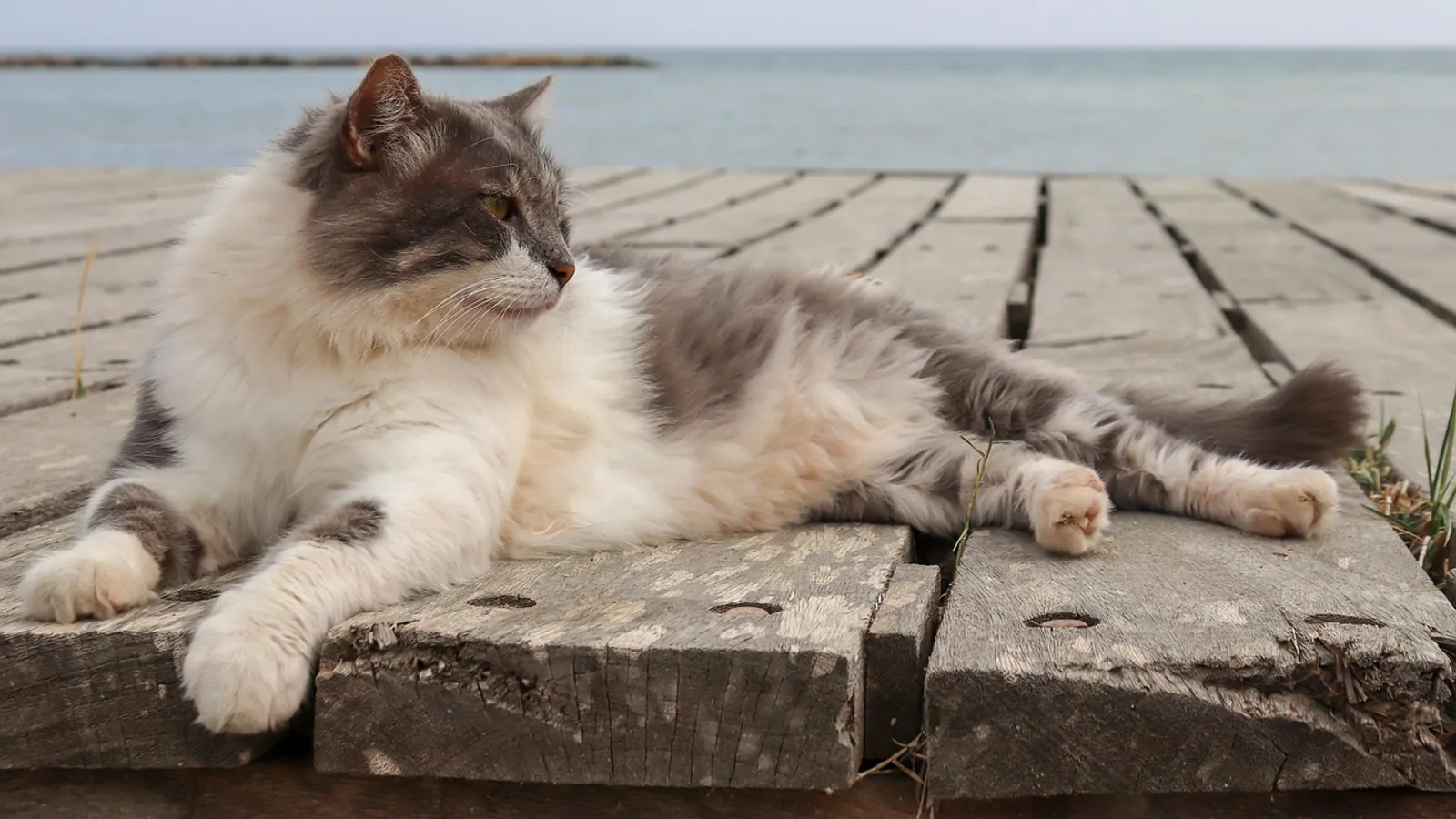
The domestic longhair is a cat, not a breed. It is a coat-type category that describes any non-pedigree cat carrying the genes for a long or semi-long coat. That single fact shapes almost everything else in this article. Because the domestic longhair is a random-bred population rather than a closed pedigree, its health profile reflects the wider feline gene pool rather than the narrow predispositions of a single breed. Population genetics work on United Kingdom cats found that domestic shorthair, domestic longhair, and domestic semi-longhair cats are random-bred populations rather than crossbreeds or pedigree-admixed cats, and that they are genetically diverse as a group [1]. The same analysis found that 19 percent of random-bred cat genomes carried a higher proportion of runs of homozygosity linked to more recent inbreeding, so the population is diverse overall but not immune to the health consequences of inbreeding [1].
This article covers what the domestic longhair is, how the coat behaves across the seasons, how to build a grooming routine that prevents mats, and which medical conditions owners and veterinarians should watch for. It also explains why a domestic longhair is not the same thing as a Maine Coon or a Persian, even when all three have long hair.
This article is educational and is not a substitute for veterinary diagnosis or treatment.
At a Glance
| Trait | Domestic Longhair |
|---|---|
| Classification | Coat-type category, not a pedigree breed |
| Genetic background | Random-bred population, not crossbred or pedigree-admixed [1] |
| Coat | Long or semi-long, variable texture and color |
| Size | Variable, no breed standard applies |
| Lifespan | Variable, no breed-specific figure applies |
| Energy level | Variable, individual |
| Grooming | High. Daily to every other day brushing |
| Trainability | Variable, individual |
| Good with children | Variable, individual |
| Good with other pets | Variable, individual |
| Typical health concerns | Hypertrophic cardiomyopathy, dental disease, obesity, and other conditions seen across the general cat population |
The table deliberately leaves size, lifespan, and temperament as variables.Anyone quoting a fixed weight range or lifespan for a domestic longhair is describing an individual cat, not a category.
What the Domestic Longhair Actually Is
The domestic longhair is defined by coat length, not by ancestry, registry, or phenotype beyond the hair itself. In the population genetics study of 1,344 United Kingdom cats, domestic shorthair, domestic longhair, and domestic semi-longhair cats clustered as random-bred populations. Principal components analysis and structure analysis verified that these cats are random-bred rather than admixed, mixed breed, or crossbred [1]. Linkage disequilibrium in these cats was the least extensive of the groups studied and decayed rapidly, which is the genetic signature of a large, freely breeding population rather than a closed gene pool [1].
This matters for owners because it changes how you interpret health information. When a veterinarian says Maine Coons have a specific mutation linked to heart disease, that statement applies to Maine Coons. When a study screens a broad population and finds that the same mutation is absent or rare outside that breed, that finding tells you the domestic longhair does not inherit that particular risk by virtue of being a domestic longhair.
The Long Haired Domestic Cat Breeds Question
Owners often search for long haired domestic cat breeds or long-haired domestic cat breeds expecting a list of pedigree cats. The domestic longhair is not on that list because it is not a breed. It is the long-coated arm of the general, non-pedigree cat population. Pedigree long-haired breeds such as the Maine Coon, Persian, Norwegian Forest Cat, and Ragdoll are separate entities with their own registries, breed standards, closed breeding populations, and documented predispositions.
A useful way to hold this distinction: a domestic longhair can look like a small Maine Coon and still have none of the Maine Coon's breed-specific genetic risks. Coat length is a visible trait. Breed is a population structure. The two are not the same.
Domestic Longhair Versus Domestic Semi-Longhair
Some registries and population studies separate domestic longhair from domestic semi-longhair cats. The United Kingdom population analysis treated domestic shorthair, domestic longhair, and domestic semi-longhair as related random-bred groups [1]. In everyday veterinary practice, the distinction is often collapsed. What matters clinically is how dense, long, and mat-prone the coat is, not which label is applied.
History and Purpose
The domestic longhair has no single origin story because it was never developed by breeders toward a purpose. Long coats appear in the general cat population wherever the underlying genes are present and survive. The population genetics evidence supports this framing directly: these cats are random-bred, not the product of deliberate crossing between established breeds [1].
The practical consequence is that the domestic longhair is best understood as the long-coated version of the ordinary cat. It has the same basic needs, the same broad disease exposures, and the same variability in temperament as any other non-pedigree cat. Its only consistent distinguishing feature is the coat, and that coat is the source of most of its special care requirements.
Appearance
The domestic longhair's appearance is genuinely variable. Coat length, density, undercoat, color, pattern, eye color, body type, and face shape all vary between individuals. There is no breed standard, so there is no correct or incorrect appearance.
What owners should focus on instead of breed-standard aesthetics is coat function. A long coat with a dense undercoat behaves differently from a long coat that is fine and single-layered. Dense undercoats trap shed hair and form mats close to the skin. Fine coats tangle more easily at friction points such as the armpits, the belly, behind the ears, and around the tail base. Both types benefit from routine brushing, but the dense-coated cat usually needs more of it.
Facial Conformation
One point of comparison is worth making because it affects breathing and eye health. A study of Persian and Exotic Shorthair show cats found high rates of hypoplasia of the nose leather at 95 percent, nose leather positioned above the level of the lower eyelid at 93 percent, moderate to severe stenotic nares at 86 percent, epiphora at 83 percent, and entropion at 32 percent [2]. The same study contrasted these cats with a group of non-purebred domestic shorthair and domestic longhair cats, which had greater uniformity and did not show the same extreme facial conformation characteristics [2].
The takeaway for domestic longhair owners is that the flat-faced, brachycephalic conformation is a pedigree trait, not a domestic longhair trait. A domestic longhair with a normal muzzle does not carry the same airway and eye risks that come with extreme facial shortening.
Temperament
Temperament in the domestic longhair is individual.A domestic longhair's temperament reflects its genetics, its early socialization, its environment, and its health.
Behavior and medical conditions are frequently interrelated, and this is directly relevant to long-coated cats. A published case series described a 3-year-old spayed domestic long-haired cat that presented after a second surgery to remove a trichobezoar, a hairball mass. The diagnostic workup considered dermatological, behavioral, and gastrointestinal causes, and the working diagnosis was an anxiety disorder with possible compounding gastrointestinal and dermatological factors. Treatment combined medication, environmental management, and behavior modification [3].
That case is a useful reminder that a grooming or hairball problem can have a behavioral component. A cat that overgrooms, pulls hair, or swallows excessive hair may be anxious, itchy, painful, or all three. When hair accumulation becomes a surgical problem, the coat is often the visible symptom rather than the root cause.
Exercise and Enrichment
Exercise needs vary by individual. The general principle for any indoor cat is that activity supports weight control, joint health, and mental welfare. Obesity is one of the most common preventable problems in pet cats, and a long-coated cat hides weight gain well, which makes routine body condition assessment more important than casual visual judgment.
Enrichment also matters for coat health. A bored, stressed cat may overgroom, and overgrooming in a long-coated cat can create broken coat, bald patches, and skin damage that is easy to miss under the hair.
Plant Eating and Hairballs
Owners of long-haired cats often assume their cat eats plants to expel hairballs. A survey study of plant eating in domestic cats tested that hypothesis directly. Short-haired cats ate plants as frequently as long-haired cats, which argues against the hairball expulsion explanation. In the two surveys, 27 to 37 percent of cats frequently vomited after eating plants, suggesting that gastrointestinal upset may be related to vomiting in some cats. Young cats ate plants more often than older cats [4].
The practical point is that plant eating is common and is not a reliable hairball treatment. Frequent vomiting in a long-coated cat deserves veterinary assessment rather than another grass tray.
Grooming the Domestic Longhair
Grooming is the defining care task for this coat type. The goal is not cosmetic. It is to remove loose undercoat before it traps against the skin, to keep the coat free of mats, and to make sure you can see the skin underneath.
Brushing Frequency
Daily brushing is the safest default for a dense or easily matted coat. Every other day is reasonable for a thinner or semi-long coat that stays tangle-free. Cats with a heavy undercoat, older cats that groom less effectively, and cats with arthritis or obesity often need daily attention because they cannot reach their own back, belly, and tail base.
Brushing technique matters as much as frequency. Work in sections. Start at the areas where mats form first, which are the armpits, the belly, the flanks, behind the ears, the neck ruff, and around the tail base. Use a comb that reaches the skin, not just the surface hair, because surface brushing leaves the undercoat to mat against the body.
Mat Prevention
Mats form when shed undercoat hair tangles and tightens. Prevention is far easier than removal. The core routine is:
- Brush or comb to the skin at least every other day, daily for dense coats.
- Check the friction zones every session: armpits, belly, groin, behind the ears, neck, and tail base.
- Run your hands over the body regularly to feel for tight spots you cannot see.
- Keep the coat dry and free of burrs and debris.
- Address weight gain and reduced mobility early, because a cat that cannot reach its own coat will mat.
Matting Can Hide Skin Wounds
A mat is not just a cosmetic problem. Tight matted hair pulls on the skin, traps moisture, and can conceal wounds, abscesses, hot spots, parasites, and skin infections underneath. A cat with a painful mat may resist handling, which means the underlying problem goes unnoticed longer. Any mat that is tight against the skin, has an odor, or sits over a swelling should be evaluated rather than simply cut away at home.
Shaving and Sedation
Severe matting sometimes cannot be resolved by brushing. When mats are tight against the skin across large areas, or when the cat is painful and cannot be safely handled, shaving under sedation may be the appropriate option. This is a veterinary procedure. Sedation allows a complete and safe clip, protects the skin from laceration, and gives the veterinarian a chance to examine the skin that has been hidden. Do not attempt to clip tight mats with scissors at home. Scissors cause a large share of the skin injuries seen in matted cats, because the skin tents up inside the mat and is easy to cut.
Seasonal Shedding
Shedding increases in spring and fall as the coat turns over with changing day length and temperature. Indoor cats under constant artificial light and stable temperatures may shed more continuously and less seasonally. During heavy shed periods, increase brushing frequency, expect more loose undercoat, and check the friction zones more often. A coat that suddenly sheds heavily or develops mats where it never did before is worth a veterinary look, because endocrine and skin disease can change coat quality.
Bathing
Bathing is not a routine requirement for most domestic longhairs. Bathe only when needed, which usually means when the coat is soiled with something the cat cannot clean off, when a medicated shampoo has been prescribed, or when a veterinarian recommends it for a specific skin condition. Frequent bathing can strip oils and dry the coat. When you do bathe, dry the coat thoroughly. A damp undercoat mats quickly and can trap moisture against the skin.
Domestic Longhair Care Table
| Care Task | Frequency | Key Points |
|---|---|---|
| Brushing or combing | Daily to every other day | Comb to the skin. Dense coats need daily care. |
| Friction zone check | Every grooming session | Armpits, belly, groin, behind ears, neck ruff, tail base. |
| Hand check for mats | Several times a week | Feel for tight spots you cannot see. |
| Seasonal shedding management | Increase in spring and fall | Expect more loose undercoat and more mats. |
| Bathing | Only when needed | Soil, prescribed medicated shampoo, or veterinary direction. Dry thoroughly. |
| Nail trimming | Regular, as needed | Long coats can snag on overgrown nails. |
| Dental check | At every veterinary visit | Dental disease is common in cats and easy to miss. |
| Weight and body condition check | Monthly at home, at every visit | Long coats hide weight loss and weight gain. |
| Skin inspection under the coat | Every grooming session | Mats can hide wounds, infections, and parasites. |
| Professional grooming or shaving | As needed, under sedation if severe | Tight matting may require a veterinary clip. |
Feeding Considerations
Feeding a domestic longhair is feeding a cat, not feeding a breed. There is no breed-specific diet for this category. The priorities are appropriate calorie intake for body condition, life stage, and any diagnosed medical condition.
Two points deserve emphasis for this coat type. First, obesity is common in pet cats and is easy to miss under a long coat, so body condition scoring by hand matters more than appearance. Second, cats with chronic gastrointestinal disease may vomit frequently, and frequent vomiting in a long-coated cat can be mistaken for normal hairball behavior. A published case of gastric dilatation in an 11-year-old spayed domestic longhair cat with chronic enteritis presented as acute vomiting with severe gastric dilatation and no evidence of gastric outflow obstruction, with large numbers of Sarcina-like bacteria found on gastric biopsy [5]. That is an uncommon finding, but it illustrates why persistent vomiting should be investigated rather than attributed to hair.
Health Problems in the Domestic Longhair
Because the domestic longhair is a random-bred population, its health risks are the health risks of the general cat population, modified by individual genetics, lifestyle, and age. The conditions below are the ones owners should know about.
Hypertrophic Cardiomyopathy
Hypertrophic cardiomyopathy, or HCM, is the most common cause of heart disease in the domestic cat [6]. It causes thickening of the heart muscle and can progress to congestive heart failure, arrhythmia, and arterial thromboembolism.
The genetics of HCM in cats are breed-specific in the ways that matter most. Two variants in the cardiac myosin binding protein C gene, MYBPC3, are associated with HCM in the Maine Coon and Ragdoll breeds, and one variant in the myosin heavy chain gene, MYH7, was identified in a single domestic cat with HCM [6]. A genotyping study of 103 DNA samples from cats with HCM, including domestic shorthair, domestic longhair, and purebred cats, found that all samples were wild type for the MYBPC3 and MYH7 variants [6]. The authors concluded that the clinical utility of testing for these variants may be limited to the two breeds in which the variants were originally described [6].
A large European screening study of 3,757 cats found the MYBPC3-A31P mutation only in Maine Coon cats, at a prevalence of 41.5 percent, with one British Longhair cat as the sole exception. Among 164 Maine Coons that had echocardiography, 34 percent carried the mutation while 7 percent had HCM, and carrying the mutation was associated with a significantly increased risk of HCM with a relative risk of 9.91 [7]. A later classification study applied human variant classification guidelines to six feline HCM variants across five breeds and designated MYBPC3:c.91G>C (A31P) and MYBPC3:c.2453C>T (R818W) as pathogenic, with MYH7:c.5647G>A (E1883K) as likely pathogenic and the remaining three as variants of unknown significance. That study advised routine genetic testing solely for the A31P variant in the Maine Coon and the R818W variant in the Ragdoll [8].
For domestic longhair owners, the practical reading is straightforward. The well-established HCM mutations belong to specific pedigree breeds. A domestic longhair does not inherit those mutations by virtue of being a domestic longhair, and routine genetic testing for them is not indicated for this population [6][8]. HCM still occurs in domestic longhairs, and it is diagnosed by echocardiography, not by a breed-based DNA test.
HCM can appear in domestic longhairs in serious forms. A case report described a 7-year-old spayed female domestic longhair cat with hypertrophic cardiomyopathy, severe left atrial enlargement, and a large aortic thromboembolus at the aortic trifurcation involving both iliac arteries. The cat underwent emergency surgical embolectomy, regained complete reperfusion of the rear limbs within hours, and remained free of clinical signs 18 months later on antiplatelet drugs, furosemide, and benazepril [9]. Another report described a 9-month-old domestic longhair cat in which HCM was suspected on echocardiography alongside feline infectious peritonitis, with left ventricular hypertrophy and bilateral atrial enlargement [10]. These cases show that HCM in this population can present at any age and can produce both heart failure and clot-related emergencies.
Polycystic Kidney Disease
Polycystic kidney disease is a well-recognized inherited condition in Persian and related pedigree lines, in which fluid-filled cysts develop in the kidneys and progressively replace functional tissue. It is a breed-associated disease. A domestic longhair with a normal, non-brachycephalic face is not a Persian, and the breed-specific screening and genetic testing programs designed for Persian lines do not transfer to this random-bred population.
That does not mean kidney disease is rare in domestic longhairs. Chronic kidney disease is common in older cats generally. The distinction is between an inherited breed-specific cystic disease and the age-related kidney disease seen across the general cat population. For a domestic longhair, routine senior bloodwork and urine testing are the appropriate screening tools. For a Persian or a Persian-influenced cat, breed-specific screening for polycystic kidney disease applies.
Dental Disease
Dental disease is common in cats and is often advanced before owners notice. The signs are subtle: bad breath, dropping food, chewing on one side, pawing at the mouth, reduced grooming, and weight loss. In a long-coated cat, reduced grooming shows up as a dull, matted coat, which may be the first visible clue that something hurts.
Dental disease has a documented link to immune function in at least one severe feline condition. A study of feline leukocyte adhesion deficiency described a neutered male adult domestic longhair cat with severe leukocytosis and recurrent infections. The cat developed periodontitis during the first months of life, followed by recurrent infections that responded poorly to antibiotics [11]. That is a rare inherited immunodeficiency, not a typical dental case, but it reinforces that early and severe periodontal disease in a young cat can be a marker of a deeper problem.
For most domestic longhairs, the practical approach is routine oral examination at veterinary visits, home monitoring for the signs above, and professional dental treatment when indicated.
Obesity
Obesity is one of the most common and most preventable health problems in pet cats. It increases the risk of diabetes, joint disease, and other conditions, and it reduces a cat's ability to groom itself. In a long-coated cat, obesity creates a compounding problem: the cat cannot reach its back, belly, and tail base, so the coat mats, and the mats then hide skin problems.
Long coats hide both weight gain and weight loss. Owners should assess body condition by feel, running hands along the ribs and spine and checking for a waist, rather than relying on how the cat looks under hair.
Other Conditions Reported in Domestic Longhairs
Published case reports describe a range of conditions in domestic longhair cats. These are individual cases, not breed predispositions, and they are included here because they illustrate the breadth of what this population can develop.
A 6-year-old male neutered domestic longhair cat was diagnosed with mediastinal histoplasmosis with cardiac involvement, presenting as a granulomatous mass abutting the heart, and improved markedly on oral fluconazole [12]. An 11-year-old neutered male domestic longhair cat with histoplasmosis developed reduced susceptibility to fluconazole after 13 months of continuous therapy, with a very high minimum inhibitory concentration, and was ultimately euthanized after neurologic signs developed [13]. A 12-year-old female neutered indoor-outdoor domestic longhair cat in the United Kingdom developed cutaneous sporotrichosis confirmed by molecular testing, with concurrent diabetes mellitus, and responded to 12 months of oral itraconazole [14]. A 9-year-old male neutered domestic longhair cat with a 12-month history of recurrent urinary tract obstruction was found to have urethral strictures and a prolapsed, friable penis, and underwent perineal urethrostomy with good recovery [15]. An 11-year-old spayed female domestic long-haired cat had a malignant paraganglioma of the cauda equina region with pulmonary metastasis [16].
The pattern across these reports is diversity. Domestic longhairs develop fungal disease, urinary disease, endocrine disease, and neoplasia, just as the general cat population does. None of these reports establishes a breed predisposition.
Screening Tests to Discuss With Your Veterinarian
Because there is no breed-specific screening panel for the domestic longhair, screening follows general feline preventive care. Reasonable topics to raise at wellness visits include:
- Cardiac auscultation at every visit, with echocardiography if a murmur, gallop, arrhythmia, or clinical sign is found.
- Blood pressure measurement, particularly in older cats.
- Senior bloodwork and urinalysis as cats age.
- Oral examination and dental assessment.
- Body condition scoring and weight trend tracking.
- Skin and coat examination under the hair, especially in matted cats.
Genetic testing for the breed-specific HCM variants is not indicated for this population based on the available evidence [6][8].
Lifespan
Lifespan in these cats reflects the same factors that drive longevity in any cat: genetics, body condition, dental health, preventive care, indoor versus outdoor lifestyle, and the early detection of chronic disease. Owners should treat any published breed-style lifespan range for the domestic longhair with caution.
Domestic Longhair Compared With Maine Coon and Persian
This comparison matters because owners frequently confuse coat length with breed.
| Feature | Domestic Longhair | Maine Coon | Persian |
|---|---|---|---|
| Classification | Coat-type category, random-bred [1] | Pedigree breed | Pedigree breed |
| HCM genetics | Breed variants absent in screened HCM population [6] | MYBPC3 A31P pathogenic, high prevalence, relative risk of HCM 9.91 [7][8] | Not among the breeds designated for the pathogenic HCM variants in the classification study [8] |
| Facial conformation | Normal, non-brachycephalic in the general population [2] | Breed standard, not brachycephalic | Extreme brachycephalic features with high rates of stenotic nares, epiphora, and entropion [2] |
| Polycystic kidney disease | Not a breed-associated risk | Not a breed-associated risk | Breed-associated inherited condition in Persian lines |
| Genetic screening | Not indicated for breed HCM variants [6][8] | Routine testing advised for MYBPC3 A31P [8] | Breed-specific screening programs apply |
The Maine Coon carries a well-documented, pathogenic HCM variant with a substantial associated risk [7][8]. The Persian carries extreme facial conformation with documented consequences for breathing and eyes, including stenotic nares in 86 percent and epiphora in 83 percent of show cats studied [2]. The domestic longhair carries neither of those breed-specific burdens. It has a long coat and the general health profile of a random-bred cat.
Finding a Domestic Longhair
You do not find a domestic longhair from a breeder, because there is no breed and no registry standard. You find one through adoption. Shelters, rescue organizations, and foster networks routinely place long-coated non-pedigree cats, and these cats are the same population described in the genetics literature: random-bred, genetically diverse overall, but not entirely free of inbreeding effects [1].
When evaluating a long-coated cat for adoption, ask about:
- Coat condition and whether the cat tolerates handling and brushing.
- Dental health and any known oral disease.
- Weight and body condition history.
- Any known heart murmur or prior cardiac evaluation.
- Any history of chronic vomiting, diarrhea, or hairball surgery.
- Any history of skin disease under the coat.
A rescue or shelter that can answer these questions gives you a realistic starting point for care.
Who Should Not Get a Domestic Longhair
A domestic longhair is a poor fit for households that cannot commit to regular grooming. If no one in the home can brush or comb the cat to the skin every day to every other day, mats will form, and matted coats hide skin disease and require veterinary intervention.
It is also a poor fit for households unwilling to pay for professional grooming or sedation when matting becomes severe. Severe matting is not a cosmetic issue that resolves on its own.
Finally, a domestic longhair is a poor fit for anyone expecting breed-predictable temperament. There is no breed-typical personality here. You are adopting an individual cat.
Limitations and When to Contact a Veterinarian
Individual cats vary, and only a veterinarian who examines your cat can diagnose or treat a specific condition. The guidance below describes when to seek care.
Contact a veterinarian promptly if your domestic longhair has:
- Difficulty breathing, open-mouth breathing, or a resting respiratory rate that is clearly elevated.
- Sudden hind limb weakness, paralysis, vocalization, or pain, which can indicate an arterial thromboembolus [9].
- A heart murmur, gallop rhythm, or arrhythmia found on examination.
- Collapse, fainting, or exercise intolerance.
- Persistent vomiting, especially if it is frequent enough to be mistaken for hairballs [4][5].
- Repeated hairball episodes that require veterinary attention or any prior surgery for a trichobezoar [3].
- Weight loss, weight gain, or a change in body condition you can feel but not see.
- Bad breath, drooling, dropping food, chewing on one side, or pawing at the mouth.
- Reduced grooming, a dull coat, or new matting in a cat that previously kept itself clean.
- Mats that are tight against the skin, have an odor, or sit over a swelling or wound.
- A cat that is painful or cannot be safely handled for grooming.
- Any non-healing skin lesion, especially in an indoor-outdoor cat [14].
- Straining to urinate, especially in a male cat, which is an emergency [15].
- Fever, lethargy, or loss of appetite lasting more than a day.
Do not attempt to cut tight mats out with scissors. Seek veterinary help for severe matting.
Frequently Asked Questions
Is the domestic longhair a breed?
No. The domestic longhair is a coat-type category for non-pedigree cats with long or semi-long hair, and population studies confirm these cats are random-bred rather than a breed or a crossbreed [1].
How often should I brush a domestic longhair?
Brush or comb daily for dense or mat-prone coats, and every other day for thinner coats that stay tangle-free. Comb to the skin, not just the surface.
Do domestic longhairs need baths?
Usually not. Bathe only when the coat is soiled, when a veterinarian prescribes a medicated shampoo, or when a specific skin condition requires it. Dry the coat thoroughly afterward.
Can matting hide health problems?
Yes. Tight mats trap moisture and can conceal wounds, infections, parasites, and skin lesions, which is one reason a matted cat needs a veterinary examination rather than a home haircut.
Do domestic longhairs carry the Maine Coon HCM mutation?
No. A genotyping study of cats with HCM, including domestic longhairs, found none carried the known MYBPC3 or MYH7 variants, and testing for those variants is advised only for the specific breeds in which they were identified [6][8].
Are domestic longhairs prone to polycystic kidney disease?
Polycystic kidney disease is a breed-associated inherited condition in Persian lines, not a domestic longhair predisposition. Older domestic longhairs can still develop chronic kidney disease like any aging cat.
Why does my domestic longhair vomit so often?
Frequent vomiting is not normal hairball behavior and should be evaluated. Surveys found that a substantial minority of cats vomit after eating plants, and chronic gastrointestinal disease can present as vomiting in long-coated cats [4][5].
Should I shave my matted domestic longhair?
Sometimes. When mats are tight against the skin across large areas, or the cat is painful and cannot be safely handled, a veterinary clip under sedation is the safer option and allows the skin underneath to be examined.
Related Articles
- Bengal Cat: Wild Looks, Domestic Personality - Complete Breed Guide
- Poodle Dog Breed: Varieties, History, Temperament, Health Records, Grooming, and Home Fit
- Newfoundland Dog: Health, Grooming, and Care Guide
- Goat Genetics and Breeding: Selection for Production and Health Traits
- Rabbit Grooming: Coat, Nail, and Ear Care for Different Breeds
- trait biology definition
Sources
- More Than a Moggy; A Population Genetics Analysis of the United Kingdom's Non-Pedigree Cats.
- Facial conformation characteristics in Persian and Exotic Shorthair cats.
- The benefits of multidisciplinary collaboration in the successful management of two complex feline cases.
- Characteristics of Plant Eating in Domestic Cats.
- Gastric Dilatation Associated with Gastric Colonization with Sarcina-Like Bacteria in a Cat with Chronic Enteritis.
- Absence of known feline MYH7 and MYBPC3 variants in a diverse cohort of cats with hypertrophic cardiomyopathy.
- Prevalence of the MYBPC3-A31P mutation in a large European feline population and association with hypertrophic cardiomyopathy in the Maine Coon breed.
- Classification of feline hypertrophic cardiomyopathy-associated gene variants according to the American College of Medical Genetics and Genomics guidelines.
- Surgical embolectomy in a cat with cardiogenic aortic thromboembolism.
- Feline coronavirus-associated myocarditis in a domestic longhair cat.
- Feline leukocyte adhesion (CD18) deficiency caused by a deletion in the integrin β(2) (ITGB2) gene.
- Mediastinal histoplasmosis with cardiac involvement in a cat.
- Reduced susceptibility to fluconazole in a cat with histoplasmosis.
- First case report of cutaneous sporotrichosis (Sporothrix species) in a cat in the UK.
- Rapid vascular uptake of contrast during a retrograde urethro-cystogram in a cat with chronic lower urinary tract disease.
- Malignant cauda equina paraganglioma in a cat.