Australian Kelpie: Breed Traits, Health and Care
By Dr. Zubair Khalid, DVM, MS, PhD ·
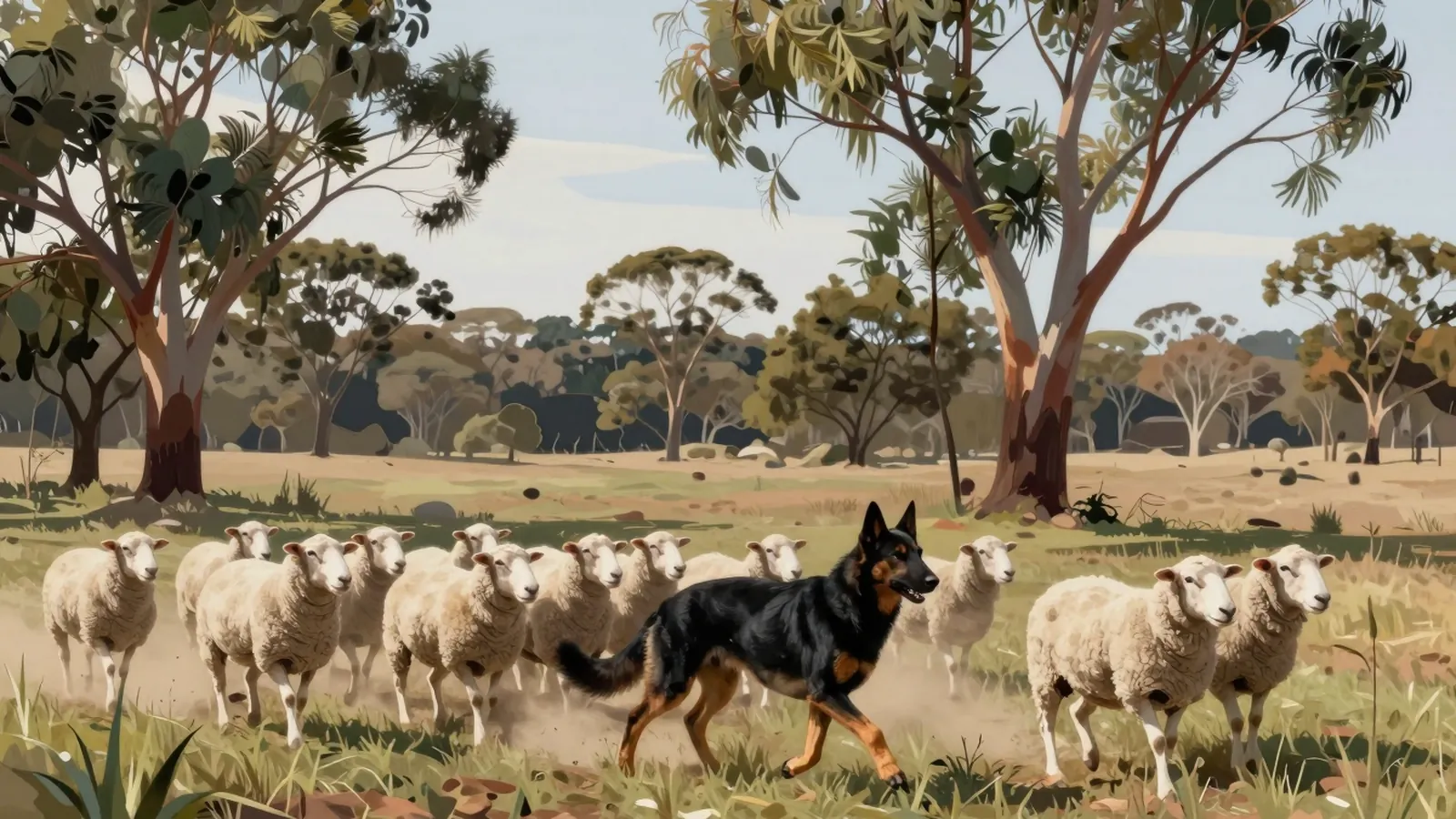
The Australian Kelpie is a medium-sized Australian sheepdog capable of mustering and driving livestock with little or no guidance (Australian Kelpie). It is a lithe, active dog built for untiring work, with high intelligence, alertness, and energy (Australian Kelpie). The breed was developed in Australia for sheep work and has been exported worldwide for mustering sheep, cattle, and goats (Australian Kelpie; Facts About the Australian Kelpie You May Not Know).
Two distinct varieties exist: the Show (or Bench) Kelpie, selected for appearance, and the Working Kelpie, bred for working ability (Australian Kelpie). Kelpies need substantial physical and mental exercise and are poorly suited to apartment life; they do best with open space, an active family, and a job to do (Facts About the Australian Kelpie You May Not Know).
Key Points
- The breed has two varieties: the Show (or Bench) Kelpie and the Working Kelpie; Show dogs are selected for appearance, while Working dogs are bred for working ability (Australian Kelpie).
- The Australian Kelpie is believed to have Scottish origins dating to around 1870 and descends from working Collies (Facts About the Australian Kelpie You May Not Know).
- The first dog known as a Kelpie was a black and tan female pup with floppy ears, bought by Jack Gleeson about 1872 from a litter born on Warrock Station.
- Kelpies were bred to handle sheep across vast areas of New South Wales and Victoria, including rough terrain, extreme heat, and dust.
- Before Kelpies, convicts led regional herding efforts; growing sheep populations made that system unsustainable and created demand for a tougher herding dog.
- A 2019 University of Sydney genomic study compared specific genes linked to ear shape and coat color, not the entire genome; its lead author clarified that the study did not show an absence of dingo ancestry in the breed.
At a Glance
| Trait | Detail |
|---|---|
| Origin | Australia; developed for sheep herding (Australian Kelpie) |
| Size | Medium, muscular working build (Australian Kelpie) |
| Coat | Short double coat; black, red, fawn, chocolate |
| Temperament | Alert, energetic, strong herding instinct |
| Exercise | High daily activity plus mental work (Facts About the Australian Kelpie You May Not Know) |
| Life span | Commonly 12 to 15 years |
The Australian Kelpie is a working dog that has been kept in work for roughly a century and a half, and its needs follow from that history (Australian Kelpie; Facts About the Australian Kelpie You May Not Know). Anyone considering one should plan for daily physical exercise, regular training and a genuine outlet for herding instinct before the dog arrives (Australian Kelpie; Facts About the Australian Kelpie You May Not Know).
What Is the Australian Kelpie?
The Australian Kelpie is an Australian sheepdog capable of mustering and droving livestock with little or no guidance (Australian Kelpie). It is a medium-sized dog that comes in a range of colors, and it has been exported around the world to work sheep, cattle and goats.
A breed built on the sheep runs
Sheep numbers expanded across New South Wales and Victoria in the nineteenth century, and convicts carried much of the herding work until that arrangement became unsustainable (Facts About the Australian Kelpie You May Not Know). The industry needed a dog that could handle rough country in extreme heat and dust. Collies had been imported to Australia for stock work from the early nineteenth century, and they were bred with other dogs with an eye to working sheep without direct supervision (Australian Kelpie). The first dog known as a Kelpie was a black and tan female pup with floppy ears, bought by Jack Gleeson around 1872 from a litter born on Warrock Station.
Where the name comes from
The breed name is linked to the Scottish water kelpie, a shape-shifting spirit said to inhabit lochs (Australian Kelpie; Kelpie). Folklore usually describes that creature as a grey or white horse-like being able to take human form (Kelpie). The dog that carries the name is a plain, hard-working herder with no trace of the myth in its build.
Show Kelpie and Working Kelpie
The breed has separated into two varieties (Australian Kelpie). The Show, or Bench, Kelpie appears at conformation shows in some countries and is selected for appearance; the Working Kelpie is bred for working ability. A buyer should ask which line a puppy comes from, because the two populations are selected against different targets.
The dingo question
A popular account published in 1950 claimed that the first Kelpies came from a deliberate cross between a smooth-haired Scottish Collie and a dingo around 1870, a story that reflected a widespread belief that Australian working dogs owed their hardiness to dingo blood (Australian Kelpie). In 2019, media outlets reported that a University of Sydney genomic study had found no dingo ancestry in the breed. The lead author later clarified that the interpretation was incorrect: the work compared specific genes associated with ear shape and coat color, not the whole genome, and she had never stated that there was no dingo blood in the breed. The episode is a useful reminder that a study of a few genes answers a narrow question.
Kelpies today
Kelpies still work on farms and appear in herding trials (Facts About the Australian Kelpie You May Not Know). The breed is described as lithe and active, capable of untiring work, extremely intelligent, alert and eager, with unlimited energy (Australian Kelpie). That combination of endurance and independence is what stockmen selected for, and it is what new owners inherit.
Appearance and Size
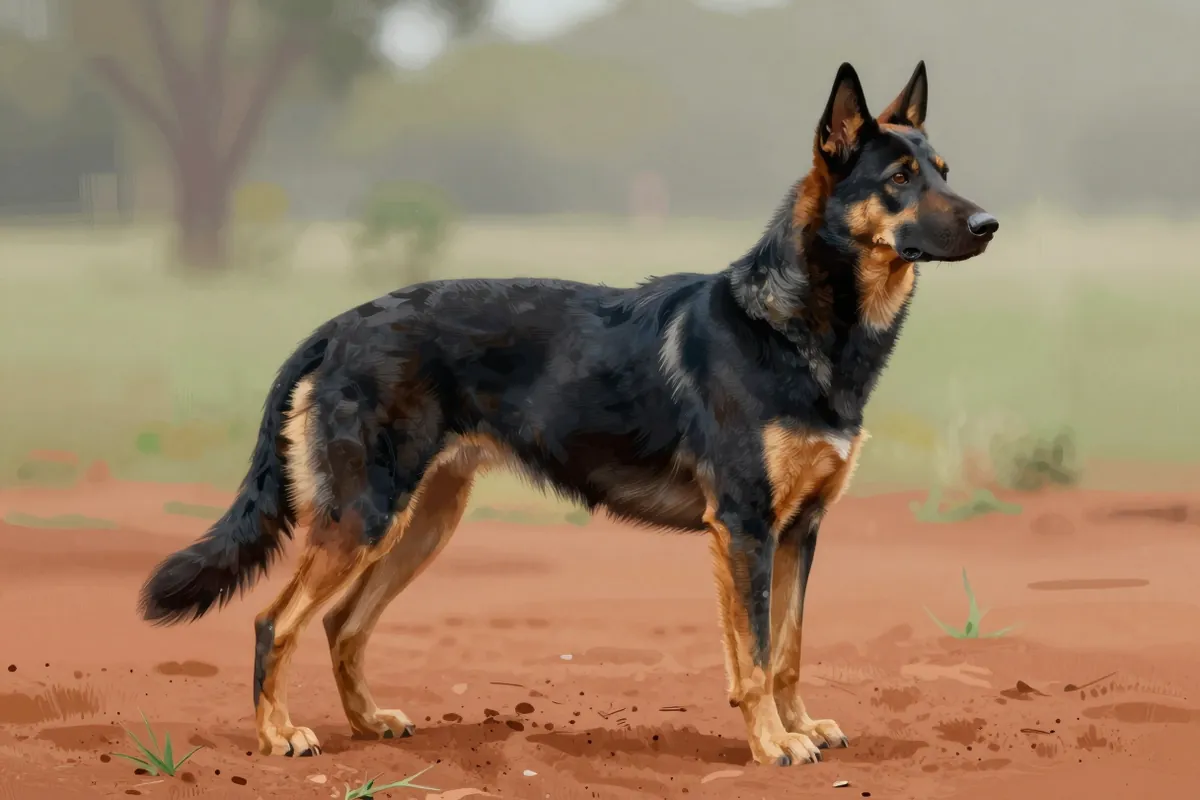
The Kelpie is a medium-sized, muscular dog with an athletic frame built for sustained work (Australian Kelpie). Nothing about the build is decorative: the body is compact, the gait is efficient, and the dog looks capable of covering long distances without fading.
| Feature | Detail |
|---|---|
| Build | Medium, muscular, athletic (Australian Kelpie) |
| Coat | Short double coat that protects against weather |
| Colors | Black, black and tan, red, fawn, chocolate |
| Ears | Erect and alert |
| Height | About 17 to 20 inches at the shoulder (Australian Kelpie) |
Coat and color
The short double coat is the breed's main protection against weather, and it does most of the work of keeping a working dog comfortable in heat, dust and cold nights (Australian Kelpie). Common colors include black, black and tan, red, fawn and chocolate. The double coat means shedding is real, especially in spring, but the short length keeps grooming manageable.
Head and ears
The ears stand erect and stay alert, which gives the breed its characteristic watchful expression (Australian Kelpie). Working Kelpies use the head and eyes as herding tools, so a handler who watches the ears and head carriage can often read the dog's intent before it moves (Australian Kelpie).
Height and frame
Height is about 17 to 20 inches at the shoulder, and males are often larger than females (Australian Kelpie). A worked example helps when judging a dog against the standard: a female measuring near the lower end of that range will look noticeably lighter through the chest and loin than a large male, even when both are fit. Condition matters more than the tape measure. A Kelpie in hard work carries muscle over the loin and hindquarters and a visible waist; a sedentary Kelpie of the same height often looks heavier and moves less freely.
Show and working builds
The two varieties are selected against different goals, so type varies between them (Australian Kelpie). Show Kelpies are bred for appearance, while Working Kelpies are bred for the ability to muster and drove livestock. Neither type is a separate breed, and both share the same short double coat, erect ears and medium frame (Australian Kelpie; Australian Kelpie).
What to look for in a young dog
Puppies change quickly, so assess the parents where possible. A Kelpie pup should be alert, curious and willing to engage, with a straight front, sound movement and a coat that already shows dense undercoat (Australian Kelpie). Loose, floppy ears in a young pup are normal and often lift as the dog matures (Australian Kelpie).
Temperament and Herding Drive
The Kelpie is alert, intelligent and highly responsive to handling (Australian Kelpie). That responsiveness is the breed's best quality and its biggest demand: a dog that reads a handler closely also notices when nobody is asking anything of it.
Instinct first
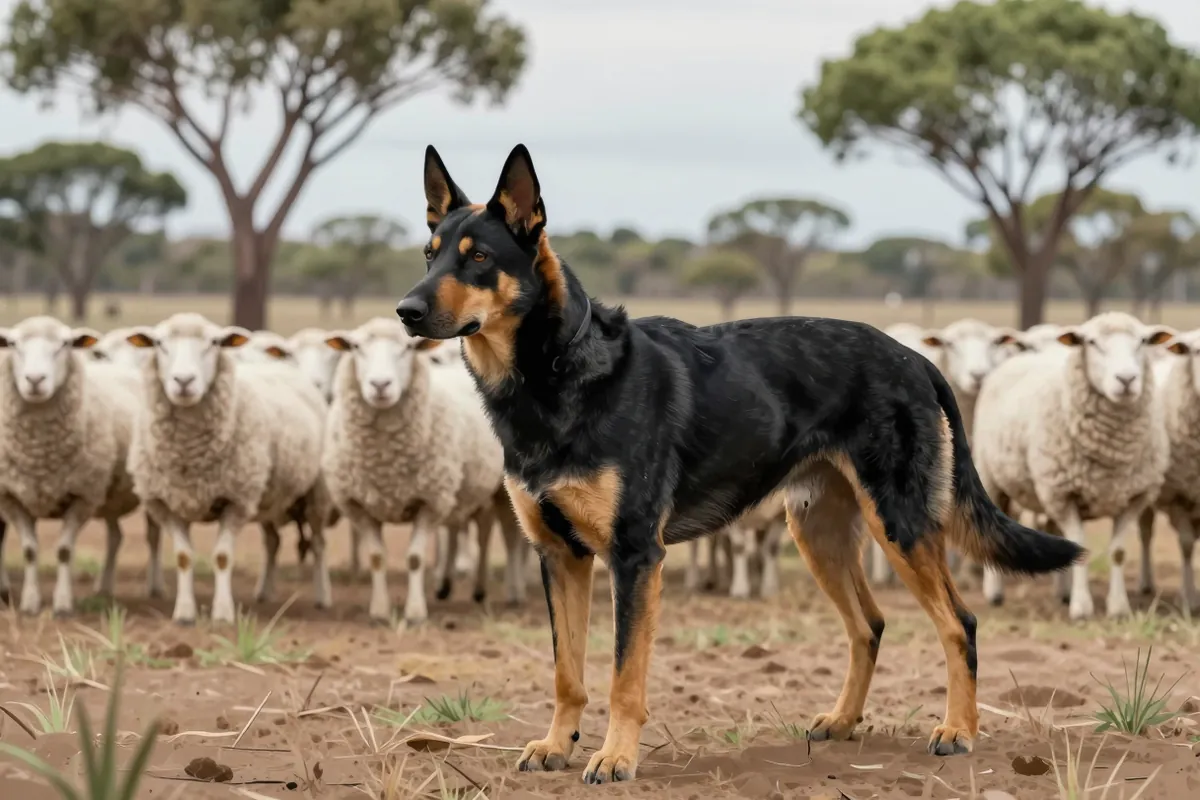
The breed carries a strong instinct to herd livestock and moving objects (Facts About the Australian Kelpie You May Not Know). Herding style includes crouching, staring and stalking, the sequence a Kelpie uses to move stock without contact (Australian Kelpie). On a farm that sequence is the job; in a suburb it lands on joggers, bicycles, cars and children running through the yard, and Kelpies may nip at heels or give chase. The behavior is not defiance. It is the dog doing what it was bred to do with the nearest available target.
Why an outlet matters
A Kelpie cannot lead a sedentary lifestyle, and the breed is not suited to apartment living (Facts About the Australian Kelpie You May Not Know). Without an outlet for instinct and energy, behavior problems become likely (Australian Kelpie). The dog needs physical exercise and mental work in roughly equal measure, and it is most fulfilled when it has a job to do.
| Observed behavior | What drives it | Practical response |
|---|---|---|
| Nipping at heels of children or visitors | Herding instinct aimed at moving people (Facts About the Australian Kelpie You May Not Know) | Supervise closely, interrupt early, teach a stop cue and redirect to a toy |
| Chasing bicycles, cars or joggers | Movement triggers the chase sequence | Keep the dog leashed near roads and paths, and train a reliable recall |
| Pacing, barking or destructive chewing after a short walk | Energy and mental needs not met | Increase duration and difficulty, and add training or a dog sport |
Family life and strangers
Kelpies are loyal to their families and can be reserved with strangers (Australian Kelpie). They are not a breed that greets every visitor with instant enthusiasm, and early, careful socialization reduces suspicion later. Because the breed is eager to please and intelligent, it responds best to positive reinforcement in training (Facts About the Australian Kelpie You May Not Know). Harsh handling tends to produce a dog that works cautiously instead of eagerly.
The right owner
The breed suits an active household with time for daily training, open space and a plan for the herding drive (Facts About the Australian Kelpie You May Not Know). Agility, obedience and rally are good fits for the mental side of the work. A prospective owner who cannot offer at least one structured activity each day should consider a lower-drive breed. The Kelpie will still be affectionate, but it will not be calm by default (Australian Kelpie).
Exercise and Mental Stimulation
Australian Kelpies were bred to work long days moving sheep across large, rough properties in heat and dust, and the breed still carries that stamina (Facts About the Australian Kelpie You May Not Know). A short walk around the block does not meet the requirement. Daily vigorous exercise is essential for this breed, and a Kelpie kept fit and busy is also a calmer dog at home.
Daily Physical Exercise
Long walks, running and off-lead work all help to use up energy (Australian Kelpie). The right amount depends on the individual dog's age, fitness and the weather, so build distance and pace gradually instead of going from a quiet week to a ten-mile run. Off-lead running belongs in a securely fenced area or a safe open space away from roads, livestock and wildlife.
| Activity | What it works | Notes |
|---|---|---|
| Brisk walk or jog | Stamina, routine | Two shorter sessions often suit better than one long one |
| Off-lead running | Speed, free movement | Only in a secure, safe area |
| Fetch and ball games | Sprint and turn | Stop before the dog is exhausted |
| Herding on stock | Instinct and control | Supervised, with an experienced handler |
| Scent games | Nose work, problem solving | Good for rainy days and recovery days |
| Puzzle feeders | Thinking, patience | Mealtime enrichment |
Mental Work
Physical tiredness alone does not settle a Kelpie. Herding, fetch and scent games tire the mind as well as the body (Facts About the Australian Kelpie You May Not Know). Puzzle feeders and short training tasks reduce boredom and give the dog a job to do. A working breed is most content when it has a purpose, and obedience exercises, trick training or a simple daily task can serve that purpose as well as farm work does.
When Exercise Falls Short
Too little activity can lead to chewing, destructive behavior and escaping (Australian Kelpie). A Kelpie with unused energy often finds its own entertainment: digging, fence testing, barking, or herding children and other pets. These behaviors are a signal to increase physical and mental activity, not a sign that the dog is stubborn.
Exercise for Puppies
Puppies need age-appropriate exercise and rest (Australian Kelpie). Growing joints are still developing, so avoid long forced runs, repetitive jumping and stair work on hard surfaces. Short play sessions, gentle walks and plenty of sleep suit a young Kelpie better than adult-level workouts. Free play on soft ground and social time with people are enough for most young puppies, with duration increasing as the dog matures.
A Workable Weekly Pattern
A practical routine mixes daily walks with several higher-energy sessions and some brain work every day. For example:
- Morning: brisk walk plus a training session of a few minutes.
- Midday or evening: off-lead running, fetch or a herding session when available.
- Meals: served in a puzzle feeder or used for scent games.
- Rest days: scent work and handling practice instead of hard running.
Weather matters. Kelpies cope with heat better than many breeds, but exercise in the cool parts of the day, provide shade and water, and watch for heavy panting or reluctance to move.
Training and Socialization
The Kelpie is intelligent and eager to please, but the breed also tends toward independence (Facts About the Australian Kelpie You May Not Know). That combination means a Kelpie learns quickly, including behaviors nobody intended to teach. Start obedience and socialization early and consistently (Australian Kelpie).
Start Early
Puppy classes, short daily sessions and steady exposure to ordinary life give a young Kelpie a strong foundation (Australian Kelpie). Keep sessions short and end on success. A few minutes several times a day teaches more than one long session that ends in frustration for dog and handler.
Reward-Based Methods
Use reward-based training and clear boundaries (Australian Kelpie). Food, toys, praise and access to a favorite activity all work as rewards. Kelpies respond best to positive reinforcement (Facts About the Australian Kelpie You May Not Know). Clear boundaries matter as much as rewards: decide which rooms, furniture and areas are allowed, and apply the same rule every day. Inconsistent rules teach a dog to test them.
Harsh handling builds distrust in a sensitive, alert breed. Fair, predictable training produces a dog that works with the handler instead of avoiding them.
Recall Around Stock
Herding instinct can make recall difficult near stock (Facts About the Australian Kelpie You May Not Know). A Kelpie that sees sheep, cattle or poultry may switch into work mode and stop hearing the handler. Teach a reliable stop and recall for safety before the dog is ever near livestock (Australian Kelpie). Practice in low-distraction settings first, then gradually add distance, other dogs and finally stock behind a fence.
A whistle or a distinct verbal cue for "stop" and one for "come" are worth teaching to a high standard. Reward generously every time the dog responds, especially around livestock, so the cue stays stronger than the instinct to chase.
Socialization
Expose puppies to people, dogs and livestock calmly (Australian Kelpie). The goal is a dog that is relaxed and curious, not overwhelmed. Invite visitors, walk in busy but manageable places, and arrange supervised, calm meetings with calm adult dogs. For livestock, controlled exposure behind a fence with an experienced handler teaches respect without triggering a chase.
Watch the puppy's body language. If the dog freezes, tucks its tail or tries to bolt, the situation is too much. Reduce intensity and try again later.
Working-Dog Sports
Working-dog sports suit this breed well (Facts About the Australian Kelpie You May Not Know). Agility, obedience, rally, trick training, herding tests and scent work all give the Kelpie a job and a reason to focus on the handler. Competition is optional; the training itself provides the mental outlet. Even a backyard course of a few jumps and tunnels, used safely, keeps a Kelpie thinking.
A Simple Training Plan
| Area | What to teach | How to practice |
|---|---|---|
| Basic obedience | Sit, down, stay, come | Short daily sessions, reward-based |
| Safety cues | Stop, recall around stock | Low-distraction practice first (Australian Kelpie) |
| Socialization | Calm meetings with people, dogs, livestock | Supervised, gradual exposure |
| Enrichment | Tricks, scent games, agility | Weekly sessions, mixed with rest |
Consistency across the household matters. Every person who handles the dog should use the same cues and the same rules.
Grooming and Everyday Care
The Kelpie is a low-maintenance dog to groom compared with many breeds, but the short double coat still needs regular attention. The coat sheds, the ears collect debris, and the nails grow whether or not the dog works.
Coat and Brushing
Brush the short double coat weekly, more when shedding (Australian Kelpie). A rubber curry or a soft slicker brush removes loose hair and spreads skin oils. During a heavy shed, brushing every few days keeps hair off furniture and helps the coat renew faster.
Bathing
Bathe only when dirty to protect skin oils (Australian Kelpie). Frequent bathing strips the natural barrier that keeps skin healthy and can lead to dryness and itching. Spot clean muddy paws and wet coats with a towel or plain water, and reserve full baths for genuinely dirty or smelly dogs. Use a dog-formulated shampoo.
Ears, Nails and Teeth
Check ears, nails and teeth regularly (Australian Kelpie). Ears should be pale, clean and odor-free. Nails need trimming when they reach the ground while the dog stands. Teeth benefit from brushing several times a week and from chews or dental products recommended by a veterinarian. A dog that dislikes handling should be trained slowly with treats, starting with brief touches.
| Task | Frequency | Notes |
|---|---|---|
| Brushing | Weekly, more in shedding season (Australian Kelpie) | Short double coat |
| Bathing | Only when dirty | Protects skin oils |
| Ear check | Weekly | Clean, odor-free ears |
| Nail trim | As needed, usually every few weeks | Trim before nails touch the floor |
| Teeth | Several times a week | Brushing plus dental chews |
Shedding
The Kelpie sheds moderately year-round and heavier seasonally (Australian Kelpie). There is no way to stop shedding, and clipping the coat short does not prevent it. Regular brushing, a lint roller and washable bedding manage the hair. Seasonal shedding is normal and does not require a veterinary visit unless the coat becomes patchy or the skin is red and itchy.
Hot Weather
Kelpies were bred for hot, dry Australian conditions (Facts About the Australian Kelpie You May Not Know), but they still need management in heat. Provide shade, water and shelter in hot weather (Australian Kelpie). Exercise in the cooler parts of the day, avoid hot pavement, and never leave a dog in a parked car. Watch for heavy panting, drooling and weakness, which can signal heat stress and need prompt veterinary attention.
Fencing and Identification
Secure fencing and identification are basic needs (Facts About the Australian Kelpie You May Not Know). A Kelpie can clear or dig under inadequate fencing, and a dog that escapes may end up near roads or livestock. Check fence lines regularly, and use a collar tag plus a microchip with up-to-date contact details. A microchip is only useful if the registry information is current.
Everyday Routine
A simple daily check takes a minute: eyes clear, ears clean, coat free of burrs, paws free of cuts, appetite normal, and no lameness after exercise. Record anything unusual so a veterinarian has an accurate timeline.
Health and Common Conditions
The Australian Kelpie is generally a hardy breed with few breed-wide problems (Australian Kelpie). That reputation does not remove the need for routine care, screening and prompt attention to lameness or vision changes. Knowing the conditions reported in the breed helps owners ask the right questions.
Overall Hardiness
The Kelpie's working background has produced a dog that tolerates hard conditions and recovers well from ordinary illness (Australian Kelpie). Owners still see the usual canine complaints: dental disease, ear infections, skin irritation and gastrointestinal upsets. Most respond to routine veterinary care.
Hip and Elbow Dysplasia
Watch for hip and elbow dysplasia (Australian Kelpie). These developmental joint conditions can cause stiffness after exercise, reluctance to jump or climb stairs, and a bunny-hopping gait. Signs often appear in young dogs but can emerge later as arthritis. Diagnosis involves veterinary examination and imaging. Breeding dogs are commonly screened, so ask a breeder about joint health of the parents.
Eye Conditions
Progressive retinal atrophy and retinal dysplasia are reported (Australian Kelpie). Progressive retinal atrophy leads to gradual vision loss, often starting with poor night vision and progressing to blindness. Retinal dysplasia is a developmental abnormality that can cause vision problems or blindness depending on severity. Both are diagnosed by a veterinary ophthalmologist. Watch for bumping into objects, hesitation in dim light, or a change in the eyes' appearance.
Cerebellar Abiotrophy
Cerebellar abiotrophy affects coordination in some pups (Australian Kelpie). Affected puppies may show a wobbly, unsteady gait, head tremors and difficulty judging distance. Signs often appear in the first weeks or months of life. There is no cure, and affected dogs need a veterinary assessment and a plan for their quality of life.
Patellar Luxation
Patellar luxation can cause lameness (Australian Kelpie). The kneecap slips out of its groove, sometimes causing a skipping gait, sudden yelp or reluctance to bear weight. Mild cases may be managed with weight control and controlled exercise, while more severe cases may need surgery. A veterinarian can grade the condition and advise on the options.
Other Considerations
Like all dogs, Kelpies are vulnerable to tick or snake encounters in the areas where they work or exercise, and to injuries from running and herding. Owners in high-risk regions should ask a veterinarian about local risks and available prevention.
Preventive Care
Routine vet checks support early detection (Australian Kelpie). A yearly examination lets a veterinarian check joints, eyes, teeth, weight and skin, and catch small problems before they become expensive ones. Puppies, seniors and working dogs may need more frequent visits.
| Condition | What owners may notice | Action |
|---|---|---|
| Hip and elbow dysplasia (Australian Kelpie) | Stiffness, reluctance to jump, lameness | Veterinary exam and imaging |
| Progressive retinal atrophy, retinal dysplasia | Poor night vision, bumping into objects | Ophthalmology referral |
| Cerebellar abiotrophy | Wobbliness, head tremors in a pup | Prompt veterinary assessment |
| Patellar luxation | Skipping gait, sudden lameness | Veterinary grading and advice |
When to Call a Veterinarian
Contact a veterinarian for sudden or worsening lameness, vision changes, a wobbly gait, persistent vomiting or diarrhea, unexplained weight loss, or any coughing at rest. For a working dog, early treatment protects both welfare and working ability.
Living With a Kelpie
A Kelpie fits a home where activity is part of the daily routine. The breed is described as lithe, active, and capable of untiring work, with high intelligence, alertness, and unlimited energy (Australian Kelpie). Those traits make daily life rewarding for an active owner and difficult for a sedentary household.
Matching the Home to the Dog
| Household factor | Practical guidance |
|---|---|
| Activity level | Choose a home with daily exercise, training, and a job or sport (Australian Kelpie; Facts About the Australian Kelpie You May Not Know). |
| Space | Open space and an active family suit the breed; apartment life is a poor default (Facts About the Australian Kelpie You May Not Know). |
| Containment | Use high, secure fencing and controlled outdoor access. |
| Small pets | Herding drive can trigger chasing; separate small pets with barriers. |
| Children | Supervise interactions and teach calm handling and house rules (Australian Kelpie). |
Apartment life can work only with intense daily exercise and mental work, and many Kelpies will still be understimulated in a small home (Australian Kelpie). The breed was developed for work in rough country, so a short walk around the block does not meet its needs (Facts About the Australian Kelpie You May Not Know).
Exercise and Mental Work
Physical activity alone can produce a fit, bored dog. Mental work matters as much as physical activity (Facts About the Australian Kelpie You May Not Know). Obedience drills, scent games, trick training, agility, rally, and supervised herding-style tasks give the dog a problem to solve. A Kelpie that has a job to do is more likely to settle at home.
A useful daily pattern includes:
- A morning walk or run in a secure area.
- Short training sessions with clear criteria.
- Puzzle feeding or scent work.
- A second exercise period.
- Quiet rest away from household traffic.
Small Pets, Children, and Visitors
Herding drive may clash with small pets (Facts About the Australian Kelpie You May Not Know). Chasing, staring, blocking movement, and nipping are work behaviors that can frighten or injure cats, rabbits, poultry, and other small animals. Use solid barriers and separate housing. Do not leave a Kelpie loose with small pets without direct supervision.
Families with children need supervision and training (Australian Kelpie). Children should learn to avoid running and screaming games that trigger chasing. Teach the dog to settle on a mat and to trade objects. Adults should manage visits and gate the dog away from the front door if jumping or herding guests is a problem.
Fences and Escape Risk
Fences must be high and secure; escape risk is real (Facts About the Australian Kelpie You May Not Know). Check gates, latches, gaps under fences, and sightlines. A Kelpie may dig, climb, or bolt through an open door. Use a double gate, a long line during training, and identification. Secure containment protects the dog from traffic and livestock and protects neighbors from a loose herding dog.
Living with a Kelpie can be excellent for an active household with clear rules, secure containment, and time for training. It is a poor fit for a home that wants a quiet lap dog or cannot provide daily physical and mental work (Facts About the Australian Kelpie You May Not Know).
When to Contact a Veterinarian
Kelpies are active working dogs, and minor problems can become serious when a dog hides pain or keeps working. Call a veterinarian when the signs below appear, persist, or worsen (Australian Kelpie). Early advice can prevent a small limp, wound, or stomach upset from becoming an emergency.
Signs That Need a Call
| Sign | What to do |
|---|---|
| Limping, stiffness, or reluctance to move | Rest the dog, check for cuts or swelling, and call if lameness persists or pain is clear (Australian Kelpie). |
| Eye changes, night blindness, or cloudy pupils | Book an eye exam; do not wait for the dog to bump into objects (Australian Kelpie). |
| Repeated vomiting, diarrhea, or weight loss | Call for advice, especially with blood, weakness, or dehydration. |
| Sudden behavior change, seizures, or wobbliness | Treat as urgent; keep the dog safe and call the clinic. |
| Suspected poisoning or heat stress after exercise | Call at once; bring product packaging or plant samples if safe. |
| Any wound, lameness, or illness that does not improve | Recheck with the clinic instead of waiting for weeks. |
Limping and Stiffness
A working Kelpie may mask soreness. Observe the dog at a walk and trot, check paws for thorns or cuts, and note whether the problem began after exercise or a jump. Rest and a leash walk are reasonable first steps for a mild strain, but persistent lameness, swelling, or reluctance to rise needs veterinary assessment (Australian Kelpie). Do not give human pain medicines without veterinary advice.
Eyes and Neurologic Signs
Eye changes, night blindness, or cloudy pupils warrant an examination (Australian Kelpie). Some eye problems progress quietly; a dog may become anxious in dim light or startle easily. Sudden behavior change, seizures, or wobbliness also needs urgent attention. Keep the dog away from stairs and water, and note the time and length of any seizure.
Digestive Upsets and Weight Loss
Repeated vomiting, diarrhea, or weight loss should be reported (Australian Kelpie). Note diet changes, scavenging, stool appearance, water intake, and energy level. A single mild upset may settle with bland food and rest, but repeated episodes, blood, or a thin dog need veterinary care. Puppies and older dogs can decline quickly.
Heat Stress and Poisoning
Kelpies were bred for hot, dry conditions, but heat stress after exercise is still a risk (Australian Kelpie; Facts About the Australian Kelpie You May Not Know). Signs include heavy panting, weakness, confusion, vomiting, and collapse. Move the dog to shade, offer small sips of water, wet the coat, and call a veterinarian. Suspected poisoning also needs a prompt call; bring the container or plant if it can be identified safely (Australian Kelpie).
What to Tell the Clinic
Prepare a short history: when signs began, what changed, exercise and food, medications, possible exposure, and a video of a seizure or limp. Ask whether the dog should be seen now or monitored at home. A follow-up call is appropriate when a wound, lameness, or illness does not improve (Australian Kelpie).
Choosing and Bringing Home a Kelpie Puppy
A Kelpie puppy is a working dog in a small body. The breed is intelligent, alert, and eager, with energy that grows into adult work drive (Australian Kelpie). Choose a puppy with health, temperament, and purpose in mind.
Decide Which Type Fits
The breed has Show and Working varieties. Show Kelpies are selected for appearance; Working Kelpies are bred for working ability (Australian Kelpie). A Working Kelpie may need more daily activity and training. A Show Kelpie can still be active and intelligent. Meet the parents and ask what the litter was bred for.
Questions for the Breeder
Ask about parents' health tests and working ability (Australian Kelpie). Request documentation and ask how the parents live and work. Avoid litters bred only for appearance; working instinct and health matter (Australian Kelpie). A responsible breeder will ask about the home, exercise plan, fencing, and experience with herding breeds.
Use a checklist:
- Parents' health tests and results.
- Parents' work or sport records.
- Puppy vaccination and worming history.
- Socialization and rearing environment.
- Contract, return policy, and support.
Meet the Puppy
Meet the puppy's temperament and energy level (Australian Kelpie). Watch the litter together and alone. A puppy that recovers from a startle, seeks people, and plays with appropriate bite control is promising. Extreme fear, constant hiding, or nonstop frantic activity need careful thought. Ask to see the mother and, if possible, the father.
Prepare the Home
Plan for training, exercise, and secure containment (Facts About the Australian Kelpie You May Not Know). Before arrival, install high fencing, check gates, buy a crate, bed, long line, identification tag, and puzzle toys. Book a veterinary visit for the first week. Enroll in a puppy class with positive training.
Budget for food, vet care, and enrichment (Australian Kelpie). A Kelpie needs quality food, routine vaccinations, parasite control, training classes, and durable toys. Set aside funds for illness or injury. Time is part of the budget: a tired Kelpie still needs training and companionship.
First Weeks
Adopt or buy from a breeder who screens stock (Australian Kelpie). Keep the first days calm. Limit visitors, start house training, and build a routine. Use positive reinforcement; the breed responds best to reward-based training (Facts About the Australian Kelpie You May Not Know). Teach settle, recall, and leave it before allowing off-leash work.
Puppy exercise should be short and frequent. Avoid forced running or long hikes until growth plates close; ask the veterinarian for guidance. Socialization includes safe people, sounds, surfaces, and polite dogs, not crowded events.
A Final Fit Check
A Kelpie can thrive with an owner who enjoys training, has secure space, and can provide daily physical and mental work (Facts About the Australian Kelpie You May Not Know). The puppy choice should match the household, not a photo. Ask what happens if the dog cannot work, becomes ill, or needs rehoming. A planned purchase or adoption is better for the dog and the family.
Related Guides
- Soft Coated Wheaten Terrier Dog Breed Guide: Temperament, Size, Lifespan, Health Problems and Care
- Anatolian Shepherd Dog Breed Guide: Temperament, Size, Lifespan, Health Problems and Care
Frequently Asked Questions
What is an Australian Kelpie?
The Australian Kelpie is a medium-sized Australian sheepdog bred to muster and drove livestock with little or no guidance (Australian Kelpie). It is lithe, active, highly intelligent, alert, and eager, with abundant energy (Australian Kelpie). The breed has two varieties: the Show Kelpie, selected for appearance, and the Working Kelpie, bred for herding ability. Kelpies have been exported around the world and are used to move sheep, cattle, and goats. Their ancestors were British working collies brought to Australia for stock work. The first dog known as a Kelpie was a black and tan female pup bought about 1872.
Are Australian Kelpies good family pets?
They can suit active families that can provide space, daily exercise, and mental work, but they are poor choices for sedentary households or apartments (Facts About the Australian Kelpie You May Not Know). Kelpies were bred to work and cannot lead a sedentary lifestyle; they need open space and an active family to be happy. Both physical and mental exercise matter, and the breed is most fulfilled with a job to do. Families should expect a dog with strong energy and herding instincts. Households with young children or other pets need careful management and training. A Kelpie is a working dog first, so the fit between dog and family matters more than the label "family pet."
How much exercise does an Australian Kelpie need?
A Kelpie needs a large amount of daily exercise, plus mental work. The breed was developed for long days of herding in rough, hot country, and it cannot lead a sedentary life (Facts About the Australian Kelpie You May Not Know). There is no single correct time for every dog; age, health, and training affect tolerance. Plan on vigorous activity and open space, along with obedience exercises or dog sports such as agility and rally. A short walk around the block will not meet the breed's needs. Mental tasks, training sessions, and controlled outdoor activity should be part of most days.
Do Australian Kelpies shed a lot?
Kelpies have a short to medium double coat that protects them from weather and helps them cope with heat and cold. They shed throughout the year, with heavier shedding during seasonal coat changes. They are not one of the heaviest shedding breeds, but owners should expect loose hair on furniture and clothing. Regular brushing, about once a week and more often during shedding periods, removes dead coat and reduces hair in the home. Bathing should be infrequent unless the dog is dirty. A healthy coat and skin need good nutrition and parasite control. If shedding changes suddenly, ask a veterinarian.
What health problems do Australian Kelpies have?
Kelpies are generally hardy working dogs, but they can develop inherited and acquired conditions seen in medium herding breeds. Breeders and owners watch for hip and elbow dysplasia, patellar luxation, progressive retinal atrophy, and cerebellar abiotrophy. Cerebellar abiotrophy affects coordination and is reported in the breed. Responsible breeders screen breeding dogs for known conditions and keep health records. Regular veterinary checks, dental care, parasite prevention, and weight control support long-term health. Any dog showing lameness, vision changes, tremors, or unusual weakness needs veterinary assessment. Purchasing from a breeder who health tests stock lowers risk.
Are Australian Kelpies easy to train?
Yes, for handlers who use reward-based methods and give the dog a job. Kelpies are intelligent and eager to please, and they respond best to positive reinforcement (Facts About the Australian Kelpie You May Not Know). They also have an independent streak, so training should be consistent, brief, and clear. The breed excels in obedience, agility, rally, and other dog sports that channel energy and mental drive. Early socialization and manners training help with herding instincts and household routines. A Kelpie with no training and no outlet for energy will become difficult to manage. Beginners can succeed with a good trainer and realistic expectations.
References and Further Reading
- Australian Kelpie, en.wikipedia.org
- Australian Kelpie, akc.org
- Facts About the Australian Kelpie You May Not Know, akc.org
- Kelpie, Wikipedia
This article is educational and is not a substitute for veterinary diagnosis or treatment. Consult a veterinarian about your animal.