Do Male Cats Go Into Heat? Facts Explained
By Dr. Zubair Khalid, DVM, MS, PhD ·
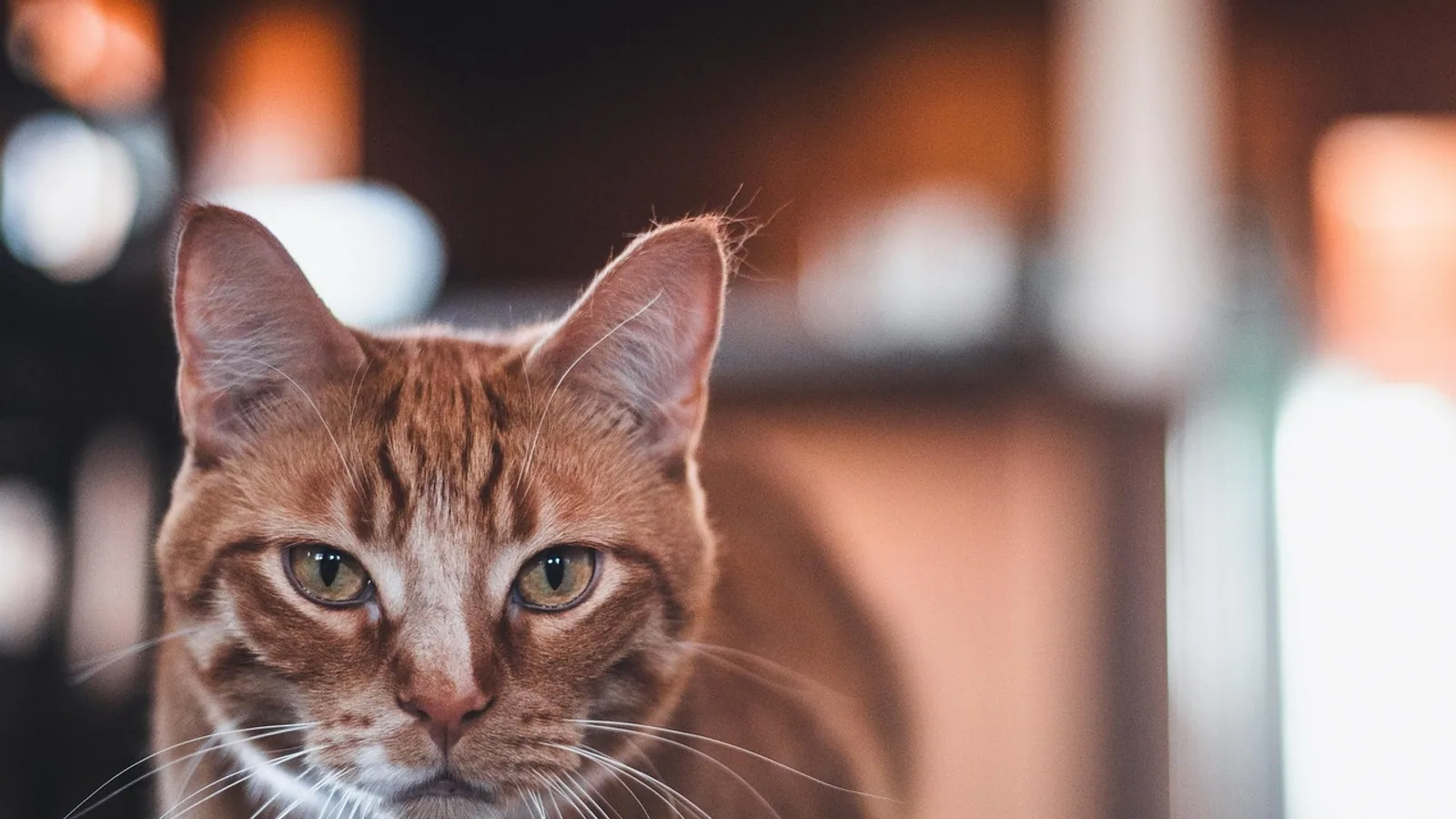
No, male cats do not go into heat. Heat, or estrus, is a reproductive cycle that belongs only to female cats, and it is driven by rising estrogen from the ovaries. A male cat cannot have a heat cycle because he has no ovaries, no estrus phase, and no estrogen surge of that kind.
What a male cat can do is respond to a female in heat. An intact tom will mount, call, spray urine, roam, and fight, and owners often mistake this burst of activity for the male "going into heat." The behavior is real. The cycle is not. This article explains the difference, walks through the female cycle that triggers the behavior, and covers what neutering does and does not change.
This article is educational and is not a substitute for veterinary diagnosis or treatment.
The Short Answer: Heat Is a Female Event
Estrus is the stage of the reproductive cycle when a female cat is sexually receptive and will accept mating. In cats, the whole cycle is described in stages: proestrus, estrus, interestrus, and, if ovulation happens, diestrus [1]. Each of these stages is defined by what the ovaries and the uterus are doing, and by the hormones the ovaries release.
A male cat has testes, not ovaries. His reproductive hormones are androgens, mainly testosterone, produced continuously rather than in a repeating cycle. Testosterone does not rise and fall in a predictable rhythm the way estrogen and progesterone do in a queen. There is no male proestrus, no male estrus, and no male interestrus.
The confusion comes from language. Owners say a cat is "in heat" when the cat is loud, restless, or sexually active. For a female, that description matches a genuine hormonal phase. For a male, the same description matches a behavioral response to a nearby female. Those are two different things.
Why the Term "Heat" Does Not Apply to Males
The word heat is a lay term for estrus. Estrus is defined by ovarian activity, specifically the growth of follicles that produce estradiol, the dominant form of estrogen in cats. Estradiol changes the vaginal lining, changes the uterus, and changes the brain circuits that control the mating posture [2].
In a queen, the strength of the neural pathway that produces the mating posture fluctuates depending on whether she is in heat [2]. That is a female-specific mechanism. The same descending pathway exists in males, but it does not switch on and off with a cycle, because there is no cycle to switch it [2].
So when someone asks whether male cats go on heat, the accurate answer is that the question is built on a category error. Males show mating behavior. They do not show estrus. A male cat cannot go into heat any more than he can ovulate.
What Is Actually Happening in a Male Cat
An intact tom in the presence of a queen in heat is responding to scent, sound, and sight. His behavior is androgen-dependent, meaning it requires testosterone. Remove the testosterone and most of the behavior fades.
The behaviors owners notice include:
- Mounting and neck biting, often directed at the female, other cats, or even soft objects
- Loud, repetitive calling, sometimes described as yowling
- Urine spraying on vertical surfaces
- Roaming, sometimes over long distances
- Aggression toward other males
- Restlessness and reduced appetite
None of these are tied to a fixed schedule. A tom does not become sexually active every two to three weeks. He becomes active when a female in heat is nearby, or when scent cues reach him. In a multi-cat household with an intact queen, that can look like a repeating pattern, but the pattern belongs to her, not to him.
This distinction matters for management. If a tom is showing mating behavior, the practical question is not "what phase is he in" but "is he intact, and is there a female in heat nearby."
The Queen's Cycle: The Engine Behind the Behavior
To understand why a tom acts the way he does, you have to understand the female cycle that produces the signals he responds to.
Seasonally Polyestrous
Cats are seasonally polyestrous, which means they have multiple estrous cycles within a breeding season, followed by a period of no cycling [1]. Queens cycle when the day length is long. They can also be induced to cycle year round with 14 hours of continuous artificial lighting [1]. In practical terms, most queens in North America cycle more in spring and summer and quiet down in the short days of winter, unless indoor lighting keeps them going.
A study of lighting protocols found that a long photoperiod increased most measures of ovarian function, including ovarian volume and follicle diameter, and lowered the resistance index of the intraovarian arteries [3]. Prior exposure to a short photoperiod did not boost that response [3]. This is the physiological basis for the seasonal pattern owners see.
Estrus Every Two to Three Weeks
When a queen is cycling, estrus typically repeats at intervals of roughly two to three weeks if she does not ovulate. Each estrus can last several days. During estrus, ovarian follicles grow. Ultrasound studies during the peri-estrus period show follicles increasing in number and size through estrus, peaking around day 5, then declining after estrus ends [4]. The resistance index of the intraovarian arteries falls during estrus and rises again afterward [4].
Vaginal cytology also changes with the cycle. A queen in cytological estrus typically shows 90 percent or more keratinized epithelial cells, and the smear often has a clear background with low to moderate cellularity [5]. This is a direct effect of estrogen on the vaginal lining, and it is one of the reasons estrus is a female-specific diagnosis.
Induced Ovulation
Cats are induced ovulators. They ovulate in response to multiple natural matings [1]. A single mating is often not enough. This is why a queen can remain in estrus and continue to attract males if she is not bred repeatedly.
If ovulation occurs, she enters diestrus, a luteal phase in which the ovary produces progesterone. If she does not ovulate, she returns to interestrus and then comes back into estrus. Hormone profiles track these phases. Anti-Müllerian hormone concentrations, for example, are significantly higher in anestrus than in heat, and progesterone is used to separate inter-estrus from metestrus [6].
The Hormone Pattern
The diagram below shows the basic sequence that drives a queen's cycle and, indirectly, the male behavior that follows it.
flowchart TD
    A[Long daylight hours] --> B[Follicles grow on ovary]
    B --> C[Estrogen rises]
    C --> D[Estrus behavior appears]
    D --> E[Mating occurs]
    E --> F{Ovulation triggered}
    F -->|Yes| G[Diestrus with progesterone]
    F -->|No| H[Interestrus]
    G --> I[Anestrus or next season]
    H --> B
    C --> J[Scent and sound cues]
    J --> K[Intact tom responds]
    K --> L[Mounting calling spraying roaming]
Male Versus Female Reproductive Behavior: A Direct Comparison
The table below contrasts the two sexes. The key point is that the female has a cycle and the male has a response.
| Feature | Intact female (queen) | Intact male (tom) |
|---|---|---|
| Heat cycle | Yes, estrus recurs roughly every 2 to 3 weeks in season [1] | No cycle |
| Primary hormone | Estrogen from ovarian follicles, then progesterone after ovulation | Testosterone from the testes, produced continuously |
| Ovulation | Induced by multiple matings [1] | Not applicable |
| Seasonality | Seasonal polyestrous, driven by day length [1] | No seasonal cycle, but behavior tracks nearby females |
| Typical behaviors | Calling, rolling, lordosis, tail deviation, receptivity | Mounting, neck biting, calling, spraying, roaming, aggression |
| Vaginal cytology | Changes with cycle stage, keratinized cells in estrus [5] | Not applicable |
| Ovarian imaging | Follicles grow and regress through estrus [4] | Not applicable |
| Effect of gonad removal | Ovariohysterectomy ends cycling | Castration reduces testosterone and most mating behavior |
| Reversibility of hormone suppression | Depends on method used | Deslorelin implant effects are reversible [7] |
The table makes the central fact plain. There is no row for a male heat cycle because no such cycle exists.
Common Myths About Male Cats and Heat
Myth: A male cat in heat is just a male cat in estrus
There is no male estrus. The behaviors are mating behaviors, not cycle behaviors.
Myth: Male cats menstruate
Cats do not menstruate in the way humans do, and males certainly do not. A queen may have a small amount of blood-tinged discharge in some phases, but this is not menstruation, and it is not something a male cat experiences. Vaginal cytology in queens can show red blood cells, but that is a female finding tied to cycle stage [5].
Myth: Neutered males never mount
Castration reduces testosterone dramatically and eliminates most mating behavior in most cats. It does not guarantee zero mounting. A male who learned the behavior before neutering, or who is mounting as a play or dominance behavior rather than a sexual one, may continue. This is why behavior does not always disappear the day after surgery.
Myth: A male cat howling at night must be in heat
Night calling in a tom is usually a response to a female in heat, a territorial dispute, or pain. It is not a heat cycle. If a neutered male suddenly starts howling, that is a medical or behavioral question for a veterinarian, not a reproductive one.
Myth: Male cats have a "season"
Males do not have a breeding season in the hormonal sense. Queens do. A tom's activity rises and falls with the presence of cycling females, which is why intact males in a colony seem more active in spring and summer.
Hormones and the Brain: Why the Behavior Looks Cyclical
The mating posture in cats is controlled by a descending neural system that runs from the midbrain periaqueductal gray to the nucleus retroambiguus in the caudal medulla, which then projects to motor neurons in the lumbosacral cord [2]. This system is present in both sexes, but in females its strength fluctuates strongly depending on whether the cat is in heat [2]. The periaqueductal gray effectively decides whether mating can take place [2].
This is the neuroanatomical reason the female cycle looks so dramatic. Estrogen changes the gain on a specific circuit. In males, the same general pathway exists but is not gated by an estrous cycle. Testosterone supports the behavior, but it does not create a rhythm.
So when a tom seems to "cycle," he is not cycling. He is tracking a female who is.
What Neutering Does and Does Not Change
Neutering, or castration, is the main management step for unwanted male mating behavior. Removing the testes removes the main source of testosterone. In most cats, this reduces or eliminates mounting, spraying, roaming, and aggression over a period of weeks to months.
The evidence for hormone dependence is strong. When toms are treated with a deslorelin implant, a GnRH agonist that suppresses gonadotropin and testosterone secretion, sexual behavior is inhibited for a mean of about 13 months in most treated cats, and fertility returns afterward [8]. In a follow-up study, testosterone fell to basal levels, testicular volume shrank, and normal libido and mating behavior returned only after treatment ended, with fertile matings occurring weeks after the last low testosterone reading [7]. This shows that male mating behavior is tightly linked to testosterone and that suppressing the hormone suppresses the behavior.
Two practical points follow.
First, timing matters. A tom who has practiced mounting, spraying, and roaming for years may have a learned habit that persists at some level after castration. The hormone drive goes away, but the motor pattern can remain, especially if it has been reinforced.
Second, not all mounting is sexual. Some neutered males mount other cats, cushions, or owners as a play or social behavior. This is not a heat cycle and not a hormonal emergency. It is a behavior question.
For owners who want to keep a tom intact for breeding, temporary suppression is possible. Deslorelin implants suppress sexual behavior in males for a mean of about 13 months, and the effect reverses [8]. This is a veterinarian-managed option, not a home decision.
What Owners Should Do
If you have an intact male cat and you are seeing mating behavior, the steps are straightforward.
- Confirm his status. An intact tom has visible testicles. If you are not sure, a veterinarian can check.
- Identify the trigger. Is there an intact female in the household or nearby? Is she showing estrus behavior? If so, the male behavior is a response, and managing the female's cycle or separating the cats will reduce it.
- Book a neuter. Castration is the standard and most effective step. It also prevents testicular disease and reduces roaming and fighting, which lowers injury and disease risk.
- Expect a gradual change. Behavior often improves over weeks, not hours. Learned habits may take longer or need a behavior plan.
- Do not use hormone treatments on your own. Products that suppress estrus in queens are prescription drugs with real side effects. Progestin exposure during pregnancy has been associated with severe congenital malformations in kittens, including cleft palate and arthrogryposis [9]. These are veterinarian decisions.
If you have an intact queen and an intact tom, the only reliable way to prevent litters is to prevent mating. Separation, or neutering one or both cats, is the practical answer.
What Still Is Not Fully Settled
Several areas remain open.
The exact prevalence of persistent mounting after castration is not well quantified in the veterinary literature. Most of what is known comes from clinical experience and from studies of hormone suppression, which show that behavior tracks testosterone but do not measure how often a learned habit survives.
The role of social learning in male mounting is also not fully mapped. Some neutered males mount without any hormonal drive, which suggests that experience and environment matter, but the relative contribution of each is unclear.
Photoperiod research in queens shows that long daylight increases ovarian activity, but spontaneous ovulation frequency was not influenced by photoperiod in one controlled study [3]. The interaction between light, season, and individual variation is still being worked out.
Finally, the use of deslorelin and other reversible contraceptives in toms is well documented for suppression, but long-term behavioral outcomes after repeated implants are less studied [8][7].
Limitations and When to Contact a Veterinarian
This article describes general reproductive biology. Individual cats vary, and a veterinarian who examines your cat can give advice specific to your situation.
Contact a veterinarian if any of the following apply:
- A neutered male suddenly starts howling, spraying, or mounting after a long period without those behaviors
- A male cat shows straining to urinate, blood in urine, or repeated trips to the litter box, since urinary blockage is an emergency in male cats
- An intact male is losing weight, vomiting, or has swollen or asymmetric testicles
- An intact female is showing signs of illness during or after estrus, including discharge, lethargy, or poor appetite
- You are considering a hormone implant or any medication to manage behavior
- You need to confirm whether a cat is neutered, which can be done with a veterinary examination and, in some cases, hormone testing
If you are managing a multi-cat household with intact cats of both sexes, ask your veterinarian about a plan that fits your breeding goals or your decision to stop breeding.
Frequently Asked Questions
Do male cats go in heat?
No. Male cats do not go into heat. Estrus is a female reproductive cycle driven by ovarian estrogen. A male cat can show mating behavior in response to a female in heat, but he does not have a heat cycle himself.
Can a male cat go into heat if he is around a female in heat?
He can show mating behavior, but he does not enter heat. The female is the one cycling. The male is responding to her scent, sound, and presence with testosterone-driven mounting, calling, spraying, and roaming.
Do male cats have a heat season?
No. Males do not have a hormonal breeding season. Queens are seasonally polyestrous and cycle more when daylight is long. A tom's activity rises and falls with the presence of cycling females, not with his own cycle.
Does a male cat menstruate?
No. Cats do not menstruate in the human sense, and male cats have no vaginal tract or uterine lining to shed. Any bleeding from a male cat's urinary or genital area is a medical sign, not a reproductive cycle.
Why does my male cat yowl and spray at night?
Night yowling and spraying in an intact tom are usually mating or territorial behaviors triggered by a nearby female in heat. In a neutered male, sudden onset of these behaviors should be evaluated by a veterinarian.
Will neutering stop my male cat from mounting?
Neutering reduces testosterone and eliminates most mating behavior in most cats. It may not eliminate mounting completely, especially if the behavior was learned before surgery or is social rather than sexual.
Can a male cat go into heat after being neutered?
No. A neutered male has no testes and no heat cycle. If a neutered male mounts or calls, that is residual or learned behavior, not estrus.
How often do female cats go into heat?
A cycling queen typically comes into estrus roughly every two to three weeks during the breeding season if she does not ovulate. Cats are induced ovulators, so mating itself is what triggers ovulation.
Related Articles
- How Often Do Cats Go Into Heat? Feline Estrous Cycle & Signs Guide
- Biology Facts
- Dog Food Nutrition Facts
- Male Herding Dog Behavior Problems
- Male Inbred Dog Behavior Problems
- Intact Male Dog Behavior Problems
Sources
- Normal feline reproduction: The queen.
- Brain circuits for mating behavior in cats and brain activations and de-activations during sexual stimulation and ejaculation and orgasm in humans.
- Comparison of Different Lighting Protocols on Female Cat Reproduction.
- Ovarian and uterine two-dimensional and Doppler ultrasonographic changes in the feline peri-estrus period.
- Vaginal cytology in the queen: clinical and cytological correlations.
- Anti-Müllerian hormone concentrations in queens throughout the estrous cycle.
- Reversibility of germinative and endocrine testicular function after long-term contraception with a GnRH-agonist implant in the tom-a follow-up study.
- Contraceptive implants used by cat breeders in France: a study of 140 purebred cats.
- Multiple congenital malformations in a litter of feline fetuses associated with gestational exposure to a synthetic estrus-suppressing progestin.