Do Female Cats Spray? Causes and How to Stop It
By Dr. Zubair Khalid, DVM, MS, PhD ·
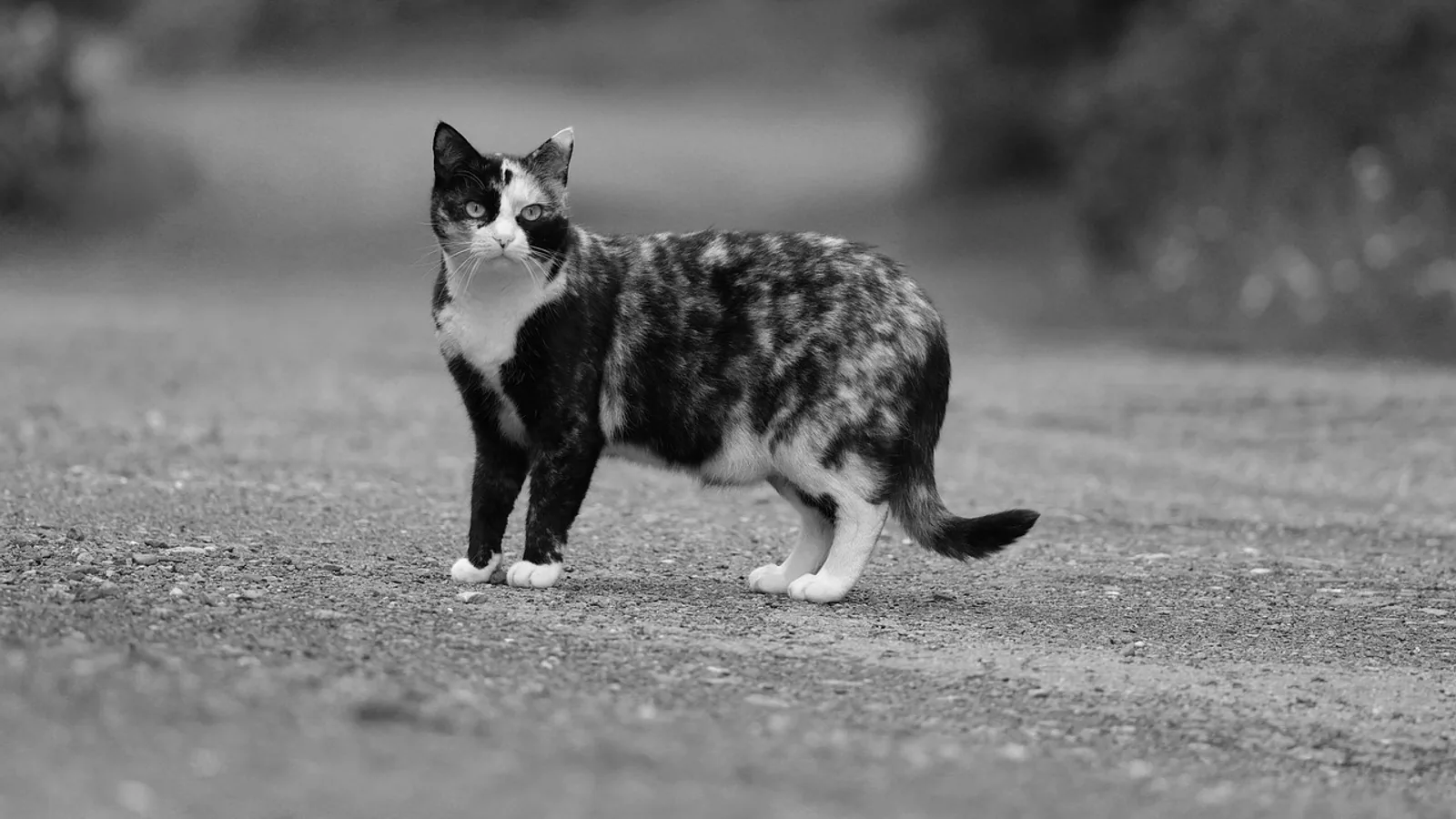
Yes, female cats spray urine. Spraying is not a male-only behavior, and any intact or spayed female can mark vertical surfaces with urine. It is less common in females than in males, but it happens often enough that veterinarians treat it as a routine behavioral complaint rather than an oddity [1].
The short version: spraying is a normal feline communication behavior that becomes a problem when it happens indoors. In females, the two broad drivers are hormonal (an intact queen signaling that she is available for mating) and behavioral (stress, territorial pressure, or conflict in a multi-cat home). Medical problems such as cystitis can trigger or maintain the behavior, so a veterinary workup comes before any training plan. Spaying resolves or greatly reduces spraying in most queens, but it is not a guaranteed cure.
This article explains what spraying actually is, how to tell it apart from ordinary house-soiling, how to work out whether your cat's spraying is hormonal or behavioral, and the management steps that have the best evidence behind them.
This article is educational and is not a substitute for veterinary diagnosis or treatment.
What Spraying Actually Is
Urine spraying is urine deposited on a vertical surface while the cat stands, usually with the tail raised and quivering and with a small amount of urine delivered in a fine stream [1]. The same behavior is described in the literature as urine marking or scent marking [1]. The cat often backs up to a wall, door frame, curtain, appliance, or piece of furniture rather than squatting on the floor.
Sprayed urine is chemically different from urine passed in a litter box, and not because the cat adds anything to it. Research on domestic cats shows that sprayed urine comes only from the bladder, with no contribution from anal sacs or other secretions [2]. What makes it a strong scent mark is its physical behavior on the surface. A feline-specific protein in the urine lowers surface tension, which makes the urine adhere strongly to vertical objects. That adhesion keeps the odor compounds on the surface and lets them be released slowly into the air, which is why sprayed urine smells so much stronger and lingers so much longer than urine in a litter box [2].
That detail matters for owners. You are not imagining that the smell is worse. The urine is doing exactly what feline biology designed it to do: advertising territorial ownership of a space through chemical communication [2].
Spraying Versus Ordinary House-Soiling
These are different problems with different treatment plans, and mixing them up wastes time.
- Spraying is a marking behavior. Small volume, vertical surface, standing posture, tail up [1].
- House-soiling (sometimes called inappropriate elimination or periuria) is urination or defecation outside the box in a squatting posture, usually on horizontal surfaces such as carpets, beds, or laundry.
The distinction is not perfectly clean. Urine marking can also occur on horizontal surfaces, which complicates the diagnosis [1]. If you are unsure which behavior you are seeing, record it. Note the posture, the surface, the volume, and the time of day. Video from a phone is genuinely useful to your veterinarian.
How Common Is Spraying in Female Cats?
Spraying is more common in males, but females spray in both intact and neutered populations [1]. Intact males and intact females use spraying to signal availability for mating, and neutered animals of both sexes can also show the behavior [1].
The clearest sex difference in the treatment literature comes from a survey of gonadectomized cats treated with progestin medication, in which 48% of males responded favorably compared with 13% of females [3]. That figure describes medication response, not how often females spray in the first place, and it should not be read as a statement about behavior frequency. What it does show is that female spraying is common enough to be studied as its own clinical problem, and that females can be harder to control with some drug protocols than males.
Spraying is also a leading reason cats lose their homes. Feline elimination issues are a frequent reason owners cite when they relinquish cats to shelters and rescue organizations [1]. That is the practical stakes of this article.
Hormonal Causes of Spraying in Female Cats
Hormonal spraying is driven by reproductive cycling. An intact queen in estrus is advertising that she is ready to mate, and spraying is one of the signals she uses [1].
Estrus and Intact Queens
If your female cat is not spayed and she sprays, especially with other signs of heat such as vocalizing, restlessness, rolling, or a raised tail, estrus is the first explanation to consider. This is normal behavior for an intact cat, not a behavioral disorder.
The good news is that this form of spraying responds well to spaying. Castration and related gonadectomy procedures are well established as the standard approach to hormonally driven marking, and spraying behavior in cats is reported to disappear almost completely after castration in the species as a whole [4]. The evidence base is strongest for males, where the effect is dramatic. For females, the same principle applies: remove the hormonal driver and the behavior usually fades.
When a Spayed Cat Sprays for Hormonal Reasons
A spayed female who sprays is not automatically a behavioral case. Rare endocrine conditions can produce male-pattern behavior in a female cat.
An ovarian remnant is one example. In a published case, an 11-year-old cat reported as spayed was presented with a four-month history of weight loss, aggression, urine spraying, malodorous urine, and estrus-like behavior. Imaging found a nodule in the abdomen, and hormone testing showed elevated androstenedione and testosterone. Surgery confirmed an ovarian remnant with an intact corpus luteum. The clinical signs resolved within two weeks of removal, and hormone values normalized at a follow-up test six weeks later [5].
Androgen-secreting adrenal tumors are another. A case series described eight sexually altered cats with these tumors. Seven were initially evaluated for inappropriate urination and pungent urine, and aggression and excess vocalization were also commonly reported. In one female cat, an enlarged clitoris was observed. Serum androgen testing found abnormally high testosterone or androstenedione. Hormonal abnormalities resolved and clinical signs improved in the four cats that had surgical adrenalectomy, while medical treatment had minimal effect on signs [6].
These conditions are uncommon. They are also the reason a spayed cat with new spraying, aggression, or a pungent urine odor deserves a proper medical workup rather than a behavioral label alone.
Behavioral Causes of Spraying in Female Cats
Behavioral spraying is about communication and stress, not reproduction. It occurs in spayed and intact cats alike, and it is the more likely explanation in a neutered female [1].
Stress and Environmental Change
Spraying often starts or intensifies after a change in the household. New pets, a new baby, moving house, remodeling, a new person in the home, or a change in routine can all raise a cat's sense of insecurity. Cats mark what they consider theirs, and an unstable environment invites more marking.
Territorial Pressure and Multi-Cat Households
Multi-cat homes are a well-recognized setting for spraying. A published case report describes urine spraying by a cat in a multicat household, illustrating how social tension between cats can drive the behavior [7]. The treatment literature also reflects this. In a study of buspirone for urine spraying, cats from single-cat households responded favorably significantly less often than cats from multiple-cat households, which suggests that social dynamics within a multi-cat home are a meaningful part of the clinical picture [8].
This is counterintuitive for many owners. You might expect a cat in a crowded home to be the problem, but the data show multi-cat cats often respond better to treatment than solo cats, likely because the social trigger is identifiable and modifiable.
Competition for Resources
Litter box access, food, water, resting spots, and high perches are all resources cats compete for. When one cat can guard a box or a hallway, another cat may start marking to assert a claim. Resource competition is a common thread in multi-cat spraying cases [7].
Olfactory Triggers
Scent is central to feline social life, and it can also trigger marking. In a study of captive-housed cats, exposure to a scent-impregnated novel object increased exploration and produced a higher frequency of urine spraying compared with a scent-free object [9]. Female cats in that study spent more time exploring the scent-impregnated object than males did [9]. The takeaway is that unfamiliar or competitor scents in the environment can directly increase marking behavior, particularly in females.
Hormonal Versus Behavioral Spraying: A Comparison
| Feature | Hormonal spraying | Behavioral spraying |
|---|---|---|
| Typical cat | Intact queen, or a spayed cat with an endocrine abnormality | Spayed or intact cat, often in a multi-cat or recently changed home |
| Main driver | Reproductive cycling and sex hormones | Stress, territorial pressure, social conflict, unfamiliar scents |
| Timing | Often cyclical, tied to estrus | Often tied to household events or ongoing tension |
| Other signs | Vocalizing, restlessness, rolling, estrus-like behavior, aggression, pungent urine in endocrine cases | Hiding, overgrooming, litter box avoidance, conflict at resources |
| Responds to spaying | Often yes | Partially, and not reliably |
| First step | Confirm spay status and check for ovarian remnant or adrenal disease if already spayed | Full medical workup, then environmental and behavioral modification |
| Role of medication | Not the primary tool | Sometimes used alongside behavior modification |
Does Spaying Stop Spraying in Female Cats?
Spaying is the single most effective step for an intact queen who sprays. It removes the hormonal signal that drives estrus-related marking, and spraying behavior in cats is reported to disappear almost completely after gonadectomy in the species as a whole [4].
The honest caveat is that spaying reduces the behavior but does not eliminate it in every cat. A meaningful minority of spayed females will continue to spray, particularly if the behavior has become a learned habit or if there is ongoing environmental stress. The commonly cited expectation is that roughly 80 to 90 percent of intact queens stop or substantially improve after spaying, with the remainder continuing at some level. This is why spaying should be paired with environmental management rather than treated as a standalone fix.
Two practical points for owners:
- Timing matters. Spaying before the behavior becomes a long-standing habit gives the best odds.
- Spaying does not rule out a medical cause later. A spayed cat who starts spraying at age 8 or 11 needs a workup, not just a behavior plan [5][6].
Medical Rule-Outs Before Any Behavior Plan
A medical problem can start spraying or keep it going, and treating the behavior without treating the body will fail. A case-control study of cats from multi-cat households with spraying and latrining behavior found medical problems in 38.9% of sprayers, 39.1% of latriners, and only 5.5% of control cats from the spraying households. That difference between cases and controls in spraying households was significant [10].
The same study identified common potential health-related findings including renal insufficiency, cystitis, and bladder lithiasis. Renal calculi, higher creatinine levels within the normal reference interval, and bladder wall glomerulations were also found in some cats that were otherwise considered clinically healthy [10].
Cystitis is the condition owners most often miss. A cat with bladder inflammation may spray or urinate outside the box because the box has become associated with discomfort, not because of a social problem. Your veterinarian will typically want a physical examination, urinalysis, and urine culture, and may recommend bloodwork and abdominal ultrasound depending on your cat's age and history [10].
Do not skip this step. Behavior modification on top of untreated cystitis is a plan built on sand.
A Step-by-Step Plan to Stop Spraying
The flowchart below shows the main decision path from the first episode of spraying to the right management track.
flowchart TD
    A[Cat sprays urine] --> B[Confirm posture and surface]
    B --> C{Veterinary workup}
    C --> D[Urinalysis and urine culture]
    D --> E{Medical cause found}
    E --> F[Treatment for cystitis or other condition]
    E --> G{Is the cat spayed}
    G --> H[Intact queen]
    G --> I[Spayed female]
    H --> J[Spay and manage environment]
    I --> K[Screen for ovarian remnant or adrenal disease]
    K --> L[Behavior and environment plan]
    J --> L
    L --> M[Reassess in 4 to 6 weeks]
Step 1: Confirm What You Are Seeing
Record posture, surface, volume, and timing. This determines whether you are dealing with spraying or house-soiling, and it gives your veterinarian the information they need [1].
Step 2: Get a Veterinary Workup
Book an appointment. Expect a physical examination, urinalysis, and urine culture at minimum, with bloodwork and imaging as indicated [10]. If your cat is spayed and showing aggression, vocalization, or pungent urine, ask specifically about hormone testing for ovarian remnant and adrenal disease [5][6].
Step 3: Address Spay Status
If your female cat is intact, spaying is the highest-yield single intervention [4]. Discuss timing with your veterinarian.
Step 4: Reduce Environmental Stress
This is the core of behavioral treatment, and it is where most owners underinvest.
- Add litter boxes. More boxes in more locations, away from heavy traffic and away from each other.
- Keep boxes clean. Scoop daily and wash regularly. Cats avoid soiled boxes, and a dirty box can push a cat toward marking.
- Separate resources. Feed cats in separate locations, provide multiple water sources, and offer several resting spots and high perches.
- Manage conflict. If one cat guards a hallway or a box, change the layout so no single cat controls a choke point.
- Introduce changes slowly. New pets, new furniture, and new routines should be phased in.
Step 5: Use Pheromone Products and Olfactory Management
Scent is a major driver of marking, and scent-based tools can help. In the study of captive-housed cats, a novel scent-impregnated object increased exploration and spraying, and female cats explored the scent object more than males [9]. This supports the general principle that managing the olfactory environment matters. Synthetic feline pheromone products are widely used for this purpose. Clean sprayed areas thoroughly with an enzymatic cleaner so residual odor does not invite remarking, and avoid ammonia-based cleaners, which resemble urine odor.
Step 6: Consider a Veterinary Behavior Consultation
If spraying continues after spaying, medical rule-outs, and environmental changes, ask for a referral to a veterinary behaviorist. These specialists can assess social dynamics, design a behavior modification plan, and determine whether medication is appropriate.
Step 7: Medication as an Adjunct, Not a First Resort
Several medications have been studied for urine spraying, and all of them work best alongside behavior and environmental modification.
- Clomipramine. In a randomized controlled trial of 67 neutered cats, all three tested dosages produced significant reductions in the frequency of urine spraying compared with placebo. Sedation was the most common adverse effect, reported in 27 of 50 treated cats, though no cat stopped treatment because of it [11]. A separate trial of 25 cats found a statistically significant decrease in spraying on clomipramine, with 20 of 25 cats showing at least a 75% reduction within four weeks. Side effects were mild, and 15 of 20 cats followed for five months still needed medication to control spraying, often at a reduced dose [12]. A third study combining clomipramine with behavior modification reported that the presenting sign improved or disappeared in all cases [13].
- Buspirone. In a study of 47 male and 15 female cats, buspirone produced a favorable response (more than 75% reduction) in 55% of cats treated for urine spraying or marking. There was no sex difference in effectiveness. Cats from single-cat households responded favorably significantly less often than cats from multiple-cat households. Only half of the cats treated with buspirone resumed spraying after the drug was discontinued following two months of treatment [8].
- Diazepam. In a clinical trial of 20 cats, diazepam eliminated or markedly reduced spraying in 11 (55%). Most cats required continuous or intermittent treatment when spraying recurred, and the authors noted that physiologic and behavioral dependency may contribute to recurrence after discontinuation [14].
- Progestins. A survey of gonadectomized cats found that injectable medroxyprogesterone acetate and oral megestrol acetate were successful overall in about one third of patients, with a higher favorable response in males (48%) than females (13%) and in cats from single-cat homes (50%) than multi-cat homes (18%) [3].
Two conclusions follow from this literature. First, medication can work. Second, response rates are moderate, not dramatic, and relapse after discontinuation is common [14][8]. Medication is a tool for making behavior modification possible, not a stand-alone cure.
Your veterinarian will select a drug, if any, based on your cat's health status, concurrent medications, and the specific pattern of behavior. Do not give any medication without a prescription and monitoring plan.
What Still Is Not Settled
The evidence base for female spraying has real gaps.
- Most treatment trials enroll mixed populations of males and females, and few report female-specific outcomes. The buspirone study is a useful exception because it found no sex difference in response [8].
- The progestin survey found a large sex difference in response, but it was a survey rather than a controlled trial, and the sample of females was small [3].
- The role of ovarian remnant and adrenal disease in spayed females is documented in case reports and case series, not in prevalence studies, so the true frequency is unknown [5][6].
- There is no single validated protocol for combining environmental modification with medication in female cats specifically.
What this means for owners is that treatment is often trial and adjustment rather than a fixed recipe. Patience and follow-up matter as much as any single intervention.
Limitations and When to Contact a Veterinarian
Individual cats differ, and this article cannot replace an examination of your cat. Contact a veterinarian promptly if any of the following apply:
- Your cat strains to urinate, produces no urine, or cries while urinating. This can indicate a urinary obstruction, which is an emergency.
- You see blood in the urine, or the urine has a strong abnormal odor.
- Spraying starts suddenly in a previously clean adult or senior cat.
- Your spayed female shows aggression, excessive vocalization, or estrus-like behavior. Ask about hormone testing [5][6].
- Spraying continues after spaying and environmental changes, or it is damaging your relationship with your cat.
- You are considering rehoming your cat because of the behavior. Talk to your veterinarian first. Elimination problems are a leading reason cats are surrendered, and many cases can be improved [1].
Frequently Asked Questions
Can female cats spray?
Yes. Female cats can spray, and both intact and neutered females show the behavior [1]. It is less common than in males, but it is a recognized clinical problem with its own treatment literature [3].
Does spraying mean my female cat has a urinary infection?
Not necessarily, but the odds are high enough that a workup is warranted. In a case-control study, medical problems were found in 38.9% of spraying cats compared with 5.5% of controls from the same households [10].
Will spaying stop my female cat from spraying?
Spaying resolves or greatly reduces spraying in most intact queens, and spraying behavior in cats is reported to disappear almost completely after gonadectomy [4]. A minority continue to spray, so pair spaying with environmental management.
My spayed cat sprays. Is that possible?
Yes, and it is more common than many owners expect. Spayed cats can spray for behavioral reasons, and in rare cases for hormonal reasons such as an ovarian remnant or an androgen-secreting adrenal tumor [5][6].
How do I tell spraying apart from peeing outside the box?
Spraying happens standing up, on a vertical surface, with a small volume of urine and a raised tail [1]. House-soiling happens squatting, on horizontal surfaces, with a normal volume. Marking can occasionally occur on horizontal surfaces, so record what you see [1].
Do pheromone products work for spraying?
They are a reasonable adjunct, and scent clearly influences marking behavior in cats [9]. They work best as part of a broader plan that includes spaying, medical treatment, and environmental changes.
Is there medication for cat spraying?
Yes. Clomipramine, buspirone, diazepam, and progestins have all been studied for urine spraying, with moderate response rates and common relapse after discontinuation [14][8][11][3][12]. Medication is used alongside behavior modification, not instead of it.
When should I see a veterinary behaviorist?
Ask for a referral if spraying continues after a medical workup, spaying, and consistent environmental changes, or if there is ongoing conflict between cats in your home [7][8].
Related Articles
- How To Stop Cat From Scratching Furniture Spray
- How to Stop a Dog from Eating Poop: Causes and Solutions
- How to Stop a Dog from Whining: Causes and Training Tips
- Dog Licking Paws Raw: Causes and How to Stop It
- DNA Replication Stop During PCR: Causes and Solutions
- Dog Potty Training Spray
- Ochre Codon: Stop Codon Function Explained
- DNA Codon: Chart, Start and Stop Signals
Sources
- Common feline problem behaviors: Urine spraying.
- Sprayed Urine Emits a Pungent Odor due to its Increased Adhesion to Vertical Objects via Urinary Proteins Rather Than to Changes in its Volatile Chemical Profile in Domestic Cats.
- Objectionable urine spraying and urine marking in cats: evaluation of progestin treatment in gonadectomized males and females.
- Treatment of problem behaviour in dogs and cats by castration and progestagen administration: a review.
- Hyperandrogenism associated with an ovarian remnant in a spayed female cat.
- Case report: Androgen-secreting adrenocortical tumors in eight cats.
- Animal behavior case of the month. Urine spraying by a cat in a multicat household.
- Effectiveness of buspirone on urine spraying and inappropriate urination in cats.
- Influence of olfactory enrichment on the exploratory behaviour of captive-housed domestic cats.
- A closer look at the health of cats showing urinary house-soiling (periuria): a case-control study.
- Determination of the dosage of clomipramine for the treatment of urine spraying in cats.
- Effects of clomipramine on cats presented for urine marking.
- Use of clomipramine in the treatment of anxiety-related and obsessive-compulsive disorders in cats.
- Comparison of diazepam with progestin for effectiveness in suppression of urine spraying behavior in cats.