Cat Loaf: Why Cats Sit in a Loaf Position
By Dr. Zubair Khalid, DVM, MS, PhD ·
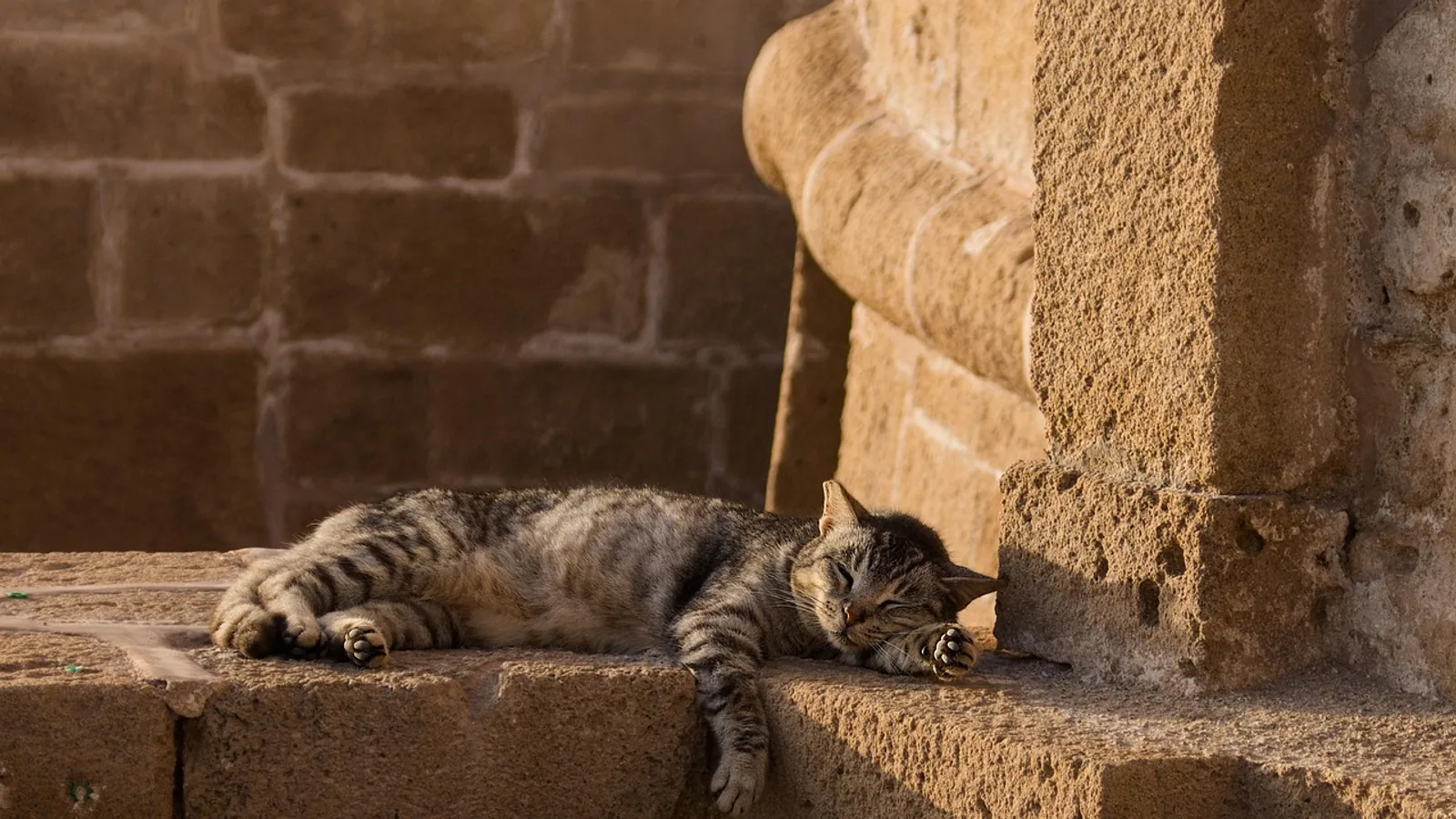
A cat loaf is a resting posture in which the cat settles its weight onto its sternum, folds all four limbs beneath the body, and tucks the tail close, producing a compact, rounded shape with no visible paws. In a healthy cat, loafing is a sign of relaxed comfort and a simple way to hold in body heat. The same shape can also appear when a cat is guarding a painful abdomen, so the posture alone does not tell you whether your cat is content or uncomfortable. Body tension, facial expression, and willingness to move are what separate the two.
This article explains the biology of the cat loaf, why cats loaf, how to read the difference between a comfortable loaf and a pain-associated crouch, and when a loafing cat needs veterinary attention.
This article is educational and is not a substitute for veterinary diagnosis or treatment.
What Is a Cat Loaf?


The cat loaf is a stationary posture. The cat lies with its ventral chest and abdomen in contact with the resting surface, the forelimbs folded under the chest, and the hind limbs tucked beneath the pelvis. The tail usually wraps around one flank or lies flat against the body. From above, the cat looks like a rounded, pawless mass, which is where the nickname comes from. Owners describe cats that loaf as "loaves" or say the cat is "loafing," and the behavior is common enough that it is one of the most recognized feline postures.
Loafing is not sleep. A loafing cat is usually awake and alert. The ears remain mobile, the eyes track movement in the room, and the head can turn without the body shifting. This is a resting-but-ready state rather than deep relaxation. A cat that is fully asleep typically sprawls, curls, or lies on its side, because muscle tone drops during sleep and the tucked-limb posture is harder to maintain.
The posture is also distinct from the classic "meatloaf" of a cat that is simply sitting. A sitting cat has its hindquarters elevated on the rear legs and its front legs extended. A loafing cat has the entire body low and in contact with the surface, with no limb visible.
Why Do Cats Loaf? The Core Reasons
Heat Conservation
The most consistent explanation for loafing is thermoregulation. A cat's limbs, ears, and tail have a high surface-area-to-volume ratio, which means they lose heat quickly when exposed. Folding the limbs under the body and wrapping the tail reduces the exposed surface area and traps warm air against the torso. Cats loaf more often in cool rooms, on cold floors, and in winter. They also loaf on warm surfaces, including radiators, sunny patches, and human laps, where the same compact shape helps hold in the heat the surface provides.
This is a behavioral adaptation, not a sign of illness. A cat that loafs on a cool tile floor in a chilly house is doing exactly what a cat should do to stay warm.
Comfort and Security
Loafing is a low-energy, stable posture. A cat that feels safe in a location will settle into a loaf and stay there for long periods. The posture keeps the body low and compact, which is a defensible position, and it allows the cat to rest without fully committing to sleep. Cats often loaf in the middle of a room, on a favorite chair, or near their people, which suggests the posture is associated with a relaxed, non-vigilant state rather than hiding or avoidance.
Resting Without Sleeping
A loafing cat is conserving energy while staying ready to respond. The tucked limbs can be extended quickly if the cat decides to move, which makes loafing a practical middle ground between full rest and full activity. This is why cats loaf while waiting for food, watching birds through a window, or supervising a household. The posture supports alert rest.
Pain Guarding
The same tucked-limb shape can appear when a cat is uncomfortable. A cat with abdominal pain may crouch with the belly protected and the limbs drawn in, because pressure on a painful abdomen is aversive. In this case the posture is not relaxation but guarding. The cat is trying to minimize movement and protect a sensitive area. This is why the loaf shape alone is not enough to judge how a cat feels. The context, the face, and the cat's willingness to move carry the diagnostic weight.
Normal Loafing Versus Pain-Associated Posture
The key differences are muscle tension, facial expression, and behavior. A comfortable loaf is soft. A pain-associated crouch is rigid.
Body Tension
A relaxed loafing cat has a soft, rounded back with no visible arch. The muscles along the spine and abdomen are loose. If you gently touch the cat, the body yields and the cat may purr or continue resting. A cat in pain often holds the back hunched or arched, with the abdomen drawn up and the spine curved. The body feels hard and tense. The cat may flinch, pull away, or vocalize when the abdomen is approached.
Facial Expression
A comfortable loafing cat has relaxed ears in a neutral position, normal-sized pupils, and eyes that are open, soft, or half-closed in a contented way. A cat in pain often has ears flattened or rotated outward, eyes narrowed or squinted, and a tense muzzle. The face is a reliable signal in cats, and validated feline pain scoring systems rely heavily on facial features, including ear position, orbital tightening (squinting), muzzle tension, and whisker position. Research on domestic cat facial morphology has shown that breed-level variation in facial landmarks affects how reliably these expressions can be read, which means a flat-faced breed may look different from a long-nosed breed even in the same state of discomfort [1]. The general principle holds: a soft face suggests comfort, a tight face suggests discomfort.
Willingness to Move
A comfortable cat will break the loaf to eat, greet you, stretch, or investigate a sound. A cat in pain stays put. Reluctance to move, reluctance to jump, and a stiff, guarded gait are more meaningful than the posture itself. If you offer a favorite treat or open a can of food and the cat does not rise, that is a stronger warning sign than the shape of the body.
The Table: Normal Loaf Versus Pain-Associated Crouch
| Feature | Normal cat loaf | Pain-associated crouch |
|---|---|---|
| Back shape | Soft, rounded, no arch | Hunched or arched, abdomen drawn up |
| Muscle tone | Loose, yields to gentle touch | Rigid, hard, flinches on approach |
| Ears | Neutral, relaxed, mobile | Flattened or rotated outward |
| Eyes | Open, soft, or contentedly half-closed | Squinted, narrowed, staring |
| Muzzle and whiskers | Relaxed | Tense muzzle, whiskers pulled back or forward |
| Tail | Wrapped or flat, relaxed | Tucked tight, may twitch or flick |
| Response to food | Rises to eat | Stays down, may refuse food |
| Response to sound | Head turns, ears track | Minimal response, stays rigid |
| Willingness to move | Stretches, walks, jumps normally | Reluctant to move, stiff gait |
| Vocalization | Quiet or normal purring | May groan, cry, or growl when handled |
| Duration | Long periods, comfortable | Persistent, does not settle into sleep |
A cat can show a mix of features. The pattern matters more than any single sign. A soft loaf with a relaxed face and a good appetite is almost always normal. A rigid crouch with a tight face and no interest in food deserves a call to your veterinarian.
The Biology Behind the Posture
Loafing is a whole-body behavior, but the underlying control is neural and musculoskeletal. Posture is maintained by continuous input from the vestibular system, the visual system, and proprioceptive feedback from muscles and joints. The brainstem nuclei that control eye movement and head position are part of this same postural network, and studies in alert cats have mapped how neurons in these nuclei fire in relation to eye position and alertness [2][3]. Alertness level directly changes the firing rate of these neurons, which is one reason a cat's posture and facial expression shift with its state of arousal [2][3]. A relaxed cat and an anxious cat can hold similar body shapes while their nervous systems are in very different states.
The tucked-limb posture also relies on the cat's flexible spine and strong hindlimb musculature. Cats can hold the loaf because their joints allow the limbs to fold tightly against the body without discomfort. When a cat has joint pain, abdominal pain, or generalized malaise, that folding becomes uncomfortable, and the cat may shift into a different, more guarded position or avoid lying down altogether.
Thermoregulation is the other biological driver. Cats have a limited ability to sweat and rely on behavior to manage heat loss. Reducing exposed surface area by tucking the limbs is an efficient way to slow heat loss in cool conditions. The same logic explains why cats seek warm surfaces and why they loaf more in cold weather.
Common Myths About the Cat Loaf
Myth: A loafing cat is always in pain
This is the most common misconception. Most loafing is normal. A cat that loafs on a sunny windowsill, purrs when you pet it, and jumps up for dinner is comfortable. Pain-related loafing is a specific pattern with tension, facial changes, and behavioral withdrawal. Treating every loaf as a pain sign would lead to unnecessary worry and unnecessary veterinary visits.
Myth: A loafing cat is always cold
Cold is one reason cats loaf, but it is not the only one. Cats also loaf when they are comfortable, when they are resting lightly, and when they are waiting for something. A cat loafing on a warm lap in a warm room is not cold. It is settled.
Myth: A loafing cat cannot move quickly
A loafing cat can rise and move very fast. The tucked limbs are not locked. The posture is stable, not rigid. This is part of why loafing is a practical resting state for a predator that may need to react to a sound or a movement.
Myth: Only lazy cats loaf
Loafing is normal across activity levels. An active cat loafs between bouts of play. A sedentary cat may loaf more often simply because it rests more. The posture itself does not indicate laziness or low energy in a medical sense.
Practical Implications for Owners
Reading Your Cat's Baseline
The most useful thing you can do is learn your own cat's normal loaf. Note the back shape, the ear position, the eye expression, and how your cat responds when you speak or offer food. A cat that always loafs with a slightly arched back because of its body type is different from a cat that suddenly develops a hunched posture. Change from the individual baseline matters more than the absolute appearance.
Warmth and Comfort
If your cat loafs frequently in cool weather, provide warm resting spots. A heated bed, a blanket, or a sunny window ledge supports normal thermoregulatory behavior. This is comfort care, not treatment. It does not replace veterinary evaluation if your cat shows other signs of illness.
Handling a Loafing Cat
Do not force a loafing cat to stand or stretch. If you suspect pain, avoid pressing on the abdomen. A gentle approach, offering food, and observing whether the cat rises on its own gives more information than physical manipulation. If the cat resists handling or vocalizes when touched, stop and contact your veterinarian.
Monitoring After Veterinary Care
If your cat has been treated for a painful condition, the return of a soft, relaxed loaf and a normal appetite are good signs of recovery. A cat that continues to crouch rigidly after treatment should be rechecked. Follow your veterinarian's recheck schedule rather than judging recovery by posture alone.
When to Worry: A Decision List
Use this list to decide whether a loafing cat needs veterinary attention. Any single item in the "contact a veterinarian" column is enough to make the call.
Normal loafing, no action needed:
- Soft, rounded back with no arch
- Relaxed ears and soft eyes
- Rises to eat, greet you, or investigate sounds
- Stretches and moves normally after resting
- No vocalization or signs of discomfort when approached
Contact a veterinarian:
- Reluctance to move, or the cat stays down when food is offered
- Vocalization, especially groaning, crying, or growling when handled
- Vomiting, diarrhea, or repeated lip licking and swallowing
- Changes in appetite, including refusing food or eating much less
- Hunched or arched back with a tense, hard abdomen
- Squinted eyes, flattened ears, or a tense muzzle that persists
- Hiding, withdrawal, or a sudden change in social behavior
- Difficulty jumping, stiffness, or a reluctance to use stairs
- Panting, open-mouth breathing, or a rapid respiratory rate
- Any sudden change from a previously normal loafing pattern
A cat that shows several of these signs together needs prompt evaluation. Abdominal pain in cats can have many causes, and the posture is only one clue. A veterinarian can assess the abdomen, check for dehydration, and determine whether imaging or blood work is needed.
Limitations and When to Contact a Veterinarian
This article describes general patterns. Individual cats vary, and a veterinarian who can examine your cat is the only reliable source of a diagnosis. Posture alone cannot confirm or rule out pain. If your cat's loafing pattern changes, if the cat stops eating, if the cat vocalizes when touched, or if the cat becomes reluctant to move, contact your veterinarian. Do not wait for the posture to become obvious. Early evaluation is easier on the cat and often easier to treat.
If your cat is loafing but otherwise normal, there is no need to intervene. If you are unsure, a phone call to your veterinary clinic is a reasonable first step. Describe what you see, including the back shape, the face, and whether the cat will eat.
Frequently Asked Questions
Why does my cat sit in a loaf position?
Cats loaf to rest comfortably while conserving body heat and staying ready to move. The tucked limbs reduce exposed surface area, which helps hold in warmth, and the low, stable posture supports light rest. Most loafing is normal behavior.
Is a cat loaf a sign of pain?
Not usually. A cat loaf is most often a sign of comfort or thermoregulation. Pain-related loafing looks different: the back is hunched, the muscles are tense, the face is tight, and the cat is reluctant to move or eat.
How can I tell if my cat's loaf is a pain posture?
Look at the back, the face, and the cat's behavior. A soft, rounded back with relaxed ears and open eyes suggests comfort. A hunched back, squinted eyes, flattened ears, and a refusal to rise for food suggest pain.
Do cats loaf more in cold weather?
Yes. Loafing is an efficient way to conserve heat, so cats loaf more in cool rooms and during cold weather. Providing a warm bed or a sunny spot supports this normal behavior.
Can a cat move quickly from a loaf?
Yes. The loaf is a stable resting posture, not a locked position. A loafing cat can rise and move very fast if it hears a sound or sees something interesting.
Should I be worried if my cat loafs all day?
It depends on the rest of the behavior. A cat that loafs all day but eats, drinks, uses the litter box, and interacts normally may simply be resting. A cat that loafs all day and stops eating, hides, or vocalizes needs veterinary attention.
Does loafing mean my cat is cold?
Not necessarily. Cold is one reason cats loaf, but cats also loaf when they are comfortable, resting lightly, or waiting for food. A cat loafing on a warm lap is not cold.
When should I call the vet about a loafing cat?
Call your veterinarian if your cat is reluctant to move, vocalizes when touched, vomits, stops eating, or holds a hunched, tense posture with a tight face. Any of these signs warrants an evaluation.
Related Articles
- How To Teach A Dog To Sit
- When to apply for postdoc positions
- The 10 Best Job Boards for Computational Biology Positions
- Goat Kidding Positions: Normal and Abnormal Presentations
- How to Write a Resume Objective for a Laboratory Technician Position
- Crafting a Career Objective for Academic Science Positions
- Abdominal Organs: Positions, Functions, and Species Differences
Further Reading
- Evaluation of Maine Coon cat behavior during three different management situations
- Social network position is a major predictor of ant behavior, microbiota composition, and brain gene expression
- Associations of health literacy with socioeconomic position, health risk behavior, and health status: a large national population-based survey among Danish adults
Sources
- The Application of Geometric Morphometrics to Explore Potential Impacts of Anthropocentric Selection on Animals' Ability to Communicate via the Face: The Domestic Cat as a Case Study
- Behavior of neurons in the abducens nucleus of the alert cat--I. Motoneurons.
- Behavior of neurons in the abducens nucleus of the alert cat--II. Internuclear neurons.