Cat Care Guide: Daily, Weekly, and Monthly Routine
By Dr. Zubair Khalid, DVM, MS, PhD ·
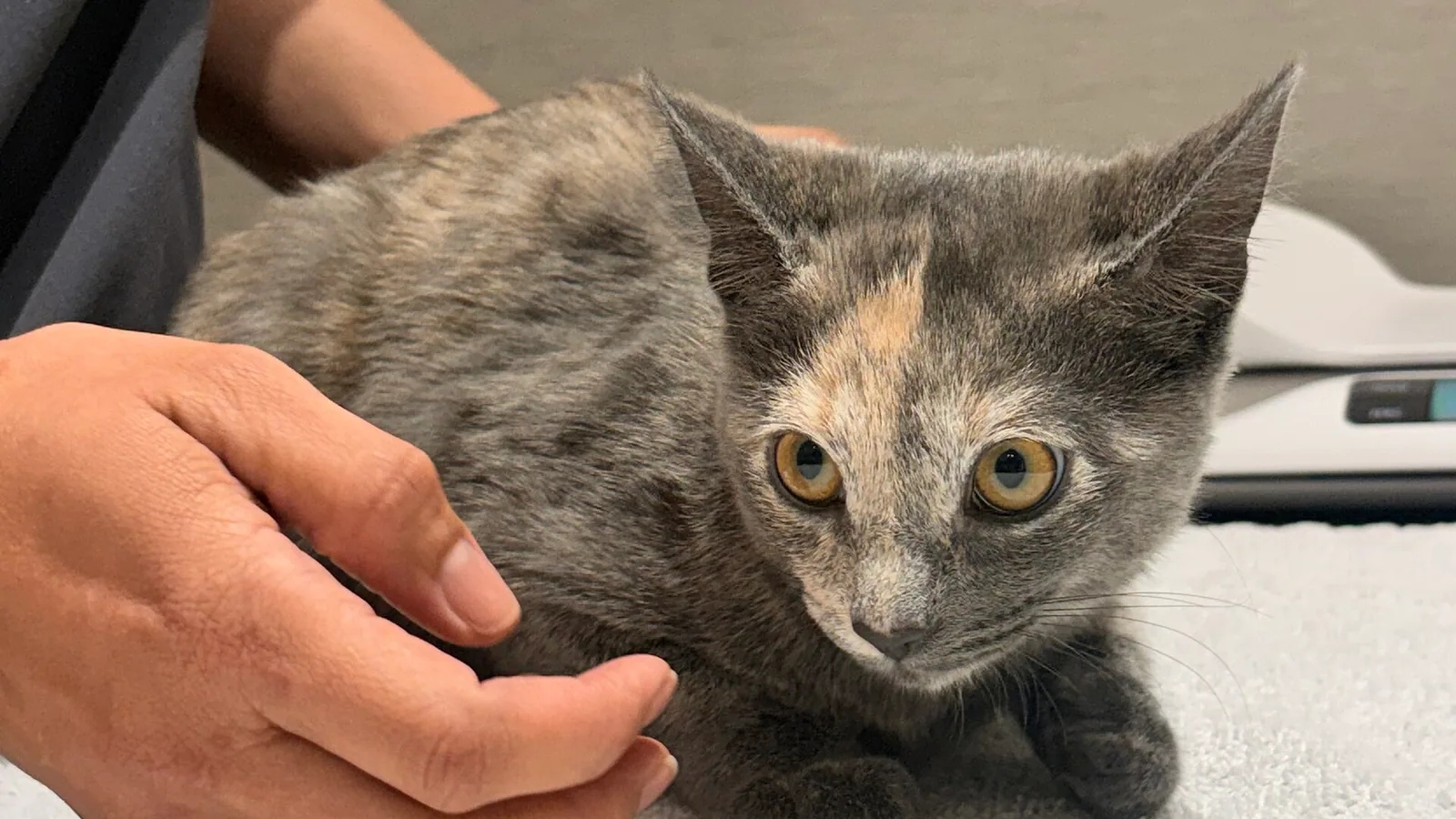
A solid cat care routine comes down to doing a small number of things every day, a few things every week, and a handful of checks every month. Daily, you feed measured meals, refresh water, scoop the litter box, and spend a few minutes on interactive play. Weekly, you clean the litter box fully, groom, wash bowls and bedding, and check the environment for hazards. Monthly, you weigh your cat, run hands-on body and coat checks, keep parasite prevention on schedule, and watch for behavior changes that can signal illness.
Cats are often described as low-maintenance, self-sufficient pets. Researchers reviewing common feline care myths point out that this belief is pervasive and can lead owners to under-provide for their cats' behavioral and husbandry needs, when in fact careful daily management measurably improves feline health, mental stimulation, and wellbeing [1]. This guide lays out exactly what to do, when to do it, and why each task matters, so that cat care for beginners feels manageable and nothing important slips through the cracks.
This article is educational and is not a substitute for veterinary diagnosis or treatment.
At a Glance: Your Cat Care Checklist
| Frequency | Task | Why It Matters |
|---|---|---|
| Every day | Feed measured meals, refresh water, scoop litter, play 5 to 15 minutes, visual health check | Prevents obesity, encourages natural behavior, catches early illness signs |
| Every week | Full litter box clean, grooming session, wash bowls and bedding, environment check | Controls parasites and bacteria, maintains coat health, keeps enrichment safe |
| Every month | Weigh your cat, body condition check, teeth and coat inspection, parasite prevention, restock supplies | Tracks trends that reveal disease early |
| Every 6 to 12 months | Veterinary wellness examination | Cats hide disease, and routine exams catch it |
Why a Routine Matters for Cat Welfare
A cat's welfare depends on meeting both physiological needs, such as food, water, and veterinary access, and psychological needs, such as appropriate housing, hiding places, perching opportunities, and control over social interactions. A large survey of shelter organizations in the British Isles found that while basic physiological needs were generally well met, psychological needs were addressed less consistently, a gap that can lead to poor welfare outcomes [2]. The same gap exists in homes. A predictable daily and weekly cat care routine is how you close it.
Shelter design research makes the principle clear. Housing that allows cats to hide, perch, and perform natural behaviors reduces stress and disease risk, while barren environments do the opposite, even when they are easy to clean [3]. In your home, this translates into providing vertical space, hiding spots, and choice, not just food and a litter box. Studies of cats in group living settings show that cats use elevated structures heavily, particularly during busy or stressful periods, and use avoidance rather than confrontation to manage conflict [4]. Your routine should therefore protect both physical care and environmental quality.
The Daily Cat Care Checklist

Feeding: Measured Meals, Not Free-For-All Grazing
Feed at consistent times each day using measured portions. Obesity is one of the most common welfare problems in pet cats. In a study of 206 mature cats aged 7 to 10 years, 45 percent were overweight and 12 percent were obese at enrollment [5]. In sterilized cats specifically, research comparing obese cats with cats of ideal body condition found that obesity was associated with adverse blood chemistry changes, including alterations in glucose, liver enzymes, triglycerides, and creatinine, along with poorer welfare outcomes [6]. Sterilization itself can predispose cats to weight gain, which makes portion control and monthly weigh-ins essential parts of how to take care of a cat after spay or neuter surgery.
Practical daily habits:
- Feed measured meals at fixed times rather than topping up the bowl whenever it empties.
- Separate food and water bowls from the litter box area. Cats prefer not to eat near elimination sites.
- If you feed multiple cats, supervise meals or feed in separate locations so one cat cannot monopolize the food.
Fresh Water
Replace water at least once daily. Many cats prefer running water or wide, shallow bowls kept away from food. Whatever vessel you choose, wash it regularly and place water stations in more than one location.
Litter Box Scooping
Scoop the litter box at least once daily, ideally after each elimination event you notice. Daily scooping is the single highest-yield hygiene task in any cat daily care checklist. Unscooped boxes drive cats to urinate or defecate elsewhere in the house, and inappropriate elimination is one of the most common reasons owners seek behavioral help.
Interactive Play
Cats are predators, and daily play lets them express hunting behavior in a safe outlet. Use wand toys, chase toys, or objects the cat can stalk and pounce on. Research on preference assessments in domestic cats shows that individual cats vary widely in what motivates them, with food, toys, and social interaction each preferred by different individuals, and that identifying your own cat's preferred reinforcer makes training and enrichment far more effective [7]. Experiment with toy types and rotate them. Short sessions of 5 to 15 minutes, once or twice daily, are more valuable than one long session.
The 30-Second Daily Health Check
Each day, observe your cat's appetite, water intake, urination, defecation, energy level, breathing, and posture. Cats mask illness, so subtle changes matter. In the aging cat study mentioned above, owners frequently reported behavioral changes in 47 percent of mature cats, changes to eating patterns in 41 percent, and activity changes in 40 percent, and some of those owner observations correlated with clinically confirmed disease [5]. In a longer follow-up study, a specific owner observation, a cat sniffing its food and then walking away, was associated with azotemia, the presence of nitrogenous waste products in the blood that can indicate kidney dysfunction [8]. If your cat sniffs food and walks away repeatedly, call your veterinarian.
Weekly Cat Care Tasks
Deep-Clean the Litter Box
Once a week, empty the box completely, wash it with mild unscented soap, dry it, and refill with fresh litter. Scooping daily removes waste, but weekly washing removes the odor residues that build up and can make a box unattractive to a fastidious cat. Provide one litter box per cat plus one extra, located in quiet, accessible spots.
Grooming and Coat Check
Brush your cat weekly, or more often for long-haired breeds. Weekly grooming removes loose hair, reduces hairball formation, and gives you a hands-on opportunity to feel for lumps, mats, wounds, or parasites. Coat condition is a health signal. In the mature cat study, a matted hair coat was significantly associated with dental disease and with abnormal orthopedic examination findings, meaning that a deteriorating coat can be one of the first visible signs of pain or illness [5]. A cat that stops grooming thoroughly deserves a veterinary look.
Wash Bowls, Bedding, and Enrichment Items
Wash food and water bowls with hot soapy water several times per week and launder bedding weekly. Dirty bowls can deter fastidious cats from eating and drinking adequately.
Environment and Safety Sweep
Walk through your home weekly and check for:
- Toxic plants, dangling cords, and small objects that can be swallowed
- Windows and balconies that are not secured, since falls are a serious indoor hazard
- Enrichment items, perches, and scratching surfaces that are worn, loose, or unstable
- Hiding places that are still available and clean, because hiding is a core feline coping behavior [3]
Enrichment Rotation
Rotate toys and rearrange perches or boxes slightly each week. Novelty within a stable environment keeps indoor cats mentally engaged. Preference research supports rotating among your cat's proven favorites rather than flooding them with unfamiliar items, since most cats respond most strongly to stimuli they have already ranked highly [7].
Monthly Routine Tasks
Weigh Your Cat and Assess Body Condition
Weigh your cat monthly on the same scale. A gain or loss of even a few hundred grams in a small cat is meaningful. Combine the scale reading with a hands-on body condition check: you should feel ribs easily under a thin fat layer, see a visible waist from above, and feel no heavy fat pad over the hips. If your cat is sterilized, be especially vigilant, since sterilization increases the risk of excessive weight gain and the metabolic consequences that follow it [6].
Dental and Oral Check
Lift the lips monthly and look at the teeth and gums. Dental disease is extraordinarily common and underrecognized. At enrollment in the mature cat study, dental disease was present in 54 percent of cats aged 7 to 10, and over a seven-year longitudinal follow-up of aging cats, dental disease became the most prevalent abnormality of all, affecting 84 percent of the cohort [5] [8]. Signs to watch for include bad breath, drooling, red gums, difficulty chewing, and dropping food. Report what you find at your cat's regular veterinary visit rather than attempting home dental treatment.
Hands-On Full Body Check
Once a month, run your hands over the entire body from nose to tail tip. Check for masses, wounds, fleas or flea dirt, tick attachment, ear debris or odor, discharge from the eyes or nose, and nail length. Cats that resist handling can be checked in short segments across several days, ideally building tolerance through positive reinforcement with their preferred rewards [7].
Parasite Prevention and Preventive Care Schedule
Keep flea, tick, and heartworm prevention on a monthly schedule appropriate to your region, as recommended by your veterinarian, and confirm annually that vaccinations, microchip registration, and licensing are current. Ownership surveys in multiple countries consistently show that identification measures such as microchipping and registration are the steps owners most often overlook, even among owners who vaccinate and deworm reliably [9] [10]. Put these dates on a calendar or phone reminder as part of your monthly review.
Review Resources and Restock
Check levels of litter, food, medications, and carrier readiness. A cat carrier should be out, open, and inviting year-round, not hauled out of a closet twice a decade, so that veterinary visits are less stressful.
Setting Up the Environment: The Foundation of the Routine
Vertical Space and Hiding Places
Cats experience the world in three dimensions. Elevated perches, cat trees, shelves, and window seats give cats vantage points that reduce perceived threat. In a Swedish cat café housing groups of 8 to 9 neutered cats, elevated structures were used far more than expected, and cats retreated to vertical levels or private rooms as human occupancy increased, suggesting that height functions as a stress-management resource [4]. Provide at least one escape route and elevated spot per cat, plus hiding options such as covered beds or open cardboard boxes.
Resource Distribution in Multi-Cat Homes
In multi-cat households, distribute resources, food stations, water, litter boxes, resting spots, and scratching surfaces, across multiple rooms so that no single cat controls access. Research comparing welfare in single versus multi-cat homes found that cats in single-cat households actually showed higher stress scores on the cat stress score measure than cats from multi-cat households, which suggests that the number of cats matters less than how well the environment and social setup are managed [11]. If you see staring, blocking, or chase behavior between your cats, increase the number and separation of resources before considering rehoming.
When multi-cat households do break down, the consequences are serious. A study of ten problem multi-cat households receiving RSPCA intervention, containing 176 cats in total, showed that welfare scores improved after intervention centered on neutering all entire female cats plus basic care education, with gains persisting at 12-month follow-up [12]. Neutering every cat in the home is a non-negotiable foundation of responsible multi-cat care.
Indoor Living and Secure Outdoor Access
The safest way to protect an indoor cat from infectious disease, trauma, and predation of wildlife is to keep it indoors or give it secure outdoor access such as a purpose-built enclosure. Australian and New Zealand feline medicine guidelines recommend that all pet cats be kept exclusively indoors or with secure outdoor access, combined with FIV testing of any in-contact cats, as the most reliable way to minimize exposure to feline immunodeficiency virus [13]. Free outdoor access also shortens lifespans, a risk that communities value addressing, as shown by economic research finding that cat owners and non-owners alike express willingness to pay for measures that reduce premature death among outdoor cats [14]. If you want to give your cat outdoor time, a catio or supervised harness time achieves the benefits without the risks.
The Behavior Side of the Routine
Behavior is a vital sign. Changes in sociability, litter box use, activity, sleep, or vocalization should be treated with the same seriousness as vomiting or limping. Nearly 30 percent of cat owners surveyed at German veterinary practices reported behavioral problems in their cats, and owner compliance with husbandry advice improved significantly when veterinarians provided accurate, empathetic behavioral guidance [15]. Bring behavior questions to your regular veterinary visits rather than waiting for a crisis.
Two common behavior-related mistakes deserve attention:
- Assuming cats cannot be trained or do not need interaction. Cats learn readily, and structured training with preferred rewards improves welfare and the human-cat bond [1] [7].
- Overlooking early warning signs as personality quirks. Increased irritability toward other pets was associated with dental disease in mature cats, and increased sleeping and increased grooming were also tied to underlying abnormalities [5]. Behavioral change is frequently medical in origin.
If you are choosing a pedigree cat, research beyond appearance. A welfare framework review of purebred cats concluded that breeding for extreme conformations, such as the osteochondrodysplasia affecting Scottish Folds and the increasingly flattened faces of brachycephalic breeds, causes avoidable suffering, and that husbandry and breeding practices matter as much as breed choice [16]. A separate review of appearance-driven breeding in dogs and cats reached the same conclusion, linking exaggerated features to chronic airway, ocular, dental, skin, and musculoskeletal disorders [17]. Ask breeders directly about health screening and avoid supporting sources that prioritize looks over health and temperament.
Common Mistakes in Cat Care Routines
- Treating the cat as self-sufficient. The most damaging myth in feline care is that cats need little management. Correcting this misconception improves physical health, mental stimulation, and wellbeing for both cat and owner [1].
- Free-feeding without measurement. Constant access to food combined with sterilization and low activity drives obesity [6].
- Too few litter boxes, scooped too rarely. Daily scooping plus one box per cat plus one extra prevents most elimination problems.
- Ignoring vertical space. A home with no perches or hiding places fails a core psychological need that even sector minimum standards recognize [2] [3].
- Skipping the annual or semiannual veterinary exam because the cat seems fine. In the seven-year aging cat cohort, 96 percent of cats developed at least one abnormality on veterinary examination, and 84 percent developed two or more morbidities, with dental disease, orthopedic abnormalities, and heart murmurs the most prevalent findings [8]. Most of these conditions are invisible to owners until they are advanced.
- Letting identification and registration lapse. Microchipping and registration are routinely overlooked even by otherwise diligent owners [9] [10].
Limitations and When to Contact a Veterinarian
Every cat is an individual. Age, breed, prior medical history, and household context change what an appropriate routine looks like, and this article cannot account for your specific cat's needs. Use it as a framework and individualize it with your veterinarian.
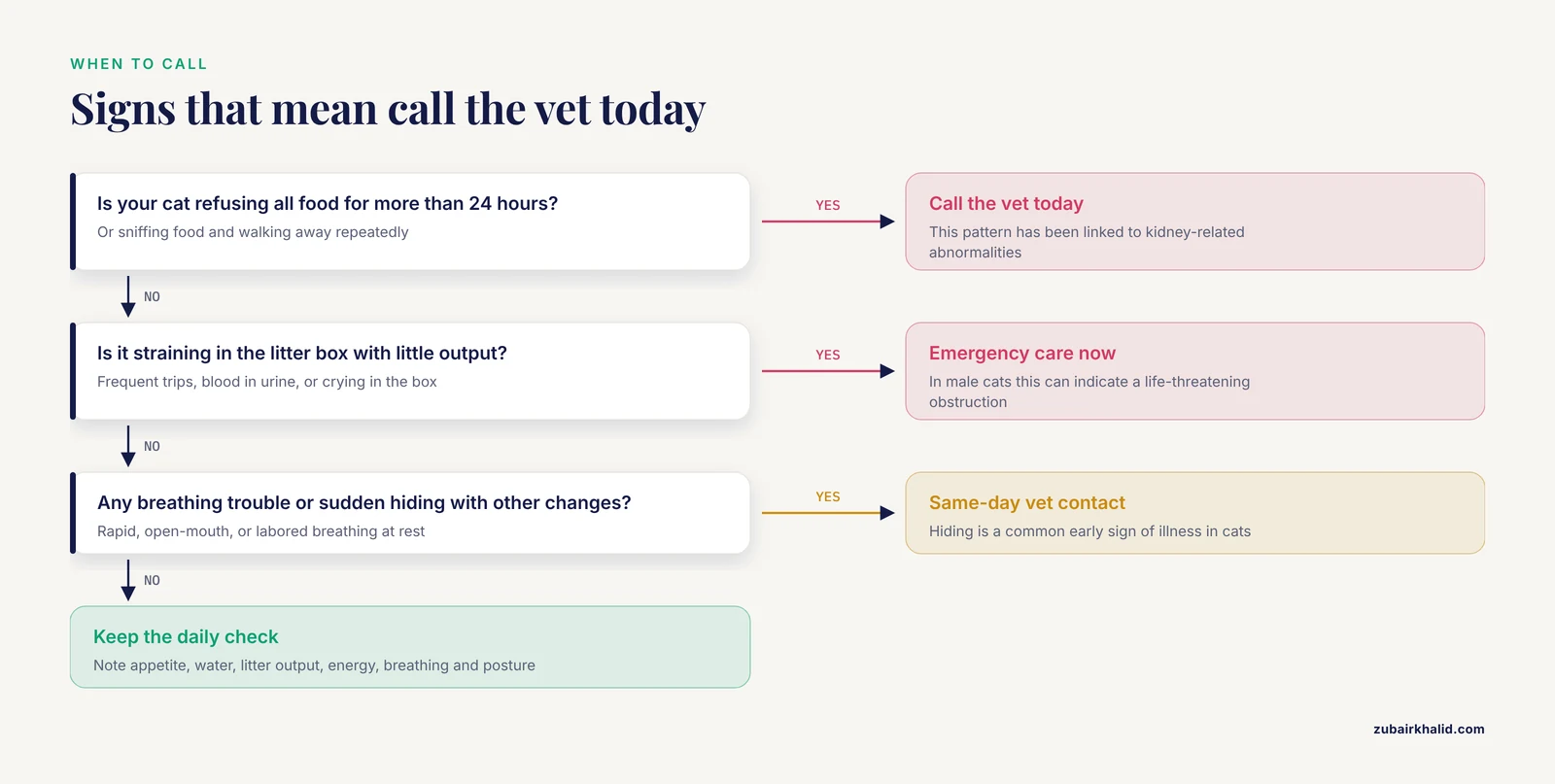
Contact your veterinarian promptly, within the same day when possible, if you observe any of the following:
- Complete refusal of food for more than 24 hours, or a pattern of sniffing food and walking away, which has been linked to kidney-related abnormalities [5] [8]
- Straining to urinate, frequent trips to the litter box with little output, blood in urine, or crying in the litter box, which in male cats can indicate a life-threatening obstruction
- Rapid breathing, open-mouth breathing, or labored breathing at rest
- Sudden hiding combined with other changes, since hiding is a common early sign of illness
- A new lump, wound, or significant weight change found during your monthly hands-on check
- Vomiting or diarrhea that persists beyond a single episode, or any vomiting in a kitten
- Sudden behavioral change, including new aggression, which may have a medical cause such as pain or dental disease [5]
- Signs of severe pain, collapse, seizure, or suspected toxin ingestion, which warrant immediate emergency care
For routine wellness, schedule a veterinary examination at least annually for young adults and every 6 months for mature and senior cats, which matches the twice-yearly examination interval used successfully in longitudinal aging cat research [8]. Owners who expect empathetic, competent handling from their veterinary team show better compliance with care plans, so choose a practice that treats cats gently [15].
Frequently Asked Questions
What does a basic daily cat care routine look like?
Feed measured meals at set times, refresh the water, scoop the litter box, play with your cat for 5 to 15 minutes, and do a quick visual check of appetite, energy, breathing, and litter output. These five tasks cover the essentials.
How often should I clean the litter box?
Scoop at least once daily and do a full wash with mild soap weekly. Provide one box per cat plus one extra, in quiet accessible locations.
How much should I feed my cat each day?
Feed measured portions appropriate to your cat's ideal body condition, using the feeding guide on your food as a starting point and adjusting based on monthly weigh-ins. Sterilized cats are particularly prone to weight gain, so measured meals matter [6].
How long should I play with my cat?
Aim for 5 to 15 minutes of interactive play once or twice daily, using toys your cat has shown preference for. Individual cats differ in whether food, toys, or social interaction motivates them most, so experiment and rotate [7].
How often should my cat see the veterinarian?
Healthy young adult cats need at least an annual examination. Mature and senior cats benefit from examinations every 6 months, since most aging cats develop at least one clinically detectable abnormality over time, led by dental disease [8].
Is it cruel to keep a cat indoors?
No. Keeping cats exclusively indoors or with secure outdoor access such as an enclosure is recommended to protect them from infectious disease, trauma, and early death, provided you supply vertical space, hiding places, and daily enrichment indoors [13].
What supplies do I need for a new cat?
Start with measured food, water bowls, one litter box per cat plus one extra with unscented litter, a scratching surface, perches or a cat tree, hiding spots, toys, a carrier left out and accessible, grooming tools, and a scale for monthly weigh-ins.
How do I take care of a cat for the first time?
Follow the daily, weekly, and monthly checklists in this guide, get a baseline veterinary examination with vaccination, microchip, and neutering arranged, set up the environment with litter, food, water, perches, and hiding places in separate locations, and build a bond through daily play and positive reinforcement rather than forced handling.
Sources
- CATastrophic myths part 2: Common misconceptions about the environmental, nutritional, and genetic management of domestic cats and their welfare implications.
- Part 1: A Sector-Wide Survey of UK/British Isles Shelter Organisations Caring for Cats: Caregiver-Reported Approaches to Housing, Husbandry and General Care Provision.
- Shelter housing for cats: Principles of design for health, welfare and rehoming.
- Cats in a Cat Café: Individual Cat Behavior and Interactions with Humans.
- Aging in Cats: Owner Observations and Clinical Finding in 206 Mature Cats at Enrolment to the Cat Prospective Aging and Welfare Study.
- Association of obesity-related blood chemistry alterations with animal welfare outcomes in sterilized cats: A case-control study in Indonesia.
- Preference assessment and reinforcer effectiveness in domestic cats.
- Patterns of morbidity, multimorbidity, and mortality in aging cats: findings from seven years of the Cat Prospective Ageing and Welfare Study.
- Responsible Ownership and Welfare Indicators for Dogs and Cats in Rural Lithuania: Self-Reported Practices and In-Person Assessment.
- Strategies for the Improvement of Pet Health and Welfare in Portugal Based on a Pilot Survey on Husbandry, Opinion, and Information Needs.
- Cognitive and Composite Behavioural Welfare Assessments of Pet Cats between the Ages of 9-22 Months, Living in Single and Multi-Cat Households.
- A novel approach to welfare interventions in problem multi-cat households.
- Feline immunodeficiency virus (FIV) infection in domestic pet cats in Australia and New Zealand: Guidelines for diagnosis, prevention and management.
- The Value of a Statistical Life of a Cat: Owner Demographics and Management Practices Impacting Willingness to Pay for Welfare Measures.
- Advice on cat behavior in German veterinary practices:Expectations of cat owners and influencing factors on compliance.
- A framework to refocus the conversation around the welfare of UK purebred cats.
- Prioritization of Appearance over Health and Temperament Is Detrimental to the Welfare of Purebred Dogs and Cats.