Turken Chicken: Naked Neck Breed Facts
By Dr. Zubair Khalid, DVM, MS, PhD ·
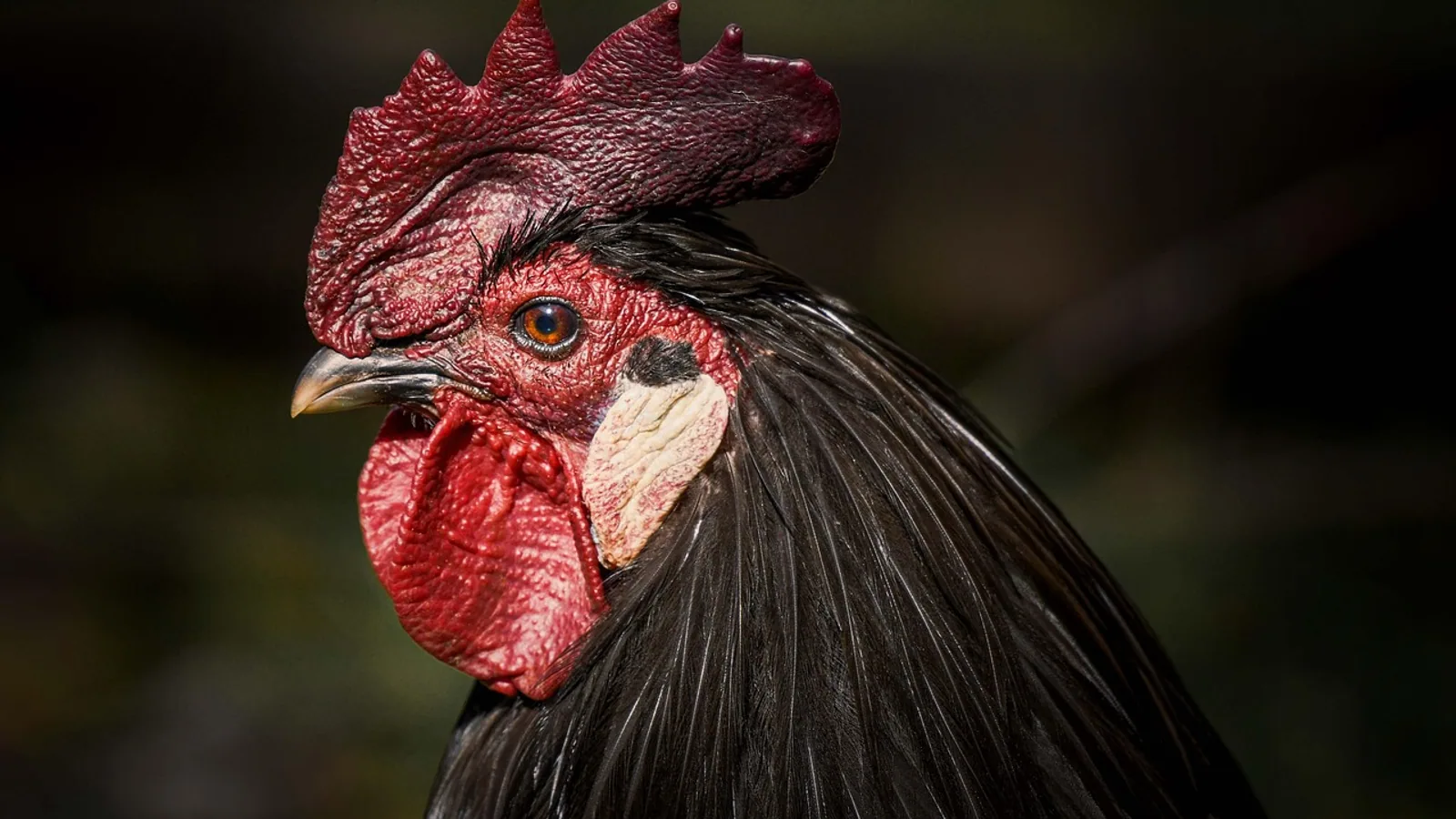
The Turken is a chicken with a bare neck and a partly bare body, and it is one of the few backyard breeds whose most visible feature is also its most important management fact. The bird is also called the Transylvanian Naked Neck, and the bare skin is not a disease or a molt. It is the outward sign of a single mutation, the naked neck gene, written as Na in poultry genetics. That gene reduces feather mass, which helps the bird dump body heat in hot weather and makes it more vulnerable to sun, wind, and cold [1][2]. Turken chickens are medium-framed, calm, and practical. They lay a moderate number of eggs, go broody readily, and tolerate heat better than fully feathered breeds. They suit keepers in hot or humid climates, keepers who want a dual-purpose flock, and keepers willing to manage shade in summer and wind protection in winter. They do not suit keepers who want a show-standard, heavily feathered bird or who cannot monitor bare skin year round.
This article is educational and is not a substitute for veterinary diagnosis or treatment.
At a Glance
| Trait | Turken (Naked Neck) | Notes |
|---|---|---|
| Other names | Transylvanian Naked Neck, Naked Neck | Same bird, different regional names [3][2] |
| Defining feature | Reduced feathering on the neck, often on the vent and body | Caused by the Na gene [2] |
| Genetics | Autosomal, incompletely dominant | Na/Na and Na/na both show the trait, Na/Na more strongly [1][2] |
| Weight | Moderate dual-purpose frame | Na birds reached a higher asymptotic body weight than fully feathered hens in one dry-tropics study (about 1,440 g vs 1,194 g) [4] |
| Egg production | Moderate, roughly 150 to 200 eggs per year in backyard conditions | Supported by laying-rate data in tropical family flocks [4] |
| Broodiness | Common | A practical trait for keepers who want to hatch chicks |
| Heat tolerance | Better than fully feathered breeds | Reduced feather mass raises heat loss [1][5][2] |
| Cold tolerance | Lower than fully feathered breeds | Bare neck and vent lose heat fast [2] |
| Grooming | Minimal feather care, but skin checks matter | Watch for sunburn, scratches, and frostbite risk |
| Temperament | Generally calm and handleable | Best framed as a docile backyard bird |
| Good with children | Often yes, with supervision | Calm birds handle well, but all poultry carry hygiene risks |
| Good with other pets | Variable | Depends on the dog or cat, not the chicken |
| Lifespan | Not established in the sources | Ask the breeder, and expect a normal layer lifespan with good care |
What the Turken Actually Is
The Turken is a domestic chicken that carries the naked neck mutation. The name "Turken" is a historical label, and the bird is more accurately called the Transylvanian Naked Neck in breed literature [3]. The bare neck is the signature, but the gene does more than strip feathers from one area. It reduces feather development on the neck and the vent, and in homozygous birds it can reduce feathering on the body as well [2].
The mutation itself is a large insertion of roughly 180 base pairs located about 260 kilobases downstream of a protein-coding gene called GDF7, or Growth Differentiation Factor 7 [2]. That insertion acts as a regulatory switch. It raises GDF7 expression in a tissue-specific way, and retinoic acid sensitizes the effect. The result is suppressed feather development in specific regions rather than a random loss of plumage [2]. This matters for owners because the pattern is predictable. You are not looking at a bird that is sick or plucking itself. You are looking at a bird whose genetic code tells the neck and vent to stay mostly bare.
The gene is autosomal and incompletely dominant [1][2]. Autosomal means it is not carried on a sex chromosome, so both hens and roosters can show it and pass it on. Incomplete dominance means the heterozygous bird (Na/na) shows a milder version of the trait, while the homozygous bird (Na/Na) shows a stronger version. In practice, a Na/na Turken may have a small tuft or a narrow strip of feathers on the neck, while a Na/Na bird may have a fully bare neck and a large bare patch on the chest or vent. Two Naked Neck parents can produce fully feathered chicks if both parents are heterozygous, which surprises new breeders. That is normal inheritance, not a mix-up at the hatchery.
History and Purpose
The Naked Neck has been kept for generations in hot and humid regions, and it is strongly associated with Transylvania and surrounding parts of central and eastern Europe [3]. The bird spread because it performed well where heat stressed ordinary chickens. That practical value, not a fancy show standard, drove its survival.
Modern research has reframed the breed as a genetic tool. The naked neck gene is now studied as a low-cost way to improve heat tolerance in poultry production, especially in tropical and subtropical countries [1]. A 2023 review in Animals describes the Na gene as a genetic strategy to reduce the impact of heat stress, and it notes that Na birds adapt, perform, and reproduce better than normally feathered birds under hot, humid conditions [1]. A 2025 review in the International Journal of Biometeorology reaches the same conclusion for both the naked neck and frizzle genes, describing them as useful for broiler and layer systems in high-temperature regions [5].
The breed also appears in indigenous poultry populations well beyond Europe. Whole-genome sequencing of Bangladeshi native chickens included a Naked Neck variety alongside Common Deshi and Hilly birds, and the authors note that these local varieties are valued for egg production, meat quality, survivability, and disease resistance [6]. That work is a reminder that the Naked Neck is not a single closed stud book. It is a recurring genetic type that many communities have kept and improved separately.
For a backyard keeper, the history has one practical takeaway. The Turken was selected for function in heat, not for ornamental plumage. Judge it on laying, hardiness, and temperament rather than on feather perfection.
Appearance


The defining look is a long, bare neck covered in skin rather than feathers. The skin color usually matches the bird's overall pigmentation, so you may see red, pink, or darker tones depending on the strain. The head often carries a small crest of feathers, and the body may be fully feathered or partly bare depending on whether the bird is Na/Na or Na/na [2].
Body shape is that of a medium dual-purpose chicken. Birds are not as heavy as a Cornish cross and not as slight as a Leghorn. In a dry-tropics study of Rhode Island Red × Naked Neck hens, the partly naked neck phenotype reached a higher asymptotic body weight than fully feathered hens, about 1,440 g versus 1,194 g, and began laying about three weeks earlier [4]. That is a useful benchmark for backyard expectations, though exact weights vary with strain, feed, and climate.
The bare vent area is easy to miss until you handle the bird. It is also the area most likely to be injured by roosters during mating, by sharp bedding, or by wire. Check it during routine handling.
One caution about appearance. A Naked Neck chick can look alarming to a first-time owner because the neck appears raw. It is not raw. It is skin that would normally be covered. If the skin is intact, dry, and the chick is active and eating, the appearance is normal.
Temperament and Behavior
Turken chickens are generally calm and easy to handle. The breed is often described as docile, which makes it a reasonable choice for a family flock where birds are picked up and checked regularly. Calm birds are also easier to examine for skin problems, which matters more in this breed than in a fully feathered one.
Behavior around heat is worth watching. Naked Neck birds dissipate heat efficiently, and they may stay active and feed during hot parts of the day when fully feathered birds are panting and inactive [1][5]. That is an advantage, but it also means a Turken may spend more time in direct sun than a heavily feathered bird would. You still need shade. Efficient heat loss does not make a bird immune to heat stress, and it does not protect bare skin from sunburn.
Broodiness is common in the breed, and that shapes flock behavior. A broody hen stops laying, sits on eggs, and can become defensive. If you want chicks, broodiness is a benefit. If you want continuous egg supply, you need to manage it. Broody hens should be moved to a cool, well-ventilated area with food and water within reach, and they should be checked daily.
Roosters can be rough during mating, and the bare neck and vent of a hen offer less protection than feathers would. Watch for skin tears on the back of the neck and around the vent, especially in flocks with more than one rooster.
Housing, Heat, and Cold Management
This is the section that separates a thriving Turken flock from a struggling one. The Na gene is a heat-tolerance tool, and it comes with a trade-off in cold weather.
Heat tolerance
Reduced feather mass allows more heat to leave the body through exposed skin [1][5][2]. A 2025 study in Animal Bioscience tested laying hens of three genotypes (NaNa, Nana, and nana) in wire cages and free-range pens during a hot summer. Introducing the Na gene improved egg production, cell-mediated immunity, and eggshell strength, and it reduced blood cholesterol and the cumulative percentage of broken eggs compared with normally feathered hens [7]. A separate study of dwarf brown-egg layers found that the naked neck gene limited the negative effect of long-term heat stress on egg production and increased egg weight [8]. In heavy broiler dams, normally feathered hens showed large performance drops under heat stress, including a 63% drop in egg production, a 20% drop in fertility, and a 72% drop in number of chicks, while NaNa hens did not show the same depression [9].
The practical translation is simple. In a hot climate, a Turken will often out-lay and out-perform a fully feathered hen of similar background. In a temperate climate, the advantage shrinks. A study comparing dwarf layers in France and Taiwan found that laying performance was lower and mortality higher in Taiwan, and that genotype-by-environment interactions were rare except for a few traits [10]. Another comparison of the same genetic lines in temperate and subtropical environments found a highly significant line-by-environment interaction for body weight, clutch length, and egg number [11]. Heat tolerance is real, but it is not a free pass. Housing, ventilation, and water access still decide the outcome.
Cold tolerance
The same bare skin that dumps heat in summer loses heat in winter. Homozygous Naked Neck birds can lose their comparative advantage in cool environments, and the sources note that Na/Na birds are the most affected [2]. A bare neck, bare vent, and reduced body feathering mean less insulation.
Cold management for Turkens should include:
- Windbreaks that block drafts at roost height, not just at ground level.
- Extra dry bedding, kept deep enough that birds can settle into it.
- A dry coop. Damp cold is worse than dry cold for any chicken, and bare skin loses heat faster when wet.
- Roosts wide enough for the bird to cover its own feet with its body.
- Ventilation that removes moisture without creating a direct draft on the neck.
Do not assume a Turken will be fine in a cold snap just because the rest of the flock is. Check the bird, not the calendar.
Sun and skin protection
Bare skin burns. Provide shade in summer, and provide it in a way the birds will actually use. Shade cloth, trees, and roofed run sections all work. A bird that is heat-tolerant may still stand in full sun, so shade needs to be available, not just present somewhere on the property.
The comparison table
| Factor | Turken (Naked Neck) | Standard fully feathered breed |
|---|---|---|
| Heat tolerance | Higher. Reduced feather mass increases heat dissipation [1][5][2] | Lower. Feathers trap heat |
| Egg production under heat stress | Better maintained. Na genotypes out-laid nana hens in hot-summer trials [7][8][9] | Drops more sharply under heat stress [9] |
| Cold tolerance | Lower, especially in Na/Na birds [2] | Higher. Feathers insulate |
| Sunburn risk | Higher. Bare neck and vent are exposed | Lower. Feathers cover the skin |
| Skin injury risk | Higher. Bare areas are easier to scratch, tear, or peck | Lower |
| Egg output, general | Moderate, roughly 150 to 200 per year in backyard conditions [4] | Varies widely by breed |
| Broodiness | Common | Varies widely by breed |
| Summer care | Shade, cool water, airflow | Shade, cool water, airflow |
| Winter care | Windbreak, deep dry bedding, dry coop | Standard cold-weather care |
| Grooming | Skin checks, wound monitoring | Feather and parasite checks |
Egg Production and Broodiness
Turken hens are moderate layers. In a dry-tropics study of Rhode Island Red × Naked Neck hens, the partly naked neck group laid at 59.9% versus 39.8% for fully feathered hens, produced heavier eggs (56.9 g vs 51.7 g), and produced more egg mass per hen per day (34.2 g vs 20.9 g) [4]. Those figures come from a specific cross under family poultry conditions, so treat them as a comparison between phenotypes rather than a guaranteed backyard number. For a typical backyard Turken, a reasonable planning range is 150 to 200 eggs per year, with the higher end more likely in a well-managed flock in a warm climate.
Egg quality has been studied in this genotype. The 2025 Animal Bioscience trial found that Na genotypes had stronger eggshells and fewer broken eggs than normally feathered hens under hot conditions [7]. A study of locally developed layer parent lines found that naked neck and frizzle birds had significantly higher fertility than normally feathered birds (71.98% and 70.29% versus 63.17%), though hatchability was higher in frizzle birds than in naked neck birds [12]. If you plan to hatch your own chicks, those fertility numbers are encouraging, but incubation management still drives hatch rates.
Broodiness is common and useful. A broody Turken can hatch and raise chicks without an incubator, which is one reason the breed persists in small flocks. If you do not want chicks, break broodiness early by moving the hen to a cool, bright area with food and water and no nest access. Persistent broodiness costs body condition and egg production.
For spent hens, one study examined GnRH administration in 72-week-old Naked Neck layers and found that treated groups had significantly higher egg production than controls, with weekly injections producing the highest rate (52.38% at day 42 versus 15.23% in controls) [13]. That is a research finding, not a backyard protocol. Do not attempt hormone manipulation without a veterinarian.
Feeding Considerations
Feeding a Turken is not fundamentally different from feeding any backyard layer, but the reduced feather mass changes two things.
First, energy use in heat. A dry-tropics study partitioned metabolizable energy in Rhode Island Red × Naked Neck hens and found that partly naked neck hens had higher maintenance energy needs (176.6 vs 156.2 kcal/hen/day), higher energy for egg production (64.0 vs 31.3 kcal/hen/day), and higher total intake (552.6 vs 447.5 kcal/hen/day) than fully feathered hens [4]. The same study found that the temperature-humidity index reduced energy intake, by about 16.1 and 23.7 kcal/hen/day per unit of THI [4]. In plain terms, heat suppresses appetite even in a heat-tolerant bird. A Turken that eats less on a hot day will lay less and lose condition. Offer feed during cooler hours and keep water clean and cool.
Second, feather mass and amino acid needs. A study on protein deposition in Naked Neck meat-type chickens noted that reduced feather coverage could affect requirements for sulfur-containing amino acids, and it estimated nitrogen maintenance requirements and maximum nitrogen retention across genotypes, sexes, and ages [14]. This is a research-level consideration. For a backyard flock, the practical step is to feed a complete layer ration rather than guessing at protein and amino acid levels, and to avoid diluting the diet with too many low-protein treats.
Do not add supplements or change the ration based on this article. Ask a veterinarian or a poultry nutritionist if you want to adjust the diet.
Health and Welfare
The main health issues in Turkens are the direct consequences of bare skin and reduced insulation.
Skin injuries
Bare neck and vent skin is exposed to pecking, scratching, rooster spurs, wire, and sharp bedding. Inspect the neck, vent, and any bare body patches at least weekly. Clean minor wounds, and separate a bird that is being pecked. Chickens peck at red or irritated skin, so a small injury can escalate quickly in a flock.
Sunburn
Bare skin burns in direct summer sun. Provide shade and monitor for reddened, painful-looking skin, especially on the neck. A sunburned bird may seek shade, stand oddly, or flinch when touched.
Cold stress and frostbite risk
Reduced insulation means a Turken is more vulnerable to cold, and the bare neck and any bare body areas are at risk in freezing conditions [2]. Frostbite risk is highest when the coop is damp or drafty. Keep bedding dry, block drafts, and check birds during cold snaps.
Heat stress still happens
Heat tolerance is relative. A Turken can still overheat if water is limited, ventilation is poor, or the bird is confined in direct sun. Watch for panting, wing holding, lethargy, and reduced feed intake. The 2025 Animal Bioscience trial showed that housing system interacts with genotype, and free-range pens gave birds more opportunity to thermoregulate through shade seeking and airflow than cages did [7]. Access to space and shade is part of heat management, not a luxury.
Immune function
The Na gene has been linked to immune advantages in several studies. The 2025 Animal Bioscience trial found improved cell-mediated immunity in Na genotypes under heat [7]. A 2008 study in British Poultry Science found that Na-bearing birds mounted a higher non-specific cell-mediated immune response and produced higher antibody concentrations after sheep red blood cell injection, particularly at 14 days after the second injection, and that NaNa birds had a higher heterophil-to-lymphocyte ratio than Nana and nana siblings [15]. A cytogenetic study found that naked neck dams had a much lower proportion of abnormal embryos than normally feathered dams at both 22 °C and 31 °C, with the highest proportion of chimeras in normally feathered dams kept at 31 °C [16]. These findings support the breed's reputation for resilience, but they do not replace biosecurity, vaccination, and parasite control.
Screening and monitoring
There is no breed-specific screening test for the Na gene in backyard practice, and no source in this review defines a screening protocol for Turken chickens. The practical monitoring list is physical:
- Weekly skin checks of the neck, vent, and any bare body areas.
- Body condition scoring, especially in broody hens and in winter.
- Fecal checks for internal parasites through a veterinarian when warranted.
- Annual or pre-season veterinary review of the flock, following the general approach used in AAHA wellness planning for animals under regular care.
Biosecurity and legal status
Backyard poultry in the United States are subject to state and local rules on flock registration, movement, and disease reporting. Outbreaks of notifiable avian disease, including highly pathogenic avian influenza, trigger federal and state response. Report sudden high mortality or unusual neurological or respiratory signs to a veterinarian or the state animal health authority promptly. Do not move birds off the property during a suspected outbreak.
Lifespan and Long-Term Care
The sources in this review do not establish a breed-specific lifespan for the Turken. Treat lifespan as a function of management, genetics, and disease exposure rather than a fixed breed number. A well-managed backyard hen can live and lay for several years, with production declining after the first two laying cycles. The GnRH study in spent Naked Neck layers used 72-week-old hens, which shows that the breed is still productive enough at that age to be a subject of laying research [13]. That is a reasonable marker for planning, not a promise.
Long-term care priorities for a Turken flock:
- Keep the coop dry and ventilated year round.
- Provide shade in summer and wind protection in winter.
- Maintain a consistent layer ration and clean water.
- Check skin weekly and treat wounds early.
- Manage broodiness so hens do not lose excessive condition.
- Review flock health with a veterinarian at least annually.
Finding a Responsible Breeder or Rescue
The Naked Neck is not a rare breed, but quality varies. A responsible breeder will:
- Tell you the genotype of the parent stock, or at least whether the birds are Na/Na or Na/na.
- Show you the adult birds, including their skin condition.
- Let you see the housing and the flock's general health.
- Provide a clear history of vaccination and parasite treatment.
- Answer questions about heat and cold management honestly.
Rescue is a real option. Naked Neck birds appear in mixed backyard flocks and in rescue situations, and a calm, handleable bird often settles well into a new home. Ask about any history of skin injury, and inspect the neck and vent before you commit.
Avoid any seller who cannot show you the birds, who pressures you to buy without seeing the flock, or who claims the breed never gets sunburn or cold stress. Those claims are wrong.
Who Should Not Get a Turken
A Turken is a poor fit if you:
- Live in a cold climate and cannot provide a dry, draft-free coop with deep bedding.
- Cannot commit to weekly skin checks.
- Want a bird that never needs shade in summer.
- Want a heavily feathered show bird.
- Are not prepared to manage broodiness.
- Cannot access veterinary care for a flock.
A Turken is a good fit if you live in a warm or hot climate, want a calm dual-purpose bird, value broodiness, and are willing to manage skin and temperature year round.
Limitations and When to Contact a Veterinarian
This article is educational and is not a substitute for veterinary diagnosis or treatment. Individual birds vary, and management decisions should be made with a veterinarian who can examine your flock.
Contact a veterinarian promptly if you see:
- A wound on the neck, vent, or bare body that is bleeding, swollen, or foul-smelling.
- Reddened, blistered, or painful-looking skin after sun exposure.
- Pale, blue, or blackened skin on the neck or comb in cold weather.
- Panting, wing holding, or collapse during hot weather.
- A sudden drop in egg production across the flock.
- Lethargy, poor appetite, or weight loss in a broody hen.
- Sudden deaths or neurological signs, which may indicate a reportable disease.
- Any bird that does not improve within 24 to 48 hours of supportive care.
Frequently Asked Questions
What is a Turken chicken?
A Turken is a domestic chicken that carries the naked neck gene, also called the Transylvanian Naked Neck. The gene reduces feathering on the neck and often the vent and body.
Is the Turken the same as the Transylvanian Naked Neck?
Yes. Turken and Transylvanian Naked Neck refer to the same breed type, and the Naked Neck name is used in scientific literature.
What is the Na gene in chickens?
The Na gene is an autosomal, incompletely dominant mutation that suppresses feather development on the neck and vent. It works through a regulatory insertion near the GDF7 gene.
Are Turken chickens good in hot weather?
Yes. Reduced feather mass improves heat dissipation, and Na birds generally out-perform fully feathered birds in hot conditions.
Can Turken chickens handle cold winters?
They handle cold less well than fully feathered breeds, especially homozygous Na/Na birds. They need wind protection, dry bedding, and a dry coop.
How many eggs do Turken chickens lay?
A reasonable backyard range is 150 to 200 eggs per year, with better output in warm, well-managed flocks.
Do Turken chickens go broody?
Yes. Broodiness is common and is one of the breed's practical advantages for keepers who want to hatch chicks.
Do Turken chickens get sunburn?
Yes. Bare neck and vent skin can burn in direct sun, so shade is required in summer.
Related Articles
- Hypoallergenic Dog Breeds: Allergy Facts and Practical Choices
- Siberian Cat: Hypoallergenic Breed Facts and Care Tips
- Chicken Neck Bacteria: Microbiological Profile and Food Safety Considerations
- Chicken-Duck Hybrids: Separating Fact from Fiction
- Biology Facts
- Raising Chickens for Eggs: Breed Selection, Care, and Egg Production
- Cricoid Cartilage: Anatomy and Clinical Relevance
Sources
- The Naked Neck Gene in the Domestic Chicken: A Genetic Strategy to Mitigate the Impact of Heat Stress in Poultry Production-A Review.
- The genetic basis and robustness of naked neck mutation in chicken.
- Effect of Post-Hatch Heat-Treatment in Heat-Stressed Transylvanian Naked Neck Chicken.
- Energy use and egg production in Rhode Island Red × Naked Neck hens under dry tropical family poultry systems.
- Effects of naked neck and frizzle genes on growth and egg-laying performance of chickens in the tropics in an era of climate change.
- Whole genome sequencing of three native chicken varieties (Common Deshi, Hilly and Naked Neck) of Bangladesh.
- The interaction effects of the naked neck gene and housing system on egg production, egg quality, blood biochemical parameters and immunity of laying hens under hot climate.
- Effect of high ambient temperature and naked neck genotype on performance of dwarf brown-egg layers selected for improved clutch length.
- The effect of naked neck gene and ambient temperature and their interaction on reproductive traits of heavy broiler dams.
- Effect of introducing the naked neck gene in a line selected for low residual feed consumption on performance in temperate or subtropical environments.
- Performance comparison of dwarf laying hens segregating for the naked neck gene in temperate and subtropical environments.
- The effects of naked neck and frizzle genes on the fertility, hatchability, egg quality and pterylosis of locally developed commercial layer parent lines.
- Effect of GnRH administration on egg production, hormonal and biochemical profile and ovarian histomorphology of spent naked neck layers.
- Evaluating the Age-Dependent Potential for Protein Deposition in Naked Neck Meat Type Chicken.
- Effect of the naked neck gene on carcase composition and immunocompetence in chicken.
- Cytogenetic study of early chicken embryos: effect of naked neck gene and high ambient temperature.