Bobwhite Quail: Raising and Care Basics
By Dr. Zubair Khalid, DVM, MS, PhD ·
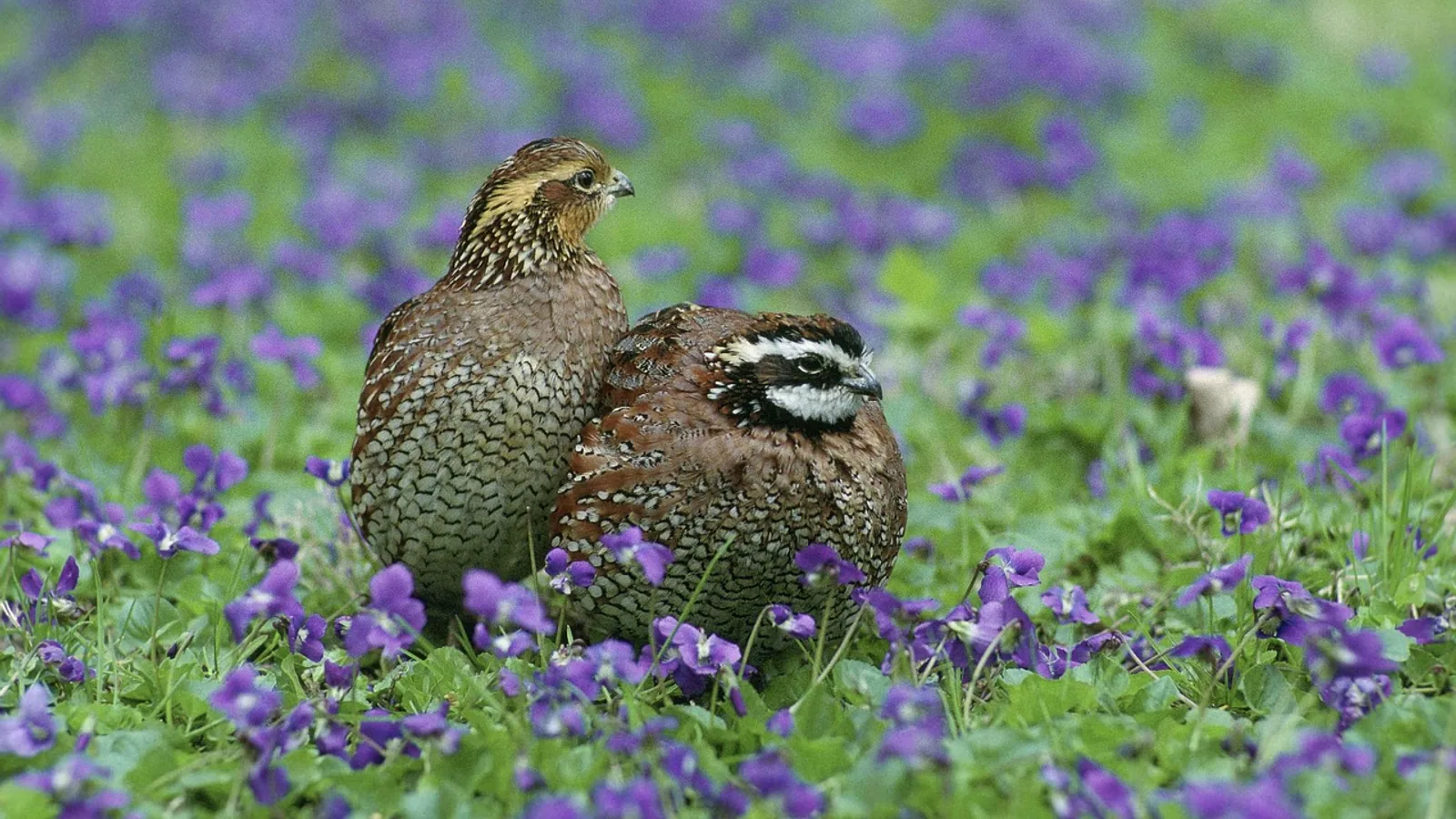
Bobwhite quail are small, native North American game birds in the genus Colinus, and the northern bobwhite (Colinus virginianus) is the species most often kept in backyard pens and captive breeding programs across the United States [1]. They are not the same bird as coturnix quail. Bobwhites are flighty, easily stressed, and seasonal breeders that respond to day length, while coturnix are calmer, heavier-bodied, and lay almost year-round. That difference shapes every part of their care, from pen height to brooder temperature to the way you manage a breeding flock.
This article is educational and is not a substitute for veterinary diagnosis or treatment.
At a Glance
| Attribute | Bobwhite quail (Colinus virginianus) |
|---|---|
| Origin | Native to North America, including the United States and Mexico [1][2] |
| Adult size | Small game bird, roughly the size of a large pigeon |
| Temperament | Flighty, stress-prone, quick to flush |
| Housing | Tall pens with cover, more vertical space than coturnix |
| Space in grow-out | About 1 to 2 square feet per bird |
| Brooder temperature, week 1 | 28 to 30 degrees Celsius (about 82 to 86 degrees Fahrenheit) |
| Starter diet | 24 to 28 percent protein crumble |
| Breeding pattern | Seasonal, triggered by photoperiod |
| Egg production | Seasonal and lower than coturnix |
| Lifespan | Several years in managed captivity |
| Good with children | Generally not a cuddly pet bird, better suited to observation |
| Good with other pets | Poor fit with cats and dogs, high stress response |
What Bobwhite Quail Are, and What They Are Not
Bobwhite quail are New World quail. The masked bobwhite (Colinus virginianus ridgwayi) is a critically endangered subspecies endemic to Sonoran Desert grasslands, and its persistence now depends on a captive breeding program that requires careful genetic management to maintain diversity [2]. That single fact tells you a lot about the species. These are wild-adapted birds with specific habitat and social needs, not a barnyard chicken that happens to be small.
The northern bobwhite has declined across much of its range, and it remains a popular game bird, a subject of captive breeding programs, and increasingly a backyard bird [1]. People keep them for meat, for eggs, for breeding projects, for dog training, and for the simple pleasure of watching a native species behave the way it evolved to behave.
That last point matters. A bobwhite that flushes straight up when you walk past the pen is not being difficult. It is doing exactly what a ground-dwelling bird that evolved under pressure from hawks and foxes is supposed to do. Every management decision you make should reduce the number of times that response fires unnecessarily.
Bobwhite Versus Coturnix: The Comparison That Matters Most
Most confusion in backyard quail keeping comes from treating all quail as one animal. They are not. The table below summarizes the practical differences.
| Trait | Bobwhite quail | Coturnix quail |
|---|---|---|
| Origin | Native North American [1][2] | Old World domesticate |
| Size | Smaller, lighter, more streamlined | Larger, heavier body |
| Egg production | Seasonal, tied to photoperiod | High volume, near year-round |
| Temperament | Flighty, stress-prone, strong flush response | Calmer, more tolerant of confinement |
| Housing | Taller pens, more cover, more vertical space | Lower pens acceptable |
| Breeding trigger | Day length and season | Largely independent of season |
| Beginner suitability | Moderate, needs more planning | Easier entry point |
The single biggest practical consequence is housing height. A bobwhite that flushes in a low pen hits the roof and can injure its head or neck. A coturnix in the same pen generally does not. If you are converting a coturnix setup to bobwhites, raise the ceiling and add cover before you add birds.
The second consequence is breeding. Coturnix hens lay heavily for most of the year. Bobwhite hens respond to increasing day length, so your egg supply will follow the seasons rather than your feed bill. Plan your breeding calendar around that reality instead of fighting it.
History and Purpose
Bobwhite quail have been part of North American landscapes and diets for centuries. Their role in managed landscapes is well documented. In the southeastern United States, longleaf pine mast years are positively correlated with northern bobwhite populations the following year, because nutrient-rich pine seeds are a major food source for the birds [3]. That relationship is a reminder that bobwhite health is tied to habitat quality in ways that a bag of feed cannot fully replace.
Managed populations also interact with wildlife disease. Bobwhite in semiarid ecoregions of Texas are affected by the eyeworm Oxyspirura petrowi and the caecal worm Aulonocephalus pennula, and researchers have tested anthelmintic medicated feed as a way to reduce parasite burden in wild birds [4]. The life cycle of O. petrowi has been worked out experimentally, with crickets serving as intermediate hosts and pen-raised bobwhite becoming infected after eating infected crickets [5]. If your birds have access to the ground and to insects, that pathway is worth understanding.
Appearance and Identification

,_male_right,_female_left,_Colorado_County,_Texas,_USA_(17_March_2017).jpg)
Bobwhite quail are compact, rounded birds with short tails and mottled brown, buff, and black plumage that breaks up their outline against dry grass and brush. The species name, virginianus, refers to Virginia, part of its historic range. Males and females differ in facial markings, and the masked bobwhite subspecies is named for the dark mask that distinguishes it.
For owners, appearance is mostly a management tool. A bird that suddenly looks fluffed, dull, or hunched is telling you something before any other sign appears. Learn what your birds look like when they are relaxed and feeding, because that is your baseline.
Temperament and Behavior
Bobwhite quail are flighty. They flush vertically and explosively when startled. They are also social and do better in groups than alone, but group size has a ceiling. Push past that ceiling and you get the two problems that dominate backyard bobwhite keeping: cannibalism and coccidiosis.
Cannibalism in quail is usually a husbandry problem, not a personality problem. Overcrowding, bright uninterrupted light, bare pens with no visual barriers, and feed or water stations that force birds into close contact all increase the risk. The fix is environmental. Reduce density toward the 1 to 2 square feet per bird range during grow-out, add cover and visual breaks, and give birds room to move away from each other.
Stress is the thread that runs through nearly every bobwhite health problem. A stressed bird eats less, grows slower, lays fewer eggs, and mounts a weaker immune response. Handling should be minimal, deliberate, and calm. Move birds with a catch pen or a soft net rather than chasing them. Work the pen at the same time each day so the flock learns your routine.
Housing Bobwhite Quail
Pen Height and Cover
Bobwhite need taller pens than coturnix. Give them enough vertical clearance that a flush does not end in a collision with the roof, and provide cover in the form of brush, artificial plants, or hide boxes so birds can break line of sight. Cover does two things. It reduces the frequency of panic flushes, and it gives subordinate birds somewhere to go when a pen mate is being aggressive.
Space Allowance
During grow-out, plan on about 1 to 2 square feet per bird. That range is a starting point, not a target to squeeze toward. If you see feather pecking, bare patches, or birds piling into corners, you are over the limit for that pen and that group. Split the flock or expand the pen.
Breeding pens are usually stocked more densely than grow-out pens, but breeding birds also need cover and escape space. Watch the hens. A hen that is constantly being chased by a cock will not perform well, and she has nowhere to go in a bare pen.
Flooring, Litter, and Sanitation
Coccidiosis is one of the classic pitfalls in backyard quail, and it is a sanitation disease. The parasite builds up in wet, soiled litter and in ground contact areas. Keep litter dry, replace it before it cakes, and avoid letting feed and water spill into the bedding. If birds are on the ground, rotate or rest areas where possible.
Good management and welfare practices are the foundation of healthy quail, and they reduce the impact of the common poultry diseases that quail are susceptible to [6]. That principle applies directly to bobwhite. Clean, dry, uncrowded housing prevents more disease than any treatment you can buy.
Predator and Rodent Control
Small birds in outdoor pens attract predators. Hardware cloth, buried skirts, and secure latches matter more for quail than for chickens because a raccoon can reach through a gap that a chicken would ignore. Rodents carry feed away and contaminate litter, which feeds back into the sanitation problem. Keep feed in sealed containers and clean up spills.
Brooding Bobwhite Chicks
Temperature
Start chicks at 28 to 30 degrees Celsius (about 82 to 86 degrees Fahrenheit) in week one. Watch the chicks rather than the thermometer alone. Chicks that spread out evenly and move between feed and heat are comfortable. Chicks that pile under the heat source are cold. Chicks that press to the far corners and pant are too warm.
Reduce temperature gradually as the chicks feather out. The goal is to move them toward ambient temperature over the brooding period without a sudden drop that stalls growth.
Starter Diet
Feed a 24 to 28 percent protein starter crumble. Bobwhite chicks are small and grow quickly, and they need a nutrient-dense crumble they can actually pick up. Fine mash and large pellets both waste feed and slow growth.
Protein and amino acid nutrition in young bobwhite has been studied for decades. Research on protein and sulfur amino acid requirements of young bobwhite quail established the framework for modern starter formulations [7]. Work on choline needs showed that growth was suboptimal when choline was limiting in purified diets, and that very high levels of excess methionine depressed growth, reduced feed consumption, and worsened feed utilization [8]. The practical takeaway is that more is not automatically better. Buy a formulated starter and follow the label rather than adding supplements on your own.
Water and Space
Chicks need shallow water they cannot drown in. Use marbles or a narrow trough for the first days. Give them enough floor space that they are not forced to compete at the feeder and waterer, and add a second station as the group grows.
Feeding Growing and Adult Bobwhite
Grow-Out Rations
Move chicks from starter to a grower ration as they feather and their protein needs shift. The exact transition age depends on your feed program, but the principle is the same: match the ration to the stage. A bird that is still growing fast needs more protein than a finished adult.
Nutritional and husbandry factors both influence performance of bobwhite grown in confinement, and the two cannot be separated [9]. Feed quality only shows up as growth and livability when the pen environment supports it.
Breeding Bird Nutrition
Breeding hens have specific nutritional demands, and researchers have tested whether the methionine levels recommended for breeding quail are higher than wild bobwhite actually need. In one study, hens fed diets with low (0.31 percent), moderate (0.39 percent), or high (0.47 percent) methionine showed no measurable differences in egg weight, percentage egg production, cumulative egg production, yolk weight, yolk volume, or percentage fertile and percentage hatch of fertile eggs [10]. That does not mean methionine is unimportant. It means that within that tested range, pushing methionine higher did not buy better reproduction.
Feed Storage
Store feed cool and dry, use it within its freshness window, and never feed moldy or caked crumble. Small flocks buy small quantities for a reason.
Breeding Bobwhite Quail
Photoperiod and Season
Bobwhite are seasonal breeders triggered by photoperiod. This is the defining difference from coturnix, which breed largely independently of season. If you want bobwhite chicks, you are working with the calendar, not against it.
Plan your breeding season around increasing day length. Condition your breeders before the season starts so hens are in good body condition when the light signal arrives. Once the season is underway, keep the routine stable. Sudden changes in light, temperature, or handling can disrupt laying.
Sex Ratio and Pairing
A ratio of one male to three females is a common stocking rate for breeder birds in quail production systems, used to obtain fertile eggs [6]. Watch your pens for over-mating. A hen with a bare back or a torn neck has too much male attention and needs either more cover or a different group composition.
Fertility, Hatch, and Chick Viability
Fertile eggs go to the hatchery or incubator, and surplus eggs are collected and sold or used in the kitchen [6]. Chick viability depends partly on the hen's ability to pass immunity to her chicks, which is why breeder nutrition and health matter beyond the egg count. In one study, the anti-Pasteurella multocida titer of yolks did not differ between hens fed high and low methionine diets, and chick mortality after challenge was not different between those groups [10]. Breeder condition and overall health, not one amino acid, drive chick outcomes.
Genetic Management
If you are breeding a rare subspecies, genetic management is not optional. The masked bobwhite captive breeding program requires careful genetic management to maintain extant genetic diversity, and novel microsatellite markers were developed specifically to inform those management decisions [2]. For backyard keepers of northern bobwhite, the same principle applies at a smaller scale. Avoid pairing close relatives repeatedly, and bring in unrelated bloodlines when you can.
Common Health Problems in Bobwhite Quail
Parasites
Parasites are common in wildlife populations and can reduce fecundity and survival [4]. In bobwhite, the eyeworm Oxyspirura petrowi and the caecal worm Aulonocephalus pennula are the two most studied. Experimental work has shown that O. petrowi can be transmitted to pen-raised bobwhite through infected crickets, with infection established in both crickets and bobwhite at a rate of 96 percent in that study [5]. If your birds are on the ground and eating insects, this pathway is real.
Anthelmintic medicated feed has been tested in wild bobwhite as part of a series of studies for United States Food and Drug Administration registration. Two pilot studies found the medicated feed had 71.5 percent efficacy against caecal worms and 81.7 percent efficacy against eyeworms, and significantly reduced total parasite burdens [4]. This is a wildlife management tool, not a backyard prescription. If you suspect a parasite problem in your flock, the right move is a veterinary diagnosis, not a guess at deworming.
Coccidiosis
Coccidiosis is a sanitation-driven problem. Wet litter, crowded pens, and contaminated feeders and waterers all raise the risk. Prevention is husbandry: keep bedding dry, clean waterers daily, avoid ground contact where possible, and do not let birds crowd at feeding stations. If you see bloody droppings, huddling, or a sudden drop in feed intake, contact a veterinarian.
Cannibalism
Cannibalism is the other classic pitfall. It starts as feather pecking and escalates. The causes are environmental: overcrowding, bright light, bare pens, and competition at feeders. Correct the environment first. Reduce density toward the 1 to 2 square feet per bird range, add cover and visual barriers, and dim the lighting if it is harsh and constant.
Viral Disease
Captive bobwhite are susceptible to viral disease. An outbreak of fowl aviadenovirus A in a captive bobwhite flock caused loose droppings, depression, and increased mortality starting at 3 weeks of age, with gizzard erosion and ulceration found in 20 to 30 percent of birds on necropsy [11]. The isolates showed more than 99 percent nucleotide identity with quail bronchitis virus [11]. This is a reminder that young captive flocks can be hit hard and fast, and that sudden mortality in chicks warrants veterinary involvement rather than watchful waiting.
West Nile virus has also been studied in bobwhite. In one experimental study, inoculated 5-week-old and 15-week-old birds developed low-level viremia, some shed low viral titers briefly, and all inoculated birds remained apparently healthy and seroconverted by 15 days post-inoculation [1]. No contact control birds became viremic [1]. The clinical picture in that study was mild, but the study confirms bobwhite can be infected and can shed virus.
Blood Parasites
Haemoproteus species have been identified in captive-bred bobwhite. A ranch in southern Utah experienced high mortality in late summer and fall, and necropsy of juvenile birds found degenerative myositis with intramyofiber schizonts, vasculitis in multiple organs, and life stages consistent with Haemoproteus spp. in erythrocytes. PCR and sequencing confirmed a Haemoproteus sp. in the subgenus Parahaemoproteus [12]. This is a diagnostic-level finding, not something an owner can identify in the pen. It is a reason to involve a veterinarian and a diagnostic laboratory when mortality clusters in a flock.
Environmental and Toxicological Risks
Bobwhite are used as a regulatory test species for pesticide toxicity, and models have been developed to predict acute oral toxicity of pesticides toward bobwhite quail [13]. That regulatory role exists because the species is sensitive to environmental contaminants. Keep treated seed, pesticide granules, and spilled chemicals out of pen areas. Historical work on DDT in bobwhite showed effects on steroid metabolism, testes size, and metabolic rate at dietary levels of 5 to 150 ppm [14]. Modern pesticides are regulated differently, but the underlying principle holds: small birds in small areas can be exposed to concentrated doses.
Per- and polyfluoroalkyl substances have also been studied in bobwhite. Chronic oral exposure to perfluorooctane sulfonic acid and a mixture with perfluorohexane sulfonic acid affected female weight gain and the ability of chicks to liberate from the shell once pipped [15]. These are environmental contaminants, not feed additives, but they illustrate how sensitive reproduction is to what the bird ingests.
Screening and Veterinary Monitoring
There are limited species-specific and age-specific hematologic data for bobwhite quail. A study of 49-day-old captive-raised quail recorded packed cell volumes, total solids, red and white blood cell counts, and white cell differentials, and found the birds were primarily lymphocytic with considerable variability. White blood cell counts performed with 1000x magnification did not compare well with other methods, including Phloxine B stain [16]. The practical implication is that reference intervals for this species are still being built, and your veterinarian should interpret results with that in mind.
There is no single screening panel that fits every backyard bobwhite flock. A reasonable baseline for a breeding group includes a physical exam, a fecal evaluation for parasites, and a review of housing, density, and litter management. For a flock with unexplained mortality, necropsy and diagnostic testing are the fastest route to an answer.
Lifespan and Long-Term Management
Bobwhite are not a long-lived species by poultry standards, but well-managed captive birds can live for several years. The variables that predict a long, productive life are the same ones that predict a healthy flock: appropriate space, clean and dry housing, a formulated diet matched to life stage, minimal stress, and prompt veterinary attention when something changes.
If you keep a breeding flock, plan for replacement birds. Seasonal breeding means your production window is finite, and a hen that has had a hard season should not be pushed into another one without a rest and a condition check.
Finding Healthy Stock
Start with a breeder who can tell you the age, sex ratio, and health history of the birds they are selling. Ask about parasite history, previous mortality events, and whether the flock has been in contact with wild birds or ground that wild birds use. Those questions matter because bobwhite are susceptible to parasites and viruses that circulate in wild populations [4][12][11][1].
Inspect birds before you buy. Look for clear eyes, clean vents, smooth feathers, and active feeding behavior. Avoid birds that are fluffed, hunched, or isolated in a corner. Those are the birds most likely to bring a problem into your pen.
Who Should Not Keep Bobwhite Quail
Bobwhite are a poor fit for anyone who wants a hand-tame pet bird. They are flighty and stress-prone, and frequent handling works against their welfare. They are also a poor fit for a household with free-roaming cats and dogs that will pace the pen, and for anyone who cannot commit to taller pens and daily observation.
They are a reasonable fit for keepers who want a native species, who are willing to build appropriate housing, who understand that breeding follows the seasons, and who are prepared to work with a veterinarian when disease appears.
Limitations and When to Contact a Veterinarian
Individual birds and flocks vary, and this article cannot replace an examination by a veterinarian who can see your birds and your setup.
Contact a veterinarian promptly if you see any of the following:
- Sudden or unexplained mortality, especially in chicks or juveniles.
- Bloody droppings, persistent diarrhea, or a sharp drop in feed or water intake.
- Feather pecking that has progressed to bleeding or open wounds.
- Respiratory signs such as sneezing, discharge, or labored breathing.
- Neurologic signs such as incoordination, head tilt, or abnormal posture.
- Swelling, lameness, or a bird that cannot stand.
- A hen with a bare, injured back or neck from over-mating.
- Any bird that is fluffed, hunched, and isolated from the group for more than a day.
For a flock with ongoing mortality, ask your veterinarian about necropsy and diagnostic testing. A diagnosis changes management, and management is where most bobwhite problems are solved.
Frequently Asked Questions
Are bobwhite quail the same as coturnix quail?
No. Bobwhite quail are native North American birds, while coturnix are an Old World domesticate. Bobwhite are flightier, need taller pens, and breed seasonally in response to photoperiod, while coturnix are calmer and lay heavily for most of the year.
How much space do bobwhite quail need?
Plan on about 1 to 2 square feet per bird during grow-out. Treat that as a starting range and expand if you see feather pecking, bare patches, or birds piling into corners.
What temperature should a bobwhite brooder be in week one?
Start at 28 to 30 degrees Celsius, which is about 82 to 86 degrees Fahrenheit. Watch chick behavior and adjust gradually as they feather out.
What protein level should bobwhite starter feed have?
Use a 24 to 28 percent protein starter crumble. Buy a formulated product and follow the label rather than adding supplements on your own.
Why are my bobwhite quail pecking each other?
Cannibalism usually comes from overcrowding, harsh or constant light, and bare pens with no cover. Reduce density, add visual barriers, and give birds room to escape each other.
Do bobwhite quail lay eggs year-round?
No. Bobwhite are seasonal breeders triggered by photoperiod, so egg production follows day length rather than running continuously like coturnix.
Can bobwhite quail live with chickens?
It is not a good idea. Chickens can carry diseases and parasites that affect quail, and the size and behavior differences create stress and injury risk for the smaller birds.
When should I call a veterinarian about my quail?
Call when you see sudden mortality, bloody droppings, respiratory signs, neurologic signs, or feather pecking that has progressed to open wounds. For flock-level mortality, ask about necropsy and diagnostic testing.
Related Articles
- Raising Quail in the Backyard
- Cichlid Care Basics for Beginners
- Foal Care Basics for New Owners
- Horse Hoof Care and Lameness Basics
- Koi Pond Care Basics for Beginners
- Raising Chickens for Eggs: Breed Selection, Care, and Egg Production
- Coturnix Quail Care Guide: Housing, Diet and Egg Laying
- Do Quail Fly? Flight Ability Explained
Sources
- Experimental West Nile Virus Infection in Northern Bobwhite Quail (Colinus virginianus)
- Development of eighteen novel microsatellite loci for Masked Bobwhite, Colinus virginianus ridgwayi.
- Longleaf pine masting, northern bobwhite quail, and tick-borne diseases in the southeastern United States
- Efficacy of a medicated feed to treat parasites of wild Northern bobwhite quail (Colinus virginianus).
- Life-cycle of Oxyspirura petrowi (Spirurida: Thelaziidae), an eyeworm of the northern bobwhite quail (Colinus virginianus)
- Quail husbandry and welfare systems at Songhai-Delta farm: Profitability of enterprise
- Studies on the protein and sulfur amino acid requirements of young Bobwhite quail.
- Influence of dietary protein and excess methionine on choline needs for young bobwhite quail.
- Nutritional and husbandry factors influencing performance of Bobwhite quail grown in confinement
- Examination of the dietary methionine requirements of breeding northern bobwhite, Colinus virginianus.
- An Outbreak of Fowl Aviadenovirus A-Associated Gizzard Erosion and Ulceration in Captive Bobwhite Quail (Colinus virginianus).
- HAEMOPROTEUS (PARAHAEMOPROTEUS) SPP. IN CAPTIVE-BRED BOBWHITE QUAIL (COLINUS VIRGINIANUS) IN SOUTHERN UTAH, USA
- Predicting Acute Oral Toxicity in Bobwhite Quail: Development of QSAR Models for LD50
- Effects of DDT on Steroid Metabolism and Energetics in Bobwhite Quail (Colinus Virginianus)
- Chronic Reproductive Toxicity of Perfluorooctane Sulfonic Acid and a Simple Mixture of Perfluorooctane Sulfonic Acid and Perfluorohexane Sulfonic Acid to Northern Bobwhite Quail (Colinus virginianus)
- Complete Blood Cell Count and White Blood Cell Counting Method Comparison in 49-day-old Bobwhite Quail (Colinus virginianus)