Blue Wyandotte Hen: Traits, Eggs, and Care
By Dr. Zubair Khalid, DVM, MS, PhD ·
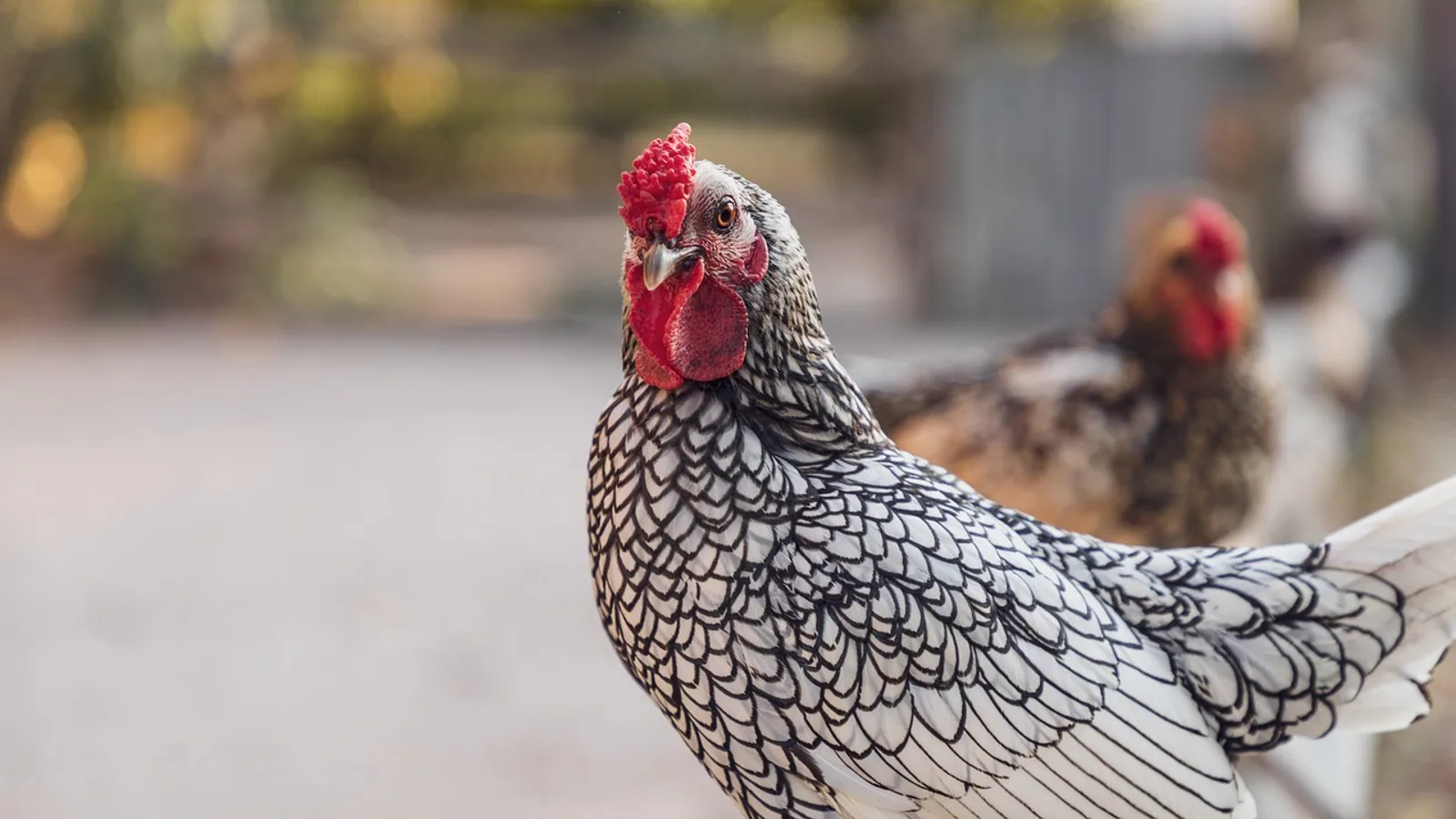
The Blue Wyandotte hen is a dual-purpose backyard chicken that lays roughly 200 brown eggs per year, carries a rose comb, and wears a slate-blue feather coat that never breeds true. She is a medium-to-heavy bird with a calm, cold-hardy constitution and a strong tendency to go broody. That combination makes her a favorite for small flocks in northern climates, but it also means anyone buying a blue hen should understand one genetic rule before they hatch chicks: blue crossed with blue produces blue, black, and splash offspring, and the blue color itself is the middle of three outcomes.
This guide covers the hen specifically. It explains what the blue gene does at the cellular level, why a blue hen mated to a blue rooster cannot produce all blue chicks, how the laced feather pattern is built, what to expect from egg production and broodiness, and how to feed, house, and monitor a flock. It also covers the health problems that matter most in backyard poultry and the point at which a hen needs a veterinarian rather than a home remedy.
This article is educational and is not a substitute for veterinary diagnosis or treatment.
At a Glance
| Attribute | Blue Wyandotte Hen |
|---|---|
| Purpose | Dual-purpose (eggs and meat) |
| Plumage | Slate blue, often with darker lacing |
| Comb type | Rose |
| Egg color | Brown |
| Eggs per year | About 200 |
| Broodiness | Common |
| Temperament | Calm, docile, cold-tolerant |
| Breeding outcome | Blue x blue gives blue, black, and splash chicks |
| Climate suitability | Good in cold weather |
The table above reflects breed-level traits. Individual hens vary in laying rate, temperament, and how often they sit.
Breed Origins and Purpose
The Wyandotte is an American breed developed in the late nineteenth century as a general-purpose farm chicken. The breed was built to do two jobs at once: lay a steady supply of brown eggs and carry enough body mass to be worth dressing for the table. That dual-purpose design is why Wyandotte hens are heavier than dedicated layer breeds and why they eat more feed per bird.
The blue variety is a color variant of the same breed, not a separate breed. Blue Wyandottes share the body type, rose comb, and temperament of the other Wyandotte colors. What separates them is a single dilution gene acting on black pigment.
Blue plumage in chickens has been studied most thoroughly in the Blue Andalusian, a breed that carries the same blue dilution. Research on Blue Andalusian genetics established that the blue phenotype depends on a bird being heterozygous at the blue locus, written Bl/bl+, with the extended black allele (E) at the E locus in the genetic background [1][2]. The Wyandotte blue works the same way. A hen is blue because she carries one copy of the blue gene and one copy of the non-blue allele.
Blue Plumage Genetics
The Blue Gene Is Incompletely Dominant
The blue gene (Bl) is incompletely dominant over its recessive allele (bl+). Incomplete dominance means the heterozygote looks different from either homozygote. A bird with two copies of bl+ has black feathers. A bird with two copies of Bl has splash feathers, which are a pale blue-white with irregular darker flecks. A bird with one copy of each, Bl/bl+, has blue feathers.
This is the entire reason blue hens do not breed true. When a blue hen is mated to a blue rooster, both parents are Bl/bl+. Each parent passes one allele at random, so the chicks fall into three groups in a 1:2:1 ratio: one quarter black (bl+/bl+), one half blue (Bl/bl+), and one quarter splash (Bl/Bl) [3]. Only half the chicks are blue.
The blue gene works by reducing eumelanin, the black pigment, in the feather. Research on Blue Andalusian stock showed that the Bl/bl+ genotype changes black pigment to blue when only one eumelanizing gene is present in the genetic background, but it is ineffective when two different eumelanin-producing genes act at the same time [1]. In practical terms, the blue gene dilutes black to slate blue, and it does so most cleanly when the bird's other pigment genes are not stacking extra black on top.
Why the Lacing Looks the Way It Does
Wyandottes are known for laced feathers, where each feather has a colored center and a darker edge. The genetics of lacing involve several interacting loci. Work crossing Blue Andalusian and Gold-Laced Wyandotte bantams found that the laced phenotype of the Gold-Laced Wyandotte depends on homozygosity of a linkage between a eumelanin intensifier, melanotic (Ml), and a pattern gene (Pg), in the presence of the eumelanin restrictor columbian (Co) and the brown allele (eb) at the E locus [2]. The Blue Andalusian, by contrast, is homozygous for extended black (E) and heterozygous for blue (Bl) [2].
That same study found that all patterned birds in the second generation were laced, with no segregation at the Co, Ml, and Pg loci, and concluded that the laced blue plumage genotype is E/E Bl/bl+ Co/Co (Ml-Pg)/(Ml-Pg) [2]. A separate study estimated the linkage between Ml and Lg at 12.2 percent, which is why lacing and melanotic patterning travel together more often than not [1].
For a keeper, the takeaway is simple. Lacing is a multi-gene trait. Two blue Wyandottes with good lacing can still produce chicks with weaker lacing, because the pattern genes have to line up correctly. Lacing quality is not guaranteed by color alone.
Mating Outcomes Table
The table below shows expected chick colors from three common matings. Percentages are the expected averages across many chicks, not a guarantee for any single hatch.
| Mating | Expected chicks | Percentage |
|---|---|---|
| Blue hen x Blue rooster | Black, Blue, Splash | 25% black, 50% blue, 25% splash |
| Blue hen x Black rooster | Black, Blue | 50% black, 50% blue |
| Blue hen x Splash rooster | Blue, Splash | 50% blue, 50% splash |
A blue hen mated to a black rooster produces no splash chicks. A blue hen mated to a splash rooster produces no black chicks. Only the blue x blue pairing produces all three colors in one hatch.
What This Means for Buying Chicks
A blue Wyandotte chick from a hatchery is not guaranteed to grow into a blue adult. Because the blue gene is incompletely dominant, a chick that hatches from blue parents has a one-in-four chance of being black and a one-in-four chance of being splash. Hatcheries that sell "blue" chicks are selling a color class, not a guaranteed adult color. If adult color matters to you, buy started pullets or grown hens whose color you can already see.
The same logic applies to breeding. If you want a flock that is entirely blue, you cannot get there by breeding blue to blue. You would need to breed blue to black and keep only the blue offspring, or accept that every blue x blue hatch will include black and splash chicks.
Hen-Specific Appearance
Body and Size
The Wyandotte hen is a medium-to-heavy bird with a deep, broad body and a full breast. Hens are noticeably smaller than roosters, which is typical of the breed. The body shape is compact rather than rangy, which helps the bird retain heat in cold weather.
Rose Comb
The Wyandotte carries a rose comb rather than a single comb. A rose comb is a low, broad, flattened structure that sits close to the skull and ends in a small spike pointing backward. The rose comb is a practical advantage in cold climates because it has less exposed surface area than a tall single comb, so it is less prone to frostbite. This is one of the reasons Wyandottes are considered a cold-hardy breed.
Feathers and Lacing
The blue Wyandotte hen has slate-blue body feathers with darker lacing around the edges. The lacing is most visible on the breast, back, and wing coverts. The exact depth of lacing varies from bird to bird because lacing depends on the interaction of several genes, as described above [1][2].
Skin, Legs, and Eyes
Wyandotte hens have yellow skin and yellow legs. The eyes are reddish bay. These traits are consistent across the breed's color varieties.
Temperament and Behavior
Calm and Docile
The Wyandotte hen is generally calm and easy to handle. She is not a flighty bird and tends to stay close to the coop rather than ranging far. That makes her a good choice for a small yard or a flock that is kept in a run.
Broodiness
Broodiness is common in Wyandotte hens. A broody hen stops laying, sits on eggs or on an empty nest, fluffs her feathers, and may peck when approached. Broodiness is driven by hormones and is a natural maternal behavior. It is also the main reason a Wyandotte hen may not lay 200 eggs in a given year, because a broody hen takes a break from laying while she sits.
If you want chicks, a broody Wyandotte hen can hatch and raise them with little help. If you do not want chicks, you need a plan for breaking broodiness. A broody hen should be moved to a wire-bottomed pen with airflow underneath, given food and water, and monitored. She should not be left to sit on an empty nest for weeks, because prolonged brooding costs body condition and delays the return to laying.
Cold Hardiness
Wyandottes handle cold weather well. The rose comb reduces frostbite risk, and the dense feathering traps heat. Cold hardiness does not remove the need for a dry, draft-free coop with ventilation. A hen that is wet and exposed to wind can still develop frostbite on the comb, wattles, and feet.
Heat Sensitivity
The same dense feathering that helps in winter makes Wyandottes less tolerant of extreme heat. In hot weather, hens need shade, cool water, and airflow. Watch for open-mouth breathing and wing-holding, which are signs of heat stress.
Egg Production
How Many Eggs
A healthy Blue Wyandotte hen lays about 200 brown eggs per year under good management. That figure assumes a hen that is not broody for long stretches, is fed a balanced layer diet, and is kept in a flock with adequate space and light.
Egg production is not evenly spread across the year. Hens lay most heavily in spring and summer and slow down in fall and winter as daylight shortens. A hen also stops laying during a molt, when she sheds old feathers and grows new ones.
Egg Size and Color
Wyandotte eggs are brown. Egg size starts small when a pullet begins laying and increases over the first few months. A mature hen lays a medium-to-large brown egg.
Factors That Change Production
Several things move egg numbers up or down:
- Age. A pullet in her first laying year produces the most eggs. Production declines each year after that.
- Broodiness. Each broody cycle removes weeks of laying.
- Molt. A full molt can pause laying for weeks.
- Nutrition. A layer ration with adequate calcium and protein supports shell quality and production.
- Light. Short winter days reduce laying unless supplemental light is used.
- Stress. Predators, crowding, and sudden changes in routine reduce output.
Egg Production Table
| Factor | Effect on laying |
|---|---|
| First laying year | Highest production |
| Broody cycle | Pauses laying for weeks |
| Annual molt | Pauses laying for weeks |
| Winter daylight | Reduces or stops laying |
| Inadequate calcium | Thin or soft shells |
| Heat stress | Reduced production |
Feeding and Nutrition
Layer Ration
A laying hen needs a complete layer ration, not scratch grain alone. Scratch is a treat, not a diet. A commercial layer feed is formulated to supply the protein, calcium, phosphorus, and vitamins a hen needs to produce eggs and maintain body condition.
Calcium
Calcium is the nutrient most directly tied to eggshell quality. A hen pulls calcium from her diet and, if dietary calcium is short, from her bones. Oyster shell offered free-choice lets a hen top up her calcium when she needs it. Hens that lay heavily need more calcium than hens that are not laying.
Protein
Protein supports feather growth and egg production. A hen going through a molt has a higher protein need than a hen in full lay. Feeding a higher-protein ration during molt helps her regrow feathers faster.
Water
Clean water is the most important nutrient. A hen that is off water will drop production within days. Water should be available at all times and should not be allowed to freeze in winter.
Treats and Table Scraps
Treats should make up a small share of the diet. Too many treats dilute the balanced ration and reduce egg output and shell quality. Avoid feeding moldy or spoiled food. Do not feed raw meat or eggs to a flock.
Grit
Hens that eat anything beyond a complete ration need grit to grind food in the gizzard. Insoluble grit stays in the gizzard and helps break down coarse material. Soluble grit, such as oyster shell, is a calcium source, not a grinding aid.
Housing and Management
Coop Space
A hen needs enough floor space to move, dust bathe, and reach food and water without competition. Crowding increases stress, feather pecking, and disease spread. A coop should have solid protection from predators and a secure door.
Ventilation Without Drafts
Cold-hardy does not mean airtight. A coop needs ventilation high on the walls so moisture and ammonia escape, while the area at bird level stays free of direct drafts. Wet, stuffy air is a bigger winter risk than cold air.
Roosts
Hens need roosts raised off the floor. Roosting keeps birds off the litter and lets them sleep in a natural position. Roosts should be wide enough for a hen to cover her feet with her body, which helps prevent frostbite on the toes.
Nesting Boxes
Nesting boxes should be dark, quiet, and lined with clean bedding. One box for every four to five hens is a reasonable target. Clean bedding reduces the chance of dirty eggs and external parasites.
Litter Management
Keep litter dry. Damp litter grows mold and ammonia and contributes to respiratory disease. Add fresh bedding as needed and remove wet spots promptly.
Predator Control
Predators are the leading cause of sudden flock losses. Hardware cloth is more secure than chicken wire. Latches should be predator-resistant, because raccoons can open simple hooks. Buried aprons or solid floors prevent digging predators from entering.
Health Problems in Backyard Hens
Respiratory Disease
Respiratory disease is common in backyard flocks. Signs include sneezing, nasal discharge, swollen eyes, and labored breathing. Some respiratory diseases are viral and some are bacterial. A hen with respiratory signs should be separated from the flock and seen by a veterinarian, because treatment depends on the cause.
External Parasites
Mites and lice live on the bird or in the coop. Signs include itching, feather loss, and dirty vent feathers. Mites can also hide in cracks in the coop and feed on birds at night. Treatment involves both the bird and the environment, and a veterinarian can recommend products that are appropriate for laying hens.
Internal Parasites
Roundworms and other internal parasites can cause weight loss, pale combs, and reduced laying. Fecal testing helps identify the parasite. Do not use a dewormer without veterinary guidance, because some products leave residues in eggs and have withdrawal periods.
Reproductive Problems
Hens can develop egg binding, where an egg cannot pass, and prolapse, where tissue protrudes from the vent. Both are emergencies. A hen that is straining, standing with a hunched posture, or has tissue visible at the vent needs immediate veterinary care.
Nutritional Deficiencies
Calcium deficiency causes thin-shelled or soft-shelled eggs and can lead to bone weakness. Vitamin and mineral imbalances cause a range of problems, including poor feather quality and reduced production. A complete ration prevents most of these issues.
Frostbite
Frostbite affects combs, wattles, and toes in cold weather, especially when the coop is damp or drafty. The rose comb reduces risk compared with a tall single comb, but it does not eliminate it. Keep the coop dry and ventilated, and avoid handling birds with wet hands in freezing weather.
Heat Stress
Heat stress can kill a hen quickly. Provide shade, cool water, and airflow during hot weather. Watch for open-mouth breathing and listlessness.
Biosecurity
New birds should be kept separate from the flock for a period before introduction. Dirty boots, shared equipment, and visitors can carry disease between flocks. A simple routine of separate footwear and hand washing reduces risk.
Vaccination and Testing
Vaccination programs vary by region and by flock type. A veterinarian can advise on what is appropriate for your birds. Some diseases require reporting to state or federal animal health authorities, and a veterinarian will know the current rules.
Screening and Preventive Care
Routine Observation
The most useful screening tool is daily observation. A healthy hen has bright eyes, a red comb, clean vent feathers, and normal droppings. A hen that separates from the flock, stops eating, or changes droppings is a hen to examine.
Fecal Testing
Fecal testing identifies internal parasites and helps guide treatment. A veterinarian can advise on how often to test based on your flock's exposure.
Body Condition
Weigh or handle hens periodically to check body condition. A hen that is losing weight despite eating may have parasites or another underlying problem.
Egg Quality Monitoring
Changes in shell quality, egg size, or the number of eggs can be early signs of a problem. Track production so you notice changes.
Molt and Recovery
Molting is normal, but a hen that is slow to regrow feathers or that stays thin after molt should be evaluated.
Lifespan and Longevity
A well-managed backyard hen can live several years. Laying peaks in the first year and declines after that. Many keepers keep hens as pets after laying slows, while others manage the flock for production. Either approach is a management decision, and both are common.
Finding a Responsible Breeder or Rescue
What to Ask a Breeder
Ask how the birds are housed, what they are fed, and whether the flock has had any recent disease problems. Ask whether the breeder vaccinates and what the vaccination schedule is. Ask to see the parent stock if possible.
What to Look For in a Bird
Choose a bird with bright eyes, a clean vent, smooth feathers, and a normal gait. Avoid a bird that is thin, that has discharge from the nostrils or eyes, or that is breathing with effort.
Hatchery Color Limits
A hatchery can sell a blue Wyandotte chick, but it cannot guarantee the adult color. Because blue is incompletely dominant, a blue x blue hatch produces black, blue, and splash chicks [3]. If adult color matters, buy started birds whose color is already visible.
Rescue and Rehoming
Rescues and rehoming groups take in hens from flocks that are downsizing. A rescued hen may need a quarantine period and a veterinary check before joining a flock.
Who Should Not Get a Blue Wyandotte Hen
A Blue Wyandotte hen is not the right choice for every keeper. Consider a different breed or a different plan if any of the following apply:
- You need maximum egg output with minimal broodiness. A Wyandotte hen goes broody often, and each broody cycle costs laying time.
- You want a flock that breeds true for blue. Blue x blue does not produce all blue chicks [3].
- You live in a very hot climate and cannot provide shade and airflow. Dense feathering makes heat a real risk.
- You cannot provide a secure coop. Predators are the leading cause of flock loss.
- You are not prepared to separate and treat a sick bird. Respiratory and reproductive problems need veterinary care.
- You want a bird that ranges far and forages widely. Wyandottes tend to stay close to the coop.
Limitations and When to Contact a Veterinarian
This article covers breed-level traits and general backyard poultry care. It cannot diagnose an individual bird. A veterinarian who sees poultry should evaluate any hen with the following signs:
- Labored breathing, open-mouth breathing at rest, or a swollen face
- Nasal or eye discharge that persists more than a day
- Straining, a hunched posture, or tissue visible at the vent
- A sudden drop in eating or drinking
- Weight loss despite a normal appetite
- Bloody or persistently abnormal droppings
- A comb that turns dark or blue
- Lameness that does not improve within a day
- Sudden death in more than one bird in a short period
Call a veterinarian before using any medication in a laying hen. Some drugs leave residues in eggs and carry withdrawal periods, and some are not legal for use in laying flocks. A veterinarian can also advise on reportable diseases and on what to do if a flock has a disease that must be reported to state or federal authorities.
Frequently Asked Questions
What color eggs does a Blue Wyandotte hen lay?
A Blue Wyandotte hen lays brown eggs. She produces about 200 eggs per year under good management, with production concentrated in spring and summer.
Do Blue Wyandotte hens go broody?
Yes. Broodiness is common in Wyandotte hens. A broody hen stops laying and sits on the nest, which reduces her annual egg total.
Why do blue chickens not breed true?
The blue gene is incompletely dominant. A blue bird carries one copy of the blue allele and one copy of the non-blue allele, so a blue x blue mating produces black, blue, and splash chicks in a 1:2:1 ratio [3].
What do you get when you cross a blue hen with a black rooster?
A blue hen crossed with a black rooster produces about half black chicks and half blue chicks. No splash chicks appear in this cross.
What do you get when you cross a blue hen with a splash rooster?
A blue hen crossed with a splash rooster produces about half blue chicks and half splash chicks. No black chicks appear in this cross.
Are Blue Wyandotte hens cold hardy?
Yes. Wyandottes are considered cold hardy. The rose comb has less exposed surface area than a single comb, which lowers frostbite risk, and dense feathering helps retain heat.
How many eggs does a Blue Wyandotte hen lay per year?
About 200 brown eggs per year. Broodiness, molt, and short winter daylight all reduce the actual number a hen produces in a given year.
Can a hatchery guarantee a blue Wyandotte chick will grow up blue?
No. Because blue is incompletely dominant, a chick from blue parents has a chance of being black or splash. Buy started birds if adult color matters to you.
Related Articles
- Do You Need a Rooster for Hens to Lay Eggs?
- Egg Binding in Hens: Signs and What to Do
- Lighting Programs for Laying Hens: Optimizing Egg Production
- Blue-Tongue Skink Care Guide
- Protein Requirements for Laying Hens: Meeting Egg Production Demands
- Coccidiosis in Laying Hens and Egg Production: Impact and Management
- Aseel Chicken: Hen, Rooster, and Breed Traits
Further Reading
- Construction of SNP feature library for the identification of chicken breeds.
- A genome-wide association study for eumelanin pigmentation in chicken plumage using a computer vision approach.
- Genome-wide association study reveals novel variants for growth and egg traits in Dongxiang blue-shelled and White Leghorn chickens.