Black Copper Maran Rooster: Breed Guide
By Dr. Zubair Khalid, DVM, MS, PhD ·
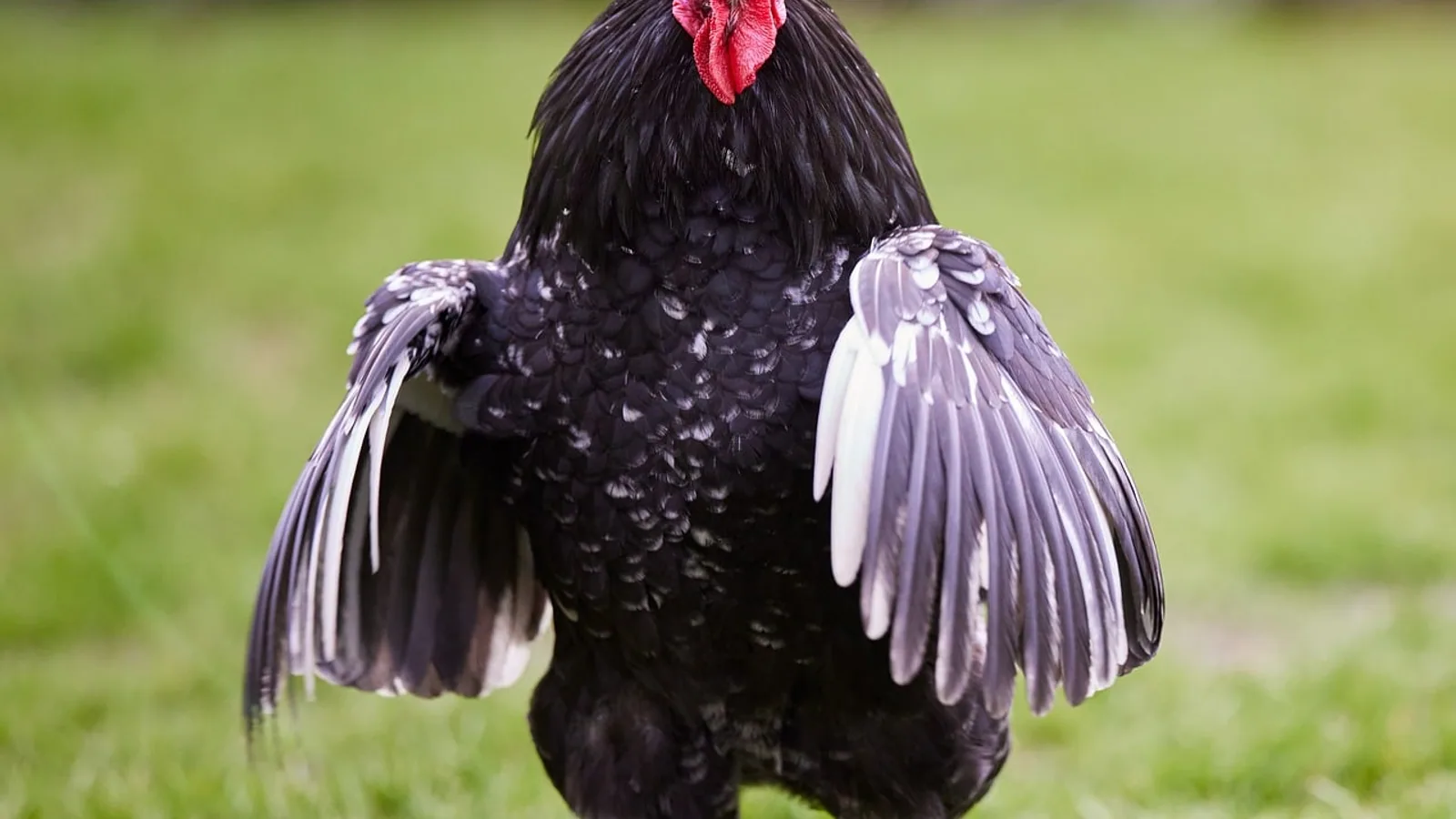
The Black Copper Marans rooster is a large, dual-purpose French farm bird kept today mostly for breeding and flock protection. He is a heavy rooster with black body plumage and copper-red feathers on the neck, back, and wings. He is calm to moderately assertive, he does not lay eggs, and his main practical value in a backyard flock is fertilizing hens and passing shell-color genetics to his daughters.
This guide covers the Black Copper Marans rooster specifically: how he differs from the hen in body and plumage, what to expect from his mating behavior, how fertility works in a small flock, and what his genetics do and do not control when it comes to dark brown eggs.
This article is educational and is not a substitute for veterinary diagnosis or treatment.
At a Glance
| Trait | Black Copper Marans rooster |
|---|---|
| Purpose | Breeding, flock protection, dual-purpose meat bird |
| Plumage | Black body with copper-red hackle, saddle, and wing bows |
| Comb | Medium single comb, typically upright |
| Wattles | Present and moderately developed |
| Spurs | Present on the legs of mature males |
| Temperament | Calm to moderately assertive, variable by line |
| Energy level | Active, foraging, watchful |
| Egg production | None (roosters do not lay) |
| Role in egg color | Passes shell-color genes to daughters, does not set his own egg color |
| Good with children | Variable, depends on handling and individual bird |
| Good with other pets | Variable, depends on flock dynamics and supervision |
| Lifespan | Several years with good husbandry |
Origin and Purpose of the Black Copper Marans
The Marans is a French breed that takes its name from the town of Marans in western France. It was developed as a general-purpose farm chicken, meaning it was kept for both meat and eggs. The Black Copper color pattern is one of the recognized varieties, and it is the variety most backyard keepers picture when they say "Marans."
The breed's reputation rests on two things. The first is a large, hardy body suited to a farmyard. The second is the dark brown egg, which is the trait that made Marans famous among egg keepers. The rooster carries half of the genetics that produce that egg color in his daughters, which is why breeders keep good roosters rather than treating them as an afterthought.
In a modern backyard flock, the Black Copper Marans rooster usually serves three roles. He fertilizes hens so that eggs can be hatched. He contributes shell-color genetics to the next generation of layers. And he acts as a watchful presence over the flock, which is the behavior most roosters show to some degree.
Appearance: How the Rooster Differs from the Hen
The Black Copper Marans rooster and hen share the same base color, but they do not look alike once the birds mature. The differences are in plumage pattern, feather length, comb and wattle development, spurs, and overall size.
Copper hackle and saddle feathers
The rooster's copper coloring is concentrated in three places. The hackle, which is the neck feathering, carries copper-red feathers that drape over the shoulders. The saddle, which is the feathering just in front of the tail, carries long copper feathers that hang down over the sides of the tail. The wing bows, the front curve of the folded wing, also show copper.
The hen shows copper too, but it is usually restricted to the neck and is duller and shorter. She does not develop the long, pointed saddle feathers that the rooster grows. This is the single easiest way to tell a young Black Copper Marans rooster from a hen before he crows: look at the neck and the saddle. A bird with long, pointed, copper saddle feathers hanging over the tail is male.
Feather shape and length
Male chickens in general grow longer, more pointed hackle and saddle feathers than females. In the Black Copper Marans, this sex difference is pronounced because the copper color sits exactly on those feathers. The rooster's copper hackle is longer and more flowing, and his saddle feathers trail down toward the tail. The hen's copper is compact and rounded.
Comb, wattles, and spurs
The rooster develops a larger, more upright single comb and larger wattles than the hen. These are secondary sex characteristics driven by male hormones. Mature roosters also grow spurs on the backs of their legs. Hens can occasionally grow small spurs or spur-like bumps, but prominent spurs are a male trait.
Size
The rooster is the larger sex. He stands taller and carries more breast and leg muscle than the hen. This size difference matters for two practical reasons. First, a heavy rooster can be rough on smaller hens during mating. Second, if you are hatching eggs, the rooster's body size is one of the traits you are selecting for in the next generation.
Rooster vs Hen: Comparison Table
| Trait | Rooster | Hen |
|---|---|---|
| Base plumage | Black with copper hackle, saddle, and wing bows | Black with copper restricted mainly to the neck |
| Hackle feathers | Long, pointed, flowing copper | Shorter, rounded, duller copper |
| Saddle feathers | Long, pointed, copper, hanging over the tail | Absent as a distinct male-type saddle |
| Comb | Larger, typically upright single comb | Smaller single comb |
| Wattles | Larger and more developed | Smaller |
| Spurs | Present on mature birds | Usually absent or only small bumps |
| Body size | Larger, heavier, taller | Smaller and lighter |
| Egg production | None | Lays eggs, dark brown in this breed |
| Primary role | Fertility, genetics, flock protection | Egg production, genetics |
| Temperament | Calm to moderately assertive | Usually calmer and more docile |
| Crow | Crows, often early and loud | Does not crow |
Temperament and Behavior
The Black Copper Marans rooster is generally described as calm for a large breed, but temperament varies by line, by individual bird, and by how much handling the bird received as a chick. Some roosters are easy to walk past. Others are assertive about space, especially around hens.
A rooster's behavior is shaped by three things. Genetics set a baseline. Handling during the first weeks of life shapes how comfortable the bird is around people. And flock structure shapes how much he feels he needs to guard. A rooster with a stable group of hens and a predictable routine is usually easier to manage than one kept alone or moved between groups.
Roosters are watchful. They scan for aerial and ground threats, they call hens toward food, and they often position themselves between the hens and anything unfamiliar. This is normal rooster behavior and it is one reason people keep them. It is also why a rooster may react to a new person, a dog, or a delivery truck in ways a hen would not.
Aggression toward people is the behavior that most often forces a keeper to make a decision about a rooster. There is no reliable way to predict from breed alone whether an individual rooster will become aggressive. If a rooster begins charging, flogging, or stalking people, that is a management and safety issue, and it is reasonable to consult a veterinarian or an experienced poultry keeper about options. Do not assume that a calm breed description guarantees a calm bird.
Mating Behavior and Fertility
Mating in chickens is a frequent, brief event. A rooster mounts a hen, balances with his feet on her back or sides, and briefly brings his cloaca into contact with hers to transfer sperm. This is called a cloacal kiss. There is no intromittent organ in chickens.
How often roosters mate
A healthy rooster mates many times a day across a group of hens. He does not mate each hen equally. Roosters often favor certain hens, and a hen that is low in the pecking order may be mated less often or harassed more often. This uneven attention is one reason fertility can vary within the same flock.
How long sperm stays viable
Sperm stored in the hen's sperm storage tubules can fertilize eggs for days to a few weeks after a single mating. In practice, this means a hen can lay fertile eggs for a period after the rooster is removed. If you are collecting eggs for hatching and you have just removed a rooster, do not assume that every egg laid the next day is infertile.
Fertility rates in a small flock
Fertility in a backyard flock is not a fixed number. It depends on the rooster's age and condition, the number of hens per rooster, the hens' age and health, nutrition, heat stress, and how long the birds have been together. A young, active rooster with a reasonable number of hens usually produces good fertility. An older rooster, an overweight rooster, or a rooster with leg or foot problems may produce lower fertility.
A practical starting point for many keepers is roughly one rooster for every eight to twelve hens. Too few hens and the rooster overworks a small group, which can cause feather loss and skin injury on the hens' backs. Too many hens and fertility may drop because the rooster cannot cover them all reliably. These are general husbandry ranges, not breed-specific guarantees.
Signs a rooster is working
You can check fertility directly by incubating eggs and candling them, or by breaking a freshly laid egg and looking for the small white blastoderm on the yolk. A fertile egg shows a distinct round white spot with a ring. An infertile egg shows a smaller, irregular spot. If you are hatching, candling at around day 5 to 7 of incubation is the standard way to see whether embryos are developing.
Hen welfare during mating
A heavy rooster can damage a hen's back feathers and skin. Watch for bare patches, reddened skin, or wounds over the back and shoulders. Hen saddles, also called aprons, are cloth covers that protect the back. Providing more space, more hens per rooster, and perches or hiding spots helps hens avoid constant attention. If a hen has open wounds, separate her and have her examined.
Egg Color: What the Rooster Does and Does Not Control
This is the point that causes the most confusion among new keepers. A rooster does not lay eggs, so he cannot determine the color of any egg laid in his lifetime. Egg color is set by the hen. The shell color of an egg is determined by the hen's genetics and by what happens in her shell gland while that egg is being formed.
The rooster's role is genetic and generational. He passes one copy of his shell-color genes to each daughter. Those genes, combined with the genes the hen passes, determine the color of the eggs his daughters will eventually lay. So a Black Copper Marans rooster can influence the egg color of the next generation of hens. He cannot change the color of eggs laid today.
How dark brown eggshells form
Brown eggshell color comes mainly from a pigment called protoporphyrin IX. In brown egg layers, protoporphyrin IX is deposited in the shell during formation in the shell gland. Research on brown eggshells has identified protoporphyrin IX as the primary pigment responsible for brown color [1].
The amount of pigment deposited varies. Hens that lay darker brown eggs have higher protoporphyrin IX content in the eggshell and in the shell gland than hens that lay lighter brown eggs [2]. This is a hen-level difference, not a rooster-level one, for any given egg.
The pigment pathway involves several genes and proteins. Studies have linked protoporphyrin IX synthesis and transport to genes including ALAS1, ABCG2, SLC25A38, and FLVCR1 [1]. Variants in the ABCG2 gene, which is involved in protoporphyrin transport, have been associated with measurable differences in brown eggshell color [3]. Proteomic work comparing hens that lay dark versus light brown eggs has identified multiple differentially expressed proteins in the shell gland, including proteins involved in protoporphyrin IX synthesis and transport [4].
The Marans scale
Marans eggs are commonly graded on a scale from 4 to 9, where higher numbers mean darker brown shells. A score of 4 is a medium brown. A score of 9 is a very dark, chocolate brown. The scale is a practical breeder tool for describing shell darkness, and it is not a measure of egg quality, nutrition, or freshness.
The Marans scale is a description of the hen's output. A rooster does not have a Marans scale score because he does not lay eggs. What a rooster has is a genetic contribution that may push his daughters toward darker or lighter shells, depending on the hen he is paired with and the genes both birds carry.
Why egg color varies between hens and between eggs
Even within a well-bred line, individual hens lay different shades. A single hen can also lay slightly different shades from one egg to the next. Pigment deposition is affected by the hen's genetics, her age, and her physiology. Research in aged laying hens has shown that eggs from older hens can have poorer shell color, with lower protoporphyrin IX content in the eggshell and shell gland compared with younger, darker-shelling hens [2]. This is one reason a hen's eggs may lighten as she ages.
Pigment and egg quality
There is a documented relationship between eggshell pigmentation and some internal egg quality measures. A study across traditional chicken breeds found that breed identity and eggshell pigmentation explained most of the variability in the concentration of two major egg white antimicrobial proteins, lysozyme and ovotransferrin. The study also found a positive correlation between egg white lysozyme concentration and eggshell cuticle protoporphyrin in tinted and dark brown eggs, but not in brown, white, and blue eggs [5]. This is a research finding about pigment and egg white proteins. It is not a claim that darker eggs are better for people, and it is not a reason to choose a rooster.
Breeding with a Black Copper Marans Rooster
If you keep a Black Copper Marans rooster for breeding, the practical questions are fertility, hen condition, and what the offspring will look like.
Setting up a breeding group
Keep the rooster with a group of hens of a size he can cover without overworking any single bird. Provide enough space that hens can move away. Provide multiple feeders and waterers so that low-ranking hens can eat without being displaced.
If you are breeding toward a specific color pattern, pair the rooster with hens that carry the traits you want. The copper pattern and the dark eggshell are both heritable, but they are separate traits. A rooster with excellent copper coloring is not automatically a rooster that throws dark eggshells in his daughters, and a rooster from a dark-egg line is not automatically a good color bird.
Collecting and incubating eggs
Collect eggs frequently and store them properly before incubation. Mark the date. Set only clean, uncracked eggs. Candle at day 5 to 7 to check for developing embryos and to remove clears.
Managing the rooster's condition
A breeding rooster needs to stay fit. An overweight rooster may have trouble mounting and may develop foot and leg problems. Check his feet and legs regularly for swelling, scabs, or wounds. Check his spurs. Long, sharp spurs can injure hens, and some keepers blunt or trim them with guidance from a veterinarian or experienced poultry keeper.
Housing and Husbandry for a Rooster
A rooster has the same basic needs as the hens: shelter, ventilation, clean water, balanced feed, and protection from predators. A few points are specific to keeping a male bird.
Roosters crow. Crow volume and timing vary by bird, but crowing is normal and it is loud. If you live where crowing is restricted, check local rules before keeping a rooster. Many municipalities in the United States prohibit roosters in residential zones, so confirm the rules for your address.
Roosters need secure housing at night. Predators that take hens will also take a rooster, and a rooster's size does not make him safe from a determined raccoon, fox, or hawk. Use hardware cloth rather than chicken wire on openings, secure latches, and close the coop at dusk.
Space matters more with a rooster in the flock because hens need room to avoid his attention. Provide perches at different heights and visual barriers so a hen can get out of sight. This reduces stress and reduces feather damage.
Feeding Considerations
Feed the flock a complete poultry ration appropriate to the birds' age and production stage. Hens that are laying need a layer ration with adequate calcium. A rooster should not be fed a high-calcium layer ration as his primary diet long term if it can be avoided, because his calcium requirement is lower than a laying hen's. In a mixed flock, many keepers feed a flock raiser or all-flock ration and offer calcium separately as oyster shell for the hens. Discuss the specifics of your flock's diet with a veterinarian or poultry nutritionist.
Fresh, clean water must be available at all times. Heat stress reduces fertility and overall condition in both sexes, so provide shade and cool water in hot weather.
Do not feed moldy feed or spoiled scraps. Keep feeders clean and store feed in a dry, sealed container.
Health Problems and Screening
The Black Copper Marans rooster is subject to the same health problems as other chickens. There is no breed-specific disease that a rooster carries simply because he is a Black Copper Marans. The conditions that matter most in a backyard rooster are the ones tied to his size, his legs, and his role in the flock.
Feet and legs
A heavy rooster puts stress on his feet and legs. Check the bottoms of his feet for swelling, scabs, or dark lesions that could indicate bumblefoot. Check the scales on his legs for raised, crusty areas that could indicate scaly leg mites. Lameness, reluctance to walk, or a hot, swollen foot should be evaluated by a veterinarian.
Spurs and injuries
Spurs can break, crack, or cause wounds to the rooster or the hens. Inspect spurs during routine handling. Do not attempt to remove or cut a spur without proper instruction, because improper trimming can cause bleeding and infection.
Respiratory and flock-level disease
Chickens can carry and transmit respiratory and other infectious diseases. New birds should be quarantined before introduction to the flock. If you see sneezing, nasal discharge, swollen eyes, labored breathing, or a drop in activity across multiple birds, contact a veterinarian. According to the Merck Veterinary Manual, respiratory disease in poultry can spread rapidly through a flock, and early veterinary assessment improves outcomes.
Parasites
External parasites such as mites and lice, and internal parasites such as worms, are common in backyard flocks. Inspect birds periodically, especially around the vent and under the wings. Discuss a parasite control plan with a veterinarian rather than treating blindly.
Recommended screening and routine checks
There is no standard screening panel specific to this breed. Reasonable routine practice for a backyard rooster includes a monthly hands-on check of feet, legs, vent, eyes, comb, and body condition, plus a weight check if you can manage it. A veterinarian who sees poultry can advise on vaccination, parasite testing, and any testing required before introducing new birds.
Lifespan and Long-Term Care
Chickens can live for several years with good care, and roosters often live longer than production hens because they are not depleted by continuous laying. Lifespan depends on genetics, nutrition, predator protection, and disease exposure. There is no single reliable number that applies to every Black Copper Marans rooster.
As a rooster ages, watch for declining mobility, foot problems, and weight changes. An older rooster may need a lower perch, easier access to feed, and protection from younger, more aggressive birds if you keep more than one male.
Finding a Responsible Breeder or Rescue
A responsible breeder will let you see the birds, answer questions about the line, and be honest about temperament and egg color expectations. Ask to see the parents if possible. Ask what the hens' eggs score on the Marans scale, and understand that this tells you about the hens, not a guarantee about the rooster's daughters.
Avoid buying based on claims that a particular rooster guarantees dark eggs. No rooster can guarantee that. What you can evaluate is the breeder's record, the health of the birds, and whether the breeder keeps records of egg color and fertility.
Rescues and farm sanctuaries often have roosters available. Roosters are frequently surrendered because of crowing complaints or aggression, so a rescue is a realistic option if you want a rooster and can accept an unknown genetic background.
Who Should Not Get a Black Copper Marans Rooster
Do not get this rooster if roosters are prohibited where you live. Do not get one if close neighbors will be disturbed by crowing and you cannot manage that conflict. Do not get one if you are not prepared to handle a large bird that may become assertive as he matures.
Do not get a rooster if your only goal is eggs. Hens lay eggs without a rooster. A rooster is not needed for a hen to lay, and he does not increase the number of eggs she lays.
Do not get a rooster if you cannot provide enough hens and enough space. A single rooster with two or three hens is a setup that often leads to over-mating, feather loss, and skin injury.
Limitations and When to Contact a Veterinarian
This article is educational and is not a substitute for veterinary diagnosis or treatment. Individual birds vary, and a veterinarian who examines your rooster can give advice that applies to your flock.
Contact a veterinarian promptly if you see any of the following:
- A rooster who stops eating or drinking, or who loses weight
- Lameness, reluctance to stand, or a swollen, hot, or wounded foot
- Open wounds on a hen's back or sides from mating
- Labored breathing, sneezing, nasal discharge, or swollen eyes in one or more birds
- A sudden drop in activity or egg production across the flock
- Blood in droppings, or droppings that are persistently abnormal
- A prolapse, a distended abdomen, or straining
- Any bird that is isolated, hunched, or being picked on by the flock
- A rooster who becomes aggressive toward people, especially children
If you are unsure whether a problem is serious, call a veterinarian who treats poultry. Early assessment is usually easier and less expensive than waiting.
Frequently Asked Questions
Does a Black Copper Marans rooster lay eggs?
No. Roosters do not lay eggs. Only hens lay eggs, and a hen does not need a rooster to lay.
Does the rooster determine the color of the eggs?
No. The hen's genetics and her shell gland determine the color of each egg she lays. The rooster passes shell-color genes to his daughters, which affects the eggs those daughters will lay later.
What does a 4 to 9 Marans scale score mean?
The Marans scale grades eggshell darkness from 4 (medium brown) to 9 (very dark chocolate brown). It describes the hen's egg, not the rooster.
How many hens should a Black Copper Marans rooster have?
A common husbandry range is about eight to twelve hens per rooster. Fewer hens can lead to over-mating and feather damage. More hens can reduce fertility if the rooster cannot cover them all.
How long after mating are eggs fertile?
Sperm can remain viable in the hen's reproductive tract for days to a few weeks. Eggs laid during that window can be fertile even after the rooster is removed.
How can I tell a Black Copper Marans rooster from a hen?
Look at the neck and saddle. A rooster grows long, pointed copper hackle and saddle feathers, a larger comb and wattles, and spurs on mature legs. The hen's copper is shorter and mostly limited to the neck.
Are Black Copper Marans roosters aggressive?
Temperament varies by line and individual bird. Some are calm and easy to handle, and some become assertive as they mature. Handling early and providing enough hens and space helps, but it does not guarantee a docile adult.
Do I need a rooster for my hens to lay eggs?
No. Hens lay eggs without a rooster. A rooster is needed only if you want fertile eggs for hatching.
Related Articles
- Do You Need a Rooster for Hens to Lay Eggs?
- Black Cat
- Copper Annealing Temperature: Definition and PCR Role
- Mineral Nutrition for Sheep and the Risk of Copper Toxicity
- Bearded Dragon Black Beard Meaning
- Argentine Black and White Tegu Care Guide
Further Reading
Sources
- Identification of crucial genes and metabolites regulating the eggshell brownness in chicken.
- Mitochondrial transcription factor A induces the declined mitochondrial biogenesis correlative with depigmentation of brown eggshell in aged laying hens.
- A non-synonymous variant of C21R in the ABCG2 gene is significantly associated with brown eggshell color of Lueyang black-boned chicken.
- iTRAQ-Based Quantitative Proteomics Identifies Potential Regulatory Proteins Involved in Chicken Eggshell Brownness.
- Concentration of egg white antimicrobial and immunomodulatory proteins is related to eggshell pigmentation across traditional chicken breeds.