Parrotfish: Species, Diet, and Reef Aquarium Needs
By Dr. Zubair Khalid, DVM, MS, PhD ·
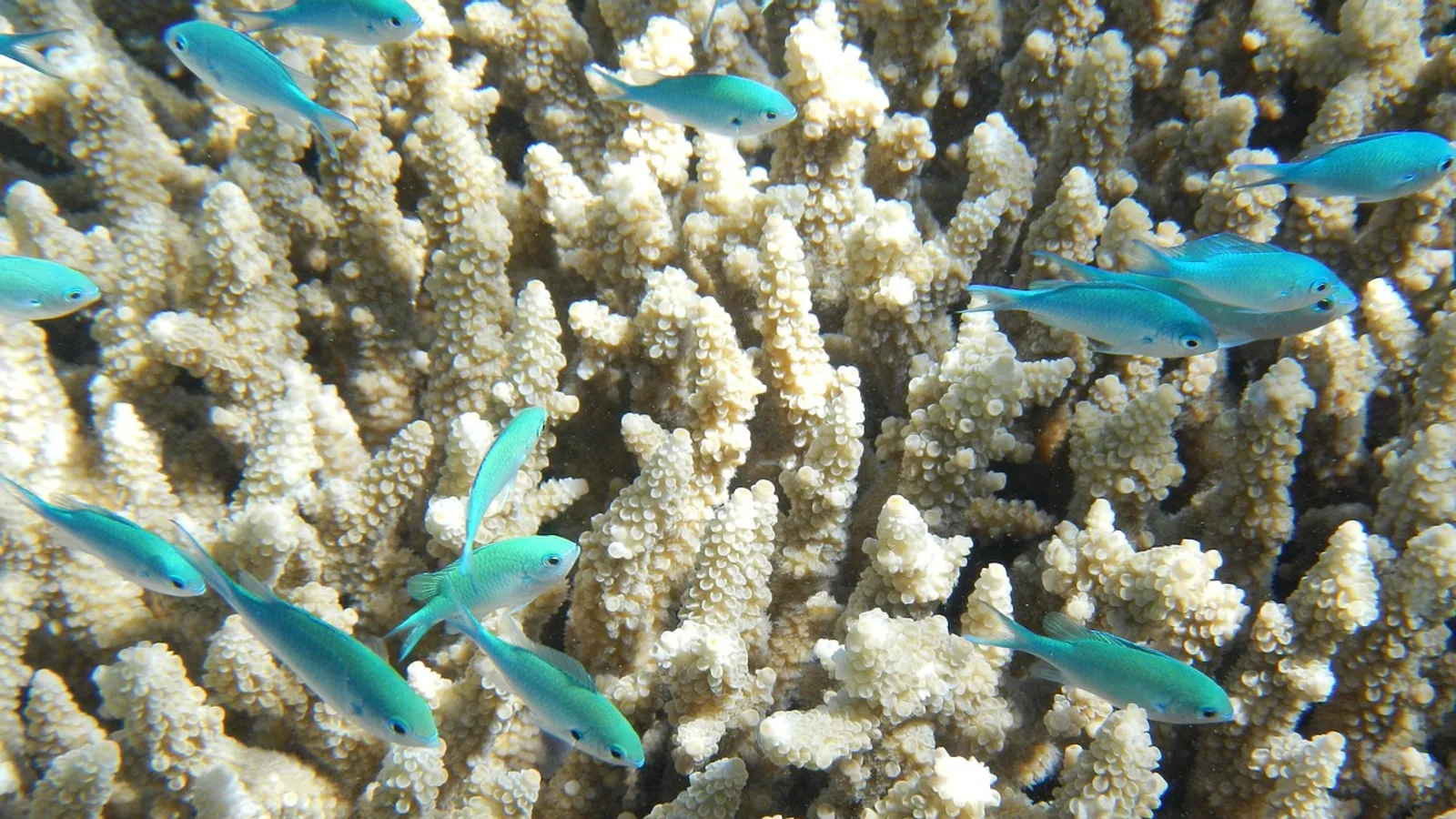
Parrotfish are coral reef grazers in the family Scaridae (now often classified within the wrasse family Labridae as the tribe Scarini) that scrape algae and live coral skeleton with fused, beak-like teeth. That scraping produces much of the white sand found on tropical beaches, but it also makes most parrotfish poor candidates for a home reef aquarium because of their adult size, constant grazing demand, and direct damage to coral.
This article explains parrotfish biology, their ecological role on the reef, the species that appear in the aquarium trade, and the practical reasons why the vast majority of parrotfish should stay on the reef. It is written for US pet owners and aquarium keepers who are researching whether a parrotfish belongs in their tank.
This article is educational and is not a substitute for veterinary diagnosis or treatment.
What Is a Parrotfish?
A parrotfish is a marine teleost fish of the family Scaridae, recognized by a fused dental plate that forms a beak rather than individual pointed teeth. That beak lets the fish rasp algae and the thin surface layer of carbonate rock and coral skeleton. The family is species-rich and ecologically important on tropical reefs worldwide.
Parrotfish belong to the same broader lineage as wrasses. Modern classification places them in the family Labridae as the tribe Scarini, which is why some scientific papers refer to parrotfishes as "Labridae: Scarini" [1]. Older aquarium literature and many field guides still use the family name Scaridae, and both names refer to the same group of fish.
Parrotfish are protogynous hermaphrodites. That means most individuals begin life as females and can later change into males. This sex change is a normal part of their life history and is tied to social structure on the reef, where the loss or removal of a dominant male can trigger a female to change sex. For an aquarist, this matters because a single fish may not stay the sex or color phase you bought it as, and because social conditions in a tank can influence behavior in ways that are hard to predict.
Parrotfish also have a notable habit of producing a mucus cocoon. Some species secrete a mucous envelope around the body at night, which is thought to mask their scent from nocturnal predators and possibly to provide some protection from parasites. This is a normal behavior, not a sign of disease, but it reflects how tightly parrotfish are adapted to reef life.
The Beak, the Jaw, and How Parrotfish Feed
The parrotfish feeding apparatus is one of the most specialized among reef fishes. The fused beak scrapes material from hard surfaces, and the jaw muscles and lever mechanics determine how much force a species can generate and what it can eat.
Nanami (2016) compared grazing ability across five parrotfish species on an Okinawan reef: Chlorurus sordidus, Chlorurus bowersi, Scarus rivulatus, Scarus niger, and Scarus forsteni [1]. The study calculated a grazing ability index from stomach contents, specifically the ratio of calcium carbonate weight to organic matter weight. Species differed significantly. C. sordidus and C. bowersi had the highest grazing ability, S. rivulatus was intermediate, and S. niger and S. forsteni were lowest [1].
The anatomical basis for those differences is instructive. C. sordidus and C. bowersi have protrusive-shaped teeth, jaw-lever mechanics that produce greater biting force, and a larger weight of the adductor mandibulae, the muscle that closes the jaw. S. rivulatus has jaw mechanics that also produce greater biting force but a smaller adductor mandibulae, giving intermediate biting force. S. niger and S. forsteni have jaw mechanics that produce lesser biting force and a smaller adductor mandibulae [1].
In plain terms, some parrotfish are built to excavate hard reef material and others are built to graze softer algae. That distinction drives both their ecological role and their aquarium unsuitability. An excavating species scrapes and removes carbonate rock and coral. A grazing species removes algae and sediment but still depends on continuous access to reef surfaces.
Why Parrotfish Matter on the Reef
Parrotfish perform several distinct ecological functions on coral reefs. They graze algae, remove sediment, erode carbonate framework (bioerosion), and in some cases prey directly on live coral [2]. These functions are not interchangeable, and different species contribute differently.
Ruttenberg and colleagues (2019) used field observations of nine herbivorous parrotfish species in the Florida Keys to estimate three ecosystem processes: area of reef grazed, amount of macroalgae removed, and rate of bioerosion [3]. Predicted rates of these processes varied dramatically among habitats and among species. The study's central point is that species identity matters. Two parrotfish of similar size can have very different effects on a reef depending on their diet, movement, and habitat use [3].
Grazing matters because fast-growing algae can outcompete corals for space. Herbivorous fishes, including parrotfish, can facilitate coral recruitment, growth, and recovery by controlling that algae [3]. This is why parrotfish are often described as reef caretakers. The description is accurate but incomplete, because the same fish also erode the reef framework and can damage live coral.
Bioerosion is the other side of the equation. Roff, Zhao, and Mumby (2015) quantified external bioerosion of the framework-building coral Orbicella annularis by grazing parrotfish at Long Cay, Belize, following the 1997/1998 El Niño mass mortality event [4]. Using high-precision uranium-thorium dating and CT scan analysis, they estimated average external bioerosion of 0.92 ± 0.55 cm depth over the 13-year period from 1998 to 2011. A model estimate of 0.85 ± 0.09 cm closely matched the measured value [4].
That result has a practical implication. Parrotfish bioerosion is remarkably robust to declines in coral cover. Even when coral dies back, parrotfish continue to graze and erode the remaining carbonate structure [4]. Bozec and colleagues (2015) modeled reef architectural complexity and included parrotfish bioerosion as a driver of carbonate skeleton loss, alongside hurricane damage and coral growth [5]. Their work shows that parrotfish are a routine part of how reef structure changes over decades, not an occasional disturbance.
Human activity changes which of these functions survive. Bellwood, Hoey, and Hughes (2012) analyzed parrotfish abundance data across the Indian and Pacific Oceans and inferred the impact of fishing pressure on four functional roles: bioerosion, coral predation, grazing, and sediment removal [2]. Rates of bioerosion and coral predation were highly sensitive to human activity, while grazing and sediment removal were more resilient to fishing [2]. In other words, the functions most likely to be lost first are the ones tied to large excavating species, which are also the species least suited to aquarium life.
Parrotfish also connect to broader reef nutrient dynamics. Dunn and colleagues (2025) modeled island restoration in the Chagos Archipelago and predicted that restored seabird populations would increase nitrogen fluxes to nearshore habitats, with predicted increases in coral growth rates and reef fish biomass [6]. That study is about seabirds and island restoration rather than parrotfish directly, but it illustrates how reef fish biomass responds to changes in nutrient supply and ecosystem condition. It is background context, not a parrotfish care guideline.
Parrotfish Species and Adult Size
Parrotfish vary enormously in adult size. The smallest species reach roughly 20 to 30 cm, while the largest, including the steephead parrotfish Chlorurus microrhinos and the bumphead parrotfish Bolbometopon muricatum, can exceed 1 meter in the wild. That size range is the single most important fact for anyone considering one in a tank.
Welsh and Bellwood (2012) tagged individual steephead parrotfish, Chlorurus microrhinos, and monitored internal temperatures over 24-hour periods using acoustic telemetry [7]. At night on the reef, these fish maintained a peritoneal cavity temperature about 0.16 ± 0.005 °C warmer than ambient water. During the day, internal temperatures were highly variable in reef-monitored fish, while tank-based trials showed peritoneal cavity temperatures tracking environmental temperature [7]. The authors suggest the warming may come from endogenous heat production coupled with physiological heat retention, and they note that the mechanisms are not fully understood [7].
This finding is relevant to aquarists in a limited but real way. C. microrhinos is a large, active, warm-bodied reef fish with physiological traits that are not fully characterized. Keeping such a fish in a small closed system is a very different proposition from keeping a small, sedentary species. The study does not define aquarium temperature requirements, and it should not be read as a care protocol.
Table: Common Parrotfish Species in the Aquarium Trade
The following table summarizes adult size, minimum tank volume considerations, and reef-safety caveats for parrotfish that appear in the trade. Tank volume figures are practical minimums for long-term housing, not guarantees of success. All parrotfish are considered reef-unsafe in a mixed coral aquarium because they graze and damage coral and other sessile invertebrates.
| Species | Common name | Adult size | Minimum tank volume | Reef safety |
|---|---|---|---|---|
| Scarus quoyi | Quoy's parrotfish | Up to ~40 cm | 500+ gallons (1,900+ L) | Not reef-safe. Grazes algae and damages coral and clam mantles. |
| Scarus ghobban | Blue-barred parrotfish | Up to ~75 cm | 1,000+ gallons (3,800+ L) | Not reef-safe. Large grazer with high food demand. |
| Scarus rivulatus | Surf parrotfish | Up to ~40 cm | 500+ gallons (1,900+ L) | Not reef-safe. Intermediate grazing ability [1]. |
| Scarus niger | Dusky parrotfish | Up to ~40 cm | 500+ gallons (1,900+ L) | Not reef-safe. Lower grazing ability, still grazes coral surfaces [1]. |
| Chlorurus sordidus | Daisy parrotfish | Up to ~40 cm | 500+ gallons (1,900+ L) | Not reef-safe. High grazing ability and strong biting force [1]. |
| Chlorurus bowersi | Bower's parrotfish | Up to ~50 cm | 750+ gallons (2,800+ L) | Not reef-safe. High grazing ability and strong biting force [1]. |
| Chlorurus microrhinos | Steephead parrotfish | Up to ~70 cm | 1,000+ gallons (3,800+ L) | Not reef-safe. Large, active, limited regional endothermy documented [7]. |
The tank volumes above reflect the reality that parrotfish are open-water, wide-ranging grazers on the reef. A fish that swims continuously across a reef patch and scrapes algae all day cannot be housed humanely in a small glass box, regardless of how well it eats prepared food.
Why Most Parrotfish Are Unsuitable for Home Aquariums
Most parrotfish should not be kept in home aquariums. The reasons are size, grazing demand, coral damage, and the difficulty of replicating reef conditions in a closed system.
Adult size exceeds nearly all home tanks
The largest parrotfish reach or exceed 1 meter, and even mid-sized species commonly reach 40 to 75 cm. A 500-gallon tank is a serious commitment, and a 1,000-gallon system is beyond what most hobbyists can maintain. A juvenile parrotfish bought at 8 cm will not stay 8 cm. It will grow, and its requirements will grow with it.
Grazing demand is continuous
Parrotfish graze throughout the day. Their digestive anatomy and feeding behavior are built around processing large volumes of low-nutrition material, including algae, sediment, and carbonate. In a tank, that translates to a fish that needs near-constant access to grazing surfaces. Prepared foods can supplement the diet, but they do not replicate the scraping and processing that defines parrotfish feeding. A fish that cannot graze normally may lose condition.
Coral damage is unavoidable in a reef tank
Parrotfish scrape coral and carbonate rock. In a mixed reef aquarium, that means damage to coral colonies, clam mantles, and any sessile invertebrate with a soft or exposed surface. There is no reliable way to train a parrotfish to avoid your prized corals. The behavior is the fish.
Social and reproductive behavior is hard to manage
Protogynous sex change and reef social structure mean that a parrotfish's behavior in a tank can shift over time. A fish that is peaceful as a juvenile female may change sex and become territorial, or may behave differently depending on tankmates. These transitions are normal and largely unpredictable in captivity.
Wild collection pressure and conservation
Bellwood, Hoey, and Hughes (2012) showed that bioerosion and coral predation functions are highly sensitive to human activity, including fishing pressure [2]. Removing large excavating parrotfish from a reef reduces the functional diversity of that reef. For an aquarist, this is a conservation argument against buying wild-caught large parrotfish, separate from the welfare argument against keeping them in inadequate tanks.
Parrotfish Diet on the Reef and in Captivity
On the reef, parrotfish diets range from strict algae grazing to excavating feeding that removes coral and carbonate rock. The grazing ability index used by Nanami (2016) captures this difference by comparing the ratio of calcium carbonate to organic matter in stomach contents [1]. Species with high indices are taking in more carbonate material with their food, which means they are scraping harder surfaces and ingesting more reef structure.
Ruttenberg and colleagues (2019) found that parrotfish species differ in diet, movement, and habitat preferences, and that these differences scale up to reef-wide rates of grazing, macroalgae removal, and bioerosion [3]. A species that grazes a wide area removes more algae. A species that excavates removes more carbonate. These are not interchangeable diets.
In captivity, keepers often offer prepared herbivore foods, nori, and algae sheets. These can support a parrotfish in the short term, but they do not replicate the continuous scraping and the carbonate intake that define natural feeding. This is one reason parrotfish often do poorly in home tanks even when they appear to eat. Specific feeding amounts and schedules are not something this article can prescribe, because they depend on the individual fish, its size, and its tank. A veterinarian or aquatic animal health professional should be involved for any parrotfish showing weight loss, lethargy, or abnormal behavior.
Health and Welfare Considerations
Parrotfish in captivity face welfare problems that are structural, not just medical. A fish adapted to continuous grazing on a reef, with a specialized beak and jaw apparatus, is not well served by a tank environment that limits grazing and swimming space.
The mucus cocoon behavior is normal and should not be mistaken for disease. If a parrotfish stops producing its cocoon, or shows other changes in nocturnal behavior, that is a reason to review water quality and consult an aquatic veterinarian.
Aquatic animal health is a recognized veterinary discipline. The World Aquatic Veterinary Medical Association (WAVMA) provides resources for veterinarians and owners on fish health. The Merck Veterinary Manual includes a Pet Fish section that covers common aquarium fish health topics. The AVMA provides aquatic animal health guidance for owners. These resources are useful starting points, but they do not change the fundamental husbandry problem with parrotfish: the tank is too small and the grazing surface is too limited for most species.
If you already keep a parrotfish and are concerned about its health, contact an aquatic veterinarian rather than adjusting medications or water treatments on your own. This article does not provide medication doses or specific treatment protocols.
What Is Still Uncertain
Parrotfish biology has real gaps. Welsh and Bellwood (2012) documented limited regional endothermy in Chlorurus microrhinos but noted that the mechanisms responsible for the departure of peritoneal cavity temperature from environmental temperature are not yet understood [7]. The authors also noted that this finding indicates some uncertainty in how reef fish respond to their thermal environment [7].
The long-term effects of parrotfish bioerosion under continued coral decline are also not fully resolved. Roff and colleagues (2015) found that external bioerosion was remarkably robust to declines in coral cover, with no significant reduction in bioerosion as coral died back [4]. Bozec and colleagues (2015) modeled reef rugosity under climate-driven disturbances and included parrotfish bioerosion as a driver of structural change [5]. These models are projections, not settled predictions, and reef systems vary regionally.
For aquarists, the practical uncertainty is simpler. There is no reliable body of evidence showing that large parrotfish thrive long-term in home aquariums. The published research on parrotfish is reef ecology, not aquarium husbandry. Anyone claiming that a particular parrotfish is "reef-safe" or "easy" in a home tank is going beyond what the science supports.
Limitations and When to Contact a Veterinarian
This article is educational and is not a substitute for veterinary diagnosis or treatment. Individual fish vary, and a veterinarian who can examine the animal and review your system is the right resource for any specific health or welfare question.
Contact an aquatic veterinarian or an experienced aquatic animal health professional if you observe any of the following in a parrotfish you keep:
- Refusal to eat for more than a few days
- Visible weight loss, sunken belly, or muscle wasting
- Lethargy, listing, or abnormal swimming
- Labored breathing at the surface or near a powerhead
- Skin lesions, discoloration, or fuzzy growths
- Cloudy eyes or fin erosion
- Sudden change in nocturnal behavior, including loss of the mucus cocoon
- Any fish in the tank dying unexpectedly
If you are considering acquiring a parrotfish, discuss the species, its adult size, and your long-term housing plan with an aquatic veterinarian before purchase. In most cases, the recommendation will be to choose a different species.
Frequently Asked Questions
Are parrotfish good for a reef aquarium?
No. Parrotfish are not reef-safe. They graze and scrape coral and carbonate rock, damage coral colonies and clam mantles, and most species grow too large for home aquariums.
What do parrotfish eat?
Parrotfish graze algae and scrape carbonate rock and coral skeleton. Some species are excavators that remove more carbonate material, while others are grazers that remove more algae. Their diet is continuous and tied to reef surfaces.
How big do parrotfish get?
Parrotfish range from roughly 20 to 30 cm in the smallest species to over 1 meter in the largest, including the steephead parrotfish and bumphead parrotfish. Mid-sized species commonly reach 40 to 75 cm.
Do parrotfish really make sand?
Yes. Parrotfish scrape and ingest carbonate rock and coral skeleton, and the ground material passes through their digestive tract and is excreted as sand. This process is called bioerosion.
What is the mucus cocoon on a parrotfish?
Some parrotfish secrete a mucous envelope around the body at night. It is thought to mask their scent from predators and possibly to protect against parasites. It is normal behavior, not a sign of disease.
Can parrotfish change sex?
Yes. Parrotfish are protogynous hermaphrodites, meaning most individuals start as females and can later change into males. This is a normal part of their life history.
What is the smallest parrotfish species?
The smallest parrotfish reach roughly 20 to 30 cm, but even these species are large for most home aquariums and still require extensive grazing surfaces and swimming space.
Why are parrotfish important to coral reefs?
Parrotfish graze algae that can outcompete corals, remove sediment, and erode carbonate framework. Their grazing can support coral recruitment and recovery, while their bioerosion shapes reef structure over decades.
Related Articles
- Coral Reef Fish: Species Selection and Compatibility for Marine Aquariums
- How Long Do Parrots Live? Lifespan by Species
- Green Parrot Species: Identification and Care Guide
- Blue Parrot Species: From Macaws to Parakeets
- Aquarium pH Shock in Fish
- Best Fish for a Small Aquarium
- Freshwater Aquarium Fish: Best Species and Care Guide
- What Do Turtles Eat? Diet Guide by Species
Sources
- Parrotfish grazing ability: interspecific differences in relation to jaw-lever mechanics and relative weight of adductor mandibulae on an Okinawan coral reef.
- Human activity selectively impacts the ecosystem roles of parrotfishes on coral reefs.
- Identity of coral reef herbivores drives variation in ecological processes over multiple spatial scales.
- Decadal-scale rates of reef erosion following El Niño-related mass coral mortality.
- The dynamics of architectural complexity on coral reefs under climate change.
- Island restoration to rebuild seabird populations and amplify coral reef functioning.
- Regional endothermy in a coral reef fish?