Feline Grimace Scale: How to Score Pain in Cats
By Dr. Zubair Khalid, DVM, MS, PhD ·
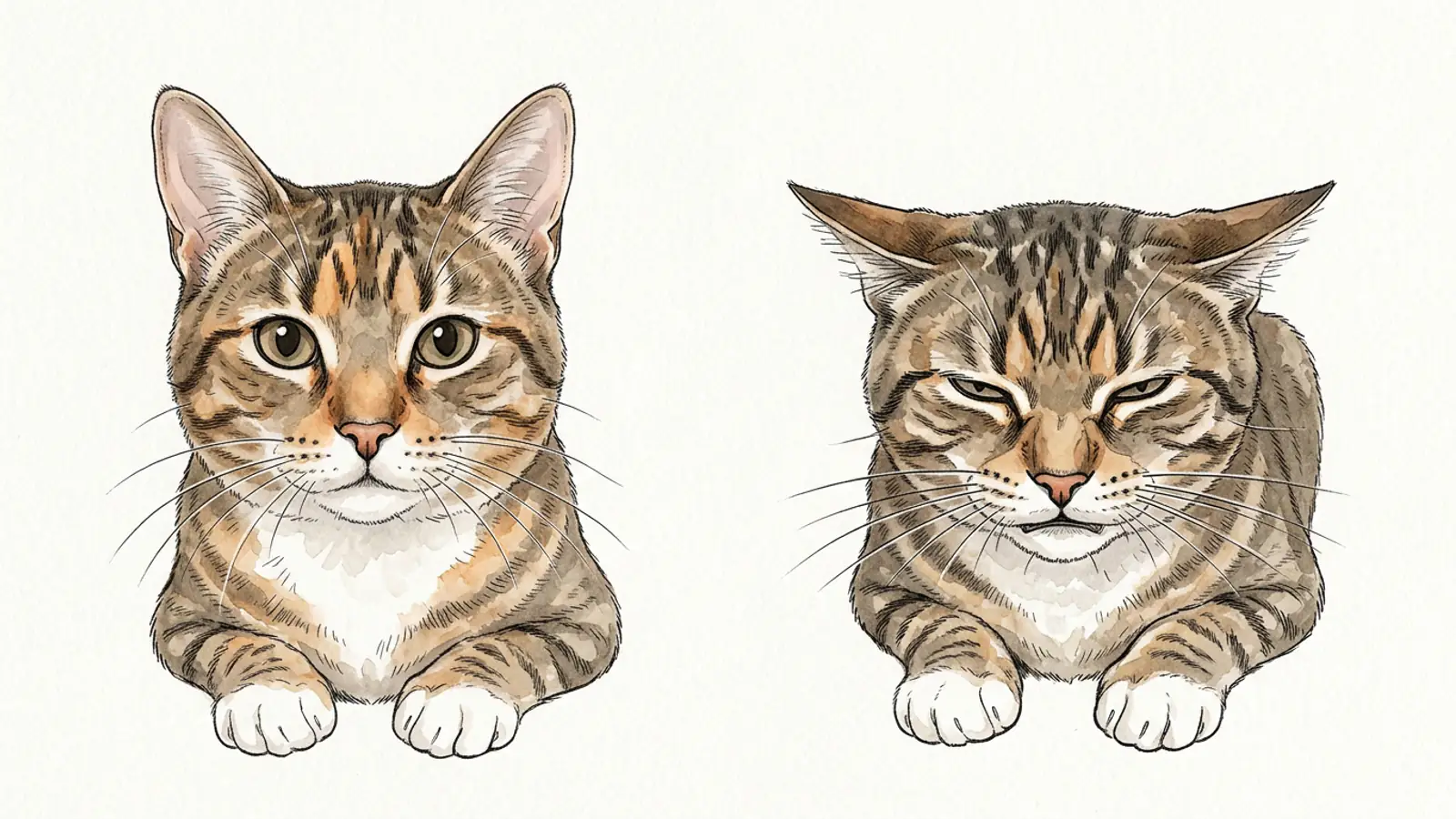
The Feline Grimace Scale (FGS) is a validated, facial-expression-based pain scoring instrument for acute pain in cats. It uses five action units, ear position, orbital tightening, muzzle tension, whiskers change and head position, each scored 0, 1 or 2, for a total score out of 10. The original validation study, published in Scientific Reports in 2019 by Evangelista, Steagall and colleagues at the Université de Montréal, reported a cut-off for analgesic intervention corresponding to a total FGS ratio score above 0.39 out of 1.0, which is equivalent to 4 of 10 when scores are expressed on the 0-to-10 scale [1]. If you are a cat owner watching your cat after surgery, or a veterinary professional scoring a hospitalized patient, the FGS gives you a short, structured way to answer the question: how do I tell if a cat is in pain?
Owner-facing triage summary: Look at the cat's face for about 30 seconds without touching, talking to or disturbing the cat. Do not score while the cat is sleeping, eating or grooming. Score each of the five action units from 0 to 2 and add the total. A total of 4 or more out of 10 suggests the cat may need analgesia, and you should contact the veterinary team. A score below 4 does not rule out pain, particularly if the cat is sedated, is a flat-faced (brachycephalic) breed, or is frightened.
This article is educational and is not a substitute for veterinary diagnosis or treatment.
Key Takeaways
- The Feline Grimace Scale (FGS) is a validated facial-expression pain scoring tool for acute pain in cats that uses five action units, each scored 0, 1 or 2, for a total out of 10.
- The five FGS action units are ear position, orbital tightening, muzzle tension, whiskers change and head position, and a total of 4 or more out of 10 suggests the cat may need analgesia.
- To score the FGS, observe the cat undisturbed for about 30 seconds and do not score while the cat is sleeping, eating or grooming, because these states alter facial expression.
- Muzzle tension and whiskers change have the lowest sensitivity and specificity in some analyses, and whiskers change showed poor inter-rater reliability in brachycephalic cats (ICC = 0.34).
- Training improves FGS reliability, with inter-rater reliability for total ratio scores rising from moderate (ICC = 0.75) to good (ICC = 0.80) after a training session.
At a Glance: Feline Pain Scales Compared
Three validated instruments dominate acute feline pain assessment in clinical practice. Each has a different structure, a different scoring burden and a different evidence base.
| Feature | Feline Grimace Scale (FGS) | Glasgow CMPS-Feline | UNESP-Botucatu (UFEPS) and short form |
|---|---|---|---|
| Basis | Facial expression only | Composite, behavior plus facial expression | Multidimensional composite |
| Items | 5 action units | Multiple behavioral and facial items | 10 items long form, 4 items short form |
| Scoring | Each action unit 0, 1 or 2, total out of 10 | Item-weighted, total out of 20 | Item-weighted, total out of 30 long form, 12 short form |
| Analgesic threshold | Ratio score above 0.39 out of 1.0, equivalent to 4 of 10 [1] | Intervention level of 5 of 20 [2] | Short form threshold of 4 of 12 or higher [3] |
| Time to score | About 30 seconds of observation | Short but requires behavioral assessment | Longer for the long form |
| Training effect | Reliability improves with training [4] | Seminar training may not be necessary for efficacious use [5] | Good reliability across observer groups, higher in veterinarians and students [6] |
| Best use | Rapid bedside or at-home screening, post-surgical monitoring | Clinical composite assessment in hospital | Detailed clinical and research assessment |
A 2026 systematic review using COSMIN standards found that the UNESP-Botucatu multidimensional pain scale, its short form, and the Feline Grimace Scale demonstrated the highest quality of evidence and findings, with appropriate criterion and construct validity, reliability and responsiveness among acute pain instruments in cats and dogs [7].
Why Cats Hide Pain
Cats are a prey species as well as a predator. Showing weakness or immobility attracts attention from larger animals, so evolution favored cats that mask pain. A cat with a fractured pelvis, a blocked urethra or a surgical incision may sit quietly, groom and eat, and still be in significant pain. Owners frequently report that they had no idea their cat was hurting until a veterinarian found a problem.
Pain in cats has two broad dimensions that matter for assessment. The sensory-discriminative dimension covers intensity, location and duration. The affective-motivational dimension covers the emotional and unpleasant quality of pain [8]. Facial expression appears to capture the affective component particularly well, which is why a pain face can be detected even when a cat is not vocalizing, limping or resisting handling.
The FGS was developed specifically to detect naturally occurring acute pain. In the original prospective case-control study, 35 client-owned painful cats and 20 control cats were video-recorded undisturbed in their cages. Painful cats received analgesic treatment and were recorded again one hour later. Five action units emerged from the analysis: ear position, orbital tightening, muzzle tension, whiskers change and head position. Four observers independently scored 110 images of control and painful cats. FGS scores were higher in painful cats than controls, correlation with another validated feline pain instrument was very strong (rho = 0.86, p < 0.001), overall inter-rater reliability was good (ICC = 0.89, 95% CI 0.85 to 0.92), intra-rater reliability was excellent (ICC > 0.91), and internal consistency was excellent (Cronbach's alpha = 0.89). The scale detected response to analgesic treatment, with scores falling after analgesia, and a cut-off was determined at a total pain score above 0.39 out of 1.0 [1].
The Five Action Units of the Cat Grimace Scale
Each action unit describes a specific change in facial geometry. The cat pain face is not a single expression. It is a combination of small shifts that, taken together, distinguish a comfortable cat from a painful one.
Ear Position
Ears rotate outward and flatten as pain increases. A score of 0 means the ears are in a neutral, forward-facing orientation. A score of 1 means the ears are slightly rotated outward or flattened. A score of 2 means the ears are flattened and rotated outward, often described as airplane ears.
Orbital Tightening
The eye aperture narrows as pain increases. A score of 0 means the eyes are open and the orbital region is relaxed. A score of 1 means the eye is partially squinted. A score of 2 means the eye is tightly squinted or closed. Orbital tightening is one of the more reliable action units in clinical use, with good inter-rater reliability reported in brachycephalic cats undergoing ocular surgery (ICC = 0.84, 95% CI 0.79 to 0.88) [9].
Muzzle Tension
The muzzle changes from a relaxed, round shape to a tense, elliptical shape as pain increases. A score of 0 means the muzzle is relaxed and round. A score of 1 means the muzzle is mildly tense. A score of 2 means the muzzle is tense and elliptical in shape. Muzzle tension is the action unit with the lowest sensitivity in some analyses, reported below 70 percent in one study of dimensional structure [10], and it showed poor inter-rater reliability in brachycephalic cats [9].
Whiskers Change
Whiskers change from loose and curved to straight and pointing forward as pain increases. A score of 0 means the whiskers are loose, relaxed and curved. A score of 1 means the whiskers are slightly curved or straight and closer together. A score of 2 means the whiskers are straight and moving forward, away from the face. Whiskers change is the action unit with the lowest specificity in some analyses, reported below 70 percent, and it has the lowest area under the curve and Youden index alongside muzzle tension [10]. In brachycephalic cats, whiskers change showed poor inter-rater reliability (ICC = 0.34, 95% CI 0.22 to 0.46) [9].
Head Position
The head lowers relative to the shoulders as pain increases. A score of 0 means the head is held above the shoulder line. A score of 1 means the head is at or near the shoulder line. A score of 2 means the head is below the shoulder line or tilted down, with the chin toward the chest. Head position showed moderate inter-rater reliability in brachycephalic cats (ICC = 0.71, 95% CI 0.59 to 0.79) [9].
FGS Scoring Table
| Action Unit | Score 0 | Score 1 | Score 2 |
|---|---|---|---|
| Ear position | Ears forward, neutral | Ears slightly rotated outward or flattened | Ears flattened and rotated outward |
| Orbital tightening | Eyes open, orbital region relaxed | Eyes partially squinted | Eyes tightly squinted or closed |
| Muzzle tension | Muzzle relaxed, round shape | Muzzle mildly tense | Muzzle tense, elliptical shape |
| Whiskers change | Whiskers loose and curved | Whiskers slightly curved or straight, closer together | Whiskers straight and pointing forward |
| Head position | Head above shoulder line | Head at or near shoulder line | Head below shoulder line or tilted down (chin toward chest) |
Total score ranges from 0 to 10. The analgesic intervention threshold reported in the validation work is a total ratio score above 0.39 out of 1.0, equivalent to 4 of 10 [1].
How to Score the Feline Grimace Scale
Scoring is deliberately simple. The value of the scale comes from doing it consistently and at the right moments.
Step 1: Observe Without Disturbing the Cat
Watch the cat for about 30 seconds. Do not open the cage, talk to the cat, offer food or handle the cat during this period. Handling and interaction change facial expression and invalidate the score. The original validation used video recordings of cats undisturbed in their cages [1].
Step 2: Avoid Invalid Scoring Conditions
Do not score while the cat is sleeping, eating or grooming. These states alter ear position, eye aperture, muzzle tone and whisker position for reasons unrelated to pain. A sleeping cat may have closed eyes and flattened ears. A grooming cat may have a tense muzzle. An eating cat may have forward whiskers. None of these indicate pain.
Step 3: Score Each Action Unit 0, 1 or 2
Work through the five action units in the same order each time. Use the table above. Assign the score that best matches what you see.
Step 4: Add the Total and Compare to the Threshold
Add the five action unit scores for a total out of 10. The reported analgesic intervention threshold is a ratio score above 0.39 out of 1.0, equivalent to 4 of 10 [1]. A total of 4 or more suggests the cat may need analgesia.
Step 5: Reassess After Analgesia
The FGS detects response to analgesic treatment. In the original validation, scores fell after analgesia was administered [1]. Reassess at a clinically appropriate interval after treatment to confirm the score is falling. If the score does not fall, the cat may need a different or additional analgesic plan, and the veterinarian should be informed.
Practical Tips for Consistent Scoring
Score from the same distance and angle each time. Use a consistent light source. If you are scoring from photographs or video, use a clear frontal or near-frontal view of the face. Training improves reliability. In a study of seven small animal veterinarians scoring 50 images before and after FGS training, inter-rater reliability for total FGS ratio scores improved from moderate (ICC = 0.75, 95% CI 0.66 to 0.83) to good (ICC = 0.80, 95% CI 0.73 to 0.87), and the ICC classification improved for every action unit after training [4]. Bias was low (less than 0.1) both before and after training, and limits of agreement narrowed slightly after training [4].
Reliability Across Different Observers
A practical question for any pain scale is whether the person using it needs to be a specialist. The evidence for the FGS is encouraging but not uniform.
Veterinarians and Veterinary Students
In a study of dimensional structure and variables affecting FGS assessment, five veterinarians and five veterinary students scored 100 cat facial images. All action units loaded at 0.6 or higher on the first principal component, supporting a unidimensional scale. All action units and total ratio scores were higher in painful cats than pain-free cats (p < 0.001). Female raters gave higher FGS scores than male raters (p = 0.02) [10]. Observer gender effects have also been documented across scales. In a study of 14 veterinarians (7 male, 7 female) scoring 24 standardized videos before and after ovariohysterectomy, female observers assigned significantly higher scores than male observers for 3 of 5 FGS action units and had 4.88 times higher odds of reaching the FGS threshold for rescue analgesia. Interobserver reliability was excellent for both genders (ICC 0.935 to 0.962) [11]. These findings do not undermine the scale. They indicate that threshold decisions may vary slightly by observer, which is why reassessment and clinical context matter.
Cat Owners and Laypeople
The FGS was developed for clinical use, and owner-facing validation is less complete. In a study comparing the UNESP-Botucatu short form and a visual analogue scale among laypeople, cat owners, students and experienced veterinarians, interobserver agreement for the UNESP-Botucatu short form was higher for veterinarians and students than for laypersons and cat owners, although all results were very good (ICC 0.81 or higher). Reliability of the visual analogue scale was very good only for experienced observers [6]. A separate owner-assessed feline acute pain scale showed moderate correlation with the FGS (rho = 0.53) and moderate agreement (kappa = 0.44), with area under the curve of 0.79 for identifying cats requiring analgesia [12]. The pattern is consistent. Owners can use facial and behavioral pain tools meaningfully, but agreement with veterinary assessment is moderate rather than strong, and owner scores should be treated as a trigger for veterinary contact rather than a substitute for examination.
Effect of Training
Training is not strictly required to use the FGS, but it improves reliability. The study of seven veterinarians showed improvement in inter-rater reliability and in action unit classification after a training session [4]. For clinics implementing the FGS, a short training session and access to reference images or video improve consistency across staff. An open-access video compilation of acute pain behaviors in cats has been published as a training resource, with 24 videos averaging 33 seconds each, covering behaviors from an ethogram of acute pain [13].
Using the FGS in the Clinic
The FGS fits naturally into a clinical workflow because it takes about 30 seconds and requires no handling.
Postoperative Monitoring
The most common clinical use is postoperative pain monitoring. Cats recovering from ovariohysterectomy, orthopedic surgery, dental extraction or soft tissue surgery can be scored at fixed intervals. A score at or above the threshold triggers reassessment of the analgesic plan. The FGS detects response to analgesia, so a falling score after treatment supports the plan, and a static or rising score prompts escalation [1].
Emergency and Medical Cases
The FGS was validated for naturally occurring acute pain, not only surgical pain [1]. It can be used in medical, trauma and orofacial pain presentations. The original case-control design included client-owned cats with naturally occurring acute pain, and painful cats were recorded before and after analgesia [1].
Integration with Composite Scales
The FGS is a facial-expression instrument. It does not capture posture, mobility, appetite, vocalization or response to palpation. In hospital settings, combining the FGS with a composite scale such as the Glasgow CMPS-Feline or the UNESP-Botucatu short form provides broader coverage. The UNESP-Botucatu short form has a reported rescue analgesia threshold of 4 or higher out of 12 [3], and the Glasgow CMPS-Feline has an intervention level of 5 out of 20 [2].
Adoption in Practice
Adoption of standardized tools remains incomplete. A survey of 154 Argentine veterinarians found that 95 percent considered acute pain assessment in cats important, 82 percent routinely evaluated pain, but only 56 percent used standardized tools, primarily the FGS. Pain assessment was performed predominantly by female veterinarians, who also showed greater familiarity with standardized scales [14]. The gap between perceived importance and actual tool use is a practical target for continuing education.
Using the FGS at Home After Surgery
Owners monitoring a cat after surgery can use the FGS as a structured observation. The scale is designed to be scored without disturbing the cat, which suits home monitoring where a cat may hide under furniture or retreat to a quiet room.
Watch the cat from a distance for about 30 seconds. Score the five action units. A total of 4 or more out of 10 suggests the cat may be in pain and warrants a call to the veterinary team. A total below 4 does not guarantee comfort, particularly if the cat is hiding, is a flat-faced breed, or is showing other signs such as not eating, not using the litter box, or resenting handling.
Owner-assessed pain scales exist and show fair to substantial agreement with veterinary scales. In a study of 130 cats, an owner-assessed scale correlated strongly with the Glasgow CMPS-Feline (rho = 0.66), moderately with the FGS (rho = 0.53) and moderately with the Colorado State University Feline Acute Pain Scale (rho = 0.57), with substantial agreement with the Glasgow scale (kappa = 0.74), moderate agreement with the FGS (kappa = 0.44) and fair agreement with the Colorado State scale (kappa = 0.28). Internal consistency was acceptable (Cronbach's alpha = 0.76), and area under the curve was 0.87 for the Glasgow scale, 0.79 for the FGS and 0.75 for the Colorado State scale [12]. The practical takeaway is that owner observation is useful and should be communicated to the veterinary team, but it does not replace examination.
Limitations of the Feline Grimace Scale
The FGS is a validated tool with defined boundaries. Knowing them prevents both undertreatment and overtreatment.
Sedation and Anesthesia
Sedation and anesthesia alter facial muscle tone, eye position and ear position. A sedated cat may have closed eyes, flattened ears and a relaxed muzzle for reasons unrelated to pain. The effects of sedation on pain scoring are recognized as an unresolved challenge in feline pain assessment [8]. Do not rely on the FGS alone in a sedated cat.
Brachycephalic Breeds
Flat-faced breeds present specific problems. In a study of 28 brachycephalic cats undergoing ocular surgery, inter-rater reliability was poor for muzzle tension (ICC = 0.47, 95% CI 0.36 to 0.58) and whiskers change (ICC = 0.34, 95% CI 0.22 to 0.46), good for ear position (ICC = 0.81, 95% CI 0.74 to 0.86) and orbital tightening (ICC = 0.84, 95% CI 0.79 to 0.88), and moderate for head position (ICC = 0.71, 95% CI 0.59 to 0.79) [9]. An automated FGS pipeline for brachycephalic cats with ocular pain showed reduced facial landmark detection accuracy compared with predominantly mesocephalic cats (normalized root mean square error 19.96 percent versus 16.76 percent) and poor generalizability of pain prediction models, with the best configuration achieving mean absolute error 0.168, R2 0.115 and Pearson correlation 0.374 [15]. For brachycephalic cats, weight ear position and orbital tightening more heavily and interpret muzzle and whisker changes with caution.
Fear and Stress
Fear and stress change facial expression. A study comparing Glasgow CMPS-Feline scores in healthy, non-painful cats at home, on arrival at the clinic and after a routine health check found that scores by caregivers and researchers were higher after the health check than at home or on arrival. The mean increase from home to post-check was 5.8 points, and from arrival to post-check was 4.1 points. The intervention level of 5 out of 20 or above, indicating pain, was reached in 11 of 17 cats despite no painful disease [2]. Healthy but stressed cats can appear to be in discomfort. The FGS is less behaviorally loaded than composite scales, but fear still affects ear position, eye aperture and whisker position. Score only when the cat is calm, and reassess after a period of quiet.
Chronic Pain
The FGS was developed and validated for acute pain [1]. It is not validated for chronic pain conditions such as osteoarthritis, chronic gingivostomatitis or cancer pain. Chronic pain assessment requires different instruments and a different clinical approach.
Observer Effects
Observer gender influences scores. Female veterinarians assigned higher scores than male veterinarians for 3 of 5 FGS action units and had 4.88 times higher odds of reaching the FGS threshold for rescue analgesia [11]. Female raters also gave higher FGS scores in a separate study of 100 images (p = 0.02) [10]. These effects matter at the threshold. When in doubt, reassess and use clinical context.
Artificial Intelligence and Chatbots
Automated scoring is an active research area but not yet reliable. A study evaluating four chatbots (ChatGPT, Gemini, Claude AI and Perplexity) against an expert rater found that most showed poor agreement and could have compromised analgesia decisions. Claude AI had acceptable bias (less than 0.1) after retesting but its limits of agreement spanned the FGS threshold for analgesia (0.39). ChatGPT had limits of agreement that did not span the threshold but unacceptable bias (greater than 0.1). Gemini and Perplexity showed unacceptable bias, and their limits of agreement spanned the threshold after retesting [16]. Chatbot scoring should not be used for clinical decisions.
How the FGS Compares with Other Feline Pain Scales
The FGS is one of three well-validated acute pain instruments in cats. Understanding the differences helps match the tool to the setting.
Glasgow Feline Composite Measure Pain Scale
The Glasgow CMPS-Feline is a composite instrument that combines behavioral observation with facial expression. It has an intervention level of 5 out of 20 [2]. A study examining whether training is necessary for efficacious use found that participant and expert analgesic decision-making did not differ before training (P = 1.0) or after training (P = 0.1), and analgesic decision-making was similar between participants and experts for all but 3 of 20 videos. Seminar training may not be necessary for efficacious use of the Glasgow scale [5]. However, reliability in clinical implementation varies. A German implementation study found moderate interrater reliability (ICC 0.59) and good intrarater reliability (ICC 0.88) among 15 staff members scoring 45 diseased and 10 healthy cats [17]. The Glasgow scale is more behaviorally loaded than the FGS, which makes it more sensitive to stress-related behaviors. The study of healthy cats at home and in clinic showed that stress alone can push Glasgow scores above the intervention level [2].
UNESP-Botucatu Feline Pain Scale
The UNESP-Botucatu scale is a multidimensional composite instrument. The long form has 10 items and the short form has 4 items [18]. The short form has a reported rescue analgesia threshold of 4 or higher out of 12 [3]. The Italian version of the long form has a rescue analgesia cut-off above 7, with good to very good inter- and intra-rater reliability for all items [19]. The short form has been validated in eight languages, including English, Chinese, French, German, Italian, Japanese, Portuguese and Spanish, with content validation by five specialists in veterinary anesthesia and analgesia [18]. Reliability across observer groups is very good, though higher for veterinarians and students than for laypersons and cat owners [6]. The long form can be time-consuming, which is a recognized limitation [3].
Choosing a Scale
The FGS is the fastest of the three and requires no handling. It is well suited to rapid bedside screening, at-home monitoring after surgery and serial postoperative assessment. The Glasgow and UNESP-Botucatu scales capture more behavioral information and are better suited to comprehensive clinical assessment when time and training allow. The 2026 COSMIN systematic review supports the UNESP-Botucatu scale, its short form and the FGS as the highest-quality acute pain instruments in cats and dogs [7].
Evidence-Based Management of Acute Pain in Cats
Pain scoring is only useful if it changes treatment. The FGS was designed to detect response to analgesia, and its clinical value lies in triggering appropriate intervention.
Analgesic Intervention
When the FGS total reaches the threshold, the cat should be assessed for analgesic intervention. The choice of drug, dose and route is a veterinary decision based on the clinical situation, the cat's comorbidities and the procedure performed. In the UNESP-Botucatu clinical validation study, rescue analgesia was performed when the short form score was 4 or higher, using methadone 0.2 mg/kg intramuscularly or intravenously and/or dipyrone 12.5 mg/kg intravenously, with a third interventional analgesia of methadone 0.1 to 0.2 mg/kg intramuscularly and ketamine if required [3]. This is an example of a study protocol, not a universal prescription. Analgesic plans should be individualized.
Reassessment After Treatment
Reassess the FGS at a clinically appropriate interval after analgesia. The original validation showed that scores fell after analgesic treatment [1]. A falling score supports the plan. A static or rising score suggests the cat needs a different or additional analgesic approach, and the veterinarian should be informed.
Multimodal Analgesia
Acute pain in cats is typically managed with multimodal analgesia, combining drugs from different classes to target different pain mechanisms. The specific combination depends on the procedure, the severity of pain and the cat's health status. The FGS helps determine whether the current plan is working.
Unsafe Home Remedies and What Not to Do
Owners should never give human pain medications to cats without veterinary direction. Several common human analgesics are toxic to cats. Do not give acetaminophen (paracetamol) or ibuprofen to a cat. Do not give aspirin without veterinary instruction. Do not adjust the dose or frequency of a prescribed veterinary analgesic without contacting the veterinary team.
Do not use the FGS as a reason to withhold or delay analgesia. A score below the threshold does not prove the cat is comfortable. If you are concerned, contact the veterinary team.
Do not score a cat while it is sleeping, eating or grooming. Do not score a cat that is being handled or restrained. Do not score a cat that is visibly frightened or stressed and expect the score to reflect pain alone.
Prevention and Prognosis
The best way to prevent unrecognized pain is to use a validated scale consistently. Clinics that adopt the FGS or another validated instrument are more likely to detect and treat pain appropriately. The 2026 survey of Argentine veterinarians found that only 56 percent used standardized tools despite 82 percent routinely evaluating pain [14], which suggests room for improvement in routine practice.
Prognosis for acute pain in cats is generally good when pain is recognized and treated. The FGS detects response to analgesia, and most acute pain resolves with appropriate treatment. Chronic pain has a different trajectory and requires different assessment tools.
Limitations and When to Contact a Veterinarian
The FGS is a screening and monitoring tool, not a diagnosis. Individual cases need a veterinarian. Contact the veterinary team if any of the following apply.
- The FGS total is 4 or more out of 10.
- The FGS total is rising over time despite analgesia.
- The cat is not eating, not drinking or not using the litter box after surgery.
- The cat is hiding, vocalizing, resenting handling or showing aggression that is new.
- The cat is a brachycephalic breed and you are uncertain how to interpret muzzle or whisker changes.
- The cat is sedated and you cannot reliably score the face.
- The cat has a known chronic painful condition and you are unsure whether the current behavior reflects acute or chronic pain.
- The cat is vomiting, has diarrhea, has a distended abdomen, is straining to urinate or has not urinated.
- The cat has difficulty breathing, has pale or blue gums, or is collapsed.
These signs may indicate a surgical complication, an unrelated medical emergency or inadequate analgesia. Do not wait for the next scheduled recheck.
Frequently Asked Questions
What is the Feline Grimace Scale?
The Feline Grimace Scale is a validated facial-expression-based pain scoring tool for acute pain in cats. It uses five action units, each scored 0, 1 or 2, for a total out of 10.
How do I score my cat's pain at home?
Watch your cat for about 30 seconds without disturbing it. Score ear position, orbital tightening, muzzle tension, whiskers change and head position from 0 to 2 each. A total of 4 or more out of 10 suggests your cat may need analgesia, and you should contact your veterinary team.
What score on the Feline Grimace Scale means my cat needs pain medication?
The reported analgesic intervention threshold is a total ratio score above 0.39 out of 1.0, equivalent to 4 of 10. A score at or above this level suggests the cat may need analgesia.
Can I score my cat while it is sleeping?
No. Sleeping, eating and grooming change facial expression for reasons unrelated to pain. Score only when the cat is awake, calm and undisturbed.
Is the Feline Grimace Scale reliable?
Yes. The original validation reported good overall inter-rater reliability (ICC = 0.89), excellent intra-rater reliability (ICC > 0.91) and excellent internal consistency (Cronbach's alpha = 0.89). Reliability improves with training.
Does the Feline Grimace Scale work in flat-faced cats?
It is less reliable in brachycephalic cats for muzzle tension and whiskers change. Ear position and orbital tightening remain more reliable. Interpret muzzle and whisker changes with caution in flat-faced breeds.
Can I use the Feline Grimace Scale for chronic pain?
No. The FGS was developed and validated for acute pain. Chronic pain requires different assessment tools and a different clinical approach.
How is the Feline Grimace Scale different from the Glasgow scale?
The FGS scores only facial expression and takes about 30 seconds. The Glasgow CMPS-Feline is a composite scale that includes behavioral items and has an intervention level of 5 out of 20. Both are validated for acute pain in cats.
Related Articles
- Cat Arthritis: How to Tell If Your Cat Is in Pain
- Cat Kidney Disease: How to Tell If Your Cat Is in Pain
- Cat Broken Leg: How to Tell and What to Do
- Gabapentin Cat Dose: Pain and Anxiety Dose and Monitoring
- Canine Pain Scales: Glasgow CMPS-SF and Colorado State Explained
- Onsior Robenacoxib Feline Dose: Feline Surgical Pain Relief Protocol
Sources
- Facial expressions of pain in cats: the development and validation of a Feline Grimace Scale.
- Comparison of the feline Glasgow Composite Measured Pain Scale in a feline population without painful disease at home and in a veterinary hospital: a prospective clinical study.
- Clinical validation of the short and long UNESP-Botucatu scales for feline pain assessment.
- Effects of training on Feline Grimace Scale scoring for acute pain assessment in cats.
- Is training necessary for efficacious use of the Glasgow Feline Composite Measure Pain Scale?
- Reproducibility and diagnostic accuracy of the Unesp-Botucatu Feline Pain Scale and the visual analogue scale among laypeople, cat owners, students and experienced veterinarians.
- A systematic review of acute pain scoring instruments and their measurement properties in cats and dogs.
- Acute pain in cats: Recent advances in clinical assessment.
- Challenges using the Feline Grimace Scale in brachycephalic cats with ocular pain.
- Understanding the Feline Grimace Scale: A study of dimensional structure, importance of each action unit and variables affecting assessment.
- The effects of observer gender on feline acute pain assessment using three pain scoring instruments.
- Development and Validation of an Owner-Assessed Feline Acute Pain Scale: Validation and Agreement with Veterinary Scales.
- Video-based compilation of acute pain behaviours in cats.
- Acute pain in cats: knowledge, attitudes and practices among Argentine veterinarians - a survey-based study.
- Automated acute pain assessment in brachycephalic cats with ocular pain using the Feline Grimace Scale.
- Agreement of Feline Grimace Scale scores between chatbots and an expert rater.
- Applicability, reproducibility, and reliability of the German version of the Glasgow composite measured pain scale - feline during implementation into a small animal clinic.
- Multilingual validation of the short form of the Unesp-Botucatu Feline Pain Scale (UFEPS-SF).
- Validation of the Italian version of the UNESP-Botucatu multidimensional composite pain scale for the assessment of postoperative pain in cats.