Complete Axolotl Care Guide
By Dr. Zubair Khalid, DVM, MS, PhD ·
Key Takeaways
- Temperature Regulation is Paramount: Axolotls require a stable, cool water temperature between 60-68°F (15-20°C). Temperatures exceeding 72°F (22°C) induce significant physiological stress, increasing susceptibility to opportunistic fungal (Saprolegnia spp.) and bacterial infections, and can lead to anorexia and metabolic disorders. Never use a heater; employ chillers or fans as needed.
- Substrate Safety is Critical: Due to their suction-feeding mechanism, axolotls are prone to ingesting substrate. Gravel and small pebbles pose a lethal risk of gastrointestinal impaction and obstruction. Acceptable substrates include bare-bottom tanks, fine silica sand (<1 mm particle size), or large, smooth river stones exceeding the axolotl's head diameter.
- Water Quality is the Primary Health Determinant: Maintaining ammonia and nitrite at 0 ppm, nitrates below 20 ppm, and a pH of 6.5-8.0 is essential. Regular 20-30% weekly water changes with dechlorinated water and a fully cycled aquarium are non-negotiable. Poor water quality directly compromises the axolotl's sensitive mucous membrane and immune system.
- Dietary Requirements are Strictly Carnivorous: Juveniles require daily small, live food items like daphnia or blackworms. Adults thrive on earthworms (nightcrawlers) or high-quality sinking carnivorous pellets, fed every 2-3 days. Avoid feeder fish due to thiaminase risks and parasites.
- Regenerative Capacity Influences Wound Management: Axolotls possess exceptional regenerative abilities for limbs and gills. Minor wounds typically heal spontaneously in optimal conditions. For severe injuries, focus on maintaining pristine water quality, cool temperatures, and potentially topical antiseptics, with systemic antibiotics reserved for confirmed bacterial infections under veterinary guidance.
The axolotl (Ambystoma mexicanum), a neotenic salamander native to the lake complex of Xochimilco near Mexico City, has become a beloved exotic pet in households across North America, Europe, and Australia. Unlike most amphibians, the axolotl retains its larval features throughout adulthood, including external gills and a fully aquatic lifestyle, making it a truly unique companion. This pillar article provides a deeply clinical, evidence-based guide to every facet of axolotl husbandry, from tank setup and cold water management to nutrition, health surveillance, and lifespan optimisation.
The axolotl is also a cornerstone of biomedical research, particularly in regenerative biology and genetic engineering. Understanding their care at a professional level ensures not only a thriving pet but also supports the highest standards of animal welfare as advocated by the AVMA, AAHA, CVMA, AVA, and FVE. This guide incorporates international best practices and peer-reviewed literature to serve as a definitive resource for veterinary professionals and dedicated owners alike.
Quick Q&A
Natural History and Biology
The axolotl is a member of the family Ambystomatidae and is critically endangered in its wild habitat due to urbanisation, water pollution, and the introduction of invasive species (e.g., tilapia and carp). In captivity, nearly all axolotls originate from laboratory or captive-bred populations. The species is renowned for its exceptional capacity for regeneration of limbs, spinal cord, heart, and even parts of the brain, making it a model organism in developmental and genetic research.
Key biological features relevant to care include:
- Neoteny: Axolotls retain gills and an aquatic lifestyle throughout life. They do not metamorphose naturally except under rare hormonal or environmental triggers.
- Cutaneous respiration: A significant portion of oxygen exchange occurs through the skin, making water oxygenation critical.
- Sensitive mucous membrane: The skin is delicate and easily damaged by rough handling, poor water quality, or high temperatures.
- Carnivorous, suction-feeding behaviour: Axolotls inhale prey whole, making substrate selection (no gravel) essential.
Understanding these traits guides all aspects of husbandry and clinical management.
Housing and Tank Requirements
Proper housing replicates the cool, well-oxygenated, still waters of Xochimilco. The AVMA and AAHA recommend enclosures that allow for species-appropriate behaviours including exploration, hiding, and resting.
Tank Size and Setup
- Minimum tank size: A single adult axolotl requires at least a 20-gallon (75-litre) long tank. A 40-gallon (150-litre) breeder tank is preferred for one or two adults.
- Shape: Long, shallow tanks provide more floor space and better surface area for gas exchange than tall tanks.
- Lid: A secure, mesh or ventilated lid is mandatory. Axolotls can and will jump out of open tanks, leading to fatal desiccation.
- Hides: Provide multiple shelters (e.g., PVC pipes, ceramic caves, smooth terracotta pots) to reduce stress. Axolotls are nocturnal and appreciate dark refugia.
Temperature Management (Cold Water)
Axolotls are strict cold-water amphibians. Unlike tropical fish, they cannot tolerate sustained warmth.
| Parameter | Ideal Range | Critical Threshold |
|---|---|---|
| Temperatura | 60-68°F (15-20°C) | Above 72°F (22°C) |
| Cooling method | Fan, chiller, frozen bottles (never direct contact) | Never use a heater |
Temperatures above 72°F (22°C) cause thermal stress, increased metabolic rate, anorexia, and predisposition to fungal infections (e.g., Saprolegnia spp.) and bacterial septicaemia. In Australian and Southern European climates, where ambient temperatures are high, an aquarium chiller is often necessary.
Water Quality and Filtration
Water quality is the single most important factor in axolotl health. Poor conditions lead to gill discolouration, skin sloughing, and immunosuppression.
- Filtration: Use a canister filter or sponge filter rated for 2-3 times the tank volume. Adjustable flow is important because axolotls dislike strong currents.
- Cycling: Fully cycle the tank (ammonia 0 ppm, nitrite 0 ppm, nitrate <20 ppm) before introducing the animal. Fishless cycling using ammonia takes 4-8 weeks.
- Water changes: Perform 20-30% weekly changes using dechlorinated water. Never use distilled or reverse-osmosis water without remineralisation.
- Dechlorination: Use a high-quality water conditioner that removes chlorine, chloramine, and heavy metals.
| Parameter | Target Value |
|---|---|
| Ammonia (NH3) | 0 ppm |
| Nitrite (NO2) | 0 ppm |
| Nitrate (NO3) | <20 ppm |
| pH | 6.5-8.0 (ideal 7.0-7.5) |
| Hardness | 100-200 ppm (moderately hard) |
| Temperature | 60-68°F (15-20°C) |
Regular testing with liquid test kits (not strips) is essential, especially during the first six months of tank establishment.
No Gravel: Substrate Safety
Gravel is contraindicated in axolotl tanks. Axolotls are suction feeders and routinely ingest small particles. Gravel ingestion can cause:
- Gastrointestinal impaction: A medical emergency requiring surgical intervention.
- Intestinal obstruction: Leading to anorexia, bloating, and death.
- Abrasions: Sharp gravel damages the delicate oral mucosa and gill filaments.
Safe substrate options:
- Bare-bottom tank: Easiest to clean and safest for juveniles. Provides no enrichment but eliminates ingestion risk.
- Fine silica sand (particle size <1 mm): Passes through the digestive tract and is generally safe for adults. Ensure it is not sharp or abrasive.
- Large smooth river stones (at least 2-3 inches in diameter): Too large to ingest, but require frequent cleaning to prevent detritus buildup.
The AVMA and AAHA guidelines for exotic pet welfare strongly advise against any substrate that can fit entirely within the animal's mouth.
Diet and Nutrition
Axolotls are obligate carnivores with a high protein requirement. Their diet should mirror the nutritional profile of aquatic invertebrates and small vertebrates.
Juvenile Diet (up to 6 months)
- Live foods: Daphnia, brine shrimp (Artemia), microworms, blackworms.
- Frequency: Daily, small amounts offered.
- Size: Food items must be small enough to be suctioned whole.
Adult Diet (6 months and older)
- Earthworms (nightcrawlers): The gold standard. High in protein, low in fat, and nutritionally complete. Chop into manageable pieces for smaller adults.
- Bloodworms: Can be offered as a treat or supplement. Frozen bloodworms are nutritionally inferior to earthworms.
- Carnivorous sinking pellets: Formulated for aquatic salamanders (e.g., Rangen axolotl pellets, Hikari sinking carnivore pellets). Ensure they are soaked before feeding.
- Avoid: Feeder fish (risk of thiaminase deficiency and parasites), beef heart (too fatty), and terrestrial insects (not part of natural diet).
Feeding Frequency and Technique
| Life Stage | Frequency | Method |
|---|---|---|
| Juvenile | Daily | Target feed with tweezers or pipette |
| Adult | Every 2-3 days | Offer food directly; remove uneaten food after 15 minutes |
Axolotls locate food primarily by smell and lateral line sensation. Using feeding tongs or a dish can help prevent substrate ingestion and allow monitoring of appetite. Anorexia is an early, non-specific sign of illness (poor water quality, high temperature, infection).
Common Health Issues
Veterinary intervention in axolotls requires knowledge of amphibian medicine. Health problems often stem from suboptimal husbandry.
Fungal Infections (Saprolegnia spp.)
- Presentation: White, cotton-like patches on gills, skin, or limbs.
- Cause: Poor water quality, high temperature, organic load, or stress.
- Treatment: Improve water quality (immediate large water change), lower temperature, and use approved antifungal baths (e.g., salt baths at 2-3 g/L for short durations). Consult a veterinary surgeon for topical antifungal agents. Avoid methylene blue in tanks with live plants or biofiltration.
Bacterial Infections (Aeromonas, Pseudomonas)
- Presentation: Reddening of skin (septicaemia), ulceration, oedema, lethargy.
- Cause: Immunosuppression due to poor water quality or high temperature.
- Treatment: Systemic antibiotics under veterinary guidance (e.g., enrofloxacin, ceftazidime, with caution for nephrotoxicity). Supportive care includes pristine water, cool temperature, and assisted feeding if needed.
Parasitic Infections
- External: Trichodina, Ichthyobodo (Costia), and Chilodonella. Present with gill pallor, excess mucus, and flashing.
- Internal: Nematodes (e.g., Capillaria) are less common in captive-bred axolotls but can occur.
- Treatment: External parasites respond to formalin-malachite green baths or salt dips (under veterinary direction). Internal parasites require fenbendazole or metronidazole after faecal examination.
Injury and Wound Care
Axolotls have remarkable regenerative capacity. Minor wounds (bitten limbs, abrasions) typically heal spontaneously within weeks in clean water. For larger wounds:
- Isolate the axolotl in a hospital tank with pristine water and cool temperature.
- Apply dilute antiseptic (e.g., 0.01% chlorhexidine) topically if infection is suspected.
- Severe wounds may require veterinary debridement and systemic antibiotics.
Wound management principles from human and veterinary medicine, including pressure injury prevention and infection control, underscore the importance of a clean environment and minimising handling.
Limb and Gill Loss
Loss of a limb or gill is not typically life-threatening. Regeneration occurs over weeks to months, provided water quality and nutrition are optimal. There is no need for surgical intervention.
Lifespan and Quality of Life
With appropriate care, axolotls live 10-15 years on average. Some captive individuals exceed 20 years. Lifespan is influenced by:
- Genetics: Captive-bred lines may have reduced genetic diversity. Research-grade animals often come from well-documented lineages.
- Water quality: Chronic exposure to ammonia or nitrite shortens lifespan.
- Temperature: Chronic heat exposure accelerates metabolism and aging.
- Diet: A varied, high-quality diet supports longevity.
- Stress: Handling, bright lighting, tank mates (especially fish), and loud vibrations cause chronic stress.
Signs of good quality of life include: active foraging, healthy pink gills with intact filaments, clear skin, regular appetite, normal buoyancy, and natural exploratory behaviour.
Handling and Tank Maintenance
Axolotls should be handled as little as possible. Their skin is covered in a protective mucous layer that is easily disrupted, leading to infection.
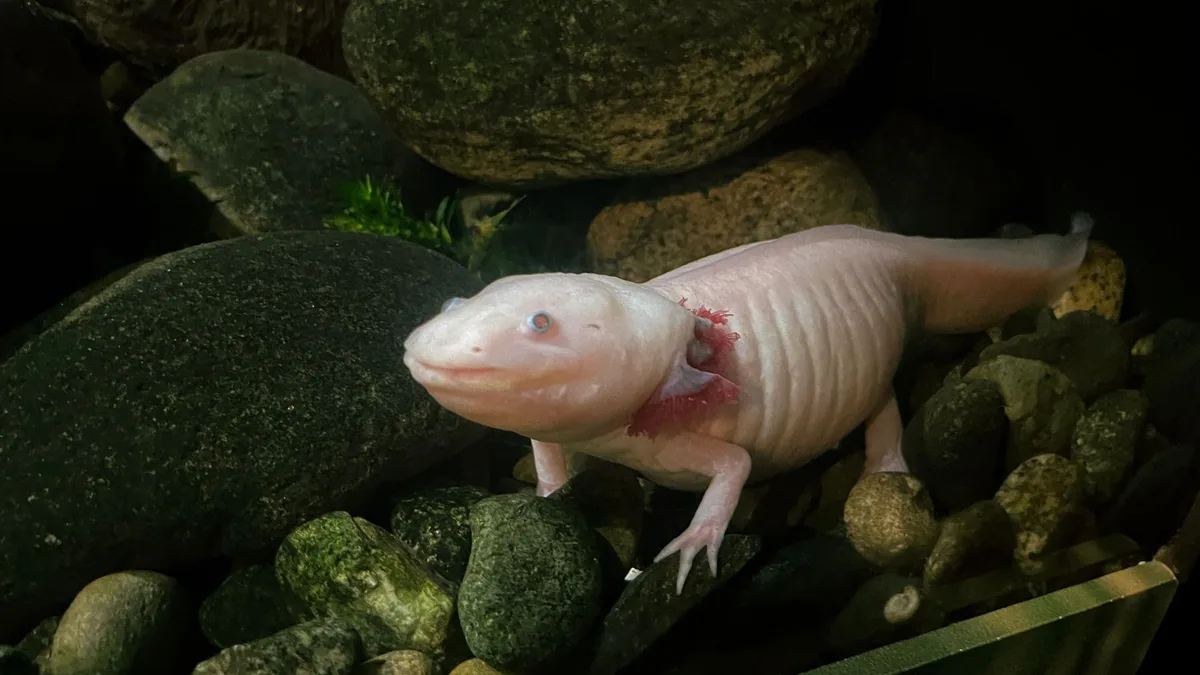 Amphibian skin is permeable, so water chemistry acts directly on the animal. Photo: Shreya Menon via Pexels.
- Netting: Use a soft, fine-mesh net. Never use a coarse net that can damage gills.
- Tank maintenance: Use an abrasive-free algae scraper. Siphon waste from the bare bottom or sand surface during water changes.
- Quarantine: New axolotls should be quarantined for at least 30 days in a separate tank to monitor for disease.
Breeding and Genetics
Breeding axolotls in captivity requires a dedicated setup and understanding of developmental biology. The species is widely used in CRISPR-Cas9 genome engineering, which has produced numerous colour morphs (leucistic, golden albino, melanoid, wild-type). Ethical breeding should avoid harmful genetic traits and prioritise welfare. Overbreeding of so-called "mosaic" or "GFP" (green fluorescent protein) lines without regard for health is discouraged by the AVMA and FVE.
Breeding pairs should be well-conditioned, with a simulated cool period and increased live food. Eggs are laid and externally fertilised; adults must be removed after spawning to prevent predation.
Regional Considerations
Axolotl care must be adapted to local climate and regulations.
United States and Canada: Axolotls are illegal in California and New Jersey due to concerns about hybridisation with native ambystomatids (e.g., the California tiger salamander). Owners in other US states and Canadian provinces should verify local laws. Chillers are often needed in southern states.
Europe: The FVE and European veterinary bodies support axolotl ownership provided welfare standards are met. Many European countries require microchipping or CITES documentation for captive-bred animals.
Australia: Axolotls are legal in most states but import restrictions apply. Northern Australia's warm climate necessitates dedicated cooling solutions. The AVA recommends that owners consult a veterinarian experienced in amphibian medicine.
United Kingdom: Axolotls are legal and popular. The climate often supports tank temperatures without a chiller, but summer heatwaves can be problematic.
Conclusion
The axolotl is a captivating, long-lived, and delicate amphibian that demands precision in care. Success depends on three pillars: cool, clean water; a safe, gravel-free environment; and a high-quality carnivorous diet. Veterinary professionals and owners must work together to maintain water quality, monitor health, and address disease early. By following this complete guide, grounded in clinical expertise and scientific evidence, you can provide an axolotl with a thriving, healthy life for a decade or more.
For further reading, consult the Merck Veterinary Manual (amphibian section), AAHA exotic animal guidelines, and peer-reviewed literature on Ambystoma husbandry and medicine.
Related Clinical & Scientific Guides
References
Fei, J., Lou, W.P.K., Knapp, D. et al. Application and optimization of CRISPR-Cas9-mediated genome engineering in axolotl (Ambystoma mexicanum). Nature Protocols 13, 2908-2943 (2018).
Luther, L., Maxson, R., Stinner, D.J. Negative pressure wound therapy in resource-limited environments: Review and field guide. Journal of Trauma and Acute Care Surgery (2025).
Hurd, C.L., Cole-Haskayne, A., Moore, G. et al. Barriers and facilitators to pressure injury prevention in acute care hospitals in Alberta, Canada: an interpretive description. Journal of Wound Care (2026).
Additional references:
- AVMA Pet Ownership Guidelines (Amphibians). American Veterinary Medical Association.
- AAHA Exotic Animal and Amphibian Care Guidelines. American Animal Hospital Association.
- Merck Veterinary Manual. Amphibian Husbandry and Medicine.
- AVA (Australian Veterinary Association) Exotic Pet Policy.
- FVE (Federation of Veterinarians of Europe) Position on Exotic Pet Ownership.