Signs of Illness in Amphibians and When to See a Vet
By Dr. Zubair Khalid, DVM, MS, PhD ·
Key Takeaways
- Amphibians' permeable skin makes them highly susceptible to environmental toxins, desiccation, and pathogens, necessitating prompt veterinary intervention for signs like lethargy, anorexia, or skin discoloration, as they often mask illness until critical.
- Red-leg syndrome, a bacterial dermatosepticemia commonly caused by Aeromonas hydrophila, presents with ventral erythema and requires immediate systemic antibiotic therapy based on culture and sensitivity, alongside supportive care.
- Bloat (coelomic distension) can stem from ascites (renal/hepatic disease, infection), gas, or organomegaly, requiring diagnostic imaging and potentially coelomocentesis or diuretics, with prognosis dependent on the underlying etiology.
- Fungal infections, including Saprolegnia (cottony skin lesions) and chytridiomycosis (Batrachochytrium dendrobatidis), necessitate improved husbandry and specific antifungal treatments (e.g., itraconazole baths), with Bd requiring PCR diagnosis and being a reportable disease.
- Anorexia is a nonspecific but critical sign indicating potential environmental stress, nutritional deficiencies, or systemic infections, often requiring diagnostic workup including fecal analysis and imaging, with supportive care like force-feeding and fluid therapy.
- Acute neurologic signs such as ataxia, tremors, or paralysis warrant immediate veterinary attention, with differentials including toxin exposure (e.g., endectocides), thiamine deficiency, or bacterial meningitis, requiring targeted treatment and supportive care.
Amphibians (frogs, toads, salamanders, newts, and caecilians) are exquisitely sensitive to environmental changes and pathogens. Their permeable skin, which is a respiratory and osmoregulatory organ, makes them uniquely vulnerable to toxins, desiccation, and infections. Recognizing early signs of illness is critical because amphibians often mask disease until they are in a critical state. This article provides a detailed, evidence-based guide to the most common and serious amphibian conditions, including red-leg syndrome, bloat, fungal infections, and anorexia, and clarifies when veterinary intervention is essential.
Quick Q&A
Question: How can I tell if my amphibian is seriously ill and needs a vet immediately? Answer: Serious illness in amphibians is often indicated by persistent lethargy, loss of appetite, skin discoloration (especially redness on the belly or limbs), bloating, or abnormal swimming or posture. Any of these signs, especially in combination, warrant an urgent veterinary examination. Do not wait for the animal to recover on its own; amphibians deteriorate rapidly.
Understanding Amphibian Physiology and Disease Susceptibility
Amphibians are ectothermic (cold-blooded) vertebrates with a unique integumentary system. Their skin is thin, moist, and richly vascularized, allowing for cutaneous respiration and ion exchange. This same property makes them highly susceptible to environmental contaminants, water quality fluctuations, and infectious agents. Unlike mammals, amphibians lack a fully developed adaptive immune system at metamorphosis, and their innate immune responses are heavily temperature-dependent. As a result, stress (from poor husbandry, transport, or overcrowding) is a primary predisposing factor for disease.
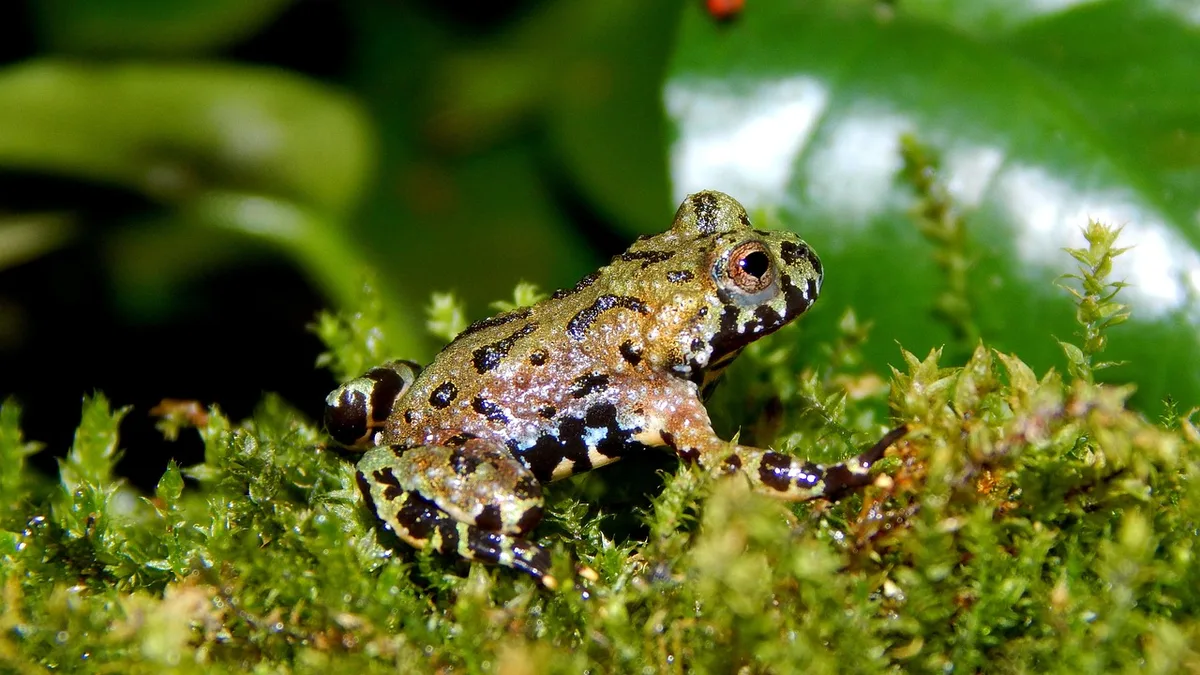 Amphibian skin is permeable, so water chemistry acts directly on the animal. Photo: aboutgeckos via Pixabay.
According to the Merck Veterinary Manual, the most common causes of disease in captive amphibians are poor water quality, inappropriate temperature or humidity, inadequate nutrition, and improper lighting (especially UVB for species that require it). Infectious diseases often follow these husbandry errors.
Critical Signs of Illness in Amphibians
1. Red-Leg Syndrome (Bacterial Dermatosepticemia)
Red-leg syndrome is a classic and often fatal condition in amphibians, most commonly caused by Gram-negative bacteria such as Aeromonas hydrophila, Pseudomonas spp., and Citrobacter spp. The hallmark sign is a diffuse erythema (redness) on the ventral skin, particularly the belly, thighs, and limbs. This is due to capillary congestion and petechiation from septicemia.
Clinical signs include:
- Reddened or hemorrhagic skin on the abdomen and inner thighs
- Lethargy and weakness
- Anorexia
- Edema (swelling) of the limbs or body
- Abnormal posture (e.g., sitting with legs splayed)
- Ulceration or sloughing of skin in advanced cases
Pathophysiology: Bacteria enter through skin abrasions or via the gastrointestinal tract. They proliferate in the bloodstream, causing systemic inflammation, disseminated intravascular coagulation (DIC), and multi-organ failure. Aeromonas hydrophila also produces hemolysins and proteases that damage tissues.
Diagnosis: Veterinary diagnosis is based on clinical signs, history, and culture of the pathogen from skin lesions, blood, or coelomic fluid. Gram-negative rods are typically identified.
Treatment: Immediate veterinary care is essential. Treatment includes:
- Systemic antibiotics (e.g., enrofloxacin, ceftazidime, or amikacin) based on culture and sensitivity. Note that topical enrofloxacin/silver sulfadiazine combinations have been evaluated for Pseudomonas aeruginosa susceptibility in veterinary settings, but systemic therapy is required for septicemia.
- Supportive care: fluid therapy (via baths or intracoelomic injection), wound management, and environmental optimization (clean, warm, shallow water).
- Isolation of affected animals.
Prognosis: Guarded to poor if treatment is delayed. Early intervention can lead to recovery, but relapses are possible.
2. Bloat (Coelomic Distension)
Bloat, or coelomic distension, is a common presenting sign in amphibians. It can be caused by fluid accumulation (ascites), gas (pneumocoelom), organomegaly (especially liver or kidney enlargement), or egg retention. Ascites is frequently associated with renal failure, hepatic disease, or bacterial infection (e.g., red-leg syndrome). Gas accumulation may result from gastrointestinal obstruction, bacterial fermentation, or aerophagy.
Clinical signs include:
- Distended, tense coelomic cavity
- Difficulty swimming or maintaining normal posture (e.g., floating at the surface or listing to one side)
- Labored breathing (due to compression of lungs)
- Anorexia
- Lethargy
Diagnosis: A veterinarian will perform a physical examination, coelomic palpation, and may use ultrasound or radiography to differentiate fluid from gas. Coelomocentesis (needle aspiration) can be diagnostic and therapeutic.
Treatment: Treatment depends on the underlying cause.
- For ascites: Diuretics (e.g., furosemide) may be used cautiously, but addressing the primary cause (e.g., antibiotics for infection, renal support) is critical.
- For gas: Decompression via needle aspiration, correction of dietary or husbandry issues.
- For egg retention: Hormonal therapy or manual expression by a veterinarian.
Prognosis: Variable. If the underlying cause is reversible (e.g., bacterial infection), prognosis is fair. Chronic renal or hepatic disease carries a poor prognosis.
3. Fungal Infections (Saprolegniasis and Chytridiomycosis)
Fungal infections are a major cause of morbidity and mortality in amphibians, both in captivity and in the wild. Two important pathogens are Saprolegnia spp. (a water mold) and Batrachochytrium dendrobatidis (Bd), the agent of chytridiomycosis.
Saprolegniasis:
- Appears as white, gray, or brown cottony patches on the skin, gills, or eggs.
- Often secondary to skin trauma or poor water quality.
- Can cause lethargy, anorexia, and death if widespread.
Chytridiomycosis (Bd):
- A reportable disease in many regions, responsible for global amphibian declines.
- Clinical signs include: excessive skin shedding, lethargy, anorexia, abnormal posture (e.g., sitting with legs abducted), and erythema of the ventral skin. In some species, the only sign may be sudden death.
- Diagnosis requires PCR testing of skin swabs.
- Treatment: Antifungal therapy (e.g., itraconazole baths) under veterinary supervision. However, treatment protocols vary by species and life stage.
General treatment for fungal infections:
- Improve husbandry: clean water, appropriate temperature, reduce stress.
- Topical antifungal agents (e.g., malachite green, formalin, or itraconazole) as prescribed by a veterinarian.
- Systemic antifungals (e.g., voriconazole) for severe cases.
Prevention: Quarantine new arrivals, maintain excellent water quality, and avoid introducing wild-caught animals.
4. Anorexia (Loss of Appetite)
Anorexia is a nonspecific sign that can indicate many problems, from environmental stress to systemic disease. In amphibians, prolonged anorexia leads to weight loss, muscle wasting, and immune compromise.
Common causes include:
- Environmental: Incorrect temperature (too cold or too hot), low humidity, poor water quality, inadequate UVB lighting.
- Nutritional: Vitamin or mineral deficiencies (e.g., hypovitaminosis A, metabolic bone disease), inappropriate diet.
- Infectious: Red-leg syndrome, chytridiomycosis, parasitic infections (e.g., nematodes, protozoa).
- Metabolic: Renal failure, hepatic disease, gout.
- Behavioral: Stress from overcrowding, aggression, or lack of hiding places.
Diagnostic approach:
- Review husbandry parameters (temperature gradient, humidity, water quality, UVB provision).
- Fecal examination for parasites.
- Blood work (if size permits) to assess organ function.
- Imaging (radiographs, ultrasound) to evaluate for organomegaly, masses, or foreign bodies.
Treatment: Address underlying cause. Supportive care may include:
- Force-feeding (with a slurry of appropriate nutrients) under veterinary guidance.
- Fluid therapy (soaking in shallow, clean water or subcutaneous/intracoelomic fluids).
- Vitamin supplementation (e.g., vitamin A, calcium with D3).
Prognosis: Depends on the cause. Anorexia due to correctable husbandry issues has a good prognosis; anorexia from organ failure has a guarded prognosis.
5. Neurologic Signs
Neurologic abnormalities in amphibians can result from toxins, metabolic disturbances, infections, or trauma. Signs include:
- Ataxia (incoordination)
- Circling or head tilting
- Tremors or seizures
- Paralysis or paresis
- Abnormal eye movements (nystagmus)
Important differentials:
- Toxin exposure: Amphibians are highly sensitive to toxins. For example, accidental exposure to topical endectocides (e.g., moxidectin, imidacloprid) can cause severe neurologic signs, including ataxia, muscle tremors, and disorientation, as reported in mammals. While this study involved dogs, the mechanism of neurotoxicity is relevant to amphibians, which have similar ion channel targets.
- Thiamine deficiency: Can cause neurologic signs in insectivorous amphibians fed thiamine-deficient prey.
- Bacterial meningitis: Secondary to septicemia (e.g., red-leg syndrome).
- Trauma: From handling, falls, or aggression.
Emergency care: Any amphibian with acute neurologic signs should be seen by a veterinarian immediately. Treatment is directed at the underlying cause and may include supportive care, antitoxins (if available), and anticonvulsants.
When to See a Vet: Emergency and Urgent Situations
Amphibians are masters of disguise when it comes to illness. By the time clinical signs are obvious, the animal is often in a critical state. The following situations warrant immediate veterinary attention:
Emergency (life-threatening):
- Severe lethargy or unresponsiveness
- Difficulty breathing (gaping, gasping, or floating at the surface)
- Seizures or severe tremors
- Profuse bleeding or skin sloughing
- Severe bloat causing respiratory distress
- Sudden death of tank mates
Urgent (within 24 hours):
- Redness on the belly or limbs (suspected red-leg)
- Persistent anorexia (more than 3-5 days for adults, 1-2 days for juveniles)
- Abnormal posture or swimming
- Skin lesions, ulcers, or cottony growths
- Weight loss or muscle wasting
- Changes in skin color or texture
- Abnormal feces (diarrhoea, undigested food, parasites)
- Lethargy or hiding more than usual
Routine veterinary care:
- Annual health check (including fecal examination)
- Quarantine examination for new arrivals
- Pre-breeding health assessment
- Husbandry review and advice
Diagnostic Tools in Amphibian Medicine
Veterinarians with exotic animal experience use a range of diagnostic tools adapted for amphibians:
- Physical examination: Includes assessment of body condition, skin integrity, oral cavity, and coelomic palpation.
- Coelomocentesis: Aspiration of fluid for analysis (culture, cytology, biochemistry).
- Radiography: Useful for evaluating the skeleton, coelomic organs, and detecting gas or fluid.
- Ultrasound: Allows visualization of the heart, liver, kidneys, and reproductive tract.
- Blood collection: From the ventral abdominal vein or lingual vein (in larger species). Parameters include packed cell volume (PCV), total solids, and blood chemistry. Reference intervals are species-specific.
- PCR testing: For chytridiomycosis (Bd) and ranavirus.
- Culture and sensitivity: For bacterial infections.
- Necropsy: Essential for post-mortem diagnosis and disease surveillance.
Prevention: The Cornerstone of Amphibian Health
Preventing illness is far more effective than treating it. Key preventive measures include:
- Optimal husbandry: Research the specific requirements of your species. Maintain appropriate temperature gradients, humidity, water quality (ammonia, nitrite, nitrate, pH), and photoperiod. Provide UVB lighting for diurnal species.
- Quarantine: Isolate new animals for at least 30-60 days. Monitor for signs of illness and consider prophylactic fecal examination and Bd testing.
- Nutrition: Feed a varied diet appropriate for the species. Dust prey items with calcium and vitamin D3 supplements. Avoid feeding wild-caught insects that may carry pesticides or parasites.
- Hygiene: Clean and disinfect enclosures regularly. Use separate equipment for each enclosure. Wash hands thoroughly before and after handling amphibians or their equipment.
- Stress reduction: Provide hiding places, avoid overcrowding, and minimize handling. Use smooth, non-abrasive substrates to prevent skin trauma.
- Record keeping: Maintain a log of feeding, behavior, weight, and any health concerns. This helps detect trends early.
Regional Considerations
- North America: Chytridiomycosis is a significant concern in wild and captive populations. Ranavirus outbreaks have been reported in several US states. Red-leg syndrome is common in pet amphibians.
- Europe: Similar disease patterns. The pet trade is regulated under CITES for some species. Quarantine is critical to prevent introduction of Bd.
- Australia: Australia has strict biosecurity laws regarding amphibian importation. Chytridiomycosis has devastated native frog populations. Captive amphibians should never be released into the wild.
Conclusion
Recognizing signs of illness in amphibians requires vigilance and a solid understanding of their unique physiology. Red-leg syndrome, bloat, fungal infections, and anorexia are common presentations that can rapidly become life-threatening. Any deviation from normal behavior, appetite, or appearance warrants a prompt veterinary consultation. By combining excellent husbandry with early intervention, amphibian owners can significantly improve the health and longevity of their animals.
Related Clinical & Scientific Guides
References
See AM, McGill SE, Raisis AL, et al. Toxicity in three dogs from accidental oral administration of a topical endectocide containing moxidectin and imidacloprid. Aust Vet J. 2009;87(8):334-337. doi:10.1111/j.1751-0813.2009.00470.x
See AM, Swindells KL, Sharman MJ, et al. Activated coagulation times in normal cats and dogs using MAX-ACT tubes. Aust Vet J. 2009;87(7):292-295. doi:10.1111/j.1751-0813.2009.00452.x
Trott DJ, Moss SM, See AM, et al. Evaluation of disc diffusion and MIC testing for determining susceptibility of Pseudomonas aeruginosa isolates to topical enrofloxacin/silver sulfadiazine. Aust Vet J. 2007;85(11):464-469. doi:10.1111/j.1751-0813.2007.00220.x
Additional Resources:
- Merck Veterinary Manual. Amphibians: Overview of Diseases. Available at: https://www.merckvetmanual.com
- AVMA. Amphibian Care Guidelines. Available at: https://www.avma.org
- VCA Animal Hospitals. Amphibian Health and Disease. Available at: https://vcahospitals.com
- Cornell College of Veterinary Medicine. Amphibian Disease Information. Available at: https://www.vet.cornell.edu