Amphibian Chytrid Fungus Signs
By Dr. Zubair Khalid, DVM, MS, PhD ·
Key Takeaways
- Early clinical signs of chytridiomycosis include behavioural changes such as lethargy and anorexia, along with excessive skin shedding, ventral redness, and increased water immersion.
- The causative agents, Batrachochytrium dendrobatidis (Bd) and Batrachochytrium salamandrivorans (Bsal), are aquatic, keratinophilic fungi that disrupt amphibian skin function, impairing osmoregulation and respiration.
- Definitive diagnosis relies on laboratory confirmation, primarily through skin swab PCR for detecting fungal DNA, and can be supported by histopathology showing intracytoplasmic sporangia.
- Rigorous quarantine protocols (minimum 30 days) and strict biosecurity measures, including effective disinfection with agents like 10% bleach or F10SC, are critical for preventing disease introduction and spread.
- Advanced signs can include neurological deficits due to electrolyte imbalances (hyponatraemia, hyperkalaemia), severe skin ulceration, respiratory distress, and sudden death, particularly in susceptible species.
- Differential diagnoses for chytridiomycosis include bacterial dermatoses, ranavirus infections, and environmental stressors, necessitating a thorough veterinary workup to rule out other conditions.
Quick Q&A
Question: What are the first signs that my pet amphibian might have chytrid fungus? Answer: Early signs include subtle changes in behavior such as lethargy, loss of appetite, and excessive or unusual skin shedding. You may also notice redness on the belly or toes, and your amphibian may spend more time in water than usual. If you observe any of these symptoms, isolate the animal and consult a veterinarian experienced in exotic species immediately.
Introduction
Amphibian chytrid fungus, caused primarily by Batrachochytrium dendrobatidis (Bd) and the more recently discovered Batrachochytrium salamandrivorans (Bsal), is one of the most devastating infectious diseases affecting amphibians worldwide. For pet owners, veterinarians, and herpetoculturists, recognizing the signs of chytridiomycosis is essential for early intervention, effective quarantine, and prevention of spread. This pillar article provides an exhaustive, clinically grounded overview of the signs of amphibian chytrid fungus, alongside best practices for quarantine, biosecurity, and veterinary diagnosis. It incorporates guidelines from authoritative bodies such as the American Veterinary Medical Association (AVMA), the Canadian Veterinary Medical Association (CVMA), the Australian Veterinary Association (AVA), and the Merck Veterinary Manual. Both North American and Commonwealth terminology and regional disease contexts are addressed to serve a global audience.
How Chytrid Fungus Affects Amphibians
Chytrid fungi are aquatic, keratinophilic pathogens that infect the keratinised skin layers of amphibians. Bd and Bsal disrupt epidermal function, impairing osmoregulation, electrolyte balance, and respiration (which occurs partly through the skin in many amphibians). The resulting physiological collapse leads to the clinical signs described below. The fungus spreads through water, direct contact, and contaminated equipment. Infections can be subclinical (carrier state) or rapidly lethal, depending on species, temperature, and stressors.
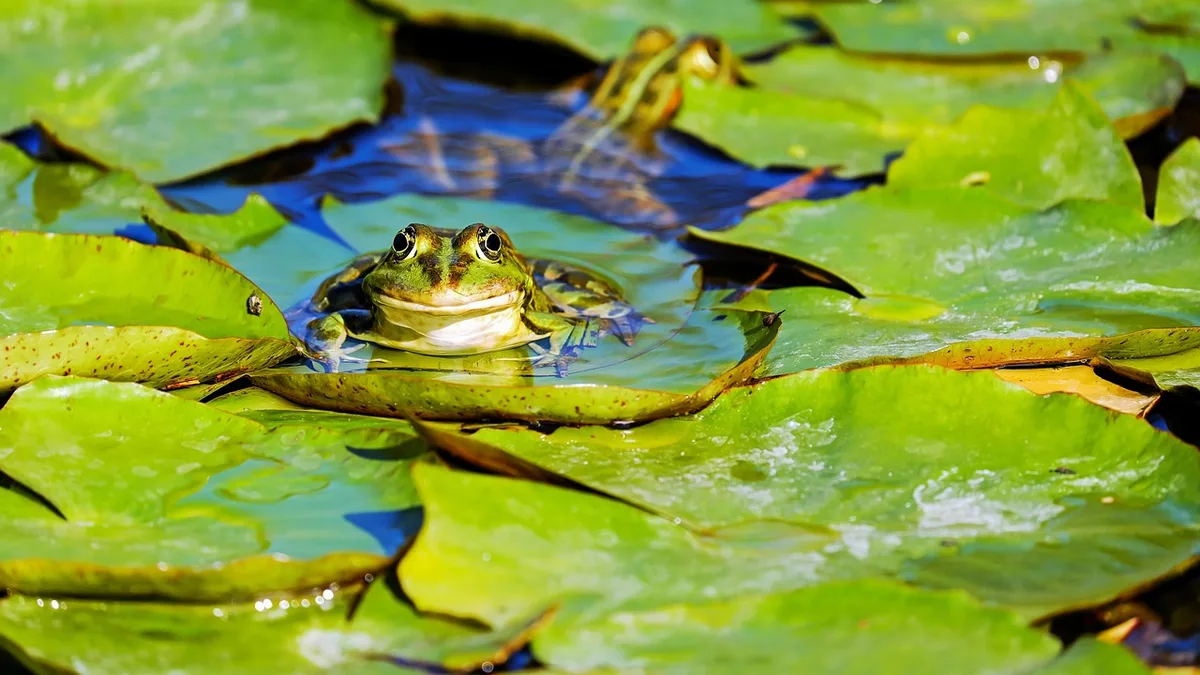 Amphibian skin is permeable, so water chemistry acts directly on the animal. Photo: Couleur via Pixabay.
Recognizing the Signs: A Detailed Breakdown
Clinical signs of chytridiomycosis vary by species, fungal strain, and disease progression. Below is a systematic overview.
Early Signs
- Behavioural changes: Lethargy, reduced activity, and reluctance to move or feed. The amphibian may appear dull or unresponsive.
- Abnormal posture: Sitting with hind limbs splayed or tucked abnormally.
- Excessive skin shedding: Sloughing of the epidermis in sheets or flakes, often macroscopically visible.
- Skin colour changes: Reddening of the ventral skin (belly, thighs, toes) due to vasodilation and inflammation. In some species, the skin may become pale or grey.
- Increased time in water: Many amphibians normally spend time in water, but chytrid-infected animals often remain submerged longer, possibly attempting to relieve skin irritation or compensate for electrolyte imbalances.
Advanced Signs
- Anorexia: Complete refusal to eat.
- Lethargy and weakness: Inability to right themselves when turned over.
- Neurologic signs: Tremors, seizures, or loss of coordination in severe cases due to electrolyte disturbances (e.g., hyponatraemia, hyperkalaemia).
- Skin lesions: Ulceration, erosions, or hyperkeratosis visible on the ventral body, feet, and cloaca.
- Respiratory distress: Gasping at the water surface or open-mouth breathing, especially in aquatic species.
- Sudden death: Particularly in epidemic outbreaks among captive collections.
Species-Specific Variations
- Frogs and toads (Anurans): Often show thick, peeling skin and discolouration. Poison dart frogs may become less vibrant or refuse to breed.
- Salamanders and newts (Caudates): Bsal causes severe skin ulcers and rapid progression; affected animals may develop white or grey patches on the skin, followed by necrosis and sloughing. Newts often die within 2-3 weeks of symptom onset.
- Caecilians (Apoda): Less studied, but likely similar signs of dermatopathy and lethargy.
In all cases, subclinical carriers may show no outward signs but remain infectious to conspecifics.
The Critical Role of Quarantine
Quarantine is the first line of defence against introducing chytrid into a collection or household. The AVMA and CVMA recommend that all new amphibians (whether wild-caught or captive-bred) be isolated for a minimum of 30 days, preferably in a separate room with dedicated equipment.
Quarantine protocols:
- Housing: Use a simple, easily disinfected enclosure (e.g., plastic tub with lid). No substrate; use paper towels instead. Provide a shallow water dish that can be cleaned daily.
- Temperature and humidity: Maintain species-appropriate conditions. Bd is inhibited at temperatures above 30°C (86°F) in some species, but this should not replace biosecurity.
- Handling: Wear disposable gloves when handling quarantined animals. Change gloves between animals.
- Testing: Ideally, submit skin swabs for PCR testing before the quarantine period ends. The Merck Veterinary Manual advises testing at least twice, two weeks apart, to rule out false negatives.
- Observation: Record daily behaviour, skin condition, and appetite. Any suspicious signs warrant immediate veterinary consultation.
In Australia, the Department of Agriculture, Fisheries and Forestry (DAFF) has specific import conditions for amphibians, including negative chytrid PCR results. Canadian and European authorities (CFIA, EFSA) emphasise similar biosecurity for laboratories and breeding facilities.
Biosecurity Best Practices
Preventing chytrid spread requires rigorous hygiene, especially in multi-species enclosures or breeding operations.
- Disinfection: Quaternary ammonium compounds (e.g., F10SC), 10% bleach (sodium hypochlorite) with a 10-minute contact time, or Virkon S are effective. Rinse thoroughly with dechlorinated water.
- Water management: Do not share water dishes, filters, or spray bottles between enclosures. Treat all water with dechlorinator or use reverse osmosis water.
- Equipment: Dedicate nets, containers, and syringes to individual tanks. Disinfect after each use.
- Quarantine area: Use separate footwear, lab coats, and tools. A footbath with disinfectant at the room entrance is recommended.
- Personnel hygiene: Wash hands thoroughly with soap and water (or use alcohol-based hand sanitiser) before and after handling any amphibian. Gloves should be changed between animals.
The AVA’s guidelines for wildlife rehabilitation facilities include similar recommendations, with emphasis on preventing cross-contamination between rescued amphibians and captive collections.
Veterinary Diagnosis of Chytridiomycosis
Definitive diagnosis requires veterinary expertise and laboratory confirmation. A veterinarian experienced in exotic animal medicine will follow a systematic approach.
Clinical Examination
The veterinarian will take a detailed history, including source of the amphibian, recent acquisitions, and any behavioural or skin changes. Physical examination should assess body condition, skin integrity, mucous membranes, and neurological status. In advanced cases, blood work may reveal electrolyte imbalances (low sodium, high potassium) suggestive of chytridiomycosis.
Laboratory Testing
- Skin swab PCR: The gold standard for detecting Bd and Bsal DNA. A sterile cotton or nylon swab is gently rubbed over the ventral body, feet, and cloacal area. Samples are sent to a specialised laboratory (e.g., Zoologix, IDEXX, or university labs). PCR can detect subclinical infections with high sensitivity.
- Histopathology: Skin biopsy or post-mortem tissue (preferably from ventral skin and feet) can show intracytoplasmic sporangia in the keratinised epidermis. PAS or GMS stains highlight fungal structures.
- Real-time PCR: Quantitative PCR is used for research and outbreak monitoring. Detection of even a single zoospore equivalent is considered positive in many contexts.
- Culture: Less common due to fastidious growth requirements; not recommended for routine diagnosis.
Differential Diagnoses
Several conditions mimic chytrid signs:
- Bacterial dermatoses (e.g., Aeromonas, Pseudomonas): Often produce reddening and ulcers but lack the characteristic shedding pattern.
- Viral infections (ranavirus, frog virus 3): Can cause lethargy and skin lesions but also internal haemorrhage and oedema.
- Parasitic infestations (e.g., Saprolegnia, water mites): Fungal or pseudofungal infections, but typically focal rather than diffuse.
- Environmental stress: Poor water quality, temperature extremes, or nutritional deficiencies may cause increased shedding or lethargy.
Veterinarians should rule out these conditions based on history, cytology, and PCR results. The European Food Safety Authority (EFSA) and USGS National Wildlife Health Center provide differential diagnostic tables for Bd and Bsal.
Treatment and Management Overview
While this article focuses on signs, quarantine, biosecurity, and diagnosis, a brief overview of treatment is warranted for completeness. Antifungal therapy (itraconazole, voriconazole) combined with supportive care (soaks in dilute electrolyte solutions, temperature management) is the mainstay. However, treatment success varies greatly, and re-infection or relapse can occur. All treated animals should be re-tested at least twice after treatment completion. Treatment must be overseen by a veterinarian, as improper dosing can be toxic. Since chytrid is a reportable disease in some jurisdictions (e.g., Australia, parts of the EU), vets may need to notify local authorities.
Conclusion
Amphibian chytrid fungus remains a formidable threat to captive and wild amphibians. Early recognition of signs, ranging from subtle behavioural shifts to dramatic skin changes, is crucial for timely intervention. Equally important are stringent quarantine and biosecurity protocols to prevent introduction and spread. Veterinary diagnosis via PCR and histopathology provides definitive confirmation, enabling appropriate management. Whether you are a pet owner, breeder, or veterinarian, staying informed about chytridiomycosis is an ethical imperative for amphibian health and conservation. By prioritising preventive measures and seeking professional care at the first sign of trouble, we can reduce the impact of this devastating disease.
Related Clinical & Scientific Guides
References
Berger, L., Speare, R., Daszak, P., et al. (1998). Chytridiomycosis causes amphibian mortality associated with population declines in the rain forests of Australia and Central America. Proceedings of the National Academy of Sciences, 95(15), 9031-9036. [PMCID: PMC21197] Voyles, J., Young, S., Berger, L., et al. (2009). Pathogenesis of chytridiomycosis, a cause of catastrophic amphibian declines. Science, 326(5952), 582-585. [DOI: 10.1126/science.1176765] Pessier, A. P., & Nichols, D. K. (2007). Diagnosis and treatment of chytridiomycosis in captive amphibians. Journal of the American Veterinary Medical Association, 231(2), 233-237. [DOI: 10.2460/javma.231.2.233] American Veterinary Medical Association. (2020). AVMA guidelines for the treatment of amphibians with chytridiomycosis. Available at: https://www.avma.org/resources-tools/animal-health-and-welfare/amphibian-health Canadian Veterinary Medical Association. (2019). Biosecurity guidelines for captive amphibians. Canadian Veterinary Journal, 60(4), 415-420. Australian Veterinary Association. (2021). Best practice for quarantine and disease surveillance in amphibian collections. AVA Policy Document. Merck Veterinary Manual. (2023). Chytridiomycosis in Amphibians. Available at: https://www.merckvetmanual.com/exotic-and-laboratory-animals/amphibians/chytridiomycosis-in-amphibians European Food Safety Authority. (2018). Risk assessment of Batrachochytrium salamandrivorans for the EU. EFSA Journal, 16(6), 5340. [DOI: 10.2903/j.efsa.2018.5340] Fite, D. S., & Yabsley, M. J. (2022). Dermatological diseases of amphibians. Veterinary Clinics of North America: Exotic Animal Practice, 25(2), 489-507. [DOI: 10.1016/j.cvex.2022.01.004]