
Trichinella spiralis in Wild Boar: Food Safety Surveillance and Public Health Risks
Introduction
Trichinella spiralis is a zoonotic nematode parasite with a cosmopolitan distribution, capable of infecting over 150 species of mammals, birds, and reptiles [1, 2]. Among its principal reservoirs, wild boar (Sus scrofa) occupies a central role in the sylvatic cycle, serving as a bridge between wildlife, domestic pigs, and humans [3, 26]. The consumption of raw or undercooked wild boar meat containing encapsulated first-stage larvae (L1) is a well-documented source of human trichinellosis outbreaks globally [4, 5, 27, 32]. This article reviews the biological mechanisms of infection, the technical principles of meat inspection and serological surveillance, epidemiological patterns across geographic regions, and the essential components of a One Health framework for risk mitigation.
Biology and Life Cycle of Trichinella spiralis in Wild Boar
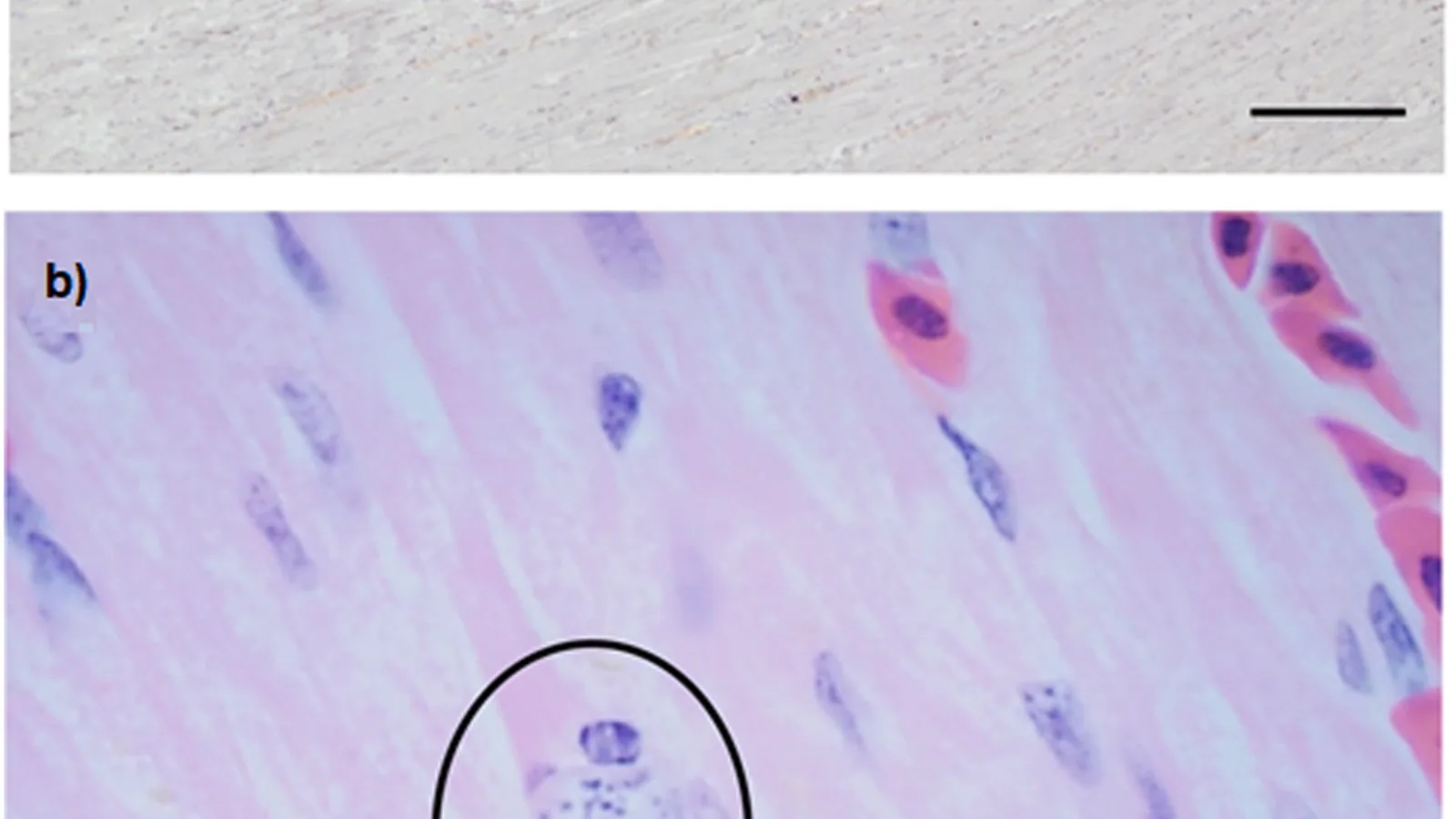
T. spiralis exhibits a direct life cycle confined to a single host. Infection begins when a wild boar ingests muscle tissue containing infective L1 larvae. In the stomach, host proteolytic enzymes release the larvae from the nurse cell complex. The larvae then invade the small intestinal epithelium, mature through four molts into adult worms within 48 hours, and mate. Gravid females release newborn larvae that migrate via the lymphatic and circulatory systems to reach striated skeletal muscle fibers. Larvae penetrate myocytes, induce cellular remodeling, and form a collagenous capsule (nurse cell) where they remain viable for years [6, 33]. The parasite load in wild boar is measured as larvae per gram (LPG) of muscle tissue, with reported burdens ranging from 0.2 to 424 LPG [7]. Freezing tolerance studies show that T. spiralis L1 in wild boar muscle remain infective for up to 9 days at -18°C, and can survive for many months under permissive conditions [8, 9, 39]. This biological resilience has direct implications for food safety, as improper freezing of game meat may not guarantee inactivation.
Diagnostic Methods for Meat Inspection and Serological Surveillance
Direct Detection: Artificial Digestion
The gold standard for post-mortem detection of Trichinella larvae in wild boar carcasses intended for human consumption is the magnetic stirrer method for artificial digestion, as specified in international standards (Commission Regulation (EC) No 2075/2005) [10, 56]. The method involves digesting a representative muscle sample (typically diaphragm pillars) in a solution of pepsin and hydrochloric acid at 44-47°C, followed by sedimentation and microscopic examination of the sediment for larvae. The sensitivity of the assay is highly dependent on sample mass (≥1 g) and the efficiency of the digestion process. Trichinoscopy (compression method) lacks sufficient sensitivity for routine testing, especially for non-encapsulated species such as T. pseudospiralis [10].
A decision tree for meat inspection is presented in Figure 1.
flowchart TD
 A[Wild boar carcass presented for food] --> B{Sample diaphragm pillars}
 B --> C["Artificial digestion (pepsin-HCl, magnetic stirrer)"]
 C --> D{Microscopic examination}
 D -->|Larvae detected| E[Identify species by multiplex PCR]
 E --> F[Carcass condemned - Not fit for human consumption]
 D -->|No larvae detected| G[Meat released for consumption]
 G --> H{Further serological testing? Optional}
 H -->|Yes| I[ELISA or multiplex bead assay for surveillance]
 H -->|No| J[End]
 E --> K[Report to national reference laboratory]
Serological Detection: ELISA and Multiplex Bead Assays
Indirect enzyme-linked immunosorbent assay (ELISA) using excretory-secretory (E-S) antigens from T. spiralis L1 is the method of choice for seroepidemiological surveys in wild boar populations [11, 73]. Commercial ELISA kits based on E-S antigens demonstrate high diagnostic sensitivity and specificity, though cross-reactions with other helminths are possible. Recombinant antigens such as T. spiralis serpin have been developed to improve specificity, but they show reduced sensitivity for detecting infections caused by non-spiralis species and may not detect early seroconversion. Multiplex bead assays, such as those using Bio-Rad Bio-Plex technology, allow simultaneous detection of antibodies against multiple pathogens, including T. spiralis, Mycobacterium bovis, and Brucella suis [1]. In a study evaluating a multiplex assay for wild boar, sensitivity for T. spiralis was 0.90 and specificity was 0.99 compared to E-S ELISA [1]. This approach is valuable for integrated wildlife surveillance programs.
Molecular Identification: Multiplex PCR
Confirmation of species identity is achieved through multiplex PCR targeting the expansion segment V (ESV) region of the ribosomal DNA and the 5S ribosomal RNA intergenic spacer region [3, 12, 10]. The European Union Reference Laboratory for Parasites in Rome has standardized a multiplex PCR protocol capable of discriminating all known Trichinella species and genotypes [13, 26]. This method is essential for distinguishing T. spiralis from other encapsulated species such as T. britovi, T. nativa, and T. pseudospiralis, which may differ in freezing tolerance and host range.
Global Surveillance and Prevalence Patterns
Europe
In Europe, T. spiralis and T. britovi are the predominant species found in wild boar, with T. pseudospiralis reported less frequently [12, 10]. Prevalence rates vary widely across countries and regions.
Table 1. Prevalence of Trichinella spp. in wild boar from selected European countries.
| Country | Period | n | Positive | Prevalence (%) | Species identified | Reference |
|---|---|---|---|---|---|---|
| Germany | 2013-2023 | >3 million | ~1500 | 0.002-0.005 | T. spiralis, T. britovi, T. pseudospiralis | [14] |
| Bulgaria | 2020-2025 | 43,228 | 597 | 1.5 | T. britovi (only) | [13] |
| Spain | 2006-2019 | >1 million | variable | 0.02-0.09 | T. spiralis, T. britovi | [4, 15] |
| Romania | 2010-2015 | 8,024 | 115 | 1.43 | T. spiralis, T. britovi | [26, 49] |
| Croatia | 2010-2017 | 183,184 | 303 | 0.17 | T. spiralis, T. britovi, T. pseudospiralis | [12] |
| Switzerland | 2009-2023 | 8,838 | 1 | 0.01 | T. britovi | |
| Poland | West Pomerania | ~10,000 | 54 | 0.54 | T. spiralis, T. britovi, T. pseudospiralis | [10] |
Germany has observed an increasing trend in prevalence, from 0.002% to 0.005% over a decade, associated with the spread of raccoon dogs and wolves [14]. In Spain, prevalence remains low overall, but the number of positive animals has increased due to growing wild boar populations [4]. Romania continues to report high prevalence in wildlife, with T. spiralis dominating in eastern regions and T. britovi in mountainous counties [3, 26, 49, 72]. Bulgaria's national survey identified only T. britovi in wild boar, contrasting with earlier sporadic reports of T. spiralis and T. pseudospiralis [13].
Asia
In China, farmed wild boar in Jilin Province showed an overall prevalence of 0.53% by artificial digestion, with T. spiralis being the only species identified via PCR [2]. The larval burden averaged 0.076 LPG, with a maximum of 0.21 LPG. In Korea, seroprevalence in wild boar has been reported, and an outbreak of trichinellosis was linked to raw wild boar meat containing 0.54 LPG. Turkey and Iran also report sylvatic foci of Trichinella in wild boar and carnivores [45, 65, 66].
Americas
Argentina: In Patagonia, 5.8% of 1,694 wild boar tested positive, with larval burdens between 0.2 and 424 LPG [7]. Positive animals were concentrated near peri-urban areas, suggesting a link between anthropogenic activity and transmission. Chile reported a prevalence of 1.8% with an average burden of 6.8 LPG in southern wild boar. In the United States, an outbreak in Iowa from a game farm wild boar confirmed T. spiralis [5]. Canada has historically documented low prevalence in domestic swine and wild boar, but continues to maintain surveillance under national Trichinella certification programs [16, 29].
Africa and Other Regions
Limited data exist for Africa. In Mexico, seroprevalence of anti-Trichinella antibodies in wild boar from management units was 5.5% by Western blot. No larvae were detected by artificial digestion in that study. Globally, underreporting remains a challenge due to inadequate surveillance in many regions.
Risk Factors for Human Trichinellosis
Primary Risk Factor: Consumption of Untested Game Meat
The most significant risk factor for human trichinellosis is the consumption of wild boar meat that has not undergone official Trichinella testing [4, 5, 27, 32, 36, 52]. In many countries, hunters are allowed to consume or distribute game meat without mandatory testing, especially in regions where trichinellosis is not perceived as a threat [13, 7]. Outbreaks have repeatedly occurred when groups of hunters or their families share meat from a single infected animal [27, 32].
Secondary Risk Factors
- Freezing and Curing Inadequacy: T. spiralis larvae can survive freezing at -18°C for 9 days, and in some experimental conditions for months [8, 9, 39]. Standard home freezers may not achieve the time-temperature combinations required for inactivation. Similarly, smoking, curing, or salting does not reliably kill larvae unless specific temperature targets are met [17, 18]. Pulsed electric field treatment and gamma irradiation have been investigated as alternative inactivation methods but are not widely implemented [17, 18].
- Lack of Awareness Among Hunters: Many hunters are unaware of the risk of trichinellosis from wild boar, particularly if they have never encountered a case. Educational campaigns are essential to improve compliance with testing.
- Peri-urban Wildlife Interfaces: Infected wild boar are often found near urban areas where they scavenge on human refuse or carcasses of synanthropic animals (e.g., rodents, feral pigs) [7, 38].
- Sylvatic, Domestic Transmission: T. spiralis can cycle between wild boar, foxes, raccoon dogs, and domestic pigs, especially in backyard farming systems where pigs have outdoor access [3, 36, 56]. This creates persistent environmental contamination.
Occupational Risk
Personnel involved in slaughtering and processing wild boar, including butchers and hunters, may become infected through accidental ingestion of raw meat or contamination of hands and utensils [5].
One Health Recommendations for Hunters and Regulators
A One Health approach requires coordinated action across veterinary, environmental, and public health sectors. The following recommendations are based on current evidence.
For Hunters
- Test every wild boar carcass intended for human consumption, regardless of the animal's apparent health, geographic origin, or season. Use only validated artificial digestion methods performed by accredited laboratories.
- Do not rely on visual inspection, freezing, or traditional preparation methods (smoking, curing, drying) as guarantees of safety.
- Handle raw meat with gloves, prevent cross-contamination, and thoroughly cook all wild boar meat to an internal temperature of at least 71°C (160°F) for at least 2 minutes.
- Participate in serological and meat-testing surveillance programs to provide data for regional risk assessments.
For Veterinarians and Food Safety Authorities
- Enforce mandatory testing of wild boar meat entering commercial game meat markets, and extend testing to meat shared privately among hunters.
- Implement quality assurance systems for testing laboratories, including participation in proficiency testing schemes (e.g., ISO 18743).
- Promote the use of multiplex bead assays or ELISA for cost-effective serosurveillance in wild boar populations, complementing direct digestion testing.
- Develop and disseminate up-to-date risk maps based on prevalence data and environmental factors (e.g., wild carnivore density, land use).
- Integrate Trichinella surveillance into broader wildlife disease monitoring programs, including for other emerging pathogens such as African swine fever [14, 47].
For Policy Makers and Public Health Agencies
- Establish cross-border sharing of molecular and epidemiological data, as Trichinella does not respect national boundaries; many European countries show shared sylvatic cycles [14, 13, 12].
- Invest in hunter education campaigns, providing clear, practical guidance on safe game meat handling.
- Mandate reporting of human trichinellosis cases and conduct thorough trace-back investigations to identify the source of infection and prevent further outbreaks.
- Support research on novel inactivation technologies (e.g., pulsed electric fields, irradiation) that could offer additional safety margins for game meat [17, 18].
Conclusion
Trichinella spiralis persists in wild boar populations worldwide, with prevalence ranging from less than 0.01% to over 5% depending on geographic and ecological factors. The primary public health risk arises from consumption of untested or improperly prepared wild boar meat. Robust meat inspection using artificial digestion remains the cornerstone of food safety, while serological tools such as ELISA and multiplex bead assays enhance the capabilities of surveillance programs. The demonstrated freezing tolerance of T. spiralis larvae reinforces the need for cooking as the only reliable consumer-level intervention. Given the expanding populations of wild boar and the increasing popularity of game meat, a sustained One Health commitment involving hunters, veterinarians, regulators, and public health authorities is essential to minimize the risk of zoonotic transmission.
References
[1] Touloudi A, Valiakos G, Cawthraw S, et al. Development of a Multiplex Bead Assay for Simultaneous Serodiagnosis of Antibodies against Mycobacterium bovis, Brucella suis, and Trichinella spiralis in Wild Boar. Microorganisms. 2021. URL: https://www.semanticscholar.org/paper/41dbc5e9ef96f2174a8ec49a29457b588947b09f
[2] Zhang NZ, Wang M, Chen WG, et al. Occurrence of Trichinella spiralis in farmed wild boars (Sus scrofa): an underrated risk in China. Parasitology. 2024. URL: https://www.semanticscholar.org/paper/cf142a76fabf1d2a03e7e7de2772440c11a78669
[3] Marin AM, Olariu T, Popovici D, et al. Trichinella spiralis Infecting Wild Boars in West, Southwest, and Northwest of Romania: Evidence of an Underrated Risk. Microorganisms. 2024. URL: https://www.semanticscholar.org/paper/cb0b7249b6db2beeeda78ff4c19f5931da9443a1
[4] Moral Moral S, Azorit C, López-Montoya AJ, et al. Epidemiology of Trichinella infection in wild boar from Spain and its impact on human health during the period 2006-2019. International Journal for Parasitology: Parasites and Wildlife. 2022. URL: https://www.semanticscholar.org/paper/cd4eb3dec82eace930a2f7d6137a8a7820fe63ab
[5] Holzhauer SM, Agger W, Hall R, et al. Outbreak of Trichinella spiralis Infections Associated With a Wild Boar Hunted at a Game Farm in Iowa. Clinical Infectious Diseases. 2014. URL: https://www.semanticscholar.org/paper/8360b66480c103f71044b67d9922b290ba24b6b4
[6] Iacob O. The aggression of the Trichinella spiralis larvae on the muscular tissue of the wild boar (Sus scrofa, Linnaeus, 1758) and the local reactivity. 2009. URL: https://www.semanticscholar.org/paper/50a1049afa933ed09521636e984499d4b1907dd5
[7] Reissig EC, Laugue M, Gatti G, et al. Invasive wild boar (Sus scrofa) as a functional reservoir for the dynamics of Trichinella in the Patagonia region. Revista Brasileira de Parasitologia Veterinária. 2024. URL: https://www.semanticscholar.org/paper/08bf2f50d29285341c02b840546666ab0cfb268b
[8] Bessi C, Ercole M, Fariña F, et al. Survival of Trichinella spiralis and T. pseudospiralis in Experimentally Infected Wild Boar Muscle Tissue under Freezing and Environmental Conditions. Iranian Journal of Parasitology. 2024. URL: https://www.semanticscholar.org/paper/570fa336f8fc2a44c2d5df642abfc6b051935367
[9] Iacob O. The viability of Trichinella spiralis larvae in frozen pork and wild boar meat revealed by the experimental infection of laboratory mice. 2015. URL: https://www.semanticscholar.org/paper/1e4b85572d03f76e26039970290accc720d38d13
[10] Bilska-Zając E, Różycki M, Chmurzyńska E, et al. First record of wild boar infected with Trichinella pseudospiralis in Poland. 2016. URL: https://www.semanticscholar.org/paper/eeebc4d9ab1aa8fe0ff8053cb2a01b0085f299f1
[11] Santos J, Ciudad J, Suarez-Lopez I, et al. Serological detection of Trichinella spiralis and Trichinella britovi in wild boar by ELISA using an excretor-secretor antigen and a crude antigen. 2011. URL: https://www.semanticscholar.org/paper/33bb5a35d3b0eb470a4e9d26e962a5d674fc30e3
[12] Balić D, Marucci G, Agičić M, et al. Trichinella spp. in wild boar (Sus scrofa) populations in Croatia during an eight-year study (2010-2017). One Health. 2020. URL: https://www.semanticscholar.org/paper/31288486db0a0c6676311a15f83ab3bd39024361
[13] Lalkovski N, Celani F, Tonanzi D, et al. Occurrence of Trichinella Species in Wild Boar (Sus scrofa) Populations Across Bulgaria. Animals. 2026. URL: https://www.semanticscholar.org/paper/342499ac45f2ac813397b049e37f90bd26ee2ce5
[14] Johne A, Sachsenröder J, Richter M, et al. Trichinella findings in Germany from 2013 to 2023 indicate an increased prevalence in wild boar (Sus scrofa) population. Veterinary Parasitology. 2024. URL: https://www.semanticscholar.org/paper/b655d851040068646febde6510d5781892964759
[15] Díaz A, Tejedor MT, Padrosa A, et al. Prevalence of Trichinella spiralis and Trichinella britovi in wild boars in the northeast of Spain. Zeitschrift für Jagdwissenschaft. 2021. URL: https://www.semanticscholar.org/paper/088d5760f7c95a13960c3902a16df83276f5d6cd
[16] Gajadhar A, Bisaillon J, Appleyard G. Status of Trichinella spiralis in domestic swine and wild boar in Canada. Canadian Journal of Veterinary Research. 1997. URL: https://www.semanticscholar.org/paper/326962440e36337f5cdad2b09c6477fdbabe8ca4
[17] Gondek M, Bilska-Zając E, Szczepankiewicz A, et al. Pulsed electric field treatment of muscle tissue inactivates Trichinella spiralis larvae. Pig and wild boar muscles as a case study. Food Control. 2024. URL: https://www.semanticscholar.org/paper/904a704bba040f174f83f22a3d4ca81e36779fac
[18] Ercole M, Bessi C, Pasqualetti M, et al. Gamma radiation effect on Trichinella pseudospiralis and Trichinella spiralis infected wild boar meat. Veterinary Parasitology. 2021. URL: https://www.semanticscholar.org/paper/4a88cb18824aede962c0e58b69f4eef605b509cc
[19] Torrents A, Comadran XFI, Bolás F, et al. Trichinella status in the wild faune of Catalonia (NE Spain): first report of T. spiralis in a wild boar from Montseny (Barcelona province). 2014. URL: https://www.semanticscholar.org/paper/17c19e809d946ee486e5d4263ac5e528774a1392
[20] Santrač V, Nedić D, Marić J, et al. The first report of Trichinella pseudospiralis presence in domestic swine and T. britovi in wild boar in Bosnia and Herzegovina. Acta Parasitologica. 2015. URL: https://www.semanticscholar.org/paper/18a6c0b12e3ff1f139aef0ef960e7873733d1ddb
[21] Nöckler K, Reckinger S, Pozio E. Trichinella spiralis and Trichinella pseudospiralis mixed infection in a wild boar (Sus scrofa) of Germany. Veterinary Parasitology. 2006. URL: https://www.semanticscholar.org/paper/f4bbbf1aa36e12ae3751b67dc7fea2879969a895
[22] Rodríguez E, Olmedo J, Ubeira F, et al. Mixed infection, Trichinella spiralis and Trichinella britovi, in a wild boar hunted in the Province of Cáceres (Spain). Experimental Parasitology. 2008. URL: https://www.semanticscholar.org/paper/4ab4ad974ebe86d7156909db71011a357b072dd8
[23] Glazunov Y, Vinogradova Y. Epidemiology Study of Trichinella Spiralis Infection in Tyumen Region. Archives of Razi Institute. 2023. URL: https://www.semanticscholar.org/paper/cd56364d9f403a6479edcc3fc42cda4aa63b0c57
[24] Abril Moya MM, Carrera Aldaz GA, Poveda Paredes FX. Characterization of Trichinella spiralis and its incidence in Ecuador. Data and Metadata. 2023. URL: https://www.semanticscholar.org/paper/95cb42a64e34a65e5479a6af4d77181597576b0f
Disclaimer: This article is for educational and informational purposes only. It is not intended to substitute for professional veterinary advice, diagnosis, treatment, or regulatory guidance. Always consult a licensed veterinarian or qualified specialist regarding animal health, disease diagnosis, and therapeutic decisions.