
Haemonchus contortus in Sheep: Anthelmintic Resistance and FAMACHA-Based Control
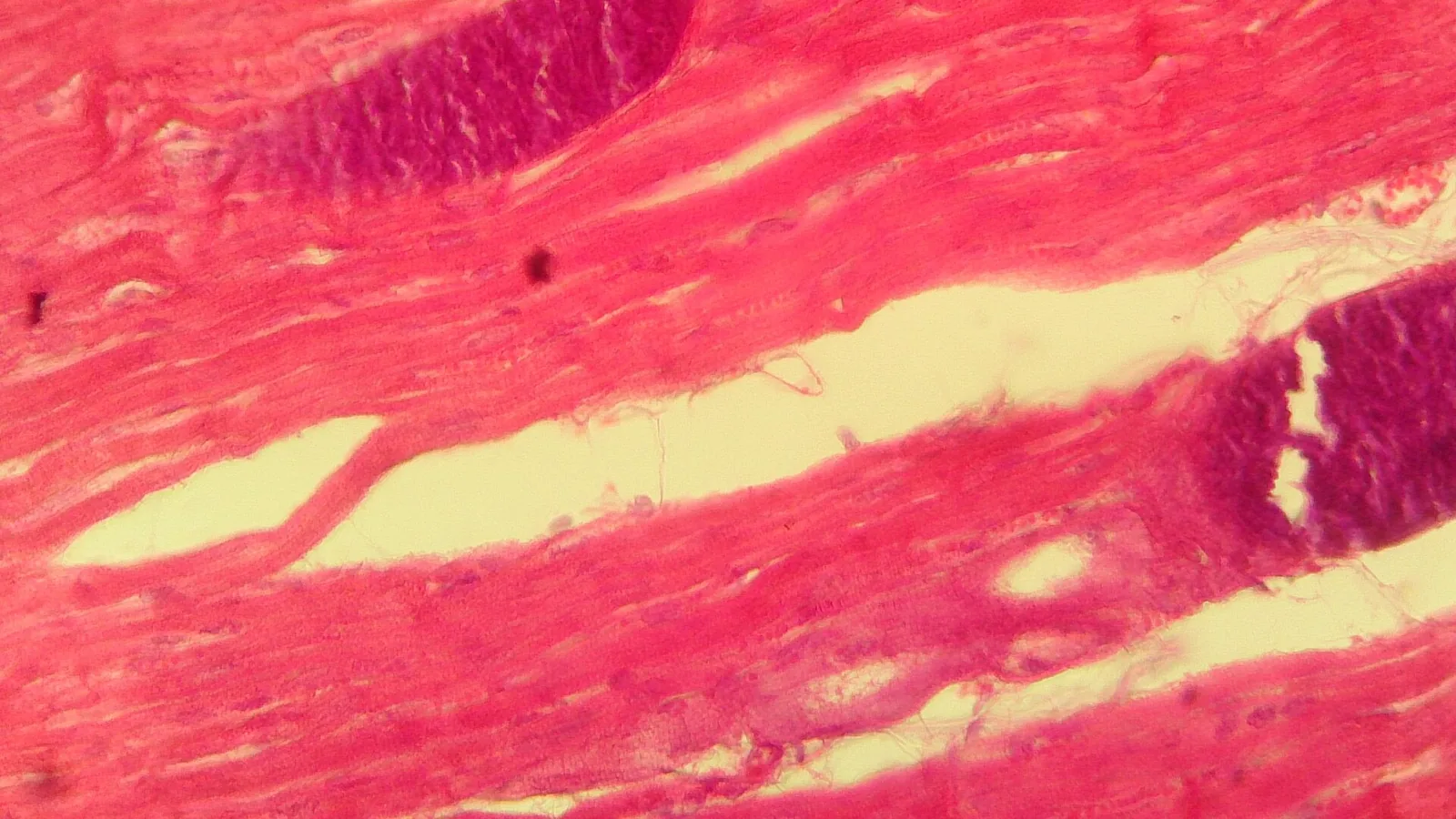
1. Introduction to Haemonchus contortus
Haemonchus contortus, commonly known as the barber's pole worm, is a highly pathogenic blood-feeding nematode of the abomasum in small ruminants. This parasite represents a major constraint to sheep production systems worldwide, particularly in regions with warm, moist climates that favor its free-living larval stages [1, 2]. Adult female worms consume blood at a rate of approximately 0.05 ml per worm per day, leading to severe anemia, hypoproteinemia, weight loss, and mortality in heavily parasitized animals [3]. The pathognomonic clinical sign is pallor of the ocular mucous membranes, a direct consequence of the progressive reduction in packed cell volume (PCV) [4].
The life cycle is direct and rapid. Eggs are passed in the feces, hatching to first-stage larvae (L1) within 24 hours under optimal conditions. These develop through second-stage (L2) and third-stage (L3) infective larvae over a period of 7 to 10 days. The L3 migrate onto herbage and are ingested by grazing sheep. After exsheathment in the rumen, the larvae penetrate the abomasal mucosa, molt to L4 and finally to adults. The prepatent period is approximately 18 to 21 days [5]. This high biotic potential, combined with intense selection pressure from anthelmintic use, has driven the evolution of widespread anthelmintic resistance (AR) [6].
2. Anthelmintic Resistance: Mechanisms and Epidemiology
Anthelmintic resistance is defined as a heritable reduction in the sensitivity of a parasite population to a drug concentration that was previously effective [7]. Resistance in H. contortus has been documented against all major anthelmintic classes, including benzimidazoles (BZs), macrocyclic lactones (MLs), and imidazothiazoles (levamisole) [8, 9]. Multi-drug resistance (MDR) is now a common finding in many sheep-producing regions, rendering some flocks refractory to standard treatment protocols [10].
2.1 Benzimidazole Resistance
Benzimidazoles bind to the beta-tubulin subunit, inhibiting microtubule polymerization in the parasite's intestinal cells [11]. Resistance is primarily conferred by single nucleotide polymorphisms (SNPs) in the isotype-1 beta-tubulin gene. The most well characterized mutations include a phenylalanine to tyrosine substitution at codon 200 (F200Y), a glutamate to alanine substitution at codon 198 (E198A), and a phenylalanine to tyrosine substitution at codon 167 (F167Y) [12, 13]. These mutations reduce drug binding affinity, rendering the microtubules stable in the presence of the compound [14].
2.2 Macrocyclic Lactone Resistance
Macrocyclic lactones (e.g., ivermectin, moxidectin) act on glutamate-gated chloride channels, causing hyperpolarization of neurons and muscle cells leading to paralysis and death [15]. Resistance mechanisms to MLs are polygenic and more complex than those for BZs. They involve mutations in P-glycoprotein efflux transporters, ligand-gated ion channels (including GluCl and GABA receptors), and altered cuticle drug permeability [16, 17]. Quantitative trait loci (QTL) analyses have identified several genomic regions associated with ML resistance, though no single diagnostic SNP has proven as universal as the F200Y mutation for BZs [18].
2.3 Levamisole Resistance
Levamisole acts as an agonist at nicotinic acetylcholine receptors (nAChRs), causing spastic paralysis [19]. Resistance is associated with changes in nAChR subunit composition and expression, with specific mutations identified in the Hco-unc-29.1 and Hco-unc-63 genes encoding nAChR subunits [20, 21]. This resistance is often less absolute than that seen with BZs or MLs, and some efficacy may persist in resistant populations.
3. Diagnostic Approaches for Resistance Detection
3.1 Fecal Egg Count Reduction Test (FECRT)
The Fecal Egg Count Reduction Test (FECRT) remains the gold standard for detecting anthelmintic resistance at the flock level [22]. The test involves comparing individual or pooled fecal egg counts (FEC) from a group of animals before and 10 to 14 days after treatment [23]. The percentage reduction is calculated using the formula:
% FECR = 100 x (1 - [T2/T1])
Where T2 is the post-treatment arithmetic mean FEC and T1 is the pre-treatment arithmetic mean FEC [24]. Resistance is defined as a reduction of less than 95% with a lower 95% confidence interval below 90% for the World Association for the Advancement of Veterinary Parasitology (WAAVP) guidelines [25].
| Parameter | Susceptible Population | Resistant Population |
|---|---|---|
| FECR (%) | >95% | <95% |
| Lower 95% CI | >90% | <90% |
| Interpretation | Effective treatment | Resistance suspected |
Table 1. Interpretation categories for the fecal egg count reduction test (FECRT) based on WAAVP guidelines.
3.2 Molecular Detection of Resistance Alleles
Molecular methods offer rapid, sensitive detection of specific resistance-associated SNPs without requiring a post-treatment sampling period. For benzimidazole resistance, allele-specific PCR (AS-PCR) and pyrosequencing assays targeting the F200Y, E198A, and F167Y mutations in the isotype-1 beta-tubulin gene are well established [26, 27].
High-resolution melt (HRM) analysis provides a closed-tube genotyping method capable of detecting heterozygous and homozygous resistant individuals from bulk larval cultures or egg extracts [28]. More recently, droplet digital PCR (ddPCR) has been applied to quantify the frequency of resistance alleles in pooled fecal samples with high precision [29]. These molecular tools are particularly effective for early warning surveillance, as they can detect resistance alleles at low frequencies before clinical treatment failure occurs [30].
4. The FAMACHA System for Targeted Selective Treatment
The FAMACHA system is a clinical decision-support tool developed in South Africa by Faffa Malan and colleagues [31]. It enables the identification of individual animals requiring anthelmintic treatment based on the degree of anemia, which correlates strongly with H. contortus burden. The system relies on the fact that within a flock, the distribution of parasites is highly aggregated: a minority of animals (approximately 20 to 30%) harbor the majority of the worm burden and shed most of the eggs [32].
The system uses a five-point color chart comparing the color of the ocular conjunctival membranes to reference photographs. The categories are:
| FAMACHA Score | Conjunctival Color | PCV Range (%) | Treatment Decision |
|---|---|---|---|
| 1 | Red/pink | >28 | No treatment |
| 2 | Red-pink | 23-27 | No treatment |
| 3 | Pink | 18-22 | Treat if other signs present |
| 4 | Pale pink | 13-17 | Treat |
| 5 | White/pale | <12 | Treat (risk of death) |
Table 2. FAMACHA score interpretation and treatment thresholds.
Field validation studies have demonstrated that FAMACHA scoring, when performed by trained personnel, has a sensitivity of 80 to 90% for identifying anemic animals (PCV < 22%) and a specificity of 70 to 80% for correctly identifying non-anemic animals [33, 34]. The positive predictive value increases when scoring is combined with body condition scoring (BCS) and fecal egg count estimation [35].
4.1 Implementation as Targeted Selective Treatment (TST)
Targeted selective treatment (TST) using FAMACHA reduces the number of anthelmintic treatments administered per season by 50 to 90% compared to blanket whole-flock treatment [36]. This reduction in treatment frequency preserves a refugia of unselected parasites, i.e., a population of worms not exposed to the drug. The refugia dilutes the frequency of resistance alleles in the parasite gene pool, slowing the progression of AR [37].
The TST protocol involves:
- Scoring all animals at intervals of 2 to 4 weeks during the transmission season.
- Treating only animals with a FAMACHA score of 4 or 5 (and score 3 if accompanied by poor body condition or high FEC).
- Retaining untreated animals as the refugia source of susceptible alleles.
- Monitoring the proportion of animals treated per flock visit to ensure it remains below 30 to 50%.
4.2 Limitations of FAMACHA
FAMACHA is specific to H. contortus and should not be used as a sole diagnostic in flocks where other parasites (e.g., Teladorsagia circumcincta, Trichostrongylus spp.) or other causes of anemia (e.g., malnutrition, chronic disease) are prevalent. The system also requires regular training and quality assurance to maintain observer accuracy, as inter-observer variation can affect reliability.
5. Integration of FECRT, Molecular Diagnostics, and FAMACHA in a Control Program
An integrated control program combines phenotypic (FECRT) and genotypic (molecular SNP detection) monitoring with clinical decision support (FAMACHA). The decision workflow is illustrated below.
flowchart TD
 A[Flock at risk of H. contortus] --> B{Perform FAMACHA scoring}
 B -->|Scores 1-3| C[No treatment. Maintain refugia]
 B -->|Scores 4-5| D[Administer targeted treatment]
 D --> E[Post-treatment FECRT at 14 days]
 E --> F{Check reduction}
 F -->|FECR >95%| G[Effective treatment, continue TST]
 F -->|FECR <95%| H[Collect fecal sample for molecular genotyping]
 H --> I[Screen for beta-tubulin SNPs]
 I --> J{Resistance alleles detected?}
 J -->|Yes| K[Switch to alternative anthelmintic class]
 J -->|No| L[Check for resistance to other classes, review dose compliance]
 K --> M[Re-test with FECRT after treatment]
Figure 1. Integrated decision algorithm combining FAMACHA-based targeted selective treatment with FECRT and molecular diagnostics for H. contortus control.
6. Computational and Bioinformatics Approaches in Resistance Surveillance
The application of computational biology to H. contortus genomics has accelerated the identification of resistance markers. Whole-genome sequencing (WGS) combined with genome-wide association studies (GWAS) has been used to map ML resistance loci to specific genomic regions [41, 42]. Population genetics models, including the use of algorithms for variant calling and structural variant detection, allow the estimation of resistance allele frequencies from pooled sequencing data.
Mathematical models of nematode population dynamics have been developed to simulate the effects of TST on resistance evolution. These models incorporate parameters such as drug efficacy, fitness costs of resistance, refugia size, and frequency of treatment. Results consistently show that TST strategies, especially those based on a threshold such as FAMACHA or FEC, extend the useful life of anthelmintics compared to whole-flock treatment [44, 45].
7. Non-Chemical Control Strategies
To reduce reliance on anthelmintics, integrated parasite management (IPM) strategies are recommended. These include:
- Grazing management: Rotational grazing with long rest periods to reduce L3 contamination. Co-grazing with cattle or horses, which are not susceptible to H. contortus, can dilute pasture infectivity.
- Genetic selection: Breeding for resistance or resilience to haemonchosis. Breeds such as Red Maasai and Gulf Coast Native sheep show higher resistance, with lower FEC and higher PCV under challenge.
- Biological control: The nematophagous fungus Duddingtonia flagrans reduces L3 survival. Spores fed to sheep pass through the gut and trap larvae in fecal pats, reducing pasture contamination.
- Nutritional supplementation: High-protein diets improve the immune response and resilience to H. contortus infection, mitigating anemia and production losses even in the presence of moderate worm burdens.
8. Conclusions
Haemonchus contortus remains the most economically important gastrointestinal nematode of sheep in warm climates. Widespread anthelmintic resistance, including MDR, necessitates a shift from prophylactic whole-flock treatments to evidence-based targeted approaches. The FECRT provides a phenotypic measure of drug efficacy, while molecular detection of SNPs in the isotype-1 beta-tubulin gene (F200Y, E198A, F167Y) offers a rapid genetic tool for benzimidazole resistance surveillance. The FAMACHA system, used as part of a TST program, effectively reduces treatment frequency, preserves refugia, and slows the evolution of resistance. Integration of these tools within an IPM framework, supported by computational models and genomic surveillance, is essential for sustainable control of haemonchosis in sheep.
References
[1] Soulsby EJL. Helminths, Arthropods and Protozoa of Domesticated Animals. 7th ed. Bailliere Tindall; 1982.
[2] Urquhart GM, Armour J, Duncan JL, Dunn AM, Jennings FW. Veterinary Parasitology. 2nd ed. Longman Scientific and Technical; 1996.
[3] Anderson RC. Nematode Parasites of Vertebrates: Their Development and Transmission. 2nd ed. CABI Publishing; 2000.
[4] van Wyk JA, Bath GF. The FAMACHA system for managing haemonchosis in sheep and goats by clinically identifying individual animals for treatment. Veterinary Research. 2002;33(5):509-529.
[5] O'Connor LJ, Walkden-Brown SW, Kahn LP. Ecology of the free-living stages of major trichostrongylid parasites of sheep. Veterinary Parasitology. 2006;141(1-2):1-15.
[6] Kaplan RM. Biology, epidemiology, diagnosis, and management of anthelmintic resistance in gastrointestinal nematodes of livestock. Veterinary Clinics of North America: Food Animal Practice. 2020;36(1):17-30.
[7] Prichard RK. Mechanisms of anthelmintic resistance. Veterinary Parasitology. 1994;54(1-3):259-268.
[8] Wolstenholme AJ, Fairweather I, Prichard R, von Samson-Himmelstjerna G, Sangster NC. Drug resistance in veterinary helminths. Trends in Parasitology. 2004;20(10):469-476.
[9] Geurden T, Bartley DJ, Appleby LJ, et al. New approaches for the diagnosis of benzimidazole resistance in Oesophagostomum dentatum. Veterinary Parasitology. 2015;212(3-4):399-404.
[10] Sutherland IA, Leathwick DM. Anthelmintic resistance in nematode parasites of cattle: a global issue? Trends in Parasitology. 2011;27(4):176-181.
[11] Lacey E. The role of the cytoskeletal protein, tubulin, in the mode of action and mechanism of drug resistance to benzimidazoles. International Journal for Parasitology. 1988;18(7):885-936.
[12] Kwa MS, Veenstra JG, Roos MH. Benzimidazole resistance in Haemonchus contortus is correlated with a conserved mutation at codon 200 in beta-tubulin isotype 1. Molecular and Biochemical Parasitology. 1994;63(2):299-303.
[13] Ghisi M, Kaminsky R, Mäser P. Phenotyping and genotyping of Haemonchus contortus isolates reveals a new putative candidate mutation for benzimidazole resistance in nematodes. Veterinary Parasitology. 2007;144(3-4):313-320.
[14] von Samson-Himmelstjerna G, Blackhall WJ, McCarty JS, Skuce PJ. Single nucleotide polymorphism (SNP) analysis of beta-tubulin isotype 1 in Haemonchus contortus. International Journal for Parasitology. 2007;37(6):641-648.
[15] Cully DF, Vassilatis DK, Liu KK, et al. Cloning of an avermectin-sensitive glutamate-gated chloride channel from Caenorhabditis elegans. Nature. 1994;371(6499):707-711.
[16] Lespine A, Ménez C, Bourguinat C, Prichard RK. P-glycoproteins and other multidrug resistance transporters in the pharmacology of anthelmintics: prospects for reversing transport-dependent anthelmintic resistance. International Journal for Parasitology: Drugs and Drug Resistance. 2012;2:58-75.
[17] Rufener L, Mäser P, Roditi I, Kaminsky R. Haemonchus contortus acetylcholine receptors of the DEG-3 subfamily and their role in sensitivity to monepantel. PLoS Pathogens. 2009;5(4):e1000380.
[18] Gilleard JS, Redman E. Genetic diversity and population structure of Haemonchus contortus. Advances in Parasitology. 2016;93:31-68.
[19] Martin RJ. Neuromuscular transmission in nematodes. Veterinary Parasitology. 1996;63(3-4):217-232.
[20] Neveu C, Charvet C, Fauvin A, et al. Genetic diversity of levamisole receptor subunits in parasitic nematode species. Parasitology. 2010;137(7):1157-1169.
[21] Boulin T, Fauvin A, Charvet CL, et al. Functional reconstitution of Haemonchus contortus acetylcholine receptors in Xenopus oocytes provides mechanistic insights into levamisole resistance. British Journal of Pharmacology. 2011;164(5):1421-1432.
[22] Coles GC, Bauer C, Borgsteede FH, et al. World Association for the Advancement of Veterinary Parasitology (WAAVP) methods for the detection of anthelmintic resistance in nematodes of veterinary importance. Veterinary Parasitology. 1992;44(1-2):35-44.
[23] McKenna PB. The detection of anthelmintic resistance in nematodes of veterinary importance. Veterinary Parasitology. 1993;48(1-4):243-256.
[24] Coles GC, Jackson F, Pomroy WE, et al. The detection of anthelmintic resistance in nematodes of veterinary importance. Veterinary Parasitology. 2006;136(3-4):167-185.
[25] Levecke B, Dobson RJ, Speybroeck N, Vercruysse J, Charlier J. Novel insights in the faecal egg count reduction test for monitoring drug efficacy against gastrointestinal nematodes of veterinary importance. Veterinary Parasitology. 2012;188(3-4):391-396.
[26] Silvestre A, Humbert JF. A molecular tool for species identification and benzimidazole resistance diagnosis in larval communities of small ruminant parasites. Experimental Parasitology. 2002;95(4):271-276.
[27] Skuce PJ, Stenhouse LJ, Jackson F, Hypša V, Gilleard JS. Benzimidazole resistance allele haplotype diversity in United Kingdom isolates of Teladorsagia circumcincta supports a hypothesis of multiple origins of resistance by recurrent mutation. International Journal for Parasitology. 2010;40(11):1247-1255.
[28] Costa-Júnior LM, Mateus L, Afonso S, et al. Detection of benzimidazole resistance in Haemonchus contortus by high-resolution melt analysis. Veterinary Parasitology. 2016;228:60-65.
[29] Baltrušis P, Halvarsson P, Höglund J. Exploring the use of droplet digital PCR for the quantification of benzimidazole resistance alleles in Haemonchus contortus. International Journal for Parasitology: Drugs and Drug Resistance. 2018;8(2):153-159.
[30] Gilleard JS, Beech RN. Population genetics of anthelmintic resistance in parasitic nematodes. Parasitology. 2007;134(8):1143-1154.
[31] Bath GF, van Wyk JA. Using the FAMACHA system for the clinical identification of haemonchosis in sheep. Journal of the South African Veterinary Association. 2001;72(3):119-123.
[32] Barger IA. The statistical distribution of trichostrongylid nematodes in grazing lambs. International Journal for Parasitology. 1985;15(6):645-649.
[33] Kaplan RM, Burke JM, Terrill TH, et al. Validation of the FAMACHA eye color chart for detecting clinical anemia in sheep and goats on farms in the southern United States. Veterinary Parasitology. 2004;123(1-2):105-120.
[34] Vatta AF, Letty BA, van der Linde MJ, et al. Testing for clinical anaemia caused by Haemonchus spp. in goats farmed under resource-poor conditions in South Africa using an eye colour chart developed for sheep. Veterinary Parasitology. 2001;99(1):1-14.
[35] Besier RB, Kahn LP, Sargison ND, van Wyk JA. Diagnosis, treatment and management of Haemonchus contortus in small ruminants. Advances in Parasitology. 2016;93:181-238.
[36] van Wyk JA, Bath GF, Sherwin VE, Malan FS. The use of the FAMACHA system to manage haemonchosis in sheep and goats: progress report. Veterinary Parasitology. 2006;139(4):301-308.
[37] van Wyk JA. Refugia: overlooked as perhaps the most potent factor concerning the development of anthelmintic resistance. Onderstepoort Journal of Veterinary Research. 2001;68(1):55-67.
Disclaimer: This article is for educational and informational purposes only. It is not intended to substitute for professional veterinary advice, diagnosis, treatment, or regulatory guidance. Always consult a licensed veterinarian or qualified specialist regarding animal health, disease diagnosis, and therapeutic decisions.