Eimeria tenella (Poultry Coccidiosis): Pathogenesis, Molecular Biology, and Control Strategies
By Dr. Zubair Khalid, DVM, MS, PhD ·
Key Takeaways
- Eimeria tenella is an obligate intracellular apicomplexan parasite causing economically significant cecal coccidiosis in chickens, characterized by hemorrhagic typhlocoliths, reduced growth, and mortality, with its life cycle involving exogenous sporulation and endogenous asexual and sexual replication within cecal epithelial cells.
- Pathogenesis is driven by the destruction of cecal epithelial cells during schizogony, leading to inflammation, mucosal barrier disruption, fluid/electrolyte loss, and potential secondary bacterial translocation, manifesting clinically as bloody diarrhea and severe lesions.
- Host immune responses involve innate TLR-mediated inflammation (cytokines like IL-1β, IL-6) and adaptive cell-mediated immunity (CD4+/CD8+ T cells), though immunity is species-specific and incomplete, while molecular mechanisms of invasion involve apical organelle proteins like EtMIC2.
- Widespread anticoccidial drug resistance, particularly to ionophores and chemical coccidiostats, is a major challenge, often linked to mutations in target enzymes such as EtG6PI and EtPGAM1, necessitating integrated control strategies.
- Diagnostic approaches combine clinical signs, lesion scoring, and laboratory methods including species-specific PCR and cross-priming amplification biosensors for rapid identification, while control relies on chemotherapy, biosecurity, and increasingly, vaccination with attenuated or recombinant subunit vaccines, and the use of phytobiotic alternatives.
Introduction
Eimeria tenella is an obligate intracellular apicomplexan parasite that causes cecal coccidiosis in chickens, a disease of major economic importance to the global poultry industry [<a href="#ref-1">1</a>, <a href="#ref-2">2</a>]. The parasite is highly host-specific and tissue-tropic, invading and replicating within epithelial cells of the cecal mucosa [<a href="#ref-3">3</a>, <a href="#ref-4">4</a>]. Clinical disease is characterized by hemorrhagic typhlocoliths, reduced weight gain, impaired feed conversion, and increased mortality, particularly in broiler flocks [<a href="#ref-5">5</a>, <a href="#ref-6">6</a>]. The global burden of coccidiosis is compounded by the widespread emergence of anticoccidial drug resistance, necessitating integrated control strategies that combine chemotherapy, vaccination, and management interventions [<a href="#ref-7">7</a>, <a href="#ref-8">8</a>]. This article provides a detailed, evidence-based review of E. tenella biology, pathogenesis, host immune responses, diagnostic approaches, and current and emerging control measures, with dense citation of the most recent peer-reviewed literature.
Taxonomy and Morphology
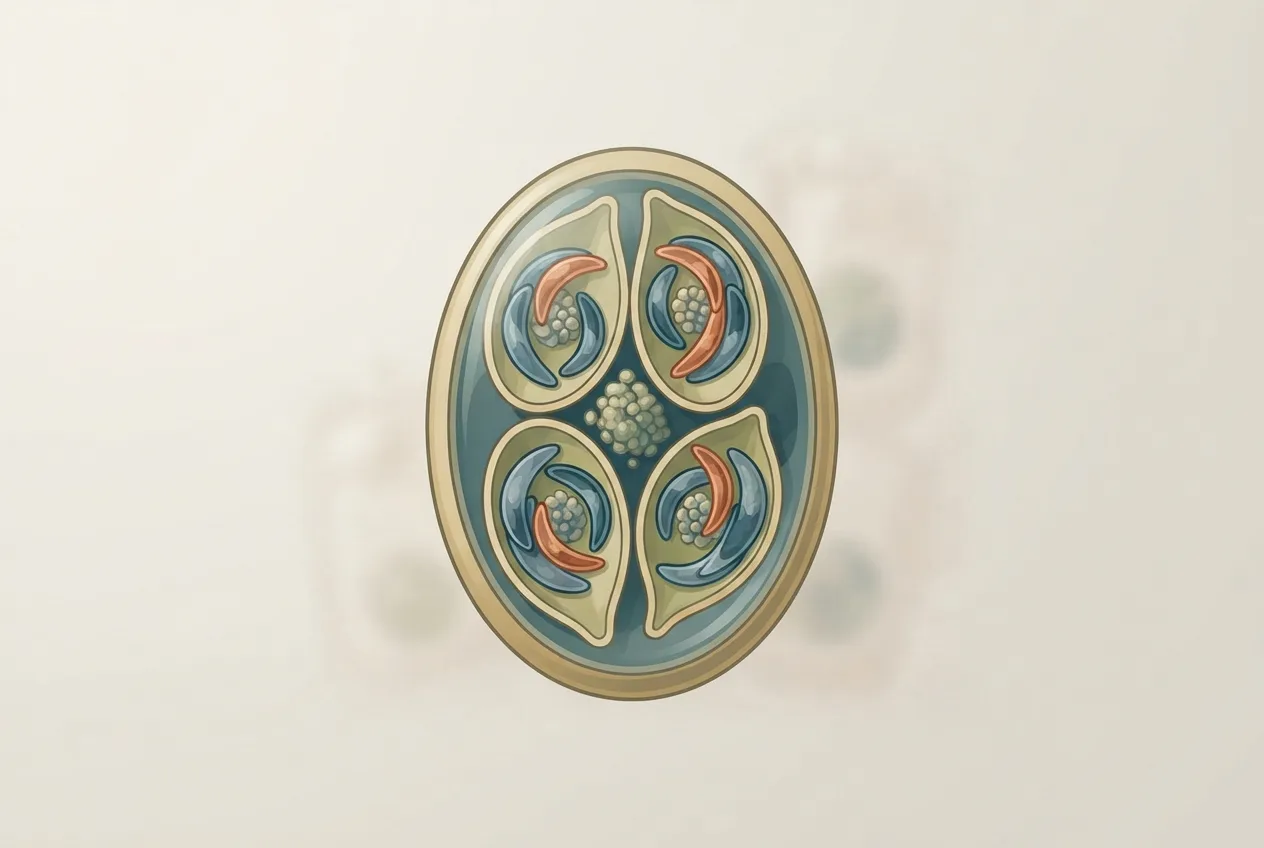
Eimeria tenella belongs to the phylum Apicomplexa, family Eimeriidae [<a href="#ref-9">9</a>]. The genus Eimeria comprises numerous species that infect the intestinal tract of birds and mammals, each with strict host and site specificity [<a href="#ref-10">10</a>]. In chickens, seven species are recognized, with E. tenella being the most pathogenic due to its predilection for the ceca [<a href="#ref-11">11</a>]. The parasite exists in several morphological stages: unsporulated oocysts (approximately 20-25 µm in diameter), sporulated oocysts containing four sporocysts each with two sporozoites, and intracellular stages including trophozoites, schizonts, merozoites, and gametocytes [<a href="#ref-12">12</a>, <a href="#ref-13">13</a>]. The oocyst wall is composed of a complex protein-lipid matrix that confers environmental resistance [<a href="#ref-14">14</a>]. The spatial proteome of E. tenella has been characterized at high resolution, revealing proteins localized to key invasion organelles such as micronemes, rhoptries, and dense granules [<a href="#ref-12">12</a>].
Life Cycle
The life cycle of E. tenella is monoxenous and comprises both exogenous (environmental) and endogenous (within the host) phases [<a href="#ref-15">15</a>]. The following Mermaid diagram summarizes the major stages:
graph TD
 A["Unsporulated oocyst excreted in feces"] --> B["Sporulation in environment (oxygen, moisture, temperature)"]
 B --> C["Sporulated oocyst (infective)"]
 C --> D["Ingestion by chicken"]
 D --> E["Excystation in gizzard/small intestine"]
 E --> F["Sporozoites invade cecal epithelial cells"]
 F --> G["First-generation schizogony (schizonts)"]
 G --> H["First-generation merozoites released"]
 H --> I["Second-generation schizogony"]
 I --> J["Second-generation merozoites released"]
 J --> K["Gametogony: macrogametes and microgametes"]
 K --> L["Fertilization: zygote formation"]
 L --> M["Oocyst wall formation"]
 M --> N["Unsporulated oocyst excreted in feces"]
 N --> A
The prepatent period is approximately 7 days [<a href="#ref-16">16</a>]. Sporulation requires adequate oxygen, moisture, and temperatures between 20-30°C, and can be completed within 24-48 hours under optimal conditions [<a href="#ref-17">17</a>]. Each sporulated oocyst contains four sporocysts, each with two sporozoites, resulting in eight infective sporozoites per oocyst [<a href="#ref-18">18</a>]. After ingestion, sporozoites are released by mechanical and enzymatic disruption of the oocyst and sporocyst walls in the gizzard and small intestine [<a href="#ref-19">19</a>]. Sporozoites invade cecal epithelial cells and undergo two to three generations of asexual replication (schizogony), with second-generation schizonts being the most numerous and pathogenic [<a href="#ref-20">20</a>]. The transition to sexual stages (gametogony) occurs after the final merozoite invasion, leading to the formation of macrogametes and microgametes [<a href="#ref-21">21</a>]. Fertilization produces a zygote that develops into an unsporulated oocyst, which is shed in the feces [<a href="#ref-22">22</a>].
Pathogenesis and Clinical Signs
The pathogenic effects of E. tenella are primarily due to the destruction of cecal epithelial cells during schizogony, particularly the second-generation schizonts, which can cause extensive hemorrhage and tissue necrosis [<a href="#ref-23">23</a>, <a href="#ref-24">24</a>]. The rupture of schizonts releases merozoites and cellular debris, triggering an intense inflammatory response [<a href="#ref-25">25</a>]. Macrophage-mediated inflammatory responses impair mucosal barrier components and promote goblet cell loss during infection [<a href="#ref-3">3</a>]. This disruption of the intestinal barrier leads to fluid and electrolyte loss, protein-losing enteropathy, and secondary bacterial translocation [<a href="#ref-26">26</a>]. Clinical signs include depression, anorexia, ruffled feathers, bloody diarrhea (often frank blood in the feces), and sudden death in severe cases. Subclinical infections result in reduced growth performance and feed efficiency, with significant economic losses. Lesion scoring at necropsy is a standard method for assessing disease severity, with cecal lesions graded from 0 (normal) to 4 (severe hemorrhage and cecal cores).
Host Immune Response
The host immune response to E. tenella involves both innate and adaptive components. Toll-like receptor (TLR)-mediated innate immune responses correlate with the pathogenicity of infection in specific-pathogen-free (SPF) chickens [<a href="#ref-7">7</a>]. TLR signaling activates downstream pathways including NF-κB, leading to the production of pro-inflammatory cytokines such as IL-1β, IL-6, and IL-8 [<a href="#ref-8">8</a>]. TRAF6, a target of gga-miR-7b, promotes E. tenella-induced inflammation and apoptosis by activating the NF-κB pathway [<a href="#ref-8">8</a>]. Breed-specific immune responses have been documented, with indigenous breeds in Bangladesh showing differential susceptibility and cytokine profiles compared to commercial broilers [<a href="#ref-6">6</a>]. The adaptive immune response is characterized by the production of parasite-specific antibodies and cell-mediated immunity, particularly CD4+ and CD8+ T cells. However, immunity is species-specific and incomplete, allowing reinfection with heterologous species. Autophagy is differentially induced by virulent and precocious strains, suggesting a role in host defense [<a href="#ref-26">26</a>].
Molecular Mechanisms of Invasion and Virulence
Invasion of host cells by E. tenella sporozoites and merozoites is a multi-step process mediated by proteins secreted from apical organelles [<a href="#ref-12">12</a>]. The microneme protein EtMIC2 binds to the host cell receptor ITGAV (integrin alpha V), promoting invasion and inhibiting host cell apoptosis [<a href="#ref-17">17</a>]. Phosphoglycerate mutase 1 (EtPGAM1) and glucose-6-phosphate isomerase (EtG6PI) are implicated in host cell invasion and maduramycin resistance [<a href="#ref-1">1</a>, <a href="#ref-20">20</a>]. Comparative transcriptomic and co-expression analyses of precocious and wild-type strains across developmental stages have identified key genes associated with virulence attenuation [<a href="#ref-5">5</a>]. Integrative comparative genomics and transcriptomics revealed that surface antigens SAG17 and SAG23 play key roles in early-stage virulence divergence [<a href="#ref-14">14</a>]. The comprehensive lysine ubiquitome profiling of E. tenella has uncovered diverse functions of ubiquitination in parasite biology, including invasion and stress responses. Death receptor signaling pathways, including FasL and TRAIL, influence host cell apoptosis during infection.
Anticoccidial Resistance
Anticoccidial resistance is a major challenge in the control of E. tenella. Resistance to ionophores (e.g., maduramycin) and chemical coccidiostats (e.g., diclazuril, toltrazuril) has been documented globally [<a href="#ref-1">1</a>, <a href="#ref-20">20</a>]. The molecular basis of resistance involves mutations in target enzymes and metabolic pathways. EtG6PI and EtPGAM1 are both implicated in maduramycin resistance, with altered enzyme activity reducing drug efficacy [<a href="#ref-1">1</a>, <a href="#ref-20">20</a>]. Resistance management strategies include rotation of drug classes, shuttle programs, and the use of vaccines. Environmental contamination with oocysts from resistant strains can be modeled to assess risk in broiler farms.
Diagnostic Approaches
Diagnosis of E. tenella infection relies on a combination of clinical observation, post-mortem lesion scoring, and laboratory methods. Microscopic examination of fecal samples using flotation techniques allows detection and quantification of oocysts, but species identification requires morphological expertise. Molecular diagnostics, including PCR and real-time PCR, provide species-specific detection and quantification [<a href="#ref-15">15</a>]. Cross-priming amplification (CPA) combined with lateral flow immunoassay biosensors enables rapid, genus-level detection and identification of the four most economically important Eimeria species, including E. tenella [<a href="#ref-15">15</a>]. A bioluminescence-based in vitro assay has been developed for rapid and quantitative anticoccidial screening, facilitating drug discovery [<a href="#ref-25">25</a>]. Histopathology and immunohistochemistry can confirm tissue stages and lesion severity.
Control and Prevention
Control of E. tenella involves an integrated approach combining chemotherapy, vaccination, biosecurity, and management practices.
Chemotherapy
Anticoccidial drugs are administered in feed or water, either prophylactically or therapeutically. Ionophores (monensin, salinomycin, maduramycin) and chemical coccidiostats (diclazuril, toltrazuril, amprolium) are commonly used [<a href="#ref-1">1</a>, <a href="#ref-20">20</a>]. However, resistance is widespread, necessitating careful stewardship. Phytobiotic alternatives are being investigated extensively. Cinnamon-Rumex nervosus phytobiotic mixtures improved growth performance and cecal health in challenged broilers [<a href="#ref-4">4</a>]. Dietary Artemisia annua leaf powder modulated intestinal response and cecal microbiota during peak infection [<a href="#ref-9">9</a>]. Dietary biotic supplementation (probiotics, prebiotics) enhanced anticoccidial efficacy and intestinal histomorphology [<a href="#ref-10">10</a>]. Phytochemical extracts from Capparis cartilaginea inhibited oocyst sporulation [<a href="#ref-11">11</a>]. Curcumin supplementation mitigated mixed Eimeria challenge effects on growth and intestinal barrier biology [<a href="#ref-13">13</a>]. Quercetin and thyme oil reduced oxidative stress and modulated IL-6, IL-2, and IL-16 mRNA expression [<a href="#ref-19">19</a>]. Gentiana scabra extract strengthened the intestinal barrier and regulated gut microbiota-metabolome [<a href="#ref-21">21</a>]. Eucalyptus oil microcapsules and mangosteen extract showed efficacy against infection [<a href="#ref-23">23</a>]. Phytogenic feed additives improved gut health and antioxidant capacity [<a href="#ref-24">24</a>]. Stemona tuberosa demonstrated anticoccidial activity in vivo and in vitro. Portulaca oleracea extract repaired cecal barrier damage. 5-Aminolevulinic acid supplementation suppressed body weight loss and reduced disease severity [<a href="#ref-16">16</a>]. Dietary iron overload exacerbated intestinal damage, indicating that mineral balance is critical.
Vaccination
Live vaccines using attenuated (precocious) or non-attenuated strains are widely used. Precocious strains have a shortened prepatent period and reduced pathogenicity while retaining immunogenicity [<a href="#ref-5">5</a>]. Recombinant subunit vaccines are under development; a tetravalent recombinant subunit vaccine provided protection against mixed challenges with four Eimeria species [<a href="#ref-18">18</a>]. An oral Eimeria-vectored vaccine has been developed to deliver protective antigens against chicken infectious anemia virus, demonstrating the potential of Eimeria as a vaccine vector. CRISPR/Cas9 technology has been used to generate knock-in markers in E. tenella, enabling functional gene studies and potential vaccine development [<a href="#ref-22">22</a>]. Validation of random transgene integration and expression in Eimeria parasites has been established [<a href="#ref-2">2</a>].
Biosecurity and Management
Strict biosecurity measures, including all-in/all-out production, cleaning and disinfection of houses, and litter management, reduce environmental oocyst loads. In vitro fermentation models have been used to assess probiotics on Eimeria-disturbed cecal microbiome and metabolome, guiding probiotic selection. Risk modeling based on environmental contamination can inform targeted interventions.
Future Directions
Emerging research focuses on understanding the molecular basis of host-parasite interactions, drug resistance mechanisms, and the development of novel control tools. The spatial proteome of invasion organelles provides a high-resolution target map for drug and vaccine design [<a href="#ref-12">12</a>]. Ubiquitome profiling reveals post-translational regulation critical for parasite survival. Autophagy modulation by virulent versus precocious strains offers insights into host defense [<a href="#ref-26">26</a>]. Continued integration of genomics, transcriptomics, and proteomics will accelerate the identification of vaccine candidates and drug targets.
Frequently Asked Questions
What is the prepatent period of Eimeria tenella?
The prepatent period of Eimeria tenella is approximately 7 days, from ingestion of sporulated oocysts to excretion of new oocysts in the feces [<a href="#ref-16">16</a>].
How is Eimeria tenella transmitted among chickens?
Transmission occurs via the fecal-oral route through ingestion of sporulated oocysts from contaminated litter, feed, water, or fomites [<a href="#ref-15">15</a>].
What are the characteristic clinical signs of cecal coccidiosis?
Clinical signs include depression, anorexia, ruffled feathers, bloody diarrhea, and sudden death, with cecal lesions ranging from petechiae to severe hemorrhage and cecal cores at necropsy [<a href="#ref-23">23</a>, <a href="#ref-24">24</a>, <a href="#ref-27">27</a>].
Which diagnostic methods are most reliable for species identification?
Molecular methods such as species-specific PCR and cross-priming amplification combined with lateral flow biosensors provide reliable species identification, while microscopic oocyst morphology remains a standard but less specific technique [<a href="#ref-15">15</a>].
What mechanisms underlie anticoccidial resistance in Eimeria tenella?
Resistance involves mutations in metabolic enzymes such as EtG6PI and EtPGAM1, which reduce drug binding or alter enzyme activity, particularly against ionophores like maduramycin [<a href="#ref-1">1</a>, <a href="#ref-20">20</a>].
Are there effective non-drug control alternatives?
Yes, phytobiotic feed additives (e.g., cinnamon, Artemisia annua, curcumin, quercetin, Gentiana scabra, Portulaca oleracea), probiotics, and vaccination with live attenuated or recombinant subunit vaccines are effective alternatives [<a href="#ref-4">4</a>, <a href="#ref-9">9</a>, <a href="#ref-10">10</a>, <a href="#ref-13">13</a>, <a href="#ref-18">18</a>, <a href="#ref-19">19</a>, <a href="#ref-21">21</a>, <a href="#ref-23">23</a>, <a href="#ref-24">24</a>, <a href="#ref-27">27</a>].
Can Eimeria tenella be used as a vaccine vector?
Yes, Eimeria tenella has been engineered as an oral vaccine vector to deliver protective antigens against other pathogens, such as chicken infectious anemia virus.
How does host breed influence susceptibility to Eimeria tenella?
Breed-specific immune responses have been observed, with indigenous breeds showing different cytokine profiles and disease outcomes compared to commercial broilers [<a href="#ref-6">6</a>].
What role does the gut microbiota play in Eimeria tenella infection?
The gut microbiota is disrupted during infection, and interventions such as probiotics and phytobiotics can modulate the microbiota-metabolome to enhance resistance and reduce pathology [<a href="#ref-9">9</a>, <a href="#ref-21">21</a>].
Is there a risk of Eimeria tenella infection in humans?
No, Eimeria tenella is highly host-specific to chickens and does not infect humans; it is not a zoonotic pathogen [<a href="#ref-10">10</a>].
Related Clinical & Scientific Guides
- Tick-Borne Diseases in Dogs: Pathogens, Clinical Signs, Diagnosis, and Prevention
- Toxoplasmosis in Cats and the Risk of Brain Infection in Humans
- Dog Heartworm and Tick-Borne Disease Prevention
- Eimeria tenella in Chickens: Cecal Coccidiosis and Anticoccidial Resistance Management
- Coccidiosis in Poultry: Etiology, Clinical Signs, and Therapeutic Management