Law of Independent Assortment: Definition and Examples
By Dr. Zubair Khalid, DVM, MS, PhD ·
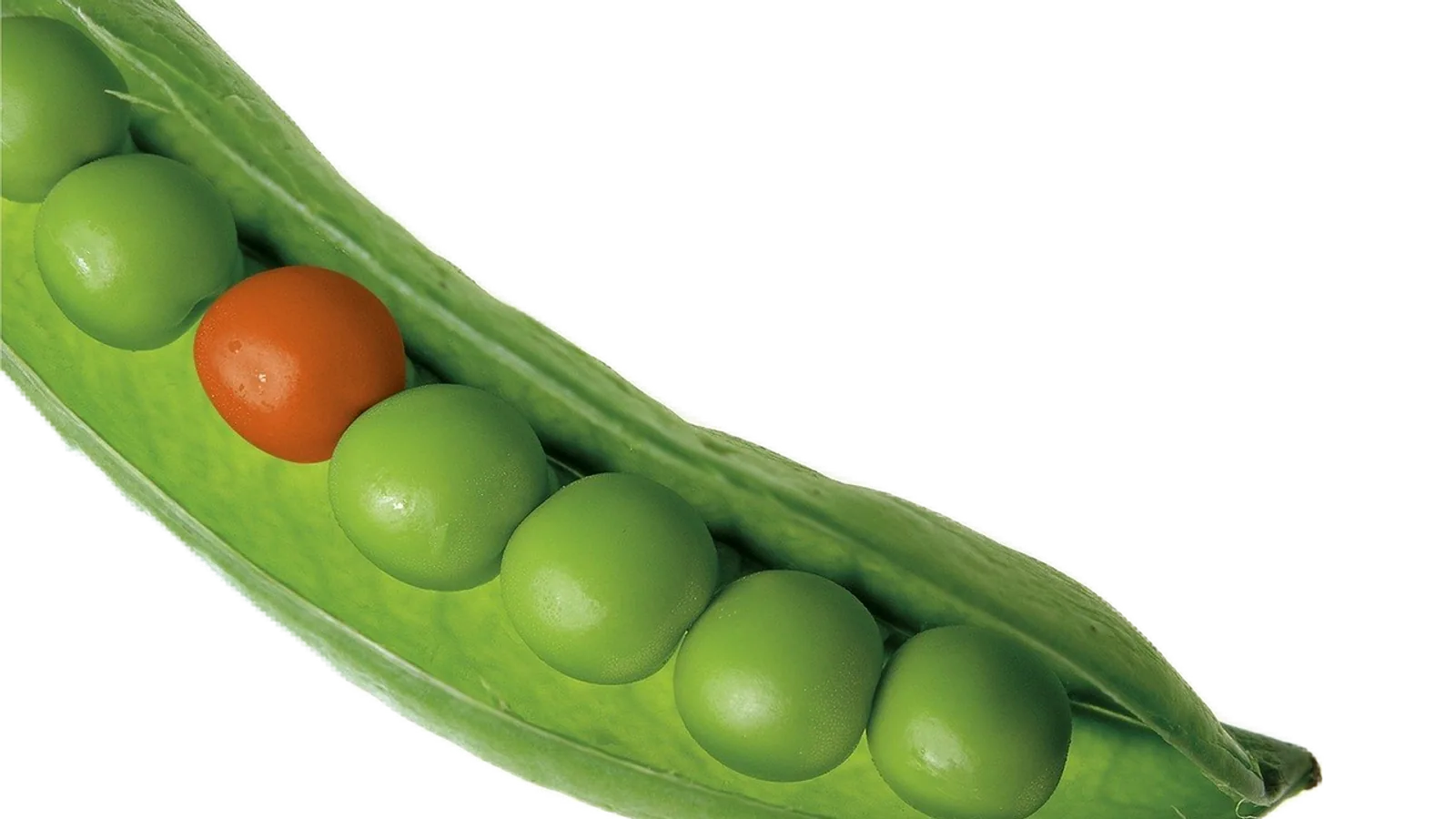
The law of independent assortment states that the alleles of two or more genes located on different chromosomes (or far apart on the same chromosome) are distributed to gametes independently of one another. In practice this means that which allele of gene A a gamete receives tells you nothing about which allele of gene B it receives.
This principle is the second of Gregor Mendel's two laws, and it is the reason a dihybrid cross between two RrYy parents yields the familiar 9:3:3:1 phenotypic ratio. Understanding it separates students who can predict cross outcomes from students who memorize ratios without knowing where they come from. It also explains why linkage, the physical co-inheritance of nearby genes, is the exception rather than the rule.
The Law of Independent Assortment Definition in Biology
The law of independent assortment definition in biology is precise: during gamete formation, the segregation of alleles for one gene is independent of the segregation of alleles for another gene when those genes are unlinked. Mendel established this principle alongside the law of segregation after studying seven traits in pea (Pisum sativum) [1].
Two conditions satisfy the law:
- The two genes sit on different chromosomes, so their homologs orient independently at metaphase I.
- The two genes sit far apart on the same chromosome, so crossing over between them is frequent enough that they behave as if unlinked.
The law does not apply to genes that are close together on the same chromosome. Those genes are linked and tend to travel into the same gamete together.
Why the Law Matters
Independent assortment is a major source of genetic variation. If alleles always traveled in fixed combinations, a population could only reshuffle the variation it already had in linked blocks. Independent assortment of homologous chromosomes is one of two mechanisms that shuffle alleles during gamete production, the other being crossing over [2]. Together they generate the combinatorial diversity that selection acts on.
The principle is also foundational for teaching. Genetics instructors use hands-on chromosome models and interactive programs so students can physically manipulate homologs through each stage of meiosis and see segregation and independent assortment happen [3]. Students who never connect the law to the meiotic events behind it often struggle in later genetics coursework [3].
The Chromosomal Basis: Random Orientation at Metaphase I
Independent assortment arises from the random orientation of homologous pairs at metaphase I of meiosis. This is the single most important mechanistic point in the topic.
During metaphase I, each pair of homologous chromosomes (a bivalent) lines up at the metaphase plate. The two homologs face opposite poles. For any one pair, which homolog faces which pole is random. For two pairs, the orientation of pair 1 is independent of the orientation of pair 2.
Consider a cell that is heterozygous at two genes, RrYy, with the R and Y genes on different chromosomes. At metaphase I there are two equally likely arrangements:
- Arrangement A: the R-bearing homolog and the Y-bearing homolog face the same pole. The resulting gametes carry RY and ry.
- Arrangement B: the R-bearing homolog and the y-bearing homolog face the same pole. The resulting gametes carry Ry and rY.
Both arrangements occur with equal probability across a population of meioses. Over many meioses, the four gamete types (RY, Ry, rY, ry) appear in roughly equal numbers. That 1:1:1:1 gamete ratio is the direct signature of independent assortment, and it is what produces the 9:3:3:1 phenotype ratio in a dihybrid cross.
Meiosis is the cellular process that makes this possible. It reduces a diploid cell to haploid gametes, and the reductional division (meiosis I) is where homologs separate [4]. The randomness is built into the geometry of the spindle: nothing in the cell pairs the orientation of one bivalent with the orientation of another.
Evidence That the Law Holds
The law is not just a textbook claim. In Trypanosoma brucei, researchers generated large numbers of progeny clones from controlled crosses, typed microsatellite and minisatellite markers on all 11 housekeeping chromosomes, and showed that alleles at loci on different chromosomes segregate independently [5]. That work provided statistically robust proof that the organism's genetic system is Mendelian and involves meiosis [5].
In the dinoflagellate Crypthecodinium cohnii, genetic analysis of 16 nonallelic motility mutants showed regular segregation and independent assortment, with only a few cross-specific exceptions [6]. Independent assortment has been documented across a wide range of eukaryotes, which is why it is treated as a general rule rather than a special case.
Worked Example: A Dihybrid Cross (RrYy × RrYy)
The classic law of independent assortment example is the dihybrid cross. This is the law of independent assortment with example numbers that students should be able to reproduce from scratch.
Setting Up the Cross
Two parent plants are heterozygous at two unlinked genes:
- R = round seed, r = wrinkled seed
- Y = yellow cotyledon, y = green cotyledon
Each parent is RrYy. Because the genes are on different chromosomes, each parent produces four gamete types in equal proportion: RY, Ry, rY, and ry. Each gamete carries one allele of each gene.
Building the Punnett Square
A 4 × 4 Punnett square gives 16 equally likely fertilization events:
| RY | Ry | rY | ry | |
|---|---|---|---|---|
| RY | RRYY | RRYy | RrYY | RrYy |
| Ry | RRYy | RRyy | RrYy | Rryy |
| rY | RrYY | RrYy | rrYY | rrYy |
| ry | RrYy | Rryy | rrYy | rryy |
Counting Phenotypes
Group the 16 boxes by visible trait:
- Round, yellow (R_ Y_): 9 boxes
- Round, green (R_ yy): 3 boxes
- Wrinkled, yellow (rr Y_): 3 boxes
- Wrinkled, green (rr yy): 1 box
That is the 9:3:3:1 phenotypic ratio. It appears only when the two genes assort independently. If the genes were linked, the two parental combinations (round-yellow and wrinkled-green) would be overrepresented and the recombinant classes (round-green and wrinkled-yellow) would be underrepresented.
Reading the Ratio as a Product of Two Monohybrid Crosses
A useful check: each gene alone gives a 3:1 ratio. Multiply the two ratios:
(3 round : 1 wrinkled) × (3 yellow : 1 green) = 9 round-yellow : 3 round-green : 3 wrinkled-yellow : 1 wrinkled-green
The multiplication works precisely because the two genes assort independently. If they did not, you could not treat them as separate probability events.
Independent Assortment vs Segregation vs Linkage
Students frequently confuse the two Mendelian laws and the exception that breaks one of them. The table below separates them by what physically separates and by the chromosomal basis.
| Law or phenomenon | What separates | Chromosomal basis |
|---|---|---|
| Law of segregation | The two alleles of a single gene | Homologous chromosomes separate at anaphase I. Sister chromatids separate at anaphase II. |
| Law of independent assortment | Alleles of two or more different genes | Homologous pairs orient randomly at metaphase I. Applies to genes on different chromosomes or far apart on the same chromosome. |
| Linkage (violates independent assortment) | Nothing new separates. Linked alleles tend to stay together | Two genes are close together on the same chromosome, so crossing over between them is rare. Parental gametes outnumber recombinant gametes. |
Segregation in One Sentence
The law of segregation says that the two alleles of a single gene separate from each other during gamete formation, so each gamete receives only one allele. It concerns one gene. Independent assortment concerns two or more genes and describes how their alleles combine.
Linkage as the Exception
Linked genes violate the law of independent assortment. When two genes sit close together on the same chromosome, they are inherited as a unit more often than not. The result is fewer recombinant gametes than the 1:1:1:1 ratio predicts. The closer the genes, the stronger the linkage and the lower the recombination frequency.
Recombination frequency is the practical measure of this. A recombination frequency near 50 percent means the genes behave as if unlinked, which is what you expect for genes on different chromosomes or far apart on the same chromosome. A recombination frequency well below 50 percent signals linkage.
How the Law Is Tested and Observed in Practice
Several standard approaches let you observe independent assortment directly.
Testcrosses
Cross a dihybrid (RrYy) to a fully recessive tester (rryy). The tester contributes only recessive alleles, so the phenotype of each offspring reveals the genotype of the gamete it received from the dihybrid parent. Independent assortment predicts four phenotypic classes in a 1:1:1:1 ratio. Linkage distorts that ratio.
Tetrad and Progeny Analysis
In organisms that package meiotic products together, such as fungi and some protists, you can score all four products of a single meiosis. In Crypthecodinium cohnii, tetrad analysis of over 200 complementing zygotes showed regular segregation and independent assortment with one possible exception [6]. In Trypanosoma brucei, large progeny panels typed at markers across all 11 chromosomes confirmed independent segregation of loci on different chromosomes [5].
Model-Based Teaching Labs
Because meiosis is hard to visualize from static figures, interactive programs let students manually manipulate chromosome models and step through each stage of meiosis until segregation and independent assortment become concrete [3]. Yeast (Saccharomyces cerevisiae) is another practical teaching system: a simple dihybrid cross in yeast demonstrates independent assortment, and pigmented adenine auxotrophs let students connect genotype to a visible phenotype [7].
Genome-Scale Shuffling Measures
At the research level, independent assortment contributes to a measurable quantity: the probability that alleles at two randomly chosen loci are shuffled during gamete production. This measure decomposes into contributions from crossover number and position and from independent assortment, and it is larger when crossovers are more evenly spaced [2].
When the Law Breaks Down
Independent assortment is a strong default, not an absolute law of nature. Several situations produce exceptions.
Physical Linkage
Genes close together on the same chromosome are the most common exception. They produce fewer recombinant gametes than independent assortment predicts.
Chromosome Size Effects
Variation in chromosome size can affect meiosis and lead to nonindependent assortment. In Caenorhabditis elegans males, chromosomes carrying insertions preferentially segregated away from the X chromosome, while chromosomes carrying deletions preferentially segregated with the X chromosome, and the degree of bias tracked the length of the insertion or deletion [8]. This "skew" is present in all eight Caenorhabditis species examined and is likely the ancestral state in the genus [9].
Centromere-Associated Effects in Humans
A genome-scale analysis of roughly 100 trillion linkage disequilibrium coefficients among the 22 non-homologous human chromosomes found 1,195 locus pairs with high linkage disequilibrium (r² ≥ 0.8), clustered near centromere regions [10]. This indicates that human non-homologous chromosomes do not assort fully independently in the centromere region, possibly reflecting inter-centromeric haplotypes [10]. The effect is localized, not genome-wide, but it shows that even the canonical human case has measurable exceptions.
Unusual Meiotic Systems
Some organisms have meiosis that departs from the standard two-division pattern. In Crypthecodinium cohnii, genetic evidence points to a one-division meiotic process, which changes how segregation and assortment appear in tetrad analysis [6]. These systems are the exception, and they are studied precisely because they deviate from the Mendelian norm.
Common Mistakes and Limitations
Confusing the two laws. Segregation is about one gene and the separation of its two alleles. Independent assortment is about two or more genes and how their alleles combine. Mixing them up is the single most common error in introductory genetics.
Assuming the law applies to all gene pairs. It applies only to genes on different chromosomes or far apart on the same chromosome. Linked genes violate it.
Treating 9:3:3:1 as universal. That ratio requires two unlinked, independently assorting genes with complete dominance at both loci. Deviations signal linkage, epistasis, or another interaction.
Forgetting that ratios are statistical. A 9:3:3:1 ratio describes expected proportions over many offspring. Small families deviate by chance, and a small sample does not disprove the law.
Ignoring that assortment is random, not directed. The cell does not "choose" which homolog goes to which pole. Orientation is random, and the 1:1:1:1 gamete ratio emerges from that randomness across many meioses.
Overlooking documented exceptions. Chromosome size bias in Caenorhabditis [9][8] and centromere-proximal linkage disequilibrium in humans [10] show that independent assortment is a strong tendency with measurable exceptions, not an ironclad rule.
Quick Review
- The law of independent assortment: alleles of genes on different chromosomes are distributed to gametes independently.
- It arises from random orientation of homologous pairs at metaphase I.
- It applies to genes on different chromosomes or far apart on the same chromosome.
- A dihybrid cross RrYy × RrYy gives a 9:3:3:1 phenotypic ratio when the genes assort independently.
- Segregation is about one gene. Independent assortment is about two or more genes.
- Linked genes violate the law and produce fewer recombinant gametes.
- Documented exceptions exist, including chromosome size bias in Caenorhabditis and centromere-proximal effects in humans.
Frequently Asked Questions
What is the law of independent assortment in simple terms?
It states that the alleles of two different genes are distributed to gametes independently of each other when the genes are on different chromosomes or far apart on the same chromosome. Which allele of one gene a gamete gets does not predict which allele of the other gene it gets.
What is an example of the law of independent assortment?
A dihybrid cross between two RrYy pea plants is the classic example. Each parent makes four gamete types (RY, Ry, rY, ry) in equal proportion, and the offspring show a 9:3:3:1 ratio of round-yellow to round-green to wrinkled-yellow to wrinkled-green.
How is independent assortment different from segregation?
Segregation describes how the two alleles of a single gene separate during gamete formation. Independent assortment describes how alleles of two or more different genes combine, which depends on how homologous pairs orient at metaphase I.
Do linked genes follow the law of independent assortment?
No. Linked genes sit close together on the same chromosome and tend to be inherited together, so they produce fewer recombinant gametes than independent assortment predicts. The closer the genes, the stronger the linkage.
Why does independent assortment produce a 9:3:3:1 ratio?
Because each gene alone gives a 3:1 phenotypic ratio, and independent assortment lets you multiply the two ratios. Three times three gives 9, three times one gives 3, one times three gives 3, and one times one gives 1.
Does independent assortment always hold in real organisms?
It holds as a strong default but has documented exceptions. Chromosome size differences can bias segregation in Caenorhabditis males, and a genome-scale human study found centromere-proximal locus pairs with high linkage disequilibrium across non-homologous chromosomes.
Related Articles
- Independent, Dependent, and Controlled Variables: A Guide for Experiment Design
- Paired vs. Independent t-Tests: Choosing the Right Test for Your Data
- Veterinary Law: Legal Issues in Animal Health Practice
- Emotional Support Animals vs. Service Dogs: What the Law Actually Says
- Rabies Vaccine Law for Pets: State Requirements and Adverse Reactions
- Individual development plan graduate school science
- Pronation vs Supination: Definitions and Examples
- Dehydration Synthesis: Definition and Examples
- Mean Square Displacement: Formula and Examples
Sources
- [[Research progress on the cloning of Mendel's gene in pea (Pisum sativum L.) and its application in genetics teaching].](https://pubmed.ncbi.nlm.nih.gov/23853365/)
- A rigorous measure of genome-wide genetic shuffling that takes into account crossover positions and Mendel's second law.
- Interactive computer program for learning genetic principles of segregation and independent assortment through meiosis.
- Genetics, Meiosis.
- Allelic segregation and independent assortment in T. brucei crosses: proof that the genetic system is Mendelian and involves meiosis.
- Genetic Evidence of Unusual Meiosis in the Dinoflagellate CRYPTHECODINIUM COHNII.
- Using yeast genetics to generate a research environment.
- Chromosome size differences may affect meiosis and genome size.
- Non-Mendelian assortment of homologous autosomes of different sizes in males is the ancestral state in the Caenorhabditis lineage.
- GPU-accelerated linkage disequilibrium scans reveal non-independent assortment of human non-homologous chromosomes.