Founder Effect: Definition and Examples
By Dr. Zubair Khalid, DVM, MS, PhD ·
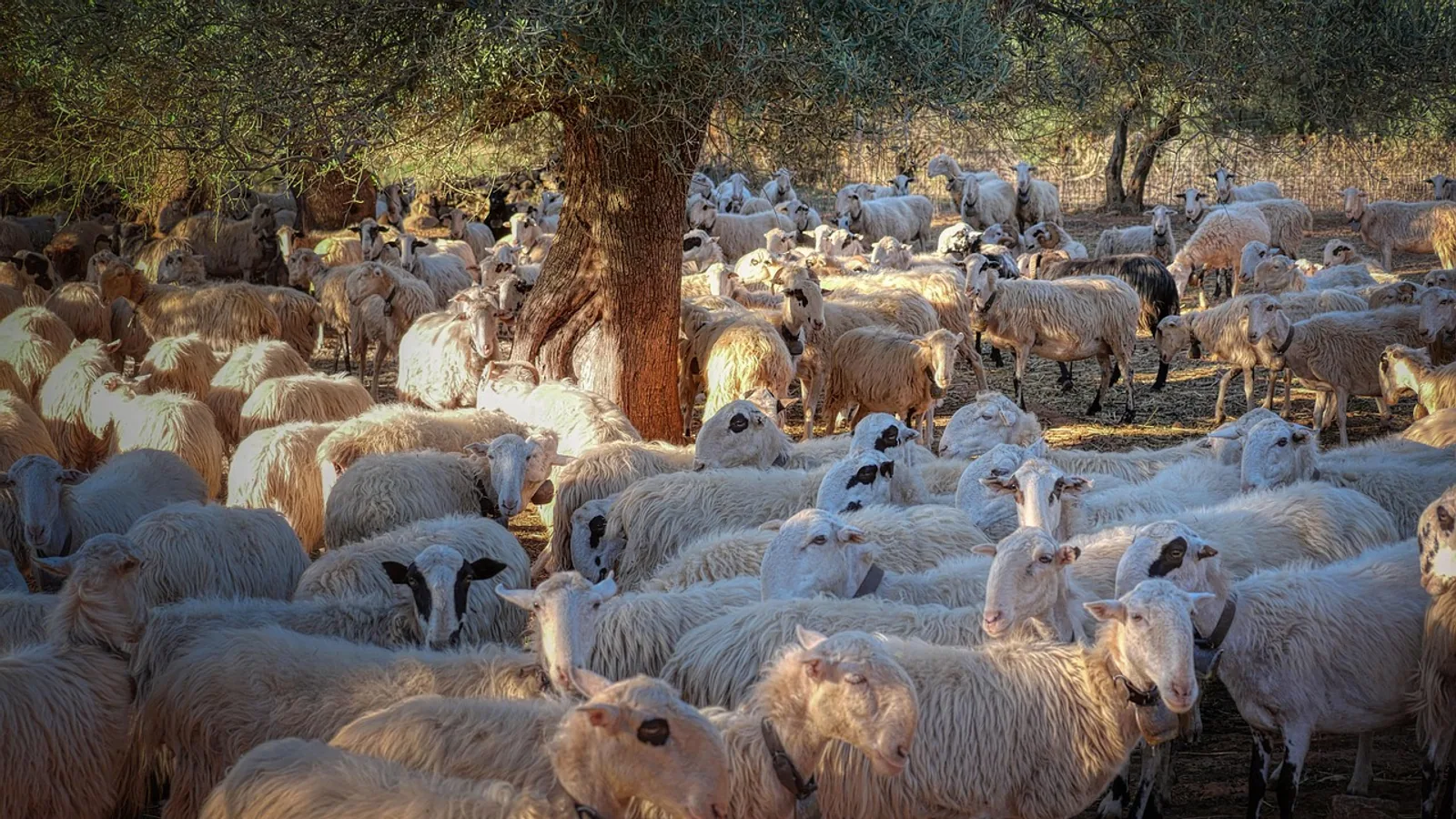
The founder effect is the reduction in genetic variation that occurs when a small number of individuals from a larger population establish a new population, so that the new gene pool reflects only the alleles carried by those founders. Because the founding group is small, alleles that were rare in the source population can become common, and alleles that were common can be lost entirely, purely by chance.
This matters because the founder effect is one of the clearest demonstrations that evolution is not always adaptive. A trait can spread through a population or a breed not because it helps survival but because the right individuals happened to be the ones that arrived, bred, and left descendants. Clinicians meet the founder effect as clusters of recessive disease. Breeders and conservationists meet it as reduced genetic diversity and rising inbreeding. Students meet it as a standard exam topic that is routinely confused with the bottleneck.
What the Founder Effect Actually Is
A founder event has three components. First, a source population exists with some standing level of genetic variation. Second, a small propagule (a founding group, whether seeds, eggs, a pregnant female, a breeding pair, or a handful of imported animals) leaves or is moved to a new area. Third, that propagule reproduces in isolation from the source, so the new population's allele frequencies are set by the founders alone.
The key word is subset. The founders are a sample of the source population, and small samples are poor representatives of the whole. If you draw two marbles from a jar that is 95 percent red and 5 percent blue, you will often draw two red marbles and lose the blue allele completely. Draw two hundred marbles and the sample proportion will sit close to the true proportion. Genetic drift is exactly this sampling process, and its strength scales inversely with population size. A founder event is therefore a single, sharp episode of drift compressed into one or a few generations.
The National Human Genome Research Institute defines the founder effect as "the reduction in genomic variability that occurs when a small group of individuals becomes separated from a larger population" [1]. That definition captures the two halves of the phenomenon: a demographic event (separation and small numbers) and a genetic consequence (reduced variability and shifted allele frequencies).
Founder Effect Versus Bottleneck
These two terms are the most common source of confusion in this topic, so it is worth separating them cleanly.
A bottleneck is a sudden reduction in the size of an existing population. The population does not move. It is reduced in place by a catastrophe, a disease outbreak, a harsh season, overhunting, or a change in land use. Survivors are a random sample of the pre-crash population, and the population's allele frequencies shift because of who survived.
A founder effect is a reduction in variation caused by a small group leaving to colonize a new area. The source population may be large and unaffected. The new population starts small and grows from that small seed.
Both are forms of genetic drift, and both leave the same general signature: lower heterozygosity, fewer alleles, and elevated homozygosity relative to the source. The practical difference is where the small numbers come from. A bottleneck starts with a large population that crashes. A founder effect starts with a small propagule that grows.
| Feature | Founder effect | Bottleneck |
|---|---|---|
| Cause | Small propagule colonizes a new area | Sudden reduction of an existing population |
| Timing | At the moment of colonization, then growth | At the moment of the crash, then recovery |
| Source population | Often large and unchanged | The same population, reduced in place |
| Initial size | Small by definition (a few founders) | Large before, small after |
| Allele frequency outcome | Frequencies set by the founders' sample | Frequencies set by the survivors' sample |
| Geographic signal | New population is geographically separate | Population stays in place |
| Typical examples | Island colonization, imported livestock, breed formation | Epidemic, habitat loss, overharvest |
The two can occur together. A species that is reduced to a few individuals by a catastrophe and then spreads from that remnant has experienced a bottleneck followed by founder events. The Scottish Traveller population shows signals of both bottlenecks and founder variants in the same dataset, with at least five putative founder variants associated with recessive Mendelian disorders detected alongside autosomal and mitochondrial bottleneck signals [2].
How the Founder Effect Shifts Allele Frequencies: A Worked Example
The arithmetic of a founder event is simple, and it is the fastest way to see why founder populations carry unusual disease burdens.
Suppose a large source herd has a recessive disease allele at frequency q = 0.05, meaning 5 percent of alleles at that locus are the disease version and 95 percent are normal. Under Hardy-Weinberg equilibrium, the carrier frequency (heterozygotes, 2pq) is about 2 × 0.95 × 0.05 = 0.095, or roughly 1 in 10.5 animals. Affected homozygotes (q²) are 0.0025, or 1 in 400.
Now imagine two animals from this herd are moved to a new farm and become the founding pair. Each founder carries two alleles, so the new population starts with four alleles drawn at random from the source. The probability that a given allele is the disease version is 0.05. The chance that neither founder carries the allele at all is 0.95⁴, about 0.815. So in roughly 81 percent of such founding pairs, the disease allele is lost immediately.
That leaves about 19 percent of founding pairs that carry at least one copy. In those pairs, the allele frequency in the new population is no longer 0.05. If exactly one of the four founder alleles is the disease version, q in the new population is 0.25, five times the source frequency. If two of the four are the disease version, q is 0.50.
Take the case where the founding pair happens to consist of two carriers, so all four founder alleles include two disease copies and q = 0.50 in the new population. If the population grows by random mating, the expected frequency of affected homozygotes in the next generation is q² = 0.25, or 1 in 4. Compare that with 1 in 400 in the source herd. The allele did not become more harmful. The population simply started from a sample in which it was common.
This is the mechanism behind founder disease clusters. A variant that is rare in a species can be at high frequency in a breed, an island, or an isolated community because a carrier happened to be among the founders.
Founder Populations in Practice
Breeds and domestic animals
Purebred dogs, cats, horses, and livestock are founder populations by design. A breed is created from a limited number of registered founders, then closed to outside genetics. The Finnish Spitz, a breed about 130 years old, has been analyzed with pedigree and genome-wide SNP data and shows 20 effective founders and mean heterozygosity of 0.313, with repeated male bottlenecks driving diversity loss [3]. The Nordic Spitz, a younger breed with a smaller total population, has 27 effective founders but a smaller effective population size, showing that founder number and current population size are separate variables [3].
Closed flocks accumulate inbreeding over time. In a closed Marwari sheep flock studied across four decades, the mean inbreeding coefficient was 1.55 percent, 67.18 percent of animals were inbred, and only 36 percent of the original ancestral genetic diversity was retained in the reference population [4]. Those numbers are the long-run cost of a narrow founder base.
Islands and isolated communities
Island and isolate populations are natural founder experiments. The Saguenay-Lac-Saint-Jean region of Quebec, a recent founder population, shows fine-scale genetic structure at the municipal level, with an east-west genetic gradient shaped by which founders contributed to which parishes [5]. The Scottish Traveller population is genetically distinct from neighboring groups, shows high autozygosity, and carries an enrichment of rare pathogenic variants including founder variants for recessive disorders [2]. In an isolated Canadian population, three apparently unrelated cases of lethal congenital contracture syndrome type 3 shared a novel PIP5K1C variant, suggesting a founder effect for an ultra-rare condition [6].
Pathogens and parasites
Founder effects are not limited to animals. When a parasite or pathogen colonizes a new host population, the founding inoculum is often tiny. Trematode parasites introduced to the west coast of North America showed significantly lower genetic diversity than native east coast populations, while their snail host showed little to no founder signature [7]. The fungal parasitoid Hirsutella minnesotensis in China is a clonal lineage that underwent a founder event and then generated diversity in parasitism ability through individual variation and phenotypic plasticity rather than local adaptation [8]. In HIV-1, transmission typically passes a single variant to the new host, producing a homogeneous viral population even when the donor carries a diverse quasispecies [9].
Invasive species
Invasive populations often show the founder signature, but not always. Aedes aegypti mosquitoes in Florida, present since the 1600s and 1700s, show far higher genetic diversity and lower genetic structure than southern California populations derived from invasions within the last 10 years [10]. The pattern is the expected one: older populations have had time to recover diversity and accumulate new mutations, while recent founders remain depauperate and highly differentiated. Some species escape the founder penalty through high propagule pressure or repeated introductions. The common reed warbler expanded its range northward with no measurable loss of nucleotide diversity or allelic richness, though private allelic richness declined slightly along the colonization route, a weak founder signature consistent with high dispersal capability [11].
Founder Variants and Recessive Disease
A founder variant is a specific allele that is common in a population because it was present in one or a few founders and has been inherited by many descendants. Founder variants are identified by two lines of evidence: the variant is enriched in the population relative to controls, and carriers share a long haplotype around the gene, which is the footprint of descent from a single ancestral chromosome.
Several examples illustrate the pattern. A recurrent C2 c.841_849+19del variant causing complement component 2 deficiency has an estimated carrier frequency of about 3 percent among Ashkenazi Jews and is rare or absent in neighboring populations, consistent with a founder effect [12]. An SLC19A2 c.1223+1G>A splice variant causing thiamine-responsive megaloblastic anemia is homozygous in eight patients of Ingush ethnicity, with a carrier frequency near 1 in 36 in a reference Ingush cohort and a shared 2.3 Mb haplotype on chromosome 1 [13]. A VRK1 nonsense variant, c.1124G>A (p.W375*), appeared in 4 of 8 families with axonal Charcot-Marie-Tooth and related disease in a Chinese cohort, with haplotype analysis supporting a founder effect [14]. A PCARE frameshift variant was homozygous in five Portuguese patients from four families, suggesting a regional founder effect [15]. A novel ASPA variant causing Canavan disease had a carrier frequency of 1 in 23 in a South Indian community, higher than reported in the Jewish population [16].
The clinical consequence is the same in every case. When a founder variant is at high frequency, the probability that two carriers mate rises, and the incidence of the recessive disease rises with it. This is why founder populations are targets for carrier screening. In a cohort enriched for consanguinity and founder effect, systematic search for homozygous loss-of-function variants across 2,904 genes with tentative gene-disease relationships identified 154 individuals carrying 119 homozygous loss-of-function variants that supported relationships for 95 genes, plus 13 founder missense variants supporting relationships for 13 genes [17]. Founder populations are efficient discovery engines precisely because recessive variants are unmasked at higher rates.
How the Founder Effect Is Detected
Detecting a founder event requires comparing the putative founder population with a reference. Standard approaches include:
- Heterozygosity and allelic richness. Founder populations show lower mean heterozygosity and fewer alleles per locus than source populations. The Finnish Spitz, for example, has mean heterozygosity of 0.313 [3].
- Effective population size. Pedigree-based effective size (Nec) and linkage-disequilibrium-based genetic effective size (Neg) both fall after a founder event. In the Finnish Spitz, Nec is 168 while Neg is only 57, and in the Nordic Spitz the values are 98 and 49 [3]. The gap between the two estimates signals recent contraction.
- Haplotype sharing. A founder variant sits on a long shared haplotype in unrelated carriers. This is the strongest single piece of evidence and was used to support founder effects for VRK1 [14], SLC19A2 [13], and C2 [12].
- Linkage disequilibrium decay. Founder populations show extended linkage disequilibrium because recombination has had fewer generations to break down ancestral haplotypes.
- Autozygosity and runs of homozygosity. Isolated populations show long runs of homozygosity. The Scottish Traveller dataset shows high autozygosity consistent with consanguinity and founder history [2].
- Site-frequency spectra and demographic modeling. Methods such as pairwise sequentially Markovian coalescent and approximate Bayesian computation infer past size changes. In barn swallows, these methods detected a bottleneck roughly 7,700 years ago near the time humans began building substantial structures [18].
Common Mistakes and Limitations
Confusing founder effect with bottleneck. The distinction is the direction of the small-numbers event. A bottleneck reduces an existing population in place. A founder effect seeds a new population from a small propagule. Both cause drift, but the demographic history is different and the geographic signature is different.
Assuming the founder effect always reduces diversity dramatically. It does not. High propagule pressure, multiple introductions, and rapid population growth can buffer the loss. The common reed warbler retained nucleotide diversity and allelic richness during a rapid range expansion [11], and the host snail Tritia obsoleta showed little to no founder signature on the west coast while its trematode parasites did [7]. The severity depends on founder number, generation time, and how quickly the population grows.
Treating founder number as equivalent to current population size. A breed can have many effective founders and still have a small effective population size, or few effective founders and a larger census size. The Finnish and Nordic Spitz comparison makes the point directly [3].
Assuming a common allele is adaptive. Founder variants reach high frequency by chance, not selection. The high frequency of a recessive disease allele in a founder population is a sampling artifact, not evidence that the allele confers an advantage.
Ignoring fine-scale structure within a founder population. The Saguenay-Lac-Saint-Jean analysis showed municipal-level genetic structure and an east-west gradient within a region long assumed to be homogeneous [5]. Treating a founder population as a single uniform gene pool can bias association studies and polygenic risk scores.
Overreading a single variant as proof of a founder effect. Enrichment in a population is suggestive, not conclusive. Haplotype sharing and a plausible demographic history are needed to support the claim, which is why several of the studies above describe their findings as a "potential" or "suggested" founder effect pending further work [15][6].
Individual animals and individual patients require case-specific evaluation by a veterinarian or clinician. Population-level patterns do not determine any single individual's genotype or risk.
Quick Review
- The founder effect is reduced genetic variation when a small subset colonizes a new area.
- A bottleneck is a sudden reduction of an existing population in place. Both cause drift, but the founder effect starts from a small propagule.
- Small samples poorly represent source allele frequencies. Rare alleles can be lost or become common by chance.
- A founding pair with a recessive allele at q = 0.05 has about an 81 percent chance of losing the allele and, if both are carriers, produces a new population with q = 0.50 and 1 in 4 affected offspring under random mating.
- Founder variants are confirmed by population enrichment plus shared haplotypes in unrelated carriers.
- Founder populations are efficient for recessive disease gene discovery because homozygotes appear at higher rates.
- High propagule pressure and repeated introductions can soften or erase the founder signature.
Frequently Asked Questions
What is the founder effect in simple terms?
The founder effect is the loss of genetic diversity that happens when a few individuals start a new population. The new population carries only the alleles those founders happened to have, so some alleles are missing and others are more common than in the source population.
What is the difference between a founder effect and a bottleneck?
A bottleneck is a sudden drop in the size of an existing population in place. A founder effect is a small group leaving to colonize a new area. Both reduce diversity through drift, but a bottleneck shrinks a population where it lives while a founder effect seeds a new one.
Why does the founder effect increase the risk of recessive disease?
If a founder carries a recessive disease allele, that allele can rise to high frequency in the new population. When two carriers mate, their offspring have a 1 in 4 chance of being affected. Rare alleles become common in founder populations by chance, not because they are harmful in themselves.
Can the founder effect happen in dogs and livestock?
Yes. Breeds are closed founder populations by design. The Finnish Spitz has 20 effective founders and mean heterozygosity of 0.313, and a closed Marwari sheep flock retained only 36 percent of its original ancestral diversity [3][4].
Does the founder effect always reduce genetic diversity?
No. High propagule pressure, multiple introductions, and rapid growth can preserve diversity. The common reed warbler expanded its range with no measurable loss of nucleotide diversity or allelic richness, only a slight decline in private allelic richness along the colonization route [11].
How do scientists prove a founder effect?
They combine population enrichment of a variant with haplotype analysis showing that unrelated carriers share a long chromosomal segment around the gene. Demographic modeling of past population size and linkage disequilibrium patterns provide supporting evidence.
Related Articles
- Frameshift Mutation: Mechanisms, Effects, and Examples
- Laminitis in Horses: Preventing Founder and Shoeing Adjustments
- Reporting Effect Sizes in Biological Papers: A Template with Examples
- Failure Mode and Effects Analysis (FMEA) for Diagnostic Assay Validation
- What Are the Side Effects of Gabapentin for Cats?
- What Are the Side Effects of Clavamox for Dogs?
- Anticholinergic Drugs: Effects and Examples
- Meclizine Side Effects and Uses in Pets
- Budesonide Side Effects in Dogs and Cats
Sources
- Founder Effect
- Genetic ancestry and monogenic disease risk in the Scottish Traveller founder population.
- Founder representation and effective population size in old versus young breeds-genetic diversity of Finnish and Nordic Spitz.
- Longitudinal study of inbreeding effect on growth traits of Marwari lambs.
- Fine-scale structure of a whole regional population through genetics and genealogies.
- Lethal Congenital Contracture Syndrome Type 3 in an Isolated Canadian Population.
- Founder effects and species introductions: A host versus parasite perspective.
- Genetic structure and parasitization-related ability divergence of a nematode fungal pathogen Hirsutella minnesotensis following founder effect in China.
- Sexually-transmitted/founder HIV-1 cannot be directly predicted from plasma or PBMC-derived viral quasispecies in the transmitting partner.
- Sunshine versus gold: The effect of population age on genetic structure of an invasive mosquito.
- Combined Evidence Reveals the Origin of a Rapid Range Expansion Despite Retained Genetic Diversity and a Weak Founder Effect.
- Clinical and population genetic insights into primary complement component 2 (C2) deficiency: A founder variant in Ashkenazi Jews.
- An Endemic Region of Thiamine-Responsive Megaloblastic Anemia Caused by an SLC19A2 c.1223+1G>A Founder Mutation.
- Novel VRK1 Variants and a Founder Effect in Axonal Polyneuropathy.
- PCARE-associated inherited retinal diseases: clinical and molecular insights from a Portuguese population.
- Prevalence and carrier frequency of Canavan disease in a South Indian community with implications for research and public health.
- High-throughput evidence generation to support tentative gene-disease relationship from a cohort enriched for autozygosity and founder effect.
- Demographic inference in barn swallows using whole-genome data shows signal for bottleneck and subspecies differentiation during the Holocene.